作者: admin

  • Sickness, cold killed nearly 30 sloths at a Florida import warehouse in 2024 and 2025

    Sickness, cold killed nearly 30 sloths at a Florida import warehouse in 2024 and 2025

    A disturbing new report from Florida’s state wildlife regulators has uncovered the deaths of nearly three dozen sloths over a 14-month period at a central Florida animal import facility, caused by inadequate temperature control and substandard living conditions that violated basic wildlife care standards.

    The Florida Fish and Wildlife Conservation Commission’s August 2025 inspection report details the first mass mortality event that unfolded in December 2024, when 21 three-fingered sloths imported from the South American nation of Guyana arrived at Sanctuary World Imports, an Orlando-based licensed animal import facility. At the time, unexpected cold snaps pushed indoor temperatures at the facility down to between 40 and 55 degrees Fahrenheit, a range far too cold for the temperature-sensitive tropical animals.

    Unlike most mammal species, sloths lack the ability to effectively self-regulate their internal body temperature, according to guidance from the U.S. Department of Agriculture’s Animal and Plant Health Inspection Service. The agency notes that sloths require consistent environmental temperatures between 68 and 85 degrees Fahrenheit to maintain healthy bodily function. Temperatures below this range trigger a life-threatening state of hypothermia, commonly referred to as cold stunning in aquatic and tropical species.

    Peter Bandre, the individual listed as the facility’s licensed operator in state documents, acknowledged the lethal conditions to inspectors. He admitted that the warehouse facility where the sloths were housed was not prepared to receive the shipment: it had no running water, no active electrical service, and no insulation to retain heat. Even so, Bandre told regulators that canceling the import shipment was not an option once the animals were en route. The facility purchased portable space heaters to warm the space, but the units overwhelmed the building’s outdated electrical system, tripping a circuit breaker that cut off power and left the sloths without any source of heat for at least one full night. All 21 sloths subsequently died from cold-related hypothermia.

    The fatal incident was not an isolated failure, inspection records show. Just two months later, in February 2025, the facility accepted a second shipment of 10 sloths sourced from Peru. Two of the animals were already dead upon arrival at the facility. The remaining eight, visibly underweight and malnourished to the point of emaciation, succumbed to untreated chronic poor health in the weeks following their arrival, bringing the total death toll to 29 sloths over 14 months. State records also note that the facility had already cycled through two prior veterinary consultants, and Bandre told inspectors he was in the process of hiring a third to address the facility’s ongoing animal health issues.

    The Associated Press attempted to reach both Bandre and Sanctuary World Imports for comment multiple times following the release of the inspection report, but has not received a response.

    In follow-up inspections conducted in March 2026, state regulators documented significant changes to the facility’s operations and ownership. Benjamin Agresta, president of the original Sanctuary World organization, told inspectors that the business had been renamed Sloth World Inc., and that Bandre was no longer associated with the company in any capacity. The AP also attempted to contact Agresta and Sloth World Inc. for comment, and has not received a response as of publication.

    Inspectors noted during the March 2026 check that the facility where the 2024 mass mortality event occurred has since been upgraded with independent, dedicated heating and air conditioning systems that maintain a constant 82 degrees Fahrenheit, well within the optimal temperature range for sloth care. Regulators also reported observing no signs of neglect or health issues among the sloths currently held at the updated facility.

  • Domestic capital key to Africa’s development, report says

    Domestic capital key to Africa’s development, report says

    NAIROBI, Kenya – As global economic shifts reshape funding landscapes across the African continent, a landmark new analysis from the Africa Finance Corporation makes a clear case for reorienting development strategy around local capital, arguing that domestic financial pools must serve as the stable foundation for growth while foreign funding takes on a secondary complementary role. This framework comes as external financing to Africa has declined sharply in both total volume and consistency, creating an urgent need to unlock the continent’s own untapped financial resources.

    The report was officially unveiled Thursday during the Africa We Build Summit, a high-profile gathering focused on shaping the next decade of the continent’s development trajectory. It offers a decade-long comparative analysis of capital flows between 2014 and 2024, finding that cumulative external financing into the region totaled approximately $1.7 trillion over that 10-year period. By comparison, the report values non-bank domestic capital pools across Africa at more than $2 trillion – a sum that already outpaces total incoming foreign investment and development assistance.

    One of the report’s most striking findings is that Africa’s core development challenge has fundamentally shifted in recent years. Where previous decades were defined by struggles to attract enough total capital to fund large-scale projects, the contemporary barrier now lies in capital intermediation: the work of converting existing domestic savings into large, productive investments in critical infrastructure, growing industrial sectors, and job-creating enterprise. This shift reflects the rapid growth of domestic institutional capital that has already occurred across the region.

    Data included in the analysis shows that domestic institutional capital has expanded dramatically in recent years, with combined pension and insurance assets crossing the $1 trillion threshold for the first time in the continent’s history. Additional figures break down the scope of existing domestic capital: public development bank assets across Africa total $276 billion, sovereign wealth funds hold $164 billion in assets, and central bank reserves grew from $480 billion in 2024 to $530 billion in the most recent reporting year.

    Much of this recent growth in central bank reserves has been driven by stronger commodity market performance and a continent-wide push to increase gold holdings. Today, gold makes up roughly 17 percent of Africa’s total central bank reserves, up from less than 10 percent in the 2022–2023 period. Total physical gold holdings across African central banks rose from 663 metric tons in 2022 to an estimated 738 tons last year, according to the report.

    Against this growth of domestic capital, external financing has become increasingly volatile and constrained. Official development assistance, a key source of public project funding for many low-income African nations, fell from $84 billion in 2020 to $74 billion in 2023, and projections point to further declines in coming years. The Organization for Economic Cooperation and Development confirms the broader downward trend, estimating that global development aid fell by 23 percent last year – the largest single-year contraction ever recorded.

    The report’s conclusions frame the growth of domestic capital as a transformative opportunity for African nations to take greater ownership of their development agendas, reducing reliance on unpredictable global funding streams and aligning investments more closely with local development priorities.

  • Smoking dispute resolved amicably in Shenzhen

    Smoking dispute resolved amicably in Shenzhen

    A public dispute that sparked widespread online discussion over enforcement of China’s strict anti-smoking regulations has been resolved amicably between the two involved parties, an official joint investigation confirmed Saturday. The confrontation unfolded Friday evening at a non-smoking designated bus stop in Guangming District, Shenzhen, a southern Chinese metropolis known for enforcing the toughest tobacco control rules in the country.

    The clash erupted between 29-year-old Wang and 33-year-old Chen around dusk, after an attempt by one party to intervene in Chen’s smoking at the restricted public space escalated into mutual conflict. According to the investigation’s official account, Wang first poured her juice onto Chen’s cigarette-holding right hand and discarded her plastic cup onto the nearby road. In retaliation, Chen picked up the discarded cup and threw it back toward Wang. Bystanders contacted local law enforcement, who responded promptly to the incident.

    The confrontation quickly went viral on Chinese social media, spurring intense public debate across multiple key issues. Online commentators questioned whether Chen should face formal penalties for violating smoking bans, whether Wang’s counteraction was excessive relative to the initial offense, and whether law enforcement had overstepped procedural boundaries after Wang shared details of the police processing on her personal social media accounts.

    To address widespread public concern and clarify the facts of the case, local authorities assembled a joint investigation team drawing representatives from Guangming District’s health authority, public security bureau, transport department, and subdistrict office. Investigators confirmed that both parties initially demanded legal action be taken against the other, so officers transported them to a formal case handling center to complete the investigation process. In compliance with standard operational protocols, law enforcement conducted mandatory personal safety checks, with a female staff member completing Wang’s screening in a private, enclosed space to protect her privacy.

    Responding to public questions regarding the application of local smoking rules, the investigation’s official statement confirmed that Chen had violated Shenzhen’s longstanding smoking control regulations, which strictly ban smoking in all public spaces including covered and open bus stops. The local transport enforcement department has formally issued a correction order to Chen and imposed an administrative fine for the violation, bringing the public interest case to a close while upholding the city’s strict tobacco control framework.

  • Italian soccer rocked by another refereeing scandal as head of referees Rocchi faces fraud probe

    Italian soccer rocked by another refereeing scandal as head of referees Rocchi faces fraud probe

    Italian soccer is grappling with yet another high-profile crisis, this time a criminal investigation into top refereeing officials for alleged sports fraud, coming just weeks after the men’s national team suffered a devastating third consecutive failure to qualify for the FIFA World Cup.

    Gianluca Rocchi, the chief of refereeing operations for Italy’s top two men’s divisions, Serie A and Serie B, has been named in a criminal probe connected to claims of match influence through referee selection and Video Assistant Referee (VAR) manipulation. He will make his first court appearance in Milan this Thursday. Andrea Gervasoni, a senior VAR supervisor working alongside Rocchi, is also facing the same criminal investigation.

    In response to the investigation announcement, Rocchi has voluntarily stepped back from his official post pending the outcome of the judicial process. He stands accused of two key violations: manipulating VAR match decisions and altering pre-assigned referee selections for high-stakes fixtures to favor specific clubs.

    Serie A president Ezio Simonelli released an official statement addressing the unfolding scandal, emphasizing the league’s core commitment to upholding transparency and fair play across all competitions. “Trusting in the work of the competent judicial bodies, it cannot be a notice of investigation that calls into question the intellectual honesty and the work of an entire system,” Simonelli said. “If it turns out that someone made a mistake, it will be right for them to pay. But it is never allowed to question the credibility of the system and the regularity of the championship.”

    The investigation centers on incidents that occurred during the ongoing 2024-25 Serie A season. One specific incident under scrutiny is the March 1, 2025 league match between Udinese and Parma, where Rocchi allegedly intervened in VAR operations by banging on the window of the VAR officiating booth and pressuring officials to conduct an on-field review of a potential penalty call.

    Italian media reports have also outlined a second line of inquiry into Rocchi’s referee assignment process. Investigators are examining claims that he re-assigned a scheduled referee for an Inter Milan fixture to an official alleged to be more favorable to the Nerazzurri, the club’s popular nickname. Inter Milan, which finished the 2024-25 season just one point behind eventual champions Napoli, has not been implicated in any wrongdoing connected to the alleged incident.

    The Italian Football Federation (FIGC) previously opened an internal disciplinary probe into the Udinese-Parma VAR incident last year, but ultimately dismissed all proceedings against Rocchi in July. The scandal has now been reignited after Milan judicial authorities launched the formal criminal investigation, bringing fresh scrutiny to Italian soccer’s governing structures.

    FIGC Prosecutor Giuseppe Chiné confirmed that the federation is maintaining close communication with Milan’s public prosecutor’s office, and has stated that the governing body will reconsider reopening its own internal investigation if new, credible evidence emerges from the criminal probe.

    This latest controversy arrives at a moment when Italian soccer is already reeling from institutional upheaval. Earlier this month, the men’s national team failed to qualify for its third straight World Cup, a historic slump that forced the immediate resignations of FIGC president Gabriele Gravina and national team head coach Gennaro Gattuso. Sports analysts note that the new refereeing scandal has deepened public distrust in Italian soccer’s governance, compounding the damage from the national team’s repeated international failures.

  • Russian mercenaries to withdraw from northern Mali city

    Russian mercenaries to withdraw from northern Mali city

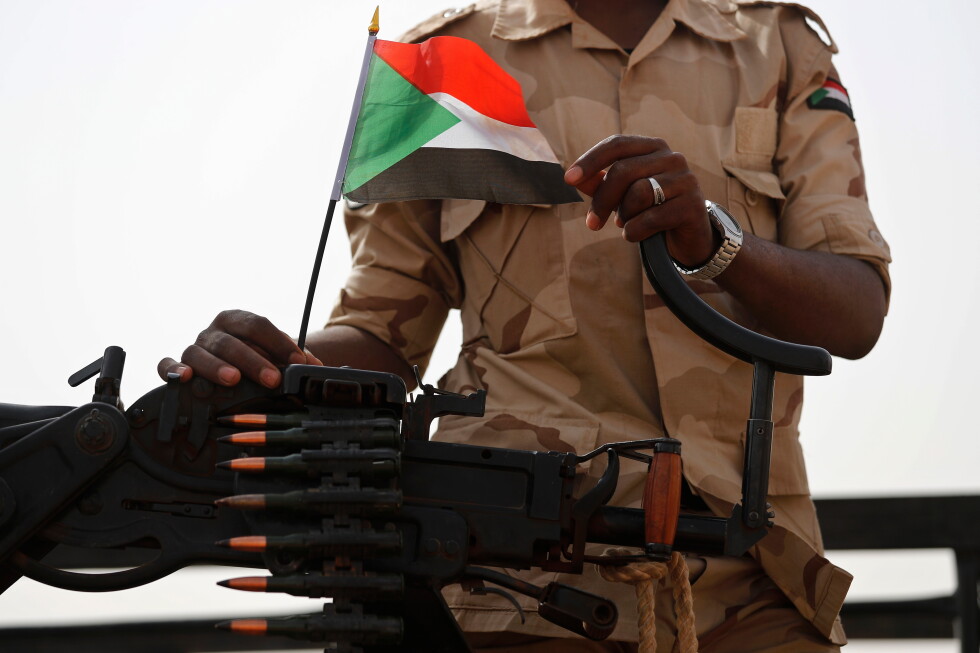
    Mali has been plunged into a new wave of deadly violence following a sweeping series of coordinated attacks carried out by separatist insurgents and jihadist militants across the country on Saturday, which has left top officials dead, triggered major military clashes, and shifted control of a strategic northern city. The Azawad Liberation Front (FLA), a separatist group fighting to establish an independent ethnic Tuareg state in northern Mali, announced that Russian mercenaries deployed by Mali’s ruling military junta have agreed to withdraw from the northern city of Kidal following two days of intense urban fighting. The FLA now claims full control of Kidal, a city that served as the separatist movement’s unofficial headquarters for more than a decade before Malian government forces backed by Russian mercenaries seized control of it in late 2023.

    The wave of violence began Saturday, when the FLA joined forces with multiple armed groups to launch synchronized assaults across Mali, stretching from the capital Bamako to northern and central regions. The assault targeted a range of key sites, including Kati, a major military base located just outside Bamako, the northern cities of Gao and Kidal, and the central Malian hubs of Sevare and Mopti. According to regional analysts, the assault was split between two sets of attackers: the FLA focused its operations on key northern population centers, while the al-Qaeda-affiliated jihadist group Jama’at Nusrat al-Islam wal-Muslimin (JNIM) carried out parallel strikes across multiple locations nationwide.

    Ulf Laessing, head of the Sahel programme at the Konrad Adenauer Foundation in Mali, described the coordinated assault as the largest unified jihadist attack on Mali in several years. One of the most shocking developments to emerge from Saturday’s violence was the reported death of Mali’s Defence Minister Sadio Camara, who was killed in a car bomb attack on his convoy near Kati. Multiple news agencies, citing confirmation from Camara’s family and French media, reported that the attack also killed at least three of his family members. The Malian government has not officially confirmed Camara’s death, but military officials have acknowledged ongoing fighting across multiple regions.

    On the ground in Kidal, FLA spokesman Mohamed Elmaouloud Ramadane noted that the city was not fully captured during Saturday’s initial attacks, as small contingents of Malian army troops and Russian mercenaries remained holed up in parts of the city. Clashes between FLA fighters and pro-government forces resumed in Kidal on Sunday, but just hours after fighting restarted, Ramadane announced a breakthrough: a deal had been reached to allow Russian mercenaries, now part of the officially recognized Africa Corps, to withdraw from Kidal under secure conditions. Shortly after Ramadane’s social media announcement, the FLA confirmed that its fighters were escorting the withdrawing Russian mercenary contingent out of the city’s boundaries. One FLA field commander who participated in the offensive told the BBC that the group had spent months planning the assault, and that its next objectives are to seize control of Gao before moving on to Timbuktu, which the commander claimed would fall easily.

    Mali’s state broadcaster ORTM has given a far more muted account of the violence, reporting that only 16 people – a mix of civilians and soldiers – were injured in the attacks, which it said caused only limited damage. The broadcaster also claimed that multiple “terrorists” had been killed in government counterattacks, and that the situation across all affected areas is “completely under control.” Despite the government’s claims, Malian military officials confirmed in an official statement Sunday that fighting is still ongoing in Kidal, Kati, and other regions across the country. The statement warned that the recent wave of violence would “not go unanswered,” and announced that a nationwide security alert had been issued. Authorities have stepped up large-scale patrols, reinforced border and urban checkpoints, and imposed curfews in multiple high-risk areas. In Bamako, a curfew is in effect from 21:00 local time to 06:00 GMT, scheduled to expire Monday.

    The international community has quickly condemned the surge in violence. United Nations Secretary-General António Guterres released a statement condemning the “acts of violence” and expressed his solidarity with the people of Mali. The Economic Community of West African States (ECOWAS), the West African regional bloc that Mali, Niger, and Burkina Faso left following a string of military coups that brought military juntas to power in all three nations, also issued a formal condemnation. Mahmoud Ali Youssouf, chair of the African Union Commission, said he was monitoring the rapidly evolving situation with deep concern.

    Mali has been mired in continuous instability for more than a decade. The FLA has waged a long-running separatist campaign for an independent Tuareg homeland in northern Mali, and currently holds de facto control over large swathes of that territory. The country is currently ruled by a military junta led by General Assimi Goïta, who first seized power in a 2020 coup after widespread public anger over the government’s failure to contain the insurgency. The junta claimed it would restore security and push back against armed groups, and initially enjoyed broad popular support for its promise to resolve the long-running crisis that began with the 2012 Tuareg rebellion, which was later hijacked by transnational Islamist militant groups. After the junta took power, UN peacekeepers and French counter-insurgency forces that had been deployed to Mali withdrew from the country, and the military government turned to Russian mercenaries to support its counter-insurgency operations. Despite this partnership, the jihadist insurgency has only expanded, and large portions of northern and eastern Mali remain outside of government control.

  • Southern China braces for heavy rainfall

    Southern China braces for heavy rainfall

    A fresh, widespread round of intense rainfall is poised to impact large swathes of southern China over the coming three days, the National Meteorological Center has confirmed in its latest official forecast. The inclement weather system will begin unfolding on Sunday, starting with rain bands developing over the Sichuan Basin and Guizhou before shifting steadily eastward. Over the course of the event, the precipitation is projected to reach more than 10 provincial-level regions across southern China, including major affected areas such as Sichuan, Guizhou, Hunan, Zhejiang and Guangdong.

    Most of the impacted regions are forecast to see moderate to heavy rainfall, with the peak intensity of the event expected to fall between Monday and Tuesday, according to the center’s meteorologists. On the opening day of the event Sunday, heavy downpours are predicted to hit northeastern parts of the Sichuan Basin, central and southern Chongqing, northern Guizhou, and northeastern Yunnan, with total accumulated precipitation expected to range between 50 and 70 millimeters in these zones.

    In preparation for the prolonged heavy rain, national authorities have issued multiple warnings and public advisories to reduce risk of harm and damage. The general public has been urged to implement proactive precautions against secondary disasters triggered by heavy and sustained rainfall, adjust travel plans accordingly, and avoid areas with road waterlogging. Officials also emphasized that residents should stay tuned for the latest official weather updates, and remain aware of the hazards associated with severe convective weather, including sudden strong winds and hail.

    On Saturday, two national government bodies — the Ministry of Agriculture and Rural Affairs and the China Meteorological Administration — issued a joint warning highlighting elevated risk of farmland waterlogging across multiple affected regions. From Sunday through Wednesday, high risk of waterlogging that can damage crops and infrastructure is forecast for the Sichuan Basin, southeastern Hubei, and most parts of Hunan and Jiangxi.

    Local governments in high-risk zones have been instructed to step up preparedness measures, including proactive management of water storage levels in reservoirs and rural ponds, and intensified pre-emptive drainage operations in agricultural fields to mitigate the impact of potential waterlogging.

  • Palace holding talks over plans for King’s US visit after DC shooting

    Palace holding talks over plans for King’s US visit after DC shooting

    Just days ahead of King Charles III’s first state visit to the United States as Britain’s monarch, a shooting incident at the Washington DC White House Correspondents’ Dinner has forced security officials on both sides of the Atlantic to re-evaluate the trip’s operational plans. The four-day visit, which will also see Queen Camilla accompany the King, is still scheduled to kick off Monday, when the royal couple is set to arrive in the nation’s capital to be hosted by President Donald Trump.

    Buckingham Palace confirmed in an official statement released Sunday that King Charles has received continuous updates on the Saturday evening shooting. The statement added that the monarch was “greatly relieved” to learn that President Trump, former first lady Melania Trump, and all other attendees at the dinner left the incident unharmed. Throughout Sunday, UK and US security and diplomatic teams held a series of discussions to assess whether the shooting would alter the trip’s itinerary and security protocols.

    The details of the shooting have now been confirmed by law enforcement and administration officials: a 31-year-old suspect identified as Cole Tomas Allen, a native of Torrance, California, opened fire while attempting to force entry into the dinner venue. President Trump and Melania Trump were immediately evacuated, and footage of the immediate aftermath shows armed security personnel rapidly removing U.S. Vice President JD Vance from the event stage. One Secret Service agent sustained a close-range gunshot wound, but his bulletproof vest prevented a fatal injury; no other attendees or officials were hurt. Acting U.S. Attorney General Todd Blanche told NBC’s *Meet the Press* that Allen is believed to have targeted current Trump administration officials, and will be arraigned on federal charges on Monday, the same day the royal visit begins.

    Blanche sought to reassure the public that robust security arrangements are already in place for the King’s visit, saying he is “very confident” in the royal couple’s safety. He framed the response to the Saturday shooting as proof that the U.S. national security system functions as intended, noting that an “all-government approach” is being deployed to secure the visit.

    UK officials echoed that the trip will move forward with adjusted, enhanced security. Chief Secretary to the Prime Minister Darren Jones told the BBC’s *Sunday with Laura Kuenssberg* that Downing Street and Buckingham Palace have maintained close coordination with U.S. security teams since before the shooting, and additional discussions would continue Sunday to finalize updated plans. A senior government official emphasized that “appropriate security in place in relation to the risk” for the visit.

    Shadow Home Secretary Chris Philp also agreed the visit should not be canceled, arguing that violence must not be allowed to disrupt normal diplomatic and political activity. Even so, he urged joint UK-US security teams to conduct a full overnight review of the King’s security detail to close any potential gaps, noting that while standard high-level visit security is already stringent, a fresh review was “vital” after the shooting.

    Top UK political leaders from across the partisan divide have already united to condemn the shooting. Prime Minister Keir Starmer wrote on X that he was shocked by the incident, calling any attack on democratic institutions and press freedom something that “must be condemned in the strongest possible terms.” Liberal Democrat leader Ed Davey called the scenes “really shocking,” stressing that “political violence is wrong” and expressing relief that no lives were lost. Reform UK leader Nigel Farage echoed that sentiment, noting that “however much we disagree about politics, if violence is used we all lose.”

    This state visit marks the first by a British monarch to the United States since Queen Elizabeth II’s 2007 trip, and the itinerary includes major diplomatic engagements: King Charles is expected to address a joint session of the U.S. Congress, lay a wreath honoring fallen British and American service members in Virginia, and visit the 9/11 Memorial in New York City. While the trip is moving forward, security planners are weighing adjustments to the King’s traditional public meet-and-greets with crowds, a staple of royal overseas visits. Security was already set to be extremely high-profile for the trip, but has now been elevated another tier. The unprecedented security bubble that surrounded President Trump’s autumn 2024 visit to the UK, which kept him entirely within the secured grounds of Windsor Castle and cut off all public interaction, is being cited as a potential precedent for any last-minute changes.

    Beyond security, the visit arrives amid a fresh diplomatic point of friction: recent reports have emerged that the U.S. may review its longstanding position on UK sovereignty over the Falkland Islands. Philp said it would be “very reasonable” for the King to raise the issue with President Trump during their talks. While Jones declined to speculate on what the King would discuss in private, he reaffirmed the UK government’s clear stance: “The Falklands is British territory and the only people that get to decide otherwise are the islanders themselves.”

    Not all voices have backed moving forward with the trip, however. Jonathan Dimbleby, a prominent broadcaster, royal historian, and close associate of King Charles, told BBC Radio 4 that the visit should be postponed. He argued that the inherent unpredictability of President Trump, who Dimbleby claimed has “systematically mocked” the UK, makes this a poor moment to deploy the monarch as a tool of British soft power. “Sound judgement is to deploy that asset, that soft power, at the right time. I think this is not the right time,” Dimbleby said, noting that Trump can be effusive in praise of the royal family one day and critical of British leadership and institutions the next. For trip planners already navigating a diplomatically complex visit, the Saturday shooting has added a new set of last-minute uncertainties and decisions to resolve before Monday’s arrival.

  • Geocultural forces reshaping China’s economic map

    Geocultural forces reshaping China’s economic map

    On April 1 this year, China’s National Bureau of Statistics published updated provincial and municipal GDP rankings that paint a clear picture: while all major Chinese economic regions have recorded consistent growth, a profound geographic reordering of the country’s economic landscape is underway.

    The most striking shift plays out at the provincial level, measured by GDP per capita. In the latest data, Jiangsu claims first place and Zhejiang takes third, leaving Guangdong in fourth position. Two decades ago, this ranking looked radically different: Guangdong held an unchallenged top spot, with Zhejiang and Jiangsu trailing far behind in third and fourth respectively.

    This reordering is even more dramatic when examining city-level data. Back in 2005, nine Guangdong cities earned a spot in the country’s top 25 ranking for GDP per capita. By comparison, Jiangsu only had five cities in that group, and Zhejiang just two. Twenty years later, that balance has flipped completely: only three Guangdong cities remain in the top 25, while Jiangsu now has seven and Zhejiang has four.

    None of this changes the fact that all three provinces remain among China’s most developed economic hubs. Since the launch of economic reforms in the late 1970s, China’s growth model centered on manufacturing and export-led development, which entrenched long-term regional inequality that heavily favored coastal eastern provinces. Guangdong was the original pioneer of this model.

    Decades ago, Shenzhen and Zhuhai, two of China’s first special economic zones, leveraged their proximity to Hong Kong and Macao respectively to rocket up the rankings: Shenzhen held first place in 2005, and Zhuhai third. By 2025, Shenzhen has fallen to sixth and Zhuhai to 16th. Guangzhou, Guangdong’s capital and largest city, which ranked eighth in 2005, has dropped to 22nd, even as it built itself into a global manufacturing and trade hub. It is also worth noting that Guangdong remains home to some of China’s most globally successful innovative firms, from telecommunications giant Huawei and drone leader DJI to tech conglomerate Tencent and electric vehicle and battery manufacturer BYD. All these firms continue to expand their influence both domestically and internationally.

    Even so, China’s cutting-edge startup ecosystem has gradually shifted northward, and the country’s latest five-year plan, released on March 12, makes this new geographic center of gravity explicit. In high-growth sectors like artificial intelligence and robotics, Hangzhou, the capital of Zhejiang, has emerged as a leading hub, home to prominent local players DeepSeek and Unitree, with backing from Hangzhou-based global tech giant Alibaba. In the fast-expanding biomanufacturing sector, national industry leader WuXi Biologics operates major facilities in Hangzhou, Suzhou (Jiangsu) and nearby Wuxi. Suzhou ranked 25th in 2005 and now sits at 7th, while Wuxi moved from 11th to 5th over the same period.

    Analysts point to the strong advantage in higher education held by Jiangsu and Zhejiang as a key driver of this divergence. Last March, The Economist profiled Zhejiang University, concluding that the institution has played a transformative role in turning Hangzhou into a world-class startup hub, mirroring how Stanford University catalyzed the growth of Silicon Valley. Leading global and domestic university rankings consistently place both Zhejiang University and Nanjing University (Jiangsu’s capital Nanjing, which moved from 31st to 11th in city-level GDP per capita rankings over 20 years) among China’s top 10 higher education institutions, alongside leading schools in neighboring Shanghai and Anhui. Guangdong has no universities that hold a consistent spot in the national top 10.

    This educational advantage that Jiangsu and Zhejiang hold is not a recent development: it stretches back centuries. The Jiangnan region, which covers the southern bank of the Yangtze River and spans most of modern Jiangsu and Zhejiang, has been China’s leading cultural and economic center since the Southern Song Dynasty. The region turned its historic strengths in agricultural productivity and trade into widespread artistic and intellectual achievement, laying the groundwork for a long-standing culture of academic excellence. In contrast, the Lingnan region that corresponds to modern Guangdong, while historically open to global seaborne trade, remained geographically and culturally separated from core regions of China for much of its history. Both regions carry deep commercial traditions, but Jiangnan’s centuries-old intellectual heritage gives it a unique edge in nurturing the skilled talent required to advance global technological frontiers.

    This shift is not limited to economics: as Jiangsu and Zhejiang expand their economic lead, they are also reemerging as central players in China’s cultural landscape. In the 1980s and 1990s, Cantonese pop culture spread across the entire country, fueled by Hong Kong’s economic boom, giving the Cantonese language unprecedented cultural prestige across China. That prestige has declined sharply alongside Hong Kong’s relative economic slowdown. At the same time, Shanghai’s rise as a global economic powerhouse has elevated the profile of Jiangnan dialects, which are reasserting their presence in the public sphere even amid nationwide efforts to standardize Mandarin.

    It is important to note that this ongoing economic and cultural shift from Guangdong to Jiangsu and Zhejiang is not a foregone conclusion. Future trajectories will depend heavily on the strategic choices and innovation success of individual entrepreneurs and firms across all regions. Global demand for Chinese goods and services is also subject to rapid shifts, shaped by ongoing trade restrictions on Chinese exports in major markets around the world. Regardless of how trends unfold in coming years, this regional reordering makes clear that China’s economic future is far from monolithic, with diverse regions competing and evolving along distinct paths.

  • War in the Middle East: latest developments

    War in the Middle East: latest developments

    Fresh waves of instability have swept across the Middle East over the weekend, as escalating cross-border tensions between Israel and the Iran-backed Hezbollah movement threaten to collapse an existing ceasefire, while regional diplomatic efforts to de-escalate broader conflict with Iran navigate unexpected disruptions from Washington.

    In a public address on Sunday, Israeli Prime Minister Benjamin Netanyahu issued a sharp rebuke of Hezbollah, accusing the Lebanese militant group of systematically undermining the fragile ceasefire agreement between Israel and Lebanon through repeated violations. Netanyahu confirmed that Israeli forces would continue targeting Hezbollah with full force, warning that the group’s ongoing breaches are effectively dismantling the truce that has held partial calm along the border for months.

    Moments after Netanyahu’s remarks, Lebanese state media reported that the Israeli Air Force launched multiple airstrikes on populated areas in southern Lebanon, just hours after the Israeli military issued urgent evacuation orders for seven local communities in the region. The National News Agency, Lebanon’s official state-run media outlet, confirmed that one of the strikes hit the southern town of Kfar Tibnit – a location explicitly named in the evacuation warning – and that early reports indicate multiple casualties have been recorded from the attack. The strikes mark a major escalation of hostilities despite the ongoing ceasefire between Israel and Hezbollah.

    Parallel to the rising tensions along the Israeli-Lebanese border, regional diplomatic efforts to broker a lasting end to the Iran conflict are working to get back on track, after former U.S. President Donald Trump’s sudden decision to cancel a planned trip by U.S. peace envoys threw talks into disarray. Iran’s top diplomat Foreign Minister Abbas Araghchi is set to return to Islamabad on Sunday, just one day after his initial visit to the Pakistani capital that concluded with a side trip to Oman for additional consultations. According to Iran’s semi-official ISNA news agency, Araghchi will hold a new round of talks with Pakistani leadership to lay out Tehran’s official stance on the framework for any potential agreement that would bring a full end to active hostilities.

    Pakistan, which has taken on the role of lead neutral mediator for the talks, has reaffirmed its commitment to keeping the diplomatic process moving forward. Pakistani Prime Minister Shehbaz Sharif confirmed he held a telephone call with Iranian President Masoud Pezeshkian in the wake of Washington’s decision to pull its envoys from the planned talks. In a post on the social platform X, Sharif emphasized that Pakistan remains fully committed to acting as an honest, sincere facilitator, and will continue working tirelessly to build a path toward durable peace and long-term stability across the Middle East region.

    Meanwhile in Washington, Trump stated that a late Saturday shooting incident at a media dinner in the nation’s capital would not alter his administration’s approach to the conflict with Iran. Speaking to reporters at the White House just hours after the attack, Trump insisted the incident would not distract him from securing what he calls a victory in the Iran war. He added that there is currently no clear evidence linking the shooting to the Iran conflict, and he does not believe the attack is connected to ongoing hostilities based on initial information.

    In another development related to Iran’s internal crackdown on opposition and alleged espionage, the Iranian judiciary announced on Sunday that authorities executed a man convicted of two charges: membership in the Sunni militant group Jaish al-Adl, and involvement in coordinated attacks on Iranian security forces in the country’s volatile southeastern region. The execution comes just one day after Iranian authorities announced the execution of a second man, who was accused of passing classified intelligence to Israel.

  • Sawe makes history with first sub-two-hour marathon in London

    Sawe makes history with first sub-two-hour marathon in London

    The 2025 London Marathon delivered two pieces of history on Sunday, as Kenya’s Sebastian Sawe became the first athlete to run a ratified sub-two-hour marathon in an official competition, while Ethiopia’s Tigst Assefa smashed her own women’s-only world record to defend her title.

    Sawe, the defending 2024 men’s champion, entered the race openly predicting a landmark performance, and he delivered beyond expectations, crossing the finish line in an official time of 1 hour 59 minutes 30 seconds. The 31-year-old Kenyan’s achievement rewrites marathon history: while Eliud Kipchoge ran a 1:59:40 in an experimental 2019 event, that performance was never ratified as an official world record because it broke standard competition rules for pacing, fluids and event format, with specialized non-regulation equipment. Sawe’s run, by contrast, complies with all official rules and stands as the first recognized sub-two-hour marathon in open competition.

    What made Sawe’s performance even more remarkable is the depth of the field’s results: the top three men all finished inside the previous official world record of 2:00:35, set by the late Kelvin Kiptum at the 2023 Chicago Marathon. Through the first half of the 26.2-mile course, Sawe led a tight leading pack of six elite runners that included Olympic champion Tamirat Tola and Uganda’s half-marathon world record holder Jacob Kiplimo, with the group passing the halfway mark in 1:00:29, on pace to break the two-hour barrier. As the race progressed, the pack strung out, leaving Sawe and Ethiopia’s Yomif Kejelcha, running his first ever marathon, to battle neck-and-neck through the closing miles. With just one mile remaining, Sawe made his decisive surge, pulling clear of Kejelcha to finish alone, taking a full 65 seconds off Kiptum’s previous world record. Kejelcha held on to finish second in 1:59:41, the fastest debut marathon in history, while Kiplimo took third place in 2:00:28.

    After crossing the line, a visibly elated Sawe shared his confidence going into the race, held on a mild warm spring day in London. “I am feeling good. I am so happy. It is a day to remember for me,” Sawe told reporters, noting his target time had even been scribbled on his running shoe before the start. “Coming to London for the second time was so important to me and that’s why I prepared well. Finally, what I had done for four months it has come today to be a good result.” Sawe ran in Adidas’s new Pro Evo 3 supershoe, which weighs less than 100 grams, and had openly teased a record attempt in pre-race media comments.

    In the women’s-only race, Assefa matched Sawe’s historic performance by breaking her own world record to defend her 2024 London Marathon title. The 29-year-old Ethiopian, a reigning Olympic and world silver medalist, was locked in a tight three-way battle for the lead with Kenyan stars Hellen Obiri and Joyciline Jepkosgei through most of the race, before breaking away in the closing kilometers to cross the line in 2:15:41. Her time shaved nine seconds off the women’s-only world record she set on the same London course in 2024.

    “It’s one of my plans really coming into this competition to break my own world record from last year’s race,” Assefa said after the race. “So to do that has brought me a lot of satisfaction. To repeat my victory from last year means even more. The happiness I feel is just swelling up inside me.” Obiri, a two-time 5000m world champion and 2024 Paris Olympic marathon bronze medalist, finished just 12 seconds behind Assefa to take second place in a new personal best of 2:15:53, edging out compatriot Jepkosgei by just 0.02 seconds. It is worth noting that the fastest marathon ever run by a woman in a mixed-gender race, where female runners benefit from male pacemakers, is 2:09:56, set by Kenya’s Ruth Chepngetich at the 2024 Chicago Marathon.

    Beyond the elite race history, the 46th edition of the London Marathon also set new records for participation and charitable giving. More than 59,000 runners were expected to complete the 42.2-kilometer course, beating 2024’s record of 56,640 finishers, which already stood as the most for any marathon in history. Organizers announced last month they are considering expanding the 2026 event to two days, which would allow up to 100,000 runners to participate. The 2025 race also raised a record £87.3 million ($118 million) for charitable causes, retaining its title as the world’s largest annual one-day fundraising event.