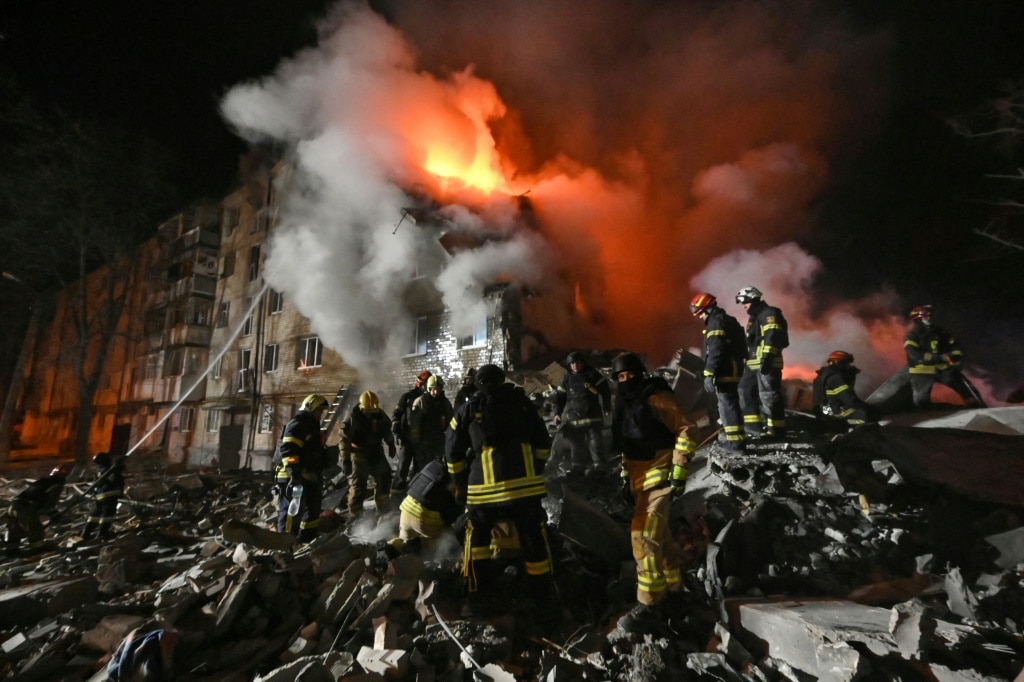
Global military expenditure has climbed to nearly $2.9 trillion in 2025, extending an uninterrupted annual growth streak to 11 years, according to a new report from the Stockholm International Peace Research Institute (SIPRI). The world’s three largest defense spenders – the United States, China, and Russia – accounted for just over half of the global total, with a combined outlay of $1.48 trillion in 2025. Overall global spending rose 2.9 percent year-on-year, even as the world’s single largest spender, the U.S., recorded a nominal reduction in its 2025 defense budget.
Lorenzo Scarazzato, a SIPRI researcher, told AFP that the U.S. cut was fully offset by sharp spending increases across Europe and Asia, driven by what he described as “another year of wars and increased tensions.” This upward trend is mirrored in the global “military burden” – the share of total global GDP allocated to defense spending – which reached its highest level since 2009. “Everything points to a world that feels less secure and is spending on its military to compensate for the global landscape,” Scarazzato noted.
The U.S. recorded a 7.5 percent annual reduction in 2025 military spending, finishing the year at $954 billion. The drop is largely attributed to the failure of Congress to approve new military aid packages for Ukraine in 2025, after Washington committed a total of $127 billion to Kyiv over the preceding three years. However, analysts expect this dip to be temporary: the U.S. Congress has already approved a $1 trillion+ defense budget for 2026, and spending could surge to $1.5 trillion in 2027 if the budget proposal put forward by U.S. President Donald Trump is enacted.
The biggest contributor to the 2025 global spending increase was Europe, which includes both Russia and Ukraine. Total regional spending surged 14 percent year-on-year to hit $864 billion. Scarazzato outlined the two core drivers behind the surge: the ongoing full-scale war in Ukraine, and shifting U.S. defense policy that pushes European nations to take greater responsibility for their own security in the face of reduced American engagement. Germany, the world’s fourth-largest military spender, raised its 2025 expenditure by 24 percent to $114 billion, while Spain recorded a dramatic 50 percent increase to $40.2 billion, pushing its defense spending above 2 percent of GDP for the first time since 1994.
Both Russia and Ukraine have ramped up military spending amid the active conflict, with both nations allocating a larger share of government expenditure to defense than any other countries tracked by SIPRI. Russia’s spending rose 5.9 percent to $190 billion in 2025, equal to 7.5 percent of the country’s total GDP. Ukraine, by contrast, boosted its defense outlay by 20 percent to $84.1 billion – a staggering 40 percent of its entire annual GDP.
In the Middle East, where long-running geopolitical tensions remain high, regional spending rose only marginally by 0.1 percent to $218 billion. While most nations in the region increased their defense budgets, both Israel and Iran recorded nominal decreases. Iran’s spending fell 5.6 percent to $7.4 billion, a drop driven almost entirely by the country’s 42 percent annual inflation rate; spending actually rose in nominal terms. For Israel, the 4.9 percent drop to $48.3 billion followed a January 2025 ceasefire in the Gaza war that reduced immediate military operational needs. Even with the decline, Israel’s 2025 defense spending remains 97 percent higher than it was in 2022.
Across Asia and Oceania, total military spending reached $681 billion in 2025, an 8.5 percent year-on-year increase that marks the region’s largest annual jump since 2009. Scarazzato identified China as the region’s major player, noting that the country has now expanded its military spending every year for 30 consecutive years, hitting an estimated $336 billion in 2025. Beyond China’s ongoing military modernization, Scarazzato highlighted growing threat perceptions among other regional actors as a key growth driver. Japan raised its defense expenditure by 9.7 percent to $62.2 billion in 2025, equal to 1.4 percent of GDP – its highest GDP share for defense spending since 1958. Taiwan also increased its spending by 14 percent to $18.2 billion amid shifting regional security dynamics.