作者: admin

  • Indonesian students protest in against state spending, fuel price hike

    Indonesian students protest in against state spending, fuel price hike

    On Friday, hundreds of university and college students flooded the streets of Jakarta, Indonesia’s capital, to voice fierce opposition to the policies of newly inaugurated President Prabowo Subianto, warning that unbridled wasteful state spending could push the nation into bankruptcy. The demonstration, which escalated into minor scuffles with police, is the most prominent display of public discontent since violent anti-government protests rocked the country last August, and it comes as growing frustration over perceived state mismanagement simmers across the archipelago.

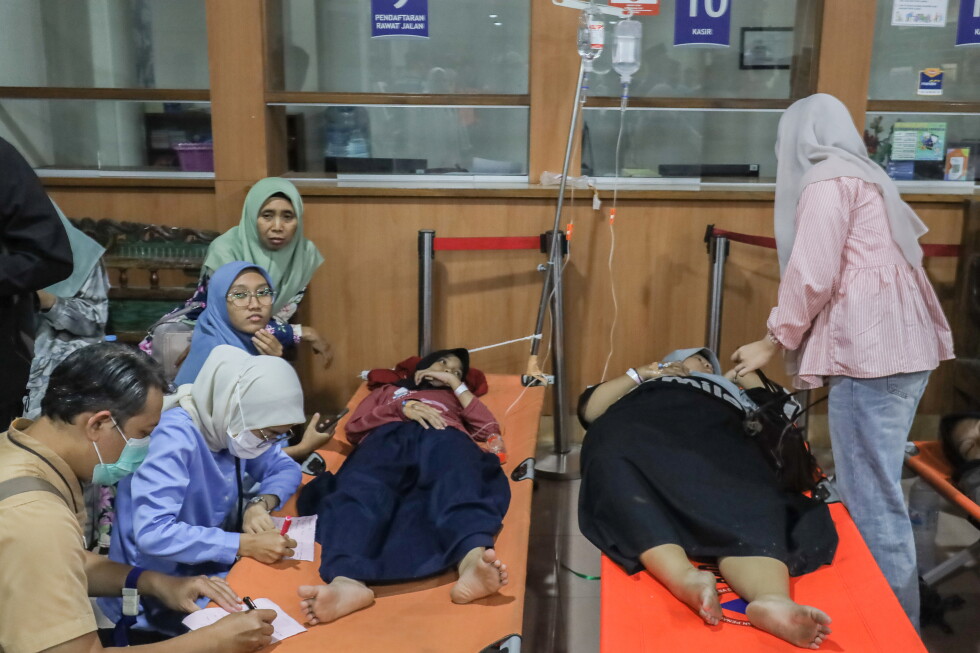
    Protesters laid out three core demands: an immediate end to what they call reckless public expenditure, a full scrapping of Prabowo’s signature free school and community meals program, and a reversal of the recent steep fuel price hike that has strained household budgets. The free meals initiative, which was the centerpiece of Prabowo’s successful 2024 presidential campaign, has been plagued by controversy in recent months: multiple mass food poisoning incidents have sickened hundreds of recipients, while widespread allegations of graft have eroded public trust in the program. Just last week, Prabowo dismissed the head of the government agency tasked with overseeing the $28 billion annual initiative in response to the growing scandal.

    Earlier this week, state-owned energy giant Pertamina announced it would raise prices for the widely used Pertamax fuel grades by more than 30%, a move that immediately sparked public outcry. The price hike came after years of government-regulated fuel price stability, but ballooning budget pressures from large-scale flagship programs like free meals left the government with little choice, according to insiders. Students argue the increase disproportionately hits the middle class and working poor, already grappling with rising cost of living across the country.

    During the march toward the iconic Hotel Indonesia roundabout, a historic site for political demonstrations in Jakarta, students clashed with riot police deployed to block their path. Footage from BBC Indonesian shows participants attempting to push through police barricades, with some throwing objects at officers, though no injuries have been reported in the immediate aftermath of the protest. Speaking to reporters on the scene, student protester Zaki questioned the government’s commitment to constitutional protections for peaceful assembly.

    “Fuel prices are going up, and our lives are getting harder,” Zaki shouted to officers. “Why are you afraid of student voices? The constitution guarantees our right to demonstrate, but that guarantee means nothing today.” Another student, Rina, emphasized that public calls to end the troubled free meals program have been repeatedly sidelined by the administration. “This program was unclear from the start,” she said. “We’ve had mass poisonings, we’ve had corruption exposed, and the government still refuses to listen to people’s demands to shut it down.”

    Government officials have defended the free meals initiative, framing it as a long-term investment in Indonesia’s future designed to address chronic child malnutrition, improve educational performance, and boost domestic economic activity. But critics argue that poor planning and a lack of transparency have turned the high-cost program into a drain on public finances. Adding to the nation’s economic woes, the Indonesian rupiah has recently slid to new record lows against major global currencies, further stoking public anxiety over the state of the economy.

    Protesters have organized their movement online under the hashtag #MenujuIndonesiaBangkrut, which translates to “Towards Bankrupt Indonesia”, drawing thousands of additional comments and expressions of support from social media users across the country. Friday’s protest is the largest outbreak of public discontent since August 2025, when the death of a motorcycle delivery rider triggered widespread anger over elitist governance and alleged systemic mismanagement, leading to violent demonstrations that left multiple people dead. Analysts note that the latest rally signals growing public frustration with the Prabowo administration just months into its term, as economic pressures and policy controversies continue to mount.

  • In pictures: Thai Princess Bajrakitiyabha dies at age 47

    In pictures: Thai Princess Bajrakitiyabha dies at age 47

    Thailand’s Royal Household has confirmed the passing of Princess Bajrakitiyabha, the eldest daughter of King Vajiralongkorn, at the age of 47. The announcement marks the end of a three-and-a-half-year medical battle for the princess, who fell into a coma in late 2022 after collapsing during a routine outing to exercise her pet dogs.

    Widely regarded as one of the most high-achieving and publicly active members of the Thai royal family, Princess Bajrakitiyabha built a distinguished public career beyond ceremonial duties. A trained lawyer by profession, she served as Thailand’s ambassador to Austria, and spent years advocating for meaningful reforms to Thailand’s national criminal justice system, drawing on her legal expertise to push for greater fairness and transparency. She also represented Thailand on global stages, including a 2009 appearance at the United Nations Human Rights Council session in Geneva.

    Throughout her public life, the princess maintained a close relationship with her father, 73-year-old King Vajiralongkorn. At the time of her death, the Thai monarch had not officially named an heir to the throne, and political analysts widely viewed Princess Bajrakitiyabha as a likely key figure in the future royal succession, given her proven public profile and proximity to the king.

    In the wake of the announcement, mourners have gathered outside Bangkok’s Chulalongkorn Hospital, where the princess had received ongoing medical care since her collapse, to pay their respects. Photos from the scene show members of the public holding portraits of the princess and sharing grief over her early passing.

    Prior to her health crisis, Princess Bajrakitiyabha was a familiar presence at national public events, from joining royal processions through Bangkok alongside the king and Queen Suthida to leading community activities honoring senior members of the royal family, including a 2015 cycling event held to tribute her grandfather, the late King Bhumibol Adulyadej.

  • Taylor Swift makes tearful 21-minute speech as she joins Songwriters Hall of Fame

    Taylor Swift makes tearful 21-minute speech as she joins Songwriters Hall of Fame

    In a landmark moment for modern popular music, global pop icon Taylor Swift has etched her name into industry history as the youngest woman ever inducted into the Songwriters Hall of Fame. During an emotional 21-minute acceptance speech at the New York induction ceremony, the 36-year-old superstar choked back tears as she paid tribute to the life-altering sacrifice her family made to launch her career.

    When Swift was just 14 years old, her entire family left their home in Pennsylvania to uproot and relocate to Nashville, Tennessee – widely recognized as the global capital of country music and songcraft. Reflecting on that choice, Swift acknowledged the immense disruption the move brought to her parents and younger brother. “It couldn’t have been easy for my parents and my brother to just pick up and move our entire family,” she told the assembled crowd of music industry luminaries. “Even though words are supposed to kind of be my thing, I will never be able to express my gratitude to you guys for doing that for me. You’re the reason I’m here tonight.”

    The induction was introduced by legendary Hollywood director Steven Spielberg, whom Swift described as a lifelong hero whose work fundamentally shaped her approach to narrative storytelling through song. In her speech, the Grammy-winning artist opened up about her relationship to her craft, revealing that songwriting is the only natural instinct she has ever had in her decades-long career. “When I say that songwriting was the easiest part for me, I think what I mean is that it was instinctual. No-one taught me how to do it,” she explained. Unlike other skills she has had to master – from crowd engagement and choreography to navigating the complexities of the music industry and protecting her mental health through years of trial, error, and public upheaval – songwriting has always come unforced to Swift.

    The honor comes on the heels of a historic multi-year run for Swift, who most recently broke her own global album sales record with the October release of her latest studio project, *The Life of a Showgirl*. In the broader context of the Hall of Fame’s history, Swift is the second-youngest inductee overall, falling just behind legendary musician Stevie Wonder, who received the honor at 33 years old. The five of Swift’s most iconic tracks cited by the Hall of Fame for the honor include *All Too Well (10 Minute Version) (Taylor’s Version)*, *Blank Space*, *Anti-Hero*, *Love Story*, and *The Last Great American Dynasty*.

    In attendance for the milestone moment was Swift’s fiancé, NFL star Travis Kelce, marking a public appearance amid ongoing swirling rumors that the couple will tie the knot next month. Swift was not the only celebrated songwriter to join the Hall of Fame this year. Her fellow 2026 inductees include alternative music icon Alanis Morissette, soft rock legend Kenny Loggins, Kiss co-founders Gene Simmons and Paul Stanley, hitmaker Christopher “Tricky” Stewart – known for his work with Beyoncé, Rihanna, and Katy Perry – Grammy-winning collaborator Walter Afanasieff, famous for his partnership with Mariah Carey, British songwriter Terry Britten, who penned Tina Turner’s classic *We Don’t Need Another Hero*, and Graham Lyle, the writer behind Turner’s iconic hit *What’s Love Got to Do with It?*.

    Founded in 1969, the Songwriters Hall of Fame has a decades-long mission of honoring creators whose work forms the backbone of the world’s most beloved popular music. In its more than 55 years of operation, fewer than 500 songwriters have earned induction, cementing the honor as one of the most prestigious in the global music industry. Beyond her latest Hall of Fame recognition, Swift stands as one of the best-selling music artists of all time, with a discography that includes 12 original studio albums and four re-recorded “Taylor’s Version” albums, released to reclaim ownership of her early work. She also holds a unique historic achievement as the first artist ever to win the Grammy Award for Album of the Year four times over.

  • Pope tells traffickers of migrants in the Canary Islands: Stop, repent or face God’s wrath

    Pope tells traffickers of migrants in the Canary Islands: Stop, repent or face God’s wrath

    On the final day of his weeklong trip to Spain, Pope Leo XIV delivered a stark rebuke to human traffickers operating one of the world’s deadliest migration routes, issuing a call for repentance and warning that they will face divine justice for exploiting vulnerable people seeking a new life in Europe. The pontiff made the remarks Friday during a gathering with humanitarian aid groups in San Cristobal de la Laguna, on the Canary Islands, a Spanish archipelago that has long served as a primary entry point for migrants crossing the perilous Atlantic from West Africa.

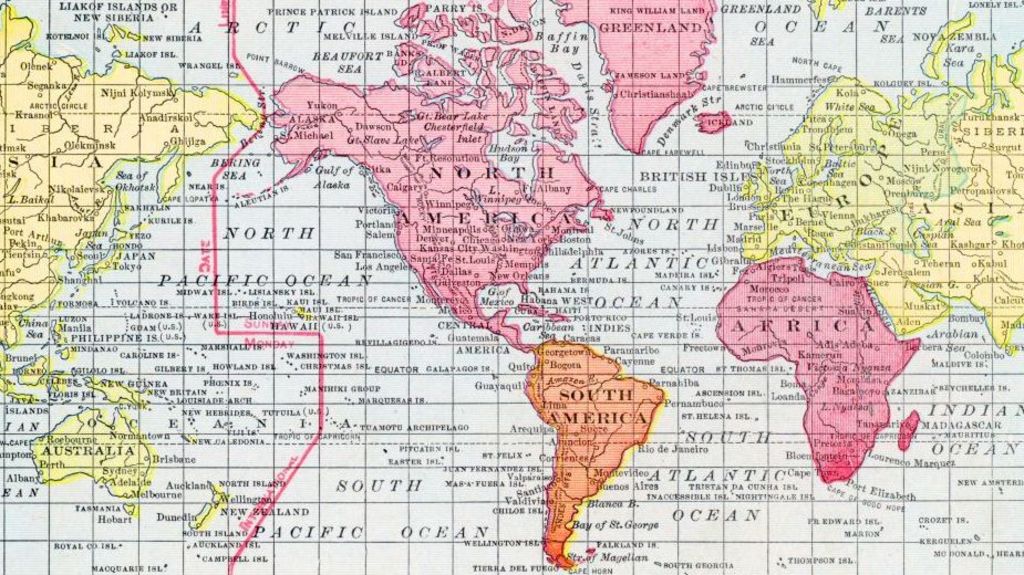
    Positioned just off the coast of Northwest Africa, hundreds of kilometers closer to the African continent than to mainland Europe, the Canary Islands have become the epicenter of one of the most dangerous migration pathways on Earth. Unlike the more heavily discussed central Mediterranean route, the vast expanse of the Atlantic Ocean and limited search-and-rescue infrastructure make this crossing far deadlier for migrants. Experts have documented entire boats drifting across the Atlantic to the Caribbean and Latin America, only to be found with all passengers dead after being pushed off course by trade winds and currents. Migrant arrivals to the islands peaked at nearly 47,000 in 2024, before dropping sharply to just over 3,000 in the first five months of 2026, a shift that has not eliminated the risk of deadly voyages.

    Addressing the criminal networks that profit from this crisis directly, Pope Leo issued an unflinching appeal. “Break those chains and free those you hold in bondage,” he said, adding, “Stop. Repent. For every life lost, every family deceived, every body subjugated, every woman threatened, every worker exploited, you will have to appear before divine justice. Repent while there is still time, for God’s mercy can reach even the most hardened sinner, but it enters only through the narrow gate of truth, justice and conversion.” Smugglers operating the route typically charge thousands of euros per passenger, often trapping migrants in debt bondage by withholding identity documents and forcing them into exploitation such as sex work or illicit labor after arrival. Many migrants also travel on self-organized boats: a large share are former Senegalese fishermen left without livelihoods due to widespread overfishing off West Africa’s coast.

    Leo’s visit to the Canary Islands fulfills a long-held wish of his predecessor, Pope Francis, who made migration advocacy a core priority of his 12-year pontificate, often clashing with right-leaning governments in the U.S. and Europe over restrictive border policies. As the first U.S.-born pope in history, Leo has positioned himself as a clear heir to Francis’ legacy, while adding his own public-facing style to the advocacy. The pontiff’s Canary Islands trip was designed to honor the thousands of migrants who have lost their lives attempting the crossing, a mission that comes amid rising anti-migrant sentiment across Europe and the Trump administration’s aggressive mass deportation campaign in the United States.

    Shortly after arriving on the islands Thursday, Leo carried forward a symbolic tradition established by Francis: he tossed a bouquet of flowers into the ocean from Tenerife’s “Dock of Shame,” the port site where thousands of migrants were forced to live in squalid, overcrowded conditions during a 2020 arrival spike. The gesture mirrored a 2013 trip Francis made to Lampedusa, Sicily, another key migration flashpoint, where he first denounced what he called the “globalization of indifference” toward people fleeing conflict, poverty and climate disaster. In a moment that revealed Leo’s more casual, youth-connected style, he embraced a viral social media hand gesture popular with young people after hearing testimony from a former migrant, drawing loud cheers from the gathered crowd.

    During his meeting with aid groups Friday, the pope also appealed to European host communities to welcome and integrate migrants, calling out the “silent shipwreck of abandonment” that leaves many survivors homeless and destitute on the streets after surviving their dangerous crossing. “A human conscience, and even more so a Christian conscience, cannot remain indifferent in the face of these graveyards of the sea, to the victims of shipwrecks and the lack of aid,” he said. “Every life lost on these routes is a failure for the human family.”

    Leo reaffirmed the Catholic Church’s core teaching of “welcome the stranger,” noting that integration of migrants into local communities offers an opportunity to share faith without imposing it on people with different religious backgrounds. He also emphasized that while migrants have a right to flee dangerous conditions, their home countries bear a responsibility to create the economic and security conditions that would allow people to choose to stay rather than risk their lives at sea. During a visit to the Las Raíces migrant reception center, the pope met directly with migrants, hearing firsthand accounts of their journeys, and went off-script to address the crowd in French and English, drawing applause from attendees. One Senegalese migrant, Bousso Diouf, shared her story of desperation and trauma, asking that all migrants be treated with dignity and respect.

    Leo’s trip to Spain wrapped up Friday, but his advocacy on migration will continue next month, when he plans to spend U.S. Independence Day on July 4 at Lampedusa, the site of Francis’ landmark 2013 address on the global migration crisis, to further amplify the call for greater global compassion toward displaced people.

  • South Africa trolled by African fans in wake of World Cup loss

    South Africa trolled by African fans in wake of World Cup loss

    As the final whistle blew on the opening match of the 2026 expanded FIFA World Cup between South Africa and co-host Mexico, the 2-0 defeat for Bafana Bafana left South African supporters heartbroken — but what unfolded across social media revealed a far deeper rift than a disappointing on-pitch result. In a break from the long-held tradition of pan-African unity that defines continental participation in major global tournaments, fans across the continent threw their support behind Mexico, linking their choice to ongoing deadly xenophobic violence targeting African migrants in South Africa.

    The 2026 World Cup, co-hosted by the United States, Canada and Mexico, features 10 African teams in its expanded 48-team format, marking a historic high for continental representation. Ahead of Thursday’s Group stage opener, many African football fans already made clear their decision to back Mexico, directly tying the choice to simmering anti-migrant tensions that have roiled South Africa in recent weeks.

    Social media was flooded with playful but pointed content after the match: users changed their profile pictures to Mexican flags, adopted Spanish pseudonyms, and shared memes featuring sombreros under the trending tagline “Mexico versus xenophobia.” One user on platform X, referencing widespread reports of migrant mistreatment, asked bluntly: “You want people to cheer for you when you play soccer just because we’re African?” Another echoed the sentiment, leaning into the baseless narrative that foreign workers drive South Africa’s unemployment crisis to joke: “We’re supporting Mexico so that South Africa can go back home early to protect their jobs.” Prominent Kenyan lawyer Ahmednasir Abdullahi added a sharp, satirical take: “I hope South Africa is not blaming African migrants for the 2–0 defeat and two red cards in the match against Mexico.”

    In-person fan sentiment reflected the same divide. Daniel Kaniki, a Congolese supporter who attended a public fan viewing event in Atlanta, Georgia, told reporters the split came down to basic solidarity. “Africa is like one country and if one is chasing others, we are not a family any more. That’s why I’m supporting Mexico today,” he explained.

    Not all fans from across the continent sided against South Africa, however. Vanlare Quist, a Ghanaian fan also at the Atlanta viewing park, said he remained firmly in Bafana Bafana’s corner. As a proud African, he argued that anti-immigrant sentiment is driven by only a small minority of South Africans, not the nation as a whole. In Juba, the capital of South Sudan, public viewing center attendees uniformly backed South Africa, rooted in shared historical struggle: South Sudan’s fight for independence from Sudan has long drawn ideological connection to South Africa’s fight against apartheid white-minority rule.

    “It was unfortunate that on social media we saw some African countries supporting Mexico and even wearing Mexico jerseys. As South Sudanese, we are behind South Africa and will continue to support South Africa – because they are representing Africa. So, all African countries must support South Africa during this World Cup,” 23-year-old student George Kenyi Charles Rehan told reporters from Juba.

    Back in South Africa, supporters pushed back against the wave of online trolling after the defeat, doubling down on their pride in the national team. The South African government also released a statement commending Bafana Bafana for their “spirited performance,” noting that “while the final score was not what the nation had hoped for, the team represented South Africa with unity, determination, and a sense of pride on the world’s biggest stage.”

    Many South African social media users rejected criticism of the country’s immigration policies, with one writing: “We qualified for the World Cup alone without your support and whether we win or lose we will remain South Africans who love their country. And illegal immigrants will still leave our country whether you hate us or not.”

    The continental rift exposed by the World Cup opener is rooted in a years-long surge of anti-migrant sentiment that has escalated dramatically in recent weeks. Migrants from other African nations have faced targeted violence and intimidation, with extremist anti-migrant groups issuing a 30 June deadline for all undocumented foreign nationals to leave the country.

    South African President Cyril Ramaphosa has publicly condemned vigilantism, stressing that “only authorised government officials can act against violations of our law.” But he has also acknowledged that public frustrations over immigration “deserve to be heard, and they deserve to be addressed.”

    In response to the escalating threats, multiple African nations have begun repatriating their citizens from South Africa. Nigeria became the latest country to announce evacuations this week, joining Ghana, Zimbabwe and Malawi, all of which have already moved to bring their citizens home amid safety concerns.

    The roots of the current crisis stretch back to the end of apartheid in 1994, when thousands of people from across the continent moved to South Africa seeking greater economic opportunity. Today, however, South Africa struggles with an official unemployment rate exceeding 30%, a crisis that has fueled scapegoating of foreign workers and sparked regular anti-migrant protests and deadly xenophobic attacks in major urban centers.

    Despite the opening defeat, South Africa still has two remaining Group stage matches to climb out of the bottom of the table and qualify for the knockout round of the expanded tournament, leaving the nation with an opportunity to prove its quality on the pitch even as tensions off the field continue to simmer.

  • British art ‘giant’ David Hockney dies aged 88

    British art ‘giant’ David Hockney dies aged 88

    One of the most transformative and influential figures in modern global art, David Hockney, has passed away peacefully at his London home at the age of 88, just one month shy of his 89th birthday, his public relations representative Erica Bolton confirmed in an official statement released Friday.

    Widely celebrated as a foundational pioneer of the 1960s Pop Art movement, Hockney maintained an unwavering commitment to creation, experimentation, and public exhibition of his work right up until his death. Across his 70-year career, he built a vast, diverse body of work defined by cross-medium experimentation, rigorous intellectual exploration of perception, perspective, and visual representation, and a lifelong celebration of the vibrancy and beauty of the world around him.

    Born in 1937 in West Yorkshire, northern England, Hockney launched his artistic training at the Bradford School of Art before going on to study at London’s Royal College of Art, where he graduated with the institution’s prestigious Gold Medal distinction. A conscientious objector during the era of mandatory military service, he completed his alternative service working as a hospital orderly, and defied the conservative social conventions of post-war Britain from an early age: he lived openly as a gay man and dedicated himself fully to his artistic vision at a time when such openness carried significant risk.

    By the mid-1960s, Hockney had emerged as a leading voice in a new generation of groundbreaking British artists. After relocating to California in 1964, his work captured the sun-drenched, carefree energy of 1960s West Coast life, alongside the rolling, bucolic landscapes of his native Yorkshire, and intimate portraits of the people and places that shaped him. His iconic 1972 work *Portrait of an Artist (Pool with Two Figures)* made global headlines in 2018 when it sold at auction in New York for $90.3 million, setting a new record for the most expensive work sold by a living artist at auction — a title he held until 2019, when Jeff Koons’ *Rabbit* surpassed the mark.

    A lifelong innovator never afraid to embrace new tools and technologies, Hockney worked across far more mediums than traditional painting and drawing: he built a celebrated body of work in printmaking, photography, and even stage design, and was an early adopter of digital art tools. When Apple first released the iPad in 2010, Hockney immediately adopted the device as a core creative tool, even collaborating with software developers to build custom art apps tailored to his creative process, according to a profile from the U.K.’s National Portrait Gallery.

    Hockney earned global critical acclaim and formal recognition from both his home country and international governments throughout his career. In 1997, he was appointed to the Order of the Companions of Honour by the British monarchy, and earlier this year, he joined the small ranks of non-French citizens awarded the Legion d’Honneur, France’s highest civilian honor.

    News of his death sparked an outpouring of tributes from art institutions and peers within minutes of the official announcement. Art historian Richard Morris paid tribute to Hockney on the social platform X, noting that his greatest achievement was making technically rigorous, groundbreaking painting look effortless. “He carried forward one of the most sustained investigations into vision, space and representation by any post-war artist. British art has lost a giant,” Morris wrote.

    Paris’ Centre Pompidou, which collaborated with Hockney on two of his most iconic retrospective exhibitions, called him “unquestionably one of the major figures of contemporary art,” adding that the body of work he leaves behind remains “dazzling, alive and eternal.”

    Remarkably, Hockney continued creating and sharing new work right up until his passing. London’s Serpentine Gallery is currently hosting the artist’s first exhibition at the institution, which was curated in close collaboration with Hockney himself and features a collection of his newest paintings. Upcoming retrospective exhibitions are already in development at London’s Tate and the Munch Museum in Oslo.

    In addition to his unmatched artistic legacy, Hockney is survived by his long-time partner and companion Jean-Pierre Goncalves de Lima, two of his brothers, and a large extended family of nieces, nephews, great-nieces, and great-nephews. Bolton’s statement noted that Hockney, who never lost his distinctive northern Yorkshire accent, remained a defiant, lifelong smoker who praised the pleasure the habit brought him, and continued smoking up until his death.

  • Indonesian students protest government policies as economic pressures grow

    Indonesian students protest government policies as economic pressures grow

    Amid growing economic strain that has squeezed household budgets across Southeast Asia’s largest democracy, hundreds of university students took to the streets of Indonesia’s capital Jakarta on Friday to deliver a clear message to the administration of President Prabowo Subianto: rein in soaring prices and roll back costly, controversial public spending programs.

    Organized by a national student coalition, the demonstration drew roughly 1,500 participants, most clad in their institutions’ signature yellow university jackets, who gathered following weekly Friday prayers with plans to march to the iconic Hotel Indonesia traffic circle, a historic gathering point for public demonstrations in central Jakarta. Security forces, however, moved quickly to impede the group’s progress, blocking key arterial routes leading to the Indonesian presidential palace — the traditional end point for most major Jakarta protests — and diverting crowds away from central government hubs. In total, more than 6,000 combined police and military personnel were deployed across the capital to manage the demonstration.

    Protesters anchored their grievances in the rapidly rising cost of living, a crisis they trace largely to global oil price shocks triggered by the U.S.-Iran conflict that has driven up domestic fuel prices across Indonesia. Compounding these economic pressures, the Indonesian rupiah has faced severe downward pressure on global currency markets, hitting an all-time low of 18,000 rupiah to the U.S. dollar earlier this month, further inflating prices for imported goods and basic necessities.

    The rally organizers laid out five core demands for the Prabowo administration, starting with immediate cuts to what they label wasteful and excessive state spending. Top of their list for rollback are two flagship government programs: a widely publicized free nutritious meal initiative and a national rural revitalization scheme. The free meals program, which carries an annual price tag of 268 trillion rupiah (equivalent to roughly $15 billion) for 2024 alone, was originally designed to tackle widespread poverty and childhood malnutrition. But the initiative has been plunged into scandal in recent weeks, after Prabowo dismissed the program’s national director amid a sweeping high-level corruption investigation that has already resulted in multiple arrests of senior nutrition agency officials.

    Beyond economic demands, protest leaders also called for an end to what they describe as the expanding role of the military in civilian governance — a shift they warn poses a direct threat to Indonesia’s young democratic institutions, which only transitioned away from authoritarian rule in 1998.

    Yatalathof Ma’shum Imawan, chair of the student organization that coordinated the Jakarta rally, accused the Prabowo administration of refusing to confront the severity of the country’s ongoing economic crisis. “The government is in denial about the current situation,” Imawan told reporters on site. “We urge Prabowo to have the courage to acknowledge his mistake and stop denying it.”

    Friday’s protest is one of the largest coordinated student mobilizations the country has seen since major nationwide demonstrations erupted last August. That wave of unrest saw thousands of Indonesians take to streets across the archipelago, with violent clashes between protesters and security forces leaving at least 13 people dead. Friday’s action was not limited to the capital: parallel demonstrations were also held in the West Java city of Bandung and in Pontianak, a major urban center on Indonesia’s Borneo island, showing growing discontent with economic policy among young people across the country.

  • A Myanmar rights group urges FIFA to drop Mytel’s World Cup rights over connections to military

    A Myanmar rights group urges FIFA to drop Mytel’s World Cup rights over connections to military

    BANGKOK, Thailand – A prominent Myanmar human rights advocacy organization is calling on global soccer governing body FIFA to scrap a controversial decision that awarded exclusive 2026 FIFA World Cup broadcast rights in Myanmar to a US-sanctioned telecommunication firm directly tied to the country’s military junta, which seized power in a 2021 coup.

    Justice For Myanmar confirmed to the Associated Press on Friday that the group only became aware of FIFA’s deal this week, after Mytel – the state-linked telecom at the center of the dispute – rolled out a local advertising blitz promoting its World Cup streaming and broadcast coverage.

    As one of Myanmar’s four major cellular service providers, Mytel operates as a joint venture between the Myanmar military and Viettel, a Vietnamese telecom firm controlled by Vietnam’s national military. Founded in 2018, the company generates consistent revenue that flows directly to Myanmar’s ruling junta, making it a top target for anti-coup activists and the subject of a widespread ongoing consumer boycott across the country.

    Myanmar has been locked in a devastating civil conflict since the military ousted the democratically elected government led by Aung San Suu Kyi five years ago. Junta forces are now battling a broad coalition of long-running ethnic minority militias and newly formed pro-democracy armed groups that oppose military rule.

    “FIFA should immediately revoke Mytel’s media rights, uphold human rights and stop undermining sanctions,” said Yadanar Maung, spokesperson for Justice For Myanmar.

    “This is an insult to the many people of Myanmar who have given their lives resisting a brutal and illegal junta, who have been boycotting Mytel, and a slap in the face to Myanmar football fans,” Maung added. “FIFA needs to right this now.”

    As of press time, Mytel has not responded to multiple requests for comment, including phone calls, voicemail messages, and emailed inquiries. FIFA also has not issued an immediate response to requests for comment on the controversy.

    FIFA opened a public tender for Myanmar World Cup media rights in September 2025, and ultimately selected Mytel as its exclusive rights holder for the country. Last year, the U.S. Department of Commerce added Mytel to its roster of sanctioned Myanmar entities, citing that the firm’s “actions and activities that are contrary to the national security and foreign policy interests of the United States.”

    At the time of the sanction designation, the Commerce Department noted Mytel was added for “providing surveillance services and financial support to Burma’s military regime, enabling the regime to carry out human rights abuses through the tracking and identification of target individuals and groups.” The U.S. and other global bodies have also imposed separate sanctions on the Myanmar Economic Corporation, the military-owned parent firm of Mytel.

    The 2026 FIFA World Cup is currently hosted across Canada, Mexico, and the United States, with group stage and knockout matches running through mid-July. While Myanmar did not qualify for the 2026 tournament, soccer holds the title of the most popular sport in the country, and marquee events like the World Cup – as well as top European club competitions – draw massive television and online viewership. Top international sides including Brazil, England, Argentina, Portugal, and Germany count huge bases of passionate fans among Myanmar’s soccer community.

  • Australia coach Popovic signs contract extension ahead of Socceroos’ opener at World Cup

    Australia coach Popovic signs contract extension ahead of Socceroos’ opener at World Cup

    On the eve of Australia’s opening 2026 FIFA World Cup Group D clash with Turkey, Football Australia has announced a major vote of confidence in men’s national team head coach Tony Popovic: a contract extension that will keep him at the helm through the start of 2027.

    The 52-year-old manager, a former Socceroos player himself, only took the position in September 2024, but quickly guided the Australian side through a successful qualification campaign that booked their spot in the expanded 48-team World Cup tournament. Under the new terms of the deal, Popovic will also lead Australia through the 2027 AFC Asian Cup, scheduled to be held across Saudi Arabia in January and early February of that year.

    Speaking ahead of his side’s first World Cup group stage match Saturday, Popovic emphasized that his full focus remains on the tournament at hand, rather than the new contract. “I’m proud to lead my country into a World Cup, but most importantly, I want to ensure that our team is fully prepared and focused on our group matches against Turkey, the United States, and Paraguay,” he said, outlining the three tough opponents Australia will face in the opening round of the competition.

    The contract extension announcement comes amid significant anticipation for the Socceroos’ World Cup run, with fans and governing body officials alike signaling approval of Popovic’s early work rebuilding the national squad following his appointment last year.

  • Kenya holds a memorial service for 16 victims of last month’s girls school fire

    Kenya holds a memorial service for 16 victims of last month’s girls school fire

    NAIROBI, Kenya – Hundreds of grieving mourners packed a memorial service Friday in Gilgil, a central Kenyan town, to pay final respects to 16 female students who lost their lives in a devastating dormitory fire at Utumishi Girls Academy last month. Authorities have confirmed the blaze was an intentional arson attack, and nine current students of the academy remain in police custody as the investigation continues.

    The ceremony unfolded against a backdrop of growing national anxiety over a worsening crisis of school unrest: dozens of learning institutions across Kenya have shut their doors in recent weeks amid a surge in student-led violence and fire incidents. The remains of the deceased students were laid to rest in white coffins, each decorated with fresh blooms and a portrait of the young life cut short. Rows of the caskets were displayed before an audience of grieving family members, shaken classmates, local community leaders and elected officials, nearly all of whom united in urgent calls for accountability and systemic change.

    Investigative updates from police indicate the nine accused students intentionally set fire to a mattress placed at the dormitory exit on May 28, using a matchstick and paraffin to ignite the blaze. No clear motive for the attack has been made public as interrogations continue. At the service, hundreds of surviving Utumishi Girls Academy students joined together to sing a quiet, somber hymn that expressed hope amid overwhelming grief. One senior presiding official opened up about his own experience as a survivor of Kenya’s deadliest ever school fire, the 2001 Machakos County blaze that claimed 67 boys’ lives, drawing a direct line between past failures and the current tragedy.

    The service was also attended by Kenya’s First Lady Rachel Ruto, and the presiding bishop used his address to challenge national leaders, asking how many more young lives must be lost before urgent safety reforms are enacted. School captain Abigael Wanjiku delivered a heartfelt eulogy for her fallen schoolmates, remembering them as beloved friends, dedicated study partners, supportive teammates and constant companions. “The pain of losing them is one that we will carry for a long time,” Wanjiku told the gathered crowd.

    A mother speaking on behalf of all bereaved families broke down in tears mid-speech, repeating calls for full accountability and justice for the 16 victims while reassuring surviving students that securing their safety remains the community’s top priority.

    This latest tragedy is far from an isolated incident in Kenya. Data from the Kenya Red Cross shows the organization has responded to 37 separate school fires across the country since the start of 2024. Fires in Kenyan schools have become a disturbingly common occurrence: some are linked to student arson, often carried out as protest against strict disciplinary measures or upcoming high-stakes examinations, while others are accidental blazes sparked by faulty electrical wiring. Systemic failures have repeatedly amplified the death toll from these incidents: overcrowded dormitories, a lack of functioning emergency exits, and insufficient on-site firefighting equipment all contribute to higher loss of life and broader property damage when fires break out.

    In the wake of the Utumishi Girls Academy fire, Kenya’s Education Ministry has already suspended the school’s principal for failing to meet mandatory fire safety regulations. The ministry also took broader action earlier this year, shutting down more than 300 schools after a separate 2024 fire tragedy in central Kenya killed 21 boys, highlighting the scale of the ongoing national safety crisis.