作者: admin

  • London council takes possession of property linked to Sierra Leone’s First Lady

    London council takes possession of property linked to Sierra Leone’s First Lady

    After a year-long probe into tenancy eligibility, Southwark Council in south London has formally taken control of a subsidized council property connected to Fatima Bio, the First Lady of Sierra Leone. This development comes just weeks after Bio publicly addressed the housing arrangement in an interview with BBC Global Women, sparking widespread public debate on both sides of the Atlantic.

    During that interview, Bio opened up about her life journey: from fleeing a forced child marriage as a young person to seeking asylum in the United Kingdom, and eventually rising to become one of the most influential female figures in Sierra Leone. When questioned about her continued hold on the Walworth-area council flat, she defended her right to keep the property, noting that all her children hold British citizenship, and stating firmly, “I’m paying for my council house myself. I have not committed any crime.”

    The case has thrown a spotlight on the deep affordable housing crisis facing Southwark, where more than 18,000 qualified applicants are currently stuck on the waiting list for social housing. Council policy openly acknowledges that even vulnerable applicants with the most urgent needs can wait multiple years to secure a subsidized home, making the allocation of every available property a high-stakes issue for local authorities and residents alike.

    In an official statement shared with the BBC, Reginald Popoola, Southwark Council’s executive member for council housing, outlined the authority’s next steps for the recovered property. “We can confirm we have taken possession of a property in Walworth following a 12-month investigation by our Housing Investigations Team,” he said. “I look forward to bringing this council property back to its original purpose which is to provide a safe and secure home for people with legitimate housing need on the council’s waiting list. This property will be swiftly allocated to a local family in genuine housing need.”

    Crucially, the council has pushed back against inaccurate circulating reports: it has not formally evicted Fatima Bio, nor has it levelled any accusations of criminal wrongdoing against her, aligning with the council’s ongoing crackdown on improper tenancy arrangements across the borough. Over the past two years, Southwark has recovered 107 council properties through similar eligibility investigations as part of its campaign against tenancy fraud and unauthorized occupation.

    The wider context of this case underscores the chronic pressure on social housing across London. Almost every borough in the capital reports growing waiting lists for affordable units, as demand for low-cost, secure housing continues to outstrip supply amid the city’s ongoing cost-of-living and housing crises.

    After the council’s public announcement, BBC Global Women reached out to Fatima Bio’s office to request her response to the development. A spokesperson for the First Lady told the outlet that she had no knowledge of the report and was unable to offer a comment at this time. Bio, a prominent advocate for gender equality who has attended high-profile global events including a 2022 Buckingham Palace reception on ending violence against women hosted by Queen Camilla, has not yet addressed the council’s action publicly.

  • Patagonia is suing Pattie Gonia, a drag queen performer with an environmental message

    Patagonia is suing Pattie Gonia, a drag queen performer with an environmental message

    A high-profile trademark dispute between legendary sustainable outdoor apparel brand Patagonia and popular drag queen and climate activist Pattie Gonia has ignited fierce debate across social media, splitting public opinion just ahead of annual LGBTQ+ Pride Month celebrations in June.

    In a viral video posted on May 27, Pattie Gonia — whose legal name is Wyn Wiley, a Bend, Oregon-based creator with nearly 3 million combined followers across TikTok and Instagram — leveled a sharp public accusation against Patagonia, claiming the multinational brand was attempting to erase a queer climate activist through legal action. The drag performer, who first rose to viral fame in 2018 for a camping clip featuring high-heeled footwear, has built a platform focused on climate education, organizing the touring “Save Her! Environmental Drag Show” to mobilize activists and raise funds for environmental nonprofits.

    Patagonia filed its original trademark infringement complaint in federal court on January 21, months before Gonia’s public announcement. The brand alleges Gonia infringed on its registered trademark by selling apparel and branded merchandise under the name “Pattie Gonia,” arguing the phonetic and orthographic similarity creates a likelihood of consumer confusion. The suit only seeks $1 in statutory damages, but legal experts note that total litigation costs for both sides could easily exceed $1 million. The four-month gap between the filing and Gonia’s public announcement initially led many social media users to incorrectly assume Patagonia had launched the suit to coincide with Pride Month; Gonia has declined to comment on whether her announcement timing was intentional.

    Legal records show Patagonia first raised concerns about Gonia’s brand use back in 2022, during a planned fundraising collaboration between the creator and outdoor accessory brand Hydro Flask. At that time, company representatives asked Gonia in a phone call and follow-up email to stop using Patagonia’s logo, font, and the name “Pattie Gonia” on commercial merchandise. Patagonia reached out again in early 2025, after Gonia filed a federal trademark application for “Pattie Gonia” to cover apparel sales, and requested a meeting to resolve outstanding disagreements. Gonia has pushed back against Patagonia’s claims, calling the complaint one-sided and arguing it misrepresents both the facts of the case and her personal integrity.

    Trademark law experts note that this type of brand protection action is far from unusual for major consumer brands. Major companies including McDonald’s and Starbucks have previously filed suits against small businesses using similar names, and Patagonia itself has previously defended its trademark against copycat brands including “Catagonia” and “Fratagonia.” Intellectual property attorneys explain that brands routinely pursue such claims to protect their long-term trademark rights: allowing a similar name for related goods could set a precedent that weakens the brand’s ability to fend off future infringement. “I get rejections for trademarks for my clients that are way less similar than these brand names,” noted Carmel Imani, a trademark lawyer who specializes in representing small creators and independent brands. Even geographic-based names, such as Patagonia — taken from the iconic wilderness region spanning southern Chile and Argentina that has long been home to Indigenous Mapuche and Tehuelche peoples — are fully eligible for strong federal trademark protection, just like automotive nameplates such as Chevy Tahoe and GMC Denali, or beverage brands like Arizona Tea, trademark attorney Josh Gerben explained.

    The public reaction to Gonia’s announcement has been divided and swift. Thousands of social media users expressed outrage that a brand long celebrated for its progressive sustainability commitments would target a beloved queer climate activist, with some organizing boycotts and even dropping off Patagonia apparel at donation centers to protest the action. “I think that you just completely wrecked your company, at least from my demographic, the LGBTQ demographic,” Jim Gregory, one protestor, said in a viral TikTok video filmed outside a Goodwill donation center. However, other observers have pushed back against the narrative that Patagonia is attempting to silence Gonia, arguing the creator has not shared the full context of the brand’s efforts to resolve the dispute before filing suit. “Saying that Patagonia was trying to silence a drag queen or a queer activist … it just felt inaccurate,” said Cleo Schroer, a Brooklyn-based researcher of queer politics and culture who initially opposed Patagonia’s action before reviewing the full court complaint.

    In recent weeks, both sides have signaled openness to a negotiated resolution, avoiding a prolonged and costly court battle. Gonia has offered to withdraw her federal trademark application if Patagonia drops the suit, while Patagonia has issued a public statement acknowledging “any hurt (the lawsuit) has caused, especially in the LGBTQ+ community” but has conditioned dismissal of the suit on Gonia agreeing to stop using its logo, font, and the “Pattie Gonia” name for commercial merchandise. Gonia has agreed to the first two conditions but has refused to stop selling merchandise branded with her stage name; her official merchandise site has already quietly been changed from www.pattiegoniamerch.com to www.pattieacherch.com, a shift Gonia has not addressed publicly. Legal experts agree that an out-of-court settlement would be the best outcome for both parties, providing certainty without the unpredictable outcome of a jury trial.

    Corley Kenna, Patagonia’s chief impact and communications officer, confirmed the brand remains open to finding a mutually acceptable resolution, but declined to share further details on ongoing discussions.

  • Niger military junta introduces new penal code criminalizing homosexuality with 5-10 years in prison

    Niger military junta introduces new penal code criminalizing homosexuality with 5-10 years in prison

    NIAMEY, NIGER – In a policy shift that deepens legal restrictions on LGBTQIA+ people across West Africa, Niger’s ruling military junta has enacted a sweeping new penal code that formally criminalizes same-sex relations and LGBTQIA+ identity, a senior adviser to the country’s justice ministry confirmed Friday to the Associated Press.

    The new legislation, which went into full effect Thursday, marks a major change from Niger’s prior legal framework, where same-sex relations were never explicitly outlawed, even as widespread social stigma marginalized LGBTQIA+ communities for decades. Niger is the second West African nation to implement such a ban this year, following similar restrictive legislation passed in Senegal earlier in 2024.

    According to the full text of the penal code, any individual found to have “committed or attempted to commit an immodest or unnatural act or practices lesbian, gay, bisexual, transgender, queer, intersex, asexual (LGBTQIA+) acts” faces a mandatory prison sentence ranging from five to 10 years, in addition to substantial financial fines. The harsh penalties extend far beyond the individuals engaged in same-sex relationships: anyone who officiates a same-sex marriage, acts as a witness for the union, consents to the ceremony, or organizes the event is subject to the same five-to-10-year prison term and fines.

    Hamidou Julien, the justice ministry adviser who confirmed the law’s implementation, did not comment on whether the junta plans to prioritize enforcement of the new provisions in the coming months. Human rights observers have already raised alarms over the policy, noting that it will exacerbate systemic discrimination and push already marginalized LGBTQIA+ Nigeriens further underground.

    The legal change places Niger among a large bloc of African nations with anti-LGBTQIA+ legislation. Across the continent’s 54 recognized countries, more than 30 currently classify same-sex sexual conduct as a criminal offense. Many of these nations, including Kenya, Sierra Leone and Tanzania, impose maximum prison sentences of 10 years or longer for conviction. In three African countries – Somalia, Uganda and Mauritania – people convicted of same-sex relations can legally be sentenced to death.

  • Iran insists on nuclear enrichment under any deal with US

    Iran insists on nuclear enrichment under any deal with US

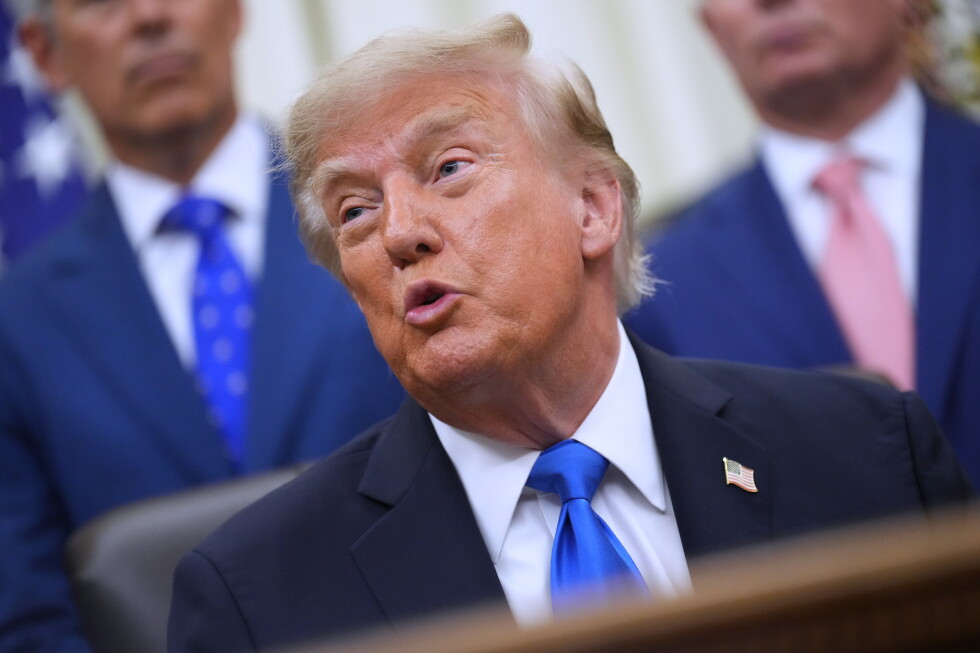
    Fresh days after former U.S. President Donald Trump announced a final draft nuclear and war-ending deal with Iran was ready for signing, Tehran made its non-negotiable demands clear on Friday: the Islamic Republic will retain its sovereign right to enrich uranium and maintain full control over the strategic Strait of Hormuz, no matter what final agreement is reached with Washington.

    The current negotiations mark weeks of indirect diplomatic talks between the two nations, aimed at ending the full-scale conflict that erupted when U.S. and Israeli forces launched strikes on Iran on February 28. A ceasefire has been in place since April, but intermittent clashes have continued to stoke global fears of a resumption of open war, even as Trump has repeatedly claimed a final agreement is imminent.

    Israel, a key U.S. ally in the region, has stated that Trump promised it any deal would require Iran to give up all of its existing enriched nuclear material. But Iran’s official IRNA news agency has flatly rejected this condition, saying such a concession is not even under discussion. According to IRNA, after both sides signed an initial memorandum of understanding, formal detailed negotiations will extend over 60 days, and Tehran will make its right to enrich uranium and retain enriched material a core priority for inclusion in the final text.

    Beyond its nuclear demands, Iran is also refusing to cede authority over the Strait of Hormuz, the critical global chokepoint through which roughly a fifth of the world’s oil and natural gas supplies pass. Since the outbreak of the war, Tehran has blockaded most international traffic through the waterway, only allowing a small number of vessels to transit after receiving approval from Iranian armed forces. IRNA confirmed Friday that the current draft text contains no Iranian commitment to hand over management of the strait or restore pre-war access conditions.

    Iran’s state Mehr news agency, citing an anonymous source close to the country’s negotiating team, published details of the draft agreement currently being finalized Friday. The draft would end hostilities across all fronts, including Lebanon, unlock $24 billion in Iranian assets frozen by international sanctions, suspend restrictions on Iranian oil and petrochemical exports, and lift the U.S. naval blockade of Iranian ports imposed in mid-April. It also requires the U.S. and its allies to pay war reparations to Iran and commit at least $300 billion to post-war reconstruction projects in the country. Final negotiations will not begin until half of Iran’s blocked funds are released, oil sanctions are suspended, and the naval blockade is lifted, the report added.

    Trump’s announcement that a draft deal had been approved by Iranian leadership triggered immediate global market shifts: major stock markets rallied on reduced geopolitical risk, while oil prices dropped sharply in response to expectations that Iranian crude would soon return to global markets. The U.S. leader also canceled a planned wave of bombings on Iranian targets Thursday, saying the signing date and location would be announced shortly, and maintained that the fine print of the deal had been approved by the U.S. and its regional allies including Israel. When pressed Friday about whether Iranian Supreme Leader Ayatollah Mojtaba Khamenei had signed off on the draft, Trump reaffirmed his position, saying he understood the answer was yes.

    Israeli Prime Minister Benjamin Netanyahu, however, has pushed back against Tehran’s current demands. His office confirmed that Netanyahu had spoken with Trump, who repeated his vow that any final deal would include the removal of all Iranian enriched uranium and the dismantling of Iran’s missile infrastructure. “As long as I am the Prime Minister of Israel, Iran will not have nuclear weapons,” Netanyahu reiterated Friday.

    Inside Tehran, ordinary Iranian citizens hold mixed views on the potential deal. Many expressed uncertainty over whether an agreement would improve their daily lives. “I don’t know if it will be good or bad for us,” a 29-year-old cafe worker told AFP, speaking on condition of anonymity out of fear of government retaliation. “The main purpose of this war was for the US to remove the system and this did not happen. So what does a deal do?” Some locals fear any deal would only strengthen the hold of Iran’s current ruling establishment, leaving ordinary citizens with few tangible benefits.

  • New Zealand great Kane Williamson announces immediate retirement from international cricket

    New Zealand great Kane Williamson announces immediate retirement from international cricket

    On Friday, New Zealand cricket icon Kane Williamson brought an abrupt end to his celebrated 16-year international career, announcing his immediate retirement from all forms of global competitive cricket that cemented his status as one of the finest batters of the modern era.

    The formal announcement was first shared by New Zealand’s men’s national cricket team, the Black Caps, on the social platform X, before a full statement detailing the decision was published on New Zealand Cricket’s official website. “New Zealand’s most prolific all-format run scorer and arguably greatest ever batsman Kane Williamson has confirmed his retirement from international cricket effective immediately,” the official statement read. “Williamson’s announcement brings an end to a glittering 16-year international career that has seen him play 378 games for his country (in all formats), setting countless batting records and earning the respect and admiration of the cricketing world.”

    At 35 years old, Williamson leaves the international stage with a historic statistical legacy that will stand the test of time. Across 92 Test matches, he accumulated 9,515 runs at an elite average of 54.06, with a career-high score of 251 notched against South Africa. His one-day international record is equally impressive: 15 centuries and 7,256 runs at an average of 48.69, while he added a further 2,575 runs in Twenty20 international cricket. In total, he scored 33 Test centuries, the most by any New Zealand batter in the format’s history, and also contributed with occasional off-break spin bowling, picking up 30 Test wickets and 37 ODI wickets throughout his career.

    Widely regarded as one of the “Fab Four” of modern batting – alongside Virat Kohli of India, Australia’s Steve Smith and England’s Joe Root – Williamson built his reputation on a technically flawless, graceful style marked by unrivaled concentration. His signature playing traits, including the ability to play fast bowling late with soft hands and devastatingly timed back-foot drives, made him a nightmare for even the most elite bowlers across all conditions.

    Beyond his on-field talent, Williamson earned global acclaim for his exceptional sportsmanship and calm leadership. He became a symbol of fair play following New Zealand’s heart-wrenching, last-ball loss to England in the 2019 50-over World Cup final, where he consoled opposing players and handled the devastating defeat with extraordinary grace. Just two years later, he captained the Black Caps to a historic first-ever World Test Championship title, beating India in a tense final to etch his name into cricket folklore.

    In his retirement statement, Williamson noted that he had weighed the decision for an extended period, and concluded the timing was right to step away from the international game. “I’ve thought about it for a while, but over the last few days it’s become clear now is the right time,” he said. “I’ve always felt a strong drive and hunger for international cricket, and I take pride in knowing I’ve given it my all in every match I’ve played for New Zealand.”

    “It’s a team I love, and I feel incredibly fortunate to have been part of it for so long. It will continue to be dear to my heart,” he added. “I leave feeling optimistic about where this group is heading. There’s a huge amount of talent, and a real desire to do something special with this New Zealand team.”

    Black Caps head coach Rob Walter paid tribute to Williamson’s far-reaching impact on both the national team and global cricket, emphasizing that his legacy extends far beyond his on-field statistics. “Anyone who’s had the privilege of working with Kane understands he is a very special player and person,” Walter said. “His numbers and batting skills speak for themselves, but it’s what he means to this Black Caps team, as well as world cricket that will be his legacy.”

    “Kane’s always put the team first and although we’re disappointed to see him go, we’re happy to know he’s content and at peace with his decision,” Walter added.

    Williamson’s retirement announcement comes in the middle of New Zealand’s three-Test tour of England, with the second Test scheduled to get underway next Wednesday at London’s Oval. His final appearances for the Black Caps came in the opening Test at Lord’s, where he scored zero and 18 on a challenging pitch as New Zealand fell to a defeat. The Black Caps confirmed that a replacement for Williamson for the remainder of the series will be announced in the coming days.

  • Indonesian students protest in against state spending, fuel price hike

    Indonesian students protest in against state spending, fuel price hike

    On Friday, hundreds of university and college students flooded the streets of Jakarta, Indonesia’s capital, to voice fierce opposition to the policies of newly inaugurated President Prabowo Subianto, warning that unbridled wasteful state spending could push the nation into bankruptcy. The demonstration, which escalated into minor scuffles with police, is the most prominent display of public discontent since violent anti-government protests rocked the country last August, and it comes as growing frustration over perceived state mismanagement simmers across the archipelago.

    Protesters laid out three core demands: an immediate end to what they call reckless public expenditure, a full scrapping of Prabowo’s signature free school and community meals program, and a reversal of the recent steep fuel price hike that has strained household budgets. The free meals initiative, which was the centerpiece of Prabowo’s successful 2024 presidential campaign, has been plagued by controversy in recent months: multiple mass food poisoning incidents have sickened hundreds of recipients, while widespread allegations of graft have eroded public trust in the program. Just last week, Prabowo dismissed the head of the government agency tasked with overseeing the $28 billion annual initiative in response to the growing scandal.

    Earlier this week, state-owned energy giant Pertamina announced it would raise prices for the widely used Pertamax fuel grades by more than 30%, a move that immediately sparked public outcry. The price hike came after years of government-regulated fuel price stability, but ballooning budget pressures from large-scale flagship programs like free meals left the government with little choice, according to insiders. Students argue the increase disproportionately hits the middle class and working poor, already grappling with rising cost of living across the country.

    During the march toward the iconic Hotel Indonesia roundabout, a historic site for political demonstrations in Jakarta, students clashed with riot police deployed to block their path. Footage from BBC Indonesian shows participants attempting to push through police barricades, with some throwing objects at officers, though no injuries have been reported in the immediate aftermath of the protest. Speaking to reporters on the scene, student protester Zaki questioned the government’s commitment to constitutional protections for peaceful assembly.

    “Fuel prices are going up, and our lives are getting harder,” Zaki shouted to officers. “Why are you afraid of student voices? The constitution guarantees our right to demonstrate, but that guarantee means nothing today.” Another student, Rina, emphasized that public calls to end the troubled free meals program have been repeatedly sidelined by the administration. “This program was unclear from the start,” she said. “We’ve had mass poisonings, we’ve had corruption exposed, and the government still refuses to listen to people’s demands to shut it down.”

    Government officials have defended the free meals initiative, framing it as a long-term investment in Indonesia’s future designed to address chronic child malnutrition, improve educational performance, and boost domestic economic activity. But critics argue that poor planning and a lack of transparency have turned the high-cost program into a drain on public finances. Adding to the nation’s economic woes, the Indonesian rupiah has recently slid to new record lows against major global currencies, further stoking public anxiety over the state of the economy.

    Protesters have organized their movement online under the hashtag #MenujuIndonesiaBangkrut, which translates to “Towards Bankrupt Indonesia”, drawing thousands of additional comments and expressions of support from social media users across the country. Friday’s protest is the largest outbreak of public discontent since August 2025, when the death of a motorcycle delivery rider triggered widespread anger over elitist governance and alleged systemic mismanagement, leading to violent demonstrations that left multiple people dead. Analysts note that the latest rally signals growing public frustration with the Prabowo administration just months into its term, as economic pressures and policy controversies continue to mount.

  • In pictures: Thai Princess Bajrakitiyabha dies at age 47

    In pictures: Thai Princess Bajrakitiyabha dies at age 47

    Thailand’s Royal Household has confirmed the passing of Princess Bajrakitiyabha, the eldest daughter of King Vajiralongkorn, at the age of 47. The announcement marks the end of a three-and-a-half-year medical battle for the princess, who fell into a coma in late 2022 after collapsing during a routine outing to exercise her pet dogs.

    Widely regarded as one of the most high-achieving and publicly active members of the Thai royal family, Princess Bajrakitiyabha built a distinguished public career beyond ceremonial duties. A trained lawyer by profession, she served as Thailand’s ambassador to Austria, and spent years advocating for meaningful reforms to Thailand’s national criminal justice system, drawing on her legal expertise to push for greater fairness and transparency. She also represented Thailand on global stages, including a 2009 appearance at the United Nations Human Rights Council session in Geneva.

    Throughout her public life, the princess maintained a close relationship with her father, 73-year-old King Vajiralongkorn. At the time of her death, the Thai monarch had not officially named an heir to the throne, and political analysts widely viewed Princess Bajrakitiyabha as a likely key figure in the future royal succession, given her proven public profile and proximity to the king.

    In the wake of the announcement, mourners have gathered outside Bangkok’s Chulalongkorn Hospital, where the princess had received ongoing medical care since her collapse, to pay their respects. Photos from the scene show members of the public holding portraits of the princess and sharing grief over her early passing.

    Prior to her health crisis, Princess Bajrakitiyabha was a familiar presence at national public events, from joining royal processions through Bangkok alongside the king and Queen Suthida to leading community activities honoring senior members of the royal family, including a 2015 cycling event held to tribute her grandfather, the late King Bhumibol Adulyadej.

  • Taylor Swift makes tearful 21-minute speech as she joins Songwriters Hall of Fame

    Taylor Swift makes tearful 21-minute speech as she joins Songwriters Hall of Fame

    In a landmark moment for modern popular music, global pop icon Taylor Swift has etched her name into industry history as the youngest woman ever inducted into the Songwriters Hall of Fame. During an emotional 21-minute acceptance speech at the New York induction ceremony, the 36-year-old superstar choked back tears as she paid tribute to the life-altering sacrifice her family made to launch her career.

    When Swift was just 14 years old, her entire family left their home in Pennsylvania to uproot and relocate to Nashville, Tennessee – widely recognized as the global capital of country music and songcraft. Reflecting on that choice, Swift acknowledged the immense disruption the move brought to her parents and younger brother. “It couldn’t have been easy for my parents and my brother to just pick up and move our entire family,” she told the assembled crowd of music industry luminaries. “Even though words are supposed to kind of be my thing, I will never be able to express my gratitude to you guys for doing that for me. You’re the reason I’m here tonight.”

    The induction was introduced by legendary Hollywood director Steven Spielberg, whom Swift described as a lifelong hero whose work fundamentally shaped her approach to narrative storytelling through song. In her speech, the Grammy-winning artist opened up about her relationship to her craft, revealing that songwriting is the only natural instinct she has ever had in her decades-long career. “When I say that songwriting was the easiest part for me, I think what I mean is that it was instinctual. No-one taught me how to do it,” she explained. Unlike other skills she has had to master – from crowd engagement and choreography to navigating the complexities of the music industry and protecting her mental health through years of trial, error, and public upheaval – songwriting has always come unforced to Swift.

    The honor comes on the heels of a historic multi-year run for Swift, who most recently broke her own global album sales record with the October release of her latest studio project, *The Life of a Showgirl*. In the broader context of the Hall of Fame’s history, Swift is the second-youngest inductee overall, falling just behind legendary musician Stevie Wonder, who received the honor at 33 years old. The five of Swift’s most iconic tracks cited by the Hall of Fame for the honor include *All Too Well (10 Minute Version) (Taylor’s Version)*, *Blank Space*, *Anti-Hero*, *Love Story*, and *The Last Great American Dynasty*.

    In attendance for the milestone moment was Swift’s fiancé, NFL star Travis Kelce, marking a public appearance amid ongoing swirling rumors that the couple will tie the knot next month. Swift was not the only celebrated songwriter to join the Hall of Fame this year. Her fellow 2026 inductees include alternative music icon Alanis Morissette, soft rock legend Kenny Loggins, Kiss co-founders Gene Simmons and Paul Stanley, hitmaker Christopher “Tricky” Stewart – known for his work with Beyoncé, Rihanna, and Katy Perry – Grammy-winning collaborator Walter Afanasieff, famous for his partnership with Mariah Carey, British songwriter Terry Britten, who penned Tina Turner’s classic *We Don’t Need Another Hero*, and Graham Lyle, the writer behind Turner’s iconic hit *What’s Love Got to Do with It?*.

    Founded in 1969, the Songwriters Hall of Fame has a decades-long mission of honoring creators whose work forms the backbone of the world’s most beloved popular music. In its more than 55 years of operation, fewer than 500 songwriters have earned induction, cementing the honor as one of the most prestigious in the global music industry. Beyond her latest Hall of Fame recognition, Swift stands as one of the best-selling music artists of all time, with a discography that includes 12 original studio albums and four re-recorded “Taylor’s Version” albums, released to reclaim ownership of her early work. She also holds a unique historic achievement as the first artist ever to win the Grammy Award for Album of the Year four times over.

  • Pope tells traffickers of migrants in the Canary Islands: Stop, repent or face God’s wrath

    Pope tells traffickers of migrants in the Canary Islands: Stop, repent or face God’s wrath

    On the final day of his weeklong trip to Spain, Pope Leo XIV delivered a stark rebuke to human traffickers operating one of the world’s deadliest migration routes, issuing a call for repentance and warning that they will face divine justice for exploiting vulnerable people seeking a new life in Europe. The pontiff made the remarks Friday during a gathering with humanitarian aid groups in San Cristobal de la Laguna, on the Canary Islands, a Spanish archipelago that has long served as a primary entry point for migrants crossing the perilous Atlantic from West Africa.

    Positioned just off the coast of Northwest Africa, hundreds of kilometers closer to the African continent than to mainland Europe, the Canary Islands have become the epicenter of one of the most dangerous migration pathways on Earth. Unlike the more heavily discussed central Mediterranean route, the vast expanse of the Atlantic Ocean and limited search-and-rescue infrastructure make this crossing far deadlier for migrants. Experts have documented entire boats drifting across the Atlantic to the Caribbean and Latin America, only to be found with all passengers dead after being pushed off course by trade winds and currents. Migrant arrivals to the islands peaked at nearly 47,000 in 2024, before dropping sharply to just over 3,000 in the first five months of 2026, a shift that has not eliminated the risk of deadly voyages.

    Addressing the criminal networks that profit from this crisis directly, Pope Leo issued an unflinching appeal. “Break those chains and free those you hold in bondage,” he said, adding, “Stop. Repent. For every life lost, every family deceived, every body subjugated, every woman threatened, every worker exploited, you will have to appear before divine justice. Repent while there is still time, for God’s mercy can reach even the most hardened sinner, but it enters only through the narrow gate of truth, justice and conversion.” Smugglers operating the route typically charge thousands of euros per passenger, often trapping migrants in debt bondage by withholding identity documents and forcing them into exploitation such as sex work or illicit labor after arrival. Many migrants also travel on self-organized boats: a large share are former Senegalese fishermen left without livelihoods due to widespread overfishing off West Africa’s coast.

    Leo’s visit to the Canary Islands fulfills a long-held wish of his predecessor, Pope Francis, who made migration advocacy a core priority of his 12-year pontificate, often clashing with right-leaning governments in the U.S. and Europe over restrictive border policies. As the first U.S.-born pope in history, Leo has positioned himself as a clear heir to Francis’ legacy, while adding his own public-facing style to the advocacy. The pontiff’s Canary Islands trip was designed to honor the thousands of migrants who have lost their lives attempting the crossing, a mission that comes amid rising anti-migrant sentiment across Europe and the Trump administration’s aggressive mass deportation campaign in the United States.

    Shortly after arriving on the islands Thursday, Leo carried forward a symbolic tradition established by Francis: he tossed a bouquet of flowers into the ocean from Tenerife’s “Dock of Shame,” the port site where thousands of migrants were forced to live in squalid, overcrowded conditions during a 2020 arrival spike. The gesture mirrored a 2013 trip Francis made to Lampedusa, Sicily, another key migration flashpoint, where he first denounced what he called the “globalization of indifference” toward people fleeing conflict, poverty and climate disaster. In a moment that revealed Leo’s more casual, youth-connected style, he embraced a viral social media hand gesture popular with young people after hearing testimony from a former migrant, drawing loud cheers from the gathered crowd.

    During his meeting with aid groups Friday, the pope also appealed to European host communities to welcome and integrate migrants, calling out the “silent shipwreck of abandonment” that leaves many survivors homeless and destitute on the streets after surviving their dangerous crossing. “A human conscience, and even more so a Christian conscience, cannot remain indifferent in the face of these graveyards of the sea, to the victims of shipwrecks and the lack of aid,” he said. “Every life lost on these routes is a failure for the human family.”

    Leo reaffirmed the Catholic Church’s core teaching of “welcome the stranger,” noting that integration of migrants into local communities offers an opportunity to share faith without imposing it on people with different religious backgrounds. He also emphasized that while migrants have a right to flee dangerous conditions, their home countries bear a responsibility to create the economic and security conditions that would allow people to choose to stay rather than risk their lives at sea. During a visit to the Las Raíces migrant reception center, the pope met directly with migrants, hearing firsthand accounts of their journeys, and went off-script to address the crowd in French and English, drawing applause from attendees. One Senegalese migrant, Bousso Diouf, shared her story of desperation and trauma, asking that all migrants be treated with dignity and respect.

    Leo’s trip to Spain wrapped up Friday, but his advocacy on migration will continue next month, when he plans to spend U.S. Independence Day on July 4 at Lampedusa, the site of Francis’ landmark 2013 address on the global migration crisis, to further amplify the call for greater global compassion toward displaced people.

  • South Africa trolled by African fans in wake of World Cup loss

    South Africa trolled by African fans in wake of World Cup loss

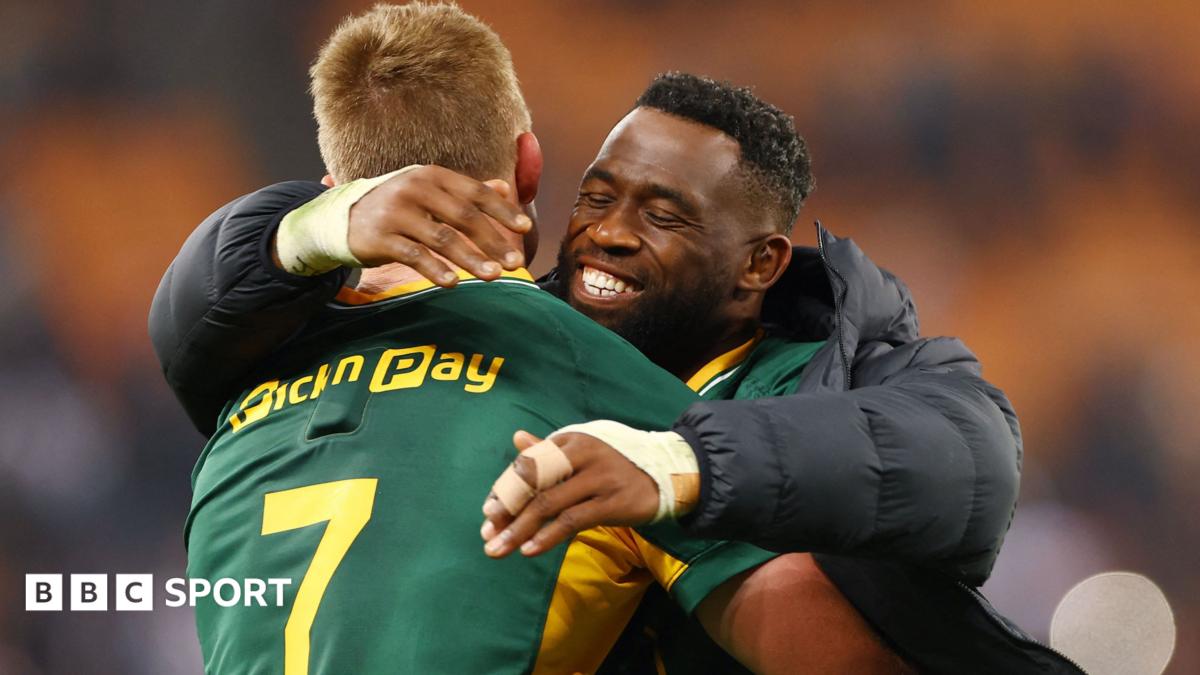
    As the final whistle blew on the opening match of the 2026 expanded FIFA World Cup between South Africa and co-host Mexico, the 2-0 defeat for Bafana Bafana left South African supporters heartbroken — but what unfolded across social media revealed a far deeper rift than a disappointing on-pitch result. In a break from the long-held tradition of pan-African unity that defines continental participation in major global tournaments, fans across the continent threw their support behind Mexico, linking their choice to ongoing deadly xenophobic violence targeting African migrants in South Africa.

    The 2026 World Cup, co-hosted by the United States, Canada and Mexico, features 10 African teams in its expanded 48-team format, marking a historic high for continental representation. Ahead of Thursday’s Group stage opener, many African football fans already made clear their decision to back Mexico, directly tying the choice to simmering anti-migrant tensions that have roiled South Africa in recent weeks.

    Social media was flooded with playful but pointed content after the match: users changed their profile pictures to Mexican flags, adopted Spanish pseudonyms, and shared memes featuring sombreros under the trending tagline “Mexico versus xenophobia.” One user on platform X, referencing widespread reports of migrant mistreatment, asked bluntly: “You want people to cheer for you when you play soccer just because we’re African?” Another echoed the sentiment, leaning into the baseless narrative that foreign workers drive South Africa’s unemployment crisis to joke: “We’re supporting Mexico so that South Africa can go back home early to protect their jobs.” Prominent Kenyan lawyer Ahmednasir Abdullahi added a sharp, satirical take: “I hope South Africa is not blaming African migrants for the 2–0 defeat and two red cards in the match against Mexico.”

    In-person fan sentiment reflected the same divide. Daniel Kaniki, a Congolese supporter who attended a public fan viewing event in Atlanta, Georgia, told reporters the split came down to basic solidarity. “Africa is like one country and if one is chasing others, we are not a family any more. That’s why I’m supporting Mexico today,” he explained.

    Not all fans from across the continent sided against South Africa, however. Vanlare Quist, a Ghanaian fan also at the Atlanta viewing park, said he remained firmly in Bafana Bafana’s corner. As a proud African, he argued that anti-immigrant sentiment is driven by only a small minority of South Africans, not the nation as a whole. In Juba, the capital of South Sudan, public viewing center attendees uniformly backed South Africa, rooted in shared historical struggle: South Sudan’s fight for independence from Sudan has long drawn ideological connection to South Africa’s fight against apartheid white-minority rule.

    “It was unfortunate that on social media we saw some African countries supporting Mexico and even wearing Mexico jerseys. As South Sudanese, we are behind South Africa and will continue to support South Africa – because they are representing Africa. So, all African countries must support South Africa during this World Cup,” 23-year-old student George Kenyi Charles Rehan told reporters from Juba.

    Back in South Africa, supporters pushed back against the wave of online trolling after the defeat, doubling down on their pride in the national team. The South African government also released a statement commending Bafana Bafana for their “spirited performance,” noting that “while the final score was not what the nation had hoped for, the team represented South Africa with unity, determination, and a sense of pride on the world’s biggest stage.”

    Many South African social media users rejected criticism of the country’s immigration policies, with one writing: “We qualified for the World Cup alone without your support and whether we win or lose we will remain South Africans who love their country. And illegal immigrants will still leave our country whether you hate us or not.”

    The continental rift exposed by the World Cup opener is rooted in a years-long surge of anti-migrant sentiment that has escalated dramatically in recent weeks. Migrants from other African nations have faced targeted violence and intimidation, with extremist anti-migrant groups issuing a 30 June deadline for all undocumented foreign nationals to leave the country.

    South African President Cyril Ramaphosa has publicly condemned vigilantism, stressing that “only authorised government officials can act against violations of our law.” But he has also acknowledged that public frustrations over immigration “deserve to be heard, and they deserve to be addressed.”

    In response to the escalating threats, multiple African nations have begun repatriating their citizens from South Africa. Nigeria became the latest country to announce evacuations this week, joining Ghana, Zimbabwe and Malawi, all of which have already moved to bring their citizens home amid safety concerns.

    The roots of the current crisis stretch back to the end of apartheid in 1994, when thousands of people from across the continent moved to South Africa seeking greater economic opportunity. Today, however, South Africa struggles with an official unemployment rate exceeding 30%, a crisis that has fueled scapegoating of foreign workers and sparked regular anti-migrant protests and deadly xenophobic attacks in major urban centers.

    Despite the opening defeat, South Africa still has two remaining Group stage matches to climb out of the bottom of the table and qualify for the knockout round of the expanded tournament, leaving the nation with an opportunity to prove its quality on the pitch even as tensions off the field continue to simmer.