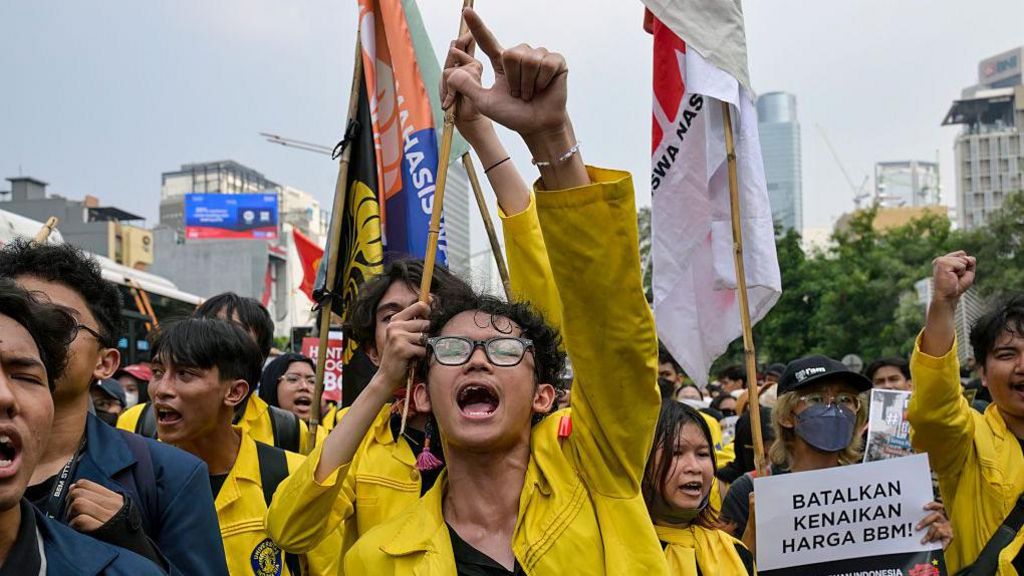
On Friday, hundreds of university and college students flooded the streets of Jakarta, Indonesia’s capital, to voice fierce opposition to the policies of newly inaugurated President Prabowo Subianto, warning that unbridled wasteful state spending could push the nation into bankruptcy. The demonstration, which escalated into minor scuffles with police, is the most prominent display of public discontent since violent anti-government protests rocked the country last August, and it comes as growing frustration over perceived state mismanagement simmers across the archipelago.
Protesters laid out three core demands: an immediate end to what they call reckless public expenditure, a full scrapping of Prabowo’s signature free school and community meals program, and a reversal of the recent steep fuel price hike that has strained household budgets. The free meals initiative, which was the centerpiece of Prabowo’s successful 2024 presidential campaign, has been plagued by controversy in recent months: multiple mass food poisoning incidents have sickened hundreds of recipients, while widespread allegations of graft have eroded public trust in the program. Just last week, Prabowo dismissed the head of the government agency tasked with overseeing the $28 billion annual initiative in response to the growing scandal.
Earlier this week, state-owned energy giant Pertamina announced it would raise prices for the widely used Pertamax fuel grades by more than 30%, a move that immediately sparked public outcry. The price hike came after years of government-regulated fuel price stability, but ballooning budget pressures from large-scale flagship programs like free meals left the government with little choice, according to insiders. Students argue the increase disproportionately hits the middle class and working poor, already grappling with rising cost of living across the country.
During the march toward the iconic Hotel Indonesia roundabout, a historic site for political demonstrations in Jakarta, students clashed with riot police deployed to block their path. Footage from BBC Indonesian shows participants attempting to push through police barricades, with some throwing objects at officers, though no injuries have been reported in the immediate aftermath of the protest. Speaking to reporters on the scene, student protester Zaki questioned the government’s commitment to constitutional protections for peaceful assembly.
“Fuel prices are going up, and our lives are getting harder,” Zaki shouted to officers. “Why are you afraid of student voices? The constitution guarantees our right to demonstrate, but that guarantee means nothing today.” Another student, Rina, emphasized that public calls to end the troubled free meals program have been repeatedly sidelined by the administration. “This program was unclear from the start,” she said. “We’ve had mass poisonings, we’ve had corruption exposed, and the government still refuses to listen to people’s demands to shut it down.”
Government officials have defended the free meals initiative, framing it as a long-term investment in Indonesia’s future designed to address chronic child malnutrition, improve educational performance, and boost domestic economic activity. But critics argue that poor planning and a lack of transparency have turned the high-cost program into a drain on public finances. Adding to the nation’s economic woes, the Indonesian rupiah has recently slid to new record lows against major global currencies, further stoking public anxiety over the state of the economy.
Protesters have organized their movement online under the hashtag #MenujuIndonesiaBangkrut, which translates to “Towards Bankrupt Indonesia”, drawing thousands of additional comments and expressions of support from social media users across the country. Friday’s protest is the largest outbreak of public discontent since August 2025, when the death of a motorcycle delivery rider triggered widespread anger over elitist governance and alleged systemic mismanagement, leading to violent demonstrations that left multiple people dead. Analysts note that the latest rally signals growing public frustration with the Prabowo administration just months into its term, as economic pressures and policy controversies continue to mount.