作者: admin

  • Twitch streamer hit by car live on camera – ‘It felt like slow motion’

    Twitch streamer hit by car live on camera – ‘It felt like slow motion’

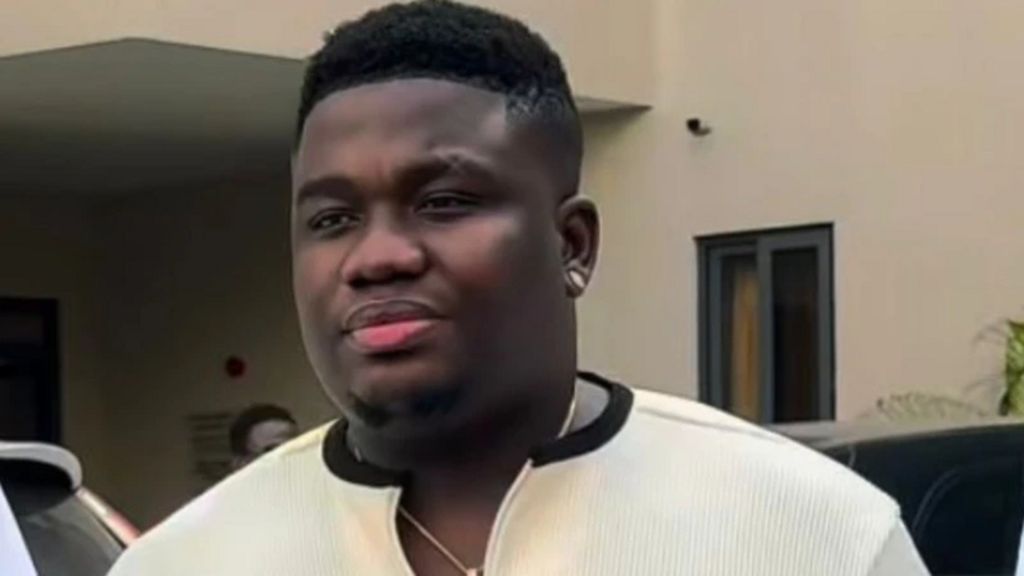
    A 27-year-old American Twitch creator who captured a shocking car accident on his live stream has opened up about the surreal, life-altering moment to the BBC, revealing he remains determined to complete his ambitious charity trek despite the terrifying collision.

    Known online by his handle “Humblezayy,” Isaiah Thomas launched the cross-country walking challenge with a heartfelt mission: to trek more than 3,000 miles from Philadelphia to Southern California, with every dollar raised going toward building a trade school for young people who cannot pursue traditional college education. The project has already struck a chord with donors, pulling in more than $50,000 in contributions by the time the accident happened.

    The incident unfolded on Day 34 of Thomas’s journey, as he traveled along Route 40 in Richmond, Indiana. Normally, Thomas follows strict safety protocols: he walks facing oncoming traffic, wears high-visibility reflective gear, and moves with a support cart ahead of him. On this particular day, however, a local fan who follows his stream offered to serve as a rear escort, driving behind Thomas with hazard lights active to warn approaching vehicles. After checking with local law enforcement and receiving official approval, Thomas began his day’s walk as planned.

    Tragedy struck mid-route when a car crashed into the escort vehicle traveling behind Thomas, sending the vehicle careening into the streamer from his right side. Recalling the split-second collision, Thomas described the experience as surreal. “It was so fast, but it felt like it was in slow motion; it was like I was just gliding in the air – it was crazy,” he told the BBC. In the moments immediately after impact, a flood of worries raced through his mind: “I’m like, I hope this isn’t over. I hope that my injuries aren’t too bad.”

    For Thomas, this close call carried extra weight: he had already survived a serious car accident just six months prior, and had spent months in intensive therapy just to relearn how to walk well enough to undertake his fundraising challenge.

    After the crash, Thomas was able to stand up and survey the damage. Both the escort vehicle and the car that caused the collision were completely totaled, though remarkably, neither driver suffered life-threatening injuries. When first responders arrived at the scene, Thomas was able to share footage of the exact moment of impact, pulled directly from his live stream by one of his content moderators. It was only when he rewatched the clip himself that he fully grasped the force of the collision. “When I watched the video, that’s when I was surprised, like, wow, this car really hit me that hard,” he said. “That’s when I realised the impact.”

    Thomas was transported to a local hospital for evaluation, and walked away with only minor injuries: sprained ankles and small soft tissue damage, a outcome he called pure luck. In the days since the accident, despite the lingering shock of the event, Thomas has reaffirmed his commitment to finishing the trek, saying he only plans to take a short recovery break before hitting the road again.

    “For the next three to four days, I’m going to be taking ice baths and really just putting my body through a lot just to get back to where I was,” he said. With roughly 2,000 miles still left to cover and three months to complete the journey, Thomas shows no sign of abandoning the cause that pushed him to take on the challenge in the first place.

  • Myanmar’s Suu Kyi back in the spotlight but still out of sight

    Myanmar’s Suu Kyi back in the spotlight but still out of sight

    Nearly three years after Myanmar’s military ousted her democratically elected government in a 2021 coup, ousted leader Aung San Suu Kyi’s upcoming transfer from prison detention to a designated residence has pushed the Nobel Peace Prize laureate back into global headlines — yet her isolation from the public and supporters remains unbroken. The announcement from junta chief Min Aung Hlaing, who seized power after the coup and was sworn in as civilian president last month, has offered little clarity about where Suu Kyi will be held or how much of her combined prison sentence she still has left to serve. A party source close to the National League for Democracy (NLD) indicates the 78-year-old will likely be held in Naypyidaw, Myanmar’s sparse, purpose-built capital.

  • King Charles III boosts his charity fundraiser with first appearance at gala joined by Lionel Richie

    King Charles III boosts his charity fundraiser with first appearance at gala joined by Lionel Richie

    NEW YORK — New York City’s annual spring gala season, a calendar of glitzy black-tie fundraisers that regularly draws A-list artists, fashion elite and high-profile public figures, kicked off its most anticipated event of 2024 Wednesday night: The King’s Trust Global Gala, held this year at Christie’s iconic Manhattan auction house. While the guest list already featured household names from across entertainment, fashion and business — including music legend Lionel Richie and Vogue doyenne Anna Wintour — the evening’s biggest draw was a surprise short appearance from none other than King Charles III, founder of the eponymous nonprofit.

    The monarch’s 3.5-minute keynote speech marked his first-ever appearance at the five-year-old global gala, drawing palpable excitement from the room. Even high-society attendees gathered along velvet rope barriers, craning to catch a glimpse of the British king during his first visit to the United States since his 2023 coronation. The four-day U.S. trip was already scheduled to mark the 250th anniversary of American independence and repair strains in the bilateral relationship, but the gala added a high-profile philanthropic centerpiece to his itinerary.

    Anticipation for Charles’ appearance rippled across the red carpet before the event. British beauty entrepreneur Charlotte Tilbury told lifestyle icon Martha Stewart — who arrived in a shimmering sapphire gown — to relay to the King that she had chosen the “royal blue” shade specifically to honor his visit. Natasha Poonawalla, executive director of the Serum Institute of India, the world’s largest vaccine manufacturer, summed up the mood of the room, noting “everyone’s been waiting for him.” Poonawalla added that Charles’ in-person appearance would significantly bolster the foundation’s global profile and mission.

    Those predictions held true: Organizers announced Wednesday night that the gala had raised more than $3 million, a new fundraising record for the event. The historic haul comes as The King’s Trust works to build a permanent endowment to support its programs in the United Kingdom and expand its reach across more than 20 other countries. Queen Camilla also joined Charles for the event, with organizers noting her presence further boosted donor interest.

    Founded 50 years ago by Charles, The King’s Trust delivers education and job training programs that have supported more than 1.5 million young people worldwide to secure stable employment. In his brief remarks before the gala dinner, Charles reflected on the organization’s five-decade impact, noting that many program graduates go on to pay the support forward to other disadvantaged young people facing similar barriers. He added a lighthearted touch to his remarks, joking that “Only now do quite a lot of them actually admit they got their start (with the trust).” Charles also exchanged playful banter with Lionel Richie after the singer announced he would not perform at the more intimate 2024 event, quipping that the Rock & Roll Hall of Famer “must gargle with port” to save his voice.

    Edward Enninful, former British Vogue editor-in-chief and gala co-chair, has witnessed the trust’s impact firsthand growing up in West London. He shared that his own cousins and brothers were able to build stable, successful lives despite being dismissed by mainstream society as “not worthy” of opportunity. Enninful called Charles’ New York appearance the nonprofit’s “glory moment.”

    “He’s set the example that philanthropy matters,” Enninful told the Associated Press. “No matter how well you are doing, you’re not doing enough unless you’re passing it on to a newer generation.”

    The 2024 gala was smaller and more intimate than previous installments, hosting just 160 guests with no scheduled musical performances. Other notable attendees included supermodels Karlie Kloss and Iman, *White Lotus* actors Leo Woodall and Meghann Fahy, and legendary fashion designers Donatella Versace and Stella McCartney.

    Martha Stewart, who built a billion-dollar media empire focused on lifestyle, cooking and homemaking, shared her own personal connection to the trust’s mission. Stewart recalled that scholarships paid for her higher education, and she credited early opportunities with her long-term success. “But I know today there’s a big challenge in getting a good job, a big challenge in getting a good education,” she said. “And we’re here to help those people.”

    This Associated Press philanthropy coverage is produced in partnership with The Conversation US, with support from Lilly Endowment Inc. The AP retains full editorial control over all content.

  • Syrian government confirms detention of missing German journalist

    Syrian government confirms detention of missing German journalist

    BEIRUT, Lebanon — In an official confirmation this Thursday, Syria’s new transitional government has acknowledged that a German reporter who vanished earlier this year remains in state custody, ending months of uncertainty over her fate. The confirmation comes amid ongoing efforts by Syria’s post-Assad leadership to consolidate control across war-torn territory recaptured in recent military operations.

    Thirty-six-year-old Eva Maria Michelmann was last spotted on January 18, amid a government offensive to seize the northern city of Raqqa from the Kurdish-led Syrian Democratic Forces (SDF). The Committee to Protect Journalists (CPJ), a press freedom watchdog, had earlier this week publicly raised alarms over Michelmann’s disappearance, noting that she was accompanied by her colleague Ahmed Polad—a Kurdish-Turkish journalist—when the pair was reportedly apprehended by advancing Syrian government troops. CPJ has since issued an urgent call for the immediate release of both reporters.

    In its official statement, Syria’s Information Ministry laid out the government’s account of the detainment: the two foreign nationals were discovered during a clearing operation by Interior Ministry forces in a Raqqa building that had previously served as a SDF security outpost. According to the statement, the pair “refused to disclose their true identities” and carried no official identification to confirm their citizenship or professional status. During initial interrogations, the ministry says the pair claimed to carry out humanitarian work on behalf of the United Nations, a claim investigators later confirmed was fabricated, with no mention of their journalistic work at the time.

    The government added that after making an attempt to escape custody, the pair was rearrested on suspicion of being illegal foreign fighters in Syrian territory. The statement confirmed that “the two were formally detained, and legal proceedings have been initiated in preparation for referral to the competent judicial authorities,” but gave no further details on the specific charges the pair may face.

    CPJ later confirmed that both reporters were on assignment for the Istanbul-based Etkin News Agency (ETHA) and Özgür TV, a broadcaster that operates across multiple European cities. Frank Jasenski, a German lawyer representing Michelmann and her family, warned earlier this week that “We assume that her health is very, very poor and we demand her immediate release.” Germany’s Federal Foreign Office confirmed last week that it has been in contact with the detained journalist, but declined to share additional details citing privacy protection regulations.

    Raqqa, which had long been held by the SDF, fell to Syrian government forces in a January offensive launched after the ouster of former President Bashar Assad in December 2024. Following the capture of the city, the new Syrian administration and the SDF reached a ceasefire agreement that laid out terms for the SDF to integrate into Syria’s national army. That ceasefire has held to date, and the integration process is proceeding gradually.

    Since overthrowing Assad’s decades-long government late last year, Syria’s new transitional leaders have faced the steep challenge of reestablishing full central authority across a country fractured by nearly 14 years of devastating civil conflict.

  • Myanmar ex-leader Aung San Suu Kyi moved to house arrest, military says

    Myanmar ex-leader Aung San Suu Kyi moved to house arrest, military says

    Nearly five years after a military coup ousted Myanmar’s democratically elected government, the country’s state-controlled media has made a bombshell announcement: detained former leader Aung San Suu Kyi, the 80-year-old Nobel Peace Prize laureate, has been transferred from military detention to house arrest.

    Since the February 2021 takeover, Suu Kyi has been held in an undisclosed location, widely reported to be a maximum-security military facility in the capital Nay Pyi Taw. In an official statement released through state channels, junta leader Min Aung Hlaing — the general who orchestrated the coup — confirmed that he had ordered Suu Kyi’s remaining prison sentence to be served at a designated residential compound instead of a military lockup. State television further publicized the move by broadcasting an image of Suu Kyi seated alongside two uniformed officials.

    This is not the first time Suu Kyi has experienced house arrest. A towering figure in Myanmar’s pro-democracy movement, she spent more than 15 years confined to her Yangon family home during decades of military rule prior to 2010. Her unwavering nonviolent resistance to authoritarian rule during that period cemented her global reputation as a human rights icon, earning her the 1991 Nobel Peace Prize and widespread admiration across the world. She would go on to lead her National League for Democracy to a historic electoral victory in 2015, becoming Myanmar’s de facto leader after the country introduced sweeping democratic reforms.

    Not everyone has accepted the junta’s announcement at face value, however. Suu Kyi’s youngest son, Kim Aris, has openly cast doubt on the claim, saying he has no independent proof that his mother is even alive, let alone that she has been moved to house arrest. Aris told the BBC that the image broadcast by state media is meaningless, because it was originally captured in 2022, not after the reported transfer. “I hope this is true,” Aris said. “I still haven’t seen any real evidence to show that she has been moved. So, until I’m allowed communication with her, or somebody can independently verify her condition and her whereabouts, then I won’t believe anything.”

    Prior to this announcement, there had been no verified updates on Suu Kyi’s health or living conditions for years. Aris told reporters in December last year that his family had not received any contact from her since the coup. Suu Kyi’s legal team also confirmed to Reuters that they have not received any official direct notification about the reported transfer to house arrest.

    After the 2021 coup, Suu Kyi was convicted on a sprawling series of charges including corruption, election fraud, and violating state secrecy laws that her political allies have universally denounced as politically motivated fabrications. She was originally sentenced to a total of 33 years in prison, but this is not the first time her sentence has been reduced by the junta.

    Suu Kyi’s international standing shifted dramatically following the 2017 military crackdown on the Rohingya Muslim minority, when she chose to defend Myanmar’s military against genocide charges at the International Court of Justice, a decision that severely tarnished her reputation as a global human rights icon.

  • Myanmar coup-leader turned president orders Suu Kyi to house arrest

    Myanmar coup-leader turned president orders Suu Kyi to house arrest

    Five years after ousting Myanmar’s democratically elected government in a military coup, the junta leader who has now rebranded himself as a civilian president has ordered that deposed national leader Aung San Suu Kyi be moved from prison to house arrest.

    In an official statement released Thursday, the office of Min Aung Hlaing confirmed that the 80-year-old former state counselor’s remaining prison sentence will now be served at a “designated residence” instead of a prison facility. At the time of publication, neither the exact location of the new place of detention nor the length of Suu Kyi’s remaining sentence has been disclosed to the public. A senior anonymous source from Suu Kyi’s banned National League for Democracy (NLD) party told Agence France-Presse that the ousted leader will likely be held in seclusion at a property in Myanmar’s capital Naypyidaw, but the source stressed that the precise address remains unknown.

    The order marks another step in Min Aung Hlaing’s ongoing push to legitimize his rule after he was sworn in as civilian president earlier this month. The election that paved the way for his new civilian role was tightly controlled by the military, completely excluded the NLD from participation, and barred any public criticism or opposition under penalty of up to 10 years imprisonment. The vote was not even held in large swathes of the country currently controlled by anti-junta rebel forces, a detail that has led independent democracy monitors to dismiss the entire electoral process as little more than a cosmetic rebranding of military rule, which has dominated Myanmar’s political landscape for most of the country’s post-independence history.

    Suu Kyi, who remains widely popular among Myanmar’s population, was first taken into custody by Min Aung Hlaing’s military forces when the 2021 coup toppled her democratically elected government. She was subsequently convicted on a series of charges that human rights organizations widely condemn as entirely fabricated, created solely to remove her permanently from Myanmar’s political scene. The coup sparked a widespread, ongoing civil conflict that has killed more than 10,000 people and displaced millions across the Southeast Asian nation, which is home to roughly 50 million people.

    Along with Suu Kyi’s transfer, the junta leadership has rolled back a small number of post-coup restrictions and issued a series of prisoner amnesties. Independent analysts have described these moves as empty public relations gestures designed to improve the administration’s image globally. This skepticism is shared by Suu Kyi’s family: in a phone interview with AFP, her son Kim Aris dismissed the decision to move her to house arrest as just another of the junta’s familiar political tactics.

    “[The military leadership is] trying to legitimise themselves in the eyes of the international media and governments around the world,” Aris said. He added that if the transfer is fully carried out, he hopes his mother will finally be granted permission to communicate with him, her legal team and other contacts, noting that no junta official has reached out to him with any updates about her status. Suu Kyi has been held almost completely incommunicado since the coup, and her family has repeatedly raised alarms over her declining and ailing health in recent years.

    In one of his first official actions after taking office as civilian president this month, Min Aung Hlaing also granted a pardon to Win Myint, Suu Kyi’s top aide and the ceremonial president of her ousted government.

  • Britain’s King Charles honors fallen US troops on last day of visit

    Britain’s King Charles honors fallen US troops on last day of visit

    On the final day of his landmark four-day state visit to the United States, King Charles III paid solemn tribute to America’s fallen service members at Arlington National Cemetery, capping a trip designed to mend bilateral strains sparked by the conflict in Iran. The visit, which wrapped Thursday, has been widely hailed as a diplomatic success, with former U.S. President Donald Trump extending a warm, ceremonial welcome as host, opening the royal stay with a spectacular formal greeting and an extravagant white-tie state banquet at the White House.

    As Charles and Queen Camilla arrived for a brief farewell gathering under clear, sunny skies Thursday morning, Trump told reporters, “He’s a great king — the greatest king, in my book.” After handshakes and informal conversation, as the royal motorcade departed, Trump added, “Great people. We need more people like that in our country.”

    Following the White House ceremony, the royal couple traveled to Arlington National Cemetery, just outside Washington D.C., to lay a ceremonial wreath and fresh flowers at the hilltop Tomb of the Unknown Soldier, a memorial honoring unidentified American service members killed in war. They stood in solemn silence as a bugler performed the traditional military tribute “Taps,” before touring a nearby exhibition hall featuring military artifacts and historical displays.

    The day’s remaining agenda included a community block party celebrating the 250th anniversary of American independence from British rule, and a meeting with Indigenous American leaders at a national park, before the pair departed for the British Atlantic territory of Bermuda.

    The undisputed centerpiece of the packed visit was Charles’ address to a joint session of the U.S. Congress on Tuesday, marking the first appearance by a British monarch before the legislative body since Queen Elizabeth II’s 1991 speech. The address earned a warm reception from lawmakers, even as Charles touched on a range of polarizing issues for Trump’s Republican Party: from urgent action on climate change and checks on executive branch power, to unwavering support for NATO and the defense of Ukraine. At 77 years old, the monarch carefully navigated existing tensions between Trump and British Prime Minister Keir Starmer sparked by the UK’s refusal to join military action against Iran, framing the bilateral relationship as one “born out of dispute, but no less strong for it.”

    On Wednesday, the royal tour brought Charles and Camilla to New York City, where they paid their respects at the 9/11 Memorial and met with city mayor Zohran Mamdani. Charles, a lifelong advocate for environmental stewardship and sustainable gardening, toured a community-led urban sustainable farming project in Harlem, while Camilla marked the 100th birthday of beloved children’s character Winnie the Pooh at the New York Public Library.

    Heavy security measures were in place for the entire visit, which came just one week after an alleged assassination attempt targeting Trump at a Washington D.C. media gala. Despite underlying diplomatic tensions, the trip included multiple warm, casual moments between Charles and Trump, including a lighthearted joke from the former president about his Scottish-born mother having had a childhood crush on a young Charles, when he was still heir to the British throne.

  • Banksy confirms behind new London statue of man blinded by flag

    Banksy confirms behind new London statue of man blinded by flag

    The notoriously anonymous British street artist Banksy has officially stepped forward to confirm he is the creator of a provocative new public sculpture that has sparked widespread public intrigue and media buzz in the heart of London this week.

    The life-sized bronze-style work first appeared unexpectedly under cover of darkness in the early hours of Wednesday morning on a vacant traffic island on Pall Mall, a historic central thoroughfare located in London’s prestigious Waterloo Place. The piece depicts a formally dressed man in a business suit mid-stride, stepping off the edge of a stone plinth into empty space. A flag wrapped completely around his head obscures his vision, leaving him unaware of the drop looming ahead. Banksy’s signature is hand-scrawled directly onto the base of the plinth, an early clue to the work’s origins that sent street art fans and passersby speculating within hours of its discovery.

    In a brief official comment to Agence France-Presse, a spokesperson for Banksy confirmed the uncommissioned monument was installed by the artist’s team, noting Banksy himself selected the specific site because “there was a bit of a gap” on the traffic island. To document the surprise installation, Banksy shared behind-the-scenes footage on his official Instagram account — the platform the artist regularly uses to authenticate his new works — showing the piece being lifted into place overnight by heavy construction machinery.

    The new sculpture comes just over a month after a Reuters investigation claimed to definitively unmask Banksy’s long-hidden identity, supporting a 20-year-old claim from Britain’s Mail on Sunday that the artist is 52-year-old British native Robin Gunningham, who has since changed his legal name to David Jones. The report drew on a 2000 New York arrest record and witness testimony from Banksy’s high-profile 2022 trip to war-torn Ukraine, where he painted a series of murals supporting the Ukrainian people. Banksy himself has never commented publicly on the identity claims, maintaining his long-standing commitment to anonymity as part of his artistic persona.

    As word of the new sculpture spread, dozens of art enthusiasts and curious Londoners flocked to Waterloo Place to see the work for themselves, joining long lines for photos and debating its possible meaning. The site is no accident: the traffic island sits steps from existing iconic memorials, including monuments to King Edward VII, pioneering nurse Florence Nightingale, and the British soldiers killed in the Crimean War, placing Banksy’s provocative contemporary work in direct conversation with London’s traditional public memorial culture.

    Visitors to the sculpture have offered a wide range of reactions. 23-year-old student Ollie Isaac, who traveled across London to see the piece, called it “brilliant” and offered his own interpretation of the work’s political subtext, suggesting it critiques the rising tide of nationalism across the globe and within the UK. “That suit screams politician,” Isaac noted, echoing the observations of many other onlookers. Other visitors, like 55-year-old teacher Lynette Cloraleigh, who made the trip after seeing the work shared on Instagram, praised the piece for its quiet audacity. “It’s intriguing how it got here,” she said. Not all feedback was positive, however: the behind-the-scenes video shared by Banksy included a clip of an elderly passerby rejecting the work outright, saying he preferred the traditional historic monuments standing nearby.

    This is not Banksy’s first unsanctioned public statue in London. Back in 2004, the artist installed *The Drinker*, a satirical reimagining of Auguste Rodin’s iconic *The Thinker* that showed the famous figure leaning on a public toilet instead of his knee, just a few blocks away on Shaftesbury Avenue. That work was stolen within days of its unveiling and became the subject of a years-long legal battle over ownership that continues to this day.

    Unlike many of Banksy’s temporary street works, the new sculpture looks set to remain in place for the foreseeable future. Officials from Westminster City Council, which manages public spaces in central London, released a statement welcoming the unexpected addition to the city’s public art scene. “We’re excited to see Banksy’s latest sculpture… making a striking addition to the city’s vibrant public art scene,” the council said, adding that officials have already taken preliminary steps to protect the work while keeping it open and accessible for the public to visit and enjoy. Many visitors noted that Banksy’s public works are almost always temporary, with many removed or destroyed within weeks of their unveiling, making the council’s decision to preserve the piece a rare and welcome outcome for fans.

  • Wada investigation finds 300 Russian doping cases

    Wada investigation finds 300 Russian doping cases

    The World Anti-Doping Agency (Wada) has announced the final results of its landmark anti-doping investigation Operation Lims, revealing that more than 300 sanctions have been issued against Russian athletes following the 2019 seizure of data from Moscow’s accredited doping laboratory. After years of global scrutiny and investigative work, the agency has formally closed the probe, confirming that 291 Russian athletes have received disciplinary action, with a total of 302 separate sanctions imposed across 22 different Olympic and non-Olympic sports.

    Among the sanctioned athletes, 107 are weightlifters – more than from any other sport – followed by 93 track and field athletes, marking these two disciplines as the most heavily affected by the state-sponsored doping scheme uncovered by investigators. Eleven athletes have been penalized multiple times for repeated anti-doping code violations, while four additional cases remain open, with final rulings still pending as of the announcement. Twenty-three independent national and international anti-doping bodies collaborated to hand down the penalties, reflecting the global coordination behind the investigation.

    Operation Lims traces its origins back to 2015, when Wada first exposed the existence of a systemic, state-orchestrated doping program operating within Russian elite sports. Following the revelation, Wada formally declared the Russian Anti-Doping Agency (Rusada) non-compliant with global anti-doping rules, a status that remained in place until September 2018, when Wada’s executive committee voted to reinstate Rusada under a strict set of compliance conditions.

    That controversial reinstatement drew widespread condemnation from clean sport advocates at the time, with one prominent critic describing the decision as “the greatest treachery against clean athletes in Olympic history.” But Wada has defended the move, noting that it was a calculated strategic choice that allowed investigators to access and retrieve 24 terabytes of raw laboratory data from the Moscow facility in early 2019.

    “Put simply, Operation Lims is the most successful investigation in anti-doping history,” Wada President Witold Banka said in a statement following the conclusion of the probe. “The decision taken in 2018 to reinstate Rusada under strict conditions – despite opposition from a vocal minority of critics – was made precisely in order to get to the truth and formed part of a sophisticated investigative strategy. Without that decision, we would never have been able to obtain the critical evidence from the Moscow laboratory needed to prosecute these cases. I am pleased to say that history has shown this approach to be effective and that the entire process has been a remarkable success in ensuring fairness for athletes around the world.”

    During the review of the seized Moscow laboratory data, investigators discovered that portions of the evidence had been deliberately manipulated to cover up positive doping tests, a finding that ultimately led the Court of Arbitration for Sport to issue Russia a four-year ban from all major international sporting events in 2019. That ban expired in 2023, but Russian athletes have remained largely barred from top-level competition under their own national flag and anthem following international sporting bodies’ collective response to Russia’s full-scale invasion of Ukraine in 2022. In recent months, however, a small number of international sports governing bodies have begun to allow individual Russian competitors to return to competition under their national flag, a shift that has reignited debate over the inclusion of sanctioned Russian athletes in global sport.

    The breakdown of sanctioned athletes across all 22 sports included in Operation Lims is as follows: aquatics (7), archery (1), athletics (93), biathlon (9.5, with the decimal accounting for a joint biathlon-cross-country skiing case), bobsleigh and skeleton (9), boxing (5), canoe (4), football (3), ice hockey (4), judo (6), kettlebell (1), modern pentathlon (2), powerlifting (9), rowing (5), sambo (1), skating (2), skiing (2.5), taekwondo (3), triathlon (1), volleyball (8), weightlifting (107) and wrestling (19).

  • Mali holds funeral for key junta figure killed in militant assaults

    Mali holds funeral for key junta figure killed in militant assaults

    DAKAR, Senegal — On Thursday, thousands gathered to honor the life of former Malian Defense Minister General Sadio Camara, the central architect of Mali’s ruling military junta’s controversial security partnership with Russia, just one week after he was killed in the largest coordinated militant assault the West African nation has seen in more than 10 years. Camara’s unexpected death, which comes on the heels of a string of major military setbacks for Malian government forces and their Russian mercenary allies, has sparked new analysis of potential internal rifts within the junta and raised widespread questions about the future of the country’s close alignment with Moscow.

    Following two days of official national mourning declared by the junta, the funeral ceremony was led by junta leader General Assimi Goita and aired live across Malian national television to allow citizens across the country to pay their respects. Camara’s casket was wrapped in the national flag of Mali — its iconic green, yellow, and red stripes on full display — while large, formal portraits of the late general lined the walls of the ceremony venue for attendees to view.

    Born in 1979 in Kati, a garrison town located just outside Mali’s capital Bamako, Camara died in the same community Saturday when a militant car bomb detonated outside his personal residence. His military career began decades earlier: in the late 2000s, he served as a field officer deployed to northern Mali, where rising insurgent activity led by armed factions with ties to Al-Qaeda had plunged the region into instability. After graduating from Mali’s national military academy, Camara traveled abroad for advanced military training, including a posting at a prestigious Russian military academy — a formative experience that would shape the trajectory of his later political career.

    Mali’s general public first gained widespread recognition of Camara in August 2020, when he appeared as a colonel on national television alongside four other senior military officers who had just successfully overthrown democratically elected President Ibrahim Boubacar Keita. The group of coup leaders accused Keita of being overly reliant on French political backing and failing to address the growing wave of militant attacks that had devastated large swathes of the country. They campaigned on a promise to restore national security and stability, a pledge that resonated with many Malians frustrated by years of unaddressed insurgency.

    In the wake of the 2020 coup, the new military government quickly pivoted away from Mali’s long-standing Western security partnerships, turning toward Russia as its primary alternative security ally, and moving to expel French counterterrorism troops and United Nations peacekeeping forces from the country. Camara emerged almost immediately as the most central figure in forging this new relationship, serving as defense minister in both of Mali’s successive military governments — first after the 2020 coup, and then being reappointed to the role following a second coup in May 2021 that brought Goita to full executive power.

    Ulf Laessing, head of the Sahel program at the Germany-based Konrad Adenauer Foundation, described Camara as the undisputed “architect of cooperation with Russia.” According to Laessing, it was Camara who first proposed the 2021 deployment of Russian mercenary forces to Mali and pushed for the expulsion of the U.N. peacekeeping mission MINUSMA, a long-standing international presence in the country. Frequent trips to Moscow to meet with Russian defense officials solidified his role as the main bridge between the Malian junta and the Kremlin, and even as the country’s security situation deteriorated steadily under his tenure, Camara remained an irreplaceable leader for the ruling military faction, Laessing noted.

    Recent weeks have brought major new setbacks for the Russian-Malian alliance. Just days before Camara’s assassination, the newly formed Russian Africa Corps — a regular Russian military unit that answers directly to Moscow’s defense ministry, estimated to have roughly 2,000 troops deployed across Mali — announced it had withdrawn its forces from the key northern city of Kidal. The withdrawal came just two days after separatist insurgent groups declared they had seized full control of the strategic city.

    Rida Lyammouri, a senior fellow at the Morocco-based Policy Center for the New South, argues that Camara’s death, combined with growing frustration among both ordinary Malians and senior military leaders over the failure of Russian forces to curb the ongoing insurgency, could push the junta to open a formal review of its partnership with Moscow. Even before Camara’s killing, discontent over Russian strategy had been quietly building within military circles, Lyammouri said.

    Adding to speculation about a potential policy shift, Laessing noted that Goita met with Russia’s ambassador to Mali on Tuesday this week, but has also signaled he is “open to collaboration with some Western countries, such as the United States” going forward. For now, the future of Mali’s security alliances remains uncertain, as the junta navigates the loss of its most prominent pro-Russia leader and growing pressure to reverse years of deteriorating security.