作者: admin

  • Germany’s far-right, pro-Israel AfD sweeps Saxony-Anhalt in historic electoral breakthrough

    Germany’s far-right, pro-Israel AfD sweeps Saxony-Anhalt in historic electoral breakthrough

    In a historic upset that has reshaped German political landscape and sent alarm across European capitals, Germany’s far-right Alternative for Germany (AfD) — an openly pro-Israel faction — secured a landslide victory in the Saxony-Anhalt state election, bringing the party closer than ever to leading a German regional government for the first time since the collapse of the Nazi regime.

    Initial exit polls conducted by public broadcaster ARD project the AfD will take 44.5% of the popular vote, a result that more than doubles the party’s vote share from the region’s 2021 election. Long-dominant conservative Christian Democratic Union, led by federal Chancellor Friedrich Merz, trailed by a staggering 26 percentage points, finishing a distant second with just 18.5% of the vote. Turnout for the election reached approximately 76%, a marked increase from the average turnout for German regional contests, according to data from Reuters.

    Speaking to Reuters shortly after results began to roll in, 35-year-old Ulrich Siegmund, the AfD’s lead candidate in Saxony-Anhalt, celebrated the milestone: “We have made history in this country.” While the outcome is unprecedented, questions remain unresolved about whether the party will be able to secure the necessary alliances or parliamentary seats to form a functional regional administration. No other major mainstream German party has announced willingness to enter a governing coalition with the AfD to date.

    The shocking election result has already triggered urgent concern across the European Union, particularly in France. Jean-Luc Melenchon, one of France’s most prominent opposition leaders, took to the social platform X to warn that “The far right is back in Germany.” Labeling the electoral outcome a “disaster”, Melenchon added that a strengthened far-right presence in German politics undermines plans for European military integration, stating: “under these conditions, the German military project to create Europe’s first conventional army is unacceptable for France.”

    A notable undercurrent of the AfD’s rise has been its open embrace by senior members of Israel’s current government, despite the party’s widely accepted classification as a far-right movement. As early as February 2025, Israeli Diaspora Affairs Minister Amichai Chikli publicly praised the party for its stances targeting groups that advocate for Palestinian rights. Chikli noted that the AfD had taken a leading role in challenging German government backing for organizations critical of Israeli policy, an outcome he described as “surprising.”

    In his social media post at the time, Chikli highlighted the AfD’s past policy actions to align with Israeli government priorities: “It was also the AfD that initiated a bill in April 2019 calling for a ban on the antisemitic BDS movement… In June 2019, the AfD also proposed a complete ban on Hezbollah’s activities in Germany.”

    AfD leadership has actively cultivated its image as an unwavering ally of Israel, even as multiple senior party figures have been repeatedly caught making antisemitic statements and spreading Holocaust revisionist rhetoric. During a high-profile conversation with Tesla and X CEO Elon Musk in January 2025, AfD co-leader Alice Weidel went so far as to frame her party as “the only protector of the Jewish people” in Germany. Weidel has explicitly tied the AfD’s vocal support for Israel to the party’s core anti-immigration and anti-Islam platforms, casting the Israeli state as a natural partner in what the AfD frames as a broader global confrontation with Islam and Muslim communities.

  • China to pump $54bn into state banks and insurers to boost economy

    China to pump $54bn into state banks and insurers to boost economy

    Facing mounting economic headwinds ranging from cross-Pacific trade friction to global market volatility and long-term demographic shifts, Chinese authorities have launched a landmark 360 billion yuan ($53.6 billion) capital infusion into eight major state-owned financial institutions, in a coordinated move to shore up the national financial system and reignite sluggish economic expansion. Led by China’s Ministry of Finance, the targeted cash injection will benefit three of the country’s largest commercial lenders and five top insurance providers — including Industrial and Commercial Bank of China, Agricultural Bank of China, and China Export & Credit Insurance Corporation, according to official statements released Sunday by state news agency Xinhua. Per Xinhua’s reporting, the policy initiative is designed to strengthen the core operating fundamentals, risk resilience, and capacity of these institutions to direct more lending and financial support toward the real economy, the backbone of China’s industrial and employment landscape. This capital injection marks the latest in a series of policy measures rolled out by Beijing to reinvigorate the world’s second-largest economy, which has contended with overlapping challenges in recent quarters. Beyond ongoing trade and technological rivalry with the United States, the economy has felt ripple effects from geopolitical instability such as the Iran conflict, while grappling with structural pressures from a rapidly aging population and shrinking domestic workforce. The Global Times, another leading Chinese state media outlet, noted that the capital boost will equip banks and financial firms with greater capacity to expand credit access for real-economy businesses, while also fortifying the sector against unexpected external disruptions amid widespread uncertainty across global financial markets. For years, Chinese President Xi Jinping has positioned sustained financial stability as a cornerstone of national economic security, framing a resilient financial sector as critical to weathering both domestic and international shocks. The timing of this weekend’s announcement aligns with Beijing’s broader push to recalibrate and rebalance the economy against a backdrop of persistent domestic and external headwinds. Recent official economic data underscores the urgency of the policy move: between April and June this year, China’s year-on-year GDP growth slowed to 4.3%, down from 5% in the first quarter, and falling short of the government’s full-year annual growth target. Weak domestic consumer demand and upward pressure on global oil prices driven by the Iran conflict outweighed strong performance from Chinese exports during the quarter, dragging overall growth down. Back in March, Beijing revised its full-year 2025 growth target down to a range of 4.5% to 5%, the lowest official expansion goal the country has set since 1991. Many independent economic analysts have interpreted this downward adjustment as a deliberate policy choice that gives Chinese authorities more flexibility to acknowledge long-running structural weaknesses in the economy, rather than pursuing unsustainable high growth through excessive stimulus.

  • Five dead after Amazon cargo plane crashes at Miami airport

    Five dead after Amazon cargo plane crashes at Miami airport

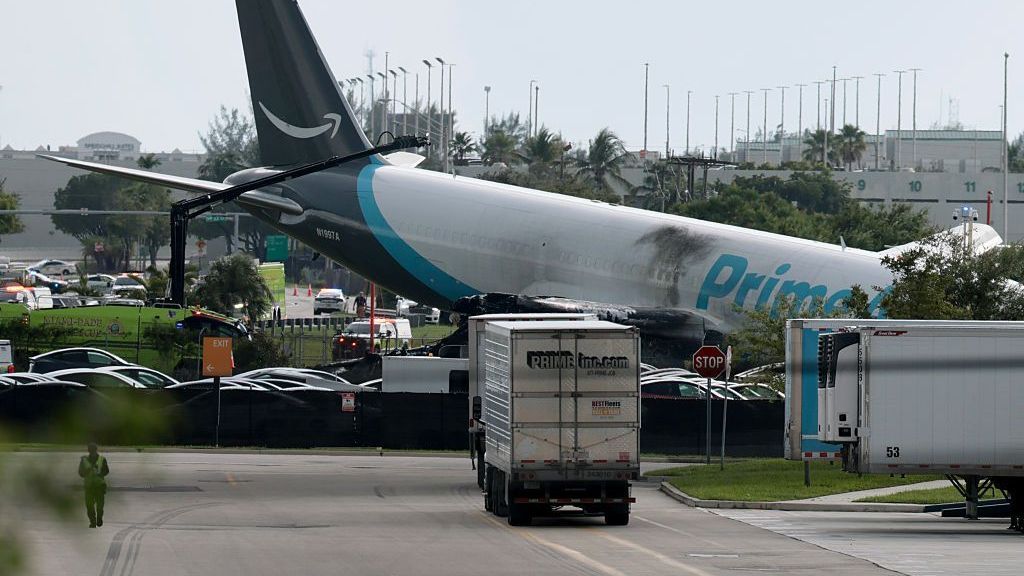
    A devastating aviation incident at Miami International Airport on the busy Labor Day travel weekend has left five people dead and five others injured, three critically, after an Amazon Air cargo jet overshot the runway during landing. The Boeing 767-300 cargo aircraft, which departed from Luis Muñoz Marín International Airport in San Juan, Puerto Rico, crashed just before 2 p.m. local time, striking multiple ground vehicles before coming to a stop at the northwest end of the airport’s diagonal runway.

    Emergency response teams mobilized rapidly to the scene, with more than 200 firefighters arriving within seconds of the crash to tackle heavy flames and smoke that erupted from the damaged aircraft. Miami Fire Chief Raied Jadallah confirmed that while crews successfully extinguished the blaze, a hazardous fuel leak remains at the crash site, which is located near a parking lot serving an Amazon warehouse and surrounding local businesses. Several injured people were trapped inside or beneath crushed ground vehicles, requiring specialized extrication efforts from rescue personnel, before all casualties were transported to area hospitals for treatment.

    In a statement following the crash, Amazon Director of Corporate Global Media Relations Kelly Nantel expressed the company’s profound grief over the loss of life. “We’re heartbroken to learn that five people lost their lives in today’s incident at Miami International Airport,” Nantel said. “Our deepest sympathies go out to the families, loved ones, and all those affected by this devastating loss.” The flight was operated by North Carolina-based charter carrier 21 Air, and Nantel confirmed Amazon is cooperating fully with local authorities and investigators to determine the root cause of the incident. The BBC has attempted to contact 21 Air for comment, but as of Sunday evening, no response had been received.

    Miami-Dade County Mayor Daniella Levine Cava described the event as an “incredibly difficult day” for the community during a Sunday evening press conference, noting that first responders had prioritized care for victims and their families from the moment of the crash. “Right now, our focus is on the families, those who were injured, and the ongoing response,” she said.

    Initial flight data from aviation tracking service FlightRadar24 shows the aircraft was traveling at 112 knots (129 miles per hour, 207 kilometers per hour) when it exited the usable portion of the runway. The tracking service also reported light thunderstorm activity and gusting winds in the Miami area at the time of the attempted landing. Officials have emphasized it is too early to draw conclusions about what caused the overrun, and the National Transportation Safety Board (NTSB), the federal agency tasked with investigating all civil aviation crashes in the United States, will lead the probe into the incident. The NTSB has scheduled a press conference for Monday to share initial updates on its investigation.

    In response to the crash, the Federal Aviation Administration ordered all outgoing flights grounded at the airport, one of the busiest aviation hubs in the United States and the nation’s busiest for international freight. Stranded passengers told the BBC they faced widespread frustration due to limited official information, with hundreds of travelers stuck in long lines at airline counters trying to rebook canceled or delayed flights. Many passengers reported they would be forced to extend their stay in Miami by at least one night due to the travel disruptions.

    The crash comes during the busiest travel period of the year for U.S. airports. The Transportation Safety Administration projected that 17 million passengers would pass through U.S. airports in the week leading up to Labor Day, with 2.3 million travelers expected to fly on Sunday alone. Miami International Airport, founded in 1928, handles more than 60% of all international arrivals to Florida and offers more connections to Latin America and the Caribbean than any other U.S. airport.

  • North Korea commissions 2nd naval destroyer as US, South Korea and Japan begin a military drill

    North Korea commissions 2nd naval destroyer as US, South Korea and Japan begin a military drill

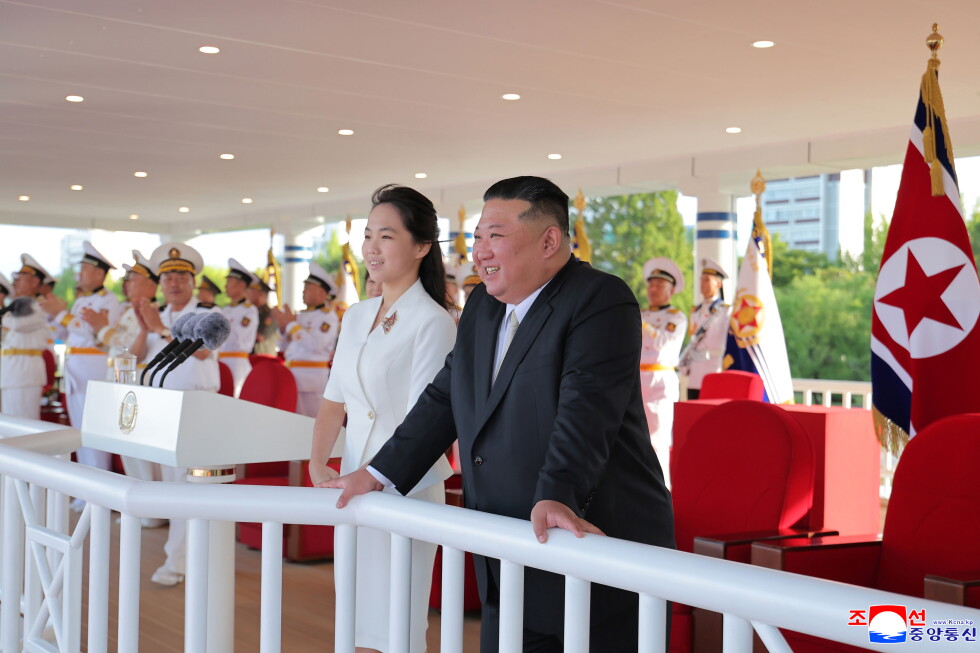
    Tensions have escalated sharply on the Korean Peninsula in recent days, as North Korean leader Kim Jong Un oversaw the ceremonial commissioning of his country’s second domestically built guided-missile destroyer while doubling down on calls to expand and strengthen the regime’s nuclear deterrent. The high-profile naval event unfolded Sunday just as the United States, South Korea, and Japan prepared to launch a landmark trilateral military exercise that Pyongyang has long decried as a direct threat to its national security.

    The newly commissioned destroyer, named the *Kang Kon*, was welcomed into service at a ceremony held in North Korea’s eastern port of Wonsan. Kim Jong Un was joined at the event by his teenage daughter, who South Korea’s National Intelligence Service has identified as Kim Ju Ae and widely considers the leader’s likely heir. Official state media photos from the ceremony show the young woman dressed in a white dress and light blazer, walking alongside her father on a red carpet, touring the destroyer’s decks, and posing for formal photos with the ship’s crew.

    The *Kang Kon* is the second of North Korea’s new 5,000-ton guided-missile destroyers, following the *Choe Hyon* that entered service in June. Both vessels are outfitted to carry nuclear-capable missiles, marking them as the most advanced warships in the North Korean navy’s fleet. In his keynote address at Sunday’s commissioning, Kim emphasized that the sequential launch of these two advanced destroyers transforms the regime’s maritime nuclear capabilities, allowing North Korea to deploy its nuclear deterrent through more diversified and practical channels, a shift that will inevitably deepen anxiety among Pyongyang’s adversaries.

    “We must establish more clearly a powerful and reliable nuclear war deterrent, to put into practice the diverse and effective operation of our nuclear combat systems and further strengthen our military activities for maritime defense and war deterrence,” Kim told ceremony attendees.

    This latest military advancement comes amid a period of renewed friction between North Korea and the United States, coming after Pyongyang rejected a conciliatory gesture from former U.S. President Donald Trump, who ordered the U.S. military to substantially scale back the annual Ulchi Freedom Shield joint exercise with South Korea last month. The drill was cut six days shorter than originally planned, with Trump citing his positive personal relationship with Kim, who has long characterized large-scale U.S.-ROK joint drills as rehearsal for an invasion of the North.

    But the scaled-back exercise failed to win Pyongyang’s approval. Kim Yo Jong, Kim Jong Un’s sister and a top senior regime official, dismissed Trump’s outreach, arguing that merely shortening the drill does nothing to alter its fundamentally provocative and aggressive nature. In response to the exercise, North Korea carried out a threat it had issued previously, launching roughly 10 short-range ballistic missiles into the sea off its coast.

    On Monday, the United States, South Korea, and Japan launched their five-day *Freedom Edge* trilateral maritime exercise in waters off South Korea’s southern Jeju Island. South Korea’s defense officials have framed the drill as a defensive training initiative designed to improve coordination to counter North Korea’s growing nuclear and missile threats. Pyongyang, however, has cast the exercise as clear evidence of U.S. escalating confrontational policy toward the North. Last week, North Korea’s Foreign Ministry criticized both the drill and repeated public statements from U.S. officials reaffirming Washington’s commitment to the complete denuclearization of the Korean Peninsula.

    Diplomatic analysts broadly view North Korea’s recent escalation of military demonstrations and rhetorical pressure as an effort to extract larger concessions from the United States. Nuclear diplomacy between Kim and the Trump administration collapsed in 2019, after the two sides failed to reach agreement on the scope of sanctions relief North Korea would receive in exchange for taking limited steps toward dismantling its nuclear program. Today, after years of advancing its nuclear and missile programs and strengthening strategic ties with major powers Russia and China, experts note Kim holds far more negotiating leverage than he did during the earlier rounds of talks. Kim has repeatedly stated he is willing to return to diplomatic negotiations only if Washington abandons what he calls its hostile policy toward Pyongyang and formally accepts North Korea’s status as a legitimate nuclear-armed state.

  • Austria’s Islamic headscarf ban in force as under-14s go back to school

    Austria’s Islamic headscarf ban in force as under-14s go back to school

    As Austria welcomes millions of students back to classrooms for the 2026-2027 academic year, a highly divisive new law banning religious head coverings for girls under 14 has officially taken effect across all public and private educational institutions in the country. Targeting specifically what the legislation labels “traditional Muslim” headwear, including hijabs and burkas, the policy has sparked fierce debate across the nation, pitting proponents framing the ban as a defense of gender equality against critics who decry it as unconstitutional anti-Muslim discrimination.

    The policy was championed by Austria’s three-party centrist conservative-led coalition government, made up of the conservative People’s Party (ÖVP), the center-left Social Democrats (SPÖ), and the liberal Neos party. Integration Minister Claudia Bauer of the ÖVP has publicly defended the law, arguing that the headscarf functions as “a sign of oppression and a means of controlling girls from the earliest childhood”. Proponents across the coalition frame the ban as a deliberate stand for gender equity, designed to safeguard young girls from coercive religious practices that undermine their autonomy.

    But opposition to the legislation has been widespread and organized. Austria’s official Islamic Community (IGGÖ) has issued a firm rejection of the policy, with spokesperson Carla Amina Baghajati telling the BBC that the law unjustly infringes on fundamental religious freedom rights and disproportionately targets Muslim girls and their families. “Rather than protecting children, it singles out a specific religious practice and risks excluding the very children it claims to support,” Baghajati said. The organization has confirmed it will back legal challenges from affected families who plan to bring the case before Austria’s Constitutional Court, marking a repeat of a 2020 confrontation when the court struck down an earlier primary school headscarf ban for violating the country’s principle of state religious neutrality.

    The law places the burden of enforcement directly on classroom teachers, who are required to initiate a series of conversations with students and their guardians if they observe a headscarf being worn. For repeated violations, child welfare services must be notified, and as a final enforcement step, guardians can face fines of up to €800 (£685). This enforcement structure has drawn criticism from educators and political opponents alike, with many pointing out that teachers are already overstretched and unprepared to take on a punitive, regulatory role. Sigi Maurer of the opposition Green Party accused liberal NEOS Education Minister Christoph Wiederkehr of “creating new conflicts and offloading them onto the teachers,” arguing that the policy forces educators to act as de facto law enforcement on top of their existing teaching responsibilities.

    The ban also faces criticism from both sides of the Austrian political spectrum: the far-right opposition Freedom Party (FPÖ) argues the current restriction does not go far enough, calling for a complete blanket ban on all head and face coverings for both students and teaching staff in Austrian schools. FPÖ politician Ricarda Berger stated that “there is no place for political Islam in Austria, and certainly not in our schools”. This hardline stance echoes recent comments from Austrian Chancellor Christian Stocker, ÖVP leader, who recently told public broadcaster ORF that he supports a constitutional ban on political Islam, adding that he did not “want to live in an Islamic state”.

    The new Austrian policy differs from similar legislation in neighboring France, which has enforced a 20-year ban on all conspicuous religious symbols — including headscarves, turbans, and Jewish kippas — in state schools. Austria’s ban, by contrast, explicitly targets only Muslim women’s head coverings. Austria already joins other European nations including France, Belgium, and Denmark in enforcing a public ban on full-face veils such as niqabs and burkas.

    Baghajati warned that the ban is part of a growing worrying trend across the continent, where complex social and political challenges are simplified into targeted symbolic restrictions against religious minority groups. “Such approaches may generate political attention, but they rarely solve the underlying problems,” she noted. Protests against the ban have already been held across the country, including a high-profile demonstration earlier this year in Vienna led by an 11-year-old student carrying a banner reading “meine Kopftuch, meine Entscheidung” — “my headscarf, my decision” — capturing the core of opposition arguments around personal autonomy and religious freedom.

  • Tiafoe and Michelsen win at the US Open as American men make a run at ending a Grand Slam drought

    Tiafoe and Michelsen win at the US Open as American men make a run at ending a Grand Slam drought

    NEW YORK — The 2024 U.S. Open is witnessing a historic breakthrough for American men’s tennis, as a new generation of homegrown talent is mounting the most serious push in decades to end the nation’s 21-year Grand Slam title drought.

    So far, Frances Tiafoe and 19-year-old Alex Michelsen have secured their spots in the tournament’s quarterfinals, with a third American potentially joining them through the final fourth-round matchup between Ben Shelton and Stefanos Tsitsipas. The run marks the first time since 1995 that five American men have advanced to the final 16 of a Grand Slam, a milestone that has injected new energy into the final major of the tennis season and sparked hope that the long dry spell for U.S. men’s tennis could finally be coming to an end.

    The U.S. has not claimed a men’s Grand Slam singles title since Andy Roddick won the U.S. Open at Flushing Meadows back in 2003. In the 21 years since that victory, American men have rarely even advanced deep enough to contend for the crown. The closest the nation came to breaking the drought was two years ago, when Taylor Fritz defeated Tiafoe in the first all-American Grand Slam semifinal since 2005, becoming the first U.S. man to reach a major final since Roddick in 2009. But Fritz ultimately fell to Jannik Sinner in straight sets, leaving the drought unbroken.

    This year, however, the dynamic is different. Backed by a roaring home crowd that has turned every American match into a festive home-field advantage, the young contingent of players has shown consistent form and mental toughness that sets this year’s run apart. Tiafoe, the No. 11 seed, pulled off a stunning upset over 2021 U.S. Open champion Daniil Medvedev, winning 7-6 (1), 6-4, 7-6 (6) to advance to his third career U.S. Open quarterfinal. The 26-year-old called competing in front of a home crowd an unmatchable experience.

    “We play so much outside of the States obviously, a lot of time in Europe,” Tiafoe said after his win. “This sport’s so international, so to be able to play in front of friends, family, loved ones, is amazing. They don’t get to see you much, so you want to put on a show.”

    Up next, Tiafoe will face Michelsen, the 22-year-old Californian who has been one of the biggest breakout stars of this year’s tournament. Michelsen defeated No. 27 seed Tomas Etcheverry 7-6 (6), 6-4, 6-4 to reach his first ever Grand Slam quarterfinal, and he remains the only men’s singles player in the tournament who has yet to drop a set through four rounds. For Michelsen, the deep run is the payoff for years of targeted training, not an unexpected surprise.

    “We’ve been working really hard to get to this point and I’m really happy but not super surprised because of all the work I put in my whole life,” Michelsen said.

    The winner of the Tiafoe-Michelsen quarterfinal matchup will advance to the semifinals, where they will face either defending champion and No. 2 seed Carlos Alcaraz or the winner of the Shelton-Tsitsipas fourth-round clash. On Sunday, four of the day’s men’s matches featured an American competitor, with the home team taking two of the first three contests. The only American to fall on Sunday was Tommy Paul, the No. 20 seed, who lost to Alcaraz in straight sets. American fans will get another chance to add a quarterfinalist on Monday, when No. 14 seed Learner Tien faces Karen Khachanov for a spot in the final eight.

    The current run echoes the golden era of American men’s tennis in 1995, when eight U.S. players advanced to the round of 16 at the U.S. Open, with three moving on to the semifinals. That year, Pete Sampras defeated Jim Courier in the semifinals before beating top-seeded Andre Agassi to claim the title, a result that was widely expected during a period when American men dominated the global tennis rankings. For years after the 2003 Roddick win, American tennis fans have grown accustomed to annual discussions about the ongoing title drought, a conversation many of the current generation of players have grown tired of.

    While the men’s side has been waiting for a breakthrough, American women’s tennis has already seen a surge of success in recent years: Coco Gauff has claimed two Grand Slam titles, while Jessica Pegula climbed to No. 3 in the WTA world rankings. Former player and current competitor Taylor Townsend noted that the depth of talent now exists across both the men’s and women’s sides of American tennis, setting the stage for a potential generational shift.

    “There have been a really consistent chunk of players, Jess, Coco, you know, have been at the top and inside the top five for the last I don’t know how many years,” Townsend said after her loss to top-seeded Aryna Sabalenka on Sunday. “Ben, Frances, Tommy, Taylor, it’s just such a great group of men as well.”

  • Italy’s upset bid falls short as the US escapes 55-52 in a tense World Cup game

    Italy’s upset bid falls short as the US escapes 55-52 in a tense World Cup game

    BERLIN – In a clash that will go down as one of the most heart-stopping contests in recent FIBA Women’s World Cup history, a resilient Italian side nearly pulled off a historic upset over powerhouse Team USA on Sunday, falling just three points short at 55-52 after a final-second game-tying attempt missed the mark.

    Making their first appearance at the global tournament in three decades, having last competed in 1994, Italy pushed the four-time defending champions to the absolute limit, handing the Americans their lowest scoring total in a World Cup victory since a 42-38 win over Australia back in 1967.

    Heading into the final quarter, Italy held a surprising 50-48 lead, and a raucous crowd of 9,232 — majority of whom were cheering for the European underdog — erupted into frenzy as the upset seemed within reach. But the United States responded with a critical 7-0 run to flip the scoreline to a 55-50 advantage. Italy clawed back to cut the deficit to three, and star forward Cecilia Zandalasini had a clear open look from three-point range to tie the game as the buzzer sounded. Her shot drifted off target, ending Italy’s bid for a historic win.

    Had the upset landed, it would have marked the Americans’ first loss at the FIBA Women’s World Cup since 2006, and their first defeat in the tournament’s preliminary round since 1983. Italy currently holds a 1-1 record in group play after the narrow defeat.

    Following the final play, Zandalasini reacted emotionally to a referee’s failure to call a foul on the USA’s defense during her game-deciding possession, a reaction she later apologized for post-game. “It was a lot of emotions today, but I should have kept them inside of me a little better,” she said.

    For Italian point guard Mariella Santucci, the bitter taste of a near-win is mixed with newfound confidence in her team’s ability to compete with the best in the world. “I feel a little bitter of course but they were the better team and they made better plays at the end so they deserve to win,” Santucci explained. “I feel like the way we play we learn so much about ourselves that we can compete against everybody. To play like that with the USA is special, but it makes us think that we are a special team and we can do something special.”

    With no time to dwell on the near-miss, Italy faces a critical group stage match against China on Monday, and Zandalasini said the squad is already shifting focus to the next contest. “We have another very important game tomorrow. So now we’ve shown what we’re capable of,” she said. “But we want to keep going and not just stop here and just lose our head on this game. It’s still a very, very long tournament.”

    Zandalasini led all Italian scorers with 14 points in the match, and entered Sunday’s contest with a notable historical footnote: Italy was one of the few teams in the world to hold a .500 or better winning record against the United States, with a 1-1 all-time head-to-head record before tipoff.

    Looking back on the team’s performance against the undisputed global powerhouse, Zandalasini said the result proved Italy earned their spot on the sport’s biggest stage. “I think we showed that tonight we deserved a spot in this tournament on this big stage,” she said. “I’m so proud of my team, and I think we have a great coach that believes in us and we really play our hearts out.”

  • The volunteers risking their lives to defuse Indonesia’s wildfire ‘carbon bombs’

    The volunteers risking their lives to defuse Indonesia’s wildfire ‘carbon bombs’

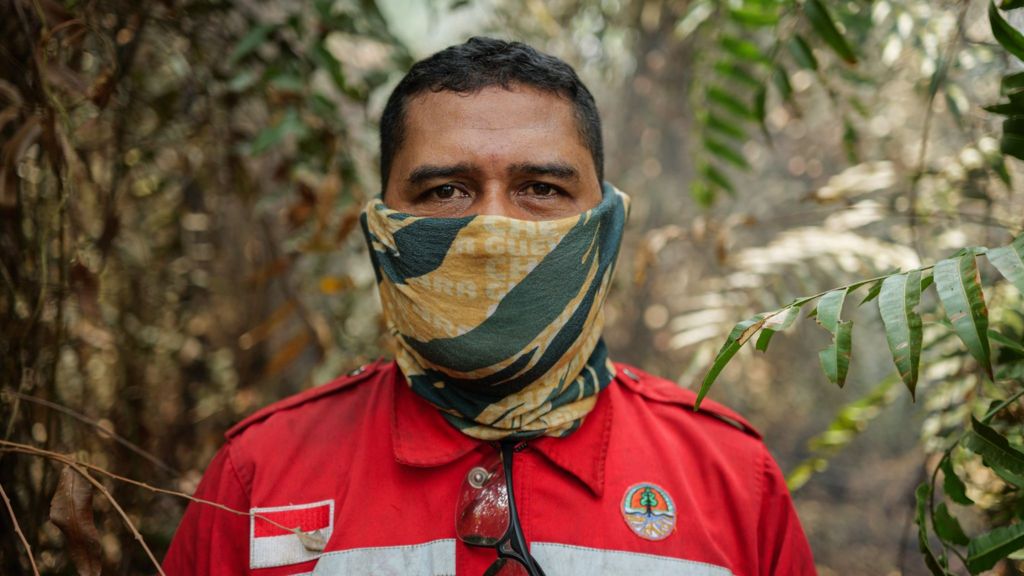
    For more than a month, volunteer firefighters across Indonesian Borneo have waged an uphill battle against out-of-control wildfires, breathing in toxic fumes as they fight to contain a catastrophe that has grown into the region’s worst haze disaster in a decade.

    Dwi Sujatmoko, a 35-year-old volunteer, describes the acrid smoke that envelops the fire line as indistinguishable from tear gas. “It strikes your nose immediately, and your eyes burn nonstop,” he says. “People call these fires extraordinary, and they are absolutely right.” Since early July, these blazes have turned 200,000 hectares of forest and farmland into charred carbon, with invisible underground peat fires continuing to smolder long after surface flames are extinguished, releasing poisonous fumes into the air that travels across national borders to Singapore, Kuala Lumpur, and Manila.

    Armed only with hand tools, wheeled carts, and portable fire pumps, thousands of local volunteers – many from indigenous Dayak and Banjar communities – are the first line of defense against an inferno that is fueled in large part by a Super El Niño-driven drought that has parched the landscape. Fahrin Ramadhianto, another volunteer stationed in the hard-hit city of Banjarbaru in South Kalimantan, has spent a month on the front lines and already feels the toxic impact of the haze on his body. “The smoke smells like burning decaying wood – that’s the unique signature of peat,” he explains. “That’s all decomposed organic material accumulated over thousands of years, and we breathe it in every single day.”

    What makes this wildfire crisis far more dangerous than typical seasonal blazes is that it is burning through one of the world’s largest tropical peatland ecosystems – a 4.5 million-hectare swath of ancient swamp and forest that acts as one of the planet’s most efficient natural carbon sinks. Under normal waterlogged conditions, peat slows decomposition, allowing carbon to build up underground for millennia. In Borneo, some peat deposits reach more than 20 meters deep, holding up to 6,000 tonnes of carbon per hectare – roughly equal to the annual CO₂ output of 4,800 gasoline-powered cars.

    “When peatlands are drained or burned, that stored carbon is released into the atmosphere extremely quickly, turning these carbon sinks into what experts call a ‘carbon bomb,’” explains Dr. Nisa Novita, a peat researcher with Indonesian conservation NGO Yayasan Konservasi Alam Nusantara. “Indonesia’s tropical peatlands are some of the most valuable carbon stores on Earth, and their destruction has massive global climate impacts.”

    The human cost of this crisis is already being felt across Southeast Asia. In Indonesia alone, the Health Ministry recorded more than 50,000 cases of fire-linked respiratory infections between July and August, over 12,000 of which are children under five. Air quality indexes across Indonesia, Brunei, Malaysia, Singapore, and the Philippines have skyrocketed to dangerous “unhealthy” levels, with some areas recording pollution levels nearly 75 times the World Health Organization’s recommended safety limit. Hospital admissions for respiratory and cardiovascular conditions have surged across the region.

    “Everyone trapped under this pollution cloud is inhaling toxic carbon monoxide and fine particulate matter from smoldering peat,” says Susan Page, a professor of geology and environment at the University of Leicester who has studied Asian peatlands for 30 years. “These particles are small enough to pass through lung tissue into the bloodstream, triggering heart disease and chronic health conditions beyond just respiratory issues. Living under this haze is extremely dangerous for everyone exposed.”

    Nowhere are these risks more acute than on the front lines, where two volunteer firefighters in Central Kalimantan have already died after their health deteriorated from weeks of exposure to toxic smoke. Peat fires are notoriously difficult to extinguish, because they burn underground and can reignite weeks after being contained. To put them out, firefighters must saturate the dry peat until it is “like porridge” – a tactic that is increasingly difficult amid a crippling drought that has left much of the region starved for water.

    Volunteers have dug emergency ponds, canals, and borewells to keep their hoses supplied, driven custom pipes into the ground to reach hidden subterranean fires, and slept within steps of the fire line to battle flare-ups through the night. Fatigue is constant, Sujatmoko says: “We’re all exhausted. We miss our families, our children, our partners. But we put that all aside right now – this is our duty to our home.”

    While the current crisis is amplified by Super El Niño, experts say the root of the disaster stretches back decades to large-scale industrial land-use change that began under the Suharto regime, when vast swathes of Borneo’s peatlands were drained and cleared for logging, industrial plantations, and development projects. In 2025 alone, Kalimantan – Indonesia’s most heavily deforested region – lost nearly 160,000 hectares of forest, more than a third of the country’s total annual deforestation, much of it cleared for industrial monocrop agriculture.

    Page notes that draining peatlands for plantations not only makes them far more vulnerable to wildfire, but also causes constant carbon emissions even when there is no blaze: “Fires are just the most dramatic and visible expression of a process that goes on every single day in drained peatlands. That constant emissions stream is often overlooked.”

    Indigenous communities that have lived on and cared for Borneo’s lands for centuries have frequently been scapegoated for the wildfires, blamed for traditional controlled burning practices used to clear small plots for farming. But Tono, a representative of the West Kalimantan Dayak Kanayatn people, says these accusations are unfounded. His community’s traditional hill farming practice, called uma bukit, is rooted in maintaining balance with nature, and controlled burns are carried out with careful planning and strict adherence to ancestral customs that minimize fire risk. Today, many indigenous community members are on the front lines fighting the very blazes they are falsely blamed for causing.

    As the crisis continues to escalate, firefighters on the ground say their greatest hope is for heavy, sustained rain to finally douse the persistent blazes. “We’ve been away from our homes for months,” Sujatmoko says. “We just hope all our efforts here protect everyone, and that the rain comes soon.”

  • India’s high-stakes exam system faces a crisis of trust

    India’s high-stakes exam system faces a crisis of trust

    Eight years after India established the National Testing Agency (NTA) to fix longstanding flaws in the country’s examination system, the body tasked with restoring public trust in high-stakes standardized testing is now grappling with its own major crisis of credibility.

    When the NTA was launched in 2017 under India’s federal Ministry of Education, it was created to deliver a testing framework defined by fairness, transparency, and consistency. For decades prior, India’s national entrance and eligibility exams were plagued by persistent issues: widespread paper leaks, administrative mismanagement, and repeated allegations of organized cheating. Over its first term in operation, the NTA absorbed oversight of the country’s most competitive and high-volume assessments, including undergraduate and postgraduate medical entrance exams, top engineering school admissions, university entry screening, and eligibility tests for teaching and research roles.

    The current crisis erupted in June 2025, when a leak of the NEET-UG, India’s critical undergraduate medical entrance examination, forced more than 2 million test-takers to retake the exam. The incident triggered weeks of widespread youth-led protests across the country, which ultimately culminated in the resignation of India’s federal education minister. In response to the public outcry, the government moved quickly to appoint a high-level reform task force, headed by renowned Indian tech tycoon Nandan Nilekani, tasked with identifying structural fixes and rebuilding public confidence in the national testing system.

    For many Indian citizens, however, this announcement triggered an all-too-familiar sense of deja vu. In 2024, a similar high-level expert panel was convened after widespread irregularities in another national medical entrance exam sparked mass unrest. That committee put forward more than 100 targeted reforms, but official reports confirm only just over half of these changes have been fully implemented to date. The pattern has become a frustrating cycle for stakeholders: an exam scandal breaks, students take to the streets, a new committee is formed, reform proposals are published, and gaps in the system remain unaddressed—until the next crisis exposes the same unresolved weaknesses.

    Experts consulted by the BBC note that the problems facing India’s testing system extend far beyond isolated incidents of paper leaks. Core issues include a lack of institutional accountability at the NTA, insufficient operational capacity, over-centralization of national testing, flawed exam design, and fundamental questions about whether India’s model of high-stakes single-sitting testing is fit for purpose for a country with millions of annual test-takers.

    BJ Rao, a member of the 2024 reform panel and current vice-chancellor of SGT University near New Delhi, argues that India must accelerate the transition to fully computer-based testing to cut the risk of paper leaks, boost operational efficiency, and minimize unnecessary human intervention in exam administration. “Digital connectivity has vastly improved across every corner of the country over the past decade. What we need to do now is allocate targeted resources, prioritize upgrading testing infrastructure, and make the full shift to computer-based exams,” Rao explained in an interview. “Right now, we rely on ad hoc, temporary testing centers. These need to be replaced with a network of standardized, state-run online testing facilities across the country.”

    Even so, Rao emphasizes that technology alone cannot fix the systemic flaws plaguing the NTA. He points to the agency’s extreme over-reliance on temporary contract staff: official government data shows only 24 of the NTA’s 221 total employees hold permanent positions, and most existing permanent staff come from traditional bureaucratic backgrounds rather than educational assessment. “When the vast majority of personnel work on short-term contracts, there is no real sense of institutional ownership or accountability, and that directly undermines core operational functions,” Rao explained. “We need skilled specialists with deep academic backgrounds and hands-on experience running large-scale assessments to deliver strong management and oversight of the system.”

    Other education experts argue that repeated crises have revealed deep flaws not just in how exams are administered, but in how they are structured. Keshav Aggarwal, educationist and president of the Educators Federation, points to the NEET-UG—the exam whose leak sparked this year’s protests—as a test that could be restructured to mirror the format of India’s popular engineering entrance exam, which is fully computer-based and split across two stages. Instead of tying a student’s entire future to a single high-stakes test sitting, Aggarwal proposes holding exams across multiple sessions with unique question sets for each session. “Splitting assessments across different stages and test days with varying question banks would cut the risk posed by any single compromised exam and make the entire system far more resilient to disruptions,” Aggarwal explained.

    Many experts also question whether an annual single-sitting exam can ever function fairly when millions of students compete for a tiny pool of limited university seats. Yamini Aiyar, a senior visiting fellow at Brown University, says India should adopt the model common across many Western nations, where students can sit major entrance exams multiple times per year. “This would give students a second chance if an exam is cancelled or they have an off day on test day, eliminating the catastrophic risk of losing an entire year of academic progress,” Aiyar says. That risk is not abstract for millions of young Indians: many spend multiple years preparing for entrance exams and invest tens of thousands of rupees in private coaching, meaning a leaked, cancelled, or delayed exam can completely upend months or even years of careful preparation.

    Seventeen-year-old Pari experienced this crippling uncertainty first-hand this year. After sitting for the original NEET-UG exam, she was forced to retake the entire test after the paper leak forced a full cancellation of the initial session. “It was incredibly frustrating. All of our preparation felt like it had gone to waste, and we had to start all over from scratch,” she said. Her experience left her deeply frustrated by the cycle of repeated exam failures across the system. “The government can form as many committees as they want. What we need is a system strong enough to stop paper leaks from happening ever again.”

    Twenty-three-year-old Mansi Bansal shares a similar story. She spent months preparing for the UGC-NET, the national eligibility test for entry-level college teaching positions. The exam was first cancelled after a 2024 paper leak, and then delayed again this year after the NTA confirmed question errors across three subject tests. Bansal, who was taking the commerce subject exam, is scheduled to retake the test on September 9. “I put my entire life on hold for these months: I stopped going to the gym, stopped hanging out with friends, even skipped family gatherings,” she said. “I planned my entire year around this exam, and now everything is up in the air. Can the government even promise me another leak won’t happen this time?”

    These widespread negative experiences have fueled growing calls from student activists and opposition political parties to abolish the NTA entirely. But most education experts argue that scrapping the agency would not fix the underlying systemic problems, and would likely create new complications. M Jagadesh Kumar, former chairman of India’s University Grants Commission, the national regulator for higher education, says the NTA needs deep structural reform to address repeated failures, but full abolition is not the solution. “A single national testing body allows for uniform security standards, shared technological infrastructure, consistent candidate services, and standardized result processing. Creating multiple smaller testing agencies would only duplicate administrative costs and lead to uneven security safeguards across regions,” Kumar told India’s PTI news agency.

    Rao echoed that perspective, noting that the NTA is not entirely without success. “It’s not all bad news. The agency has successfully administered dozens of large-scale exams over the years with no reports of leaks or major irregularities,” he said. What the system requires, Rao argues, is a formal statutory institution staffed by full-time specialists with the academic, technical, and operational expertise needed to run a truly secure national testing system.

    For some analysts, however, the core debate extends far beyond the NTA as an institution. Aiyar argues that the larger issue is not just preventing the next paper leak, but whether a highly centralized national testing system can ever cope with the extreme competition for limited educational opportunities that defines higher education in India. The NTA may be able to implement reforms that make exams more secure, she says, “But it cannot, at least on its own, fix a system where millions of students compete for a tiny number of prestigious seats, and a single exam can make or break an entire young person’s future.”

    Many experts agree that meaningful reform must go further than fixing the NTA: India needs a testing system that is less reliant on one-off, high-stakes exams, offers students multiple testing opportunities, and is built to withstand disruptions. Rao says he remains optimistic that the new Nilekani-led task force will deliver actionable changes to close gaps in the current system. But for millions of Indian students, yet another expert committee offers little real reassurance, unless it delivers tangible, visible changes to the system they rely on for their future.

    “I’m studying for my university entrance exam next year,” said one 16-year-old 12th grade student. “In the back of my head, I’m already prepared there might be another leak. But what can we do about it? I’ll just keep preparing and hope for the best.”


  • A gritty late surge lifts the US past Italy 55-52 in its toughest World Cup test in years

    A gritty late surge lifts the US past Italy 55-52 in its toughest World Cup test in years

    BERLIN – The undefeated streak of the United States women’s national basketball team at the FIBA World Cup faced its closest test in 18 years on Sunday, when a gritty defensive performance from Italy pushed the defending champions to the brink before a late-game rally and a game-saving key stop secured a tense 55-53 win for the Americans.

    Jackie Young led the U.S. scoring with 10 points in a match that saw the American offense struggle to find its rhythm from start to finish. This low-scoring victory marks the fewest points the U.S. has put up in a World Cup win since a 42-38 defeat of Australia back in 1967, highlighting just how tight the matchup against Italy truly was.

    Entering the match, the U.S. held an unprecedented 31-game consecutive World Cup win streak, a run that stretches all the way back to a 2006 semifinal loss to Russia. Before Sunday’s game, only one opponent had pulled within single digits of the Americans during this historic run: Australia, who fell by eight points back in 2010. Italy’s performance made clear just how much the global gap with the U.S. has narrowed in recent years, a trend the American side acknowledged following the final buzzer.

    “You have to be able to win different ways in this tournament because every team stylistically plays a little bit different,” said U.S. head coach Kara Lawson after the win. “You do have to be able to win when you don’t have your fastball. We didn’t have a fastball tonight, but we figured it out late and we’ll grow from it.”

    Breanna Stewart, who missed her opening eight shots from the field before notching her first and most critical bucket of the game late in the fourth quarter, echoed that sentiment. “Obviously, Italy really kind of mucked up the game for us a little bit. It made it difficult for us to score. They are a tough team. Tons of respect to what they’ve done. And, just proud of the resiliency of this group.”

    This narrow escape comes on the heels of another close call for the U.S. at the 2024 Paris Olympics, where the Americans claimed their eighth consecutive gold medal with just a one-point win over France in the championship game. For Lawson, the increasing competitiveness of global women’s basketball is a win for the entire sport.

    “We’ve seen that through the tournament that every game feels like a dogfight,” Lawson noted. “It’s really hard. On any given night, if you’re not prepared to play, you’ll lose. That’s awesome for our sport.”

    The game unfolded far differently than most U.S. matchups in recent memory. The Americans jumped out to an early 23-8 lead in the first quarter, a start that suggested the match would end in another dominant blowout. That changed immediately when Italy switched to a stifling 2-3 zone defense, which completely disrupted the U.S. offense. Italy closed out the first half on a 16-7 run to trail by just six points at 30-24, then carried that momentum into the third quarter with an 11-2 run that put them in front 35-32. The U.S. held a narrow 42-39 lead going into the final quarter, but Italy refused to collapse, pushing ahead 50-48 with just 4:29 left to play.

    That deficit sparked a late 7-0 game-winning rally from the U.S. Stewart hit her first basket of the entire match to put the Americans up 51-50, before a critical offensive foul drawn by Chelsea Gray on Italy created an opening for Young to hit a go-ahead layup. Gray followed the defensive stop with a jumper with 1:07 remaining that pushed the U.S. lead to five points. After a late bucket from Italy’s Matilde Villa cut the lead back to three with under a minute left, the U.S. missed two chances to extend the lead to two possessions, setting up a final game-winning attempt for Italy.

    Italy’s star forward Cecilia Zandalasini, who led all scorers with 14 points in the match, got an open three-point look at the buzzer to tie the game, but her shot bounced off the rim, securing the U.S. win. After the game, Zandalasini publicly apologized for an emotional outburst toward an official after the final buzzer, sparked by a missed foul call she believed should have gone Italy’s way.

    “It was a lot of emotions today, but I should have kept them inside of me a little better,” Zandalasini said. This year marks Italy’s first appearance at the FIBA Women’s World Cup since 1994, and the team entered Sunday’s matchup having fallen by 34 points to the U.S. in a qualifying match back in March.

    The U.S. offense was visibly hampered by Italy’s zone defense all game, shooting just 29% from the field overall and a dismal 1-for-12 from three-point range. The Americans also missed a high volume of close-range layups, leaving easy points on the board that nearly cost them the match.

    “I think we missed some shots. We missed some layups, some shots that we have made in the past,” Gray said of the offensive struggles, adding that her late game-changing stop was just part of what the team needed to pull out the win. Lawson praised Gray’s impact on the final result, calling the defensive play a game-altering turning point.

    “I thought that late charge Chelsea took was a big momentum changing play,” Lawson said. “It was an incredible winning play by Gray there.”

    With the win, the U.S. improves to 2-0 in group play, while Italy drops to 1-1. In other Sunday matchups at the tournament, China claimed an overtime victory over the Czech Republic, Australia defeated Turkey, and Belgium beat Puerto Rico.