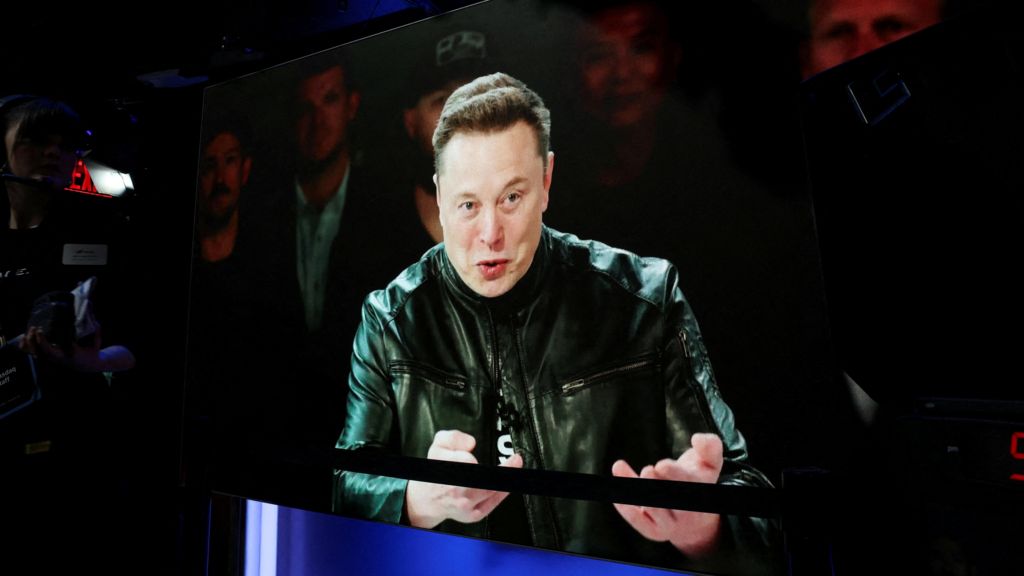
On a historic Friday that reshaped global business and inequality dynamics, Elon Musk crossed an unprecedented financial threshold to become the world’s first trillionaire, driven by a roaring market debut of his aerospace and artificial intelligence firm SpaceX that went down as the largest initial public offering in stock market history.
SpaceX opened trading on the New York-based Nasdaq exchange with a total market valuation of $2.2 trillion, after pricing its initial shares at $135 apiece. Buoyed by overwhelming investor enthusiasm for Musk, the commercial space sector, and emerging AI, opening trades jumped to $150 per share, and the price briefly peaked at $176.50 before closing the session at $160.95. The blockbuster IPO raised $75 billion in fresh capital for the company, which earmarked the funds to accelerate development of reusable rocket technology and advance its artificial intelligence projects.
Musk’s 42% ownership stake in SpaceX alone closed the day valued at roughly $884 billion, when combined with his 12% stake in electric vehicle manufacturer Tesla, his total net worth pushed just over the $1 trillion mark, cementing his position as the world’s wealthiest individual by a wide margin. For context, Musk’s on-paper net worth is roughly equivalent to the entire annual gross domestic product of European nations Poland and Switzerland.
This unprecedented milestone for a private individual immediately ignited fierce global debate over skyrocketing wealth concentration. High-profile progressive U.S. politicians Bernie Sanders and Elizabeth Warren were quick to condemn the development, with Warren arguing that Musk’s new trillionaire status should serve as a urgent ‘wake up call’ that reinforces the urgent need for targeted wealth taxation on the world’s ultra-wealthy.
It is important to note that Musk’s new status is based on the valuation of his equity holdings, not liquid cash reserves, and he is bound by a lock-up agreement that bars him from selling any of his SpaceX shares for at least 12 months. Beyond Musk, the IPO has delivered life-changing windfalls for more than 4,400 current and former SpaceX employees, who received company equity as part of their compensation packages and are now set to become millionaires from the listing.
The historic listing also renewed public scrutiny of Musk’s increasingly high-profile political engagements in recent months. Musk, who currently leads U.S. President Donald Trump’s Department for Government Efficiency (DOGE), oversaw the shutdown of the U.S. Agency for International Development (USAID) as part of the department’s cost-cutting agenda. Researchers publishing in *The Lancet* medical journal have warned that the cuts to USAID could lead to more than 14 million additional preventable deaths globally by 2030. He has also had repeated public clashes with UK Prime Minister Keir Starmer, most recently over the murder of 18-year-old British student Henry Nowak. He has also drawn sharp criticism for his stances on immigration policy from governments on both sides of the Atlantic.
Unlike many established public companies, SpaceX’s $2.2 trillion valuation is rooted overwhelmingly in investor optimism about its long-term future potential rather than proven consistent profitability. Recent regulatory financial filings show the company has recorded cumulative losses of more than $9 billion across 2025 and the first half of 2026, driven by massive upfront spending on AI development, rocket infrastructure, and other capital projects. The company did not provide a clear timeline for when it expects to turn a profit in its pre-IPO filings with the U.S. Securities and Exchange Commission (SEC).
Today, SpaceX already operates a leading commercial rocket launch business, manages the growing Starlink satellite internet constellation, and owns xAI, the artificial intelligence firm behind the controversial chatbot Grok. Its long-term ambitions outlined in its IPO prospectus far exceed its current operations: the company states its core mission is ‘To build the systems and technologies necessary to make life multiplanetary, to understand the true nature of the universe and to extend the light of consciousness to the stars.’ Musk has long publicly championed the goal of colonizing Mars and has also floated plans to build cloud data centers in orbit.
Ahead of the Nasdaq listing, protesters gathered in New York’s Times Square to demonstrate against Musk and the company, echoing widespread public criticism of his wealth and political actions. Market analysts hold mixed views on the company’s post-IPO trajectory. Susannah Streeter, chief investment strategist at asset manager Wealth Club, noted that the outsized jump in share price reflects how deeply investors have bought into Musk’s ambitious long-term vision. ‘He has long been reaching for the stars with his extra-terrestrial ambitions, and it appears plenty of investors share his enthusiasm for the future,’ Streeter said. However, she also warned that Friday’s rally is ‘being driven as much by hype and scarcity as fundamentals.’
Industry observers have also raised concerns about unintended exposure to SpaceX’s expected volatility for ordinary savers. Many pension funds and retail savings products invest in broad market index funds that automatically include shares of the largest public companies, meaning millions of ordinary savers will be exposed to any future swings in SpaceX’s share price. Samuel Kerr, who leads equity capital markets research for Mergermarket, emphasized that the real test for SpaceX will not be its first-day trading performance but its ability to sustain its valuation over the long term. ‘The question on SpaceX is less about the immediate trading after IPO,’ Kerr said. ‘It’s more about how the price holds over the longer term.’