作者: admin

  • One dead and at least 10 others wounded in Texas shooting

    One dead and at least 10 others wounded in Texas shooting

    A mass shooting in the central Texas city of Midland left at least one civilian dead and nine other people injured Friday, local officials confirmed in an official press briefing, marking the latest act of gun violence to roil a US community.

    Midland, located roughly 330 miles west of Dallas, was locked down for hours Friday morning as emergency responders confronted an active shooter situation. According to Midland Mayor Lori Blong, local law enforcement received the first 911 calls about the shooting at 8:03 a.m. local time (14:03 GMT), and first responders arrived at the scene within minutes. When officers reached the location, they reported hearing active gunfire originating from inside a nearby building.

    The situation quickly escalated, with specialized SWAT teams and multiple partner law enforcement agencies deployed to contain the suspect. Police initially entered a standoff with the shooter, but by early Friday afternoon local time, officials confirmed the suspect was dead, bringing the active threat to an end. Blong confirmed in an update posted to social media that no law enforcement officers were injured during the response.

    As of Friday afternoon, a total of 11 people have been identified as connected to the incident, including the deceased suspect and the one fatally killed civilian victim. Nine injured victims were transported to Midland Memorial Hospital, the closest major regional medical center, for urgent care. Hospital representatives confirmed Friday that four of the nine admitted patients are currently undergoing emergency surgery, while the remaining five are listed in stable condition.

    In a public statement, Blong urged local residents and visitors to continue avoiding the affected area as public safety personnel carry out active on-site investigations: “At this time, public safety personnel are actively responding, and we ask the public to avoid the area until further notice.”

    As of Friday afternoon, authorities have not released additional details about the suspect, including their identity, potential motive, or any background information. Details about the victims, including their names and ages, have also not been released pending next of kin notification. Investigations are ongoing, with officials expected to release additional updates as more information becomes available.

  • Clashes erupt in Congo’s capital as opposition rejects changes to presidential term limits

    Clashes erupt in Congo’s capital as opposition rejects changes to presidential term limits

    On Friday, the capital of the Democratic Republic of the Congo, Kinshasa, became the site of bloody street clashes as thousands of opposition demonstrators gathered to protest a controversial constitutional overhaul that opponents warn would allow sitting President Félix Tshisekedi to run for a third term in office. The protest was organized by the newly unified opposition coalition C64, also called Coalition Article 64, which brought together Congo’s once-fractured main opposition parties back in May specifically to block the proposed changes.

    The confrontation broke out outside the country’s Parliament building, where anti-reform protesters came face-to-face with supporters of the ruling administration. As violence escalated between the two groups, security forces moved in to disperse the crowd using tear gas. Among those wounded in the chaos was Martin Fayulu, a leading opposition figure and the runner-up in the 2018 presidential election. Footage posted to Fayulu’s official Facebook page showed the opposition leader with visible blood on his face and shirt collar, assisted away from the violence by his supporters.

    Tshisekedi, 62, first took office in 2019 and is currently serving his second five-year presidential term, which is scheduled to conclude in 2028. Under current Congolese law, the constitution explicitly prohibits any revision of presidential term limits, which currently cap a president’s tenure at two terms. However, a draft bill now under debate in the National Assembly, Congo’s lower legislative chamber, would create a legal loophole: it would permit changes to term limit provisions if a “major dysfunction” is declared to have paralyzed state institutions, a change that would ultimately be put to voters in a public referendum. Tshisekedi has publicly stated he would only pursue a third term if the change is approved by Congolese voters.

    Beyond the political crisis sparked by the proposed reforms, Congo is already grappling with multiple overlapping national crises. An ongoing Ebola outbreak has strained the country’s under-resourced public health system, while in eastern Congo, a decades-long internal conflict has intensified in recent years. The Rwandan-backed M23 rebel group is one of more than 100 armed factions fighting for territorial control in the region, displacing hundreds of thousands of civilians and fueling a major humanitarian emergency.

    Opposition leaders warn that the push to rewrite term limits represents a direct threat to Congo’s fragile democratic institutions and overall national stability. The C64 coalition has framed the proposed changes as a deliberate power grab by Tshisekedi to hold onto the presidency beyond his constitutionally mandated time in office, turning a planned peaceful protest into a violent confrontation that has escalated the country’s political tensions.

  • Mother finds body of missing son two days after Kenya’s Ebola quarantine centre protests

    Mother finds body of missing son two days after Kenya’s Ebola quarantine centre protests

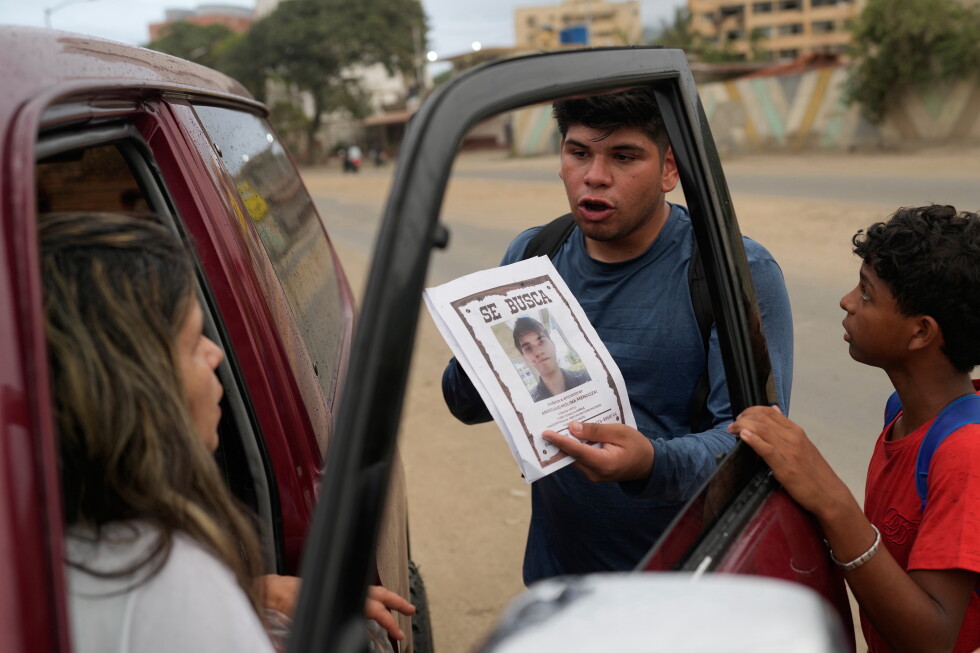
    In the central Kenyan town of Nanyuki, a grieving single mother is calling for accountability after her 17-year-old son became the third fatality in violent clashes between police and demonstrators protesting a planned U.S.-backed Ebola quarantine facility.

    Lucy Kagure, who earns just $2.30 a day doing casual labor to raise her son Sylvester Muigai Ndung’u, has described the devastating aftermath of her child’s death. The teenager left his home on a routine Tuesday errand — picking up a new school uniform from his aunt — when he unknowingly walked into the middle of erupting unrest. Two days after he went missing, Kagure found his bloodied body listed as an unknown male in a local mortuary, where half his head had been severely damaged.

    “I have struggled to raise that boy from nursery school to form three, and then they just killed him,” Kagure told the BBC through tears. She has openly accused Kenyan police of using excessive force to break up the demonstration, asking, “Are they not parents too?”

    Witnesses on the scene claim Muigai was shot in the head during the chaos, while family members say police have suggested the injury came from a tear gas canister rather than a live bullet. Local police commander Daniel Kitavi told reporters that authorities are still awaiting post-mortem results to confirm the official cause of death, declining to comment further ahead of the autopsy.

    Those close to Muigai remember the teen as a quiet, well-behaved young man who regularly helped his family at home and harbored dreams of one day becoming a priest. His death has cast a harsh light on the growing tensions over the proposed 50-bed Ebola isolation facility, which is set to be built at Kenya’s Laikipia Air Base to treat U.S. citizens affected by the ongoing Ebola outbreak in the Democratic Republic of Congo.

    The project has sparked widespread public anger across Kenya, with residents and activists raising alarms over potential cross-border infection risks and criticizing the Kenyan government for a lack of transparency around the facility’s development. Last month, Kenya’s High Court ordered a halt to all construction work after a human rights group filed a lawsuit arguing the center posed “grave and imminent risks” to public health. However, satellite imagery obtained by the BBC confirms construction work has continued at the air base in defiance of the court order.

    U.S. officials acknowledged the ongoing legal challenge last week, saying they remained “optimistic we can resolve objections” to the facility. Kenyan President William Ruto has publicly defended the project, noting the U.S. requested the center and arguing that turning down the proposal would be “inhuman.” He has urged Kenyans not to politicize the Ebola response and called on politicians to avoid what he described as “reckless” rhetoric around the issue.

    The Tuesday protest that led to Muigai’s death was originally organized as a peaceful march to deliver a petition calling for the facility to be relocated out of the area. But the demonstration turned violent after police blocked demonstrators’ access to the construction site. Police deployed tear gas and water cannon to disperse crowds, while protesters responded by erecting roadblocks and setting bonfires across Nanyuki.

    The Kenya Human Rights Commission, an independent non-governmental organization, has accused police of widespread excessive force during the unrest, including the use of live ammunition and arbitrary mass arrests. As of this report, Kenyan authorities have not issued any public response to these allegations.

    For Kagure and her family, the immediate priority is not the larger political debate over the quarantine center — it is justice for a young life cut tragically short. “I want justice for my boy,” she said.

  • Is China really deflating deflation? It’s harder than Beijing thinks

    Is China really deflating deflation? It’s harder than Beijing thinks

    Amid growing optimism that China has turned the page on its 2025 deflation crisis, new analysis warns the foundations of this recovery remain fragile, drawing stark parallels to Japan’s 30-year battle with entrenched deflationary pressures that continues to hobble growth today.

    Official data from May shows China’s consumer price index climbing 1.2% year-on-year, while producer prices surged 3.9% driven by rising input costs for energy, semiconductors and industrial metals. Many economists have pointed to this uptick as the clearest evidence yet that the deflationary era is ending, giving way to a period of controlled reflation. But experts warn that surface-level inflation readings do not address deep structural imbalances that have kept deflationary sentiment alive, just as they did in Japan starting in the 1990s.

    Two critical structural reforms stand between Beijing and a durable end to weak price pressures, neither of which the Chinese government has pursued with urgent action. The first is resolving the ongoing deep-seated housing market crisis, which increasingly mirrors the bad-loan spiral that dragged down Japan’s economy starting in the 1990s. With roughly 70% of Chinese household wealth tied directly to real estate, stabilizing property markets across the country’s 70 largest cities is a non-negotiable prerequisite to reviving consumer spending and sustaining annual GDP growth between 4.5% and 5%, analysts note. The second priority is building a robust, nationwide social safety net that would allow China’s 1.4 billion citizens to feel secure enough to increase consumption instead of maintaining high precautionary savings.

    Japan’s decades-long experience serves as a critical cautionary tale for Chinese policymakers. Even as the Bank of Japan (BOJ) prepares to raise its benchmark interest rate to 1% next week – the farthest it has moved from the zero lower bound in more than 30 years – deep deflationary undercurrents still persist across the Japanese economy.

    On paper, Japan appears to have finally escaped its decades-long low-price trap: the BOJ projects full-year 2026 inflation will hit 2.8%, a reading that seems to confirm reflation is taking hold. But beneath the headline data, real wage growth remains negative, with earnings consistently lagging rising prices, and weakening domestic demand as a direct result. This has created a slow-burn stagflation dynamic, and Tokyo has still failed to implement the structural reforms needed to close the gap between rising living costs and stagnant household incomes.

    “For the Japanese economy to fully break free from its long-standing deflationary mindset, it’s imperative for the government and the central bank to align, articulate their risk assessments, maintain honest and transparent dialogue with financial markets, and resolutely execute bold, long-term growth investments,” said Toshihiro Nagahama, chief economist at the Dai-ichi Life Research Institute.

    Nagahama argues that today’s global economy is being shaped by an unusually dense web of overlapping shocks: the ongoing war in Ukraine, widespread volatility across the Middle East, and historic turning points in central bank monetary policy across major advanced economies. The connecting thread across these shifts is clear: geopolitical developments are now driving global economic outcomes, rather than the reverse. With the potential for expanded conflict in Iran creating major uncertainty, Nagahama warns that governments cannot anchor economic strategies to optimistic best-case scenarios. Instead, they must plan for worst-case risks, including the possibility of multi-year disruptions to shipping through the Strait of Hormuz, a critical energy chokepoint whose closure would reshape global energy trade flows and inflation dynamics for years to come.

    “While these shifts present a formidable trial for Japan, they also represent a historic opportunity,” Nagahama notes. “As the country sheds its decades-long deflationary mindset and restores nominal growth, these external shocks serve as a critical test for fully escaping the paradigm of contracting equilibrium.”

    Yet Japan may not get the sweeping policy rethink it needs to escape this trap. Prime Minister Sanae Takaichi’s economic framework still relies heavily on the ultralow interest rates and weak yen policy that Tokyo has leaned on for nearly 30 years. That is why next week’s widely expected rate hike to 1% has already sparked pushback from Japanese political leaders who prefer the comfort of decades-old monetary policy over painful structural reform.

    The timing of the BOJ’s June 16 rate-setting meeting is awkward: it will proceed without Governor Kazuo Ueda, who has been hospitalized with a liver infection. Even so, Nomura economist Mari Iwashita notes that Ueda’s absence is unlikely to change the final outcome of the vote. Still, Takaichi’s administration has publicly pressured the BOJ to hold off on tightening. Last year, she even dismissed the idea of rate hikes as “stupid,” despite growing evidence that Japan’s 27-year experiment with near-zero interest rates has backfired. Her government is the 14th Japanese administration since the late 1990s to double down on a weak-yen strategy designed to boost exports and lift headline GDP.

    Far from reviving entrepreneurial and business confidence across Japan, this approach has dulled risk-taking incentives. Decades of near-free money reduced the urgency for policymakers to boost national competitiveness and for corporate leaders to pursue innovation, restructuring and calculated risk-taking. That long-running complacency is visible today: Japanese industry is watching uneasily as Chinese EV maker BYD upends the global electric vehicle market and Chinese AI firm DeepSeek reshapes the global artificial intelligence landscape – the same kind of disruptive innovation Japanese companies dominated back in the 1980s.

    Since taking office in October, Takaichi has shown little interest in breaking from this long-standing script. Her “Sanaenomics” agenda is essentially a continuation of former Prime Minister Shinzo Abe’s Abenomics framework, built on the same reliance on ultralow rates and a deliberately undervalued yen. The core problem with this approach is that Japan’s current inflation is not the healthy, demand-driven growth that policymakers once hoped for. It is fueled by high import costs for energy, food and other essential goods – classic cost-push inflation, not the demand-led price gains that signal rising household and business confidence. In short, it is unhealthy inflation that erodes living standards rather than reflecting broad-based growth.

    A strikingly similar dynamic is now unfolding in China. The gap between surging producer price inflation and muted consumer price growth is the widest it has been since June 2022. This divergence indicates that Chinese manufacturers are still struggling to pass higher input costs on to end consumers, leaving corporate profit margins under intense pressure. If this margin squeeze persists, it could have severe consequences for wage growth across the world’s second-largest $20 trillion economy, undermining household spending and weakening Beijing’s narrative of a successful end to deflation.

    This trajectory explains why Eurasia Group CEO Ian Bremmer began 2026 warning that “China’s deflation trap” would not disappear as easily as many optimistic analysts predict. Bremmer argues that Chinese leader Xi Jinping continues to prioritize political control and technological supremacy over the consumption stimulus and structural reforms that could break the deflationary cycle. “Beijing has the means to prevent a full-blown crisis, but living standards will deteriorate, the fallout will spread abroad, and the world’s second-largest economy will remain stuck in a trap of its own making,” Bremmer said.

    Five consecutive years of falling home prices have created “household wealth destruction on par with America’s 2008 crash, except it’s still accelerating,” Bremmer added. “Consumer confidence, investment, and domestic demand have cratered with it. Beijing bet big that high-tech manufacturing would fill the gap left by a contracting property sector. Instead, state-driven investment has created massive overcapacity, and weak domestic demand means there aren’t enough buyers to absorb the excess production.”

    One clear outcome of Beijing’s policy priorities is that too many Chinese firms are competing for a shrinking pool of domestic demand, forcing widespread price cuts to stay in business. “Margins collapse, forcing even well-run firms to cut wages and jobs to stay afloat,” Bremmer notes. “Workers spend less. Demand weakens further, so firms cut prices again. Meanwhile, debts grow harder to service with each turn of the cycle. Banks and local governments keep zombie firms alive — rolling over loans, protecting local champions — which keeps overcapacity entrenched.”

    Former U.S. President Donald Trump’s 2025 tariffs on Chinese goods made the situation even worse, closing off a critical export market and forcing Chinese firms to choose between cutting prices to find new buyers outside the U.S. or absorbing the extra costs of transshipping goods through third countries to access American consumers. Either choice further squeezes corporate margins, and today more than a quarter of all listed Chinese firms are unprofitable, the highest share in 25 years, creating a self-reinforcing debt-deflation cycle, Bremmer concludes.

    The core takeaway from decades of Japanese experience and current Chinese trends is that deflationary pressures can persist long after headline inflation turns positive, quietly eroding consumer and business confidence over time. This dynamic is why global markets are increasingly pricing in the possibility of monetary easing from the People’s Bank of China (PBOC) in the coming months – a move that would likely weaken the yuan and widen China’s already large trade surplus.

    As Council on Foreign Relations economist Brad Setser puts it: “Of course, no one explicitly says they would welcome a bigger surplus. But if an international institution’s policy advice is monetary easing — to fight deflation — and fiscal consolidation because of off-balance-sheet risks, plus more exchange-rate flexibility, it is effectively advocating for the country to export its way out of its domestic troubles.”

    Beijing has so far been reluctant to allow sharp yuan depreciation, for three key strategic reasons. A stable or slowly appreciating currency reduces the risk of offshore debt defaults among heavily indebted Chinese property developers. It also supports Xi’s long-term ambition to position the yuan as a credible alternative reserve currency to the U.S. dollar. Finally, it helps manage trade tensions with the second Trump White House, which remains highly sensitive to any policy that appears to give Chinese exporters an unfair competitive advantage.

    Regardless of how 2026 unfolds for the Chinese economy, hopes that Xi’s administration has successfully defeated deflation could be heading for a sharp correction. Japan’s decades-long experience proves that even when headline economic data suggests reflation is gaining traction, the deeply entrenched deflationary mindset among households and businesses is extremely difficult to reverse.

  • Tornadoes, severe weather hit US Midwest

    Tornadoes, severe weather hit US Midwest

    A devastating outbreak of severe thunderstorms and tornadoes has swept across large swathes of the U.S. Midwest, leaving a trail of destruction in its wake. Meteorologists had warned of heightened severe weather risk for days ahead of the event, but the speed and intensity of the system caught many residents off guard. Multiple tornado touchdowns were recorded across at least half a dozen states, with eyewitness accounts describing entire residential blocks reduced to rubble. Dozens of homes have been confirmed destroyed, with hundreds more suffering structural damage that leaves them uninhabitable for the foreseeable future. The violent winds have also downed hundreds of power lines and toppled transmission towers, cutting electricity service to more than 500,000 residential and commercial customers as of the latest update from regional power authorities. Transportation networks across the region have also been thrown into chaos. Major airports in Midwestern hub cities have halted arrivals and departures for extended periods, delaying or canceling more than 1,200 commercial flights nationwide, stranding thousands of travelers at gate sides and terminals. Local highway authorities have closed multiple stretches of major interstate highways due to downed power lines, fallen trees, and debris blocking roadways, complicating emergency response efforts. State and local emergency management agencies have already deployed search and rescue teams to the hardest-hit areas, conducting door-to-door checks to locate missing residents and provide emergency medical care to those injured. The National Weather Service has extended severe weather warnings for parts of the region into the next 24 hours, warning residents of continued risks of flash flooding, strong straight-line winds, and additional tornado formation as the system slowly moves eastward. Recovery officials note that the full scope of damage will take days to assess, and long-term recovery efforts for affected communities are expected to take weeks or even months.

  • Trump accuses Iran of leaking agreement details that ‘bear no relation to the truth’

    Trump accuses Iran of leaking agreement details that ‘bear no relation to the truth’

    A sharp public rift has erupted over the contours of a potential Iran peace deal after leaked supposed terms circulated by Iranian media drew a blistering rejection from former U.S. President Donald Trump, who declared that good-faith negotiation with Tehran is impossible.
    The breakdown in public messaging comes weeks after a broad wave of U.S. and Israeli strikes on Iranian targets that launched the latest open conflict in February. Iran retaliated with attacks on Israeli positions and Gulf states aligned with Washington, and effectively shut down the Strait of Hormuz — the global economy’s critical chokepoint for oil and liquefied natural gas shipments. An April ceasefire paused large-scale hostilities, but intermittent tit-for-tat strikes have continued, including two back-to-back exchanges just this week.
    The chaos erupted just 24 hours after Trump’s own volatile shift in messaging: on Thursday, he first threatened new military strikes on Iran, then hours later announced he had called off the attacks because negotiators had reached a “great settlement” that would be signed imminently. Iranian officials quickly pushed back, calling any claims of a finished agreement pure speculation.
    On Friday, Iranian state media outlets published what they claimed were the finalized terms of the emerging agreement, laying out terms that aligned with longstanding public demands from Tehran. The leaked details included an immediate end to the U.S. naval blockade on Iran, the release of at least $300 billion in frozen Iranian assets to cover damage from the recent U.S. and Israeli strikes, and preconditions for full negotiations: half of all frozen assets must be unblocked, oil sanctions suspended, and the blockade lifted before formal talks on core issues begin. The leaked draft also calls for a final deal to be ratified by a United Nations Security Council resolution, with talks limited to enrichment activity, sanctions relief, and Iranian economic reconstruction. It also includes Tehran’s longstanding demand for an end to Israeli hostilities with Iran-backed Hezbollah in Lebanon.
    Iran’s top diplomat Seyed Abbas Araghchi walked back the leak, however, acknowledging that a deal has never been closer but urging media to avoid unconfirmed speculation about the content of ongoing talks.
    U.S. officials quickly pushed back against every core element of the Iranian leak. A senior Trump administration official told the BBC that the U.S. vision for any agreement requires the full destruction and removal of Iranian nuclear material and the permanent dismantling of Iran’s enrichment program. No Iranian assets will be released, the official said, until Tehran meets all U.S. demands, reopens the Strait of Hormuz permanently, and commits to cutting off funding for proxy groups including Hezbollah across the Middle East. The nuclear dispute has spanned decades: Western nations have long accused Iran of pursuing a nuclear weapons capability, a charge Tehran consistently denies, saying its program is exclusively for peaceful energy and scientific research.
    U.S. Vice President JD Vance also issued a public correction Friday, noting “a couple of bizarre things” in the leaked reporting. “Iranians are not receiving any cash, and no funds are being released for simply signing a deal or attending a meeting,” Vance wrote in a post on X. He emphasized that the potential agreement is structured to prioritize U.S. and allied security concerns, with economic benefits only unlocked after Iran verifiably meets all its obligations.
    In his most blunt comments Friday, Trump rejected the leaked terms out of hand, saying the published details “bears no relation to the truth” and have “nothing to do with the terms that were agreed to” in private talks. “They were very dishonorable people to deal with,” Trump wrote of Iranian negotiators, urging Tehran to “get your act together, and FAST!” He added that there is “no such thing as dealing in good faith” when negotiating with the Islamic Republic.
    The indirect talks between the U.S. and Iran, which do not include Israeli negotiators, have been mediated primarily by Pakistan. The goal of the current discussions is to extend the fragile April ceasefire and set a framework for future negotiations on core contentious issues, including Iran’s nuclear program.

  • UK faces hard choices over military spending: analysts

    UK faces hard choices over military spending: analysts

    The recent high-profile resignations of two senior British defence officials have thrust long-simmering tensions over the United Kingdom’s military resourcing and future strategy into the global spotlight, leaving Prime Minister Keir Starmer’s new administration facing a series of unenviable decisions over the country’s defence priorities. Just days after former Defence Secretary John Healey and Armed Forces Minister Al Carns stepped down in protest of the government’s upcoming, still-unreleased 10-year Defence Investment Plan (DIP), Starmer appointed Dan Jarvis, a veteran ex-Parachute Regiment officer with a decades-long record of security service, to take the helm of the Ministry of Defence (MoD) on Thursday.

    At the core of the controversy is a projected £28 billion funding gap in the MoD budget between the present day and 2030, a deficit that has already eroded military readiness and forced difficult trade-offs between modernisation, infrastructure upgrades, and global operational capability. In his scathing resignation letter, Healey accused Starmer and the Treasury of failing to allocate the critical resources needed to protect UK national security amid a rapidly growing global threat environment, noting that promised additional defence funding had been “backloaded” to the final years of the 10-year plan. Fenella McGerty, a senior analyst at the International Institute for Strategic Studies, explained that this funding structure creates a so-called “hockey-stick” growth trajectory, where nearly all spending increases do not take effect until the end of the decade, leaving the military underresourced for immediate readiness needs.

    Pressure to increase defence spending has also come from across the Atlantic, where former US President Donald Trump has repeatedly called on NATO allies to raise their own defence contributions and reduce reliance on US security support. Starmer has already made public pledges to incrementally raise UK defence spending: the target is set to reach 2.5% of GDP next year, rising to 3% by 2029 if the Labour Party wins the next general election, and hitting 3.5% by 2035. However, defence analysts argue even these increases will not be enough to fund a truly global military posture. “This would only cover operations very much focused on the mainland and the near vicinity of the UK,” explained Jamie Gaskarth, a senior research fellow at London-based think tank Chatham House.

    Nick Reynolds, a land warfare expert at the Royal United Services Institute, emphasized that the UK faces unavoidable hard choices about which military capabilities it can afford to maintain. Both the British Army and Royal Navy require extensive refurbishment of existing aging equipment, he noted, a process that will demand a significant budget increase even before any major modernization efforts can begin. Recent operational challenges have laid bare these resource gaps: when conflict erupted in the Middle East earlier this year following US-Israeli strikes on Iran, it took the Royal Navy several weeks to deploy just one single vessel to the region to reassure allied partners. Gaskarth attributed this delay to a long-running strategic shift toward maintaining fewer, more technologically advanced platforms, a trend that has left the UK with too few deployable assets to respond to multiple global crises simultaneously. “It actually means in a crisis you can no longer rely on the idea that you will have assets in place in different regions around the world,” he said.

    Beyond underfunding, the second major point of contention from the resigning ministers is the DIP’s perceived lack of innovation, particularly its failure to prioritize emerging technologies that have already proven decisive on the battlefield in Ukraine. Carns, who resigned shortly after Healey, publicly criticized the plan for being designed to “fight the last war rather than the next one”, arguing it failed to incorporate critical lessons from the ongoing conflict in Ukraine. He called for increased investment in uncrewed systems, famously noting that “data is the new gunpowder” for modern warfare.

    Unnamed senior military sources quoted by The Times have echoed this criticism, arguing the unpublished plan overemphasizes expensive traditional hardware such as new warships, main battle tanks, and fighter jets at the expense of next-generation capabilities including AI-enabled command software, space and cyber defence tools, hypersonic weapons, and low-cost attack drones. Reynolds explained that drones offer a uniquely cost-effective lethal capability for modern militaries: “Drones are a cheap, highly precise artillery system and give a lot more range than traditional artillery. So it’s essential they are part of the force structure, because they can grant an affordable volume of lethal capability.” While the UK has already begun investing in drone technology, Gaskarth noted that it has not yet made the wholesale strategic shift needed, with current policy focused on domestic production rather than rapidly scaling capabilities through partnership with Ukrainian manufacturers. Gaskarth added that while senior policymakers, military leaders, and politicians all acknowledge that threats to the UK are growing and immediate, the pace of defence reform remains glacial.

    The long-delayed DIP is currently scheduled for publication ahead of the upcoming NATO summit set to take place in Turkey on July 7, Starmer has confirmed. In terms of identifying the UK’s most pressing security threats, analysts and officials broadly agree that Russia remains the most urgent immediate threat following Moscow’s 2022 full-scale invasion of Ukraine, while China poses a growing long-term challenge to global security norms. Carns, in a post on social media following his resignation, argued that Britain has spent a decade shrinking its global influence at a time when major powers are rewriting the rules of global communications, energy, and trade. “Right now the rules on communications, energy and trade are being rewritten. By China. By Russia. By countries that take their own security seriously. We need to be at that table. That’s a choice we must make,” he wrote.

  • French town buries murdered child as questions mount over police failings

    French town buries murdered child as questions mount over police failings

    Two weeks after 11-year-old Lyhanna was killed in southwestern France, the young girl was laid to rest on Wednesday, a tragedy that has roiled the nation in anger over catastrophic systemic failures that allowed her suspected killer to remain free despite multiple red flags. Hundreds of local residents joined Lyhanna’s family for the funeral service in the small town of Fleurance, located roughly 30 miles west of Toulouse. Following the ceremony, she was interred at the town’s municipal cemetery. In a show of collective solidarity across the wider Gers region, mayors ordered flags lowered to half-mast outside town halls and called on local communities to gather in remembrance and support for the victim’s family. The murder sparked a national wave of revulsion once details of systemic missteps came to light: the prime suspect, 41-year-old Jérôme Barella, had been reported to French law enforcement nine months earlier for repeated sexual abuse allegations against a 10-year-old child, yet investigators never once summoned him for questioning. Further records show that U.S. authorities had previously alerted French police to suspicious online activity by Barella that indicated he may have been accessing child sexual abuse material. According to reporting from French newspaper Le Monde, this alert was only uncovered after a post-arrest search of Barella’s records last week. The French National Office for Minors (OFMIN) confirmed the alert was received in 2023 and was classified as a “low priority” signal, noting the office processes roughly 300,000 such notifications annually. The scandal has expanded beyond Jérôme Barella, with new sexual abuse allegations now levied against his father and brother as well. This week, Jérôme’s 44-year-old brother Yannick was taken into custody after he presented himself to police to file a defamation complaint. He was subsequently placed under formal investigation for rape, based on claims from two accusers: one who was a minor at the time of the alleged assault, and a second who is Yannick’s former partner. Yannick has denied all allegations against him. The family’s 71-year-old patriarch, Joël Barella, is also now under formal investigation after prosecutors in Béziers reopened a 2019 sexual abuse case accusing him of assaulting his partner’s granddaughter. A second granddaughter has since come forward with additional abuse allegations in national media, and Joël has repeatedly denied all claims. Investigative records confirm Jérôme Barella, whose daughter was a close friend of Lyhanna, was seen driving the 11-year-old away from her school on the Friday she disappeared. He was taken into custody three days later, and Lyhanna’s remains were discovered on a nearby farm eight days ago. What began as a horrific local murder has rapidly escalated into a national political scandal, as the French public has confronted the full scope of official failures that allowed Barella to remain at liberty. Court records show Barella had already been linked to three separate open sexual abuse cases when he was reported for the alleged rape of 10-year-old Rosa in August 2023. A medical examination confirmed the credibility of Rosa’s claims, yet justice officials and gendarmes moved so slowly that Barella was never contacted over the nine months between the report and Lyhanna’s killing. The case has erupted at a moment of growing public anxiety across France over systemic failures in how the justice system handles sexual violence against women and children. In recent weeks, Paris City Hall has faced widespread accusations of negligence over a string of sexual abuse charges against school employee. Just this week, iconic French singer Patrick Bruel was placed under formal investigation for rape and sexual assault, charges he has repeatedly denied. In response to mounting pressure for his resignation over the Lyhanna case, Justice Minister Gérald Darmanin has refused to step down. A public opinion poll released Friday found that two-thirds of French respondents support Darmanin remaining in his post. Darmanin has pushed back against claims that the failures stem from chronic underfunding or understaffing in the justice system — a common criticism from activists. Instead, he has framed the blunder as a failure of priority-setting, arguing the obvious severity of the allegations against Barella should have elevated the case much earlier. Prime Minister Sébastien Lecornu has already announced plans to strengthen France’s legal framework for sexual violence crimes, proposing longer prison sentences for child rapists and mandatory statutory deadlines for the completion of investigations into child sexual abuse claims. But advocacy groups and labor unions say incremental changes are not enough. They are calling for a sweeping new standalone law addressing sexual violence against women and children, paired with a dedicated €2.7 billion ($3.1 billion) budget to implement systemic reforms. Activists have pledged to hold weekly peaceful protests outside court buildings across France every Monday to demand action. “This isn’t hysteria — this is a call for structural change,” said Sophie Binet, general secretary of the powerful CGT labor union, which has backed the reform movement.

  • Iran war is straining African airlines, industry body warns

    Iran war is straining African airlines, industry body warns

    NAIROBI, KENYA – The ongoing conflict in Iran has triggered a sharp upward swing in global jet fuel prices, amplifying existing supply chain pressures across African aviation and pushing regional carriers to re-evaluate their route networks. The crisis has laid bare a dangerous overreliance on imported refined jet fuel that leaves the continent’s airlines exposed to sudden global market shocks, according to the African Airlines Association (AFRAA).

    Long before the outbreak of the Iran war, African carriers already faced a steep cost disadvantage: AFRAA data shows they paid roughly 17% more for jet fuel than the global average. This new wave of price hikes has squeezed already razor-thin profit margins across the entire sector, putting significant strain on carrier balance sheets.

    “The impact is dire, a major shock for all our members,” AFRAA Secretary-General Abderahmane Berthe told the Associated Press in an interview. “Fuel makes up between 30% and 40% of an airline’s total operating costs. Any price increase hits their bottom line immediately.”

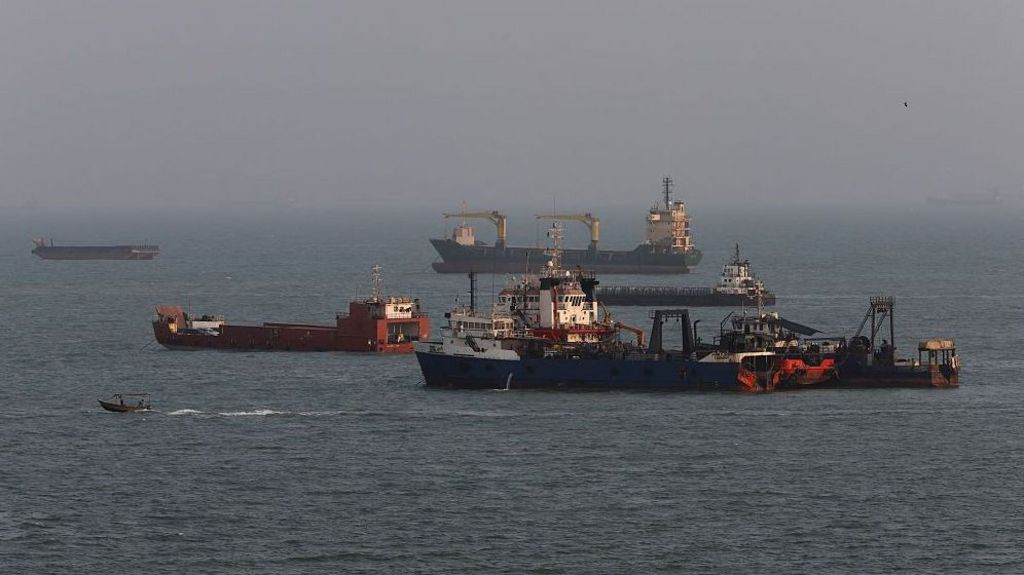
    The entire global aviation industry has turned its attention to the Strait of Hormuz, the critical global energy chokepoint that carried roughly one-fifth of the world’s total oil and refined fuel shipments before Iran effectively closed the waterway to commercial shipping when the war began in February. For African airlines, the fallout from this closure is far more severe than for carriers in other regions, due to longstanding structural weaknesses: higher baseline procurement costs and far smaller financial buffers to absorb unexpected market shocks.

    Berthe explained that while some airlines have introduced limited fuel surcharges to offset costs, most cannot pass the full brunt of price increases on to passengers for fear of crashing travel demand. Instead, they are forced to absorb the extra costs directly, eating into already limited profits.

    Supply disruptions have also sparked urgent concern at key African aviation hubs, including Nairobi in Kenya and Addis Ababa in Ethiopia, where consistent, reliable jet fuel access is non-negotiable for both regional and long-haul international operations. To adapt, a number of carriers have already begun restructuring their route networks: cutting flight frequencies, pausing service on low-demand routes, and reworking their entire schedules to mitigate rising costs and fuel supply uncertainty.

    The ongoing crisis has reignited longstanding calls for African nations to invest in expanding domestic petroleum refining capacity, to cut the continent’s heavy dependence on imported refined jet fuel. “We need African solutions to African problems,” Berthe emphasized. “Many African countries are major crude oil producers, yet we still rely entirely on non-African suppliers for the refined jet fuel our aviation sector needs to operate.”

    Attention is increasingly shifting to large-scale regional projects already in operation that could ease this dependency, most notably Nigeria’s giant Dangote Refinery. The facility is projected to become a major supplier of refined fuel across the continent, including to key aviation hubs in Kenya, Ethiopia, and South Africa. Already, major hubs like Addis Ababa have begun sourcing fuel from Dangote to stabilize supplies, a shift that Berthe says is already helping ease pressure on regional fuel supply chains amid the current crisis.

    Even amid these mounting pressures, demand for air travel across Africa remains robust. AFRAA projects annual passenger growth of roughly 6% for African carriers in coming years, a growth rate that outpaces many mature global aviation markets. Still, Berthe warned that prolonged market shocks from the Iran war could cause lasting damage to both airline profitability and cross-continental connectivity.

    “If this crisis drags on, the impact on African airlines will be very severe,” he said. “If Africa wants a truly resilient, sustainable aviation sector, it must secure its own fuel future.”

  • Elon Musk gets public trading of SpaceX underway from Texas

    Elon Musk gets public trading of SpaceX underway from Texas

    SpaceX, the aerospace manufacturer and space transportation firm founded by billionaire entrepreneur Elon Musk, has officially kicked off its public trading journey from a base in Texas, marking one of the most anticipated milestones in the history of corporate public offerings. In comments released alongside the launch, Musk opened up about the company’s humble origins, revealing that when he first established SpaceX decades ago, he personally estimated that the venture had less than a 10 percent probability of ever achieving meaningful success. Against all early projections, the aerospace trailblazer has evolved from a risky startup experiment into a global industry leader, and its impending public listing is set to become the largest initial public offering in corporate history. The launch of public trading from Texas underscores the company’s deep roots in the U.S. southern space corridor, a region that has become a central hub for SpaceX’s launch operations and long-term strategic development. For years, SpaceX has disrupted the global space industry, delivering groundbreaking advancements in reusable rocket technology, securing billions in NASA and commercial contracts, and advancing ambitious projects including the Starlink satellite internet constellation and the Starship development program targeted at deep space exploration missions to Mars. The transition to public ownership opens a new chapter for the company, allowing outside investors to take a stake in Musk’s long-term interplanetary vision while bringing unprecedented capital to accelerate its expanding portfolio of projects.