作者: admin

  • Aftermath of fatal Amazon cargo plane crash at Miami airport

    Aftermath of fatal Amazon cargo plane crash at Miami airport

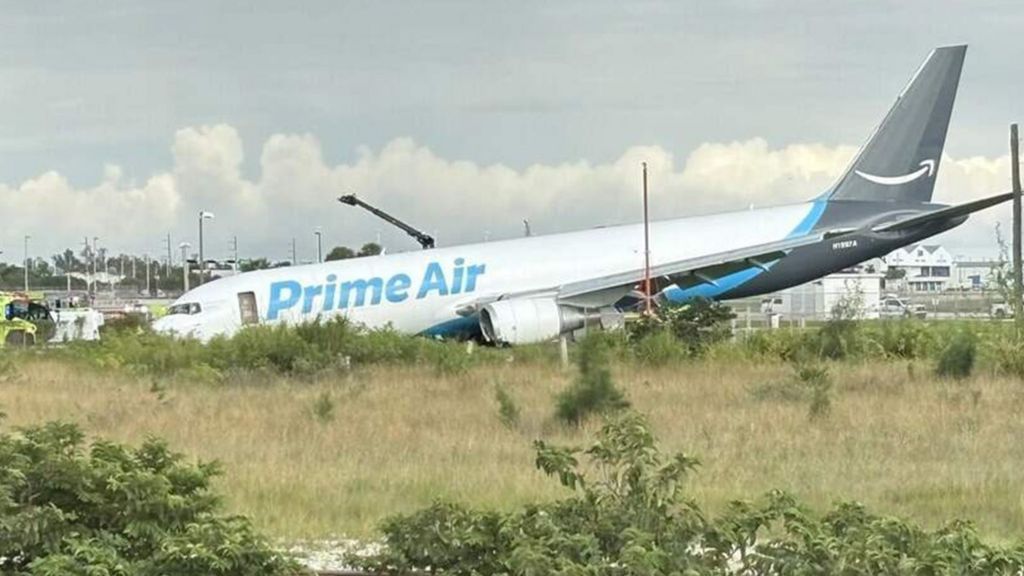
    A devastating aviation incident has left the Miami airport community reeling after a cargo plane operated for Amazon overran a runway during landing, erupted into flames, and claimed multiple lives in the process. Recently released on-site footage captures the grim aftermath of the crash, showing charred wreckage scattered across the ground beyond the runway threshold and emergency response teams working to secure the scene.

    Initial reports confirm the aircraft, which was carrying cargo for the e-commerce giant, failed to stop within the designated runway boundary during what was supposed to be a routine landing. The overrun pushed the plane off the paved runway surface, triggering an intense blaze that quickly engulfed the fuselage. Emergency crews from Miami-Dade Fire Rescue were dispatched to the scene within minutes, working to extinguish the fire and conduct search-and-recovery operations amid the smoldering debris.

    The crash has prompted an immediate investigation by the U.S. National Transportation Safety Board, which has dispatched a team of aviation investigators to examine all potential contributing factors, including weather conditions at the time of landing, aircraft maintenance records, and pilot operational decisions. Local airport operations were disrupted in the immediate aftermath, with multiple incoming and outgoing flights diverted to nearby airports while authorities cleared the crash site and secured the area.

    As details continue to emerge, the tragedy has drawn attention to the growing volume of air cargo traffic moving through major U.S. coastal airports, and ongoing conversations about runway safety infrastructure to prevent similar overrun incidents. At this stage, official statements confirm multiple fatalities, though the full list of victims has not yet been released as next-of-kin notifications remain ongoing.

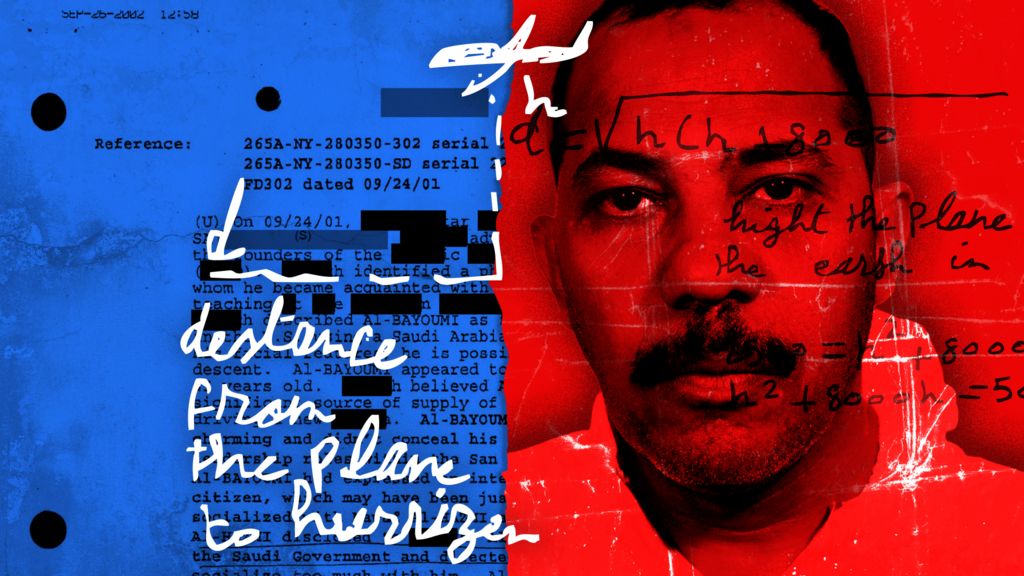
  • New videos of man in 9/11 lawsuit reveal extremist links

    New videos of man in 9/11 lawsuit reveal extremist links

    Twenty-five years after the deadliest terrorist attack on U.S. soil that killed nearly 3,000 people, newly unsealed evidence in the ongoing lawsuit brought by 9/11 victims’ families has exposed explosive new details about long-buried connections between a central suspect, senior Saudi government figures, and future al-Qaeda leadership — along with repeated failures by the FBI to disclose critical evidence to investigators, prosecutors, and the official independent inquiry into the attacks.

    At the center of the $1 trillion civil suit is Omar al-Bayoumi, a Saudi national who moved to San Diego in 1994 claiming to be an English language student. Court records show Bayoumi quickly abandoned his studies to focus on organizing religious events, and his name was found on the apartment lease of two of the 19 9/11 hijackers, Nawaf al-Hazmi and Khalid al-Mihdhar, who crashed a plane into the Pentagon. For decades, Bayoumi has denied any ties to extremism or being a Saudi intelligence asset, claims that the newly public video evidence directly contradicts.

    The BBC has obtained and verified never-before-seen video footage that the FBI acquired within days of the September 11, 2001 attacks. One clip, filmed in January 1998, captures Bayoumi embracing Anwar al-Awlaki, who would later rise to become the leader of al-Qaeda in the Arabian Peninsula before being killed in a 2011 CIA drone strike. A second video, recorded between 1997 and 1998 near San Diego, shows Bayoumi, Awlaki, and an official from Saudi Arabia’s Ministry of Islamic Affairs participating in a military-style paintball exercise. Participants are seen wearing military fatiguges, practicing urban combat drills, and shouting “Allahu Akbar” during simulated charges, with Bayoumi addressing Awlaki with the honorific title “Sheikh Anwar.”

    Additional footage also documents multiple private meetings between Bayoumi and Ministry of Islamic Affairs officials, including a public outing at SeaWorld where Bayoumi explicitly positioned himself to be recorded alongside the Saudi representatives. Established in 1993, the Ministry was long known to be dominated by hard-line Sunni clerics who exported radical Islamist ideology globally, spending hundreds of millions of dollars to build mosques and place ideological operatives across the United States.

    The explosive video evidence is not the only suppressed piece of evidence unearthed by the BBC’s joint investigation with Panorama and Radio 4, which reviewed thousands of declassified documents, court records, and interviewed dozens of former FBI agents and investigators involved in the case. When British Metropolitan Police arrested Bayoumi at his home in Birmingham, UK, just 10 days after the 9/11 attacks, officers seized more than 80 videotapes, thousands of pages of documents, and a handwritten diagram of an airplane accompanied by a mathematical descent equation written in Bayoumi’s own handwriting. Legal representatives for the 9/11 families describe the diagram as the long-sought “smoking gun” that proves Bayoumi had prior knowledge of the attack plot: the handwritten numbers calculate the altitude and distance required for a pilot to crash a plane into a fixed ground target. A federal judge overseeing the lawsuit ruled in 2023 that the document, on its face, connects Bayoumi to advance knowledge of the 9/11 attacks. Bayoumi claimed in 2021 court testimony that he collected random equations and could not recall writing the diagram.

    Within 48 hours of the seizure, copies of the plane diagram were delivered to the FBI’s liaison at the London police station where Bayoumi was being held, and passed between three senior FBI agents. Yet the British detectives interrogating Bayoumi were never informed of the diagram’s existence, nor were they briefed to question him about the paintball video or his ties to Awlaki. When Bayoumi’s seven-day detention window expired, U.S. Department of Justice officials rejected British investigators’ recommendation to extradite Bayoumi to the U.S. to face charges, claiming there was insufficient evidence — even though the critical evidence had been intentionally withheld from the prosecution team. Bayoumi was released in September 2001, and he has never been prosecuted.

    Multiple FBI agents interviewed by the BBC confirmed a pattern of deliberate evidence suppression spanning field offices. The diagram was couriered to the FBI’s New York field office, the lead agency for the 9/11 investigation, but no formal analysis report has ever been uncovered. Only one reference to the diagram exists in declassified FBI files, created 11 years after it was seized. The San Diego FBI field office, which was actively investigating Bayoumi’s local activities including his ties to the hijackers, repeatedly requested copies of all evidence seized in Birmingham but never received most of the materials. Rick Lambert, who led the San Diego 9/11 investigation, told the BBC that New York refused to comply with repeated requests, and that early access to the evidence could have allowed investigators to uncover the full plot network much faster.

    The paintball video faced a similar fate: a copy was sent to New York and viewed by agents, but it was never mentioned in official summaries of Bayoumi’s connections to extremism, and his long-standing relationship with Awlaki was omitted from all internal 2002 FBI and DOJ memos that otherwise noted Bayoumi’s anti-American and jihadist writings. Jeffrey Breinholt, former deputy director of counterterrorism at the Department of Justice who oversaw post-9/11 terrorism prosecutions, told the BBC that Bayoumi was initially identified as a high-priority candidate for charges, but the New York U.S. Attorney’s Office never submitted a prosecution proposal for approval. Breinholt noted that both the plane diagram and paintball video would have been more than enough evidence to secure a conviction on material support for terrorism charges, adding “we’ve convicted people for less.”

    Investigators also faced explicit political roadblocks when trying to question Saudi officials connected to Bayoumi. In 2001, Lambert’s San Diego team requested permission to interview multiple Saudi Ministry of Islamic Affairs officials in the U.S. whom they suspected of coordinating Bayoumi’s support to the hijackers. Permission was denied by FBI headquarters and the U.S. State Department. The following year, the Los Angeles FBI field office faced the same block when requesting to interview a Saudi religious diplomat who met Bayoumi immediately after his first meeting with Hazmi and Mihdhar. The State Department declined to comment on the BBC’s inquiry.

    The pattern of suppression extended to the 9/11 Commission, the independent congressional inquiry tasked with producing a full public account of the attacks. When the Commission interviewed Bayoumi in Riyadh in 2003, he had returned to Saudi Arabia following his release, and the interview was held in the presence of Saudi secret police, who later explicitly requested that Bayoumi be cleared of any wrongdoing. The final 2004 Commission report effectively exonerated Bayoumi, describing him as “obliging and gregarious” and concluding there was no evidence of extremist ties. But the BBC has confirmed that multiple Commission staff objected to the conclusion that Bayoumi was “unlikely” to have ties to Islamist extremists, and the final report was revised to attribute the claim only to “our investigators who have dealt directly with him.” Critically, the Commission was never given access to the plane diagram, the paintball video, or any of the other evidence seized by British police. Commission executive director Philip Zelikow declined to answer specific questions about the suppressed evidence, noting that the Commission’s findings had been reviewed twice by U.S. government bodies and that the panel was open about its uncertainties.

    The unsealed evidence comes as the long-running civil lawsuit brought by 9/11 families against the Saudi government moves forward, after a 2018 court ruling allowed the case to proceed and a 2021 executive order from former President Joe Biden ordered the declassification of thousands of 9/11 investigation files. Bayoumi and the Saudi government have never responded to the BBC’s requests for comment, and both have repeatedly denied any involvement in or prior knowledge of the 9/11 attacks, calling all allegations of complicity categorically false. The FBI has also declined to comment on the BBC’s findings, while the DOJ said it could not comment on 25-year-old decisions involving staff who no longer work at the agency.

  • ‘Nothing good was supposed to come out of me’

    ‘Nothing good was supposed to come out of me’

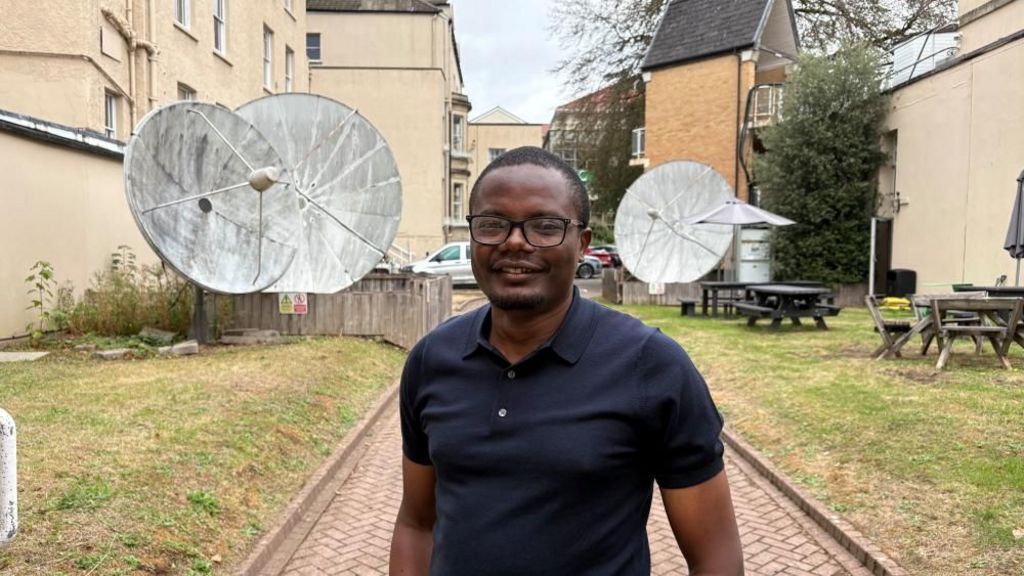
    Against all odds that stacked against him from early life, 43-year-old David Etor has gone from growing up in extreme deprivation in rural Nigeria to securing a respected position as a lecturer in electrical and mechanical engineering at the University of Bristol in the UK, opening up about his decades-long fight to escape systemic disadvantage in a candid new interview with BBC.

    Etor’s childhood was marked by deprivation so severe that even neighbors better off than his family categorized them as the poorest of the poor. Raised in a crowded multi-family compound where all residents shared a single kitchen, toilet, and bathroom, he did not learn to read and write until he was 12 years old, and many people around him went as far as to tell him outright that no meaningful success would ever come from him. The most haunting memory of that period, he recalled, is how his mother would fake cooking meals for their family simply to preserve their dignity: she would repeatedly boil water, stir it over the heat, and carry the pot back to their room as if she had prepared a full dish, hiding the fact that they had nothing to eat from the neighbors.

    “I didn’t see a way out” when I was young, Etor told BBC Radio Bristol’s John Darvall during an interview to mark the release of his first memoir, which chronicles his extraordinary life trajectory.

    His first major turning point came during a period of national service in Nigeria, when he noticed a widespread public health crisis affecting local communities: dozens of residents were being hospitalized with severe food poisoning because the common method of drying food for preservation — leaving it out in open fields — exposed it to contaminants and pathogens. Etor, who had long nurtured an interest in building and engineering, set out to create a low-cost accessible solution for his community. Drawing on his limited resources, he designed and constructed a homemade solar-powered drying oven that allowed locals to preserve food safely and affordably. The invention worked far better than he had anticipated, earning him a public award from the Nigerian state government and his first formal paid job.

    That breakthrough opened new doors for Etor, who eventually moved to the UK to pursue higher education. He completed his undergraduate degree at Newcastle University, went on to earn a PhD from the University of Durham, and ultimately landed his current academic post at Bristol.

    Sir Steve Webb, a former UK Member of Parliament and Pensions Minister who got to know Etor through their shared local church in Bristol, described Etor’s achievements as nothing short of remarkable. “David’s core message is that people should never be defined by their childhood upbringing or their starting background,” Webb explained. “No one should ever write off a person’s potential just because of where they come from.”

    Reflecting on how far he has come, Etor says he still sometimes pinches himself to believe his own success. “Growing up, everyone said nothing good was supposed to come out of me,” he said. “Now, I get to stand in a position I never could have imagined as a hungry child in that compound.”

  • Indonesia volcano eruption leaves 270,000 stranded as airports extend closure

    Indonesia volcano eruption leaves 270,000 stranded as airports extend closure

    A powerful eruption of Indonesia’s iconic Anak Krakatau volcano has triggered widespread travel chaos across the archipelago, leaving more than 270,000 passengers stranded after more than 2,000 flights were grounded and key airports extended shutdowns into a second consecutive day.

    The eruption, which began late Friday in the Sunda Strait roughly 150 kilometers southwest of Jakarta, has sent towering lava fountains streaming into the sky and plumes of volcanic ash drifting across heavily populated regions including the national capital and Lampung province. Seismic activity remained elevated and unstable throughout the weekend, with the most recent outburst recorded at 20:23 local time on Sunday, according to Indonesian geological authorities.

    By Monday, Jakarta’s Soekarno-Hatta International Airport—one of the busiest air hubs in Southeast Asia—and three additional affected airports announced extensions to their temporary closures until 18:00 local time Monday, after continuous monitoring detected unsafe levels of volcanic ash in surrounding airspace. Volcanic plumes reached altitudes of up to 6,000 meters on the Java side of the volcano and as high as 15,000 meters over Sumatra, according to Indonesia’s meteorological agency BMKG, with ash also falling across parts of Banten, Java’s westernmost province.

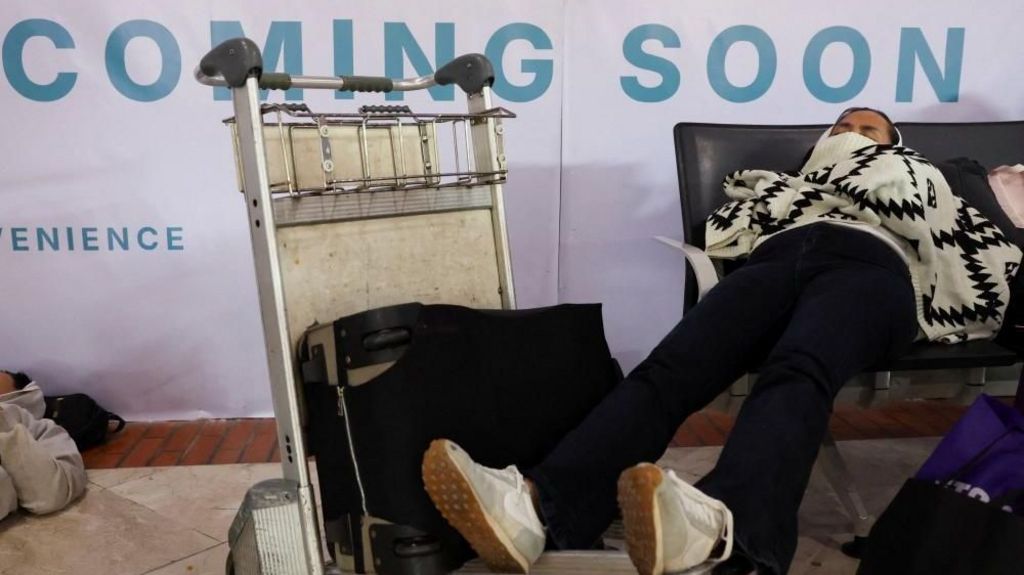
    The disruption has rippled across daily life in the region: local schools shifted all classes to remote learning, and commercial shipping operations through the busy Sunda Strait have also faced major interruptions. Long, snaking queues formed in departure halls at Soekarno-Hatta on Monday as stranded travelers crowded service desks to seek ticket refunds, rebookings, and updated information on rescheduled flights.

    For many travelers, the extended shutdown has turned routine or celebratory trips into stressful ordeals. A newlywed Malaysian couple, who just finished a week-long honeymoon in Bali, told reporters they face a five-day wait until their next available flight back to Kuala Lumpur, scheduled for September 11. “We only prepared enough money for our honeymoon and were supposed to go home yesterday,” 29-year-old Amir Hamzah told Malaysia’s national news agency Bernama. “We thought we would just sleep at the airport for a few hours and then take the morning flight home on Monday. We never thought we would end up being stuck here for days.”

    Other stranded passengers have adopted a resigned outlook amid the unpredictable natural event. “This is nature, after all. So I have to accept it, because when it comes to nature, there’s no choice. Now I’m just waiting for the next update from the airline,” 58-year-old business traveler Suhardi, who was due to travel from Jakarta to Lampung for work, told Reuters.

    Indonesia’s Geological Agency has issued a stark warning that the risk of additional large eruptions in the coming days remains high, while authorities have established a 3-kilometer exclusion zone around the active crater, barring all land access to the area and prohibiting commercial ships from passing through the restricted maritime zone around the volcano. In a reassuring update, however, officials confirmed there is no current tsunami warning linked to the volcano’s recent activity.

    Indonesia’s Transport Minister Dudy Purwagandhi noted that authorities cannot yet predict when the closures will end, due to the highly dynamic and shifting volcanic activity and weather patterns. “We cannot ascertain when this will end due to the dynamic weather,” he said, adding that air quality and ash spread monitoring is being conducted every 30 minutes across affected airport zones to track whether ash plumes are expanding or receding.

    Anak Krakatau—meaning “Child of Krakatoa”—rose from the sea in the early 1900s, forming in the massive caldera left by the catastrophic 1883 eruption of the original Mount Krakatoa, one of the most destructive volcanic events in recorded history. The volcano has seen sporadic activity for more than a century, but a major 2018 collapse triggered a massive tsunami that killed more than 400 people and displaced and injured thousands across coastal areas of Java and Sumatra.

    Indonesia sits along the Pacific Ring of Fire, a 40,000-kilometer horseshoe of tectonic activity that wraps around the Pacific Ocean basin. Roughly 90% of the world’s earthquakes and 75% of all active volcanoes on Earth—totaling 452 active volcanic systems—are located along the ring, making the country one of the most geologically active nations on the planet.

  • When lunch is the main event, here’s a ‘Greek Out’ take on halibut and halloumi skewers

    When lunch is the main event, here’s a ‘Greek Out’ take on halibut and halloumi skewers

    What does the term “main dish” actually mean? For most people across the globe, the phrase immediately brings to mind a formal evening dinner, typically following the rigid formula of meat paired with a starch side and a vegetable portion. This common assumption makes perfect sense: for millions of households, dinner is the largest, most structured meal of the day. But for Greek recipe creator Maria Koutsogiannis, author of the new cookbook *Greek Out*, a main dish is far less about a set structure and far more about a feeling that fits how you grew up eating. And for Koutsogiannis, that means the biggest meal of the day has always been lunch – and main dishes don’t have to be reserved for the dinner table at all.

    In an excerpt from her upcoming 2026 cookbook, Koutsogiannis shares one of her signature creative main dishes: handheld grilled skewers that pair flaky wild halibut with salty halloumi, sweet dried dates and fresh figs, balanced with warm aromatic spices. Designed to work as a hearty main for four people or a shareable appetizer for a crowd of 10, this dish brings together an unexpectedly harmonious blend of textures and flavors: chewy sourdough, creamy cheese, tender juicy fish, and layered notes of sweet, salty, and warm spice all in one portable bite.

    Many Greek recipes gravitate toward graviera for firm, salty grating and grilling cheese, but Koutsogiannis makes a deliberate swap for halloumi here. The choice is a practical one: halloumi holds its shape perfectly on the grill without melting or turning mushy, and its bold saltiness stands up beautifully to the mild, tender halibut for a balanced bite. The simple prep process starts with seasoning the fish: cubed 1-inch chunks of skinless wild halibut get coated in a dry rub of lemon zest, ground sumac, garlic powder, onion powder, kosher salt, black pepper, and just a hint of warm cinnamon, tossed with a splash of extra-virgin olive oil. Cubed sourdough, 1-inch chunks of halloumi, halved fresh figs, and pitted Medjool dates get a light toss in olive oil as well, before being threaded onto pre-soaked wooden skewers in repeating order: bread, halloumi, halibut, fig, and date, to create 10 complete skewers.

    The skewers are grilled over medium heat (around 400°F or 200°C) until each side develops deep caramelized char marks, with a total grilling time of 8 to 12 minutes to ensure the halibut cooks through and flakes easily. Once pulled off the grill, a quick drizzle of hot or regular honey, a squeeze of fresh lemon, and a sprinkle of bright mint leaves finish the dish. For an extra punch of garlicky creaminess, Koutsogiannis recommends serving with store-bought toum, a creamy garlic spread.

    Koutsogiannis is no newcomer to Greek cooking: the CEO and creator of the popular recipe platform FoodByMaria grew up working in her parents’ Greek diner and spent every summer traveling through Greece, building a deep foundation of traditional Greek food knowledge that she reimagines for modern home cooks. She now shares her approach with a community of nearly 4 million followers across social and digital platforms, splitting her time between New York City and Calgary, Alberta. This excerpt is printed with permission from Voracious, an imprint of Little, Brown and Company, with all content copyrighted 2026 by Maria Koutsogiannis.

  • Europe wrestles with impact of historic regional gains for Germany’s AfD

    Europe wrestles with impact of historic regional gains for Germany’s AfD

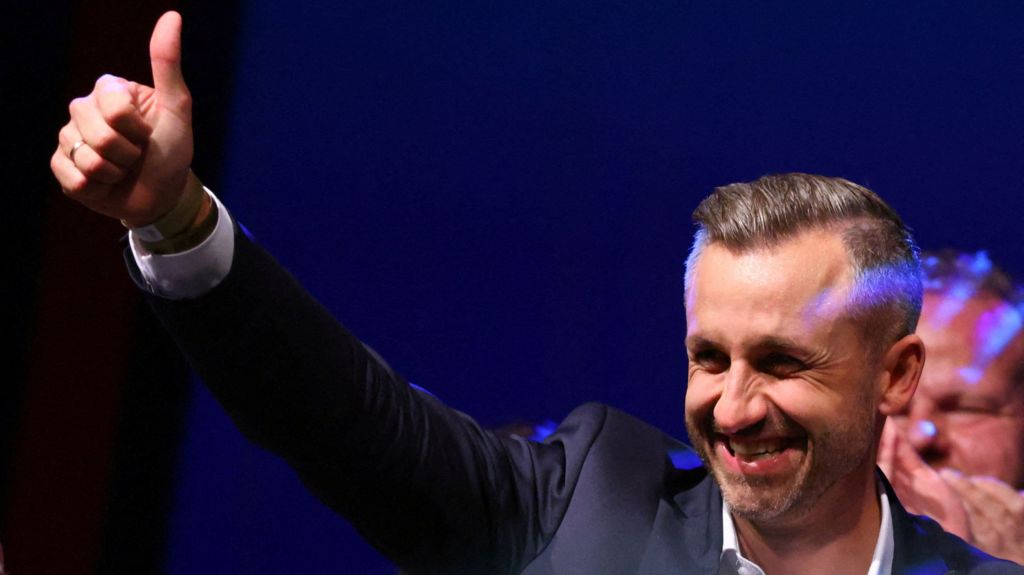
    On Sunday, the anti-immigration hard-right nationalist party Alternative for Germany (AfD) secured a historic breakthrough victory in regional elections in Germany’s eastern state of Saxony-Anhalt, sending immediate political tremors across Berlin, Brussels, and beyond. Political analysts and major media outlets have already framed the outcome as a seismic shift, a socio-political earthquake, and a defining watershed moment for modern German politics — a description that, despite the state’s small geographic and demographic size, proves anything but exaggerated.

    Saxony-Anhalt, one of Germany’s 16 federal states, counts only 1.7 million eligible voters out of the country’s total 59 million, and the AfD fell just short of an outright parliamentary majority. Still, the implications of the result stretch far beyond this small, economically struggling eastern region, touching every level of German and European politics.

    Domestically, the landslide result amplifies pressure on Germany’s already embattled centrist federal coalition in Berlin, and may well spell the political end for unpopular conservative Chancellor Friedrich Merz, who staked his political credibility on curbing the AfD’s growing support. This domestic political upheaval comes at a particularly precarious moment for the European Union, as the bloc confronts Russian military aggression in Ukraine, aggressive trade pressure from former U.S. President Donald Trump, and growing economic competition from China — and as Germany, the EU’s largest and most economically powerful member, finds itself increasingly weakened and distracted by internal strife.

    Most notably, the result marks the first major electoral landslide for a hard-right nationalist party in Germany since the collapse of the Third Reich in 1945, forcing a national reckoning with a country’s still-lingering legacy of Nazi extremism. German federal authorities have already formally classified parts of the AfD as anti-democratic, and the Saxony-Anhalt regional faction is explicitly labeled a far-right extremist extremist group. Long a dominant political force in eastern Germany, the AfD now stands as the most popular political party in national polling, a clear sign that Germany’s traditional mainstream political establishment has failed to address voter grievances.

    The shockwaves of the Saxony-Anhalt result have already reached across international borders. Within hours of exit polls being published, former U.S. President Donald Trump shared the result on his Truth Social platform, aligning the AfD’s nationalist, anti-immigration, “Germany for Germans” platform with his own “Make America Great Again” movement. Like many other European nationalist parties, the AfD has adopted core elements of Trump’s political playbook: attacking the credibility of mainstream media, questioning judicial neutrality, and promising to “make Germany great again.”

    Shortly after Trump’s post, Kirill Dmitriev, head of the Russian Direct Investment Fund and a close ally of Vladimir Putin, hailed the outcome as “historic,” dismissing Germany’s sitting national government as “discredited” and Chancellor Merz as “humiliated.” Dmitriev’s comments are no coincidence: Germany is the largest single military donor to Ukraine, and the AfD has openly pushed to end Western military aid to Kyiv, lift sanctions on Russia, and resume imports of cheap Russian energy — a policy that holds particular appeal for energy-hungry German industrial firms that suffered massive economic losses after Russia cut energy exports following the 2022 full-scale invasion of Ukraine. For voters in Saxony-Anhalt, Germany’s poorest region which still lags far behind western German states despite trillions of euros in integration spending since the fall of the Berlin Wall, the AfD’s pro-Russia stance and appeals to “Ostalgie” — nostalgia for the relative stability of communist East Germany — have resonated deeply.

    Across the European Union, the result has sparked widespread alarm, as the bloc prepares for a year of critical national elections across key member states including France, Italy, Spain, and Poland. EU leaders fear that the AfD’s victory will embolden far-right nationalist parties across the continent, a concern echoed by political actors on both sides of the debate. Santiago Abascal, leader of Spain’s nationalist Vox party, hailed the outcome as “a great hope for Germany and for Europe,” while French Europe Minister Benjamin Haddad, a close ally of centrist President Emmanuel Macron, warned that “this is a serious moment in Europe, seeing the far right win in a regional election in Germany.”

    While far-right parties across Europe differ in tone and policy — Marine Le Pen’s National Rally in France expelled the AfD from its European Parliament grouping two years ago for being overly radical — they share core anti-immigration and nationalist policy platforms that directly challenge the EU’s founding principles of cross-border unity and integration. Brussels fears that the rise of Eurosceptic nationalist parties will fracture European cohesion at a moment when unified action is more critical than ever, from countering Trump’s trade threats to checking China’s economic expansion to maintaining unified sanctions against Russia.

    European defense officials warn that softening stances on sanctions against Russia and wavering support for NATO collective defense — positions held by the AfD and many other European nationalist parties — only embolden Moscow, increasing the risk that the Kremlin could eventually launch attacks on NATO Baltic member states if left unchecked.

    At its core, the Saxony-Anhalt result is a stark warning to Europe’s traditional mainstream political parties and establishment institutions, which the AfD dismisses as a self-interested elite disconnected from ordinary voters. Across the continent, millions of voters report feeling let down by decades of leadership from traditional parties, grappling with growing anxieties over economic insecurity, crumbling public services, uncontrolled immigration, street safety, and the spillover effects of ongoing wars in Ukraine and the Middle East. The growing willingness of voters to support the AfD, which has never held national governing power and ran on the upbeat slogan “Anything is Possible” paired with a promise to restore national pride, does not mean they have all embraced extremism — it means they are ready to try something new.

  • Congo’s Ebola burial teams battle community anger, fatigue and fear of infection

    Congo’s Ebola burial teams battle community anger, fatigue and fear of infection

    In the conflict-battered province of Ituri, Democratic Republic of Congo, the ground zero of the deadliest Ebola outbreak on record, a small group of frontline workers confronts an unrelenting, life-threatening workload every single day. Yuma Adolphe leads one of these specialized burial teams, tasked with laying Ebola victims to rest safely and with dignity — a job that has pushed him and his colleagues to their breaking points as the out-of-control epidemic continues to claim more lives.

    As of the latest reporting, the outbreak has recorded more than 6,500 confirmed and suspected cases, with nearly 3,200 deaths already recorded. Since the epidemic first emerged in mid-May, regional health authorities have deployed dozens of small, specialized burial teams across high-transmission hotspots to manage the steady stream of fatalities. Each team member earns just $20 a day for work that exposes them to the deadly virus on a constant basis, places them in conflict with grieving local communities, and leaves them physically and mentally exhausted.

    The core of the conflict between burial teams and local populations stems from a collision between infectious disease protocol and centuries-old cultural tradition. Public health rules require trained workers to handle all remains of Ebola victims, because the virus spreads through direct contact with infected blood and bodily fluids — and experts confirm that deceased victims still carry high levels of active virus that can trigger new chains of transmission. For local communities, however, this restriction means they are barred from carrying out the traditional burial rites that are central to honoring their dead.

    This cultural rift has erupted into violence on multiple occasions across the outbreak’s front lines. Since May, Adolphe’s team and similar burial crews have faced repeated assaults from bereaved family members angry at being stripped of their ability to practice their customs. “Under normal circumstances, families would receive their loved one’s body and carry out all the rituals our African traditions demand,” Adolphe explained in an interview with The Associated Press. “But in this crisis, we cannot allow families to handle the body as they normally would. They are denied their sacred customs, and that’s what creates the deep misunderstandings that put us at risk.” Jeanne Alasha, health and humanitarian affairs advisor to Ituri’s military governor, warned that those who attack burial teams will face legal prosecution under regional emergency rules.

    Ituri’s already dire crisis is compounded by overlapping layers of instability: the province is not only the epicenter of the Ebola outbreak, but also the heart of an ongoing rebel insurgency in eastern Congo, and is governed by a military administration appointed by national authorities in Kinshasa. The outbreak has now spread to six eastern Congolese provinces, spread by rebel violence, mass population displacement, and constant large-scale population movement. Weak local healthcare and surveillance systems, incomplete contact tracing, and limited laboratory capacity have further hampered response efforts. Making matters worse, the outbreak is being driven by the rare Bundibugyo strain of Ebola, for which no fully approved vaccine or targeted treatment exists. While frontline workers have been given the Ervebo vaccine, which the World Health Organization confirms offers some protection against other Ebola strains, there is no definitive data that it works against the current outbreak’s strain.

    The true scale of the crisis is even larger than official figures reflect: health officials estimate the actual number of cases and deaths is likely three times higher than what has been recorded, as the virus continues to outpace containment efforts. The WHO has warned the outbreak could soon surpass the 2014-2016 West African Ebola epidemic, the current deadliest on record which killed more than 11,000 people. Compounding these challenges, frontline health workers have held multiple strikes over unpaid wages, slowing critical response work across the region.

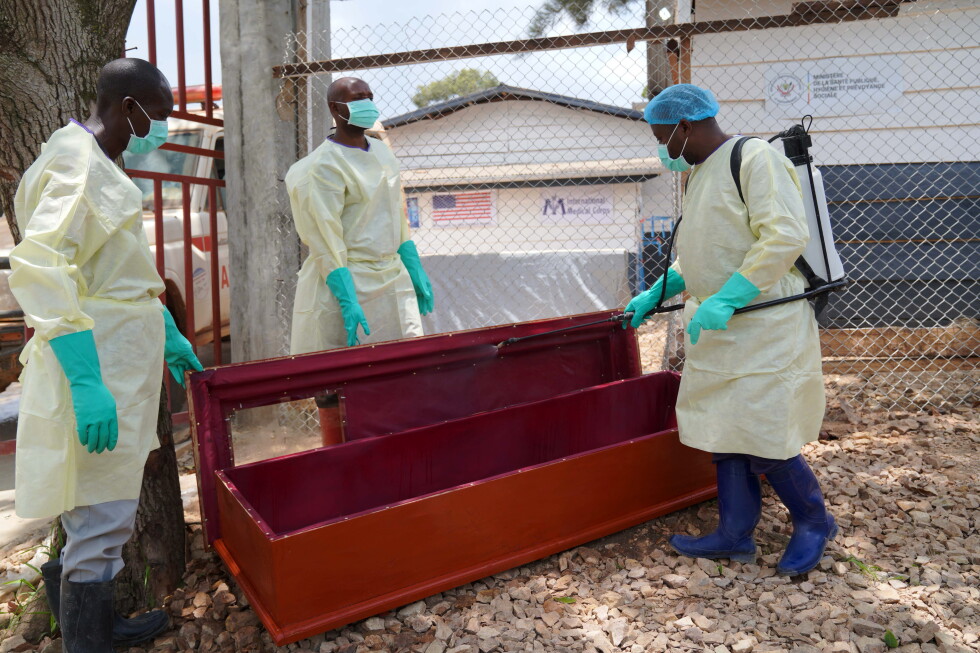
    The human cost of the crisis is visible in even the most recent burials. Shortly before noon on a recent Friday, 36-year-old Justine Habineno, a church chorister, was laid to rest in Ituri after dying from Ebola. Her mother, Sofia Wanito, recalled that Habineno only complained of mild headaches before being admitted to hospital and diagnosed with the virus. Under outbreak rules, Wanito was only allowed to see her daughter’s body through a hospital ward window, and was barred from touching the coffin. “We never had to deal with dying like this before,” Wanito said. “I couldn’t even cover her body with a sheet myself, couldn’t give her a final goodbye.” A lay catechist led the shortened ceremony, attended by dozens of community members, while Adolphe’s team — clad in full protective scrubs and boots — stood by to oversee the safe burial.

    For the burial team members, the danger of infection and community hostility is paired with constant physical and mental exhaustion, yet most say protecting their communities remains their top priority. Benjamin Muhindo, another team member, said his own family lives in constant fear he will bring the virus home, but he still shows up for work every day to ensure victims are buried properly. “Burial work during this epidemic is incredibly complicated,” Muhindo said. “We work under constant pressure, racing against the clock to stop the spread every single day.”

    Trauma experts note that the outbreak’s impact stretches far beyond the official case and death count, leaving deep psychological scars on both bereaved communities and the frontline workers who respond to the crisis. “The trauma of this outbreak doesn’t end when we count the latest case number,” said Rose Tchwenko, country director for the humanitarian organization Mercy Corps in Congo. Breaking the chain of transmission, she added, requires far more than medical intervention: “We need an integrated, holistic response that includes mental health and social support for both grieving families and the frontline workers who carry this heavy load.”

    After finishing Habineno’s burial last Friday, Adolphe acknowledged he is exhausted, but said his biggest concern remains the safety of his community. “We have no other choice,” he said. “We are here to protect our people, even when we have to push past our own limits to do it.”

    This reporting was contributed by Ope Adetayo from Lagos, Nigeria. The Associated Press receives financial support for global health and development coverage in Africa from the Gates Foundation, and maintains full editorial independence over all content.

  • Carbon credit financing emerges as Africa’s biggest bet for expanding clean cooking

    Carbon credit financing emerges as Africa’s biggest bet for expanding clean cooking

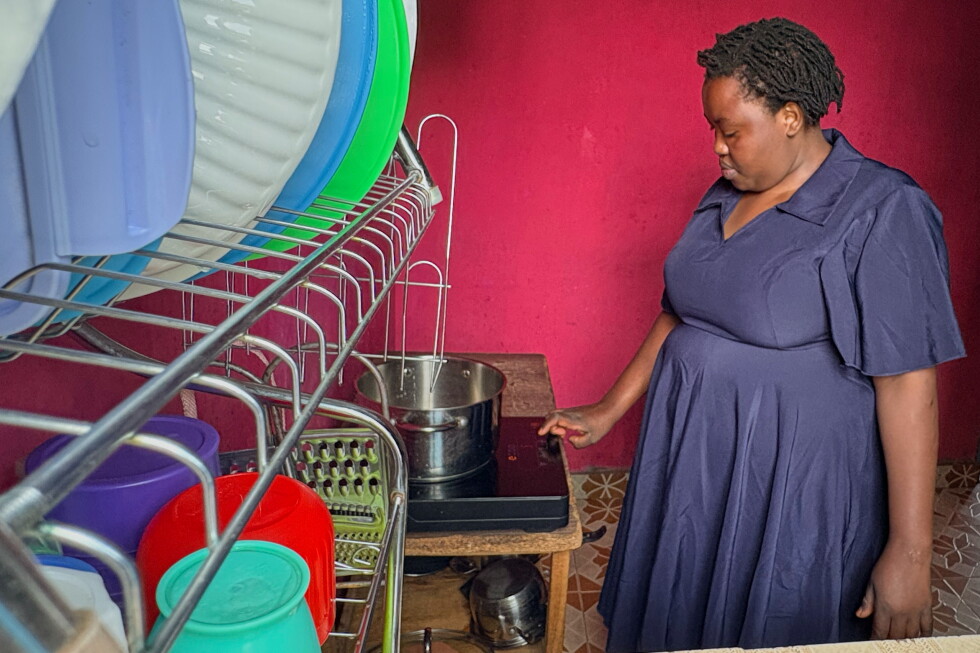
    NAIROBI, Kenya — For Nairobi-based business owner Mary Kavutha, morning cooking for her two young children looks drastically different today than it did two years ago. Where she once relied on a smoke-choking charcoal stove that cost roughly $1.15 per day in fuel, she now uses an induction cooker powered by electricity, with daily costs dropping to just 80 cents.

    “It cooks much faster, and is much safer because I have young children,” Kavutha explained. “With charcoal there was always smoke in the house. Now I can cook indoors comfortably, and I spend much less.”

    Kavutha’s shift to clean cooking is part of a growing movement across the African continent, where an estimated 1 billion people still depend on traditional charcoal and firewood for daily meal preparation. Data from the International Energy Agency (IEA) links household air pollution from these dirty fuels to roughly 850,000 premature deaths across Africa every year. Unlike many green transitions driven by climate advocacy, however, Kavutha and millions of other African households switched not for environmental reasons, but because carbon credit financing has made clean stoves far more affordable than their traditional alternatives.

    This financing model works by allowing clean cooking companies to secure upfront capital based on projected future revenue from carbon emission reductions. This capital is then used to heavily subsidize the upfront cost of stoves for low-income households, turning what was once an out-of-reach luxury product into an accessible everyday necessity.

    Clean cooking industry leaders are betting that despite longstanding criticism of carbon credit credibility, this financing model will become Africa’s most critical tool for expanding clean household energy and curbing deforestation driven by demand for firewood and charcoal. Recent momentum for the sector has been significant: in June, the IEA announced that Africa had secured $900 million in new financial commitments dedicated to scaling clean cooking technologies. Since the 2015 Paris Climate Summit, more than 30 governments representing 80% of Africans without access to clean cooking have rolled out 121 new policy frameworks to support the transition, according to IEA data.

    Tanzanian President Samia Suluhu emphasized the urgency of the shift during an IEA clean cooking conference co-hosted in Dar es Salaam earlier this year, noting that “Clean cooking is not a luxury, but an everyday necessity affecting every household.” Her remarks followed the African Union’s 2023 Dar es Salaam Declaration on Clean Cooking, adopted by 30 African governments to formalize regional commitment to the transition.

    Peter Scott, founder and CEO of Nairobi-based clean cookstove manufacturer BURN, described carbon finance as a transformative force for the sector. “The only way clean cooking is going to scale on the continent is through carbon project finance,” Scott said. “Governments earn revenue and customers get a product they would never have been able to afford without that subsidy.”

    BURN, which has distributed more than 7.3 million stoves across 11 African countries, attributes its growth not to stove design innovation alone, but to its carbon-backed financing structure. “Our biggest innovation is not the stove itself, but the financing behind it,” Scott explained. “Without that financing, many families cannot afford to switch.”

    The model works by cutting retail costs dramatically: an efficient biomass stove that would normally retail for $40 can cost end users as little as $5 after carbon credit subsidies. For higher-cost induction cookers like Kavutha’s, carbon credits are paired with flexible pay-as-you-go payment plans that spread costs across several months, making the technology accessible to households with limited upfront income. “Investors provide upfront capital that subsidizes the retail price of our stoves. In return, they receive revenue from carbon credits generated as households reduce their use of charcoal, wood and other polluting fuels,” Scott added.

    Despite this progress, the carbon credit model still faces significant scrutiny over transparency, credibility, and structural challenges. In recent years, industry leaders have adopted strict new standards and advanced measurement technologies — including Bluetooth usage monitoring, digital emissions verification, and real-time usage tracking — to address past criticism of unproven or overstated emission reductions.

    Critics still warn that overreliance on carbon credits to fund the clean cooking transition carries major risks. One high-profile setback came earlier this year, when leading Kenyan clean cooking firm Koko Networks — once held up as a poster child for Africa’s green transition — shut down in February after failing to secure required government authorization to sell carbon credits.

    George Mwaniki, WRI Kenya representative and head of Air Quality for WRI Africa, argues that carbon money can support the transition but should not be its foundation. The core structural issue, he explains, is that carbon financing typically disburses funds after emission reductions are achieved, while clean cooking companies need upfront capital to manufacture and distribute stoves before any emission cuts are generated.

    “Carbon financing is more of a second financing source,” Mwaniki said. “That creates a problem for clean-cooking companies as they need money to manufacture and distribute equipment before they can generate the emissions reductions that ultimately produce carbon credits. If we depend wholly on carbon credits to support the transition, it will be extremely slow and will not happen at the pace that we need it to.”

    Even with these shortcomings, the clean cooking transition is accelerating across the continent, as companies adapt their models to fit local economic and energy contexts. BURN, for example, has found electric induction cooking to be more viable in Kenya and Tanzania, while biomass stoves remain the preferred option for households in the Democratic Republic of Congo and Madagascar. Other regional players are carving out local niches: Eco Safi operates across Uganda, Kenya, and Malawi offering forced-draft pellet stoves and renewable fuel made from agricultural waste; Rwandan firm BioMassters produces locally manufactured smokeless solar-powered pellet stoves and biomass-residue fuel; and Kigali-based ENEDOM produces low-cost briquettes made from agricultural waste.

    For households like Kavutha’s, the policy and financing debates are secondary to the tangible improvements clean cooking has brought to daily life. “My kitchen is cleaner, my children are safer, and I spend less,” Kavutha said. “That is all that matters.”

    This coverage of climate and environmental issues by The Associated Press receives financial support from multiple private foundations, with AP retaining full editorial control over all content. More information on AP’s standards for philanthropic partnerships, a list of supporters, and funded coverage areas is available at AP.org.
  • Australians will be able to switch off social media algorithms under planned legislation

    Australians will be able to switch off social media algorithms under planned legislation

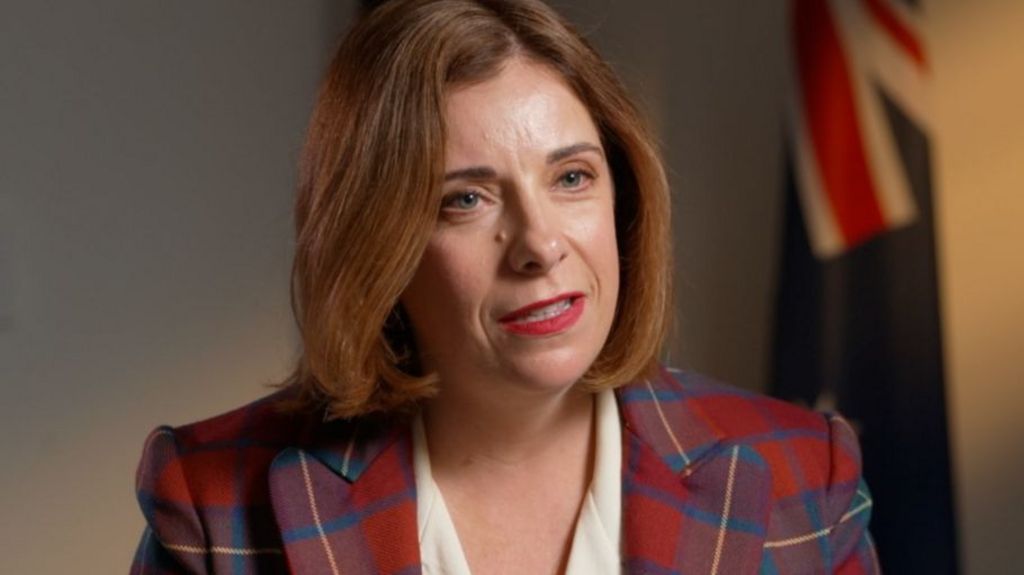
    Australia is set to advance landmark digital regulation this week, with Communications Minister Anika Wells set to introduce draft legislation that would require all major social media platforms to offer users the ability to disable content recommendation algorithms entirely. This new proposal builds on the federal government’s 2024 world-first policy that banned users under the age of 16 from accessing social media platforms, and marks another step toward enforcing formal duty-of-care obligations on an industry that has long operated with minimal domestic safety oversight.

    Under the terms of the planned reform, big tech firms including Meta, Google and TikTok would face substantial financial penalties if they fail to implement the optional algorithm disable feature for Australian users. Wells confirmed the government is still consulting technical experts to settle a key policy detail: whether algorithms will remain enabled by default (requiring users to actively opt out) or switched off by default (requiring users to opt in to receive algorithmically curated feeds. Mirroring the process that led to the under-16 social media ban, the government intends to introduce the framework legislation before finalizing all implementation specifics.

    Speaking to the Australian Broadcasting Corporation on Monday, Wells framed the policy as a measure centered on expanding user choice rather than restricting content. “We recognize that many Australians value algorithms, both for the personal enjoyment they deliver and the practical utility they provide, such as surfacing content from local small businesses in their community,” she explained. “Many users will choose to keep algorithms enabled. But we believe big tech has an obligation to offer customers that choice, and to respect the decision each individual makes. Big tech is not a protected species, and they must meet basic safety standards for their users.”

    The proposal has already sparked sharp political division. Opposition Liberal Party leader Angus Taylor has publicly stated he is highly skeptical of the plan, arguing that the reform could function as a de facto tool for government censorship. Taylor told News24 that he fears the policy is a deliberate attempt to restrict free expression on social platforms, and urged the Labor government to first address well-documented enforcement gaps in the existing under-16 ban. Wells, for her part, has pushed back firmly against these claims, telling Channel Nine’s *Today* show that “This is not about censorship. It is about requiring big tech to identify safety risks on their own platforms and take meaningful action to mitigate those harms.”

    Notably, Wells has acknowledged that the government has not yet issued any fines to tech firms for failing to enforce the 2024 under-16 ban, despite repeated independent research showing that the vast majority of minors who already had accounts on major platforms prior to the ban’s December implementation continue to access those accounts unchanged.

    Opinions among crossbench and opposition stakeholders are split: some opposition lawmakers have expressed support for the principle of expanding user control over feeds, while others echo Taylor’s concerns about free speech. The proposal also received high-profile backing from leading consent advocate Chanel Contos, who used an address last week at the National Press Club of Australia to urge the government to adopt an opt-in default for algorithmic feeds, a design that would make it far harder for platforms to evade the intent of the reform. Contos argued that unmoderated recommendation algorithms are directly driving the spread of harmful content that fuels rates of sexual violence across Australia, including exposing young users to misogynistic “manosphere” rhetoric and ideology.

    Beyond the algorithm reform, the upcoming draft legislation is also expected to introduce new mandatory requirements forcing social media platforms to proactively block and remove harmful content, including illegal pornography and content promoting disordered eating behaviors, before it can spread widely across user feeds. The bill is scheduled to be introduced to Australia’s parliament in the coming days, setting off what is expected to be a heated debate over the balance of digital safety, user choice and corporate freedom in the country’s growing regulatory framework for big tech.

  • The 49ers are refreshed in Australia and preparing for the opener vs. the Rams

    The 49ers are refreshed in Australia and preparing for the opener vs. the Rams

    MELBOURNE, Australia – In a groundbreaking moment for American football, the San Francisco 49ers have completed their trans-Pacific journey to Melbourne, shaken off most of the effects of international travel, and begun final preparations for their 2024 NFL regular season opener against the Los Angeles Rams this Friday at the Melbourne Cricket Ground.

    The 49ers departed their Bay Area base in California last Wednesday, touching down in southeastern Australia two days later. After granting players a full 24-hour break to explore Melbourne’s landmarks and local offerings, the franchise held their first game-week practice session on Monday at AAMI Park, with most players reporting they felt surprisingly refreshed following the long-haul flight.

    In a contrasting scheduling approach, their opponent the Los Angeles Rams have remained in the U.S. and will not arrive in Melbourne until Thursday, a plan Rams head coach Sean McVay has already framed as the optimal strategy for his squad.

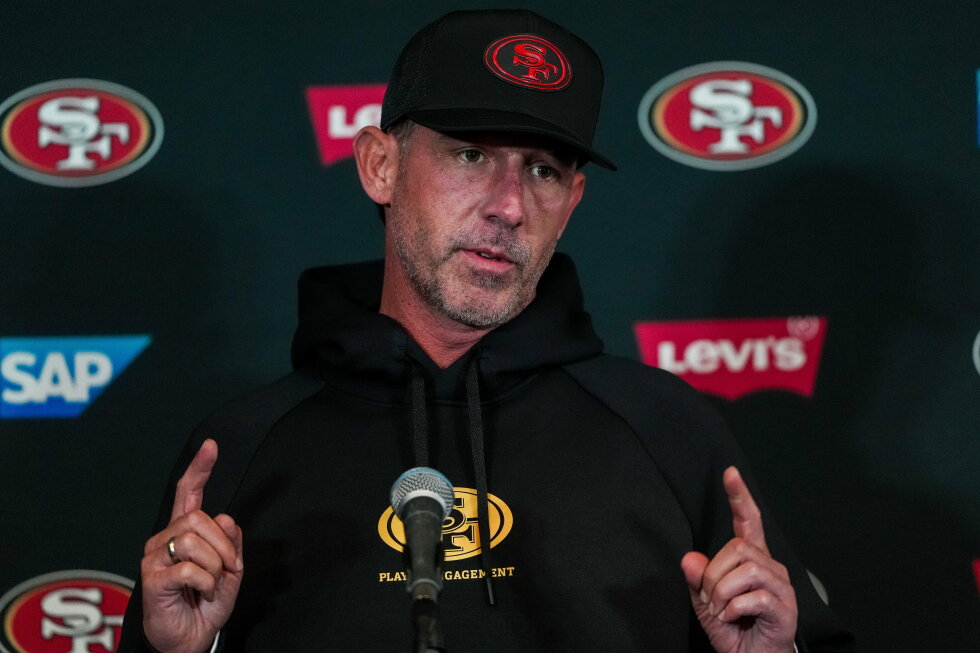
    Speaking after Monday’s practice, 49ers head coach Kyle Shanahan shared that while the majority of the team had adjusted to the new time zone within a couple of days, his own experience of the city has been limited to a short stroll and views from his hotel window, a reality of being deep in the competitive season. “It took a couple days to adjust but feeling real good today,” Shanahan said. “Most of the city I’ve seen out of my window, I’ve gotten to go on one walk. It’s a little different for coaches. We’re in the season so we’re not out much. But players had yesterday off so I know they got out a little bit and they’ve spoken very highly of everything.”

    Multiple 49ers players took advantage of their day off to attend an Australian Football League match at the Melbourne Cricket Ground, the iconic venue that will host the first ever NFL regular season game held on Australian soil. Star running back Christian McCaffrey did not attend the AFL contest, but said he had heard glowing feedback from his teammates, and has thoroughly enjoyed his first days in the country.

    McCaffrey explained that structured pre-travel guidance from the team’s performance and training staff helped minimize disruptive jet lag symptoms, leaving only the fatigue from 14-plus hours confined to an airplane as the main lingering effect of the journey. Now fully recovered, the All-Pro back said the entire squad is eager to take the field Friday. “This has been such a cool experience. Obviously, there’s a lot of question marks when you hear you’re playing in Australia, but since we’ve been here, man, it’s been so cool. The people are unbelievable. The food’s incredible. The coffee’s great. The atmosphere, you can already feel it. It’s just been a lot fun, so we’re super fired up we’re here.”

    Shanahan acknowledged that he was initially less enthusiastic about the overseas matchup when it was first announced. The original schedule would have seen the 49ers face the Rams in Los Angeles, where 49ers fans traditionally turn out in large numbers to give the team a de facto home field advantage. But after arriving in Melbourne and learning of the strong ticket demand from 49ers supporters traveling for the game, Shanahan’s outlook has shifted.

    “That was nothing against Australia or anything, that’s just about competition and how important our 17 games are,” he explained. “It’s cool for us just we always have an advantage of having one, I see it as one home game a year in L.A., just the way our fans are and take over that stadium. So it was disappointing to let them off the hook and get them out of that. Knowing how our fans roll, I have a feeling they won’t be much different here. I expect to have a good showing. … After being here for a couple days like this is the right time to be here it’s the right place to be and it’s right team to go against.”

    The 49ers did not release any injury updates following Monday’s practice, a departure from Shanahan’s typical routine. Due to the 17-hour time difference between Melbourne and California, the Rams will hold their first game-week practice on Monday U.S. time, which falls on Tuesday in Australia. To maintain a level playing field for injury reporting timelines, Shanahan opted to delay any announcements about the status of star players including tight end George Kittle and defensive end Nick Bosa.

    “Because we’re technically in the future, from where we’re from, and the Rams are in the present, I don’t have to talk about injuries until tomorrow,” Shanahan joked. “So I’m not talking about them.”

    One confirmed injury update was released: defensive end Sam Okuayinonu fractured his foot during the 49ers’ final practice in California before departure. He has been placed on the injured reserve list and is expected to miss the vast majority of the 2024 season.

    In other team news, the 49ers announced they will retain the same eight team captains from the 2023 season. Quarterback Brock Purdy will once again serve as a captain, alongside McCaffrey, Kittle, Bosa, fullback Kyle Juszczyk, offensive tackle Trent Williams, linebacker Fred Warner and cornerback Deommodore Lenoir.