作者: admin

  • UK imam’s house firebombed and suspicious device found at mosque in Bolton

    UK imam’s house firebombed and suspicious device found at mosque in Bolton

    In a sequence of shocking, suspected coordinated attacks targeting local Muslim community figures in Bolton, northern England, a suspicious device was discovered outside a local mosque, followed hours later by a firebomb arson attack on the home of a prominent local imam. The discovery of the suspicious package, which contained a battery pack, was made early Wednesday morning outside Zakariyya Jaam’e Masjid, local outlet Manchester Evening News first reported.

    By the end of the same day, the residential property of 42-year-old imam Hassan Patel, also located within Bolton, had been firebombed in a deliberate attack. Captured closed-circuit television footage documents a masked man, clad in a helmet and all-black clothing, approaching the driveway of Patel’s home. The footage shows the suspect lighting an accelerant-laden object, smashing a front window of the property and throwing the lit item inside.

    Patel resides in the home with his wife, four children, and nephew, bringing the total number of people in the property at the time of the attack to seven. Greater Manchester Police (GMP) confirmed that all seven residents managed to escape the attack without physical injury, and emergency services safely evacuated the entire family.

    In a statement following the attack, Patel expressed that his family has been left devastated by the brazen, cold-hearted act, which was carried out in broad daylight. He emphasized the attack was an intentional, dangerous act that deliberately put every member of his family at mortal risk. Patel, a long-time Bolton resident who has a track record of interfaith engagement with people across all religious and secular backgrounds, noted that law enforcement have so far not classified the incident as a hate crime. Even so, he argued that all potential motives must be examined thoroughly, with no lines of inquiry ruled out before investigations are complete.

    As of the latest update, GMP confirmed that a full criminal investigation is active and ongoing, and no arrests have yet been made. Detective Chief Inspector Mike Sharples of GMP released an official statement stressing that attacks of this nature have no place in the region, and no member of any local community should ever be made to feel unsafe, threatened or intimidated in their own home. Sharples acknowledged the understandable anxiety the incident has sparked across Bolton’s wider community, adding that officers are working at full speed to identify and prosecute the perpetrators. He confirmed that the attack is being treated as a deliberate, targeted act, and there is no ongoing threat to the general public. GMP has issued a public appeal for any members of the public with relevant footage or information about the attack to come forward to assist with the investigation.

    The dual incidents in Bolton have already sparked significant political fallout, with local leaders and party figures weighing in on the attack and the perceived lack of national response. Zack Polanski, leader of the Green Party, who was born in nearby Salford, publicly criticized Prime Minister Keir Starmer for failing to issue any public condemnation of the Bolton attacks. Writing on the social platform X, Polanski called the silence disgraceful, arguing that a troubling double standard has emerged: some attacks are met with widespread cross-party condemnation, blanket media coverage and urgent emergency response, while others are ignored entirely by senior national leaders.

    Local Labour MP for Bolton Yasmin Qureshi also spoke out, noting that the back-to-back targeting of a mosque and a local imam has left Muslim residents across the town feeling anxious about walking public streets and bringing their children to worship. Qureshi refused to downplay the nature of the attacks, stating that when a mosque and an imam’s home are targeted within hours of one another, the message to the local Muslim community is clear, and it is a message she recognizes too. “Islamophobia has no place in Bolton. None. Our Muslim community is part of the fabric of this town, and an attack on them is an attack on all of us,” Qureshi said.

    The Bolton incidents come one day after violent race riots broke out in Belfast, the capital of Northern Ireland, where hundreds of masked far-right rioters set fire to homes and vehicles owned primarily by ethnic minority residents. Rioters even set up informal checkpoints to stop and search vehicles for foreign nationals, following the arrest of a Sudanese asylum seeker charged with attempted murder earlier that same Tuesday. The suspect, Hadi Alodid, a 30-year-old who has been granted indefinite leave to remain in the UK, was filmed carrying out a knife attack on a man on a residential Belfast street, an act many political commentators have described as an attempted beheading.

    Following the Belfast attack, high-profile far-right activist Tommy Robinson (real name Stephen Yaxley-Lennon) and X owner Elon Musk both publicly called for anti-migrant protests across the UK. Anti-migrant demonstrations were subsequently held in Belfast, Glasgow and Southampton this week, raising tensions around interfaith and immigrant community safety across the country.

  • EU agrees to launch membership talks with Ukraine next week even as war with Russia drags on

    EU agrees to launch membership talks with Ukraine next week even as war with Russia drags on

    BRUSSELS – In a landmark decision with far-reaching geopolitical consequences for a war-ravaged Eastern Europe, the 27 member states of the European Union formally agreed Friday to launch full membership accession negotiations with Ukraine and neighboring Moldova, with the official opening ceremony scheduled to take place next Monday at an intergovernmental conference in Luxembourg.

    This move marks one of the most significant strategic choices the bloc has made in years, framing the future of the European continent amid Russia’s ongoing full-scale invasion of Ukraine. For Kyiv, which submitted its EU accession application barely five days after Russian forces crossed its border in February 2022, membership in the world’s largest single trading bloc is viewed as a critical cornerstone of long-term security and stability following the end of the current conflict. While Kyiv has also prioritized NATO membership for collective defense, that path remains blocked: the former Trump administration has repeatedly ruled out Ukrainian membership in the military alliance, other Western powers oppose accession while active hostilities continue, and Moscow cites NATO expansion as a core justification for its 2022 invasion. Notably, Russia has not publicly opposed Ukraine’s EU membership bid, unlike its fierce pushback against NATO integration.

    Moldova, like Ukraine, has long sought to escape Moscow’s sphere of influence, and Friday’s agreement brings the small Eastern European nation onto the same integration path as its larger neighbor.

    EU leadership praised the two countries for their progress on reform, even amid unprecedented wartime and political pressure. “This is a recognition of the determination, courage and hard work shown by both countries in advancing reforms, even in the face of immense challenges,” EU Council President António Costa and European Commission President Ursula von der Leyen said in a joint statement. The pair framed the decision as a strategic investment that will strengthen “peace, security and prosperity across our continent,” adding that it sends a clear message “that the EU’s offer of peace, stability and opportunity is unmatchable.”

    The accession process is a years-long, rigorous path that requires candidate countries to negotiate alignment with 35 distinct EU policy chapters, covering everything from agricultural regulation to internal trade standards. The opening conference on Monday will kick off negotiations on the first cluster of chapters, focused on the core founding values and principles that underpin the EU bloc. Every step of the process – from opening each individual chapter to closing it ahead of full accession – requires unanimous approval from all 27 existing EU members. For years, Hungary maintained a hardline blockade on opening negotiations, but the recent formation of a new government in Budapest has softened the country’s opposition, clearing the way for Friday’s unanimous agreement.

    While the EU has praised Ukraine for pushing through ambitious reforms even amid active war, deep concerns remain among member states about persistent corruption gaps and shortcomings in judicial standards. The path to full membership remains uncertain, with multiple European capitals pushing for alternative interim arrangements to bring Ukraine closer to the bloc faster without granting full membership rights immediately. Last month, German Chancellor Friedrich Merz called on EU partners to consider a new model of associate membership for Ukraine, a proposal designed to reinvigorate efforts to reach a resolution to the conflict more than two and a half years after Russia’s full-scale invasion. Under Merz’s framework, Ukraine would participate in EU meetings and hold non-voting observer positions in both the European Commission and European Parliament, stopping short of full membership. France and the Netherlands have also floated similar incremental models to accelerate integration while bypassing the full accession process’ slower timelines.

    Friday’s decision comes as the EU grapples with shifting global diplomatic dynamics: U.S.-mediated peace talks between Kyiv and Moscow remain stalled, with U.S. foreign policy attention increasingly diverted to escalating tensions related to the Iran conflict. Some European capitals are now weighing whether the bloc should pursue its own direct negotiations with Russian President Vladimir Putin to move the peace process forward, though no consensus on that step has yet emerged.

  • Plane trouble delays pope’s return after migrant-focused Spain visit

    Plane trouble delays pope’s return after migrant-focused Spain visit

    Pope Leo XIV’s seven-day visit to Spain, a trip defined by its laser focus on the global migrant crisis, concluded Friday with an unexpected twist: a last-minute technical fault with his chartered Iberia flight forced a three-hour delay to his return journey to Vatican City.

    The 70-year-old head of the global Catholic Church, which counts 1.4 billion adherents worldwide, had already boarded the aircraft at Tenerife’s airport and been formally waved off by Spanish King Felipe VI when the flight captain notified passengers of an unserviceable engine issue. Pope Leo immediately disembarked, and arrangements were quickly made to fly him back to Rome aboard the Spanish royal air force’s Falcon jet, which had carried King Felipe to the Canary Island earlier in the day. The rest of the papal entourage, including accompanying journalists and Vatican officials, were set to depart on a backup plane Iberia dispatched from Madrid.

    The departure delay capped a final day heavily focused on the migrant experience in the Canary Islands, which has become the primary entry point for thousands of people undertaking dangerous sea crossings from North Africa to reach European soil. Before traveling to the airport, Pope Leo led an open-air mass at the Port of Santa Cruz de Tenerife, drawing an estimated crowd of 40,000 worshippers and attendees.

    Earlier that morning, during a meeting with local migrant support organizations, the pontiff shone a light on the often-overlooked struggles migrants face after reaching European shores, warning of a “silent shipwreck” that leaves many isolated, unemployed, and disconnected from social support. “Too many arrive only to be left alone in a city, without a voice, without community ties, stable work or a sense of security,” he said. He also issued a forceful rebuke to human traffickers who profit from dangerous irregular migration routes, urging them to “stop and repent” — a comment that drew loud applause from the gathered crowd.

    During his public remarks, Pope Leo also laid out clear guidance for migrant integration, urging new arrivals to learn the language of their host country, respect local laws, and engage with national customs. He doubled down on a core message of his papacy earlier in the trip: “Human dignity has no passport,” a line he delivered after laying a wreath at sea in Arguineguín, Gran Canaria, to honor the thousands of migrants who have died attempting to cross to the Canary Islands. He also blessed a weathered blue wooden cross crafted from debris from a migrant boat that made landfall on the island.

    Attendees at the papal events praised the pope’s unwavering focus on migrant issues. Candida Feo, a 54-year-old local who brought her two children to see the pontiff, told Agence France-Presse that drawing global attention to the crisis was a critical step forward. “If people come here, it’s for a reason. Anything that helps focus attention on the issue seems very good to me,” she said. For 16-year-old Aliu Ceesay, a Gambian migrant who arrived in the Canaries by boat just one month prior to seek work to support his family, the pope’s message felt deeply personal. “He is so kind, so good. He doesn’t care if we are black or white, Muslim or Christian. He wants to help us,” Ceesay said while waiting to catch a glimpse of the pontiff.

    Data from the International Organization for Migration underscores the severity of the crisis: nearly 1,200 people died or went missing on the crossing from Africa to the Canary Islands last year alone, making it one of the deadliest irregular migration routes on the planet.

    Beyond his work highlighting migration, Pope Leo’s week-long visit included several major stops across mainland Spain. In Madrid, he addressed the Spanish parliament, where he repeated his call for “safe and legal pathways” for migration and a “respectful welcome and real opportunities for integration” for new arrivals. He also celebrated an open-air mass that drew more than one million attendees, and held a private hour-long meeting with six survivors of clerical sexual abuse — a longstanding priority for the modern papacy. In Barcelona, he marked the 100th anniversary of architect Antoni Gaudí’s death by blessing the final completed tower of Gaudí’s iconic Sagrada Família Basilica. The new tower, the tallest of the basilica’s 18 spires, brings the structure to its full planned height of 172.5 meters, making it the tallest church in the world.

    The pope’s focus on migrant issues will continue next month, when he is scheduled to travel to Lampedusa, the Italian island that has also emerged as a key entry point for migrants arriving in Europe, further cementing the issue as a defining priority of his early papacy.

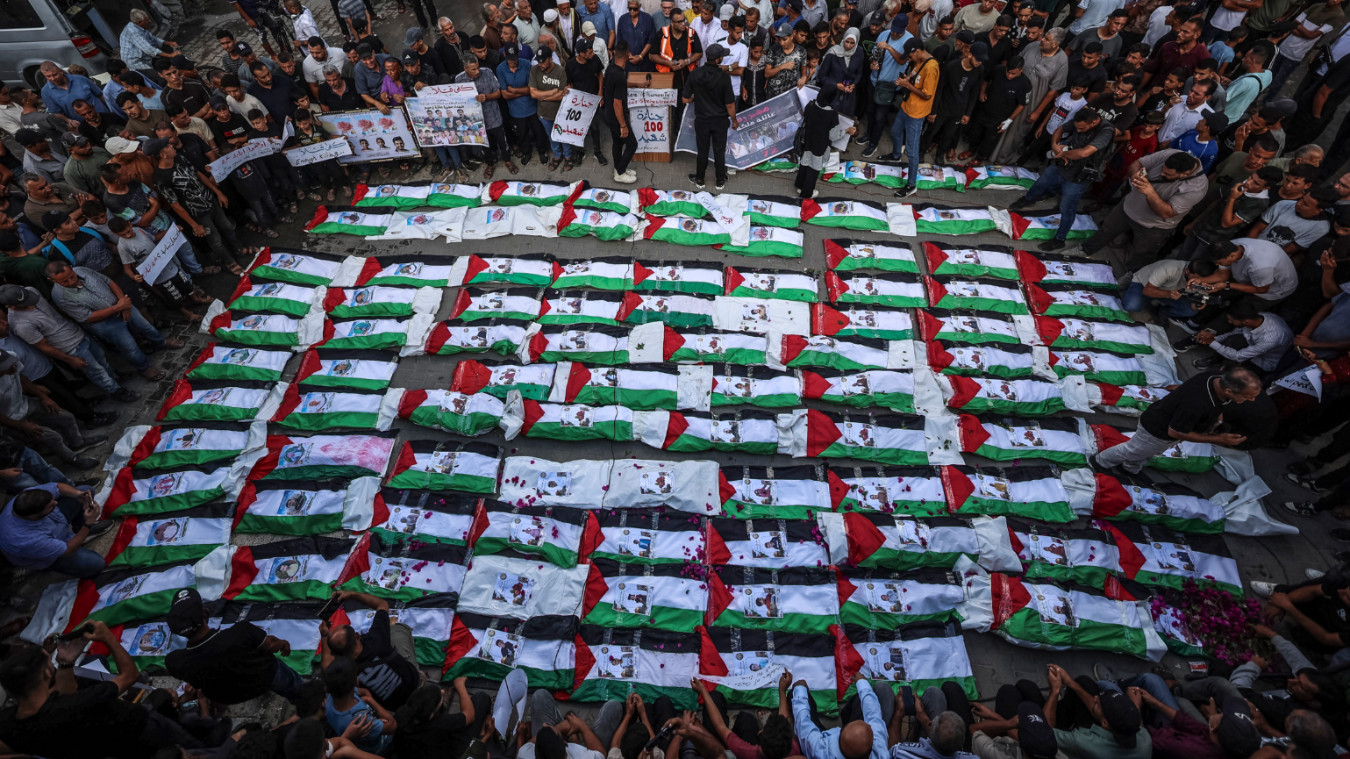
  • Israel expels Palestinians from their homes to use them as military posts

    Israel expels Palestinians from their homes to use them as military posts

    For Mohammed Rahal, a Palestinian father who survived 18 months of displacement after Israeli forces drove him from his original home in Jenin Refugee Camp in the occupied West Bank, the dream of stability was short-lived. After pooling every resource he and his sons could gather to purchase a new home on the edge of the camp and working up to 20 hours a day for months to ready the space for his extended family, Israeli soldiers arrived at his door with a new order: evacuate the property immediately so it could be converted into an Israeli military outpost for a minimum of two months.

    Rahal’s story is far from an isolated case. The seizure of private Palestinian civilian homes for military use has become a rapidly growing practice across the occupied West Bank, a trend that has accelerated sharply since October 2023, amid a broad intensification of Israeli military crackdowns across the territory. When Israel launched a large-scale offensive across the northern West Bank districts of Jenin, Tulkarm and Tubas in early 2025, the operation left a trail of destruction across the region’s refugee camps: hundreds of structures were demolished, burned or seized by military forces, pushing nearly 40,000 Palestinians from their homes. The overwhelming majority of those displaced are residents of Jenin Refugee Camp.

    Human rights organizations and global policy experts have formally condemned the campaign, accusing Israel of committing war crimes, crimes against humanity, and ethnic cleansing in its West Bank offensive. Rahal was among the first to flee when the January 2025 offensive began; his original multi-family building, home to him, his five brothers and all their extended families, was partially destroyed in the operation. For 14 months, his entire clan crowded into overcrowded student housing at the Arab American University, a period he describes as marked by unrelenting hardship. Determined to rebuild a stable life, the family scraped together savings to buy their new property in Jabriyat, a hillside neighborhood overlooking Jenin Refugee Camp.

    The Rahal home sits on the edge of a seven-dunum plot of land that Israeli forces seized in May 2025, despite the area falling under Oslo Accords designation as Area A — territory formally administered by the Palestinian Authority. Just two months after the Rahal family moved in, Israeli soldiers arrived on a Tuesday and ordered them to evacuate within 10 minutes. After negotiations with the family, the deadline was extended to the following Thursday morning, giving Rahal just 48 hours to remove all the furniture and belongings he had spent weeks acquiring and arranging. Today, he waits for the evacuation order to expire on August 23, clinging to faint hope he will be allowed to return, but deeply skeptical of Israeli promises.

    “Even though the order is for two months, the occupation is unpredictable,” Rahal said. “They could extend the takeover for another period, and then another, until the house is seized permanently.”

    Down the street from Rahal, Fidaa Abu al-Haija received an identical evacuation order. Her home overlooks the newly seized land, a location that has fueled widespread local fears that the military takeover is intended to be permanent, with Israeli forces planning to build a full military camp across the confiscated plot, expanding seizures to encompass the entire neighborhood over time. Abu al-Haija lives in the home with her three children; her husband has been held in an Israeli prison for nearly four years. Her brother-in-law, also imprisoned by Israel for more than four years, received an evacuation order for his nearby home as well, forcing his family of four to leave their property too.

    Long before the formal evacuation order, Abu al-Haija said, Israeli forces carried out repeated raids on her home during the Jenin offensive, traumatizing her young children and damaging rooms so badly that much of her furniture is already unusable. She often was forced to abandon trips home from work mid-journey, when military checkpoints and deployments blocked access to the neighborhood. “I knew they wouldn’t leave me alone,” she said. The formal eviction order marks a dangerous new escalation, she added, and with her husband’s original family home inside Jenin Refugee Camp already destroyed, she has no safety net. As workers carried her belongings out of her home, she told reporters she was scrambling to find an affordable rental while trying to salvage what little remains of her family’s life.

    “The furniture is piled up outside because I want to save it before it’s destroyed,” she said. “We’ve been living through this tragic situation for more than a year.”

    Jabriyat’s vantage point overlooking Jenin Refugee Camp makes it strategically valuable to Israeli forces, and increasingly dangerous for the Palestinian residents who call it home. Mu’tasim Istaiti, a neighbor who already survived more than a year of displacement when soldiers seized his home during the initial offensive, returned to the neighborhood to protect his property only to find the area transformed. “Since we came back, it feels like we’re living in a ghost town,” he said. “All we hear are military vehicles. This used to be a vibrant neighborhood. Now it’s almost deserted.” Over safety fears, he rarely allows his children to leave the home unaccompanied, and Israeli forces have blocked the neighborhood’s main access road with barbed wire, forcing residents to take a dangerous, unpaved alternative route. “We know staying here is dangerous, but we want to protect our homes until the very last moment,” he said. “We don’t know what the future holds for our children and us after the decision to confiscate the land near us.”

    Mohammad Jarrar, mayor of Jenin, told Middle East Eye that Jabriyat is one of the city’s largest residential neighborhoods, home to roughly 10,000 Palestinian residents. At least 15 families have already been forced from their homes in the neighborhood since the early 2025 offensive began, and Israeli restrictions have blocked Jenin municipal crews from accessing areas near the camp to deliver basic services to residents who remain. In one case, a broken sewage pipe has flooded local streets, creating a severe public health hazard, but workers have not been permitted to reach the site to make repairs.

    “We fear the displacement of these families will become permanent,” Jarrar said. “The occupation appears intent on displacing as many residents as possible out of the neighborhoods surrounding the camp.” According to Jenin municipal data, approximately 800 families have already been displaced from neighborhoods across Jenin city, not counting the thousands more displaced from the Jenin Refugee Camp itself. “Even those who remain are being pressured through the withholding of services,” Jarrar added. “The aim is to make life so difficult that people leave on their own.”

    Global human rights advocates warn that the accelerating pattern of home seizures and forced displacement in northern West Bank marks a dangerous escalation of Israel’s decades-long occupation, with long-term consequences for the territorial and humanitarian status of the region.

  • Sadiq Khan says he told Met Police to investigate Great Israeli Real Estate event

    Sadiq Khan says he told Met Police to investigate Great Israeli Real Estate event

    A brewing controversy over an upcoming real estate event in London that promotes properties linked to illegal Israeli settlements in the occupied West Bank has drawn public opposition from London Mayor Sadiq Khan, who has confirmed he has raised concerns about the gathering with UK law enforcement and senior government departments.

    Khan made his opposition official during Friday’s Mayor’s Question Time session at the London Assembly, responding to a question tabled by Zack Polanski, assembly member and leader of the Green Party of England and Wales. The gathering, branded the Great Israeli Real Estate Event, is scheduled to open this Sunday, though organizers have refused to publicly disclose its exact location.

    In his address to the assembly, Khan made clear his position on the issue: “Israeli settlements in the West Bank are unjustifiable and illegal under international law. They are deeply tied to the ongoing displacement of Palestinians. I condemn any attempt to sell property in the settlements in the West Bank, be that in London or anywhere else in the world.”

    The mayor added that his shared concerns over the event’s planned presence in London had prompted direct outreach to the Metropolitan Police (Met), the UK’s capital police force. “I’m informed that any allegations of criminality relating to the potentially unlawful sale of property at the event would be assessed by the Met with a view to investigation,” Khan said. When pressed by Polanski on whether he had contacted the UK foreign secretary, Khan confirmed his office had already established communications with both the Foreign Office and Home Office, declining to share further details on the discussions for operational reasons.

    Following the question time session, Polanski told Middle East Eye (MEE) he welcomed Khan’s strong rebuke of the event and its ties to activity that violates international law, but stressed that concrete action is now needed. “In practical terms, the Met Police should shut down the event on the grounds that it is unlawful. London risks becoming complicit in settlement expansion if people in our capital are profiting from the theft of Palestinian land,” Polanski said.

    Legal advocacy groups have already formally requested a police investigation into whether the event should be blocked under a UK Serious Crime Prevention Order (SCPO), a civil court order designed to restrict involvement in serious criminal activity. In a letter sent to the Met on Friday, the International Centre of Justice for Palestinians (ICJP), the European Legal Support Center and the Public Interest Law Centre called on officers to assess whether reasonable grounds exist to investigate potential offenses stemming from the event’s organization, promotion and facilitation.

    The letter specifically asks the Met to examine whether any financial flows tied to the event qualify as criminal property, and to consider applying for a SCPO if evidence confirms serious criminal conduct. “Palestinian land is not for sale, and occupation is not a real estate opportunity,” said Órlaith Roe, ICJP’s public affairs and communications officer. “This order sets out further evidence of the serious concerns surrounding the illegality of this event, concerns we have already raised with the Metropolitan Police.”

    MEE’s prior reporting has confirmed direct links between the event’s participating companies and illegal settlement activity. Multiple participating firms openly advertise or have built projects in illegal Israeli settlements across the occupied West Bank and East Jerusalem: Harey Zahav advertises properties in Negohot, a settlement in the southern Hebron Hills; the Meshulam Levinstein Group has constructed residential and commercial projects in illegal settlements including East Jerusalem’s Homat Shmuel neighborhood; Tivuch Shelly real estate agency lists properties in the Ma’ale Adunim settlement; and Africa Israel Residences, part of the Africa Israel Group, has been involved in multiple settlement projects across the West Bank and East Jerusalem. At the time of writing, the event’s website displays a map of Israel that incorporates all occupied Palestinian territories, though a reference to the Gush Etzion settlement cluster was removed from the site earlier this week.

    The UK Foreign Office has already confirmed that Israeli settlements violate international law and pose a major barrier to lasting regional peace. Just days before the event, the UK government updated its official Business Risk Guidance to explicitly warn British citizens and businesses against engaging in any economic or financial activity tied to illegal Israeli settlements. When MEE requested comment from the Foreign Office earlier this week, a spokesperson said the government would continue coordinating policy with international allies and pursue concrete action to counter settlement expansion.

    Event organizers have pushed back against the allegations in comments to Jewish News, denying any plans to feature properties from the occupied West Bank. They claimed “all exhibitors, without exception, will provide information about properties and projects within the Green Line” and dismissed criticism as “ridiculous allegations” motivated by anti-Israeli sentiment.

    This is not the first time the Great Israeli Real Estate Event has sparked controversy: the gathering was held in New York City last month, where reporting from The Intercept confirmed at least one exhibitor advertised land sales in illegal occupied settlements. New York Mayor Zohran Mamdani also publicly opposed the event, and Amnesty International UK has this week called on the UK government to take immediate action to block the London gathering from going forward.

  • ‘We knew it was coming’: Belfast violence leaves Syrian supermarket in ruins

    ‘We knew it was coming’: Belfast violence leaves Syrian supermarket in ruins

    In a strongly loyalist Protestant neighborhood of south Belfast, two Syrian migrants who spent years building a small community business now face the aftermath of destruction for the second time in two years. For managers Mohammed and Sultan, the charred remains of their Sham supermarket on Donegall Road have left them with little choice but to flee the area they have called home for over a decade.

    Mohammed, who fled Syria’s conflict in 2014 with a permanent shrapnel wound to his leg and gained British citizenship a year later, says the violence is inevitable. “It’s about to kick off,” he warned before the attack. His younger business partner Sultan, who was just 10 years old when his family escaped war-torn Aleppo to rebuild their lives in Northern Ireland’s capital, echoes the grim realization: “We’ve got to go.”

    The pair pack into Mohammed’s car, its interior cluttered with the messy, familiar chaos of a life with six children – half-eaten croissants tucked under seats, discarded clothing piled against the baby seat, one window stuck permanently open. Minutes later, they sit down at a nearby Lebanese cafe to reflect on the total loss of all their hard-won progress.

    Mohammed has managed the neighborhood supermarket since 2021, and this latest arson marks the second time masked gangs targeting ethnic minority-owned businesses have destroyed the property. Just three days before the attack, the store stood fully stocked: produce lined the front display, aisles were clean and welcoming, and new refrigeration units – installed to replace equipment destroyed in the 2024 attack – were fully operational. Today, the entire building is gutted by fire, its facade and sections of the residential flats above blackened by soot. The heavy protective security shutters are split clean in two, a discarded wheelie bin sits abandoned outside, and pigeons pick through the charred rubble for scraps of food. “They burned it all,” Mohammed confirms plainly.

    The attack came in the wake of a fatal stabbing carried out by a Sudanese man on local resident Stephen Ogilvie, an event the two business owners knew would act as a tinderbox for sectarian and anti-immigrant violence. It would mark the third consecutive summer of racist unrest in Belfast. “We saw some things on Facebook, so we knew it was going to happen,” Mohammed explained. Out of respect for Ogilvie, he voluntarily closed the store on Tuesday, but the gesture did nothing to stop the approaching violence. By 7 p.m., as gangs rampaged through loyalist areas of the city, firebombing homes they identified as belonging to ethnic minority families and setting vehicles alight, Mohammed’s phone flooded with urgent messages alerting him that his shop was ablaze. There was nothing he could do to stop it.

    When the pair arrived at dawn the next morning to assess the damage, they found nothing salvageable. Even the new fridges and freezers – replaced after the first attack in August 2024, which followed a wave of anti-immigrant riots that spread across the UK from the English town of Southport – were completely destroyed. The entire stock of produce was lost to the flames.

    The Sham supermarket sits directly across from Sandy Row Rangers Supporters Club, a local institution rooted in the area’s staunch loyalist identity, which supports Northern Ireland remaining part of the United Kingdom. The neighborhood is dotted with iconic markers of that identity: a wall mural marking Queen Elizabeth II’s 2012 Diamond Jubilee inscribed “From Sandy Row to the House of Windsor”, a tribute to the Northern Irish national football team labeled “Our wee country”, and murals honoring loyalist paramilitary fighters killed during the Troubles, emblazoned with the crests of the Ulster Defence Association and Ulster Freedom Fighters. Flags fly from every building: the Union Jack, Saint George’s Cross, and the Israeli flag, raised in counterpoint to the Palestinian and occasional Hezbollah flags common in Catholic west Belfast.

    Outside the supporters club, local opinion splits on the violence. While many long-term residents reject attempts to paint the entire loyalist community as racist, hostility toward the Syrian-owned supermarket persists, repeating unsubstantiated talking points spread by far-right figures including Elon Musk and Tommy Robinson. One local man in his 60s repeated false claims that the shop’s owners are drug dealers, alleging repeated tax raids on the property. Sultan dismisses these allegations as baseless excuses to justify years of harassment and ultimately the destruction of the business. Graffiti scrawled on a nearby apartment building across the street labels the property “Drug dealer flat”, echoing the smears.

    Other local residents openly condemn the rioting. Jackie, 69, and John, a former British soldier who settled in Belfast 50 years ago, both describe the attackers as thugs. “These people are thugs,” Jackie says, while John adds “Personally, I think they’re doing the wrong thing.” Even so, both parrot anti-migrant rhetoric common in far-right circles, claiming migrants housed in local hotels are responsible for violent crime and that the UK government “emptied their prisons” to allow mass migration. Jackie insists the unrest “isn’t about race”, pointing to her concern for a Black local family trapped in their home during the violence, but acknowledges the fear and suffering the unrest has inflicted on innocent people.

    Few residents are willing to speak openly about long-running rumors that loyalist paramilitary groups are involved in organizing the violence. Amid widespread poverty across the Sandy Row area, many locals acknowledge that organized crime groups profit from the instability and hold back community development. “Some of these areas have suffered from the baleful interests of loyalist paramilitaries and protection rackets,” explained Patrick Corrigan, head of nations and regions for Amnesty International. “Some of the investment has come from migrants because they set up little businesses and no one is competing with them.”

    While Belfast remains a deeply segregated city, split largely between Irish Catholic and Protestant communities, the past three years of summer violence have targeted a new group: Black and Brown migrant residents, not Catholic communities. For many long-term residents, the chaos echoes the worst violence of the Troubles. “History is repeating itself,” says John. Jackie recalls experiencing similar unrest as a child: “I got a flashback to when I was 11 years old, living up the road, when the soldiers were coming over, the petrol bombs were flying, and the fear of God was in me.”

    For Mohammed and Sultan, the violence in Belfast echoes the trauma they fled from Syria. Mohammed first became caught up in the 2011 Syrian uprising, and survived an airstrike in his hometown of Latakia in 2014 that left him with a permanent leg injury when he went out to buy food for his family. He claimed asylum in the UK, settled in Belfast, and gained citizenship in 2015; his wife joined him in 2018, and all six of his children were born in Northern Ireland. “I came here and I felt like I’m happy,” he says. Despite his injury qualifying him for disability benefits, he chose to work, holding a three-year position as a cook at KFC before opening his own shop. “I told myself it’s easy to open businesses here because there are no Arabic shops and rent is cheap.” He said he liked Belfast, liked the people, and understood the city’s complex history.

    Even so, the pair say there was not a single day operating the supermarket that did not bring some form of harassment. After the first attack in 2024, they rebuilt anyway, only to lose everything again. “The racist attacks are getting worse,” Sultan says. Official data from December 2025 confirms his observation: race hate crimes in Northern Ireland have reached their highest level since record-keeping began 20 years ago.

    Sultan, who grew up in Aleppo before the city was reduced to rubble by regime and Russian bombing, says local rioters have no understanding of the trauma he and Mohammed have already survived. “They have no idea what happened in Syria,” he says. Even so, his life is now rooted in Northern Ireland: he attended local schools, and has a Northern Irish girlfriend from a mixed Protestant-Catholic family who supports him. “My life is here now,” he says. “There are a lot of locals who look out for me. My girlfriend is amazing. Her family take care of me.”

    Despite the repeated destruction and rising danger, the two men have not given up entirely. They plan to make one more attempt to rebuild the Sham supermarket. “Life is not going to stop because some people burned a shop,” Sultan says.

  • Trump ‘anti-weaponisation’ fund  indefinitely blocked as judge wants guarantee it’s abandoned

    Trump ‘anti-weaponisation’ fund indefinitely blocked as judge wants guarantee it’s abandoned

    A federal judge in the United States has upheld a block on the $1.8 billion (approximately £1.3 billion) “anti-weaponisation” fund put forward by former President Donald Trump, rejecting verbal assurances from the administration that the plan has been scrapped and demanding formal sworn confirmation within seven days that the initiative will not move forward.

    The controversial proposal first emerged as part of a planned settlement in Trump’s personal lawsuit against the Internal Revenue Service, filed over the unauthorized leak of his confidential tax returns. Under the plan, the $1.776 billion fund would be overseen by a five-person independent commission tasked with reviewing and compensating claims from individuals who identified as victims of so-called “lawfare” and the “weaponisation” of the U.S. justice system.

    Almost immediately after the fund was announced, it sparked fierce bipartisan backlash in Congress, as lawmakers raised urgent alarms that the fund could be used to issue payouts to people charged or convicted in connection with the January 6, 2021 U.S. Capitol riot — including those found guilty of assaulting law enforcement officers during the insurrection. In response to the widespread public and congressional outrage, Attorney General Todd Blanche told lawmakers on Capitol Hill earlier this month that the Trump administration would abandon the plan entirely, stating clearly “We’re not moving forward with the fund, period.”

    Last week, U.S. District Judge Leonie Brinkema issued a temporary restraining order pausing the implementation of the fund, which was set to expire at the end of Friday. During a Friday court hearing, Brinkema pushed back against arguments that Blanche’s congressional testimony constituted sufficient assurance that the fund was dead. According to MS NOW, the judge repeatedly emphasized that verbal testimony was not enough to lock in the cancellation, and ordered that formal sworn confirmation of the fund’s termination be submitted by both Attorney General Blanche and Treasury Secretary Scott Bessent within one week.

    The legal challenge to block the fund was brought by a coalition of plaintiffs, led by Andrew Floyd, a former federal prosecutor who has claimed he was wrongfully fired from his position after leading prosecutions of January 6 Capitol rioters. Following the judge’s ruling, Floyd released a statement reaffirming his commitment to the lawsuit. “I will continue this litigation to ensure that this unconstitutional fund does not erase the accountability imposed by judges and impartial jurors — and the hard-earned work of the victims, witnesses, law enforcement officers, and prosecutors who delivered it,” Floyd said.

    The ongoing legal battle over the fund highlights deep partisan and institutional tensions over the Trump administration’s approach to the justice system, and the widespread concern over potential attempts to pardon or compensate individuals convicted of crimes related to the 2021 Capitol insurrection.

  • Partey denied entry to Canada for Ghana’s World Cup opener

    Partey denied entry to Canada for Ghana’s World Cup opener

    As the 2026 FIFA World Cup co-hosted by the United States, Mexico and Canada gets underway, a high-profile eligibility dispute has emerged: Ghanaian star midfielder Thomas Partey has been barred from entering Canada, forcing him to miss the Black Stars’ opening group stage match against Panama in Toronto.

    The 32-year-old Villarreal playmaker, who previously featured for English Premier League side Arsenal, was selected by Ghana for his second consecutive World Cup appearance. Partey currently faces seven counts of rape and one count of sexual assault filed by four separate complainants over allegations that date back to the period between 2020 and 2022. He has formally pleaded not guilty to all charges, and his trial is scheduled to begin next year; he has not been convicted of any offense as of the tournament’s opening.

    In an official statement confirming the development, global football governing body FIFA explained that Partey, who was with Ghana’s squad at their pre-tournament training base in Boston, had his visa application rejected by Canadian immigration authorities. “FIFA is not involved in the immigration processes of host countries, including the adjudication of visas,” the statement read. “The host government ultimately determines who receives a visa and is admitted into the country.”

    Under Canadian immigration regulations, individuals who have been charged with or convicted of criminal offenses may be deemed inadmissible to enter the country. Even though Partey has not been found guilty of any crime and is awaiting trial, the policy still led to his entry being blocked.

    Ghana head coach Carlos Queiroz, who selected Partey to the 2026 squad despite the pending legal issues, has stood firmly by his decision ahead of the tournament. “If the player is here with me, my answer is clear,” Queiroz said. “I don’t have any comments about my own decisions. He is here so what are we talking about? This is not for me or you to make a judgement about. Let the events run their normal course; let the river flow and one day when the river meets the ocean we are going to find the truth.”

    While Partey will sit out Ghana’s opening clash, he remains eligible to feature in the team’s two remaining Group L matches, which will both be held on U.S. soil. Ghana is scheduled to face England at Boston Stadium in Foxborough on June 23, before taking on Croatia in Philadelphia four days later.

    This is not the first instance of immigration issues affecting teams and officials ahead of the 2026 co-hosted World Cup. Iraqi striker Aymen Hussein was detained for multiple hours of questioning at Chicago O’Hare International Airport before being granted entry to the U.S. Iran’s national team was forced to relocate their pre-tournament training base from the U.S. to Mexico, after multiple members of the Iranian delegation had their visa applications rejected, and hundreds of Iranian fans had their match tickets revoked. Separately, Somali referee Omar Artan was denied entry to the United States, with a source from the former Trump administration citing his alleged “association with suspected members of terror organisations” as the reason for the ban.

  • Pope Leo XIV’s flight home from Spain was grounded so the king came to his aid

    Pope Leo XIV’s flight home from Spain was grounded so the king came to his aid

    After a busy seven-day apostolic visit across Spain that carried a strong message on migration policy and marked a historic milestone for Barcelona’s iconic Sagrada Familia, Pope Leo XIV’s journey back to Rome hit an unforeseen snag Friday at Tenerife North–Ciudad de La Laguna Airport in Spain’s Canary Islands. The Iberia Airlines charter jet scheduled to carry the pontiff and his delegation home developed a critical mechanical issue that grounded the aircraft, leaving the Vatican team stranded before a last-minute act of generosity from Spain’s monarch resolved the crisis.

    The problem emerged after Pope Leo had already boarded the plane: the aircraft’s engine failed to start, and initial attempts by the ground crew to repair the fault were unsuccessful. All passengers were required to exit the aircraft, and an investigation into the root cause of the malfunction was launched immediately. With the Canary Islands located off the northwest coast of Africa, far closer to the African continent than to mainland Spain, sourcing a replacement aircraft locally was not feasible. In response to the emergency, King Felipe VI extended an offer of his personal private jet, a Falcon, to transport the pope back to the Vatican.

    The Spanish king accompanied Pope Leo to the aircraft on the airport tarmac, where the pontiff and his core delegation boarded the jet. The plane departed more than three hours behind the original scheduled departure time, marking an unusual end to a visit that had otherwise proceeded without a hitch. The remaining passengers, including approximately 70 Vatican correspondents and support staff, were set to be picked up by a backup Iberia jet dispatched from Madrid, the airline confirmed.

    The unplanned aircraft swap is an extremely rare event in modern papal travel. Veteran Vatican journalists who cover papal visits could only recall a handful of similar disruptions during the decades-long pontificate of St. John Paul II. In 1986, a snowstorm closed Rome’s airports en route back from India, forcing John Paul II to divert to Naples before completing the journey by special train. Two years later, severe weather forced an unscheduled landing in South Africa during a trip to Lesotho – a country the pontiff was visiting as part of a tour that intentionally excluded apartheid-era South Africa over its policy of racial segregation.

    Papal air travel follows longstanding standard protocols: typically, Italy’s national carrier ITA Airways transports the pope to his destination, and the host country’s national carrier handles the return flight. For particularly long journeys or trips to nations without the capacity to host large papal charter flights, ITA Airways often handles the full round-trip. Papal charters are structured with the pope, his delegation, and security detail in the forward section of the aircraft, while traveling journalists occupy standard economy seating.

    Earlier in the visit, Iberia had publicly celebrated its role as the host carrier, releasing official video footage of Pope Leo sitting in the cockpit of the jet during his flights between Madrid, Barcelona, and the Canary Islands. In the clips, the pontiff is seen smiling and waving to Spanish military escort pilots – a traditional honor provided by the host nation for visiting top dignitaries.

    During the week-long visit, Pope Leo prioritized advocacy on migration issues, delivering multiple sharp speeches calling out global indifference to the plight of migrants crossing dangerous Atlantic routes to reach the Canary Islands. He also made history by inaugurating the completed final tower of the Sagrada Familia, Antoni Gaudí’s unfinished architectural masterpiece that has been under construction for more than 140 years.

  • Israeli firm BlackCore meddled in US and Scottish elections, French watchdog says

    Israeli firm BlackCore meddled in US and Scottish elections, French watchdog says

    A growing international scandal over suspected cross-border digital election meddling has expanded after France’s national disinformation watchdog Viginum confirmed that an Israeli cyber company already accused of sabotaging French local elections is also suspected of interference efforts in elections in New York City and Scotland, global news agency Reuters reported.

    The accusations were laid out publicly during a Thursday press conference that included French Prime Minister Sebastien Lecornu, where Viginum director Marc-Antoine Brillant stated that technical forensic investigations had pointed to Israeli cyber firm BlackCore as the actor behind the global influence operations. Brillant emphasized that the company’s pattern of covert meddling was not confined to France’s municipal election cycle.

    “This modus operandi was not limited to municipal elections in France,” Brillant told reporters. “It also appears to have been used to carry out foreign digital interference operations in other countries or regions, such as Angola, Togo, the elections in Scotland, and the 2025 municipal election in New York.”

    As it stands, however, French investigators have not been able to uncover who ultimately commissioned BlackCore to carry out the covert interference operations targeting French political candidates. Brillant acknowledged that ongoing probes have not yielded definitive answers about the identity of any hidden backers.

    “Our investigations did not make it possible to identify the sponsor or sponsors, if indeed they exist, behind this foreign digital interference,” he said.

    The first public allegations against BlackCore emerged last month, when French authorities tied the firm to a coordinated online smear campaign targeting three left-wing mayoral candidates from France Unbowed (LFI), a leftist party with explicit pro-Palestine positions. The covert interference campaign, first detected by Viginum in March, leveraged fake websites, inauthentic social media profiles, and targeted negative digital advertising to spread false criminal accusations—including claims of sexual assault—against candidates running in the cities of Marseille, Toulouse, and Roubaix.

    A subsequent joint investigation by French outlet *Libération* and Israeli newspaper Haaretz found digital traces of the operation on a server linked to BlackCore and two other Tel Aviv-based companies. Lecornu confirmed that the French government has formally requested that Israeli authorities provide explanations for BlackCore’s alleged activities and assist in identifying the hidden backers of the smear campaign.

    “I do not doubt for a single instant that if a French private group, from French soil moreover, had engaged in foreign digital interference in Israel, they would have done the same to its ambassador on site,” Lecornu added.

    Israel’s embassy in Paris has confirmed that French officials reached out regarding the case, noting that Israeli authorities are waiting to receive full details of the French investigation to launch their own internal inquiry.

    Notably, Brillant did not explicitly name the targets of the alleged interference in New York City’s 2025 election, which was won by Zohran Mamdani, a candidate well known for his public support of the Palestinian cause. Multiple relevant stakeholders, including Mamdani’s team, the New York Police Department, and the U.S. Cybersecurity and Infrastructure Security Agency, have not yet responded to Reuters’ requests for comment, while the Federal Bureau of Investigation declined to issue any statement on the matter.

    Viginum also confirmed that social media accounts linked to BlackCore targeted Scotland’s First Minister John Swinney, who has publicly labeled the humanitarian situation in Gaza a man-made catastrophe and warned that a genocide could be unfolding in the besieged territory.

    Before the allegations became public, BlackCore removed all of its public online presence following press inquiries. Prior to taking its website offline, the firm marketed itself as “an elite influence, cyber, and technology company built for the modern era of information warfare” that offered governments and political campaigns “cutting-edge strategies, advanced tools, and robust security to shape narratives.” BlackCore has not responded to multiple repeated requests for comment on the allegations from news organizations.