作者: admin

  • Georg Baselitz, German artist known for provocation and upside-down paintings, dies at 88

    Georg Baselitz, German artist known for provocation and upside-down paintings, dies at 88

    Legendary German Neo-Expressionist master Georg Baselitz, whose provocative, boundary-pushing practice and iconic inverted paintings cemented his legacy as one of contemporary art’s most transformative figures, has passed away at the age of 88. His representative gallery, Thaddaeus Ropac Gallery, confirmed the artist’s peaceful death on Thursday in a statement released on behalf of his family, though no cause of death was disclosed.

    Born Hans-Georg Kern in January 1938 in the village of Deutschbaselitz, located in eastern Germany’s Saxony region, the artist adopted the professional name Georg Baselitz in tribute to his hometown. Raised amid the total collapse of German society and landscape following World War II, he fled rising political repression in East Germany for West Germany in 1957, a move that would shape the rebellious, questioning core of his artistic identity. In a pre-85th birthday interview with German news agency dpa, Baselitz reflected on his formative experience, saying, “I was born into a destroyed order, into a destroyed landscape, into a destroyed people, into a destroyed society.”

    Baselitz’s career was defined by provocation and innovation from its earliest days. His first solo exhibition in 1963 sparked public outrage when vice squad officers seized two of his works, labeling them pornographic. For this lifelong willingness to upend convention, he was often dubbed an “artist of rage,” and he adopted “contradiction” as his personal artistic motto. By the 1960s, he earned his first major critical acclaim for his “Golden Heroes” series, which drew inspiration from fictional characters in Russian Civil War novels. The series depicted war-ravaged, broken figures in ragged uniforms, distorted with oversized hands and undersized heads, and his 1966 work *Der Hirte (The Shepherd)* quickly became an internationally celebrated staple of the series.

    In 1969, Baselitz debuted his most recognizable artistic trademark: the inverted canvas. His first upside-down work, *Der Wald auf dem Kopf (The Forest on its Head)*, flipped the natural imagery of trees on its head, a technique he would revisit throughout his decades-long career to force audiences to abandon traditional modes of seeing and engage with paint and form first. German President Frank-Walter Steinmeier summed up the innovation of this signature approach in a tribute, noting, “Georg Baselitz did not just turn his paintings upside down; he also turned our thinking routines upside down. Having experienced the destruction and suffering of the Second World War as a child, the collapse of all order forced him to question everything around him.”

    Rejecting conventional naturalistic painting, Baselitz once mused on his practice in a recent video interview: “Typical painting has never appealed to me. I actually wanted to be more of a black-and-white painter, and above all, I didn’t want to work spatially, perspectively, with shadows and light and such things that arise with the imitation of nature. I must say that throughout my life, I was not aware that I was a painter of color, even though I am constantly told that I have such wonderful colors.” He explained that his core goal as an artist was to “construct my connection to the world, to myself and to my wife,” using the most “simple and ordinary” means possible. The interview was recorded at Venice’s Giorgio Cini Foundation, which is currently running an exhibition of his “Golden Heroes” series through September 27, 2024.

    Over his 60-plus year career, Baselitz built an extraordinary body of work spanning painting, sculpture, drawing, and printmaking. Thaddaeus Ropac Gallery honored him in its statement, calling him “a titan of contemporary painting, sculpture, drawing and printmaking” and “one of the most important artists of our time,” whose work reshaped practice for generations of later artists across the global art world. His works are held in the collections of the world’s most prestigious museums, and his pieces regularly sell for millions of dollars at auction. In 2017, German police made headlines when they recovered 15 stolen Baselitz works valued at approximately 2.5 million euros (US$2.9 million). In 2023, a major retrospective titled “Naked Masters” at Vienna’s Kunsthistorisches Museum examined five decades of his career, pairing his controversial nude works — many featuring the artist and his wife Elke — alongside canonical nude paintings by old masters to draw unexpected connections across art history.

    Baselitz is survived by his wife Elke and his two sons, Daniel Blau and Anton Kern.

  • Watch: Supporters and critics react as Trump visits retirement ‘utopia’

    Watch: Supporters and critics react as Trump visits retirement ‘utopia’

    As former President Donald Trump traveled to central Florida this week, all eyes turned to The Villages — a sprawling, 20,000-acre master-planned community marketed as a retirement utopia for active seniors, and one of the most reliably Republican voting blocs in the critical swing state of Florida. For decades, this massive retirement hub, which boasts more than 150,000 permanent residents and a dense network of golf courses, recreation clubs, and social gathering spots, has delivered lopsided victories for GOP candidates in every major election. But ahead of Trump’s highly anticipated visit, new divides have emerged within the community that signal a potential political shift, a BBC on-the-ground investigation found.

    During the visit, Trump was met with raucous, enthusiastic crowds of loyal supporters, many of whom lined the streets hours in advance to catch a glimpse of the former president, waving campaign flags and voicing strong support for his 2024 presidential comeback bid. Longtime residents who align with the GOP told reporters that Trump’s policy agenda, particularly his stances on Social Security, healthcare costs, and cultural issues, align closely with the priorities of most retirees in The Villages. Many emphasized that they see Trump as the only candidate capable of pushing for the changes they want to see in Washington.

    But contrary to the community’s reputation as a uniformly conservative stronghold, a growing group of local residents — including some who have voted Republican for most of their lives — have emerged as vocal critics in the lead-up to the visit. These critics raised concerns about Trump’s past policy decisions that have impacted senior citizens, as well as his ongoing legal battles and polarizing political style that many say has divided the country. Some local residents even organized small, peaceful protests ahead of the visit to make their opposition visible, breaking with the longstanding unbroken support for GOP candidates that has defined The Villages for generations.

    Political analysts note that any shift in voting sentiment in The Villages could have major implications for the 2024 general election. Florida is widely expected to be one of the most competitive battleground states in the nation, and senior voters make up a disproportionately large share of the electorate in communities across the state. The growing divide within this traditionally solid GOP base suggests that even the most loyal Republican strongholds are not immune to shifting attitudes toward Trump, adding a new layer of uncertainty to the upcoming presidential race.

  • Iran offers new proposal amid stalled US peace talks

    Iran offers new proposal amid stalled US peace talks

    Nearly two months into a ceasefire between US-led coalition forces and Iran, hopes for a diplomatic breakthrough have moved forward slightly after Tehran delivered a new negotiating proposal to Washington via Pakistani mediators, Iranian state media confirmed Friday.

    According to Iran’s official IRNA news agency, the full text of the proposal was transferred to Islamabad for onward transmission to US officials on Thursday evening. This development comes after the only completed round of direct peace talks between the two parties ended without progress, even as a cessation of active hostilities has held since April 8. The conflict, launched on February 28 via a surprise joint strike campaign by the United States and Israel, has paused on the battlefield but left a tangled web of economic blockades that are roiling global markets.

    A key point of ongoing friction remains control of the Strait of Hormuz, a critical chokepoint for 20% of the world’s daily oil trade. Iran has continued its restrictions on commercial shipping through the strait, cutting off millions of barrels of oil, natural gas, and fertilizer supplies from global markets. In response, Washington has enforced a full counterblockade of Iranian ports. The Wall Street Journal reported Thursday that US President Donald Trump has instructed national security officials to prepare for the standoff to extend through coming months, a revelation that immediately pushed up global crude prices.

    Speaking in a video published by Iran’s judiciary website Mizan Online, top Iranian judicial official and senior cleric Gholamhossein Mohseni Ejei reaffirmed Tehran’s position on negotiations this week. “The Islamic Republic has never shied away from negotiations,” he said, while adding that Iran would never accept externally imposed terms for a peace deal. Ejei also stressed that Tehran has no interest in resuming full-scale conflict. “We do not welcome war in any way; we do not want war, we do not want its continuation,” he added.

    Even with the ceasefire holding, global markets have remained roiled by the uncertainty of the prolonged standoff. Crude oil prices remain more than 50% higher than pre-conflict levels, as traders price in extended disruption to Hormuz shipping. The European Central Bank opted this week to hold interest rates steady, driven by new concerns that sustained energy price hikes could reignite global inflation.

    Domestically, the conflict has amplified political and economic pressure on both sides. In Washington, a bitter legal debate over war powers has broken out, centered on a 60-day deadline for the president to secure congressional authorization for military action under the War Powers Resolution. Trump administration officials, including Defense Secretary Pete Hegseth, argue that the ceasefire has paused the clock on the deadline, claiming active hostilities that began on February 28 have formally ended for the purposes of the law. But critics have pushed back on the claim, and Trump faces growing discontent over the conflict, which has coincided with rising domestic inflation, slower-than-expected economic growth, and looming November midterm elections. US government data released Thursday put national inflation at 3.5%, well above policymakers’ target levels.

    For Iran, the conflict has compounded economic hardship that built up over years of harsh international sanctions. The US Pentagon reported this week that its counterblockade has prevented Iran from exporting $6 billion worth of oil since the conflict began. Iran’s national statistics center shows that domestic inflation, already above 45% before the war, has climbed to 53.7% in recent weeks.

    “For many people, paying rent and even buying food has become difficult, and some have nothing left at all,” Mahyar, a 28-year-old Iranian resident who spoke to AFP on condition of safety, said. He added that the private company he works for has laid off 34 staff, roughly 40% of its total workforce, amid the economic downturn.

    On the diplomatic front, Washington has moved forward this week with plans to launch a new international shipping coalition, branded the “Maritime Freedom Construct”, to restore commercial traffic through the Strait of Hormuz. Trump has repeatedly criticized US allies for dragging their feet on coalition efforts to reopen the waterway. Previously, France and Britain had organized a broader international coalition that pledged to support reopening Hormuz only after a diplomatic peace deal is reached.

    After the US announcement of its separate coalition, French Foreign Minister Jean-Noel Barrot sought to downplay tensions between the two initiatives during a visit to the Gulf this week. Barrot said the two coalitions have different mandates and will complement rather than compete with one another. “The US mission is not of the same nature as the one we established… it comes as a sort of complement,” he explained.

  • Rebels take key military camp in Mali’s north

    Rebels take key military camp in Mali’s north

    In a major escalation of armed opposition to Mali’s ruling military junta, a coordinated alliance of Tuareg separatists and al-Qaeda-linked jihadists has captured a key strategic military outpost in the country’s far north, after junta-aligned forces withdrew without major resistance.

    The fall of the Tessalit military base — a strategically critical installation nicknamed a “super-camp” located just kilometers from the Algerian border — was confirmed by multiple independent sources speaking to Agence France-Presse, following a wave of large-scale coordinated attacks across the West African nation that have already killed a top junta leader and left at least 23 other people dead.

    A senior official with the Tuareg-dominated separatist Front for the Liberation of Azawad (FLA), the group leading the rebel advance, confirmed that all remaining Malian army troops and their Russian mercenary allies surrendered the camp and retreated southward ahead of rebel forces entering the area. A security source based in Gao, the largest city in northern Mali located south of Tessalit, confirmed no significant armed clashes broke out during the capture, as regular Malian forces had fully evacuated the base before rebel fighters arrived. A locally elected official in the region further confirmed that Russian mercenary personnel, who have been embedded with Malian troops across the country to counter insurgent movements, also abandoned their positions at the outpost.

    Geopolitical and military analysts have underscored the outsize strategic importance of the Tessalit base. Originally constructed by French colonial authorities, the installation features a well-maintained airstrip capable of accommodating military helicopters and larger fixed-wing aircraft, and its isolated position in the far northern Sahara offers unobstructed monitoring of cross-border movement across the entire Sahara region. Prior to its capture, the base hosted a large contingent of Malian army troops and Russian mercenary allies, and stocked a substantial arsenal of military equipment.

    The capture of Tessalit comes as the culmination of a series of coordinated rebel offensives that mark the most significant armed challenge to Mali’s junta in nearly 15 years. Last weekend, separatist FLA fighters and jihadists from the Group for the Support of Islam and Muslims (JNIM) — an al-Qaeda-affiliated insurgent group — launched coordinated large-scale fatal attacks across multiple key junta strongholds across the country. The attacks included a car bombing at the residence of Mali’s defense minister Sadio Camara, a core leader of the 2020 junta, in the garrison town of Kati near the capital Bamako. Camara, 47, died of his wounds from the attack, and the junta held an official state tribute for him earlier this week. During the weekend offensive, rebel forces also seized full control of the major northern city of Kidal, and FLA leaders have publicly predicted their alliance will soon take control of all of northern Mali and topple the junta entirely.

    Just one day before the fall of Tessalit, JNIM launched a full road blockade of the capital Bamako, permitting only exit for residents already inside the city and cutting off most inbound supply routes. This is not the first time the group has targeted the Malian economy with blockades: late in 2024, JNIM imposed widespread blockades on imported gasoline and diesel trucked into the country from neighboring Ivory Coast and Senegal, in an attempt to cripple government revenue and basic services.

    Mali’s current political trajectory has been shaped by its 2020 military coup, which brought the current junta to power. In the years following the coup, Mali joined neighboring junta-led Burkina Faso and Niger in cutting all diplomatic and security ties with former colonial power France, and aligned closely with the Russian government. Russia has deployed thousands of mercenary fighters to the three Sahel states to support counter-insurgency operations against jihadist groups. Earlier this year, the three nations formed the Alliance of Sahel States (AES), a joint security bloc with a stated combined force of 15,000 troops. Late Thursday, the government of Niger announced that the AES had launched intensive air campaigns across Mali in response to last weekend’s rebel attacks.

  • Turkish police fire tear gas, arrest hundreds at Istanbul May Day rallies

    Turkish police fire tear gas, arrest hundreds at Istanbul May Day rallies

    On Friday, thousands of workers and activists across Turkey took to the streets for annual May Day demonstrations, with the most intense confrontations unfolding in Istanbul, where security forces deployed tear gas and detained hundreds of participants seeking access to a iconic protest site.

    Taksim Square, a public space that has long been a flashpoint for anti-government demonstrations in Turkey, was locked down by police overnight ahead of the planned rallies. Two groups of protesters had explicitly announced their intention to march to the sealed square on the city’s European side, triggering a swift, heavy-handed response from law enforcement.

    AFP journalists on the ground confirmed that riot police used vehicle-mounted tear gas launchers to disperse crowds gathered in Istanbul. Data collected by the CHD Lawyers’ Association, which had legal observers present at the demonstrations, puts the number of arrests in the city at a minimum of 370 as of 11:00 GMT, a figure that approaches the 400+ detentions recorded at 2023’s Istanbul May Day protests. Footage broadcast by opposition broadcaster HALK TV showed Turkish Workers’ Party leader Erkan Bas directly targeted with pepper spray during the clashes.

    Speaking before the confrontation, Bas emphasized the core purpose of the demonstration: “Those in power already speak 365 days a year, so let workers talk about the hardships they face at least one day a year.”

    Shortly after publicly condemning the closure of Taksim Square to demonstrators, Basaran Aksu, a senior union official, was taken into custody by police. In remarks before his arrest, Aksu criticized the unequal access to the central public space, saying “You can’t close off a square to the workers of Turkey. Everyone uses Taksim, for official ceremonies, for celebrations. Only the labourers, the workers, the poor find the square closed to them.”

    May Day protests have drawn heavy police deployment in Turkey for years, with authorities routinely sealing off large swathes of central Istanbul around Taksim Square to prevent unauthorised gatherings. On Friday this year, the city’s central neighbourhoods were blocked off by metal barricades, with thousands of officers in full riot gear positioned to block access.

    In Istanbul’s Mecidiyekoy district, AFP reporters witnessed police use tear gas against a group that included members of the leftist HKP party, who attempted to break through police lines while chanting anti-government and anti-American slogans. In the Besiktas neighbourhood, officers surrounded demonstration zones and intervened violently whenever protesters began chanting, with multiple demonstrators seen being tackled and thrown to the ground by security forces.

    The 2024 demonstrations were organized by a coalition of trade unions and civil society groups under the unifying slogan “Bread. Peace. Freedom”, a call rooted in the country’s ongoing severe cost-of-living crisis. Official data puts Turkish inflation at 30 percent, but independent economic analysts estimate the real rate is closer to 40 percent, squeezing working-class households across the country.

    In the capital city of Ankara, around 100 coal miners joined the May Day march after staging a nine-day hunger strike to demand payment of long-overdue wages. The march in Ankara drew a notably large, young crowd, and was also closely monitored by a heavy police deployment, an AFP correspondent reported.

    The crackdown on Friday came days after Turkish authorities issued arrest and search warrants for 62 people, 46 of whom include working journalists, trade union leaders, and opposition figures. Authorities labeled the group “likely to carry out attacks” ahead of the May Day demonstrations.

  • Family of ‘senior lieutenant’ in Kinahan gang write letters to court

    Family of ‘senior lieutenant’ in Kinahan gang write letters to court

    Ahead of a high-profile sentencing hearing scheduled for June 8 at Dublin’s non-jury Special Criminal Court, family members of Sean McGovern, an alleged senior leader of the internationally sanctioned Kinahan organised crime gang, have submitted personal character testimonies to the presiding judges.

    McGovern has already entered guilty pleas to two serious criminal charges brought by the state. The first charge centres on his role directing criminal organisation activities between October 2016 and December 2016 linked to the murder of Noel Kirwan. The second charge covers his direction of organised criminal activity from October 2015 to April 2017, which involved surveilling James Gately, a member of the rival Hutch gang, as part of preparations for a major planned offense.

    Since McGovern chose to plead guilty rather than proceed to a full trial, the state has presented its full body of evidence during two pre-sentencing hearings held last Monday and Friday. Senior defence counsel Michael Bowman confirmed to the court that multiple personal testimonials from McGovern’s immediate and extended family have been officially entered into the court record.

    Testimonial letters were submitted by McGovern’s mother, his partner, his partner’s father, and his uncle. In her submission, McGovern’s mother highlighted his past involvement in youth soccer, reflected on the impact of his father’s death on his life, and described her son as a dedicated, committed father to his children. McGovern’s partner’s father, who is grandfather to the couple’s two children, similarly stated that McGovern has consistently presented himself as a caring and generous parent to his kids.

    McGovern’s partner outlined the history of their relationship and detailed the ongoing state of turmoil that his criminal charges have brought to their family life. His uncle acknowledged the poor choices and decisions that led McGovern to this point, but argued that these actions do not define the whole of his character. The uncle emphasized that rehabilitation is always possible, and expressed hope that McGovern will one day be able to rejoin the community to resume his roles as a father, partner, and son.

    The court has formally recognized Noel “Duck Egg” Kirwan’s family as the primary victims in this murder case. It was also confirmed during hearings that McGovern wishes to issue a formal apology for his criminal actions.

    Prior to his extradition back to Ireland, McGovern served a period of detention in a United Arab Emirates prison, and he is currently incarcerated at Ireland’s Portlaoise Prison. A behavioural report submitted by the prison’s governor noted that McGovern has not presented any disciplinary issues during his detention, and he is actively participating in available inmate support services.

    Bowman has requested that the judges deduct the time McGovern spent in Dubai custody from his final sentence, arguing that prison conditions in the UAE are far more onerous and difficult than those in Irish correctional facilities, and that this experience should be considered as a mitigating factor.

    During the evidence presentations, the court outlined the full extent of McGovern’s role in the plot against Kirwan: prosecutors confirmed that McGovern planned, oversaw, and directed the entire operation that led to Kirwan’s murder. Forensic evidence recovered from a Kinahan cartel safe house apartment found McGovern’s fingerprints on multiple items, including a bag of Cadbury’s Buttons chocolate, a laptop, and a document containing instructions for operating a tracking device. The court also confirmed that McGovern was responsible for passing on intelligence collected from a tracker that had been installed on Kirwan’s car. McGovern has been remanded in custody and will receive his final sentence on June 8.

  • Superdry cofounder James Holder convicted of rape after a night of drinking

    Superdry cofounder James Holder convicted of rape after a night of drinking

    In a landmark ruling delivered Friday at Gloucester Crown Court, 54-year-old James Holder, the married co-founder of renowned British fashion label Superdry and father of two, has been found guilty of one count of rape. The guilty verdict came after a weeks-long trial that laid out graphic details of the May 2022 incident, while the jury acquitted Holder on a second separate charge of assault by penetration.

    According to testimony presented during the trial, the encounter unfolded after the accuser and Holder both spent an evening drinking at a bar in the Gloucestershire town of Cheltenham. After the pair left the venue, Holder followed the woman into her taxi without invitation, then accompanied her back to her private residence. The complainant told the court that Holder took a short nap at her home, and launched a sexual assault against her immediately after waking.

    The accuser testified that she repeatedly begged Holder to stop his attack through the incident, breaking down in tears as he continued his assault despite her clear protests. Throughout the trial, Holder maintained his innocence, firmly arguing that all sexual activity between the two was entirely consensual.

    Following the jury’s guilty verdict, Judge Ian Lawrie QC remanded Holder into custody immediately. He is set to receive his formal sentencing at Bristol Crown Court on May 7, leaving the fashion industry and local community reeling from the conviction of one of Britain’s most high-profile fashion entrepreneurs.

  • French hub monitors Hormuz tensions from afar

    French hub monitors Hormuz tensions from afar

    Thousands of kilometers from the oil-rich waters of the Persian Gulf, a small team of 12 French naval analysts sits hunched over monitoring screens in a basement facility in Brest, tracking every blink of vessel activity signaling shifting danger near the strategic Strait of Hormuz. Since the outbreak of the Iran conflict in late February, this quiet outpost — the Maritime Information Cooperation and Awareness Center, or MICA Center — has become a critical lifeline for hundreds of civilian merchant vessels trapped in the Gulf amid escalating blockades and unpredictable attacks.

    Tensions between Iran and the United States have led to overlapping blockades of the narrow strait, a global energy chokepoint that carried roughly one-fifth of the world’s total crude oil and liquefied natural gas supplies before the conflict began. The standoff has left more than 750 civilian ships stranded on the Gulf side of the passage, with only a tiny number able to successfully exit in recent weeks.

    MICA’s core mission is to deliver real-time security alerts to commercial shipping operators across the globe. When the center’s team detects any sign of bombardment or imminent threat, it immediately dispatches an encrypted alert to all container ships, cargo vessels and cruise liners within a 50-nautical-mile radius of the danger zone. “We share the nature of the event, its context and exact position,” MICA’s commanding officer Thomas Scalabre told Agence France-Presse during an on-site interview. That advance warning allows vessels to react quickly: crews can steer clear of incoming fire or floating debris, or even disable their tracking transponders to avoid being targeted. For context, the strait measures just 29 nautical miles across at its narrowest point, making the 50-nautical-mile alert zone more than sufficient to cover the entire waterway.

    MICA’s monitoring data draws from multiple sources, combining high-resolution satellite imagery, automatic location signals transmitted by ship transponders, and on-the-ground reports shared directly by crews operating in high-risk waters. The center currently provides its monitoring and alert services to 85 major international maritime transport companies, including French shipping giant CMA CGM and Danish industry leader Maersk. While the Strait of Hormuz is currently MICA’s top priority, the facility also monitors security risks across all the world’s open waters, tracking Houthi rebel missile and drone attacks in the Red Sea, piracy operations off the coast of Somalia, and transnational drug smuggling routes.

    Since the outbreak of the conflict on February 28, Scalabre says MICA has documented roughly 40 separate security incidents in and around the Strait of Hormuz, 24 of which were direct attacks by Iranian forces on commercial vessels — some of which have resulted in fatalities.

    France and the United Kingdom have previously announced plans to form a multinational coalition to reopen the strait to safe commercial navigation, but the coalition will not be deployed until after a ceasefire is reached. To date, peace talks aimed at de-escalating the conflict have stalled in recent weeks, leaving merchant shipping in a state of ongoing uncertainty.

    In the absence of a clear resolution, “the rules Iran imposes on navigation remain very unclear and are constantly shifting,” Scalabre explained. This uncertainty extends to which vessels the Iranian Revolutionary Guards Corps (IRGC) may choose to target. “There isn’t necessarily any logic in the IRGC’s targeting policy. We’ve seen many different nationalities and types of vessels” targeted, he added.

    Even nations long viewed as friendly to Iran are not exempt from unprovoked attacks. According to security intelligence firm Vanguard Tech, IRGC gunboats opened fire on the India-flagged tanker Sanmar Herald on April 18 without any prior radio contact, despite India being counted among Iran’s close partners alongside China, Russia, Iraq and Pakistan. Iran has also publicly confirmed it has laid sea mines across the main channel of the strait.

    “What matters is the psychological effect. No one will take the risk of venturing there,” Scalabre said of the persistent threat. While Tehran retains the authority to grant individual ships permission to enter or exit the Gulf through the strait, even approved vessels are not guaranteed safe passage. “Even when they obtain it, the IRGC’s ‘mosquito fleet’ can emerge to block their way,” Scalabre added, referencing the IRGC’s fleet of small, fast attack speedboats that are used to intercept and harass commercial vessels.

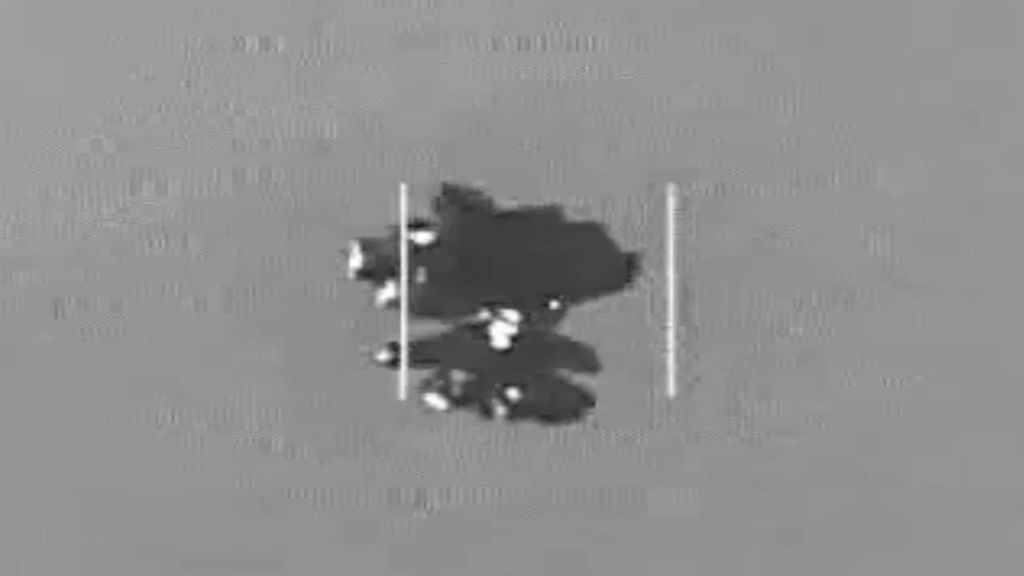
    In his office, Scalabre pulled up a satellite image showing a swarm of these small craft moving in to intercept a target: a dozen patrol boats cutting through the water, leaving trails of white wake as they encircle and seize a commercial vessel before it can exit the Gulf. “They sometimes carry out indiscriminate attacks, whether the country is considered friendly or not,” the French naval officer said.

    For the Iranian government, controlling access to the Strait of Hormuz remains one of its most powerful leverage points, Scalabre noted: “For Tehran, controlling the Strait of Hormuz remains one of its trump cards to exert pressure and negotiate a way out of the conflict.”

  • ‘Dreams come true’ for singer joining Lady Gaga on Devil Wears Prada soundtrack

    ‘Dreams come true’ for singer joining Lady Gaga on Devil Wears Prada soundtrack

    Two decades after the release of the iconic 2006 comedy-drama *The Devil Wears Prada*, the long-awaited sequel has finally hit cinema screens worldwide, bringing back every fan-favorite member of the original cast for a new chapter of high-fashion drama. While the return of Meryl Streep’s sharp-witted, iconic editor Miranda Priestly has dominated early conversation, another element of the new release has quickly captured public attention: its all-female curated soundtrack, which pairs established A-list superstars with breakout emerging talent.

    Among the rising artists featured on the album is 20-something American singer Izzy Escobar, who marks her first major movie soundtrack placement with original track *Evergreen Avenue*, created specifically for the sequel. For Escobar, the opportunity to contribute to the follow-up to one of her all-time favorite films still feels surreal.

    “I’m still trying to wrap my head around it. This is my first time ever having a song in a major film, and it’s for *Devil Wears Prada*? Dreams really do come true,” Escobar shared in an exclusive interview with BBC Newsbeat. She described seeing her name credited alongside global superstars like Lady Gaga, Dua Lipa and Olivia Dean as a “pinch me” moment that feels like validation for her years of hard work, adding: “It’s such a clear sign I should just keep persevering.”

    The collaboration came about after *Devil Wears Prada 2* director David Frankel discovered Escobar’s 2025 breakout single *Sunny in London*, and reached out directly to invite her to join the soundtrack project. “He really loved the sonic palette of that song and wanted me to write something that was in a similar vein,” Escobar explained. Though this marked her first foray into film composition, she says the creative process aligned closely with her usual writing style.

    As a self-described visual storyteller, Escobar builds her tracks around vivid mental narratives: “I close my eyes when I sit down at my keyboard and make up a movie in my own mind, anyway.” To craft *Evergreen Avenue*, she did a deep dive into the established world of the *Devil Wears Prada* franchise, brainstorming concepts that would honor the original story while weaving in her distinct artistic voice.

    Escobar stayed tight-lipped to avoid plot spoilers, only sharing that her track appears during an emotional sequence late in the runtime of the sequel. “I don’t want to give too much away, but I’m on the radio in Anne Hathaway’s character’s house, which is pretty cool,” she teased. The singer got her first chance to see the track paired with the finished film at the sequel’s New York world premiere earlier this year, an experience she calls unforgettable.

    “To finally see it visualised on-screen with some of my favourite artists in the room, it was the best feeling in the world,” she said.

    For Escobar, the *Devil Wears Prada* franchise holds deep personal meaning, dating back to her childhood. Growing up, she explored self-expression through both music and fashion, and the original 2006 film resonated deeply with her. “When I saw it, I just remember thinking, ‘oh my gosh, this is another way of expressing yourself, just like music’”, she recalled.

    She also highlighted the ongoing interconnected relationship between the music and fashion industries, pointing to recent high-profile examples like Lady Gaga and Doechii’s collaborative track *Runway*. “I love the video that they did, incorporating all different types of fashion to let people express themselves, while singing a song that highlights feeling confident and empowered,” she said.

    As for what audiences can expect from the full *Devil Wears Prada 2* soundtrack, Escobar promises a dynamic, uplifting listening experience: “It’s going to make you dance and leave you feeling very, very empowered, inspired and excited.”

    *The Devil Wears Prada 2* arrives in United Kingdom cinemas this Friday.

  • UN troubled by rejected appeal of Cambodian opposition leader

    UN troubled by rejected appeal of Cambodian opposition leader

    In a move that has sparked widespread international condemnation from global human rights bodies, Cambodia’s appellate court has upheld a decades-long treason conviction for prominent opposition leader Kem Sokha, drawing sharp rebuke from the United Nations’ top human rights official.

    Seventy-two-year-old Kem Sokha, a co-founder of the now-banned Cambodia National Rescue Party (CNRP), was first found guilty of treason in 2023 on allegations that he plotted to overthrow the government of long-serving former prime minister Hun Sen — who remains a powerful, behind-the-scenes political figure despite handing the top leadership role to his son. The conviction carried a 27-year sentence, though Kem Sokha has been allowed to serve the term under court-supervised house arrest in Phnom Penh since the original ruling. He has continuously denied all charges against him, which date back to a 2013 speech delivered during a trip to Australia, four years before his initial 2017 arrest.

    On Friday, United Nations High Commissioner for Human Rights Volker Türk confirmed he was deeply troubled by the Phnom Penh Appeals Court’s decision Thursday to reject Kem Sokha’s appeal and leave the conviction intact. The UN human rights chief also raised urgent alarms over a separate court ruling handed down Wednesday that convicted 33 additional Cambodian nationals, including opposition activists, independent human rights defenders and social media commentators.

    According to the Office of the United Nations High Commissioner for Human Rights (OHCHR), the Phnom Penh First Instance Court handed down sentences ranging from 18-month suspended terms to two years of imprisonment. The charges stemmed from public comments the 33 individuals made in 2024 regarding the Cambodia-Laos-Vietnam Development Triangle Area, a regional cross-border infrastructure and development project.

    OHCHR spokesperson Jeremy Laurence told reporters at a Geneva press briefing that the rulings in both cases directly contradict established international human rights law. He warned that the convictions risk amplifying what is already a severe chilling effect on open discourse across Cambodia, brought by broad, vaguely worded national criminal statutes that are frequently enforced in an arbitrary manner targeting civil society members, independent journalists and ordinary citizens.

    “Kem Sokha and the other 33 individuals were all exercising their internationally protected rights to freedom of expression,” Laurence said. “Their trials also raise serious, well-founded concerns about widespread violations of due process and fundamental fair trial rights.”

    Türk has called on Cambodian authorities to enact meaningful reforms to bring the country’s legal practices in line with international human rights standards, urging the government to protect legitimate political criticism and free expression rather than criminalizing dissenting viewpoints. He also called for safeguards to protect judicial independence, preserve open civic space and guarantee fair trial protections for all defendants.

    Laurence reiterated the UN body’s core demand: Cambodian officials should immediately overturn the latest convictions and sentences, and unconditionally release Kem Sokha along with all other individuals detained arbitrarily for exercising their fundamental human rights.

    Global human rights organizations have long documented patterns of the Cambodian government using politicized legal proceedings to silence opposition voices and quash legitimate political dissent. OHCHR confirmed it has repeatedly raised these systemic concerns directly with Cambodian authorities, highlighting broader patterns of repression targeting core rights including freedom of speech, freedom of expression, freedom of association and freedom of peaceful assembly across the country.