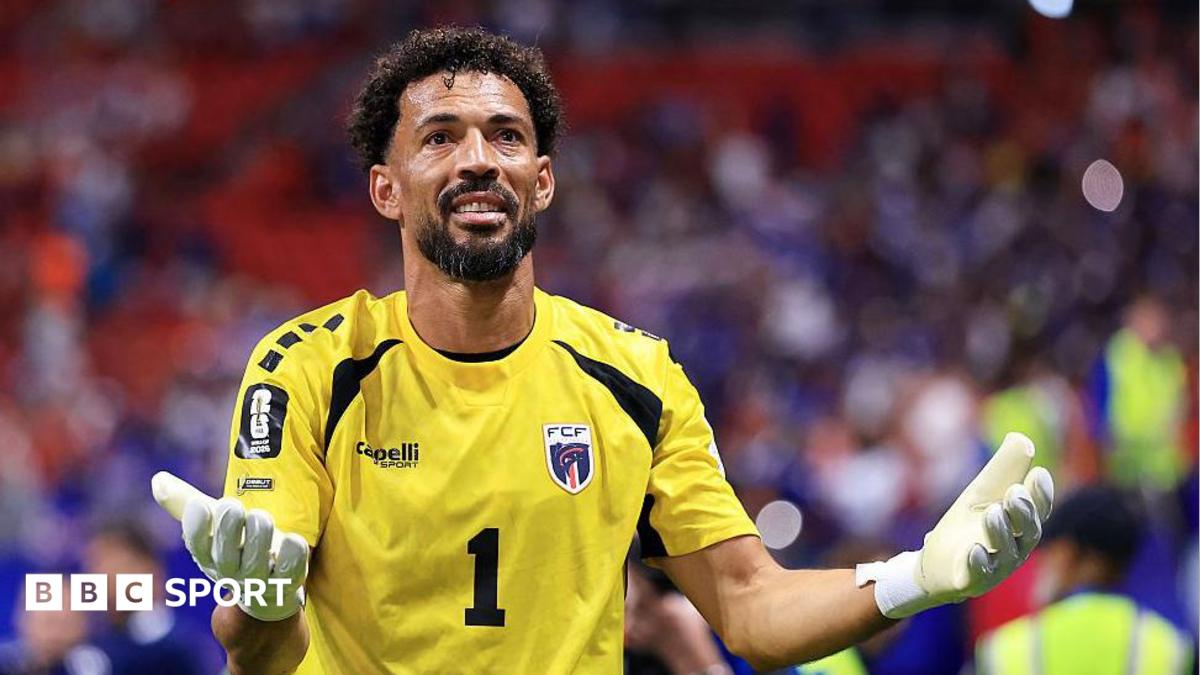
It is not every day that a sports star gets a newly discovered marine species named after them, but that is exactly the once-in-a-lifetime honor that has fallen to Vozinha, the 40-year-old goalkeeper who captured global attention with his standout 2026 FIFA World Cup displays for underdog Cape Verde.\n\nThe story of the namesake honor begins with Jesus Ortea, a 75-year-old emeritus professor at the University of Oviedo and a lifelong football fan. Ortea, who was awarded Cape Verde’s Medal of Merit in 2023 for his years of marine research in the waters surrounding the island nation, uncovered the tiny bright red mollusk during a research expedition in the Caribbean. Following his discovery, he made the decision to name the species Aldisa vozinha in tribute to the goalkeeper’s remarkable World Cup run.\n\nCape Verde, the second smallest nation to ever qualify for the World Cup finals, defied all pre-tournament expectations to advance out of their group stage, capturing the hearts of football fans across the globe. Their journey ended only in the Round of 16, where they pushed defending champions Argentina all the way to extra time before bowing out with a narrow 3-2 defeat. The standout moment of the team’s historic campaign came in their group stage clash with European champions Spain, where Vozinha put on a legendary performance, making seven spectacular saves to secure a hard-fought 0-0 draw — the first World Cup point in Cape Verde’s entire history.\n\nIn his official discovery report, Ortea explained the reasoning behind his naming choice, noting that he wanted to recognize Vozinha’s “prominent role” in the underdog success against Spain, a side famously nicknamed La Roja, or ‘The Red One’. \”The red colour of the dedicated species is a reminder of his feat,\” Ortea wrote in his notes on the new find.\n\nVozinha’s standout showing against Spain immediately catapulted him to global stardom. Before the World Cup, he had roughly 50,000 followers on Instagram, but that number surged exponentially in the weeks after the match, growing to more than 17.4 million — a follower count that surpasses even legendary NFL star Tom Brady.\n\nThis is far from the first time Ortea has combined his two great passions: marine biology and football. On previous expeditions, he has honored other famous goalkeepers and players with species names: he named a discovery made off the coast of Costa Rica after Keylor Navas, the country’s legendary former goalkeeper who played for top clubs including Real Madrid, Paris Saint-Germain and Nottingham Forest. He also named a small marine creature, which carried the same distinct color scheme as Spanish club side Sporting Gijon, after the club’s iconic former striker Quini.
作者: admin
-
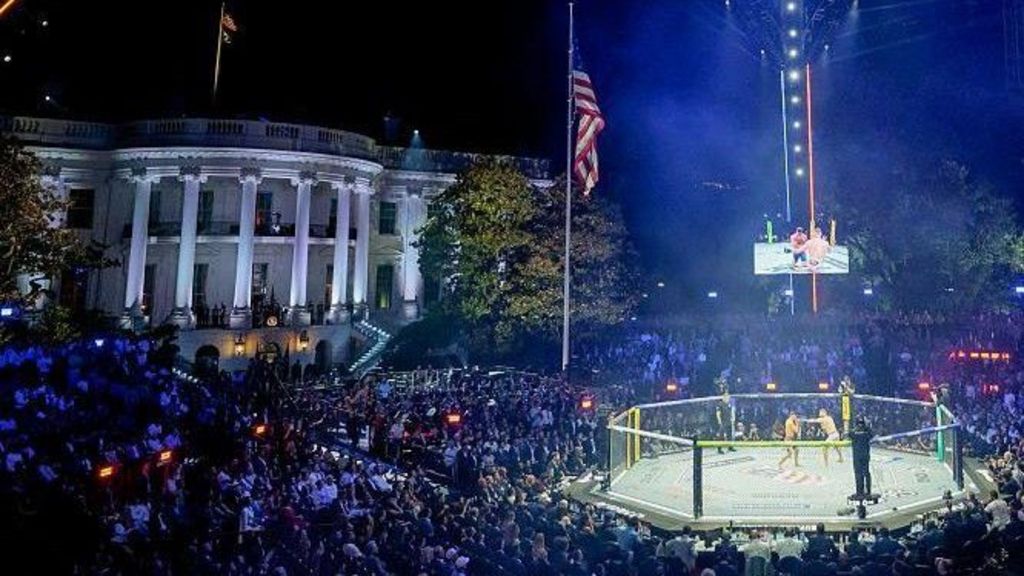
Eight charged over alleged conspiracy to attack White House UFC event
A coordinated terror plot targeting former President Donald Trump and other high-profile public figures at a June White House mixed martial arts event has led to terrorism charges against eight men across the United States, federal law enforcement officials have confirmed. The alleged conspiracy, which prosecutors say aimed to spark a national revolution by attacking the invite-only gathering, was foiled only after a concerned mother tipped off authorities weeks before the event was set to take place.
The June 14 UFC Freedom 250 event, held on the White House South Lawn to mark the 250th anniversary of U.S. independence, drew roughly 4,300 attendees. Among those present were President Trump, Vice President JD Vance, senior White House cabinet officials, and sitting members of Congress. The gathering also fell on Trump’s 80th birthday, marking it as a high-profile national event.
According to federal court documents and statements from prosecutors, the conspiracy was uncovered on June 10, four days before the event, when the mother of 20-year-old suspect Tycen J Proper contacted local law enforcement. She raised alarm over her son’s recent large purchases of firearms and his communications with an online group calling itself a network of former military service members aligned with Christian values. Prosecutors note the group shared extensive grievances over a range of political issues, including alleged government corruption, the federal government’s handling of the Jeffrey Epstein case, and the impact of data centers on local water supplies.
The FBI says Proper admitted the group’s core goal was to “jumpstart a revolution in the United States” by launching a coordinated attack on the UFC event. Prosecutors outline a multi-phase plot: first, explosive-laden drones would strike adjacent buildings to trigger mass panic, driving fleeing attendees toward an positioned sniper team waiting to open fire on “high value targets.” A second wave of attackers would then storm the main gate of the White House to continue the assault.
Court filings linked to co-defendant Abraham Hermosillo Alvarez confirm the group compiled a target list that included Trump, Vance, Israeli Prime Minister Benjamin Netanyahu, business leader Elon Musk, and multiple sitting elected officials. Though not all targets ultimately attended the June 14 event, law enforcement notes the attack plan remained in motion.
The eight co-conspirators, ranging in age from 19 to 32, face three core charges: conspiracy to provide material support to terrorists, conspiracy to commit murder on federal government property, and conspiracy to murder a federal official. The final suspect, Chandler D Scaggs, was taken into custody earlier this week in West Virginia, wrapping up the arrest of all eight alleged plotters. If convicted on the murder conspiracy charges, each defendant faces a possible life prison sentence, while the terrorism offense carries a maximum penalty of 15 years behind bars.
Law enforcement records show the defendants were based across the country, with residences stretching from California to Missouri and Nebraska. Proper told investigators the group first began organizing in March, with most new members recruited through the social media platform TikTok. The group planned the attack using a range of encrypted and mainstream communication platforms, including Signal, Instagram, and Discord, according to officials. Investigators have not yet confirmed any formal affiliation between the group and larger established domestic or international extremist organizations.
A ninth individual, Alexander Iniguez Mercado, was arrested last week on a separate charge of obstruction of justice. Prosecutors allege Mercado deleted the Signal messaging app from his phone after being contacted by an FBI agent, intentionally wiping potential evidence linking him to the plot. He has pleaded not guilty to the obstruction charge.
The foiled plot marks the third high-profile security incident near the president in less than three months. In April, a shooting occurred at the White House Correspondents Dinner that Trump attended, and in May a man was shot and killed by Secret Service agents after opening fire at a White House security checkpoint.
-
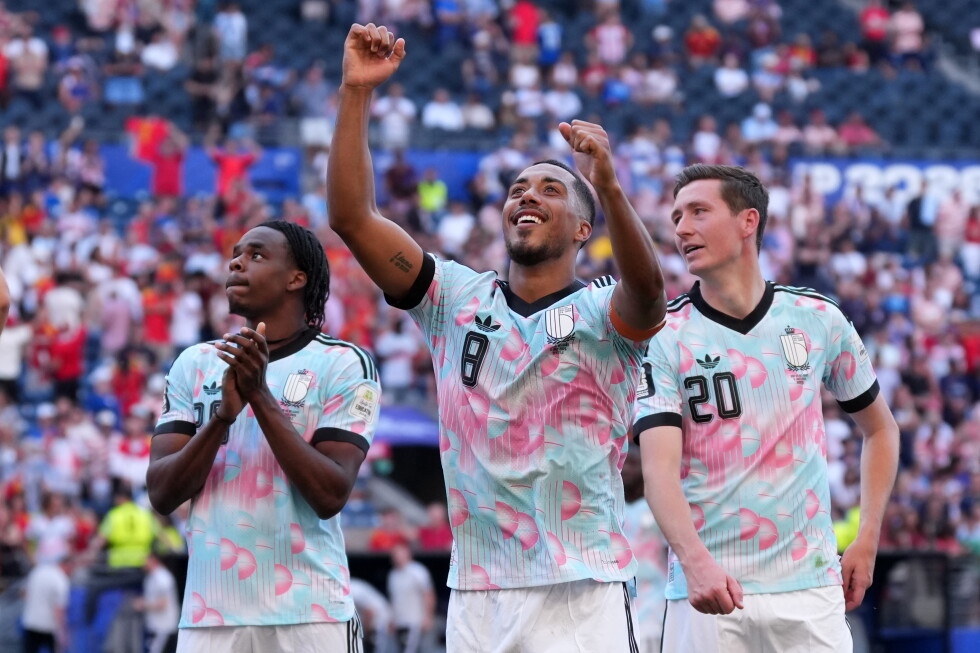
Belgium captain Youri Tielemans injured in warmups, scratched for quarterfinal against Spain
INGLEWOOD, California — Just hours before Belgium’s high-stakes 2026 FIFA World Cup quarterfinal showdown with Spain, the Belgian national team has been dealt a devastating late injury blow. Star midfielder and team captain Youri Tielemans was pulled from the starting lineup minutes before kickoff on Friday after sustaining an unexpected injury during the final pre-match warmup sessions.
stepping into Tielemans’ spot in the starting XI is Hans Vanaken, a versatile midfielder who has already proven his offensive punch off the bench in this tournament. The last-minute change marks yet another major hit to Belgium’s already depleted depth chart, which has been ravaged by injuries throughout the knockout stage.
Tielemans, who plies his club trade with Aston Villa in the English Premier League, has been a foundational two-way contributor for the Belgian side, nicknamed the Red Devils, throughout the World Cup campaign. His impact was on full display in the round of 32, where his two goals powered Belgium’s dramatic 3-2 comeback win over Senegal that secured their spot in the knockout round.
Vanaken is no stranger to stepping up when called upon: the experienced midfielder came off the bench to find the back of the net in Belgium’s lopsided 4-1 round of 16 victory over the United States this past Monday. This is not the first injury-enforced change to Belgium’s starting group this tournament either: Vanaken was already tabbed as a regular replacement for Amadou Onana, who was ruled out for the remainder of the World Cup after suffering a torn knee ligament against the U.S.
The Red Devils have also been forced to compete without promising young defender Zeno Debast, who picked up a leg injury earlier in the tournament. His club, Sporting CP, has held him out of all match action to prevent further damage to the injury.
On a small positive note for Belgium, star playmaker Kevin De Bruyne made his return to the starting lineup against Spain after being rested for the round of 16 match against the United States, a game the Red Devils ultimately won comfortably.
-
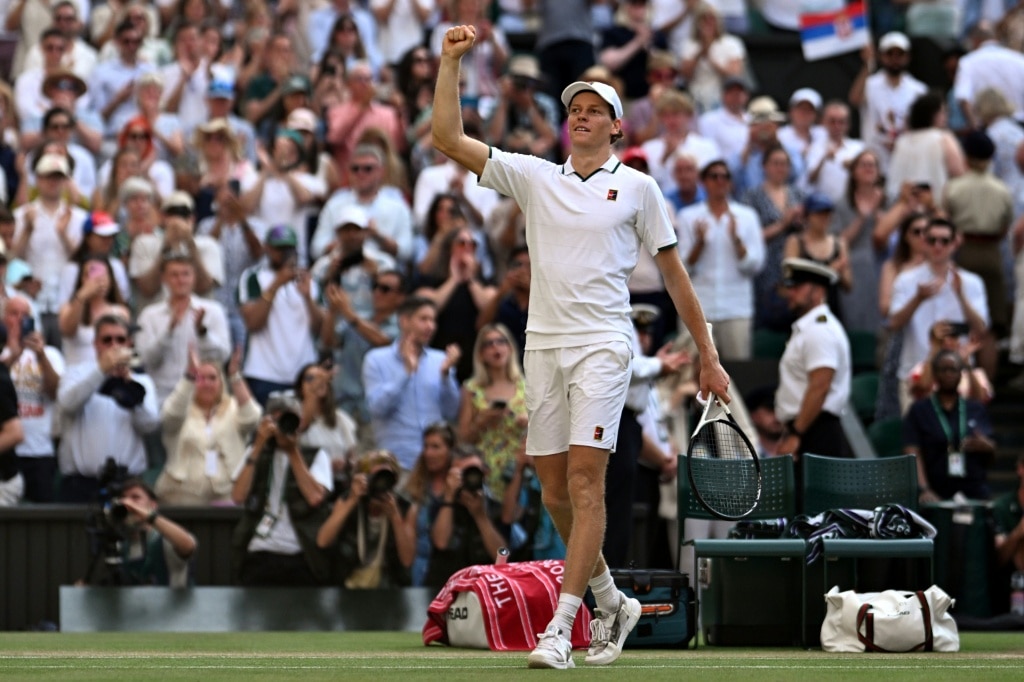
Sinner, Zverev power into Wimbledon final
On a dramatic Friday at the All England Lawn Tennis Club, two of men’s tennis’ top stars delivered dominant semi-final performances to punch their tickets to the 2025 Wimbledon men’s singles title match, ending two compelling underdog and legend bids for history along the way. World No. 1 and defending champion Jannik Sinner of Italy sent seven-time Wimbledon winner Novak Djokovic packing with a straight-set 6-4, 6-4, 6-4 victory, halting the 39-year-old’s pursuit of a record-breaking 25th Grand Slam singles crown. On the neighbouring half of the draw, French Open champion Alexander Zverev, the tournament’s second seed from Germany, delivered an equally clinical win over British wildcard entrant Arthur Fery, sealing his spot in the final with a 7-6 (7-0), 6-2, 6-4 triumph.
Centre Court packed fans packed into Centre Court on Friday carrying high hopes for two dream storylines: a fairytale deep run for home favourite Fery, and another display of age-defying greatness from Djokovic, who was aiming to draw level with Roger Federer’s all-time record of eight Wimbledon titles. But by the end of the day, it was Sinner and Zverev’s combination of blistering power from the baseline and unflinching lethal serving that stole the show, earning them a spot in tennis’ most anticipated championship match.
For Sinner, Sunday’s final marks his second consecutive Wimbledon title appearance, where he will chase a fifth career Grand Slam crown. The 24-year-old Italian heads into the title clash as the undisputed favourite, boasting a nine-match winning streak against Zverev – four of those wins coming in 2025 alone. He also brings a 13-match uninterrupted winning streak at the All England Club into the final, and a victory on Sunday would not only defend his title but also mark his 100th career Grand Slam match win, mirroring his 2025 Australian Open final victory over Zverev.”It means a lot to me to play one more final here. It’s the most special tournament we have,” Sinner told reporters after his win, following an early second-round exit from this year’s French Open. This will be Sinner’s seventh Grand Slam final, his first since a defeat to Carlos Alcaraz at the 2024 US Open. Through the first five matches of this year’s tournament, Sinner has dropped only two sets total, rallying from a two sets to one deficit to escape a first-round scare against Miomir Kecmanovic. “I knew mentally I had to raise my level, which I have done so I am very happy,” Sinner added. “I’m happy where I am, happy to be back in the final and we hope for a good final on Sunday.”
For Zverev, the run to the final caps off a remarkable 12-month turnaround. Just one year ago, the 29-year-old suffered a humiliating first-round exit at the hands of Arthur Rinderknech at SW19. Now, he is through to his first ever Wimbledon final, and his fifth Grand Slam final overall. After shedding the long-held label as the most talented player of his generation yet to win a major with his French Open title last month, Zverev is now one win away from becoming just the seventh man in the Open Era to claim back-to-back Roland Garros and Wimbledon titles. He would also be the first German man to lift the Wimbledon trophy since Michael Stich in 1991, and the first German man to reach the final since Boris Becker in 1995. The German echoed the tactical stakes ahead of Sunday’s clash, noting: “Jannik has won Wimbledon last year. Again, I think the serve-return patterns are going to be very, very important.” When asked if his French Open breakthrough win over Flavio Cobolli had freed him of pressure, Zverev confirmed: “Yes, one thing, for sure, once you win a major you know how to do it and you feel like you can do it again. You have this feeling inside of you.” Like Sinner, Zverev has dropped only two sets through the first five matches of the tournament, and he brings a 13-match winning streak across all Grand Slams into Sunday’s final.
For the fallen semi-finalists, the defeat carried different shades of disappointment but also silver linings. Djokovic, who will turn 40 before his next bid for Wimbledon glory, showed no signs of planning to retire, confirming he intends to return to next year’s tournament for another shot at the record. “I would like to, at least one more time,” he said when asked about a 2026 return. Djokovic has not won a Grand Slam title since the 2023 US Open, and has now fallen in six consecutive major semi-finals since that victory. For Fery, the world No. 114, the pain of missing out on becoming the first men’s singles wildcard to reach the Wimbledon final since Goran Ivanisevic in 2001 was softened by pride in his unprecedented run. “I’m proud of how I handled the progression of the tournament and how I kept going in every match,” Fery said after the match. “It might have been just a step too far today.”
All eyes now turn to Sunday’s Centre Court showdown, where two of the game’s top players will compete for the most prestigious trophy in the sport.
-
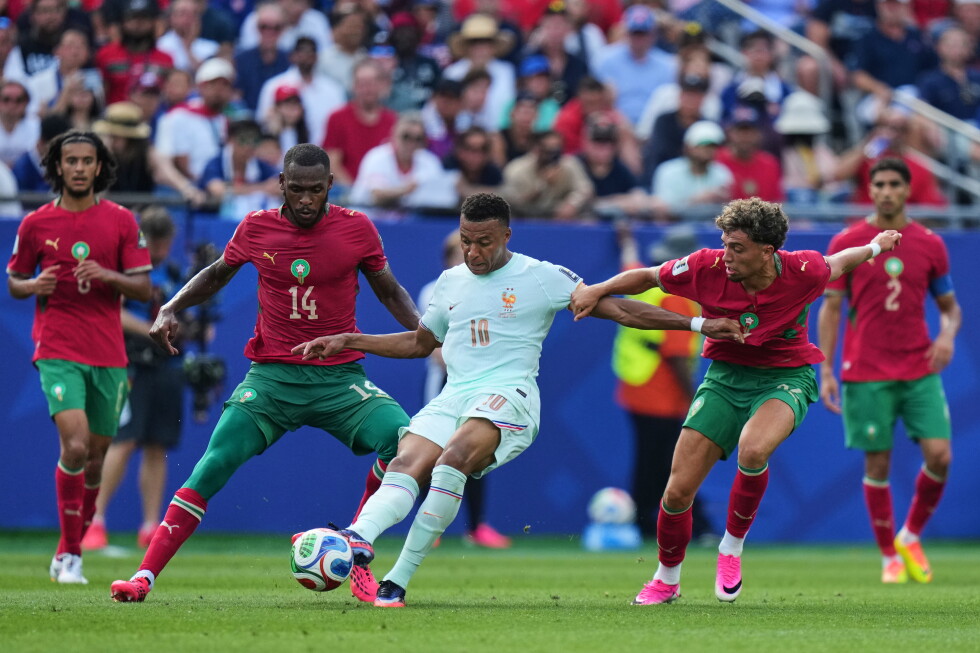
One Extraordinary Photo: France’s Kylian Mbappe the center of attention of again
FOXBOROUGH, Mass. – For first-time World Cup photographer Stephanie Scarbrough, a staff photographer with The Associated Press based in Baltimore who covers beats spanning from sports and daily community life to sudden breaking news, the 2024 World Cup quarterfinal clash between France and Morocco delivered the perfect moment to capture the raw pressure and high stakes of knockout-stage soccer.
The encounter carried heavy historical weight for Morocco: this rematch against France came four years after Morocco made global history as the first African and Arab nation to reach a World Cup semifinal, only to see their run end with a 2-0 elimination at France’s hands in Qatar. When the two sides met again in a do-or-die quarterfinal fixture Thursday, Scarbrough positioned herself to capture every tense moment of the game-changing encounter.
The iconic frame she captured centers on France’s global superstar Kylian Mbappe, who is pictured mid-pass, caught between two Moroccan defenders flanking him on his left and right. The image encapsulates the core narrative of the match: the tournament’s underdog, hungry for revenge and another shot at history, closing in on the seasoned favorite that already held a historic advantage over them. Every detail of the shot radiates unfiltered tension and desperation: the players’ locked, focused expressions, outstretched arms fighting for position, and the sharp forward momentum of the ball moving through the gap between defenders.
Scarbrough shared the technical choices that allowed her to nail the once-in-a-game moment. She set up in her designated pitch-side position opposite the team benches, using a powerful 400mm telephoto lens to zoom in tight on the action without disrupting the flow of play. To ensure every detail of the fast-paced movement was captured clearly, she set an extremely fast shutter speed of 1/4000 of a second. That setting froze the action at the exact instant Mbappe’s foot connected with the ball to make the pass, even catching the blades of grass flying up from the force of the impact.
Beyond technical precision, the image succeeds on a compositional and narrative level, Scarbrough explained. The shot features striking intentional symmetry in both its color palette and geometric shape, creating a visually balanced, compelling composition that draws the viewer’s eye straight to the central confrontation. Most importantly, the frame distills the full story of the match into a single instant: one side fighting to etch their name deeper into World Cup history, while the other works to extend their legendary run in the tournament.
-
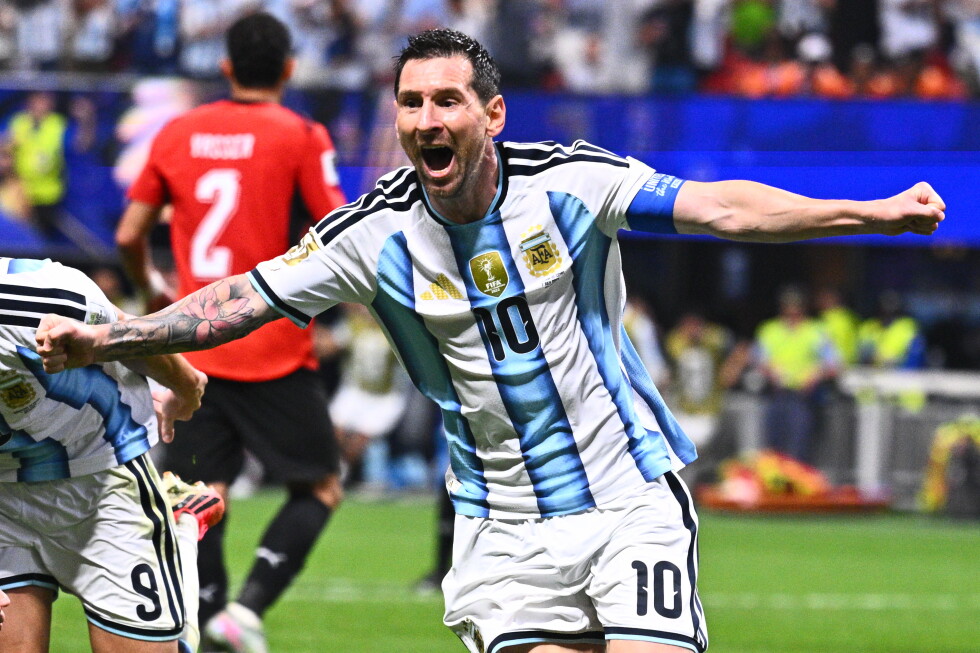
Lionel Messi and Argentina play upstart Switzerland in World Cup quarterfinals at Arrowhead Stadium
KANSAS CITY, Missouri — When the final World Cup quarterfinal kicks off Saturday night at Arrowhead Stadium, two teams separated by decades of footballing prestige and history will face off for a spot in the tournament’s final four. Defending World Cup champions Argentina enter the match as undeniable favorites, fielding a star-studded squad led by Lionel Messi — widely hailed as the greatest player of his generation — alongside elite attacking talents like Lautaro Martinez and Julián Alvarez.
Standing in their way is Switzerland, a side that has defied expectations to reach this stage, and enters the matchup as one of the tournament’s biggest underdogs. On paper, the contrast could not be starker: Argentina claims three World Cup titles and a global legacy of footballing excellence, while Switzerland has never advanced past the quarterfinal round, with their last appearance in this stage of the tournament dating back to 1954, when they fell to Austria as tournament hosts.
Yet Argentine fans and pundits alike have been reminded repeatedly in this tournament that no victory is guaranteed, even for the sport’s most dominant sides. La Albiceleste already scraped past a stubborn Cape Verde side earlier in the competition, and just days ago needed a dramatic late comeback from a 2-0 deficit to defeat Egypt in the round of 16, with Messi equalizing in the 83rd minute before Enzo Fernández scored a stoppage-time winner. That history of hard-fought wins has given Switzerland, which knocked out Colombia on penalties to earn this quarterfinal spot, quiet confidence that they can pull off one of the tournament’s biggest upsets.
“We know Argentina has many fine qualities. Few talk about the Swiss qualities,” Swiss captain and defensive midfielder Granit Xhaka told reporters Friday. “Tomorrow we will talk on the pitch, and we will show what we can do, and everything else doesn’t matter.”
Defender Manuel Akanji echoed that sentiment, acknowledging the magnitude of the challenge while emphasizing his side’s readiness to compete. “It’s obviously a very tough challenge, but I think we’re ready. I think we can play against any opponent and make it hard for them,” Akanji said. “We know it’s going to be difficult but we’re going to give our best.”
Switzerland’s path to an upset runs through their stout defensive structure, which has conceded just three goals across five matches in the tournament. The side held Colombian star Luis Díaz scoreless across 120 minutes of play in the round of 16, and the full responsibility of containing Messi will fall to Xhaka, Akanji, Remo Freuler, Nico Elvedi and goalkeeper Gregor Kobel. Even Xhaka admits that shutting down the Argentine icon for a full 90 minutes is nearly unachievable, but says his side has a clear gameplan to limit his impact.
“I don’t know that we can stop him over 90 minutes. It’s going to be difficult,” Xhaka said. “But we have to be smart, compact, close the gaps and not give him too many spaces. We just try to play our game.”
For Argentina, momentum is firmly on their side. La Albiceleste carries an 11-match World Cup unbeaten streak dating back to the 2022 Qatar tournament, and has scored multiple goals in every one of those wins — a streak that ties with Uruguay for the longest in World Cup history.
Messi, who notched a hat trick against Algeria in an earlier group stage match at Arrowhead Stadium, remains locked in a tight race for the tournament’s Golden Boot. He enters Saturday’s match level with France’s Kylian Mbappe on eight goals, and has extended his all-time record to 21 career World Cup goals, including at least one goal in a record six consecutive knockout matches. Argentina head coach Lionel Scaloni said Messi’s consistent brilliance makes him an irreplaceable role model for the rest of the squad.
“Especially for those players on the bench, the players who watch Lionel Messi play and can’t believe what they’re watching — he should be a role model for them,” Scaloni said. “He tries again and again, and I get goosebumps.”
In terms of injury news, Argentina enters the match fully healthy, but Switzerland will be without key midfielder Johan Manzabi, who remains sidelined with a knee injury. The SC Freiburg star scored twice in a 4-1 group stage win over Bosnia-Herzegovina, and head coach Murat Yakin said the entire squad has missed his presence and energy. “We tried everything we could to get him back in peak form,” Yakin said. “Momentum was on his side, and there was so much joy when he plays, and he has his teammates by his side. Everything worked out so well for him until now.”
One variable that will not impact the match is extreme Kansas City weather, which has been a persistent concern for tournament organizers amid summer heat indexes regularly topping 100 degrees Fahrenheit and severe storm activity across the American Heartland. Forecasters predict favorable conditions for kickoff, with temperatures around 88 degrees Fahrenheit (30 degrees Celsius) and only a minimal chance of rain.
The match has also drawn pre-game attention to the officiating, after multiple high-profile refereeing decisions sparked debate throughout the tournament. In a break from standard protocol, which usually sees FIFA appoint referees from confederations unrelated to both competing teams to avoid bias, Portuguese referee João Pinheiro — a member of UEFA, the same confederation as Switzerland — will take charge of Saturday’s match.
The winner of the clash will advance to a semifinal spot next Wednesday in Atlanta, where they will face off against the winner of the quarterfinal between Norway and England for a place in the World Cup final.
-

Students abducted in May by Islamic militants in Nigeria are rescued, government says
ABUJA, Nigeria – More than 50 days after dozens of students and staff were seized by Islamic militants in southwestern Nigeria’s Oyo State, a successful government operation has freed all surviving captives, senior officials confirmed Friday.
Government spokesperson Bayo Onanuga announced the outcome of the rescue mission, though he did not release an exact figure for the number of rescued students. When the abduction first occurred on May 15, authorities initially reported that over 40 people were taken captive alongside the students, one of whom – a teacher – was executed by the militants just hours after the kidnapping.
In addition to freeing the captives, the operation led to the arrest of eight suspected militants, while an undisclosed number of attackers were killed during the raid, according to Onanuga.
The May kidnapping in Oyo State marked a worrying expansion of Nigeria’s long-running security crisis. For years, mass school abductions linked to militant and criminal groups have been concentrated primarily in the country’s northern region, so the attack in a southern state signaled an escalation of threats to civilian safety across the nation.
Nigerian President Bola Tinubu emphasized in an official statement that the successful military operation has resolved the more than 50-day standoff and siege, delivering long-awaited relief to the entire country and especially to the families of the abducted victims.
The Oyo State abduction was not an isolated incident that week: just days after the seizure in the southwest, dozens more children were kidnapped in Borno State, the long-standing epicenter of Nigeria’s insecurity challenges linked to extremist insurgency.
Mass school abductions have become a persistent and widespread crisis across Nigeria, where militant and criminal groups regularly target educational institutions to pressure the federal government, generate public fear, and extract large ransom payments to fund their operations.
-
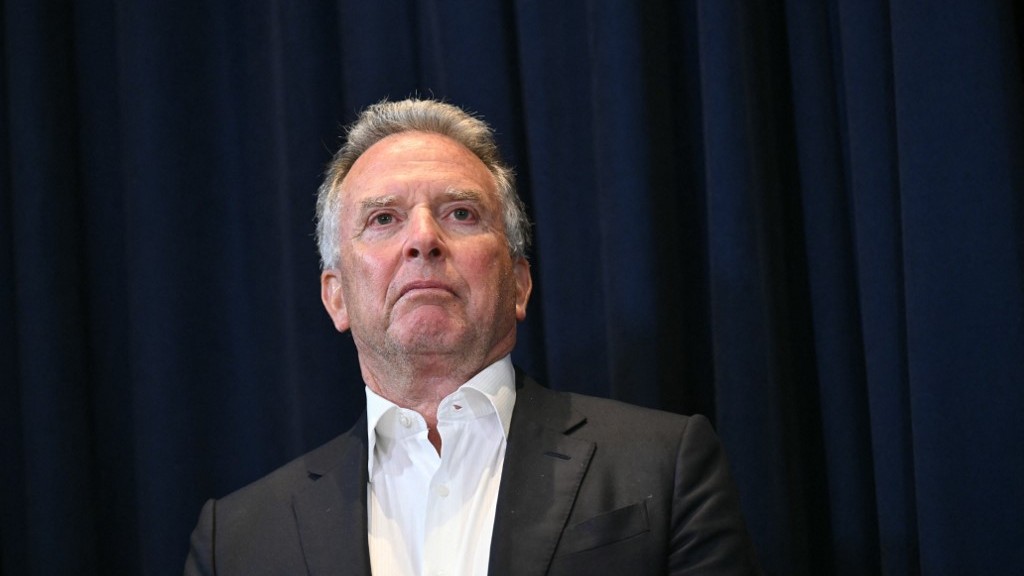
Smotrich: Steve Witkoff called Gaza Palestinians ‘two million Nazis’
A firestorm of controversy has erupted in Israeli and Middle Eastern political circles after far-right Israeli Finance Minister Bezalel Smotrich publicly alleged that a senior U.S. envoy made extraordinarily inflammatory remarks describing all two million residents of the Gaza Strip as “Nazis” during a closed-door meeting last year. The explosive claim was made by Smotrich during a public conference in Israel this Thursday, where he also repeated longstanding expansionist rhetoric that has drawn international condemnation for human rights violations.
According to Smotrich’s account, the conversation took place shortly after U.S. Special Envoy Steve Witkoff completed a visit to Gaza last August, a period marked by intense Israeli military operations and mounting global alarm over humanitarian conditions in the enclave. Smotrich stated that he, former Israeli ambassador to the U.S. Ron Dermer, and Witkoff reviewed a pre-prepared propaganda video during the closed meeting. After viewing the footage, Smotrich claims Witkoff turned to him and stated: “Bezalel, I will not let two million Nazis live next to your children on fences.”
The allegation is particularly striking given the public framing of Witkoff’s 2024 Gaza trip. A former real estate property lawyer with no prior professional experience in foreign policy or humanitarian work, Witkoff publicly positioned his visit as a mission to advance a plan for delivering desperately needed food and medical aid to Gaza’s civilian population. At the time of his visit, Israel had imposed sweeping restrictions on the entry of food, fuel and other essential goods into Gaza, a policy that the United Nations and multiple humanitarian organizations have warned has driven a large share of Gaza’s population into acute famine and food insecurity.
Beyond the explosive claim about Witkoff, Smotrich used the conference platform to double down on his longstanding ultranationalist expansionist agenda, calling for permanent Israeli territorial annexation of parts of Lebanon. He argued that “There is only one thing that hurts the enemy – land. Whoever messes with us will lose land for ever. A security zone needs to be created for years in Lebanon,” adding in a separate conversation with journalist Amit Segal that Israel would ultimately need to formalize permanent control over captured Lebanese territory.
This latest rhetoric aligns with Smotrich’s repeated public calls for the ethnic cleansing of Palestinian residents from Gaza to make way for new Jewish Israeli settlements. Last December, he stated publicly: “We cannot live with two million antisemitic Nazis who live off hatred of Israel … That is why we need to encourage their emigration and settle Gaza.” Months earlier, he claimed former U.S. President Donald Trump backed a plan to remove Gazans from the enclave, saying “He supports his own plan of removing the Gazans from Gaza, so our kids won’t have to grow up within a spitting distance from two million Nazis who want to butcher, murder and rape.”
Smotrich already faces mounting international legal scrutiny over his actions in occupied Palestinian territories. Independent regional outlet Middle East Eye has reported that the prosecutor’s office of the International Criminal Court has submitted a sealed application for an arrest warrant against Smotrich, covering alleged crimes committed in the occupied West Bank. The proposed charges listed in the application include forced displacement, forced population transfer, persecution, and apartheid, according to the outlet’s reporting.
Middle East Eye confirmed that it reached out to the White House for comment on Smotrich’s allegation against Witkoff, requesting confirmation of whether the remarks were made. No response from the White House had been received by the time of the outlet’s publication. The outlet, which provides independent, on-the-ground coverage of the Middle East and North Africa region, did not immediately offer independent verification of Smotrich’s claim.
-
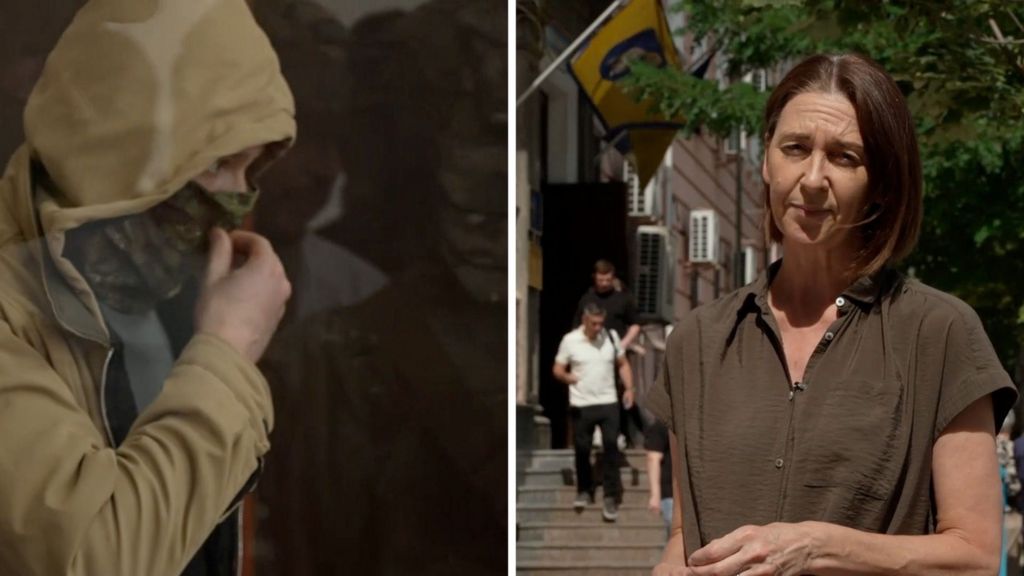
Watch: What links a bomb in Monaco and a shooting in Ukraine?
A cross-continental criminal investigation has taken an abrupt, unexpected turn after a Ukrainian intelligence operative walked back a key confession he gave earlier. The agent had previously admitted to shooting dead a woman in Ukraine who authorities connected to a foiled assassination plot targeting a wealthy multimillionaire in Monaco, a high-stakes scheme that has raised questions about transnational criminal and intelligence activity across Europe. The tangled case first drew international attention when a bombing targeting the Monaco-based billionaire was uncovered, prompting investigators to trace the plot back to the suspected female plotter who was living in Ukraine. Once the woman was identified as a person of interest in the Monaco attack, she was found dead from gunfire in Ukraine, and the Ukrainian intelligence operative quickly came forward to confess to the killing. But in a dramatic development that has upended the narrative of the investigation, the same agent has now stated publicly that he is not responsible for pulling the trigger that killed the suspect. The conflicting statements from the operative have deepened the mystery surrounding the two connected incidents, leaving investigators and analysts scrambling to untangle the web of connections between the failed bombing in the Mediterranean principality and the fatal shooting half a continent away in Eastern Europe. As of now, official details about potential motives, broader conspiracies, or next steps in the investigation remain tightly held, with neither Ukrainian nor Monegasque authorities releasing full clarity on how the case will proceed following the agent’s recantation.
-
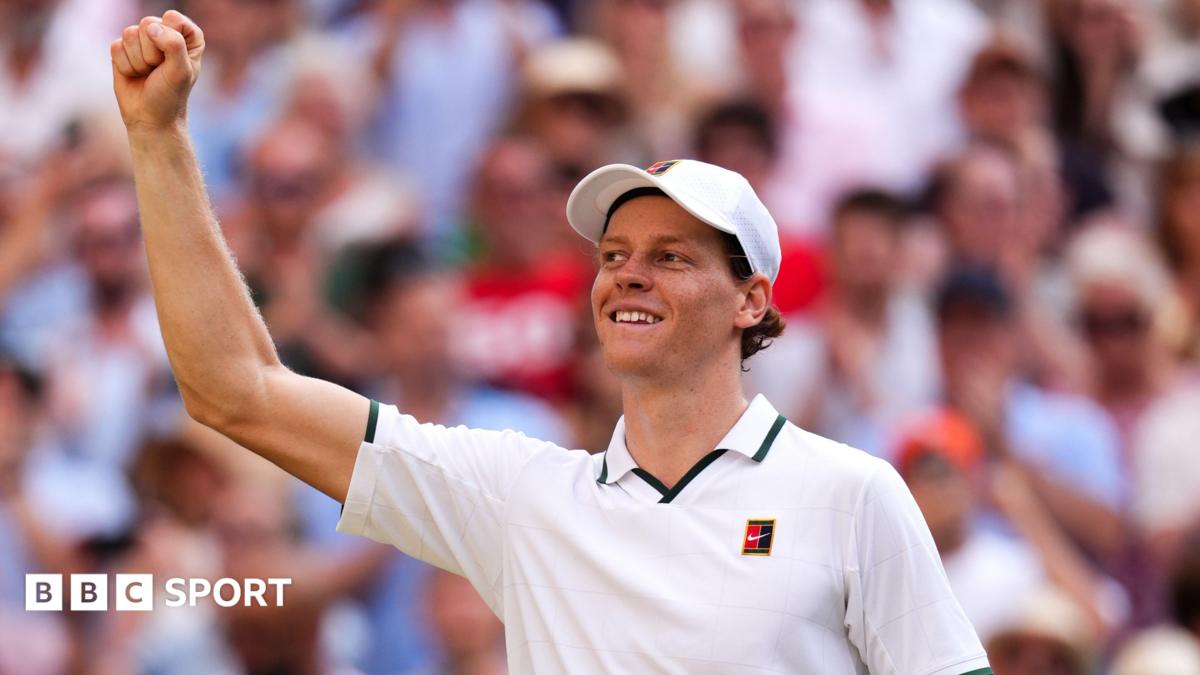
Superb Sinner ends Djokovic’s latest bid for history
On Centre Court at the 2026 Wimbledon Championships, defending men’s singles champion Jannik Sinner delivered a masterclass of controlled power and pinpoint accuracy to defeat Novak Djokovic in straight sets, ending the Serbian icon’s chase for a historic 25th Grand Slam singles title and securing his spot in Sunday’s final against Alexander Zverev.
Mirroring his 2025 semi-final triumph over Djokovic, Sinner produced a near-perfect performance to block Djokovic’s bid to equal Roger Federer’s all-time record of eight Wimbledon men’s singles titles. The Italian world No.1 refused to hand Djokovic a single break opportunity until the middle of the third set, and erased the 39-year-old’s only chance of the match with a blistering ace before closing out a decisive 6-4, 6-4, 6-4 victory.
The win marks Sinner’s 99th Grand Slam match victory, and makes him the first Italian man to reach multiple Wimbledon singles finals. He closed out the match to love, sealing the win before a respectful mid-net embrace with Djokovic, who received a warm standing ovation from the Centre Court crowd as he exited.
“It’s the most special tournament we have. It means a lot to me to play another final here,” Sinner told reporters after the match. “Of course, playing against Novak, he is a huge inspiration – not only for you guys but for the new generation – what he is still doing is amazing, incredible. We always have very, very tough matches. I’m very happy with this performance.”
For Djokovic, who holds a record 24 Grand Slam singles titles, the wait to surpass Margaret Court’s all-time record of 25 major titles will continue. The Serb had delivered a marathon five-set win over Felix Auger-Aliassime just two days prior, finishing after the 11pm curfew, and was unable to replicate that high intensity against a near-unstoppable Sinner on Friday.
Sinner enters Sunday’s final as the overwhelming favourite, just one win away from becoming the 10th man in the Open Era to successfully defend his Wimbledon men’s singles crown. The Italian has not dropped a set since his opening five-set match of the tournament, and produced his strongest performance of the fortnight against Djokovic, landing 16 aces, firing 40 winners and committing only 15 unforced errors. He has also not lost to Zverev since 2023, holding a 10-4 head-to-head lead over the newly-crowned French Open champion.
Zverev earned his spot in the final after ending the Cinderella run of British wildcard Arthur Fery in the day’s first semi-final. The German claimed his first Grand Slam title at this year’s Roland Garros, and Sinner acknowledged that his opponent will enter the final in top form.
The match itself was controlled by Sinner from the opening game. After Djokovic saved the first break point of the match, Sinner continued to pile on pressure, forcing two more break points in the ninth game of the first set. He missed a routine overhead on the first, but responded with a stunning cross-court backhand winner on the second to claim the break and close out the opening set.
Centre Court fans rallied behind Djokovic through the second set, chanting his name to spark a comeback, but Sinner refused to let the Serb gain a foothold in the match. Djokovic managed to fend off break points to hold for 3-2, but could not stop Sinner from breaking him two games later, sealing the break with a clever drop shot that left Djokovic stranded.
Carrying a two-set lead, Sinner remained unrelenting, earning two break points in Djokovic’s opening service game of the third set. Djokovic saved the first two, then a third, but could not fend off a fourth, handing Sinner an early break that all but sealed the final result. Sinner closed out the win in just two hours and 20 minutes, only six minutes longer than his shortest match of the tournament, wrapping up an emphatic statement win ahead of Sunday’s final.