作者: admin

  • Trump says he’ll place 25% tariff on autos from the EU, accusing it of not complying with trade deal

    Trump says he’ll place 25% tariff on autos from the EU, accusing it of not complying with trade deal

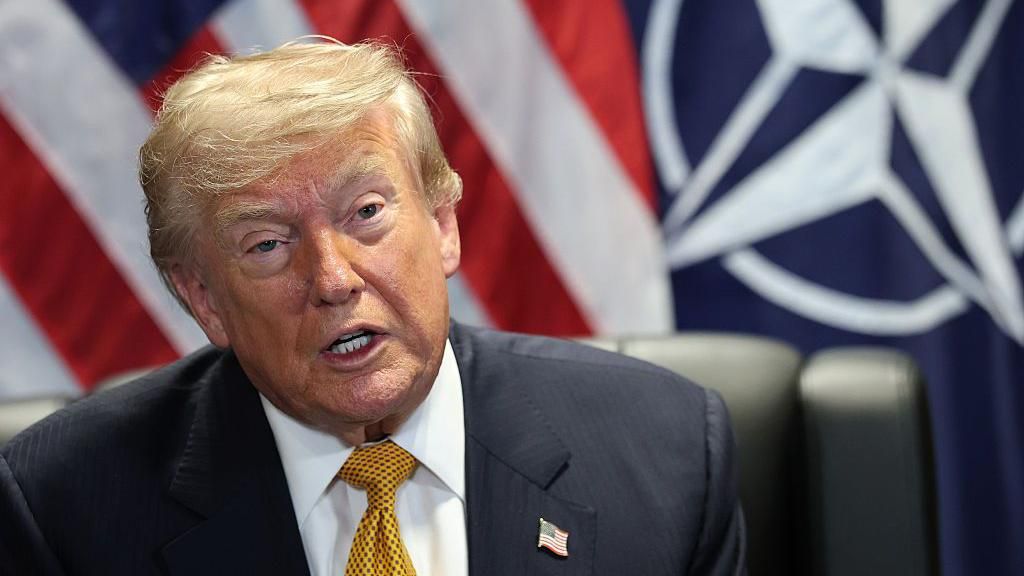
    WASHINGTON — In an unexpected announcement that has sent ripples through global markets already grappling with multiple crises, former and returning U.S. President Donald Trump revealed Friday that he will raise import tariffs on European-manufactured cars and trucks to 25% starting next week. The policy shift arrives at a moment of unprecedented vulnerability for the global economy, threatening to exacerbate already mounting pressures on growth and inflation.

  • Former Miami Congressman David Rivera is convicted of secretly lobbying for Maduro’s Venezuela

    Former Miami Congressman David Rivera is convicted of secretly lobbying for Maduro’s Venezuela

    MIAMI — After a high-profile seven-week federal trial that pulled back the curtain on hidden foreign influence operations targeting U.S. Latin America policy, former Republican U.S. Representative David Rivera has been found guilty on all charges connected to a covert $50 million lobbying campaign on behalf of Venezuela’s Nicolás Maduro government during the first Donald Trump presidential term.

    Jurors delivered the guilty verdict Friday against Rivera, a decades-long close personal friend of U.S. Secretary of State (and former Florida U.S. Senator) Marco Rubio, and his co-defendant, political consultant Esther Nuhfer. All 11 counts against the pair, including conspiracy to commit money laundering and failing to register as agents of a foreign government with the U.S. Department of Justice, resulted in conviction. Rivera remained stoic and expressionless as the verdict was read, a demeanor he maintained throughout the entire course of the trial.

    Though Rivera had been released on bond ahead of the verdict, U.S. District Judge Melissa Damian immediately ordered him to be taken into federal custody. Damian ruled Rivera qualifies as a substantial flight risk, citing his access to large unreported assets, the potential for a decades-long prison sentence, and additional pending federal foreign lobbying charges linked to this scheme that he already faces in Washington, D.C.

    The trial, one of the few high-profile public proceedings to examine foreign influence operations centered in Miami, offered an unprecedented look at the city’s unique role as a hub for cross-border lobbying campaigns designed to shift U.S. policy toward Latin America. Miami’s large Venezuelan exile community, deep political connections to Washington, and concentration of regional power players have long made it a magnet for both anti-Communist advocacy and foreign corruption operations, a dynamic laid bare by the proceedings.

    The case even drew testimony from top Washington political figures, including Rubio and Texas Congressman Pete Sessions, both of whom told jurors they had no idea Rivera held a secret consulting contract with PDV USA, the U.S.-based affiliate of Venezuela’s state-owned oil giant PDVSA. Both said they were shocked when the scheme came to light.

    Prosecutors first unsealed the 11-count indictment against Rivera and Nuhfer in 2022. The case alleges that Venezuela’s then-Foreign Minister Delcy Rodríguez — who now serves as Venezuela’s acting president — personally tapped Rivera to leverage his Republican connections built during his time in Congress to convince the first Trump administration to drop its hardline opposition to Maduro and roll back crippling economic sanctions that had gutted Venezuela’s economy.

    Prosecutors argued that the pair manipulated high-profile political contacts including Rubio and Sessions like “pawns on a chessboard” as part of the lobbying push, all to advance Maduro’s goal of normalizing relations with the Trump administration at a time when the Venezuelan government faced widespread global condemnation for gross human rights violations. In his closing arguments to the jury, lead prosecutor Roger Cruz emphasized that the defendants prioritized large payments over ethical or legal obligations, saying “As long as the money kept coming in, they didn’t care from where.”

    Per prosecution arguments, Rivera and Nuhfer concealed their work to protect Rivera’s public image as a leading anti-Communist voice in Florida Republican politics; keeping the “massive secret” hidden was the only way to avoid ending his political career, prosecutors said. To hide communications from authorities, Rivera set up an encrypted chat group codenamed MIA (for Miami) with Raúl Gorrín, a Venezuelan media tycoon who served as the main liaison to the Maduro government and has since been charged by U.S. authorities with bribing senior Venezuelan officials. Chat members used coded language to obscure their activities: Maduro was referred to as the “bus driver,” Sessions as “Sombrero,” Rodríguez as “The Lady in Red,” and multi-million dollar payments were called “melons.” Prosecutors added that payments from the Maduro government were consistently referenced in chats using the Spanish word for light, “La Luz.”

    The defense pushed back aggressively against the prosecution’s narrative. Attorneys for both defendants argued their clients acted in good faith and had no legal obligation to disclose the consulting contract, which they claimed focused exclusively on commercial efforts to convince oil major ExxonMobil to return to its operations in Venezuela. Commercial work of this nature is typically exempt from foreign agent registration requirements under U.S. law. The defense further contended that Rivera’s later meetings with Rubio and Sessions, which occurred after the consulting contract expired, were focused on promoting a transition to a new Venezuelan government less hostile to U.S. interests, rather than normalizing Maduro’s rule.

    “He was working every possible angle to get Nicolás Maduro out,” defense lead attorney Ed Shohat said in closing arguments. “There was not a word in the chats about normalizing relations.” Nuhfer’s attorney, David Oscar Markus, drew a controversial comparison between the government’s case and the 17th-century Salem Witch Trials, arguing the prosecution presumed guilt on thin, insubstantial evidence that did not prove malicious intent. “My client does not have a dark heart,” Markus told the jury.

    Prosecutors rejected the defense’s framing, arguing the ExxonMobil-focused contract was just a cover for illegal political lobbying on behalf of the Maduro government. Once the scheme began to unravel, prosecutors said, Rivera and Nuhfer fabricated documents, backdated agreements, and created sham contracts to hide the flow of illegal funds. One example presented to the jury was a fake agreement created to justify a $3.75 million wire transfer to a South Florida company that maintained Gorrín’s luxury yacht.

    The political lobbying operation included arranging private meetings for Rodríguez across multiple U.S. and Latin American cities, including New York, Washington, Caracas and Dallas. The pair recruited Sessions to help broker a meeting between Rodríguez and ExxonMobil’s CEO, a position previously held by Trump’s first Secretary of State Rex Tillerson. Sessions also agreed to carry a personal letter from Maduro to Trump after holding a secret meeting with the Venezuelan leader in Caracas.

    The outreach effort ultimately collapsed within six months of Trump taking office. The Trump administration imposed sweeping sanctions on Maduro, labeled him a dictator, and launched a “maximum pressure” campaign aimed at forcing him from power. A decade later, however, Rodríguez has emerged as a key trusted partner for the second Trump administration following a U.S. military operation that ousted Maduro from power.

    Before his election to Congress in 2010, Rivera built his political career as a senior Republican leader in the Florida state legislature, where he shared a home in Tallahassee with a young Marco Rubio, who later rose to become Speaker of the Florida House of Representatives, a U.S. Senator, and most recently U.S. Secretary of State. Rivera has a long history of political controversy: in 2012, he was accused of secretly funding a Democratic spoiler candidate in his congressional re-election race, though federal prosecutors dropped the case last year after an appeals court struck down a large fine imposed by a lower court. He was also previously investigated for alleged campaign finance violations and a $1 million no-bid contract with a gambling company while serving in the Florida legislature, but never faced criminal charges in either case.

  • Florida sheriff identifies body found in Tampa Bay as 2nd missing student from Bangladesh

    Florida sheriff identifies body found in Tampa Bay as 2nd missing student from Bangladesh

    TAMPA BAY, Fla. — Law enforcement officials have confirmed that a badly decomposed body pulled from Tampa Bay earlier this month is that of the second missing University of South Florida international graduate student from Bangladesh, in what a top sheriff calls an unspeakable, cold-blooded double killing.

    Hillsborough County Sheriff Chad Chronister announced the identification Friday, more than a month after the two students were first reported missing. The remains of Nahida Bristy, a doctoral candidate in chemical engineering, were discovered Sunday by a recreational kayaker whose fishing line caught on a discarded garbage bag bobbing in the bay’s waters. Due to the advanced state of decomposition of the corpse, investigators relied on DNA testing and dental records to confirm Bristy’s identity, Chronister explained during a press briefing.

    Just two days before Bristy’s remains were located, the body of her friend and fellow USF doctoral student Zamil Limon was found in a separate garbage bag dumped on a bridge spanning the bay. Limon, who studied geography, environmental science and policy, shared an off-campus apartment with 26-year-old Hisham Saleh Abugharbieh, who has been in custody since the day Limon’s body was recovered. Abugharbieh, a former USF student who dropped out of the institution, faces two counts of first-degree murder in connection with the students’ deaths.

    In chilling comments to reporters, Chronister said the suspect displayed absolutely no remorse or reaction when confronted with evidence of the brutal killings. “He was nonreactive. He was callous and showed no emotion when we showed him the information we had,” the sheriff said. While preliminary evidence indicates both students were killed at the same location and around the same time, Chronister noted detectives are still working to confirm a definitive timeline of the crime.

    To date, investigators have not uncovered a clear motive for the slayings, a detail Chronister says his team remains determined to uncover. “I hope we find that out,” he added.

    The case began on April 16, when Bristy and Limon were separately reported missing to campus police and the Hillsborough County Sheriff’s Office. Colleagues and contacts told investigators that failing to show up for scheduled appointments was completely out of character for both students, and law enforcement quickly connected the two disappearances.

    Initial interviews at the apartment shared by Limon, Abugharbieh, and a third roommate immediately raised red flags for investigators. While the third roommate cooperated fully with questions, Abugharbieh gave vague, shifting answers about his interactions with Limon. Investigators also noted he had an unstitched cut on one arm and a bandaged finger, leading them to label him a person of interest, though they did not have sufficient evidence to arrest him at that stage.

    A follow-up interview with the third roommate yielded a critical break: the roommate told investigators he had seen Abugharbieh using a large cart to move items out of his room and to a nearby trash compactor in the overnight hours between April 16 and 17. When investigators searched the compactor, they found Limon’s glasses, student ID, wallet, and blood-soaked clothing. That evidence was enough to secure search warrants for the entire apartment and Abugharbieh’s electronic devices.

    A forensic sweep of the apartment uncovered damning physical evidence: large visible blood traces in the kitchen that extended down the hallway and into Abugharbieh’s bedroom. When investigators used blood-detecting luminal spray, they even found a faint outline of blood matching the shape of a human body curled in the fetal position, pressed against the wall right next to Abugharbieh’s bed. Additional blood traces were later found on the floorboards of Abugharbieh’s car, and genetic testing confirmed those traces belonged to Bristy.

    Investigators have reconstructed what they believe is the sequence of events: after the killings, Abugharbieh loaded the bodies into a cart under cover of darkness and transported them to his car to be dumped. Tracking data from the suspect’s car GPS, paired with surveillance footage from a nearby fire station, allowed investigators to map his route from the apartment to the Tampa Bay area, prompting the extensive search that eventually led to the recovery of both victims’ remains.

    While most of the content on Abugharbieh’s phone had been manually erased, forensic analysts were able to recover disturbing search history from the days leading up to the students’ disappearance. The search queries included deeply troubling questions: “Can a knife penetrate a skull?” and “Can a neighbor hear a gunshot?” Investigators also confirmed that Abugharbieh purchased large quantities of Lysol disinfecting wipes, heavy-duty contractor-grade trash bags, and other suspicious supplies in the days before April 16.

    “This was calculating. That’s what makes this so premeditated,” Chronister said of the suspect’s alleged actions.

    Relatives of both victims have been notified of the identification and ongoing developments in the case, the sheriff confirmed. Jennifer Spradley, an attorney with the Tampa public defender’s office representing Abugharbieh, declined to comment on the case when reached by email earlier this week.

  • Was LIV Golf an expensive failure for Saudis? Not everyone thinks so

    Was LIV Golf an expensive failure for Saudis? Not everyone thinks so

    For many casual observers, writing off Saudi Arabia’s $5 billion investment in the controversial breakaway LIV Golf tour as an expensive business failure seems like a straightforward conclusion after the kingdom confirmed its exit after five planned seasons. But industry experts argue that framing the LIV experiment as a total loss misreads Saudi Arabia’s broader strategic goals, which extended far beyond turning a quick profit on professional golf.

    Launched in 2022 by Saudi Arabia’s $900 billion sovereign wealth fund, the Public Investment Fund (PIF), LIV Golf upended the global golf landscape by poaching dozens of top stars including Dustin Johnson and Phil Mickelson with nine-figure signing bonuses. The reimagined tour format—featuring 54 holes of play, simultaneous shotgun starts, and on-course entertainment—sparked a bitter legal battle with the established PGA Tour that ended only when the two sides announced surprise merger negotiations, which dragged on for years without reaching a final deal. Ultimately, LIV never secured a lucrative major broadcast contract or built a large, loyal global fanbase, making continued large-scale investment unsustainable.

    However, analysts emphasize that LIV always served a larger purpose beyond golf: advancing Saudi Arabia’s core strategic agenda of diversifying its oil-dependent economy and boosting its global profile as a destination for tourism, international business, and investment. As the world’s top crude oil exporter, Saudi Arabia has used its PIF to pour billions into high-profile sports properties to deliver on this vision, a strategy that has already yielded visible wins: securing hosting rights for the 2034 men’s FIFA World Cup, luring global soccer superstar Cristiano Ronaldo to the Saudi Pro League, and taking over English Premier League club Newcastle United. Even with LIV’s exit, experts say this broader strategic trajectory remains unchanged.

    “Saudi Arabia is not going cold on sport,” Simon Chadwick, professor of Afro-Eurasian sport at Emlyon Business School in Shanghai, told Agence France-Presse. “It is evaluating the work that has thus far been done, what remains to be delivered, and what has worked (or hasn’t worked). The trajectory remains the same.”

    Chadwick added that initial Saudi ambitions for sports investment may have been overly ambitious, opening the door for opportunistic actors in the global sports industry to exploit the kingdom’s aggressive spending spree. Other analysts note that LIV’s exit is part of a broader pullback from the most extravagant, unproven projects across Saudi Arabia’s economic diversification agenda, including scaled-back spending on the $500 billion futuristic megacity NEOM and luxury tourism resorts. Within sports, the Saudi Pro League has also pulled back from the blank-check spending spree that attracted veteran global stars, and PIF recently sold a majority stake in top domestic club Al Hilal. Other high-profile events, including the Saudi Arabia Snooker Masters, have also been scrapped years into long-term contracts.

    Amro Elserty, a France-based Middle East sports affairs analyst, explained that LIV fulfilled its core initial purpose of putting Saudi Arabia on the global sports map, even if continued massive spending no longer made strategic sense. “That phase was primarily about visibility and positioning Saudi Arabia as a major global player,” he said. “What has changed is not that this objective disappeared, but that the marginal value of continuing to spend at the same level on a single project like LIV has declined.”

    While LIV’s exit carries some minor reputational risk, Elserty argued that it is not viewed as a major failure inside Saudi policy circles. “Within the logic of PIF’s strategy, this is better understood as a controlled exit from an experimental phase rather than a failure in the conventional sense,” he said. Chadwick echoed that view, noting that outside observers have overblown the significance of the pullback, framing what is a routine strategic adjustment as a high-stakes sports melodrama. Critics have long dismissed Saudi Arabia’s sports investments as “sportswashing,” an effort to distract from global criticism of the kingdom’s human rights record, but that has not slowed the expansion of Saudi influence across global sport. Even with LIV’s end, experts confirm Saudi Arabia’s commitment to using sports investment as a core tool for economic and geopolitical positioning remains intact.

  • War criminal Mladic close to death, say lawyers asking judge for jail release

    War criminal Mladic close to death, say lawyers asking judge for jail release

    Eighty-four-year-old convicted Bosnian Serb war criminal Ratko Mladic, infamously known as the “Butcher of Bosnia”, is at the center of a high-stakes legal battle before a United Nations tribunal, as judges prepare to rule on a desperate appeal for his early release on humanitarian grounds.

    Mladic’s path to a cell in The Hague has been decades in the making. First indicted for atrocities during the 1992-1995 Bosnian War, he evaded capture for 16 years after disappearing in 1995, and was only tracked down and arrested in rural Serbia in 2011. He has remained in UN detention ever since, going on trial at the international tribunal in 2012 before receiving a life sentence in 2017 on charges of genocide, war crimes, and crimes against humanity. That conviction was upheld on appeal in 2021.

    The gravity of Mladic’s crimes is well-documented. As commander of Bosnian Serb forces during the breakup of the former Yugoslavia, he oversaw a campaign of ethnic cleansing across Bosnia and Herzegovina, a nearly four-year siege of the capital Sarajevo that killed more than 10,000 civilians, and the 1995 Srebrenica massacre, where 8,000 Bosniak men and boys were systematically executed.

    Now, Mladic’s legal team argues the 84-year-old’s declining health makes continued detention unnecessary and cruel. In a formal submission to the tribunal Friday, his lawyers outlined a rapid deterioration of his condition: Mladic has long been confined to a wheelchair or bed, and recently suffered a suspected stroke during a phone call with his son that left him nearly unable to speak. Two independent doctors who have evaluated Mladic have concluded his condition is critical, with a high risk of imminent death.

    The defense is pushing for immediate provisional or conditional release to a Serbian-language hospital or hospice, an ask widely interpreted as a bid to allow Mladic to return to Serbia to spend his final days. Serbian Justice Minister Nenad Vujic has confirmed the Serbian government is prepared to provide all required assurances to the UN court to facilitate the transfer.

    Mladic’s legal team argues that the current UN detention unit and its on-site prison hospital lack the capacity to provide adequate end-of-life care for the former general. They maintain that keeping Mladic behind bars now constitutes cruel and inhumane punishment, and no longer serves the original goals of his conviction.

    In response to the request, presiding judge Graciela Gatti Santana ordered an independent medical evaluation of Mladic’s health, with final findings due Friday. The assessment is tasked with evaluating the adequacy of his current care, confirming his diagnosis and prognosis, and outlining available treatment options.

    But the appeal has drawn fierce pushback from Bosnian victim and survivor groups, who reject the claim that this is a purely humanitarian request. They argue Mladic’s release bid is nothing more than a calculated legal tactic, pointing to multiple failed attempts by his defense team to secure his freedom in recent months: A similar release request was rejected in July 2025, and an application for temporary release to attend a family member’s memorial was also turned down last November.

    As the international tribunal weighs its decision, Mladic’s son Darko told Serbian media that there has been no recent change to his father’s condition, and he plans to visit him in the prison hospital next week. The ruling on the release bid, which will close one of the most high-profile chapters of international war crime prosecutions stemming from the Yugoslav Wars, is now imminent.

  • Exorbitantly expensive tickets for early World Cup games still on general sale

    Exorbitantly expensive tickets for early World Cup games still on general sale

    With just over 30 days remaining until the 2026 men’s FIFA World Cup kicks off across the United States, Canada and Mexico on June 11, the majority of the tournament’s group stage matches still have tickets available to the general public – but steep pricing has left many soccer fans frustrated and locked out of attending.

    FIFA has been releasing tickets in staggered sales phases since last September, and currently, remaining seats are listed through the governing body’s official website in a dedicated “last-minute sales” portal. Prices vary dramatically based on seating tier, with premium Front Category 1 seats commanding the highest costs and Category 4 being the most affordable entry point. The lowest current price for general sale group stage tickets is $380, a rate available for seven different matches, including the group stage clash between World Cup first-time qualifier Curacao and Ivory Coast, hosted in Philadelphia.

    Even with this baseline entry price, cost disparities between matches and seating tiers are striking. For example, a Category 3 seat for the United States’ opening group game against Paraguay in Los Angeles currently lists for $1,120 – nearly three times the $380 price tag of a Category 2 seat for the Austria vs. Jordan group fixture. The most expensive general sale ticket for any group stage match tops out at $4,105 for the US-Paraguay game, with dozens of other group stage matches carrying average ticket prices around the $2,000 mark. Other high-priced group fixtures include Argentina’s match against Austria at $2,925 for top-tier seats, Ecuador vs. Germany at $2,550, Uruguay vs. Spain at $2,520, and England’s clash with Croatia at $2,505. Top-tier tickets for defending champion Lionel Messi’s Argentina side range between $2,475 and $2,925, while Brazil’s tickets run from $2,280 to $2,310 for premium seating.

    This year’s tournament marks the first time FIFA has implemented dynamic pricing for the World Cup, meaning listed ticket prices can shift based on demand over time. Back in January, FIFA president Gianni Infantino claimed that public demand for World Cup tickets was equal to “1,000 years of World Cups at once,” predicting that all 104 tournament matches would sell out completely. To date, that prediction has not held: while 17 total group stage matches are listed as sold out on FIFA’s website, dozens more still have general sale inventory. The tournament’s opening match between co-host Mexico and South Africa in Mexico City is sold out, alongside seven other matches held across Mexican venues, including Mexico’s two additional group games against South Korea (Guadalajara) and Czech Republic (Mexico City). Other sold out group fixtures include Turkey vs. USA in Los Angeles, Brazil’s match against Morocco in the New York/New Jersey metro area, and Scotland’s clash with Brazil in Miami. Even for top national sides including defending champions Argentina, Brazil, Spain, France, and England, fans who can afford the current asking prices are still able to purchase tickets directly.

    Beyond group stage play, no general sale tickets are currently available for the tournament final. However, premium seats for the two semifinal matches are still on offer, with prices reaching five figures: a top-tier ticket for the Atlanta semifinal lists for $9,660, while the same seating tier for the Dallas semifinal costs $11,130.

    The unprecedented pricing has sparked significant backlash from fans worldwide, who have called FIFA’s pricing strategy a “monumental betrayal” of soccer supporters. Fan anger has been amplified by the introduction of additional high-priced seating categories as the tournament approaches, with most of the remaining general sale tickets falling into these more expensive tiers. Fans looking for resold tickets also face extreme markup: last month, four final seats were listed on third-party resale platforms (including FIFA’s official resale marketplace) for just under $2.3 million per ticket. While FIFA does not set resale prices or directly list resold tickets on its marketplace, the organization takes a 30% cut of every resale transaction, allowing it to profit a second time from the same seat.

  • Driver who drove into a tea party outside a London school charged over death of 2 girls

    Driver who drove into a tea party outside a London school charged over death of 2 girls

    LONDON – One year after a devastating vehicle collision that claimed the lives of two young girls outside a London primary school, UK law enforcement authorities have announced formal charges against the driver in connection with the deadly incident. The case, which shocked local communities when it unfolded in July 2023 during a end-of-term outdoor tea party, has taken a major procedural turn following a reopened investigation and the uncovering of previously unknown evidence.

    On July 6, 2023, 49-year-old Claire Freemantle was behind the wheel of a Land Rover when the vehicle veered off course, crashed through a perimeter fence, and plowed into the gathering of students and families outside Study Preparatory School, a private primary campus located in the Wimbledon district of south London. The crash killed Nuria Sajjad and Selena Lau, both 8 years old, and left multiple other attendees injured. More than a dozen people required on-site medical care for their injuries, and 10 individuals – including several current students at the school – were transported to local hospitals for further treatment.

    Following the initial investigation, Freemantle was not charged, after prosecutors concluded the crash was caused by an unexpected epileptic seizure. Freemantle herself has stated publicly that she retains no memory of the incident, but has shared that she feels “deepest sorrow” over the harm the crash caused. However, relatives of the two deceased girls pushed for further scrutiny of the case, raising questions about the original investigative process and prompting the Metropolitan Police to reopen the probe.

    After completing the reinvestigation uncovered new evidence, prosecutors confirmed on Friday that they have filed two counts of causing death by dangerous driving, plus seven additional counts of causing serious injury by dangerous driving, against Freemantle. Along with announcing the new charges, the Metropolitan Police issued a formal public apology for its handling of the initial investigation. The force has also referred its own officers to the UK’s independent police watchdog to investigate potential professional misconduct connected to the original probe.

    So far, details of the new evidence that led to the filing of charges have not been released to the public. Freemantle’s defense team has publicly questioned the decision to reverse the original declination of charges, and confirmed that their client will enter a plea of not guilty when she makes her first scheduled court appearance at Westminster Magistrates’ Court on June 16.

  • China has now dropped tariffs on imports from every African country except 1

    China has now dropped tariffs on imports from every African country except 1

    CAPE TOWN, SOUTH AFRICA – A landmark Chinese trade policy that grants duty-free market access to Africa’s largest economies for a two-year period officially entered into force on Friday, launching at a moment of stark contrast with the United States’ ongoing push for protectionist trade measures under former President Donald Trump.

    The new tariff exemption framework covers the 20 biggest economies across the African continent, including regional powerhouses South Africa, Egypt, Nigeria, Algeria and Kenya. Prior to this update, China had already eliminated import tariffs for 33 low-income African nations, bringing the total number of African countries eligible for full tariff-free treatment for their exports to 53 out of the continent’s 54 sovereign states. The sole exception is the small southern African kingdom of Eswatini, which remains the only African country to maintain official diplomatic relations with Taiwan, a self-governing island that China claims as part of its own territory.

    Chinese authorities frame the policy as a concrete step toward shared bilateral growth. The Customs Tariff Commission of China’s State Council emphasized that the initiative will advance mutually beneficial development between China and African trading partners. According to China’s state-run Xinhua News Agency, the first shipment to benefit from the new rules cleared customs in the southern Chinese tech hub of Shenzhen in the early hours of Friday: a 24-metric-ton consignment of fresh apples sourced from South African orchards.

    China’s Ministry of Commerce noted that the policy will deliver particular gains for high-demand African agricultural exports that previously faced import duties ranging from 8% to 30%. These include cocoa from top global producers Ivory Coast and Ghana, coffee and avocados from Kenya, and citrus fruits and wine from South Africa. Combined, Ivory Coast and Ghana control more than half of the world’s total cocoa supply, while South Africa ranks as one of the world’s top exporters of citrus produce.

    The policy rollout comes as many leading African economies have been actively diversifying their export markets away from the U.S., after the Trump administration implemented steep reciprocal tariffs on African goods roughly a year ago. At the height of those measures, South Africa, Africa’s most industrialized economy, faced tariffs as high as 30%, while some other African nations saw rates exceed 40%.

    “South Africa looks forward to working with China in a friendly, pragmatic and flexible manner,” South African Trade Minister Parks Tau stated during bilateral trade talks held in Beijing this past February. Though the U.S. Supreme Court ruled Trump’s broad global tariffs unconstitutional and struck them down in the same month, the former president quickly announced that his administration held “very powerful alternatives” and immediately enacted new temporary import taxes to replace the invalidated measures.

    Today, China already holds the position of Africa’s largest single trade partner, at a time when the continent’s demographic footprint is expanding rapidly: the United Nations projects Africa’s current population of 1.5 billion will nearly double to 2.5 billion by 2050, accounting for more than a quarter of the global population at that time.

    Despite Beijing’s framing of the deal as a win-win for development, analysts point to persistent structural imbalances in the China-Africa trade relationship, alongside billions of dollars in outstanding African sovereign debt owed to Beijing. In 2025, total bilateral trade hit a record high of $348 billion. However, Chinese exports to Africa grew roughly 25% to reach $225 billion over the period, while African exports to China rose only around 5% to $123 billion, widening the existing trade deficit for African nations.

    For decades, the core of the trade relationship has centered on China importing raw materials from Africa and exporting finished manufactured goods back to the continent. Thierry Pairault, a leading China-Africa researcher at France’s National Center for Scientific Research, points out that most African raw material exports – including crude oil and industrial minerals – already enjoyed tariff-free access to Chinese markets before the new policy. While Pairault acknowledges the policy will deliver modest benefits for African agricultural exporters, he argues its broader geopolitical purpose is deliberate.

    “Xi Jinping is positioning China as the antithesis of Western protectionism. This gesture is intended to appeal to both African public opinion and global markets,” Pairault explained in an analysis published by the China Global South Project, a research initiative focused on China’s engagement with low and middle-income nations. Even so, he added, the policy “only applies where it costs China almost nothing.”

  • King Charles III wins praise for deft handling of Trump on his US state visit

    King Charles III wins praise for deft handling of Trump on his US state visit

    LONDON — Following King Charles III’s high-stakes four-day state visit to the United States this week, former U.S. President Donald Trump has heaped praise on the British monarch, announcing a rollback of select tariffs on Scotch whisky as a goodwill gesture tied to the royal tour. The trip, which brought the King and Queen Camilla to Washington D.C., New York and Virginia, was crafted as a carefully calibrated diplomatic mission to patch growing rifts between the Trump administration and the U.K. government, timed to coincide with the 250th anniversary of U.S. independence.

    Against a backdrop of deep trans-Atlantic divisions over Washington’s push for military action against Iran — divisions that have left U.S. relations with Prime Minister Keir Starmer’s government severely strained — the King delivered a performance widely hailed as a masterclass in quiet diplomacy. He balanced warm overtures to his U.S. host with carefully measured, implicit criticism of Trump’s policy priorities, leaving experts debating whether the visit can deliver long-term improvement to an alliance already frayed by policy disagreements.

    Kristofer Allerfeldt, an American history professor at the University of Exeter, assessed that while the trip was unlikely to resolve long-running trans-Atlantic tensions in the long run, it had successfully reaffirmed the British monarchy’s standing at home. “He’s done us proud,” Allerfeldt noted, crediting the King’s confident performance for restoring much of the institution’s prestige.

    The mission unfolded against significant political friction even before the King arrived in the U.S. Trump has repeatedly lambasted Starmer, whom he once praised, for refusing to join U.S. military strikes on Iran, dismissing the British prime minister as unfit to bear the legacy of Winston Churchill — the World War II leader who coined the phrase “special relationship” to describe the U.K.-U.S. bond. This criticism is part of a broader rift between Trump and NATO allies, whom he has publicly labeled “cowards” and “useless” for declining to join the Iran campaign. That tension, however, has not eroded Trump’s long-standing admiration for the British monarchy, a sentiment he says was deepened during his unprecedented second state visit to the U.K. last September.

    Some British opposition lawmakers had even called for the reciprocal U.S. visit to be canceled entirely, warning that unpredictable statements or actions from Trump could leave the monarch in an awkward, embarrassing position. In the end, though, the four-day tour was marked by widespread warmth and very few awkward moments — with one notable exception: Trump broke with long-standing convention that private conversations with the monarch remain confidential, sharing unprompted remarks attributed to Charles during a white-tie state dinner at the White House.

    In those public remarks Tuesday, Trump claimed Charles “agrees with me, even more than I do” that Iran must never be permitted to acquire nuclear weapons, and added that “if that were up to him,” the King “would have followed the suggestions we made with respect to Ukraine.” Buckingham Palace responded calmly to the disclosure, noting only that “the king is naturally mindful of his government’s longstanding and well-known position on the prevention of nuclear proliferation.”

    Publicly, the King left no ambiguity about his policy priorities — and the differences between his position and that of the Trump administration. In the centerpiece address of his visit, a speech to a joint session of the U.S. Congress, Charles stressed the need for “unyielding resolve” in supporting Ukraine’s defense against Russian invasion, a sharp implicit rebuke of Trump’s “America First” agenda that has cast doubt on long-term U.S. support for Kyiv. The speech was packed with subtle, regal pushback on Trump administration priorities: the King reaffirmed the indispensable role of NATO, emphasized the critical value of checks on executive power, highlighted the urgent threat of climate change, and celebrated the strength of “vibrant, diverse and free societies.” He also referenced his own service in the Royal Navy, a branch of the British military that Trump has previously disparaged.

    Historian Anthony Seldon told *The Guardian* that the King could not have struck a better balance in his remarks. “It’s difficult to imagine he could have gone much further in what he said and what he didn’t say,” Seldon said. “He judged it incredibly well: very brave, very smart, very clever.”

    Allerfeldt pointed to the unusual cross-partisan reception the speech received, with multiple standing ovations from both Democratic and Republican lawmakers. “Apart from the section on the natural world and the environment, both Republicans and Democrats stood up and applauded,” he noted. In a lighter moment at the White House state dinner, the King even won laughs from the crowd with a self-deprecating joke about British troops burning down the White House during the 1812 war.

    Organizers judged the trip a notable success even with the lingering shadow of Prince Andrew, the King’s younger brother who has been stripped of his royal titles, exiled from public royal life, and is currently under investigation over his long-standing ties to disgraced convicted sex offender Jeffrey Epstein. Andrew has repeatedly denied any wrongdoing connected to Epstein’s crimes. Victims of Epstein had publicly called on the King to meet with them during the visit; while the King did not hold a formal meeting, he referenced their experience indirectly in his congressional speech, noting the need to “support victims of some of the ills that, so tragically, exist in both our societies today.” Andrew Lownie, author of the Andrew biography *Entitled*, called the address “the best defense of the monarchy in years.”

    Shortly after the royal couple departed the U.S. to return to the U.K., Trump made the surprise announcement that he would lift select tariffs on imported Scotch whisky, framing the move as a tribute “in honor of the King and Queen of the United Kingdom.” Buckingham Palace welcomed the decision, saying in a statement that the King “sends his sincere gratitude for a decision that will make an important difference to the British whisky industry and the livelihoods it supports.”

    Trump doubled down on his praise for the monarch in an interview with Sky News after the visit, calling Charles “a phenomenal representative” for the United Kingdom, before returning to his familiar criticism of Starmer. “Your prime minister has to learn to deal the way he deals, and he’ll do a lot better,” Trump told the outlet.

  • Ukraine says a strike hit Tuapse oil terminal, the fourth attack on the region in 2 weeks

    Ukraine says a strike hit Tuapse oil terminal, the fourth attack on the region in 2 weeks

    In a sharp escalation of cross-border military strikes amid the ongoing Russia-Ukraine conflict, Ukrainian forces have carried out a new attack on an oil terminal located in Tuapse, a Russian city on the Black Sea coast, Ukraine’s General Staff confirmed Friday. This strike marks the fourth assault on Russian oil infrastructure in the Black Sea region in just over two weeks.

    Ukraine’s top military body confirmed that explosions and a large fire broke out at the terminal site following the strike. Russian local authorities clarified that the blaze was triggered by an incoming Ukrainian drone, and noted that no fatalities or injuries have been reported from the incident.

    Records of repeated attacks show this same Tuapse oil facility was targeted three times earlier this month, on April 16, April 20, and April 28. In a coincidence that underscores the pace of strikes in the region, Veniamin Kondratyev, the governor of Russia’s Krasnodar Krai which administers Tuapse, announced just 24 hours before Friday’s strike that crews had fully extinguished a fire at the city’s oil refinery from a previous attack.

    The strike on Russian infrastructure came as Russian forces launched a wave of large-scale drone attacks across multiple regions of Ukraine Friday, causing civilian casualties and widespread damage to public infrastructure.

    Serhii Nadal, mayor of Ternopil, a major city in western Ukraine, reported that Russia launched more than 50 drones at the city. Strikes hit local industrial sites and key public infrastructure, leaving at least 10 people wounded and cutting power to multiple residential neighborhoods, Nadal said.

    In southern Ukraine’s Odesa region, overnight Russian drone strikes caused damage to two multi-story residential apartment buildings and local port infrastructure, local emergency management officials confirmed. Ukraine’s State Emergency Service reported that one apartment in a 16-story residential building was completely destroyed by the strike, and the building’s roof caught fire. In a second nearby high-rise, flames engulfed the entire 12th floor.

    Ukrainian President Volodymyr Zelenskyy wrote in a Telegram post Friday that the Odesa strikes left at least five people injured. He added that damage from overnight Russian attacks was also documented in two other Ukrainian regions: the central city of Kryvyi Rih, and the northeastern Kharkiv region, where Russian strikes hit critical railway infrastructure.

    In his statement, Zelenskyy emphasized the scale of Russia’s recent aerial campaign, noting that Russian forces had carried out 210 total drone strikes against Ukraine in recent days, with roughly 140 of those strikes conducted using Iranian-made Shahed attack drones, the most commonly used loitering munition in Russia’s cross-border strikes. “Russia continues to attack our energy infrastructure, critical infrastructure, and civilian objects,” Zelenskyy wrote.