In a landmark decision addressing one of the entertainment industry’s most contentious modern challenges, the Academy of Motion Picture Arts and Sciences announced sweeping new policy updates on Friday that explicitly bar AI-generated performances and screenplays from Oscar eligibility, alongside major reforms to the Best International Feature Film nomination process. The regulatory changes mark the Academy’s most high-profile intervention into the growing use of artificial intelligence in Hollywood, a technology that has sparked widespread anxiety among creative workers over job security and artistic integrity. Under the new framework, only roles performed by consenting human performers that are officially credited in a film’s legal billing can be considered for nomination in any acting category. For writing categories, the rules have been formally codified to require that all submitted screenplays must be human-authored to qualify for awards consideration. The announcement arrives just days after an AI-generated recreation of late Hollywood star Val Kilmer was publicly revealed to a gathering of cinema industry leaders. One year after Kilmer’s passing, a digitally recreated youthful version of the actor appears in the trailer for the upcoming archaeological action film *As Deep as the Grave*. The project was developed with full support from Kilmer’s family, who provided access to the actor’s personal video archive to help reconstruct his likeness at multiple points throughout his life and career. Unregulated AI development has been one of the most divisive issues in global entertainment for years, and it served as the core sticking point during the 2023 Hollywood strikes that brought major film and television production to a standstill. During the work stoppage, striking actors and writers repeatedly warned that unregulated adoption of AI would threaten long-term career stability for millions of creative professionals by enabling studios to replace human workers with digital alternatives. Beyond its AI policy reforms, the Academy also introduced significant changes to the eligibility rules for the Best International Feature Film category, a revision designed to address longstanding criticism of the old selection system. Prior to this update, only films officially selected by a recognized national governing body in their country of origin could be entered into the category. This requirement created a major barrier for acclaimed filmmakers working in authoritarian states, where government-backed bodies often block politically critical works from submission. A high-profile example of this gap came earlier this year, when Iranian dissident director Jafar Panahi’s film *It Was Just an Accident* was ultimately submitted as an entry from France rather than his home country. Under the new rules, non-English language films can now qualify for submission to the category if they win a qualifying award at one of five major international film festivals: Cannes, Berlin, Busan, Venice, and Toronto. Additionally, the Academy has revised attribution protocols for the category: moving forward, the film itself will be recognized as the nominee rather than the submitting country, and the director’s name will be listed on the statuette plaque directly after the film title, with the country of origin included only when applicable.
作者: admin
-

Australia wants to be first nation in the world to eliminate a cancer – can it?
Twelve years ago, Chrissy Walters’ life changed forever. Six months after welcoming her long-awaited first daughter into the world following years of fertility struggles, the Toowoomba resident was rushed to hospital with a severe internal bleed. After multiple tests, biopsies and specialist appointments, the 39-year-old received a devastating diagnosis: advanced cervical cancer.
Today, after more than a decade of grueling, invasive treatments, Walters’ cancer has spread throughout her body, and her condition is terminal. For her 12-year-old daughter, cervical cancer has been a constant presence throughout her life – the family began having open conversations about Walters’ mortality when the girl was just three years old. Now, as her daughter reaches the age Australia’s national immunization program targets for HPV vaccination, Walters holds onto the hope that her daughter’s generation will be the first to grow up free of the disease that is taking her life.
Australia is well on its way to making that hope a reality. On track to become the first country in the world to eliminate cervical cancer as a public health threat – potentially beating its 2035 target – the nation has built on decades of local innovation and public health investment to reach this historic cusp. The story of Australia’s progress begins in 2006, when University of Queensland scientists Ian Frazer and Jian Zhou developed Gardasil, the world’s first effective vaccine against human papillomavirus (HPV), the most common high-risk cause of cervical cancer. A year later, Australia became the first country to roll out a national HPV vaccination program for adolescent girls, expanding the program to include boys (who can be asymptomatic carriers of the virus) in 2013.
Alongside widespread vaccination, Australia has implemented a world-leading screening program that has drastically improved early detection. In 2017, it became one of the first nations to replace traditional pap smears with more sensitive HPV-based screening, which only needs to be completed once every five years. It also introduced the option of self-collected samples, a change public health officials call a game-changer for people who avoid screening due to anxiety about pelvic exams, or barriers like limited time or geographic distance from healthcare services.
Public health experts define elimination of cervical cancer as fewer than four new cases per 100,000 people annually. As of the latest data, Australia already records 6.3 new cases per 100,000 women, down from double that rate when national record-keeping began in 1982. Most notably, 2021 data recorded zero new diagnoses of cervical cancer in women under 25 – a landmark that would have been unthinkable a generation ago. Karen Canfell, a leading epidemiologist at the University of Sydney and global pioneer in cervical cancer control, says the end of cervical cancer as a widespread public health threat is in sight. “It’s not all women of all ages yet, but you can see that concept of elimination being realised,” she notes.
Canfell adds that Australia’s early investment in vaccination and screening has served as a blueprint for the World Health Organization’s global elimination strategy, making the country a trailblazer in the first global effort to eliminate any form of cancer. “Public health innovations in Australia sort of gave a general exemplar for WHO to follow,” she says.
Despite this remarkable progress, significant challenges remain. The latest progress report highlights a small but concerning decline in vaccination coverage across the country, with stark disparities for First Nations communities. Aboriginal and Torres Strait Islander women currently face twice the rate of cervical cancer diagnoses and three times the mortality rate of non-Indigenous Australian women, due to long-standing barriers to healthcare access that often lead to late detection. On current trends, cervical cancer elimination for Indigenous Australian women will not come until 2047 – 12 years after the national 2035 target.
Researchers add that other barriers, including lingering vaccine hesitancy in the wake of the COVID-19 pandemic, rising healthcare costs, and missed school-based vaccinations among students who have missed class time, are slowing progress. Many families also remain unaware that the HPV vaccine is fully free under Australia’s universal healthcare system, and there is no systematic national program to help children catch up on missed doses. “There’s not a lot of a concerted effort to get them back in if they’ve missed it… The onus is very much on families to get their child caught up on that vaccine,” explains researcher Jocelyn Jones.
Beyond Australia’s borders, high implementation costs remain a major barrier to replicating the nation’s success in low- and middle-income countries, which often lack the robust public health infrastructure and funding needed to roll out widespread vaccination and screening programs. Global aid cuts have exacerbated this gap: in 2025, former U.S. President Donald Trump announced the end of American support for Gavi, the global vaccine alliance that supplies HPV vaccines to developing nations. Australia has stepped in to support neighboring nations including Vanuatu and Papua New Guinea to pursue their own elimination goals, but Canfell notes that high-income countries hold a unique advantage. “To say the obvious thing, we are obviously lucky to be in a high-income country where we have a form of universal healthcare and access for all,” she says.
Canfell argues that eliminating cervical cancer is a worthwhile long-term investment for all nations, pointing to not only the saved lives and societal benefits but also tangible economic returns: when women do not die prematurely from cervical cancer, they remain active in the workforce and boost national economic productivity.
Currently, Australia is in a quiet global race to be the first to reach elimination, with Sweden and Rwanda targeting 2027 and the UK targeting 2040, though all other nations currently lag behind Australia on key coverage milestones. For terminal patient Chrissy Walters, who describes living with cervical cancer as a full-time job that has left her with debilitating side effects, crippling fatigue and crippling financial stress even under Australia’s universal healthcare system, the progress could not come soon enough. While she will not live to see a world free of cervical cancer, she holds onto the hope that her daughter’s generation will never have to experience the pain and loss the disease has brought her family. That future, for Australia, is now within reach.
-

Jury convicts former Florida congressman in Venezuela lobbying case
In a high-profile federal corruption trial that wrapped up Friday, a jury found ex-U.S. Representative David Rivera of Florida guilty on multiple felony counts, including conspiracy and failure to register as a foreign agent, for his role in a covert lobbying campaign on behalf of the Venezuelan government. The conviction marks a major conclusion to a six-week proceeding that drew testimony from high-profile political figures and laid bare a secret influence campaign worth tens of millions of dollars. Prosecutors laid out that the former lawmaker’s consulting firm secured a $50 million contract from PDVSA, Venezuela’s state-owned oil giant, to lobby sitting U.S. officials to soften Washington’s stance on Caracas during a period of extreme bilateral tension. The work was carried out in 2017 and 2018, when the Trump administration first imposed harsh economic sanctions on the Maduro regime, and was funneled through PDVSA’s U.S. subsidiary Citgo, according to court documents. Joining Rivera in conviction was his long-time associate Esther Nuhfer, a veteran political consultant who partnered with him on the scheme. Federal prosecutors from the Southern District of Florida argued that the pair intentionally hid the true source of their funding and the ultimate backer of their lobbying: Nicolás Maduro’s Venezuelan government. “As long as the money kept coming in, they didn’t care from where,” lead prosecutor Roger Cruz told jurors during closing arguments. The trial featured unexpected testimony from sitting U.S. Secretary of State Marco Rubio, a long-time friend and former housemate of Rivera’s, who was one of the targets of the lobbying effort. Rubio repeatedly stated he had no knowledge of Rivera’s work for the Venezuelan-linked firm, a claim confirmed by Texas Congressman Pete Sessions, who also testified during the proceedings. Neither Rubio nor Sessions have been accused of any wrongdoing in the case. Defense teams for both Rivera and Nuhfer mounted a two-pronged defense throughout the trial. First, they argued that the pair were under no legal obligation to register as foreign agents because their contract was directly with the U.S.-based Citgo, not the Venezuelan central government. Second, Rivera’s lead attorney Ed Shohat told jurors that his client was actually working to remove Maduro from power, not normalize relations between the two countries. “He was working every possible angle to get Nicolás Maduro out,” Shohat said, according to court transcripts from the Associated Press. “There was not a word in the chats about normalizing relations.” The case unfolded against a dramatic shifting backdrop for Venezuelan politics: earlier this year, in January, former President Donald Trump authorized a military strike in Venezuela that resulted in Maduro’s capture. The former Venezuelan leader is currently being held in New York City, awaiting trial on federal drug trafficking charges alongside his wife. Following the verdict reading, during which Rivera showed no visible emotion according to U.S. media reports, the judge ordered the former congressman into immediate detention. Prosecutors successfully argued that Rivera poses a significant flight risk given his ties and possible assets abroad. The conviction caps a decades-long political career for Rivera, who represented a South Florida congressional district for one term from 2011 to 2013, and closes a major chapter in a federal investigation into unregistered foreign lobbying in Washington. Rivera and Nuhfer now face sentencing at a later date, with potential penalties including decades of federal prison time.
-

Fifa Congress: Infantino tried to stage an Israel-Palestine handshake. He failed
At FIFA’s annual global congress held in Vancouver on Thursday, a staged gesture of reconciliation orchestrated by FIFA President Gianni Infantino devolved into a high-profile public standoff, drawing fierce backlash across global sports and human rights circles. Infantino had invited both Jibril Rajoub, president of the Palestinian Football Association, and Basim Sheikh Suliman, vice president of the Israel Football Association, onto the main stage, gesturing for Rajoub to approach his Israeli counterpart for a public handshake and photo opportunity. What followed exposed the deep, unresolved political tensions that have long plagued regional soccer governance, and renewed scrutiny of Infantino’s controversial approach to Middle East politics. After a brief, heated exchange with the FIFA leader, Rajoub declared, “We are suffering,” before stepping off the stage, stopping only to share an amicable hug with Infantino before exiting. In an immediate explanation of Rajoub’s refusal, Palestinian FA Vice President Susan Shalabi told Reuters that Rajoub told Infantino he cannot “shake the hand of someone the Israelis have brought to whitewash their fascism and genocide.” The incident came directly after Rajoub used his allotted speaking time at the congress to deliver a blistering rebuke of FIFA’s recent decision to reject sanctions against Israel over Israeli football clubs operating in illegal Israeli settlements in the occupied West Bank. Shalabi emphasized that forcing a handshake immediately after Rajoub’s speech completely undermined the core message of his address. “He spent 15 minutes trying to explain to everyone how the rules matter, how this could easily become a precedent where the rights of member associations are violated with impudence, and then we’ll just wrap this under the carpet. It was absurd,” Shalabi said. Speaking publicly after the incident, Rajoub – a long-time Fatah politician who has been repeatedly detained by Israeli authorities – acknowledged the value of sportsmanship, but drew a clear line at engaging with a representative of what he called a criminal Israeli administration. “If the other side is representing a criminal like Bibi [Israeli Prime Minister Benjamin Netanyahu] and speaking on behalf of Bibi as if Bibi is Mother Teresa, how can I shake hands or have a photo with such a man?” Rajoub asked. Infantino, who used the Vancouver congress to officially announce his candidacy for a third term as FIFA President next year, attempted to frame the failed gesture as a step toward progress. “We will work together, President Rajoub, Vice President Suliman. Let’s work together to give hope to the children. These are complex matters,” he told delegates after Rajoub’s exit. Reactions to Infantino’s move online were overwhelmingly critical, with many observers labeling the attempt tone-deaf, cynical, and a dangerous trivialization of ongoing human suffering in Gaza. Amnesty UK’s Kristyan Benedict posted a sarcastic rebuke on social media platform X, writing, “Why can’t they just get along…..with genocide, apartheid, and an ever expanding occupation?” Sports journalist Leyla Hamed echoed that criticism, noting, “Gianni Infantino treating genocide like it can be solved with a handshake and a camera. There’s something deeply unsettling about seeing such horror reduced to nothing more than optics.” Other commentators slammed the moment as a failed act of performative soccer diplomacy, accusing Infantino of staging the moment to boost his own public image and cast himself as a global peacemaker ahead of his re-election bid. “Dreaming of the Nobel Peace Prize himself, Infantino sought to stage a handshake between the Israeli and Palestinian federations at the Fifa annual Congress. Complete failure of his ‘soccer diplomacy’ and irritation from the Palestinian president, Jibril Rajoub,” French sports journalist Romain Molina posted on social media. This incident is far from the first time Infantino has faced widespread criticism over his handling of Israel’s military campaign in Gaza. UN experts and Palestinian and global human rights activists have repeatedly called for FIFA to suspend Israel from the international governing body, pointing to the same precedent FIFA set when it suspended Russia from all international competition following its 2022 full-scale invasion of Ukraine. Infantino has also drawn condemnation for other controversial political moves in recent months, including awarding the first-ever FIFA Peace Prize to former U.S. President Donald Trump during the 2026 World Cup draw in December. FIFA has repeatedly defended the award as an apolitical gesture, but human rights groups across the globe uniformly condemned the decision. In the days leading up to the Vancouver congress, the Norwegian Football Association called on FIFA to abolish the new prize entirely to avoid dragging the governing body into partisan political disputes. Australian men’s national team player Jackson Irvine argued that decisions like the Trump Peace Prize award have severely eroded FIFA’s claimed credibility as a force for global good. “As an organisation, you would have to say decisions like the one that we saw awarding this peace prize make a mockery of what they’re trying to do with the human rights charter,” Irvine told Reuters.
-

Starmer accused of ‘weaponising’ Golders Green attack to target pro-Palestine protests
A violent stabbing incident targeting two Jewish men in a majority-Jewish northwest London neighborhood has ignited a fierce national debate in the United Kingdom over the intersection of pro-Palestine protest rights, rising antisemitism, and political opportunism. The attack, which left a 34-year-old and a 76-year-old injured, prompted Prime Minister Keir Starmer to deliver a nationally televised address that immediately drew sharp criticism from civil liberties campaigners, opposition politicians, and pro-Palestine organizers.
Following the attack, a 45-year-old Somali-born British national named Essa Suleiman was taken into custody just hours after the stabbing. Channel 4 News later confirmed that Suleiman had been discharged from a psychiatric facility only days before the incident. On Friday, London’s Metropolitan Police formalized charges against him: two counts of attempted murder and one count of illegal public possession of a bladed weapon. Notably, no terrorism-related charges have been filed, despite widespread early speculation. Additional court documents seen by the BBC also reveal Suleiman is accused of attempting to murder a third man, Ishmail Hussein, an acquaintance of 20 years, on the same morning as the Golders Green attack. Records also show Suleiman was referred to the UK’s controversial Prevent counter-extremism programme back in 2020.
An obscure little-known online faction calling itself Harakat Ashab al-Yamin al-Islamia (Hayi) quickly issued a statement claiming responsibility for the attack. The unsubstantiated claim has not been verified by any British law enforcement body, and no evidence has emerged to connect Suleiman to the group, or to explain how a mentally ill man recently discharged from hospital could have received operational direction from the faction. Hayi has issued a string of similar uncorroborated claims for attacks across Europe over the past two months. While the Israeli government has alleged the group has ties to Iran, British investigators have not confirmed any such link, though they confirm the connection is being probed.
In his national address, Starmer drew direct connections between widespread pro-Palestine marches across the UK and the recent surge in antisemitic violence, arguing that any protester who participates in a march where the slogan “globalise the intifada” is used is effectively endorsing terrorism against Jewish people, and that anyone using the phrase should face prosecution. He doubled down on the claim, adding that protesters who march alongside people displaying paraglider images—an reference to the October 7, 2023, Hamas attack on Israel—without speaking out are glorifying the murder of Jewish people. Three women were convicted of a terror offense earlier this year for displaying paraglider images at an early October protest, though officials confirm such displays are extremely rare at pro-Palestine gatherings. To date, there are no recorded instances of an antisemitic attack in the UK linked to the “globalise the intifada” slogan. Even so, UK police forces moved in December to authorize arrests for anyone chanting or displaying the phrase, and three pro-Palestine protesters were charged on counts related to the slogan in January.
As of this week, the Metropolitan Police confirmed it is reviewing a proposed full ban on upcoming pro-Palestine demonstrations, including a major rally planned in London for May 16, organized by the Stop the War Coalition to mark Nakba Day—the annual commemoration of the 1948 displacement of over 750,000 Palestinians from their ancestral lands. Jonathan Hall, the UK’s independent reviewer of terrorism legislation, further escalated the conversation this week by calling for a full moratorium on all ongoing pro-Palestine marches, arguing that such events inevitably incubate antisemitic and anti-Jewish rhetoric.
Political and activist leaders have pushed back fiercely against these moves, condemning what they describe as the cynical weaponization of a violent attack to erode fundamental civil liberties and target the pro-Palestine movement. Zack Polanski, leader of the Green Party of England and Wales and the only Jewish leader of a major UK political party, accused Starmer’s government of exploiting the pain of the Jewish community for political gain. “I suffer antisemitic abuse every single day. For other politicians to use antisemitism as a political football, especially after these appalling attacks, is utterly appalling and should be beneath them,” Polanski said, adding that any response to the stabbings that cuts away at civil rights is inherently wrong.
Pro-Palestine organizers have repeatedly rejected claims that the slogan “globalise the intifada” is antisemitic or a call for violence, noting that the Arabic term “intifada” translates directly to “uprising” or “shaking off occupation,” not a targeted campaign against Jewish people. They also point out that British Jews have been among the most visible and consistent participants in pro-Palestine marches across the country. The Stop the War Coalition, which is organizing the upcoming Nakba Day rally, issued a statement unequivocally condemning the Golders Green stabbing and all forms of antisemitism, but rejected any attempt to tie the attack to peaceful pro-Palestine protest. “These marches are supported by many Jewish people who attend. They are not the ‘hate marches’ described by right-wing politicians but expressions of solidarity and support for those under attack,” the coalition said. Jeremy Corbyn’s left-wing group Your Party echoed the criticism, saying politicians are “weaponising the abhorrent stabbings to take away our civil liberties and baselessly attack the Palestine movement.”
UK officials confirm there has been a major, documented surge in antisemitic hate crimes across the country in recent months, including multiple arson attacks and dozens of antisemitic incidents investigated by the Metropolitan Police in just the past 30 days. The ongoing controversy comes as the UK government struggles to balance growing concerns over antisemitic violence with long-standing protections for freedom of speech and peaceful protest, a balance that has become increasingly fraught amid the Israel-Gaza war.
-

Kenya celebrates Sawe’s historic run with state recognition
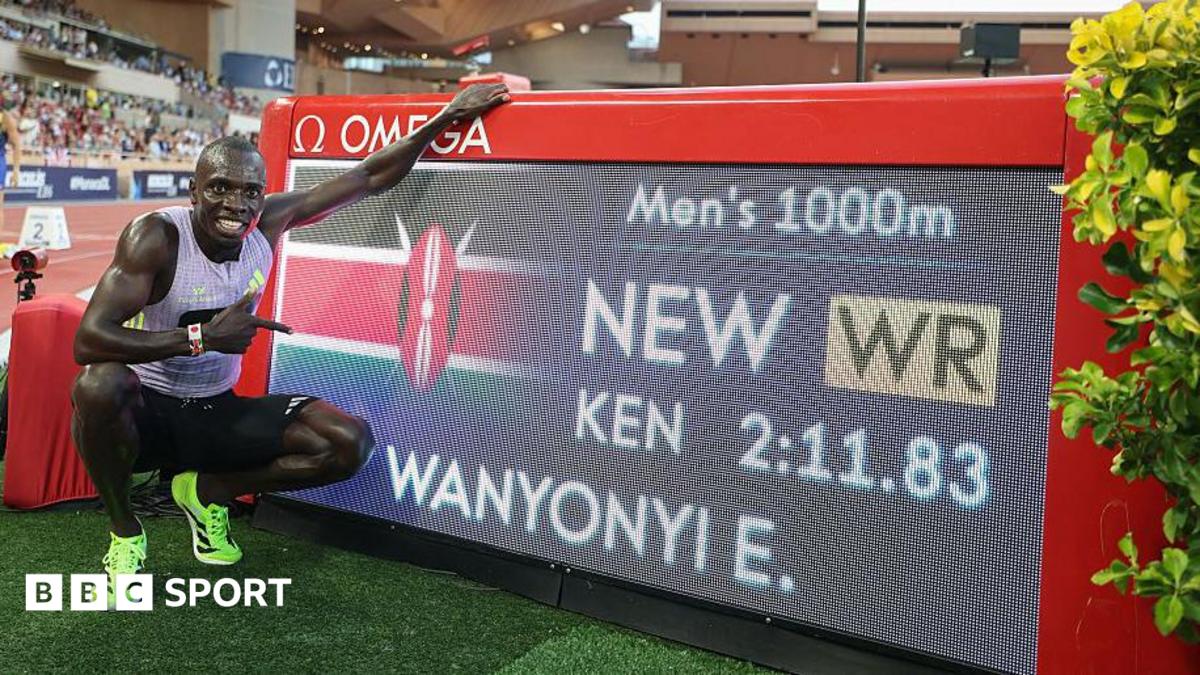
Nairobi, Kenya – May 1, 2026 – Thousands of Kenyans turned out to welcome distance running star Sabastian Sawe back to the capital this week, capping a historic milestone in marathon racing with formal state recognition and nationwide celebration that framed his sub-two-hour achievement as both a personal victory and a landmark national moment.
At an official ceremony held Thursday at Kenya’s State House, President William Ruto presented Sawe with a combined financial award of 8 million Kenyan shillings, equal to roughly $61,900. Of the total, 5 million shillings recognizes Sawe’s unprecedented record-breaking marathon run, while an additional 3 million shillings honors his 2026 London Marathon gold medal win.
Along with the cash prize, Sawe received a one-of-a-kind custom license plate etched with the time 1:59:30 – the exact mark of his trailblazing finish that cemented his place in athletic history.
In his remarks during the ceremony, President Ruto emphasized that Sawe’s breakthrough achievement has redefined global understandings of human athletic potential, and will serve as a touchstone of inspiration for generations of young Kenyan athletes to come. Ruto added that the runner’s historic performance has further strengthened Kenya’s long-held reputation as a global powerhouse in long-distance running.
“You have not only broken a record; you have expanded the horizon of human potential. You have made the impossible possible. You have inspired a nation, a whole generation and the world,” Ruto told the gathering.
For his part, Sawe dedicated his historic win to all Kenyans, emphasizing that he competed to lift his country’s profile on the world stage. He also expressed gratitude to the Kenyan government for its consistent investment and support for the nation’s athletic community.
“I did it on behalf of all of us, to build the name of our country so that it continues to shine,” Sawe said.
Claudio Berardelli, Sawe’s long-time coach, credited the runner’s unprecedented success to relentless discipline and extraordinary natural endurance. Berardelli revealed that Sawe maintains an grueling training routine, averaging more than 200 kilometers of running each week, with his mileage peaking at 241 kilometers in the final weeks leading up to the London Marathon.
“In over two decades of coaching in Kenya, I have not seen such a complete athlete,” Berardelli said, praising Sawe’s unwavering focus and fierce competitive spirit.
Veteran retired Kenyan marathoner Ibrahim Hussein, who made history as the first African athlete to win the Boston Marathon, called Sawe’s performance a potential turning point for the sport of distance running. Hussein noted that Sawe’s sub-two-hour finish could open the door to even faster times in future races, when run under optimal competitive conditions.
-

US criticises allies over failure to stop Gaza aid flotilla
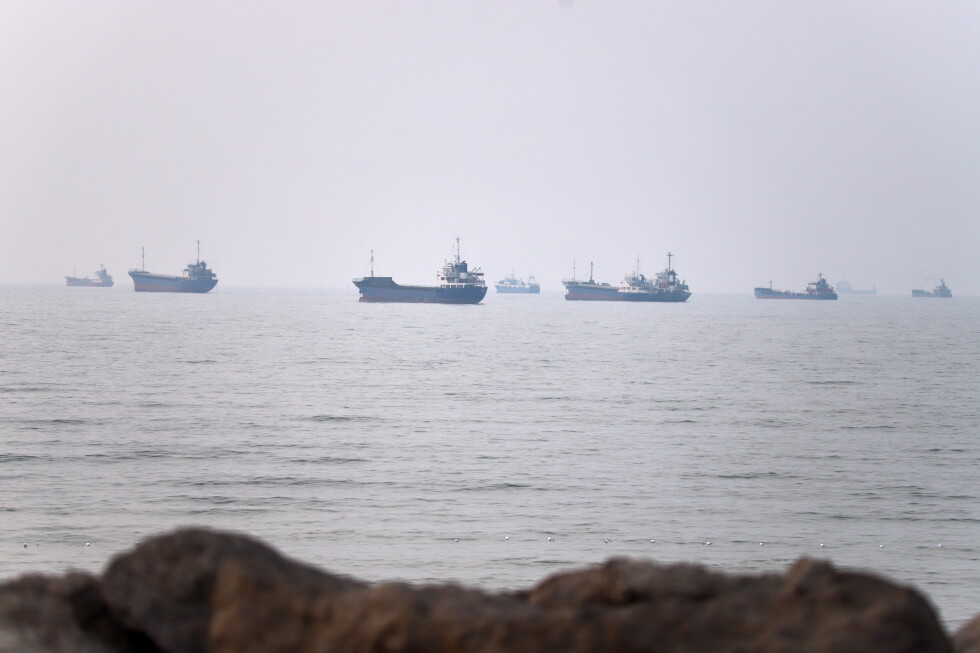
Tensions between the United States and its European allies have escalated sharply in recent days, after Washington publicly blamed its partners for failing to block a Gaza-bound humanitarian aid flotilla that Israeli naval forces intercepted and seized in international waters earlier this week.
On Wednesday, Israeli commandos seized at least 21 vessels participating in the aid mission, detaining 175 activists on board. Organizers with the Global Sumud Flotilla, the coalition behind the effort, have labeled the interception an outright act of piracy carried out in neutral international waters.
One day after the raid, State Department spokesperson Tommy Pigott released a formal statement dismissing the flotilla as a “baseless, counterproductive stunt”. Pigott argued that the mission bypassed existing official channels designed to deliver humanitarian support to Palestinian civilians in Gaza, and said the Biden administration expects allied nations to take “decisive action” against vessels involved in the effort. That action, he specified, includes blocking access to ports, denying docking privileges, prohibiting departures from allied territories, and refusing refueling services to participating ships.
“The United States will explore using available tools to impose consequences on those who provide support to this pro-Hamas flotilla and supports our allies’ legal actions against [it],” Pigott added.
The U.S. rebuke comes as growing rifts have emerged between Washington and its European partners over U.S. and Israeli policy in the Middle East, particularly amid escalating tensions with Iran. According to a recently leaked internal Pentagon email, the U.S. government threatened last week to punish NATO member states that refuse to back the U.S.-led campaign against Iran, and even considered expelling Spain from the alliance over Madrid’s public opposition to the conflict. The same email also revealed U.S. officials have floated recognizing Argentina’s territorial claims over the Falkland Islands, a move that would directly target the United Kingdom for what Washington claims is insufficient support for its Iran policy.
The U.S.-led “Board of Peace”, a body created by the Trump administration to oversee a new governing framework for Gaza, also issued a public statement on the social platform X condemning the aid flotilla. The organization dismissed the effort as “performative love-boat activism”, and called on critics of Israeli policy to instead redirect pressure toward Hamas. In the same statement, the Board claimed it has drastically expanded humanitarian support for Gaza’s civilian population, asserting that three times as many Gaza residents are now receiving food aid compared to previous periods.
These claims, however, stand in stark contrast to on-the-ground data and reporting from the region. Back in April, the Gaza Government Media Office reported that an average of just 227 aid trucks enter the blockaded strip each day, which amounts to only 37 percent of the daily delivery volume agreed to under the October 2024 ceasefire deal. Despite a U.S.-mediated truce agreement, Israel has continued to tighten entry restrictions on humanitarian aid, leading to a steady decline in food deliveries to Gaza’s 2 million residents. Independent reporting from Middle East Eye has documented widespread fears of imminent famine across the strip, as Palestinians grapple with acute shortages of basic food ingredients, cooking gas, and fuel needed to power homes and medical facilities.
In response to the Israeli raid and the U.S. criticism of allied inaction, officials from Germany and Italy issued a joint statement expressing “deep concern” over the interception and calling for “full respect of international law” in the incident. The Italian government additionally demanded that Israel immediately release the Italian nationals who were unlawfully detained during the seizure of the flotilla.
-

Athletics won’t strangle super-shoe innovation – Coe
The world of long-distance running has been sent into a frenzy of debate following one of the most groundbreaking achievements in the sport’s modern history: 31-year-old Kenyan runner Sabastian Sawe becoming the first competitive athlete to complete a marathon in under two hours at the 2025 London Marathon. Sawe crossed the finish line with a time of 1 hour 59 minutes 30 seconds, breaking a barrier that experts and athletes alike once viewed as an unbreakable limit of human physical endurance. Not far behind him, Ethiopian runner Yomif Kejelcha also finished under the two-hour mark, just 10 seconds adrift of Sawe, while women’s winner Tigst Assefa set a new women’s marathon world record on the same day. All three athletes shared one common detail that has sparked global conversation: they all wore the new Adidas Adizero Adios Pro Evo 3, the latest iteration of the controversial “super shoe” technology that has redefined elite marathoning over the past decade.
Speaking to BBC Sport Africa on the sidelines of the upcoming World Relays event in Gaborone, Botswana, World Athletics President Sebastian Coe pushed back against calls to restrict or ban advanced shoe technology, arguing that stifling innovation has never benefited any industry or society. “I don’t think any society, any civilisation, any sector of the economy has been served well if you try to strangle innovation,” Coe stated. He clarified that World Athletics’ role sits at the intersection of enabling technological progress and upholding fair competition, noting that the governing body carries a clear responsibility to regulate the space to prevent unfair advantages.
The Adidas super shoe worn by the London podium finishers marks a new milestone in footwear innovation: it is the first elite racing shoe to weigh less than 100 grams, lighter than a standard bar of soap. Adidas claims the proprietary technology built into the shoe improves running efficiency by 1.6%, a small but potentially decisive margin in a race decided by seconds. Sawe himself has praised the design, calling it the best shoe he has ever raced in, highlighting its exceptional lightness and stability. However, cutting-edge technology comes at a steep price: consumers looking to purchase the shoe will pay roughly $500 for a pair, putting it out of reach for many recreational runners.
Coe pushed back against the narrative that super shoes are the primary driver of recent record-breaking performances, arguing that athlete mentality, physical conditioning, high-level coaching and federation support programs remain the most critical factors behind improved results. Sawe’s own preparation backs this framing: he cut more than two minutes off his personal best at the London race, a gain he attributes largely to his rigorous training routine of 200 kilometers per week at altitude, as well as improved race fuelling strategies that saw him consume 115 grams of carbohydrates per hour during the event, after a pre-race breakfast of just two slices of bread with honey and tea. After returning to his home country of Kenya following his historic win, Sawe gifted one of his record-setting shoes to Kenyan President William Ruto during jubilant homecoming celebrations in Nairobi.
The growing prevalence of super shoes has forced World Athletics to evolve its regulatory framework over the past decade. The first wave of widespread debate around the technology emerged at the 2016 Rio Olympics, where all three men’s marathon medallists wore prototype versions of the Nike Vaporfly 4%, which claimed a 4% improvement in running performance. By 2020, World Athletics introduced formal rules limiting sole thickness, carbon-fibre plate design, and requiring all shoe technology to be commercially available, in an effort to prevent sportswear brands from gaining an unfair edge through unapproved custom designs.
As major brands continue to push the boundaries of current regulations, Coe confirmed that the rulebook will continue to evolve alongside technology. He described the regulatory process as an inherently evolutionary journey, noting that World Athletics only recently established a formal evaluation system for new footwear designs. “We work closely with the athletes, the coaches, the shoe companies. We don’t want them to go off and spend hundreds of millions of dollars on shoes that we’re going to find illegal. So there is a balance,” Coe explained. He also highlighted an often-overlooked benefit of advanced footwear design: much of the research that improves performance also leads to innovations in injury prevention, allowing athletes to train longer, compete longer, and sustain longer careers in the sport — an outcome Coe described as an unambiguous positive.
Reflecting on his own legendary career as a two-time Olympic 1500-meter champion, Coe joked that even with modern super shoes, he would not have been capable of running a sub-two-hour marathon, though he acknowledged the technology would have helped him clock a faster time in his signature 800-meter event.
Critics of super shoe technology argue that the issue goes beyond simple regulation, warning that excessive reliance on engineering could erode the core identity of distance running, turning record performances into a victory for lab technology rather than human grit and endurance. Coe acknowledged these concerns but said he believes World Athletics has struck the right balance so far. “Life is always about balances,” he said. “I think at World Athletics we have technical teams that are always going to be conscious of where that balance is. At the moment, I think we’re the right side of it.”
-

How Turkey’s new ‘kamikaze’ drones may outclass Iran’s Shahed
Against the backdrop of two consecutive 2025 U.S.-Israeli conflicts with Iran, battlefield performance of Tehran’s Shahed suicide drones has triggered a major shift in Turkish military drone development. With regional tensions rising sharply between Ankara and Tel Aviv — two competing powers vying for Middle Eastern dominance since 2024 — Turkish defense analysts and industry leaders have closely studied Iranian drone tactics, spurring homegrown innovation that aims to outperform Tehran’s existing designs.
Iran’s Shahed drones have already seen widespread combat use, from Russian operations in Ukraine to Iranian retaliatory strikes against U.S. regional partners and Israeli targets during 2025 conflicts. These deployments have proven the platform’s effectiveness against long-range targets, cementing kamikaze drones as a transformative force reshaping the landscape of modern warfare. In response, multiple Turkish defense contractors, including Skydagger and Turkish Aerospace Industries, launched programs to develop locally produced equivalents. Leading Turkish aerospace firm Baykar has beaten all competitors to market, rolling out three distinct purpose-built kamikaze drone models designed to operate as a coordinated layered attack force.
Each of Baykar’s new platforms fills a unique niche in the coordinated attack strategy, starting with the largest model, the K2. Capable of carrying a 200-kilogram munition payload, the K2 boasts a 13-hour flight endurance and a 2,000-kilometer operational range, even without reliance on Global Navigation Satellite Systems (GNSS). The drone maps terrain visually to autonomously calculate its position, uses a satellite datalink for precision targeting, and offers a rare flexible design: it can either complete a suicide attack on its target or return to base for future reuse.
The second platform, the Sivrisinek (meaning “mosquito” in Turkish), made its official public debut just last week. Comparable in payload to Iran’s Shahed-131 — which carries a similar warhead and has a 700 to 900-kilometer range — the Sivrisinek offers a 1,000-kilometer range and carries a warhead weighing just over 20 kilograms. With an extremely low per-unit cost estimated between $25,000 and $30,000, the drone is designed for mass deployment as an expendable battlefield asset. Defense industry sources confirm the Sivrisinek is an updated variant of the YIHA-3, a platform co-developed with Pakistan in 2023 that has already amassed real-world combat experience across Syria, Ukraine, Sudan, and the 2025 Pakistan-India border clashes, giving the new model invaluable battlefield-tested technical refinements.
Baykar’s newest addition, the Mizrak, unveiled just this Thursday, shares functional similarities with Iran’s widely deployed Shahed-136. Where the Shahed-136 reached a 2,000-kilometer range and 50-kilogram warhead capacity after years of iterative development, the Mizrak enters the field with a 1,000-kilometer range and 40-kilogram payload. Industry analysts note the Mizrak leverages existing technology from Roketsan, Turkey’s leading missile developer, drawing design elements from the company’s proven UMTAS air-to-surface anti-tank missile system.
All three platforms share key advanced capabilities: they are hardened against electronic warfare interference, can visually identify and lock onto targets without GNSS connectivity, and execute strikes using a combination of on-board artificial intelligence (AI) autonomy and satellite communications. Turkish defense experts argue this sets Baykar’s new fleet apart from Iran’s existing Shahed program, which suffers from key technological limitations.
“The Iranian UAV programme lacks proven capabilities in AI-based autonomous and network-centric swarm attack skills,” explained Hursit Dingil, an expert on Iranian military capabilities at the Ankara-based Centre for Area Studies. “Furthermore, the Iranian platforms have problems and limitations regarding communication ranges and satellite communication.”
Dingil noted that Turkey has spent a decade refining its domestic drone industry, building well-established expertise in the very areas where Iran lags behind. “Similarly, the Iranian UAV programme has disadvantages and limitations in terms of precision strike capabilities, advanced electro-optical imaging, and self-location and navigation capabilities,” he added, confirming Turkish defense firms have already mastered these core technologies.
Baykar’s core innovation does not lie in the individual drones themselves, but in the integrated layered combat strategy the company has designed for the fleet. Early joint flight demonstrations already showed the K2 flying lead patrol missions while Sivrisinek drones operated in coordinated swarms beneath the larger platform. Independent defense industry expert Yusuf Akbaba confirmed all three Baykar kamikaze platforms are designed to share data and coordinate attacks seamlessly, and can even be commanded remotely by Baykar’s already well-known Bayraktar TB2 armed drone.
A defense source familiar with the program outlined the step-by-step layered tactic for MEE: low-cost Sivrisinek drones would first be deployed in large numbers to saturate enemy airspace and overwhelm critical air defense systems, softening enemy defenses ahead of follow-on strikes. Next, Mizrak drones would eliminate any remaining anti-drone and air defense infrastructure. Finally, the K2, with its large payload capacity, would destroy high-value critical targets left undefended, completing the mission. All phases of the attack can be commanded by a Bayraktar TB2 or other aerial command platform operating well outside the range of enemy defenses.
Dingil argues that with this new integrated system, Turkey has emerged as a far more competitive actor in the global kamikaze drone market than Iran, noting that the existing Shahed-136 cannot match the capabilities of Turkey’s new hybrid class of autonomous networked drones. Even so, he cautioned that the platform still faces an unproven hurdle: “An important challenge for Turkey is whether the fusion of AI-based autonomous solutions with simple missile-based drones would provide a functional and efficient output in combat conditions or not.”
-

French PM fuels row with trip to buy baguettes
On France’s annual Labour Day public holiday, French Prime Minister Sébastien Lecornu stepped into a small village bakery in the central French community of Saint-Julien-Chapteuil, smiled for assembled press cameras, and completed a purchase of at least four baguettes, before stopping at a neighboring florist to pick up a bouquet of flowers. What was intended as a show of support for small independent food and flower businesses quickly escalated into a fresh public dispute with major French labor unions, which have fiercely opposed the government’s push to carve out a permanent exception to the country’s mandatory Labour Day rest rule for bakeries and florists.
Current French labor law strictly limits which businesses can operate on the 1 May public holiday, with only core essential services such as hospitals and hotels granted legal permission to open, requiring any working staff to receive double their standard daily wages. The regulatory status of small-scale bakeries and flower shops has long remained ambiguous in this framework, creating confusion for business owners that the Macron administration is seeking to resolve through new legislation.
The controversial proposal, introduced to parliament earlier this month, would formally exempt independent bakeries and florists from the mandatory rest requirement, on the condition that any employee working on the holiday provides written confirmation of voluntary participation and receives double pay for their shift. Government officials have framed the change as a common-sense adjustment, arguing that these local small businesses are “indispensable to the continuity of social life” and that the exemption would support independent operators who rely on the holiday foot traffic for revenue.
Unions have pushed back hard against the plan, warning that the policy creates a dangerous opening for employers to pressure vulnerable workers into agreeing to work on a holiday that is legally protected for rest. Marylise Léon, General Secretary of France’s largest union, dismissed Lecornu’s public bakery visit as an unnecessary political stunt. “Politicians going to a bakery, I think that’s part of a political spectacle that we don’t need today,” Léon said. “We need to show what the reality of a bakery worker is like.” Unions argue that the formalization of this exemption sets a worrying precedent, pointing to a pattern where incremental carve-outs to protected labor rights eventually erode core rules entirely. In a joint statement released in April, unions warned: “social history shows us that each time a principle is undermined, exemptions gradually increase until they become the rule”, with many leaders fearing the change could eventually lead to widespread rollbacks of mandatory rest for all public holidays across France.
The dispute deepened after it emerged that Lecornu had personally intervened to waive a heavy fine issued to a baker who opened his shop on Labour Day earlier this year. According to reports from BFMTV and Europe1, the prime minister spoke by phone with the baker, identified only as Eric, who had been cited by labor inspectors for operating on the holiday and faced a total fine of €5,250 — €750 for each of his seven employees working that day. Lecornu reportedly reassured Eric that he would not be required to pay the penalty, a move that unions have decried as a politically motivated bypassing of existing labor regulations.
The government’s bill now moves to parliamentary debate for approval, with the outcome likely to shape both future labor policy and the already tense relationship between the Macron administration and France’s powerful labor movement in the coming months.