TAMPA BAY, Fla. — Law enforcement officials have confirmed that a badly decomposed body pulled from Tampa Bay earlier this month is that of the second missing University of South Florida international graduate student from Bangladesh, in what a top sheriff calls an unspeakable, cold-blooded double killing.
Hillsborough County Sheriff Chad Chronister announced the identification Friday, more than a month after the two students were first reported missing. The remains of Nahida Bristy, a doctoral candidate in chemical engineering, were discovered Sunday by a recreational kayaker whose fishing line caught on a discarded garbage bag bobbing in the bay’s waters. Due to the advanced state of decomposition of the corpse, investigators relied on DNA testing and dental records to confirm Bristy’s identity, Chronister explained during a press briefing.
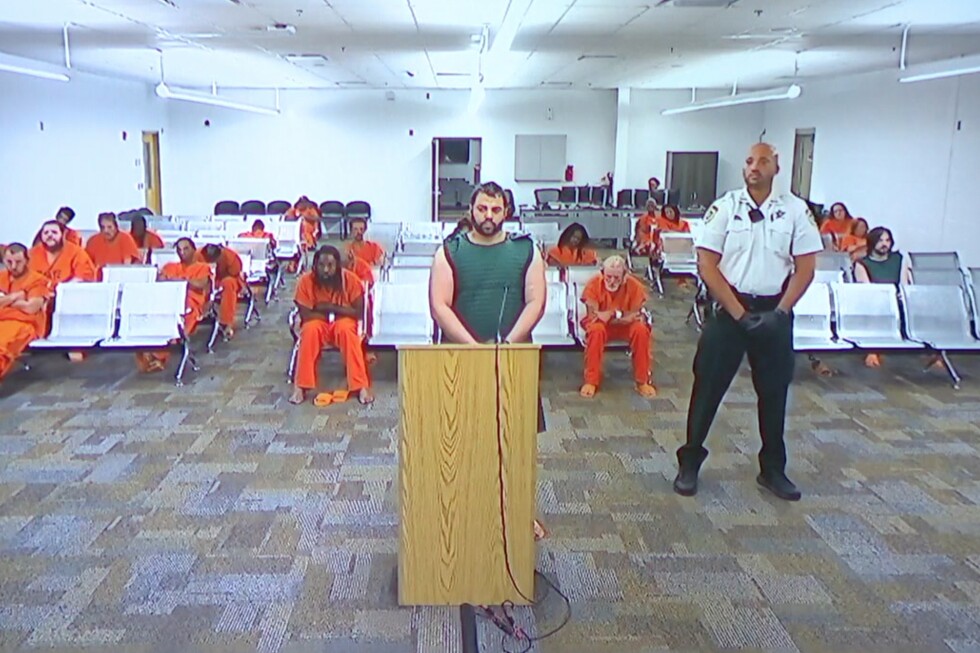
Just two days before Bristy’s remains were located, the body of her friend and fellow USF doctoral student Zamil Limon was found in a separate garbage bag dumped on a bridge spanning the bay. Limon, who studied geography, environmental science and policy, shared an off-campus apartment with 26-year-old Hisham Saleh Abugharbieh, who has been in custody since the day Limon’s body was recovered. Abugharbieh, a former USF student who dropped out of the institution, faces two counts of first-degree murder in connection with the students’ deaths.
In chilling comments to reporters, Chronister said the suspect displayed absolutely no remorse or reaction when confronted with evidence of the brutal killings. “He was nonreactive. He was callous and showed no emotion when we showed him the information we had,” the sheriff said. While preliminary evidence indicates both students were killed at the same location and around the same time, Chronister noted detectives are still working to confirm a definitive timeline of the crime.
To date, investigators have not uncovered a clear motive for the slayings, a detail Chronister says his team remains determined to uncover. “I hope we find that out,” he added.
The case began on April 16, when Bristy and Limon were separately reported missing to campus police and the Hillsborough County Sheriff’s Office. Colleagues and contacts told investigators that failing to show up for scheduled appointments was completely out of character for both students, and law enforcement quickly connected the two disappearances.
Initial interviews at the apartment shared by Limon, Abugharbieh, and a third roommate immediately raised red flags for investigators. While the third roommate cooperated fully with questions, Abugharbieh gave vague, shifting answers about his interactions with Limon. Investigators also noted he had an unstitched cut on one arm and a bandaged finger, leading them to label him a person of interest, though they did not have sufficient evidence to arrest him at that stage.
A follow-up interview with the third roommate yielded a critical break: the roommate told investigators he had seen Abugharbieh using a large cart to move items out of his room and to a nearby trash compactor in the overnight hours between April 16 and 17. When investigators searched the compactor, they found Limon’s glasses, student ID, wallet, and blood-soaked clothing. That evidence was enough to secure search warrants for the entire apartment and Abugharbieh’s electronic devices.
A forensic sweep of the apartment uncovered damning physical evidence: large visible blood traces in the kitchen that extended down the hallway and into Abugharbieh’s bedroom. When investigators used blood-detecting luminal spray, they even found a faint outline of blood matching the shape of a human body curled in the fetal position, pressed against the wall right next to Abugharbieh’s bed. Additional blood traces were later found on the floorboards of Abugharbieh’s car, and genetic testing confirmed those traces belonged to Bristy.
Investigators have reconstructed what they believe is the sequence of events: after the killings, Abugharbieh loaded the bodies into a cart under cover of darkness and transported them to his car to be dumped. Tracking data from the suspect’s car GPS, paired with surveillance footage from a nearby fire station, allowed investigators to map his route from the apartment to the Tampa Bay area, prompting the extensive search that eventually led to the recovery of both victims’ remains.
While most of the content on Abugharbieh’s phone had been manually erased, forensic analysts were able to recover disturbing search history from the days leading up to the students’ disappearance. The search queries included deeply troubling questions: “Can a knife penetrate a skull?” and “Can a neighbor hear a gunshot?” Investigators also confirmed that Abugharbieh purchased large quantities of Lysol disinfecting wipes, heavy-duty contractor-grade trash bags, and other suspicious supplies in the days before April 16.
“This was calculating. That’s what makes this so premeditated,” Chronister said of the suspect’s alleged actions.
Relatives of both victims have been notified of the identification and ongoing developments in the case, the sheriff confirmed. Jennifer Spradley, an attorney with the Tampa public defender’s office representing Abugharbieh, declined to comment on the case when reached by email earlier this week.