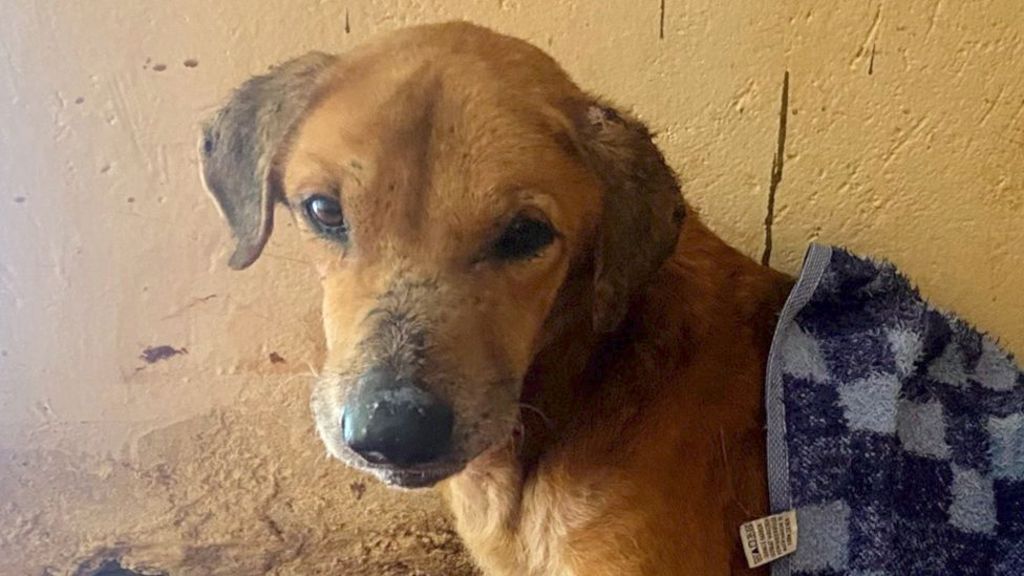
On a dusty roadside in Mityana, a small Ugandan trading hub 70 kilometers outside the capital Kampala, a rust-furred dog named Russet lay panting in visible agony. His broken hind legs, hidden from initial view in a 15-second TikTok clip posted in January last year, became the centerpiece of hundreds of fraudulent fundraising campaigns that scammed thousands of dollars from animal lovers across Europe, North America and Australia. What looked like a plea to save an injured accident victim was actually part of a multi-million-dollar hidden industry built on animal cruelty, exploitation of Western stereotypes, and viral social media engagement, a year-long investigation by BBC Africa Eye has uncovered.
Mityana has become globally infamous among animal rescue activists as the global hub for fake online dog rescue operations. The scam relies on a simple, highly effective formula: local scammers exploit Western audiences’ widespread love for companion animals, lean into outdated stereotypes of African poverty and widespread animal neglect to trigger emotional giving, and convert viral social media content into untraceable donations that flow straight into the scammers’ pockets. Bart Kakooza, chairman of the Uganda Society for the Protection and Care of Animals, explained that the scam has flourished as unemployed young people in rural Uganda recognized they could turn global social media’s obsession with dogs into fast, easy income. “On one side, you have young people looking for any way to make money online, and on the other, you have Western donors who are deeply passionate about animal welfare,” Kakooza told the BBC. “These scammers quickly realized that putting those two together equals profit.”
Scammers operating out of Mityana have flooded major platforms including TikTok, Instagram, Facebook and YouTube with hundreds of thousands of emotionally charged clips featuring underfed, injured dogs and cats. A typical video shows a makeshift shelter, with a voiceover or on-screen text claiming dogs have gone days without food, face eviction, or need urgent life-saving veterinary care. The videos intentionally lean into harmful stereotypes about Africa, framing young local animal rescuers as fighting against a society that does not care about animals to elicit sympathy from foreign donors. BBC Africa Eye’s data analysis found the scam has been extraordinarily lucrative: over the past five years, more than $730,000 has been raised via the popular donation platform GoFundMe alone for fake Ugandan animal shelters, with nearly 40% of all fundraisers linked to operations based in Mityana. In Mityana, the fake shelter industry is an open secret: local residents told the BBC that scammers are easily identified by the new status-symbol Subaru cars they buy with stolen donations, and are among the most respected young people in the town. Few locals dare to speak out publicly, however, for fear of retaliation from criminal scam networks.
To uncover the inner workings of the industry, BBC Africa Eye sent an undercover reporting team to Mityana, posing as new operators looking to learn the fake shelter trade. The investigation revealed a structured, organized system: multiple content creators rent space at pre-established fake shelters, paying an entrance fee to film with the owner’s dogs. The same dogs and the same shelter are then used by dozens of separate accounts to run independent fundraisers, each claiming to be the sole caretaker of the animals. One shelter owner, Charles Lubajja, openly admitted to undercover reporters that the entire operation is a fraud built to steal money from foreign donors. He shared the common tricks scammers use to inflate donations: lying that a shelter faces imminent eviction to drive urgent giving, faking veterinary treatment by placing unused syringes on dogs’ fur without giving any actual care, and inflating the reported cost of dog food by more than 11 times. “Once you get the money from GoFundMe, you use it to buy a car or build a house,” Lubajja said in a secret recording. “Once you get a white donor, you don’t treat them like a brother. You squeeze them, you drain them dry.”
Inside the shelters, undercover reporters found dogs kept in horrific conditions: 15 dogs crammed into a single cage, lying in their own waste, most severely underweight and lethargic. Most disturbingly, Lubajja confirmed what activists have long suspected: some scammers deliberately injure dogs to create more emotional, high-performing content. When scammers run out of new content to post, they cut or break dogs to create new fundraising appeals, he explained. The practice only slowed after donors started recognizing the pattern of abuse and warning others, leading to falling donations. “When the white people realized what was happening, they stopped giving, so scammers don’t cut dogs as often now,” he said.
The death of Russet the dog exemplifies the full human and animal cost of this scam. After Russet’s video went viral and was shared across hundreds of accounts run by different scam groups, a British donor who wished to remain anonymous paid scammers to release the dog to a veterinary clinic in Kampala. Dr Isa Lutebemberwa, the vet who treated Russet, found his injuries were almost certainly not the result of a random traffic accident, as Lubajja claimed. An X-ray showed all of Russet’s leg bones were broken in the exact same spot – the weakest point of the bone, the place someone would target if they intended to break the leg on purpose. Though Lutebemberwa operated on Russet, the dog died a few days after the procedure, having endured weeks of unneeded suffering while scammers profited off his pain. “If you looked at his face, you could see how much he had been through,” Lutebemberwa said. “He did not deserve to die like that.” When contacted by the BBC for comment on the investigation’s findings, Lubajja denied owning Russet or harming any animals, though he did confirm that content creators pay to film at his shelter.
As the scam has grown, a global movement of activists has emerged to shut it down. The most prominent campaign, called We Won’t Be Scammed, is run by Nicola Baird, a 49-year-old activist from Yorkshire in the UK who became an anti-scam campaigner after she was scammed herself. Baird sent money to a Mityana scammer who claimed his dog needed emergency surgery, but when she received photos of the procedure, local vets confirmed the images showed abuse, not legitimate care. “I realized I had enabled this cruelty,” Baird told the BBC. “That’s when I became determined to stop it. These scammers are the epitome of evil.” We Won’t Be Scammed now has 20,000 followers on Instagram, where the group names and shames fraudulent accounts and warns potential donors about the scam. Lubajja named the campaign as the biggest threat to the scammers’ business.
Activists and Ugandan animal welfare leaders say the root of the problem is impulsive, unvetted giving from foreign donors, who unknowingly fuel the cycle of cruelty. “People who donate without checking are the ones causing this animal suffering – they keep fanning the fire,” Kakooza said. Baird echoed that assessment, pointing to Russet’s case as evidence: “Donations prolonged Russet’s agony. If people had not given money to those scammers, he would never have suffered as long as he did.” Activists agree that increasing awareness to cut off the flow of donations would reduce the profitability of the scam, discouraging new scammers from entering the trade and reducing the number of dogs captured for fake content. However, there is still no clear solution for the hundreds of dogs currently being held in Mityana’s fake shelters.
Local law enforcement has struggled to address the problem: a 2023 police operation rescued 24 severely injured dogs from a Mityana fake shelter and arrested three suspects on animal cruelty charges, but the case was eventually closed, the suspects were released, and they only received a warning. Now, a coalition of Ugandan and international activists is turning to private prosecutions to hold scammers accountable, with the first case already in preparation. “We hope this case will act as a deterrent for anyone who wants to get involved in this illegal trade,” Kakooza said. For Russet and the other dogs that have already died at the hands of scammers, however, any justice will come too late.