As the AFL prepares for this week’s pivotal ladder clash between Hawthorn and Fremantle, all early signs point to Hawthorn skipper James Sicily suiting up for Thursday night’s blockbuster at Perth Stadium, despite the ankle injury he sustained during last week’s dramatic draw against Collingwood. Sicily suffered an ankle roll during the match against the Magpies, leaving the turf multiple times throughout the tense contest and prompting widespread fan and media speculation over his availability for the upcoming high-stakes game. But speaking to reporters on Tuesday, Hawthorn head coach Sam Mitchell downplayed concerns over the star defender’s fitness, playfully dismissing the hype around Sicily’s injury as nothing more than “a bit of carry on”. “Yeah, he’ll be fine. He’ll play,” Mitchell confirmed bluntly. “He’s good to go, he’ll be fine, he just rolled his ankle … a bit of carry on from him, probably. Technically, club doctors will say he has to get through a final training session to confirm his spot, but I’m fully expecting him to take the field on Thursday.” A win for Hawthorn would catapult the club into outright second position on the AFL premiership ladder, making the encounter one of the most anticipated matches of the round. Hawthorn currently sits two points behind Thursday’s opponent Fremantle, coming off the hard-fought draw against Collingwood last week. Beyond the fitness update on Sicily, Mitchell also offered high praise for mercurial young small forward Nick Watson, who has emerged as one of the club’s most impactful players through the opening third of the 2025 season. The coach highlighted Watson’s relentless dedication to refining his forward craft, noting that the young star has prioritized improving his core strengths rather than seeking a permanent shift to the midfield, a common path for many rising small forwards looking to expand their roles. “The thing with Nick is that he’s pretty passionate about his forward craft. I know a lot of people are excited about the idea of seeing him spend more time in the midfield, but there’s lots of small forwards that love to be midfielders — he loves being a forward,” Mitchell explained. “He’s been that his whole career since his junior days. I think the smartest thing he’s done is double down on what he’s already good at. It’s not just his goalkicking, finishing around goal and crumbing that stand out; his pressure and intensity around the ball is very, very difficult to replicate if you don’t put the training work in.” Mitchell added that Watson has made massive physical and skill-based improvements over the past nine months, dating back to the end of the 2024 season, crediting the young forward’s work ethic and the support of the club’s program for his rapid development. “I don’t think anyone at the club has made bigger gains physically than he has over that period. Credit to him and the environment around him,” the coach said. “He’s only just started to blossom, and I honestly don’t think we’ve seen the best of ‘Wizard’ just yet.”
作者: admin
-

No commercial vessel, oiler crossed Strait of Hormuz during past hours without permission: IRGC
Escalating geopolitical tensions around the strategically critical Strait of Hormuz have spurred a sharp standoff between Iran and the United States, with Iran’s Islamic Revolution Guard Corps (IRGC) issuing a clear, forceful assertion of its sovereignty over the key waterway over the weekend.
In an official statement published Monday on its affiliated media outlet Sepah News, the IRGC flatly denied recent claims circulated by U.S. officials, stating categorically that no commercial vessel or oil tanker has traversed the strait without explicit Iranian authorization in recent hours. The body emphasized that any unauthorized maritime activity that violates the rules set by its naval command carries severe consequences, adding that violators will be intercepted by force if they attempt to ignore Iran’s territorial regulations.
Semi-official Iranian news agency Fars further reported comments from IRGC Navy Deputy Commander for Political Affairs Mohammad Akbarzadeh, who warned that any U.S. military strike intended to forcibly reopen the strait would be met with a pre-planned Iranian operational response that will catch Washington off guard. “This response will be beyond the enemy’s calculations,” Akbarzadeh was quoted as saying.
The latest exchange of warnings came after U.S. President Donald Trump claimed Sunday that the U.S. military would escort all vessels stranded in the restricted Strait of Hormuz out of the area by Monday. Trump’s claim drew an immediate, harsh rebuke from Iran’s top military body, Khatam al-Anbiya Central Headquarters. In a statement carried by Iran’s official news agency IRNA, the headquarters warned that any foreign armed force, particularly what it called the “aggressive U.S. army”, would face direct military attack if they attempt to approach or enter the strait without Iranian approval.
Local Iranian military sources added that on Monday, Iran’s naval forces already demonstrated their readiness by firing cruise missiles, rockets, and launching combat drones in areas close to U.S. destroyers that had moved toward the strait, in a clear warning to the American vessels to withdraw.
The current standoff around the strait, through which roughly a fifth of the world’s oil supplies pass daily, has been building for months. Iran first tightened access controls on February 28, barring passage for any vessels owned by or linked to Israel and the United States. The restriction was imposed after joint strikes targeting Iranian territory carried out by the two nations. Tensions escalated further after ceasefire talks between Iranian and U.S. delegations held in Islamabad, Pakistan on April 11 and 12 failed to produce any breakthrough agreement, prompting the U.S. to implement its own blockade-related measures around the strategic waterway.
-

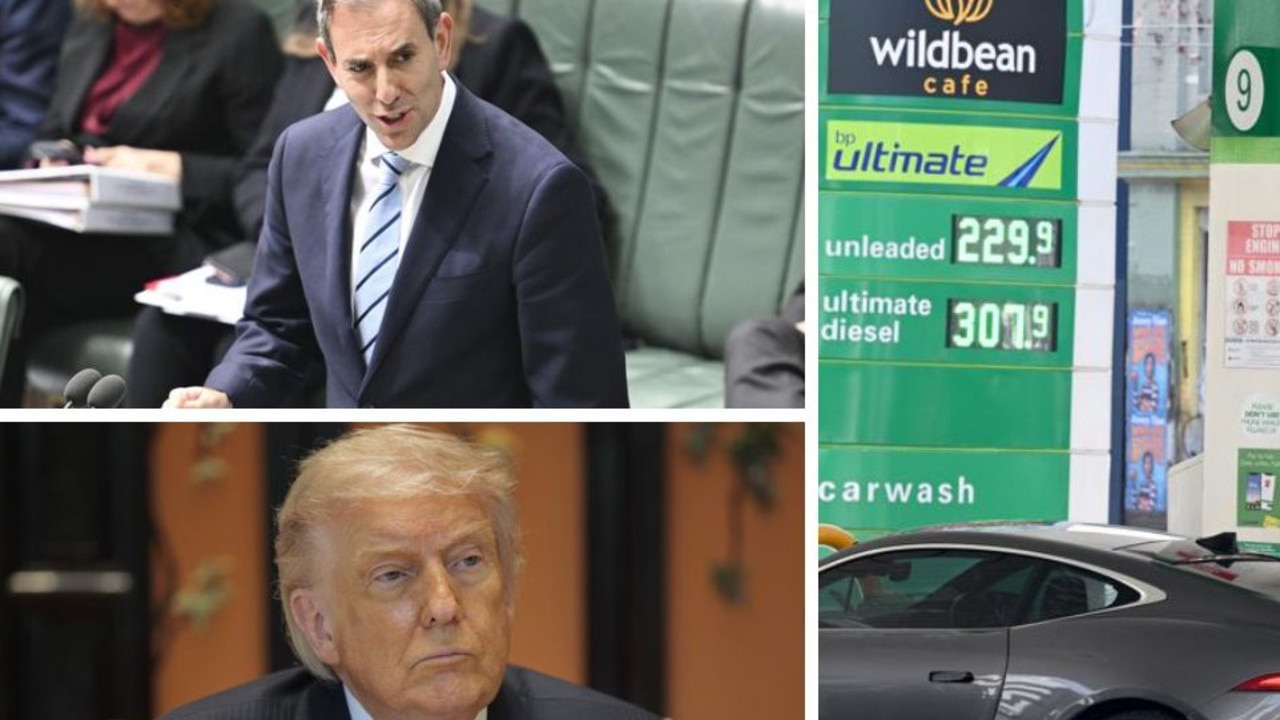
Westpac sounds alarm on economy with grim forecast for inflation and growth
As geopolitical tensions in the Middle East send ripple effects across global supply chains, three of Australia’s four largest financial institutions have issued a coordinated warning of mounting economic pressure on domestic households, with multiple interest rate increases, soaring living costs and stalled growth projected in the coming years.
Westpac, the latest major bank to release its gloomy economic outlook alongside half-year financial results, forecasts that the Reserve Bank of Australia will implement three additional interest rate hikes for mortgage holders, with the first increase expected as early as this Tuesday. The bank projects inflation will climb to 4.6% and GDP growth will cool to just 1% by the end of December 2026, a sharp slowdown from current trend levels.
Westpac Chief Executive Anthony Miller directly tied the worsening economic outlook to ongoing conflict between Israel and Iran, noting that disrupted global energy supply chains have pushed up prices that are now passing through to both businesses and consumers across the country. “Different sectors are bearing uneven impacts from these disruptions, but the pressure is widespread,” Miller explained. He added that the bank stands ready to collaborate with the federal government to bolster Australia’s economic resilience, including continued investment in a stable, sustainable national energy system to mitigate long-term supply risks.
In its half-year results, Westpac reported a net profit of $3.5 billion when excluding one-time notable items, marking a 1% year-on-year increase from 2025 but a 1% dip over the past six months. Despite the uncertain macroeconomic landscape, the bank recorded strong growth across key lending lines: Australian business lending rose 16% over the 12-month period, while institutional lending jumped 23%. Customer deposits also grew by 7%, driven by expanding transaction account volumes, and operating expenses fell 2% compared to the previous half-year.
Miller noted that the vast majority of mortgage holders – around 85% – had built buffers ahead of the latest conflict, with payments ahead of schedule. Even so, the bank has recorded a clear slowdown in residential mortgage applications in April, signaling that fewer Australians are moving forward with home purchases amid rising borrowing costs.
Ahead of the upcoming federal budget, Miller also called for targeted national productivity reforms to maintain Australia’s global competitiveness. “We must seize the opportunity for meaningful reform to put the economy on a stronger footing for coming challenges,” he said.
Westpac’s downbeat forecast aligns with projections from two other major Australian banks, ANZ and National Australia Bank (NAB), all three of which point to the Middle East conflict as a core driver of growing uncertainty. NAB Chief Executive Andrew Irvine acknowledged that while the environment has become far more volatile, with volatility expected to persist for some time, most Australian households start from a position of financial resilience.
Like Westpac, Irvine predicts an interest rate hike will come out of Tuesday’s RBA monetary board meeting, followed by one additional increase. He noted that the central bank faces an extraordinarily difficult balancing act, as high inflation remains a persistent threat to household and business stability that must be brought under control. “The RBA has a devilishly difficult job ahead of them,” Irvine said. “Inflation is running too high and we have to get it under control. Inflation is bad for households and businesses.”
For its part, ANZ reported that most of its mortgage customers have kept up with payments so far, but CEO Nuno Matos warned that the full impact of the Middle East crisis has yet to be felt. “The longer global oil supply remains constrained, the greater the risk that this crisis shifts from primarily an inflation challenge to a broader shock that hits supply chains and overall economic growth,” Matos explained.
-

China’s Wu Yize wins World Snooker Championship for first time
In a historic, edge-of-your-seat final at Sheffield’s iconic Crucible Theatre, 22-year-old Chinese cuemaker Wu Yize clinched his first ever World Snooker Championship crown on Monday, edging out veteran English competitor Shaun Murphy by a razor-thin 18-17 scoreline in a deciding frame that kept fans holding their breath until the final shot.
Wu’s triumph marks a second consecutive milestone for Chinese snooker: he becomes just the second Chinese player to lift the sport’s most prestigious trophy, following compatriot Zhao Xintong’s history-making win last year that saw Zhao become the first Asian world champion. Wu also enters the record books as the second youngest world champion ever crowned at the Crucible, sitting only behind Scottish legend Stephen Hendry, who claimed his first title at 21 back in 1990.
After a tense back-and-forth battle that stretched across two days of play, Wu held his composure when it mattered most to seal the victory. Heading into Monday’s final session, Wu held a narrow 10-7 advantage from Sunday’s opening exchanges, and extended his lead to 13-12 early on. But Murphy, a former world champion who claimed the title in 2005, refused to bow out easily. The Englishman grittily leveled the score at 16-16 with a well-earned century break, setting off a tense sprint to the finish.
Wu struck first in the closing exchanges, pulling off a brilliant 91-point clearance from a 45-0 deficit to move one frame away from the title at 17-16. He jumped to a 43-0 lead in the next frame, seemingly on the brink of victory, but a missed black off the spot let Murphy step in, who crafted a 75 break to force a decisive 35th frame. It was Wu who capitalized on the final turning point: Murphy left a tricky red ball hanging over the middle pocket, and Wu coolly slotted it home to launch an 85-break that sealed the historic win. This final marks the first time the World Snooker Championship has gone to a deciding frame since Peter Ebdon’s 18-17 win over Stephen Hendry in 2002.
In the immediate aftermath of his win, an emotional Wu paid tribute to the parents who have supported his snooker journey from its earliest days. “I have been trying to go for this for ages. For the past few months, I have been living the same life. I’m so happy that I could play well today,” Wu told reporters after the match. His parents, who were in the crowd, wiped away tears of joy before joining him for the trophy presentation. “My parents are the true champions. Since I made the decision to drop out of school, my dad has been by my side. My mum has also been going through a lot over the years, they are the source of my strength, I love them so much.” When asked about his immediate plans for celebration, the new champion laughed off grand gestures, saying: “I just want to have a good sleep. I have been feeling nerves all the time since before the match, so now I just want to go to bed!”
For Murphy, the defeat extends a tough run in World Championship finals: Monday’s loss was his fourth final defeat since he claimed the title in 2005. Despite the heartbreak, the English veteran was generous in praise for the new champion, recalling a prediction he made earlier in the season. “I hate being right, but we had a great game in China earlier this season. I came out afterwards and said he would be world champion one day,” Murphy said. “It’s just a real shame that it was today, but I couldn’t have given it any more. I played the best shots I could. I just didn’t get my chance.”
Hailing from Lanzhou in northwest China, Wu turned professional at just 17, and made a pivotal move to Sheffield three years ago to train alongside the growing community of elite Chinese snooker players based in the city. His path to the top was not without sacrifice: in his early months in England, he shared a small, windowless apartment with his father, where the pair shared a bed to cut costs. That dedication and sacrifice has slowly paid off, with runner-up finishes at the 2024 English Open and Scottish Open building momentum ahead of his Crucible run. Wu claimed his first ever ranking title at last year’s International Championship, where he defeated snooker great John Higgins.
Currently the youngest player ranked in the world’s top 16, Wu’s run to the 2025 world title included standout wins over former champions Mark Selby and Mark Allen that signaled he was a contender to watch. Even before his triumph, the young star had earned high praise from the sport’s biggest names: Ronnie O’Sullivan once described Wu as a “more dynamic” version of all-time legend Steve Davis. Now, like O’Sullivan and Davis, Wu can officially add “world snooker champion” to his list of career achievements.
-

Pulitzers honor damning coverage of Trump and his policies
The 2025 Pulitzer Prizes, announced Monday by Columbia University’s award committee, have cemented a clear stand in defense of independent journalism, with the majority of top honors going to outlets that published searing, in-depth investigations into the policies and actions of the second Donald Trump administration.
Ahead of revealing the year’s winners, Pulitzer Administrator Marjorie Miller opened the announcement with a firm rebuke of growing threats to press freedom under the current U.S. presidency, saying: “We stand for civil discourse and against censorship. Unfortunately, this bears repeating now, as media access to the White House and Pentagon is restricted, free speech is challenged in the streets, and the President of the United States has filed lawsuits for billions of dollars for defamation and malice against multiple print and broadcast media.”
The most prestigious award, the Pulitzer Prize for Public Service, went to *The Washington Post* for its exhaustive reporting on Trump’s chaotic overhaul of the U.S. federal bureaucracy. Miller noted that the outlet’s coverage laid out in rich detail both the direct human toll of widespread staffing cuts and the long-term structural consequences of the reshuffle for the entire country.
*The New York Times* took home the prize for Investigative Reporting for its explosive series exposing how Trump leveraged the power of the presidency to unlock lucrative business opportunities, lining the pockets of his immediate family and close political allies. The reporting detailed how members of Trump’s inner circle profited from their connections to wealthy Gulf monarchies and controversial forays into the cryptocurrency market.
In the Local Reporting category, *The Chicago Tribune* earned recognition for what the committee called vivid, muscular prose documenting a siege-like incursion of federal immigration agents into the Midwestern city, carried out as part of the Trump administration’s hardline crackdown on undocumented migration. A second Local Reporting prize was awarded to the Connecticut Mirror and ProPublica for an investigation into predatory, unregulated vehicle towing practices across the state.
Beyond the awards focused on the Trump administration, the committee issued a special posthumous and long-overdue citation to Miami Herald reporter Julie K. Brown for her groundbreaking 2017 and 2018 reporting on convicted sex offender Jeffrey Epstein. Miller explained that Brown’s *Perversion of Justice* series, published nearly a decade before Epstein’s 2019 arrest on federal sex trafficking charges, first revealed how politically connected prosecutors had shielded Epstein from serious prosecution when he was first accused of abusing dozens of underage young women.
*The New York Times* also won the Breaking News Photography prize for Saher Alghorra’s haunting, sensitive collection of images capturing mass devastation and widespread starvation in Gaza amid the ongoing Israel-Hamas war. Reuters took home the National Reporting prize for its rigorous investigation into how Trump has expanded executive power to exact political vengeance on perceived opponents, aided by hardline supporters within his administration. The Associated Press won the International Reporting category for its exposé of how the U.S. government allowed American tech firms to sell sensitive surveillance technology to China.
Other major reporting honors went to the *San Francisco Chronicle*, which won the Explanatory Reporting prize for its series examining the aftermath of Southern California wildfires, documenting how major insurance companies routinely undervalued destroyed properties, wrongfully denied homeowners’ claims, and stalled rebuilding efforts for thousands of disaster survivors. Reuters also earned the Beat Reporting prize for its inventive and revelatory work exposing how Meta Platforms knowingly allowed widespread scams and AI-driven manipulation to run rampant across its Facebook and Instagram platforms, putting users at risk.
The Breaking News Reporting prize went to the *Minnesota Star Tribune* for its comprehensive, community-focused coverage of a mass shooting at a back-to-school gathering at a Catholic school in the state, which left two children dead and 17 others wounded. The outlet’s coverage put a spotlight on the persistent prevalence of gun violence across the United States and the ongoing failures of policy efforts to curb it. The Feature Writing prize went to Aaron Parsley of *Texas Monthly* for his intimate, devastating personal account of the Central Texas floods that destroyed his family home and killed his nephew.
In the arts categories, Bess Wohl’s play *Liberation* won the Pulitzer Prize for Drama, Jill Lepore’s *We the People* took the prize for History, and Amanda Vaill’s *Pride and Pleasure* was awarded the Pulitzer for Biography. Overseen by Columbia University, the Pulitzer Prizes remain the most prestigious award for American journalism and the arts, with this year’s winners drawing a clear line between independent investigative work and the growing threats to press freedom under the current administration.
-

Advantage Arsenal as Man City held in six-goal Everton thriller
The 2024-25 Premier League title race took a dramatic turn on Monday, as a chaotic 3-3 draw between Everton and defending champion Manchester City has left the destiny of the crown firmly in Arsenal’s hands. Jeremy Doku’s stoppage-time equalizer rescued a point for Pep Guardiola’s side at Goodison Park (branded the Hill Dickinson Stadium for sponsorship purposes), but a disastrous second-half defensive collapse left City unable to claim all three points that would have kept their title bid on track.
Arsenal, led by manager Mikel Arteta, now hold a five-point advantage at the top of the table, with just three games remaining in the regular season. If the Gunners win all three of their remaining fixtures, they will end a 20-year trophy drought to claim their first Premier League title since 2002. City remain five points behind with a game in hand, but their messy performance against Everton has cast major doubt over their ability to claw back the deficit and secure a seventh league title in nine seasons.
City entered the fixture under intense pressure, having watched Arsenal notch back-to-back wins while City took a two-week break from league action. Guardiola heavily rotated his squad for the FA Cup semi-final against Southampton the previous weekend, but his first team looked sharp rather than rusty in the opening 45 minutes. The Sky Blues pinned Everton deep inside their own half for nearly the entire first half, creating multiple chances before breaking the deadlock two minutes before the interval. Rayan Cherki threaded a pass through to Doku, who curled a clinical shot into the top right corner past Everton goalkeeper Jordan Pickford.
The first half also brought a controversial moment that would shape the final result: Everton defender Michael Keane escaped a red card after a wild, lunging tackle on Doku, receiving only a yellow card from the match official.
That let-off proved pivotal as City produced a string of basic defensive errors in the second half that Everton ruthlessly punished. Before the first Everton goal, the hosts already wasted two clear chances: City goalkeeper Gianluigi Donnarumma parried an effort from Iliman Ndiaye back into the danger zone, but the rebound went unconverted, and Ndiaye missed another opening after a mistake from Matheus Nunes.
City’s defensive lapses quickly handed Everton the lead. First, a badly underhit backpass from Marc Guehi left striker Thierno Barry one-on-one with Donnarumma, and Barry slotted home the equalizer with ease. Minutes later, another mistake put Everton ahead: Abdukodir Khusanov was caught in possession by Ndiaye, and while Guehi made a last-ditch intervention to stop the chance, the resulting corner found defender Jake O’Brien, who rose above the City defense to head home Everton’s second. A rapid Everton counter-attack soon produced a third, as Barry poked home a deflected cross from Merlin Rohl to put the Toffees 3-1 up, leaving Guardiola’s side completely disjointed at the back.
But City immediately struck back to pull one back: straight from the kickoff, Mateo Kovacic played a through ball to Erling Haaland, who finished to cut the deficit to 3-2. Then, deep into seven minutes of stoppage time, Doku produced a sensational long-range strike to level the score at 3-3, shattering Everton’s hopes of a famous upset win that would have boosted their own European qualification bid.
After the match, Guardiola acknowledged that City no longer control their own title destiny. “It’s better than losing. It shows what type of team they are,” he said of his side’s late fightback. “It’s not in our hands. Before it was, now it’s not. We have games left. We will see what happens.”
Arsenal’s remaining fixture list sees them travel to relegation-battling West Ham United this coming Sunday, before hosting already-relegated Burnley and concluding the season with an away trip to Crystal Palace.
-

UAE says missile and drone strikes launched from Iran
Just one month after agreeing to a fragile ceasefire with the United States, Iran has dramatically escalated tensions across the Persian Gulf by launching a coordinated barrage of missiles and drones against the United Arab Emirates, marking the first major assault on a Gulf Cooperation Council state in the post-ceasefire era. The large-scale attack has triggered immediate warnings from Abu Dhabi that it reserves the right to launch retaliatory action, stoking fears of a wider regional conflict.
In an official statement released following the assault, the UAE’s foreign ministry condemned the operation as a reckless and unacceptable escalation that directly undermines the sovereignty, security and territorial stability of the country. “These attacks represent a dangerous escalation and an unacceptable transgression, posing a direct threat to the state’s security, stability, and the safety of its territories,” the statement read, confirming that the Emirates would exercise its full legitimate right to respond to the unprovoked aggression.
The assault unfolded shortly after the United States unveiled a new maritime security plan to escort commercial vessels transiting the Strait of Hormuz, the critical chokepoint through which roughly a fifth of the world’s global oil supplies pass daily. Iranian state-run Fars News Agency initially claimed that Iranian military forces had struck a U.S. warship with two anti-ship missiles while the vessel was traversing the strategic waterway. That claim was swiftly rejected by then-U.S. President Donald Trump, who clarified Monday that only a South Korean-flagged vessel had been damaged in the incident. Trump added that U.S. forces had destroyed seven Iranian fast-attack craft operating in the area, a statement that Tehran quickly denied. U.S. Central Command also issued a formal rebuttal of Fars News’ report of a struck American warship.
According to the UAE’s defense ministry, at least four cruise missiles were launched toward Emirati territory from Iranian soil. The country’s integrated air defense systems intercepted and destroyed three of the incoming projectiles, while the fourth missile impacted harmlessly in the open waters of the Gulf. A separate drone attack, however, ignited a blaze at an energy facility located in Fujairah, the UAE’s critical Indian Ocean port that serves as a key export hub for Emirati oil that avoids passing through the Strait of Hormuz.
Local civil defense teams were deployed to the site within minutes of the attack. “Fujairah Civil Defence teams immediately responded to the incident and are continuing their efforts to control it,” the Fujairah media office confirmed in an update. Three Indian nationals working at the facility sustained moderate injuries in the strike, the Emirati federal government confirmed.
The spillover from the attack extended to neighboring Oman, where local authorities reported two people were injured after a strike targeted a residential building in Bukha. The town of Bukha, which lends its name to the surrounding Omani province, sits in an Omani exclave along the Gulf coast, just northwest of the Emirate of Fujairah, putting it in the direct path of projectiles launched toward the UAE.
Monday’s coordinated strikes have upended the tentative de-escalation that followed last month’s U.S.-Iran ceasefire, with regional powers already moving to reinforce military positions and issue diplomatic condemnations. The incident also underscores the persistent volatility of the Gulf region, even amid diplomatic efforts to reduce the risk of open conflict between Iran and Western-aligned Gulf states.
-

Rescuers among three dead after yacht sinks off Australian coast
A devastating maritime tragedy has unfolded off the coast of New South Wales, Australia, leaving three people dead — including two volunteer marine rescuers who lost their lives answering a distress call from a sinking yacht. The incident unfolded Monday evening near the popular coastal town of South Ballina, located just kilometers from the border between New South Wales and Queensland, when rough, treacherous conditions turned a routine rescue mission into a disaster.
Local emergency dispatchers received the first alert at 18:15 local time, when a member of the public spotted the recreational yacht struggling against high seas near the South Ballina breakwall. A volunteer crew from Marine Rescue NSW immediately launched to reach the stranded vessel, but disaster struck as their rescue craft crossed the notoriously choppy Ballina Bar: the small boat capsized amid powerful, unstable swells, throwing the crew into the frigid water. The two deceased rescuers were aged 62 and 78 respectively.
Four other people aboard the yacht ultimately managed to swim to shore with only minor injuries, and search operations were scaled back Tuesday morning after all people connected to the distressed yacht were accounted for. By early Tuesday, search crews recovered the body of a third victim, a man believed to be in his 50s, washed up on a nearby sandbank. Formal identification of the third victim is still pending.
In the wake of the disaster, Marine Rescue NSW confirmed the devastating loss in an official statement Tuesday. “It has been a terrible night for Marine Rescue NSW and our focus right now is supporting the families of those affected and our volunteers,” the organization’s spokesperson said. Commissioner Todd Andrews and Deputy Commissioner Dan Duemmer traveled to Ballina Tuesday morning to meet with local crews and coordinate support for the impacted community.
Superintendent Joe McNulty, of the NSW Police Marine Area Command, described the sea conditions during the rescue as extremely dangerous in comments to the Australian Broadcasting Corporation. He paid solemn tribute to the volunteer crew, emphasizing the extraordinary risk rescuers take every day to protect members of the public. “We need to remember and reflect on the heroic actions of this crew overnight,” McNulty said. “These people do a fantastic job, volunteers in the community and putting their life at risk to go and save another vessel that was stricken and in danger.”
Local residents in Ballina, a small close-knit coastal community, say the tragedy has left the entire town in mourning. “It affects the community when something like that happens, especially when a rescuer is lost and those people risk their lives to go and help other people in difficulty,” local resident Margie Fitzgerald told Nine’s Today programme. The stricken yacht has since fully sunk in waters off the coast, and a full investigation into the incident is expected to get underway in the coming days.
-

Criminal complaint filed against Norwegian politicians over complicity in Gaza genocide
A landmark legal development has put four of Norway’s most senior current and former political leaders under formal criminal investigation over allegations they aided and abetted genocide in Gaza through their oversight of the country’s $2.2 trillion sovereign wealth fund. The complaint, filed by Norwegian activist groups, alleges the officials violated domestic Norwegian laws that integrate provisions of the Rome Statute banning genocide by allowing the Government Pension Fund of Norway (GPFG)—the world’s largest single sovereign investor—to maintain holdings in firms linked to Israeli war crimes in Gaza.
Named in the primary complaint brought by Grandmothers Against Genocide (Grag) are sitting Prime Minister Jonas Gahr Store, current Foreign Minister Espen Barth Eide, former Finance Minister Trygve Slagsvold Vedum, and former NATO Secretary General Jens Stoltenberg, who also previously served as Norway’s finance minister. A complementary complaint submitted by the Palestine Committee of Norway adds two more senior figures: GPFG Chief Executive Nicolai Tangen and Ida Wolden Bache, governor of Norway’s central bank, which manages the fund.
In a reversal of an earlier dismissal, documents obtained exclusively by Middle East Eye confirm that Norway’s Prosecuting Authority has formally ordered the country’s national criminal investigation unit, Kripos, to open a full probe into the allegations. Prosecutors have also instructed Kripos to formally notify all respondents named in the complaint of the pending investigation.
The case centers on the GPFG’s controversial investment strategy related to firms operating in or linked to Israel. In 2025, the fund divested from 23 Israeli companies over documented violations of its internal ethical investment guidelines, a decision that drew fierce public backlash from the United States, with State Department officials stating they were “very troubled” by the move. Despite that divestment, the fund retained stakes in 29 other Israeli firms, and continues to hold shares in major multinational arms manufacturers including Leonardo and ThyssenKrupp—both of which supply military equipment directly to the Israel Defense Forces, which has killed more than 72,000 Palestinians in Gaza since the outbreak of hostilities in October 2023, according to Gazan health authorities.
A parliamentary push for full, blanket divestment from all companies linked to Israeli war crimes was defeated in the Norwegian Storting (parliament) in June of last year, after the governing Labour Party joined conservative opposition parties to reject the proposal. Months earlier, United Nations Special Rapporteur for the Occupied Palestinian Territories Francesca Albanese had written directly to Stoltenberg warning that the fund’s ongoing holdings put Norway at risk of violating binding international law.
Activists behind the complaint say the investigation is long overdue and would set a critical precedent for holding elected officials accountable for mass atrocities abroad. Kirsti Maehle, co-founder of Grag, argued that prosecuting responsible officials would establish a clear guiding principle for Norwegian representatives who have thus far ignored the suffering of Palestinian civilians. “They sit in our parliament, the Storting, and vote in favour of the investments. That amounts to voting to contribute to crimes against humanity, which is absolutely outrageous,” Maehle stated.
Legal analysis backing the complaint, prepared in a personal capacity by Terje Einarsen, a law professor at the University of Bergen, notes that explicit intent to enable atrocities is not required to establish legal liability under Norwegian law. Einarsen told Middle East Eye that senior Norwegian government leaders have almost certainly been aware of the core crimes committed in Gaza and the role that fund-invested companies play in enabling those abuses. “They may thus be legally responsible for aiding and abetting one or more crimes,” Einarsen explained.
Complaints have also been bolstered by a 118-page independent academic report from the group Historians for Palestine, published in June 2024, which documents the GPFG’s holdings in firms linked to human rights violations and war crimes. The report was submitted alongside the criminal complaint as key evidence. Co-author Pal Nygaard, a professor of economic history at the Norwegian Business School, emphasized that continuing these investments directly reinforces impunity for Israel. “It is important that the fund follows its own ethical guidelines and acts as a truly responsible investor, and that means divesting from all companies that contribute to Israel’s illegal occupation of Palestine, their apartheid system, and their genocide,” Nygaard said. He added, “The continued investments in companies that actively contribute to Israel’s violation of international law equals accepting these mass atrocities. In the end, it is the politicians who designed this system for responsible investments, and they are then also ultimately responsible for ensuring that the fund and its Council on Ethics manage the fund’s investments accordingly.”
Earlier this week, Grag submitted updated evidence regarding the fund’s investments to Norway’s Standing Committee on Finance and Economic Affairs. Middle East Eye has reached out to the Norwegian Prime Minister’s Office, GPFG, Kripos, and the Norwegian Prosecuting Authority for comment on the investigation, and had not received a response as of publication.
-

Alberta separatists submit petition for independence referendum
A years-long movement pushing for Alberta’s separation from Canada reached a pivotal milestone this week, as organizers of the citizen-led initiative formally submitted a petition calling for a fall independence referendum — only to see their progress halted by a court challenge from Indigenous First Nations groups.
Led by the grassroots group Stay Free Alberta, the petition drive required a minimum of 178,000 signatures, equal to 10% of the province’s eligible voters, to qualify for a public vote. In a press conference outside Edmonton’s election office Monday, group leader Mitch Sylvestre announced organizers had collected more than 300,000 signatures, far exceeding the threshold. Calling the moment a historic turning point for the separatist cause, Sylvestre framed the campaign’s progress as advancing to the final stage of a high-stakes political process, comparing it to reaching the championship round of the Stanley Cup hockey tournament.
The separatist movement in Alberta draws its core support from long-held grievances of western alienation, a sentiment shared by many residents who argue the province’s economic and political interests are consistently sidelined by federal decision-makers in Ottawa. Frustration has boiled over in recent years particularly over federal climate policy, which many Albertans blame for restricting growth of the province’s lucrative oil and gas industry, especially under the current Liberal federal government. Once relegated to the political fringe, the movement has gained traction over the past 12 months, pushing the once-remote possibility of a national unity crisis into the mainstream of Canadian political discourse.
Despite the milestone for pro-separation organizers, their path forward is now blocked by a legal challenge launched by multiple First Nations communities, including the Athabasca Chipewyan First Nation, who argue that an independent Alberta would violate the constitutionally protected treaty rights their communities signed with the British Crown more than a century before the formation of modern Canada. According to Kevin Hille, legal counsel for the First Nation group, an international border created by separation would fundamentally alter treaty access and the community’s traditional way of life, and full independence would effectively sever the binding treaty agreements between Indigenous communities and the Canadian state.
Hille pointed to a December 2025 ruling by an Alberta court that already found an independence referendum would be unlawful because it infringes on First Nations constitutional rights. Since that ruling, the provincial government has amended local laws to remove the requirement that citizen-initiated referendums align with the Canadian constitution, and allowed the petition process to move forward. The current court case will decide whether the original December ruling still stands despite the legislative change. A final decision on the challenge is expected by the end of May. If the First Nations challenge succeeds, only a referendum proposed directly by the provincial government could move forward, effectively ending the current citizen-led initiative. A court has already paused the official signature verification process while it considers the case.
If the petition is ultimately approved and signatures verified, Albertans will head to the polls as early as October 19 to vote on the question: “Do you agree that the Province of Alberta should cease to be part of Canada to become an independent state?”
Public opinion polling suggests separation still lacks majority support among Albertans. A February 2026 survey by Canadian polling firm Abacus Data found that roughly 25% of residents support independence, while a majority remain opposed to splitting from Canada. A counter-petition organized by anti-separation activists calling “Forever Canadian” has already collected more than 450,000 signatures, and is currently under review by a provincial legislative committee to qualify for a separate public vote.
Proponents of separation argue that independence would allow Alberta to unlock the full economic potential of its vast natural resource reserves and keep all revenue generated by the province’s energy sector. The movement has also drawn international attention: organizers confirmed earlier this year that they held meetings with officials from the U.S. Trump administration to discuss a feasibility study for a potential $500 billion line of credit in the event of separation, though they stressed they have not requested direct funding from the U.S. government.