作者: admin

  • Messi meets England at last with World Cup final place on the line

    Messi meets England at last with World Cup final place on the line

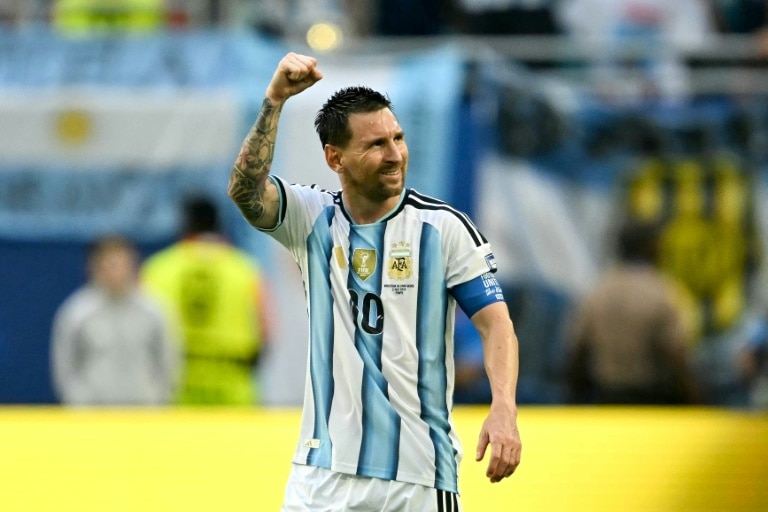
    After a storied 19-year international career spanning 200 appearances for Argentina, 39-year-old Lionel Messi will finally check one unfulfilled box off his legendary resume Wednesday: squaring off against England for the first time, with a place in the World Cup final hanging in the balance.

    Messi’s journey with the Albiceleste began far more dramatically than anyone could have predicted back in August 2005. Fresh off leading Argentina to an Under-20 World Cup title in the Netherlands and breaking into FC Barcelona’s senior squad just months prior, the 18-year-old wunderkind was handed his senior international debut by manager Jose Pekerman in a friendly against Hungary in Budapest. Coming on as a 64th-minute substitute to partner strike legend Hernan Crespo up front, Messi was shown a red card just 90 seconds later for an elbow offense, marking one of the most humbling debuts in modern international football.

    Crespo, Messi’s strike partner that day, later criticized the officiating for the harsh treatment of the young debutant, saying: “An 18-year-old kid who is making his debut for the national team and has so much hope — he can’t be punished like that. The referee needed to be more understanding.” That red card triggered a three-month suspension that forced Messi to miss a subsequent friendly against England in Geneva, a coincidence that set up the years-long wait for this first meeting.

    That long-awaited clash will finally kick off under the roof of Atlanta’s Mercedes-Benz Stadium, with a spot in the World Cup final at stake. Speaking after Argentina’s quarter-final victory over Switzerland in Kansas City, Messi acknowledged the historic weight of the moment: “I have played against everyone except England and it is special because they are a major nation, a powerhouse, and it is always nice to play against a side like that, especially in a World Cup semi-final.”

    This match carries extra historic resonance for Argentina, recalling the iconic 1986 World Cup quarter-final between the two sides where Diego Maradona cemented his legacy with the infamous “Hand of God” goal followed by what many still call the greatest World Cup goal of all time – a solo run that sliced through half of England’s defense. Now, four years after Messi emulated Maradona by lifting the World Cup trophy in Qatar, he will look to channel that legendary magic against England once again.

    Entering this semi-final, Messi already holds the all-time record for most World Cup appearances at 32, and leads the tournament’s 2026 golden boot race with 21 total World Cup goals, one ahead of France captain Kylian Mbappe. He notched goals in nine consecutive World Cup matches before the quarter-final against Switzerland, where he stepped back into a playmaking role to let forward Julian Alvarez lead the attacking charge.

    For Argentina, a win on Wednesday would book their spot in a third World Cup final in four tournaments, and make them the first nation to retain the World Cup title since Brazil in 1962. Should Messi reach the final, he will match an achievement only Brazil great Cafu has pulled off in modern history – appearing in three consecutive World Cup finals, a mark even Maradona never hit, having only played in two.

    Messi emphasized the rarity of the moment, saying: “Getting to another semi-final is not a normal, mundane thing, so this is something we should really enjoy because we don’t know if it will happen again.”

    For the England side, the opportunity to face the player widely regarded as the greatest to ever step onto a football pitch is already being framed as a career-defining moment. Defender Nico O’Reilly, who is expected to start at left-back and mark Messi if he retains his place in the starting eleven, called the clash a once-in-a-lifetime opportunity in comments to BBC Radio 5 Live: “He’s coming towards the end of his career. For me personally, he’s the best player to ever touch a football pitch. And yeah, I can’t wait for the challenge.”
  • China’s June exports surge 27% from a year earlier as AI boom drives strong demand

    China’s June exports surge 27% from a year earlier as AI boom drives strong demand

    HONG KONG – New data released by China’s General Administration of Customs on Tuesday shows the country’s export growth accelerated sharply in June, climbing 27% year-on-year in a performance that outpaced nearly all economist projections. The reading marked a notable jump from May’s 19.4% annual growth, with industry analysts linking the stronger-than-expected expansion to multiple global market factors, most prominently the worldwide boom in artificial intelligence development.

    Imports also saw stronger growth than forecast in June, surging 36% compared to the same period last year, up from May’s 27.4% annual increase. Analysts note that rising geopolitical tensions, particularly the ongoing conflict involving Iran, have pushed up global commodity and energy costs, contributing to the higher overall value of China’s import volumes for the month. The country’s monthly trade surplus widened to $125.6 billion in June, up from $105.4 billion recorded in May.

    Julian Evans-Pritchard, head of China Economics at Capital Economics, highlighted in a client note released Tuesday that the surge in trade values reflects a broader market shift tied to AI development. “Trade values took another big leg up in June,” Evans-Pritchard wrote. “This predominantly reflects the recent surge in semiconductor prices on the back of the AI boom. But even putting that aside, foreign demand for Chinese goods remains robust.”

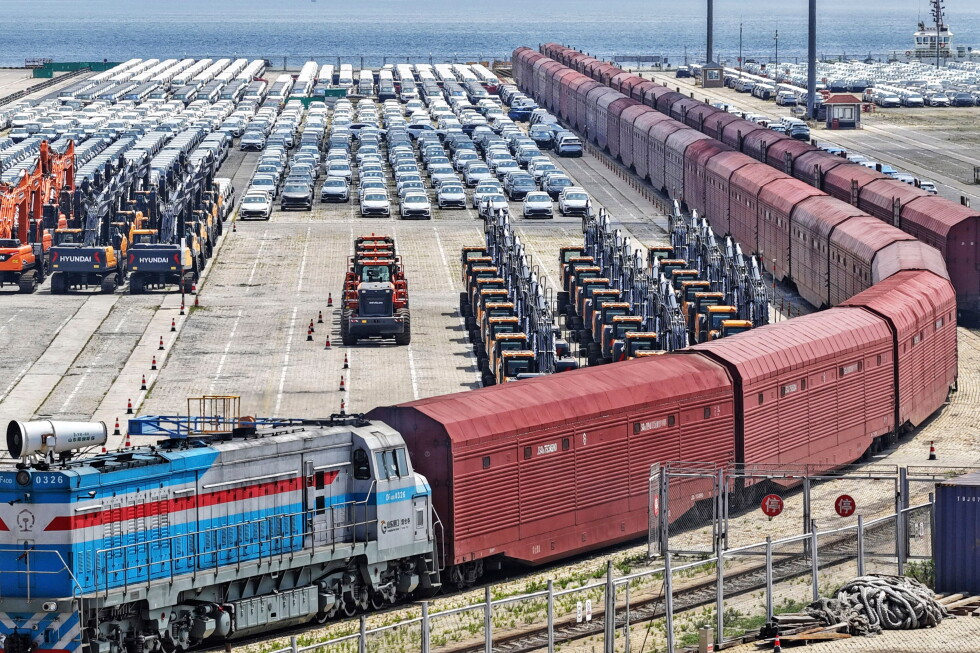
    Beyond semiconductors, China has seen rapid export growth in two key high-value sectors: electric vehicles (EVs) and other technology-focused manufactured goods. As global industries rush to integrate AI tools into operations, demand for semiconductors, circuit boards and other electronic components produced in Chinese factories has risen sharply, driving the overall export expansion. EV exports have emerged as a particularly bright spot, with separate data showing China’s passenger vehicle exports jumped 80% year-on-year in June amid rising global demand for affordable electric vehicles.

    The strong performance of China’s export manufacturing sector has provided critical support for the country’s overall economic growth this year, offsetting persistent softness in domestic consumer spending and fixed investment. The sluggishness in domestic activity stems largely from a prolonged downturn in China’s real estate industry, which has historically accounted for a large share of the country’s economic output and household wealth.

    For the first half of 2026 overall, Chinese customs data shows exports grew 17.6% year-on-year, while imports rose 26.6% over the same period. Breaking down export growth by region, shipments to Southeast Asia surged nearly 35% year-on-year in June, while exports to the European Union and Latin America rose more than 18% and 28% respectively. Exports to the United States also climbed almost 14% from a year earlier, a gain partially driven by comparison to weak 2025 volumes that dropped after former U.S. President Donald Trump implemented new higher tariffs on Chinese goods during his second term.

    Policymakers in the U.S. and Europe have repeatedly raised concerns over growing bilateral trade deficits with China in recent years. In response to trade barriers including higher tariffs, many Chinese manufacturing firms have relocated production capacity to regional hubs across Europe and other global markets to bypass import restrictions. China has also actively diversified its export markets, ramping up shipments to fast-growing economies in Southeast Asia, Latin America and Africa to reduce reliance on traditional Western markets.

    While many analysts project China’s export growth will continue in the coming months, they warn the expansion is increasingly fragile. Wei Li, head of Multi-Asset Investments at BNP Paribas Securities (China), noted that the strong growth in auto and AI-related goods exports remains heavily dependent on sustained global consumer and business demand, as well as future changes to international trade regulations that could create new headwinds.

    China is scheduled to release its official second-quarter gross domestic product (GDP) growth data on Wednesday. Chinese policymakers have set an annual GDP growth target of 4.5% to 5% for 2026, which is slightly lower than the 5% growth the country recorded in 2025. Last week, the International Monetary Fund (IMF) upgraded its 2026 growth forecast for China by 0.2 percentage points to 4.6%, but the organization projects China’s annual growth will slow to 4.1% by 2027 amid long-term structural headwinds.

    To counter softness in domestic demand, Chinese leaders have rolled out a series of stimulus measures aimed at boosting consumer spending, including trade-in subsidies for new vehicles and home appliances. However, many households remain cautious amid ongoing economic uncertainty, with many consumers delaying large, big-ticket purchases to preserve savings.

  • Australian consumer confidence near 50-year lows despite slight July rise

    Australian consumer confidence near 50-year lows despite slight July rise

    A small uptick in Australian consumer confidence recorded in July is at serious risk of being erased by a new wave of rising fuel costs, shifting global oil market dynamics and looming interest rate changes, new economic surveys have revealed.

    The closely watched Westpac-Melbourne Institute Consumer Sentiment Index registered a 4.1% improvement between June and July, pushing the overall reading to 83.9 points. Despite this month-on-month gain, the index remains firmly in negative territory – any score below 100 signals a majority of consumers hold pessimistic views about the future, and the current reading sits near 50-year record lows.

    Matthew Hassan, Westpac’s head of Australian macro-forecasting, explained that the modest July improvement stemmed largely from consumers breathing a sigh of relief after worst-case economic scenarios – including extreme energy price spikes, aggressive interest rate hikes and widespread job losses – failed to materialize. “Some of the July improvement looks to be relief that ‘worst-case’ scenarios – around energy prices, interest rates and jobs – are not playing out,” he noted, adding that “however, family finances are clearly under intense pressure and the outlook is uncertain.”

    The temporary drop in national fuel prices was the single largest driver of the confidence bump. During the survey period, average retail petrol prices across Australia fell to $1.60 per litre, fully reversing the price surge triggered by the outbreak of conflict in the Middle East earlier this year. Consumers also reported slightly less anxiety about their personal financial outlook over the coming 12 months and growing confidence in job security, with Hassan adding that “while they are still downbeat on the economy, consumers are more comfortable about the labour market outlook.”

    Even with these small gains, consumer willingness to make large discretionary purchases remains stagnant: the subindex tracking attitudes toward buying major household goods held broadly steady at depressed levels, indicating households are still holding back on big spending.

    Crucially, the positive fuel price trend that supported the July gain was already reversed just days after the survey concluded. Global oil prices jumped 15% in the following days, climbing above $US84 per barrel, and new pressures are set to push pump prices even higher in the coming months. AMP economist My Bui projected that the confidence uptick will almost certainly be wiped out in next month’s reading, as the temporary benefits of stable interest rates and lower fuel prices fade. “Fuel prices look to increase further throughout July and August with the reintroduction of fuel excise and higher global oil prices, while we think the Reserve Bank has a high chance of raising the cash rate in August,” she explained.

    Geopolitical instability is adding extra uncertainty to the outlook. Hassan warned that consumer sentiment remains highly vulnerable to developments in the Middle East, noting that “sentiment also remains hostage to developments abroad, with daily responses showing a significant weakening as the situation in the Strait of Hormuz deteriorated over the course of the survey week.”

    In contrast to the gloomy household outlook, separate data from National Australia Bank (NAB) shows Australian business confidence has staged a notable recovery in recent months. The NAB Monthly Business Survey recorded a 9-point rise in business confidence in June, bringing the index to -5 points. While confidence still remains in negative territory, the reading marks a major rebound from the sharp drop recorded in March amid escalating Middle East tensions. Business conditions held steady at +3 points for the third consecutive month, matching earlier stable readings.

    NAB chief economist Sally Auld explained that fading fears over the economic impact of Middle East conflict and easing cost pressures have driven the uptick in business sentiment. “Business confidence has now recovered much of the sharp decline we saw in March, reflecting some easing of concerns around energy markets and as broader geopolitical risks have tempered,” she said.

    Auld added that businesses are reporting lower-than-expected inflation expectations tied to Middle East tensions, alongside improving profitability and broadly stable trading conditions. From a policy perspective, the survey offers encouraging signals for inflation management: the sharp spike in input cost growth recorded in March has largely reversed, and price increases have moderated across most Australian industries. “Labour costs remain elevated and margins are still under pressure, but the broader trend is toward easing capacity constraints and more moderate price growth,” Auld noted.

  • Italy’s Cannone suspended for 4 weeks for head-butting in rugby’s Nations Championship

    Italy’s Cannone suspended for 4 weeks for head-butting in rugby’s Nations Championship

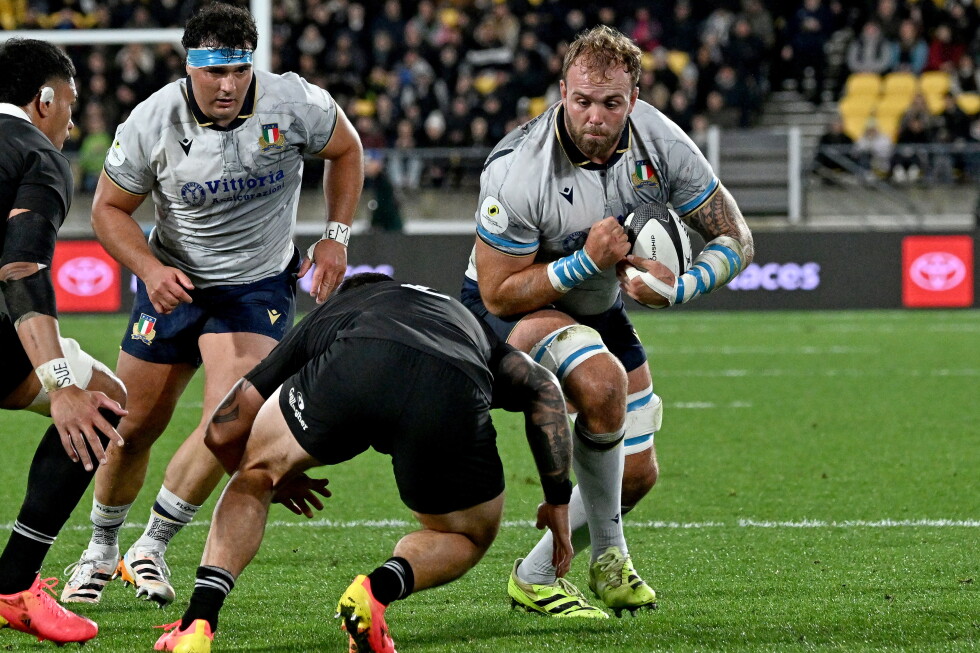
    WELLINGTON, New Zealand — A significant disciplinary action has shaken up the 2024 Nations Championship after Italian rugby lock Niccolo Cannone received a four-week suspension for a violent head-butting incident during Saturday’s test match against New Zealand’s All Blacks.

    The incident unfolded in the 52nd minute of the match at a ruck, where Cannone made contact with New Zealand scrumhalf Cam Roigard using his head. On-field officials initially issued a yellow card for the offense, but post-match video review upgraded the punishment to a red card. The red card forced Italy to play with just 14 players on the field for the final 20 minutes of the match, which ended in a lopsided 47-17 defeat for the Italian side.

    On Tuesday, the tournament’s independent Foul Play Review Committee (FPRC) concluded its formal review of the incident, formally finding Cannone in violation of World Rugby Law 9.12, which prohibits physical abuse of opposing players.

    In an official public statement released after the ruling, the FPRC explained its sentencing process. “The FPRC determined that the act of foul play merited a low-end entry point of six weeks or matches,” the statement read. “In light of Cannone’s acceptance that he committed an act of foul play worthy of ordering off, as well as mitigating factors such as his clean disciplinary record, respectful conduct throughout the review process, and genuine expression of remorse, the FPRC applied a 2-week reduction to the sanction.”

    The four-week suspension will rule Cannone out of Italy’s next critical Nations Championship fixture, scheduled for this Saturday in Perth against Australia. It is unclear whether he will be available for selection for any subsequent tournament matches following the completion of his ban.

  • US burrito giant Chipotle opening first outlet in Mexico

    US burrito giant Chipotle opening first outlet in Mexico

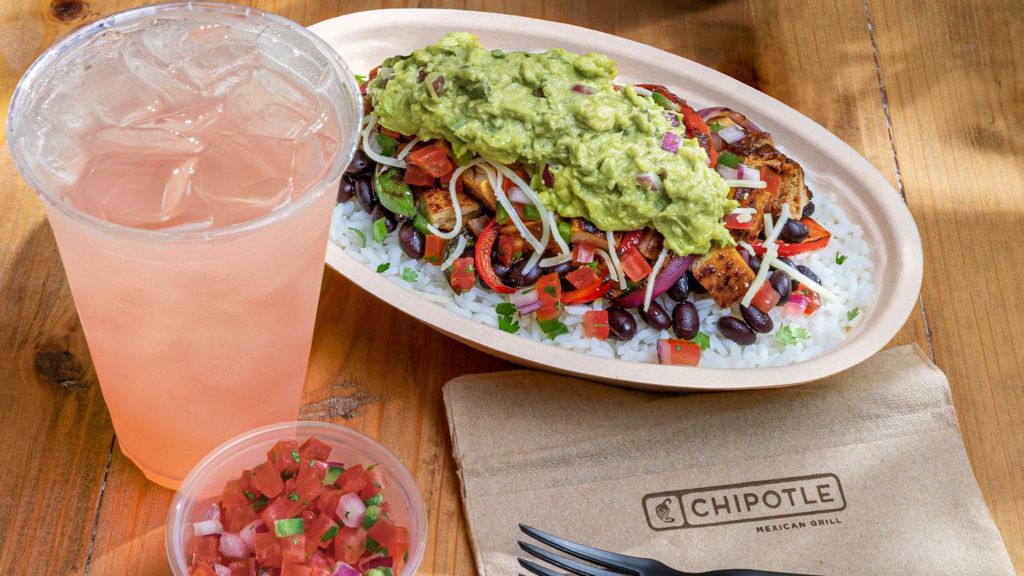
    U.S.-born fast-casual chain Chipotle Mexican Grill is preparing to open its very first restaurant in Mexico this week, marking an unprecedented milestone for the brand that built its global empire on Mexican-inspired cuisine. With more than 4,100 outlets operating across the world, the company frames this launch into the culinary birthplace of its core menu as one of its most significant strategic moves in recent years.

    Founded on the concept of customizable burritos, hand-crafted tacos, and build-your-own grain bowls, Chipotle has gained a loyal following across North America and beyond. But its new venture comes with major historical precedent: U.S. food chains that attempt to enter the origin countries of their signature dishes have a well-documented track record of failure. Most famously, Taco Bell, another U.S. fast food giant specializing in Mexican-inspired fare, has twice tried and failed to establish a permanent presence in Mexico, withdrawing its last location in 2010 after failing to resonate with local diners. Similarly, Domino’s Pizza exited Italy, the global birthplace of pizza, in 2022, shuttering all its outlets after seven years of struggling to compete against beloved local pizzerias.

    Chipotle’s leadership is leaning into a posture of cultural respect as it enters the market. Scott Boatwright, the company’s chief executive, emphasized in a statement Monday that the chain is entering Mexico with profound respect for the country’s centuries-old culinary heritage, and is committed to delivering a high-quality version of the signature Chipotle experience. “We look forward to serving new guests and earning a place in Mexico’s vibrant dining culture,” Boatwright said.

    The inaugural Chipotle location is situated in the northeastern Mexican state of Nuevo León, just along the border with Texas. The company says this launch site will serve as a critical proof-of-concept for its wider Mexican expansion strategy. In partnership with Alsea, a prominent Mexican restaurant operator that already manages major global brands including Domino’s Pizza, Starbucks, and Chili’s across the country, Chipotle plans to open additional outlets across Nuevo León before expanding into Mexico City in 2027.

    News of the launch has sparked a fierce divided debate across social media platforms, with many users poking fun at the brand’s decision to enter the market. On X (formerly Twitter), commenters have drawn sharp, humorous comparisons to other notorious failed chain expansions. One user joked that the move was analogous to “selling Mexico a corporate version of Mexico,” while another questioned why local consumers would choose Chipotle when Mexico already has abundant access to affordable, high-quality authentic Mexican food. Other comparisons included comparing the launch to opening a Pizza Hut in Naples, or even joking that the next step would be American Chinese food chain Panda Express opening its first location in mainland China.

    Not all reactions were critical, however. Some social media users noted that the move is a key test of Chipotle’s broader global expansion ambitions, while others suggested the chain could find success as a novelty attraction for international tourists visiting the country. For 2026 overall, Chipotle has plans to open as many as 370 new restaurants across the globe, with new market entries also planned for Singapore and South Korea as the brand works to grow its international footprint.

  • Thai police probe safety lapses after deadly Bangkok bar fire

    Thai police probe safety lapses after deadly Bangkok bar fire

    A devastating late-night fire at a popular Bangkok live music bar has claimed at least 28 lives and left dozens injured, triggering an official investigation into widespread safety lapses that may have turned a manageable blaze into a fatal tragedy.

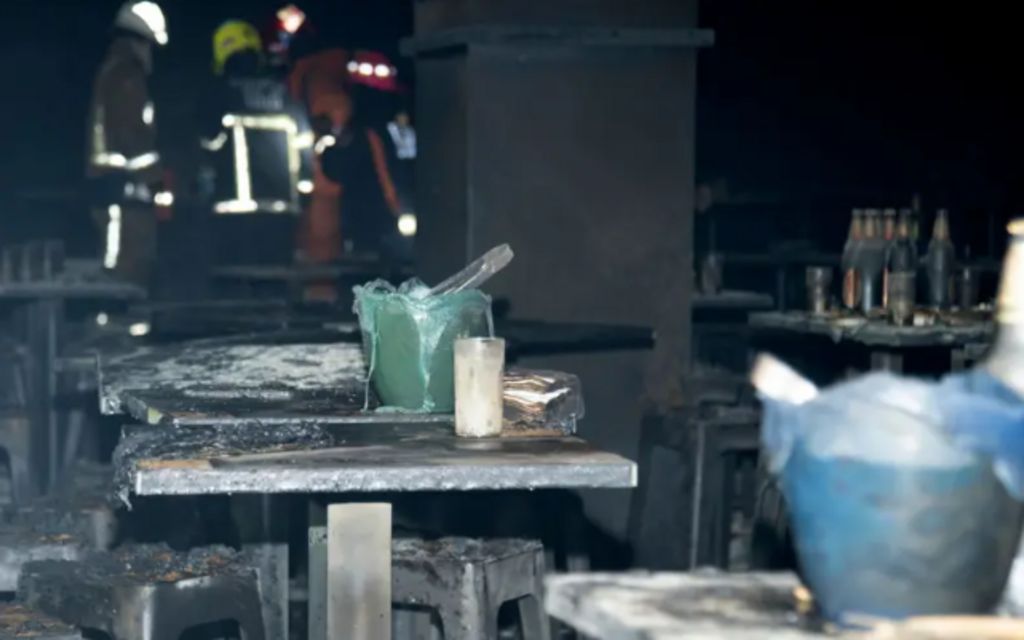
    The fire erupted on Sunday evening near the performance stage of Rong Beer Na Lat Phrao, where Thai indie band Thotsakan was mid-performance. Preliminary investigations point to an air conditioning unit short circuit as the initial source of ignition; the fault immediately cut power to the entire venue, plunging the already dimly lit space into total darkness. Investigators confirm that highly flammable decorative materials, including plastic floral arrangements covering the stage and combustible foam plastered on the venue’s ceiling, allowed the flames to spread across the space in seconds, producing toxic fumes that overwhelmed patrons almost instantly.

    Multiple accounts and post-fire inspections reveal a cascade of life-threatening safety failures. Survivors and inspectors have confirmed that emergency exit doors were locked, entrance doors were partially blocked by furniture, and clear emergency exit signage was entirely absent from the venue. A former visitor to the bar described convoluted, unmarked winding corridors that left patrons disoriented even under normal operating conditions. When the fire broke out, many customers instinctively fled toward the rear of the venue where restrooms were located, only to find the door at that location locked and no alternate escape route. Many victims were ultimately found in these rear restrooms, having been trapped while attempting to escape the blaze.

    Structural engineering experts note that the use of flammable synthetic materials created toxic “smoke twins” — carbon monoxide and hydrogen cyanide — that likely killed most victims via inhalation long before they were burned by flames. Two members of the performing band Thotsakan are among the dead.

    In the wake of the tragedy, Thai police have opened an investigation into whether severe negligence on the part of venue owners contributed to the death toll. National Police Chief Kittiratt Phanphet condemned the venue’s safety standards Monday, saying the multiple hazards “indicate a lack of caution and disregard for the safety of the patrons.”

    Further investigation has uncovered that the venue was legally registered as a “restaurant with live music” rather than a formal entertainment venue. This lower-risk classification meant the establishment was not required to use fire-retardant building or decorative materials, creating a regulatory loophole that directly contributed to the fire’s rapid spread. The venue’s owner has a prior history of fire incidents: local Thai media reports confirm the owner previously operated a pub in Yasothon province that was destroyed by fire in December 2019, though that blaze caused no casualties as it broke out during daytime operating hours when the building was not packed with people.

    Following the disaster, Bangkok’s Metropolitan Administration announced it has launched a full review of safety regulations covering both restaurants and entertainment venues, with the goal of closing regulatory gaps that allow high-risk venues to operate without meeting adequate fire safety standards.

  • UAE condemns Iran’s ‘brazen’ attack on tankers as US launches fresh strikes

    UAE condemns Iran’s ‘brazen’ attack on tankers as US launches fresh strikes

    The strategic Strait of Hormuz, a critical global energy chokepoint, has erupted into a fresh wave of geopolitical crisis, following a deadly attack on two Emirati tankers and a sweeping new announcement from U.S. President Donald Trump that risks upending global shipping markets. The rapid escalation comes after three consecutive nights of U.S. strikes on Iranian military targets, marking a sharp breakdown in a recent ceasefire agreement between the two long-standing adversaries.

    On Monday, the United Arab Emirates’ Ministry of Defence issued a formal statement condemning what it called a “brazen” Iranian attack on two of its national tankers transiting the strait. The strike left one Indian crew member dead and eight others injured, six of whom are Indian and two Ukrainian, with four casualties in critical condition. The ministry called the assault a severe violation of international law that undermines regional security and stability.

    Shortly after the attack, Iran’s Islamic Revolutionary Guard Corps (IRGC) took responsibility for the strikes in a Telegram statement. The IRGC claimed the two tankers had ignored multiple navigation warnings, disabled their location tracking systems, and attempted to traverse a route marked as dangerous due to prior mining activity. The corps added that any vessel cooperating with what it calls the “aggressor enemy” will only face consequences including damage, delayed passage, and the risk of triggering a global energy crisis. The IRGC confirmed it had disabled both targeted tankers.

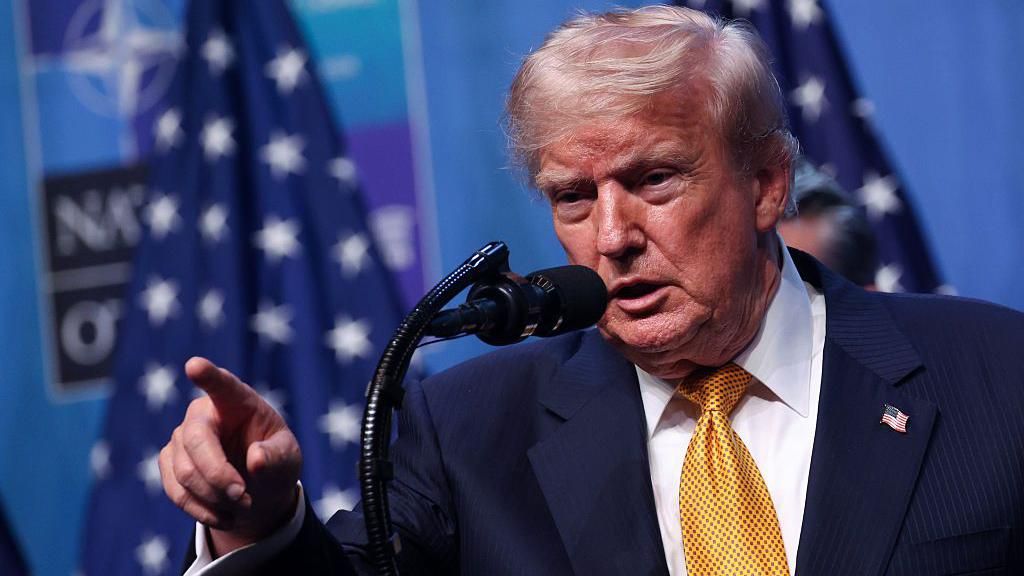
    The attack capped a 48-hour period of steadily escalating military exchanges between the U.S. and Iran. On Monday, following strikes for the third straight night, President Trump announced via his Truth Social platform that the U.S. would reinstate a full naval blockade of Iranian ports and impose a mandatory 20% charge on all cargo shipped through the Strait of Hormuz, set to take effect at 16:00 Eastern Time on Tuesday. The U.S. leader framed the toll as reimbursement for security costs, claiming the U.S. would now serve as the official “Guardian of the Hormuz Strait,” while asserting that all non-Iranian shipping would retain fair and open access to the waterway.

    Speaking to reporters at the White House, Trump said the U.S. was hitting Iran “very hard” and working to eliminate all of Tehran’s offensive capabilities while securing full control of the strait. When asked about the prospects for a negotiated end to the ongoing conflict, Trump maintained that a diplomatic deal remained within reach. U.S. Central Command (Centcom) confirmed it carried out the latest round of strikes on Monday afternoon, targeting military sites across multiple Iranian locations including Bushehr, Bandar Abbas and Abu Musa, with the stated goal of further degrading Iran’s capacity to attack commercial shipping. In response, Iranian state media reported that Iran’s army had targeted U.S. military assets stationed in Kuwait.

    Iran’s foreign minister Abbas Araghchi offered a sharp, sardonic retort to Trump’s announcement, leaning into the president’s own framing on X. Araghchi acknowledged that any power providing safe passage for commercial vessels through the strait deserves compensation, noting that “Iran has always been the GUARDIAN of the Strait and will remain so FOREVER.” He added that Trump’s proposed 20% rate is far too high, quipping that “We will be fair.” Iran’s top military spokesperson Ebrahim Zolfaghari went further, warning that any U.S. interference in the management of the strait will be considered an act of war against Iranian sovereignty, and that expanded conflict would spread flames across the entire Middle East.

    The International Maritime Organization (IMO), a United Nations body that oversees global shipping regulations, has already rejected Trump’s proposed toll outright. A spokesperson told Reuters that the organization “stands firmly against charging fees for passage through straits used for international navigation,” adding that there is no international legal basis for imposing mandatory transit tolls on commercial shipping through the waterway. As of Monday, ship tracking data from MarineTraffic shows that while a small number of vessels are still moving through the strait, overall commercial traffic remains heavily restricted.

    The current crisis marks the latest chapter in a months-long conflict that has already reshaped global energy markets. The strait, through which roughly 25% of the world’s crude oil and 20% of global liquefied natural gas pass, was effectively shut down by Iran in February after the U.S. and Israel launched large-scale strikes on Iranian targets. Iran retaliated with missile and drone attacks on Israeli and U.S. military assets across the Gulf, and the IRGC seized two commercial vessels and fired on others that attempted to transit without Tehran’s approval. The disruption sent global oil prices soaring in the weeks that followed.

    The U.S. first imposed a full naval blockade of Iranian ports in April to pressure Tehran. By mid-May, U.S. military officials reported they had redirected 100 commercial vessels and disabled four Iranian-flagged ships under the blockade. The blockade was lifted in June as part of a ceasefire memorandum between the two sides aimed at de-escalation, but disputes over control of the strait quickly reignited. Last week, Trump formally notified Congress that the U.S. had resumed military action against Iran starting on July 7, complying with federal notification requirements for ongoing military engagements.

    The practical implications of Trump’s new announcement remain uncertain, and it carries both international and domestic political risks. Under international UN law, coastal states exercise full sovereignty over territorial waters extending 12 nautical miles from their coastline, and at its narrowest point, the Strait of Hormuz’s shipping lanes lie entirely within the territorial waters of Iran and Oman. Many U.S. allies are expected to push back against the requirement to pay a 20% cargo toll, and critics have already noted that the strait was fully open and unrestricted before the current conflict began.

    Domestically, the announcement creates political complications for Trump’s fellow Republicans ahead of upcoming midterm elections. Even though Trump is not on the ballot, the move is likely to drive renewed increases in global oil prices, which will impact U.S. consumers at the pump. Some lawmakers from both parties, including a number of Republicans, have already questioned the value of the earlier ceasefire, and many American voters are already concerned about rising energy costs. Some analysts have framed the announcement as a characteristic Trump negotiating tactic: a provocative move designed to force a reset in talks and draw greater international involvement into resolving the crisis.

  • Australian police reveal unseen photos 25 years after British backpacker murder

    Australian police reveal unseen photos 25 years after British backpacker murder

    July 14, 2026 marks 25 years since one of Australia’s most high-profile missing person and murder cases unfolded in the remote outback of the Northern Territory. On that same date in 2001, 28-year-old British backpacker Peter Falconio, originally from Huddersfield, was shot and killed by Bradley Murdoch on a desolate stretch of Stuart Highway near Barrow Creek, roughly 300 kilometers north of Alice Springs. To this day, Falconio’s body has never been recovered, and 25 years on from the attack, Northern Territory (NT) Police have made the unprecedented decision to release a collection of never-before-seen photographs from their original investigation, in a last-ditch effort to jog public memory and elicit new information that could finally lead investigators to Falconio’s remains.

    The newly released batch of images captures key pieces of evidence and context from the immediate aftermath of the attack. Included among them is a full-length portrait of Murdoch taken during the early police investigation, a raw shot of Falconio’s travel partner and girlfriend Joanne Lees visibly traumatized just hours after the assault, close-up images of the binding injuries Lees sustained when Murdoch tied her wrists with cable ties, the abandoned orange Volkswagen Kombi van the couple was driving around Australia that was found parked off the Stuart Highway near the attack site, and multiple shots of the remote outback crime scene itself.

    The attack that shook both Australia and the United Kingdom unfolded after Murdoch pulled his vehicle alongside the couple’s camper van, claiming he had spotted sparks coming from the van’s exhaust. When Falconio stepped out to inspect the issue, Murdoch shot him in the head before forcing Lees into his own vehicle and binding her. Lees managed to escape Murdoch’s custody, hiding in dense outback scrubland for several hours before she was able to flag down a passing truck for help.

    Murdoch was ultimately found guilty of Falconio’s murder, as well as charges of assault and attempted kidnapping of Lees, in a unanimous jury verdict following his 2005 trial. Despite overwhelming DNA evidence linking him to the crime, Murdoch consistently maintained his innocence, launched two unsuccessful appeals to overturn his conviction, and never cooperated with authorities to disclose where he had hidden Falconio’s body. Last year, the 67-year-old died in prison from terminal throat cancer, taking the secret of Falconio’s burial location to his grave. Just one week before his death, NT Police conducted a final recorded interview with Murdoch in a last attempt to get him to reveal the location; footage of that interview was released to the public in recent days.

    NT Police Commissioner Martin Dole emphasized that the investigation will remain open until Falconio’s family gets the closure they have waited 25 years for. “This was a traumatic and horrific event for Ms Lees, and for Peter’s family, who have now gone such a long time without the answers they deserve,” Dole said in an official statement. “While a murderer has been held accountable for his crimes, this investigation can never be considered closed until Peter’s remains are found and his family can lay him to rest.”

    Dole added that it was “deeply regrettable that Murdoch died without, as far as we know, ever disclosing the location of Peter’s remains. His cowardly silence has denied his family, friends and loved ones the closure they deserve.” Police remain committed to pursuing every possible lead to bring the case to a full conclusion, and an existing reward of up to AU$500,000 remains active for any information that leads investigators to the recovery of Falconio’s remains. Commissioner Dole expressed hope that the 25-year milestone, paired with the release of these unseen images, will prompt anyone with even small pieces of forgotten information to come forward.

  • Hours each day in an iron lung kept her breathing, her will to live kept her alive

    Hours each day in an iron lung kept her breathing, her will to live kept her alive

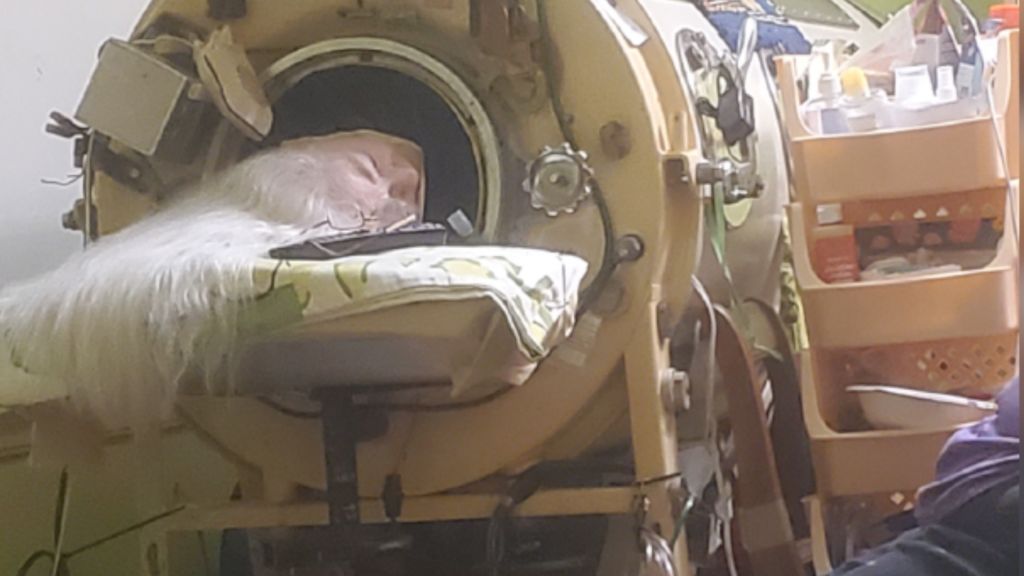
    Martha Lillard, the United States’ last remaining person who relied on an iron lung to breathe after contracting polio, died at her home in Oklahoma at the age of 78 on June 26. For nearly three-quarters of her life, the large metal breathing device defined her daily routine — but it never defined her spirit, her family says.

    Lillard was just 5 years old when she was diagnosed with paralytic polio in the mid-1950s, one year before the first widespread polio vaccine rolled out across the U.S. Waking up one morning unable to lift her head from her pillow, she already understood what her symptoms meant: widespread public fear of the incurable disease dominated conversations at the time, and the young girl immediately recognized the signs of the infection that had already left so many children dead or disabled.

    After her diagnosis, Lillard spent decades dependent on the iron lung, a negative-pressure respiratory device that works by adjusting air pressure inside a sealed metal cylinder to force the lungs to expand and contract, doing the work of weakened respiratory muscles automatically. While many children who relied on the machine feared it, Lillard never shared that anxiety, according to her younger sister Cindy McVey. Instead, the device felt like a recharge, leaving her feeling refreshed after daily sessions inside it.

    Against all odds, Lillard and her family refused to let her condition limit the life she built. Determined to let her live as independently as possible, her uncle and grandfather engineered a custom modification to the iron lung that let Lillard open and close the device on her own, granting her the ability to live alone that most other iron lung users never had. Loved ones also retrofitted a car to match her limited mobility: the steering wheel was repositioned to rest in her lap, and turn signals were moved to the floor, letting Lillard drive herself wherever she wanted to go.

    Over her decades of life, Lillard cultivated a rich set of passions. She became a skilled painter, creating detailed landscape works, and was an avid learner who constantly asked questions of her smart speaker to expand her knowledge. She also shared more than 20 years with her partner Baha Salh, who moved to the U.S. from Egypt after securing a visa earlier this year. The pair married in February, just four months before Lillard’s death.

    While her official cause of death is listed as post-polio syndrome and chronic pulmonary failure, McVey says long COVID-19 ultimately contributed to her sister’s passing. Even so, McVey says her sister remained resilient and resourceful throughout her entire life: “She was resilient, she would find a way, or make do.”

    Lillard’s story comes amid a renewed reckoning over polio and vaccine access in the U.S. After the polio vaccine was introduced in 1955, a nationwide mass vaccination campaign eliminated endemic polio in the U.S. by 1979, a major public health victory that ended the regular outbreaks that killed and paralyzed thousands of children annually. According to the World Health Organization, roughly 1 in 200 polio infections result in permanent paralysis, and 5 to 10 percent of paralyzed patients die when their breathing muscles become immobilized.

    Today, however, growing vaccine hesitancy across the U.S. has put that progress at risk. Earlier this year, Kirk Milhoan, chair of the Centers for Disease Control and Prevention’s Advisory Committee on Immunization Practices, drew controversy after suggesting that polio vaccination should be made optional, arguing that improved sanitation and lower current risk mean the tradeoff between vaccine risk and disease risk has shifted.

    That rhetoric and the trend of declining childhood vaccination leave McVey deeply worried. Speaking through tears, she warned that fading cultural memory of polio’s devastation has led generations to underestimate the danger of the disease. “Polio is terrible. The disease disfigures, disables and leaves people trapped. We had it under control here and now we have all these people who aren’t vaccinating their children,” she said. “They may think there’s problems with the vaccine, but there’s a whole lot more problems if they don’t vaccinate.”

    McVey also noted just how narrow the gap was between her sister’s fate and a polio-free life: Lillard was infected the year before the vaccine became widely available, and McVey had friends who participated in the vaccine trials that same year. “It was that close,” she said.

  • France and Spain prepare to duel at World Cup

    France and Spain prepare to duel at World Cup

    The stage is set for a blockbuster 2026 FIFA World Cup semi-final showdown at Arlington, Texas’ AT&T Stadium on Tuesday, where two European football heavyweights, France and Spain, will battle it out for a coveted spot in the tournament’s final in New York.

    France, the only team in modern history to reach back-to-back World Cup finals, enters the clash with deep-rooted motivation to claim a historic third world title. Les Bleus lifted the trophy in 2018 in Russia, before falling agonizingly short in a penalty shootout against Argentina in the 2022 Qatar final, despite a memorable hat-trick from their star forward Kylian Mbappe. That bitter defeat in Doha still fuels the squad’s hunger, especially with a potential rematch against Messi’s Argentina looming if the South American side beats England in Wednesday’s second semi-final in Atlanta.

    Mbappe, currently tied with Lionel Messi at the top of the tournament’s Golden Boot race with eight goals, leads what many pundits call the most dangerous attacking lineup in the competition. Alongside the Real Madrid superstar sits Ballon d’Or winner Ousmane Dembele and dynamic English-born forward Michael Olise, whose blistering pace and tight dribbling skills stretch opposing defenses open, creating the space Mbappe needs to exploit. With talented backup options Bradley Barcola and Desire Doue, both of Paris Saint-Germain, waiting in the wings to add firepower off the bench, France’s attacking depth remains unmatched.

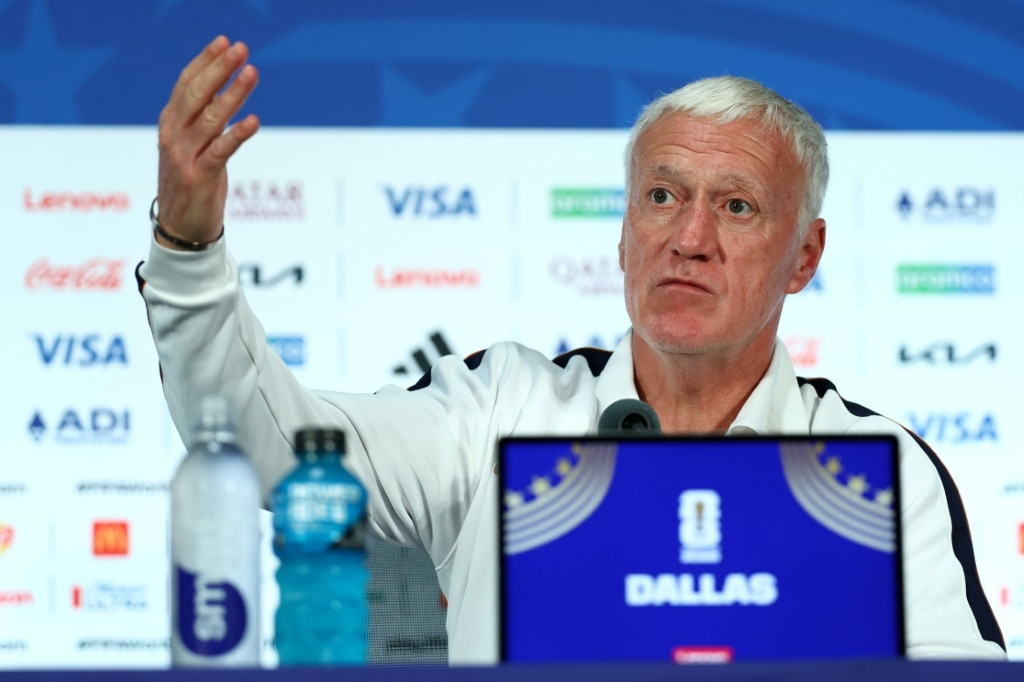
    This tournament also marks the final campaign for long-serving France head coach Didier Deschamps, who has led the national side for 14 years. One of only a handful of people to win the World Cup as both a player and a coach, Deschamps is desperate to cap his legendary tenure with a third world title, though he remains realistic about Tuesday’s challenge. Noting that Spain has beaten France in their last two consecutive meetings, Deschamps labeled his side the underdogs, pointing out that Spain have grown steadily stronger since their opening tournament draw against debutants Cape Verde. “Ever since then Spain have confirmed that they are the favourites,” Deschamps said.

    For Spain, the clash carries its own sense of destiny: the nation, despite its unparalleled footballing heritage, has only claimed one World Cup trophy, back in 2010 in South Africa. A new generation of young talent has this year’s squad widely tipped as title contenders, led by teenage prodigy Lamine Yamal, who celebrated his 19th birthday on the eve of the semi-final. The Barcelona winger, who inspired Spain to Euro 2024 glory last year, entered this World Cup still regaining match fitness after a hamstring injury, and looked rusty in the opening goalless draw with Cape Verde. He has found his rhythm as the tournament has progressed, however, claiming player-of-the-match honors in Spain’s tense 2-1 quarter-final victory over Belgium.

    Yamal made headlines last week after saying France, not Spain, should be afraid ahead of the tie, a comment that sparked widespread discussion. Appearing relaxed at Monday’s pre-match press conference, the teenager clarified his remarks, noting that he was simply responding to a question about whether he feared Mbappe and France’s attack. “We are European champions. It’s simply football,” Yamal said. The 19-year-old showed off a new jewel-encrusted necklace he bought to mark his birthday, but made clear what he really wants as a gift: a win on Tuesday and a place in the World Cup final. “The best gift would be a win on Tuesday and a trip to New York,” he added.

    Yamal isn’t the only advantage Spain brings into the tie: the teenager pointed to Spain’s recent winning record against France, with La Roja claiming 2-1 victory over Les Bleus in the Euro 2024 semi-final, followed by a dramatic 5-4 win in a 2025 Nations League semi-final. Unlike France’s all-out attacking approach, Spain has built their run to the semi-final on a combination of solid defensive organization and the trademark possession-based playing style that defined the great Spain teams of the 2000s and 2010s, masterfully restored by head coach Luis de la Fuente. Remarkably, Belgium’s quarter-final goal was the first Spain has conceded throughout the entire tournament, putting the onus on Mbappe and his attacking teammates to break down a disciplined, confident defense to advance.