作者: admin

  • Australian police reveal unseen photos 25 years after British backpacker murder

    Australian police reveal unseen photos 25 years after British backpacker murder

    July 14, 2026 marks 25 years since one of Australia’s most high-profile missing person and murder cases unfolded in the remote outback of the Northern Territory. On that same date in 2001, 28-year-old British backpacker Peter Falconio, originally from Huddersfield, was shot and killed by Bradley Murdoch on a desolate stretch of Stuart Highway near Barrow Creek, roughly 300 kilometers north of Alice Springs. To this day, Falconio’s body has never been recovered, and 25 years on from the attack, Northern Territory (NT) Police have made the unprecedented decision to release a collection of never-before-seen photographs from their original investigation, in a last-ditch effort to jog public memory and elicit new information that could finally lead investigators to Falconio’s remains.

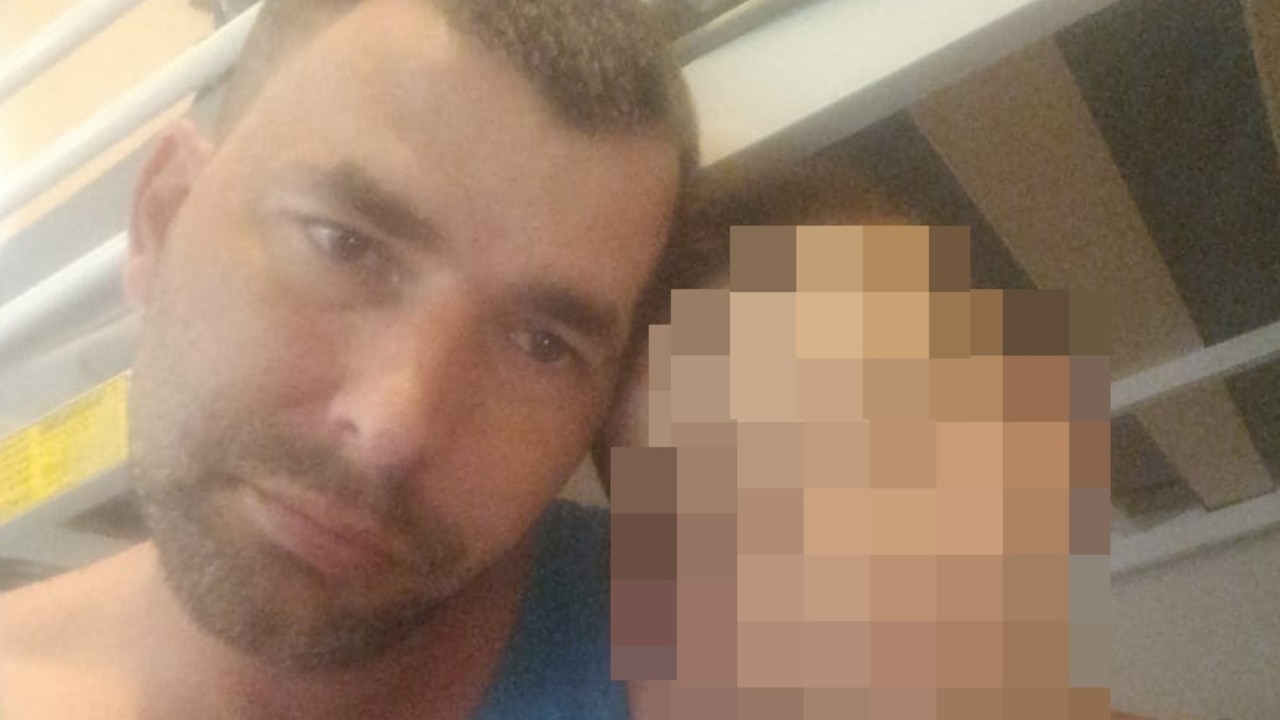
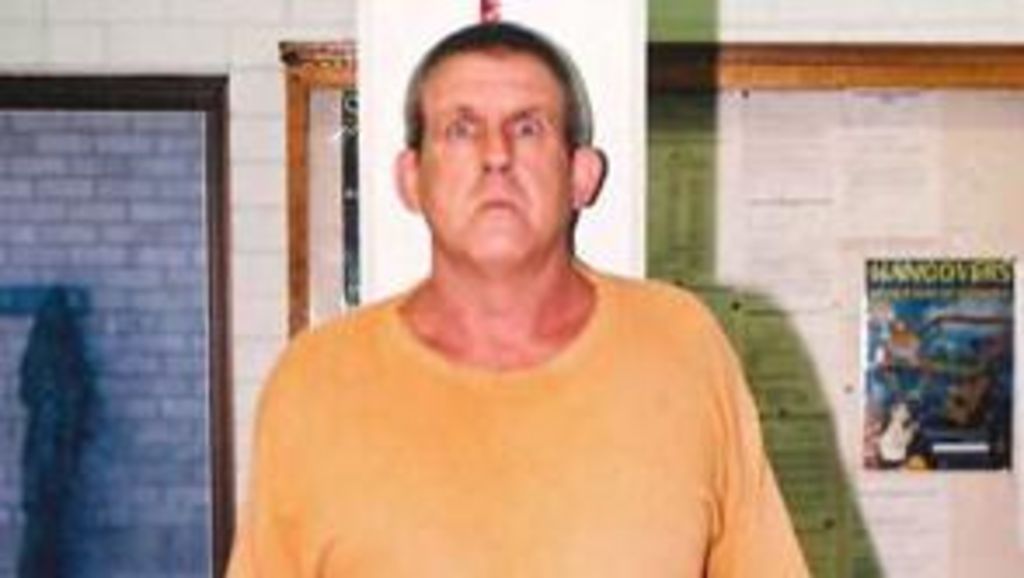
    The newly released batch of images captures key pieces of evidence and context from the immediate aftermath of the attack. Included among them is a full-length portrait of Murdoch taken during the early police investigation, a raw shot of Falconio’s travel partner and girlfriend Joanne Lees visibly traumatized just hours after the assault, close-up images of the binding injuries Lees sustained when Murdoch tied her wrists with cable ties, the abandoned orange Volkswagen Kombi van the couple was driving around Australia that was found parked off the Stuart Highway near the attack site, and multiple shots of the remote outback crime scene itself.

    The attack that shook both Australia and the United Kingdom unfolded after Murdoch pulled his vehicle alongside the couple’s camper van, claiming he had spotted sparks coming from the van’s exhaust. When Falconio stepped out to inspect the issue, Murdoch shot him in the head before forcing Lees into his own vehicle and binding her. Lees managed to escape Murdoch’s custody, hiding in dense outback scrubland for several hours before she was able to flag down a passing truck for help.

    Murdoch was ultimately found guilty of Falconio’s murder, as well as charges of assault and attempted kidnapping of Lees, in a unanimous jury verdict following his 2005 trial. Despite overwhelming DNA evidence linking him to the crime, Murdoch consistently maintained his innocence, launched two unsuccessful appeals to overturn his conviction, and never cooperated with authorities to disclose where he had hidden Falconio’s body. Last year, the 67-year-old died in prison from terminal throat cancer, taking the secret of Falconio’s burial location to his grave. Just one week before his death, NT Police conducted a final recorded interview with Murdoch in a last attempt to get him to reveal the location; footage of that interview was released to the public in recent days.

    NT Police Commissioner Martin Dole emphasized that the investigation will remain open until Falconio’s family gets the closure they have waited 25 years for. “This was a traumatic and horrific event for Ms Lees, and for Peter’s family, who have now gone such a long time without the answers they deserve,” Dole said in an official statement. “While a murderer has been held accountable for his crimes, this investigation can never be considered closed until Peter’s remains are found and his family can lay him to rest.”

    Dole added that it was “deeply regrettable that Murdoch died without, as far as we know, ever disclosing the location of Peter’s remains. His cowardly silence has denied his family, friends and loved ones the closure they deserve.” Police remain committed to pursuing every possible lead to bring the case to a full conclusion, and an existing reward of up to AU$500,000 remains active for any information that leads investigators to the recovery of Falconio’s remains. Commissioner Dole expressed hope that the 25-year milestone, paired with the release of these unseen images, will prompt anyone with even small pieces of forgotten information to come forward.

  • Hours each day in an iron lung kept her breathing, her will to live kept her alive

    Hours each day in an iron lung kept her breathing, her will to live kept her alive

    Martha Lillard, the United States’ last remaining person who relied on an iron lung to breathe after contracting polio, died at her home in Oklahoma at the age of 78 on June 26. For nearly three-quarters of her life, the large metal breathing device defined her daily routine — but it never defined her spirit, her family says.

    Lillard was just 5 years old when she was diagnosed with paralytic polio in the mid-1950s, one year before the first widespread polio vaccine rolled out across the U.S. Waking up one morning unable to lift her head from her pillow, she already understood what her symptoms meant: widespread public fear of the incurable disease dominated conversations at the time, and the young girl immediately recognized the signs of the infection that had already left so many children dead or disabled.

    After her diagnosis, Lillard spent decades dependent on the iron lung, a negative-pressure respiratory device that works by adjusting air pressure inside a sealed metal cylinder to force the lungs to expand and contract, doing the work of weakened respiratory muscles automatically. While many children who relied on the machine feared it, Lillard never shared that anxiety, according to her younger sister Cindy McVey. Instead, the device felt like a recharge, leaving her feeling refreshed after daily sessions inside it.

    Against all odds, Lillard and her family refused to let her condition limit the life she built. Determined to let her live as independently as possible, her uncle and grandfather engineered a custom modification to the iron lung that let Lillard open and close the device on her own, granting her the ability to live alone that most other iron lung users never had. Loved ones also retrofitted a car to match her limited mobility: the steering wheel was repositioned to rest in her lap, and turn signals were moved to the floor, letting Lillard drive herself wherever she wanted to go.

    Over her decades of life, Lillard cultivated a rich set of passions. She became a skilled painter, creating detailed landscape works, and was an avid learner who constantly asked questions of her smart speaker to expand her knowledge. She also shared more than 20 years with her partner Baha Salh, who moved to the U.S. from Egypt after securing a visa earlier this year. The pair married in February, just four months before Lillard’s death.

    While her official cause of death is listed as post-polio syndrome and chronic pulmonary failure, McVey says long COVID-19 ultimately contributed to her sister’s passing. Even so, McVey says her sister remained resilient and resourceful throughout her entire life: “She was resilient, she would find a way, or make do.”

    Lillard’s story comes amid a renewed reckoning over polio and vaccine access in the U.S. After the polio vaccine was introduced in 1955, a nationwide mass vaccination campaign eliminated endemic polio in the U.S. by 1979, a major public health victory that ended the regular outbreaks that killed and paralyzed thousands of children annually. According to the World Health Organization, roughly 1 in 200 polio infections result in permanent paralysis, and 5 to 10 percent of paralyzed patients die when their breathing muscles become immobilized.

    Today, however, growing vaccine hesitancy across the U.S. has put that progress at risk. Earlier this year, Kirk Milhoan, chair of the Centers for Disease Control and Prevention’s Advisory Committee on Immunization Practices, drew controversy after suggesting that polio vaccination should be made optional, arguing that improved sanitation and lower current risk mean the tradeoff between vaccine risk and disease risk has shifted.

    That rhetoric and the trend of declining childhood vaccination leave McVey deeply worried. Speaking through tears, she warned that fading cultural memory of polio’s devastation has led generations to underestimate the danger of the disease. “Polio is terrible. The disease disfigures, disables and leaves people trapped. We had it under control here and now we have all these people who aren’t vaccinating their children,” she said. “They may think there’s problems with the vaccine, but there’s a whole lot more problems if they don’t vaccinate.”

    McVey also noted just how narrow the gap was between her sister’s fate and a polio-free life: Lillard was infected the year before the vaccine became widely available, and McVey had friends who participated in the vaccine trials that same year. “It was that close,” she said.

  • France and Spain prepare to duel at World Cup

    France and Spain prepare to duel at World Cup

    The stage is set for a blockbuster 2026 FIFA World Cup semi-final showdown at Arlington, Texas’ AT&T Stadium on Tuesday, where two European football heavyweights, France and Spain, will battle it out for a coveted spot in the tournament’s final in New York.

    France, the only team in modern history to reach back-to-back World Cup finals, enters the clash with deep-rooted motivation to claim a historic third world title. Les Bleus lifted the trophy in 2018 in Russia, before falling agonizingly short in a penalty shootout against Argentina in the 2022 Qatar final, despite a memorable hat-trick from their star forward Kylian Mbappe. That bitter defeat in Doha still fuels the squad’s hunger, especially with a potential rematch against Messi’s Argentina looming if the South American side beats England in Wednesday’s second semi-final in Atlanta.

    Mbappe, currently tied with Lionel Messi at the top of the tournament’s Golden Boot race with eight goals, leads what many pundits call the most dangerous attacking lineup in the competition. Alongside the Real Madrid superstar sits Ballon d’Or winner Ousmane Dembele and dynamic English-born forward Michael Olise, whose blistering pace and tight dribbling skills stretch opposing defenses open, creating the space Mbappe needs to exploit. With talented backup options Bradley Barcola and Desire Doue, both of Paris Saint-Germain, waiting in the wings to add firepower off the bench, France’s attacking depth remains unmatched.

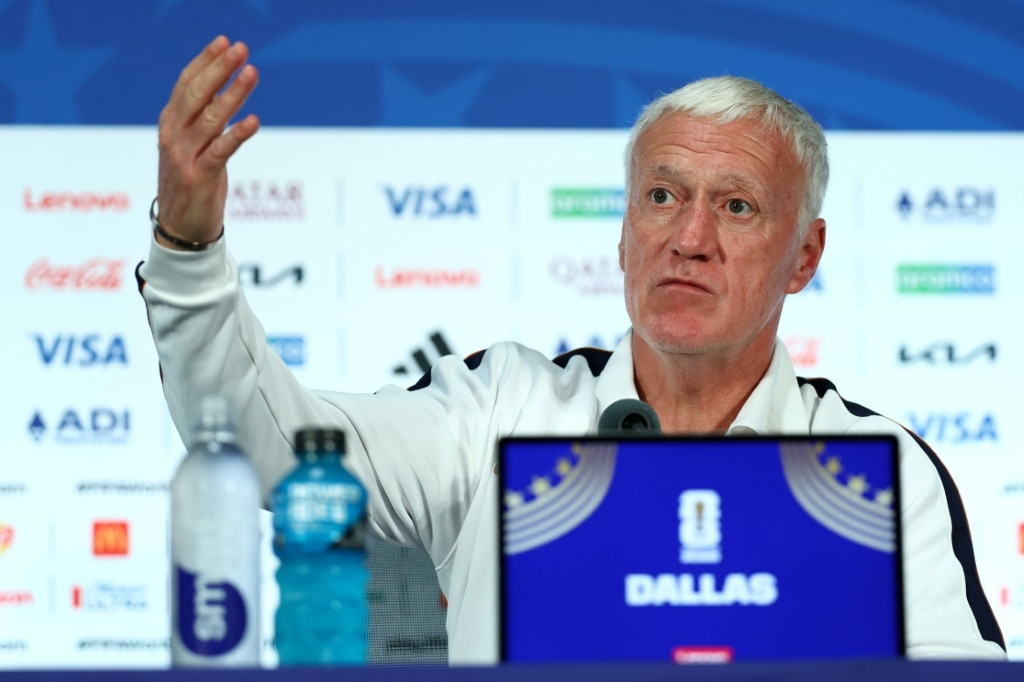
    This tournament also marks the final campaign for long-serving France head coach Didier Deschamps, who has led the national side for 14 years. One of only a handful of people to win the World Cup as both a player and a coach, Deschamps is desperate to cap his legendary tenure with a third world title, though he remains realistic about Tuesday’s challenge. Noting that Spain has beaten France in their last two consecutive meetings, Deschamps labeled his side the underdogs, pointing out that Spain have grown steadily stronger since their opening tournament draw against debutants Cape Verde. “Ever since then Spain have confirmed that they are the favourites,” Deschamps said.

    For Spain, the clash carries its own sense of destiny: the nation, despite its unparalleled footballing heritage, has only claimed one World Cup trophy, back in 2010 in South Africa. A new generation of young talent has this year’s squad widely tipped as title contenders, led by teenage prodigy Lamine Yamal, who celebrated his 19th birthday on the eve of the semi-final. The Barcelona winger, who inspired Spain to Euro 2024 glory last year, entered this World Cup still regaining match fitness after a hamstring injury, and looked rusty in the opening goalless draw with Cape Verde. He has found his rhythm as the tournament has progressed, however, claiming player-of-the-match honors in Spain’s tense 2-1 quarter-final victory over Belgium.

    Yamal made headlines last week after saying France, not Spain, should be afraid ahead of the tie, a comment that sparked widespread discussion. Appearing relaxed at Monday’s pre-match press conference, the teenager clarified his remarks, noting that he was simply responding to a question about whether he feared Mbappe and France’s attack. “We are European champions. It’s simply football,” Yamal said. The 19-year-old showed off a new jewel-encrusted necklace he bought to mark his birthday, but made clear what he really wants as a gift: a win on Tuesday and a place in the World Cup final. “The best gift would be a win on Tuesday and a trip to New York,” he added.

    Yamal isn’t the only advantage Spain brings into the tie: the teenager pointed to Spain’s recent winning record against France, with La Roja claiming 2-1 victory over Les Bleus in the Euro 2024 semi-final, followed by a dramatic 5-4 win in a 2025 Nations League semi-final. Unlike France’s all-out attacking approach, Spain has built their run to the semi-final on a combination of solid defensive organization and the trademark possession-based playing style that defined the great Spain teams of the 2000s and 2010s, masterfully restored by head coach Luis de la Fuente. Remarkably, Belgium’s quarter-final goal was the first Spain has conceded throughout the entire tournament, putting the onus on Mbappe and his attacking teammates to break down a disciplined, confident defense to advance.

  • Adelaide man jailed over attack on brother after ‘trivial and petty’ row

    Adelaide man jailed over attack on brother after ‘trivial and petty’ row

    A 37-year-old South Australian man has been handed a fixed non-parole period of five years behind bars after carrying out a brutal, premeditated attack on his own younger brother that left the victim clinging to life, and assaulted his own mother when she tried to intervene to stop the violence.

    Kane Swift’s violent rampage, which unfolded at his Elizabeth Park home on April 1, 2025, was sparked by what the sentencing judge described as a “trivial and petty” disagreement over moving household furniture. Court documents reveal that Swift was already waiting for his mother and brother when they arrived at his residence just after 12:30 pm that afternoon, armed with two kitchen knives that he held one in each hand before launching his assault.

    In graphic sentencing remarks delivered at the Supreme Court of South Australia on Monday, Justice Sandi McDonald laid out the full horrific details of the attack that shocked the local suburban community. “You immediately went after your brother and chased him around a car until he fell over,” Justice McDonald said in her address to the offender. “You then stabbed your brother in the stomach multiple times. When you attempted to pull the knife from your brother’s abdomen and he begged you to stop, you responded by saying ‘I want to see you slowly bleed out, you motherf**ker.’”

    After the repeated stabbings, Swift proceeded to choke his brother until he lost consciousness. When his mother rushed over to intervene, begging him to stop and warning he would kill his sibling, Swift reportedly replied, “Well, that’s what I wanna do.” As the 56-year-old woman tried to pull Swift off her injured son, the offender pushed her to the ground, causing her to hit her head, before tearing a large clump of hair directly from her scalp.

    Mr Drechsler, Swift’s brother, somehow regained consciousness mid-assault and managed to stagger across a nearby road, screaming for help from neighbours before collapsing against a tree. Undeterred, Swift retrieved a heavy metal pipe from his home and followed his victim, again attempting to choke him to death before neighbours who had responded to the calls for help were able to wrestle the weapon away from him.

    Instead of surrendering, Swift then fled the scene by stealing his brother’s Ford SUV, which had been left with the keys in the ignition. He reversed the vehicle at high speed directly toward his injured brother, who was still lying on the ground, before speeding away from the area erratically. The chase ended just minutes later when Swift crashed the SUV into a tree, bringing the vehicle to a stop.

    The court confirmed that both victims suffered lasting physical and emotional harm from the attack. Mr Drechsler was left with multiple deep stab wounds, fractured ribs, and a severe laceration to his hand that cut all the way through to the tendon, in addition to extensive soft tissue damage. Beyond the immediate physical injuries, Justice McDonald noted that the attack has caused irreversible damage to the entire family. Swift’s immediate family members have cut all ties with him, have refused to forgive his actions, and have made clear they want no further contact with him.

    Originally, Swift was charged with attempted murder, but prosecutors dropped that charge after he agreed to plead guilty to two reduced aggravated charges: intentionally causing serious harm, and recklessly causing harm. Justice McDonald acknowledged that Swift has expressed remorse for his actions, and that he had no prior criminal record, meaning the violence was out of character for him. The court also heard that the attack came after a sustained period of substance abuse, where Swift’s personal life had spiralled out of control amid addiction to drugs and alcohol.

    Despite these mitigating factors, Justice McDonald stressed that the sentence needed to reflect both the severity of the crime and the need to deter similar violent offending in the community. “Senseless acts of violence, particularly under the influence of intoxicating substances, are all too prevalent in the community,” she said. “The sentence that I impose must reflect the need for both personal and general deterrence and the need for the community to see that those who have engaged in such behaviour, particularly involving the use of knives, are adequately punished.”

    Swift was sentenced to eight years in prison on the leading charge of causing serious harm with intent, and five years on the second charge of recklessly harming his mother. Justice McDonald ordered that the sentences be served concurrently, setting a non-parole period of five years, meaning Swift will not be eligible for release before 2030.

  • Marat Ganiev: Man charged after missing teenager Isla Bell found dead at tip seeks rare stay of proceedings

    Marat Ganiev: Man charged after missing teenager Isla Bell found dead at tip seeks rare stay of proceedings

    A legal battle is unfolding in Victoria’s Supreme Court after a Melbourne man accused of tampering with a missing teenager’s remains is pushing to have the entire case thrown out, claiming the prosecution’s actions amount to a fundamental abuse of the court process. The case centres around 19-year-old Isla Bell, who disappeared without a trace from Melbourne in October 2024. Roughly six weeks after her disappearance, her partial remains were located at a Dandenong South waste depot, triggering a homicide investigation that has now reached a critical crossroads.

    Prosecutors initially advanced a serious manslaughter allegation against 55-year-old Marat Ganiev, claiming he killed Bell inside his St Kilda residence before hiding her body in a refrigerator and moving the container across multiple Melbourne locations. Forensic investigators, however, ran into significant dead ends during their examination of Bell’s remains: experts could not confirm an official cause of death, could not rule out death by drug overdose, and could not determine whether visible injuries on the body were inflicted before death or caused by a waste compactor after the remains were dumped at the depot.

    Weeks before Ganiev was set to stand trial on the manslaughter charge in May 2024, prosecutors made the rare decision to abandon the count, acknowledging publicly that there were no reasonable prospects of securing a conviction before a jury. Instead of closing the case entirely, prosecuting authorities later filed a new indictment charging Ganiev with attempting to pervert the course of justice, a charge directly tied to the alleged handling and concealment of Bell’s body after her death.

    When the case reached the Victorian Supreme Court on Tuesday, Ganiev’s senior barrister Sally Flynn KC told Justice James Elliott that the prosecution’s pivot from dropping the manslaughter charge to laying a new equally serious charge violates basic legal fairness. Flynn argued that the defense had always maintained the original manslaughter charge was legally unsound and doomed to fail. She told the court that after the defense pushed to have the first charge thrown out, prosecutors instead discontinued the original count and filed a new charge, creating an unfair outcome that justifies the extraordinary step of a permanent stay of proceedings.

    “It’s so unfair as to mean that this court ought take the extraordinary step of staying the prosecution,” Flynn stated in court. Outside the courtroom on Tuesday, dozens of supporters of Bell’s family gathered to rally, holding signs demanding justice for the 19-year-old, while members of Bell’s family sat inside the court gallery to observe the proceedings.

    Crown prosecutor Jeremy McWilliams pushed back against the defense’s application on Tuesday, arguing that permanent stays of prosecution are only granted in the most extreme, exceptional legal circumstances, and Ganiev’s case does not meet the required legal threshold. McWilliams noted that it is standard practice for prosecutors to regularly review the strength of cases as evidence evolves, and there is no proof that the defense’s pressure to dismiss the original manslaughter charge influenced the prosecution’s decision. “There’s nothing relevantly unfair about that process being undertaken in this case,” McWilliams said, adding that “Nothing in the way the case will proceed from here is different, new or unexpected.”

    Justice Elliott has reserved his decision on the defense’s application for a permanent stay, and will release his ruling at a later, unannounced date.

  • Rubio says US will dismantle ICC ‘brick by brick’

    Rubio says US will dismantle ICC ‘brick by brick’

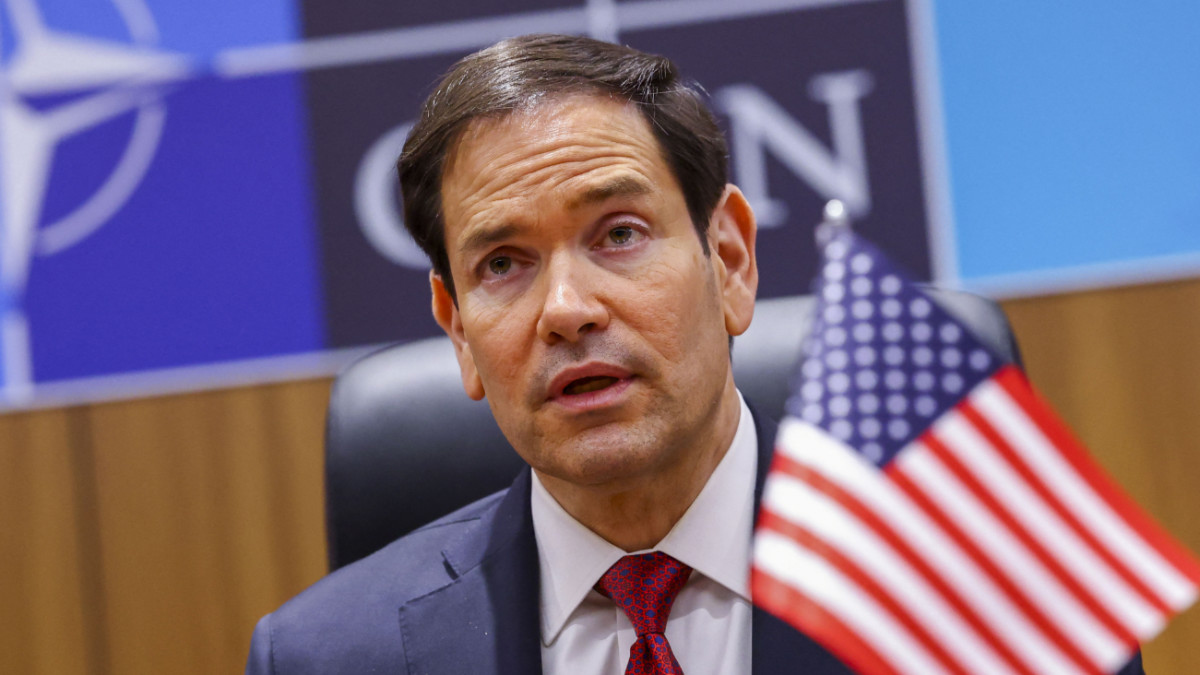
    In a stark public challenge to the International Criminal Court (ICC) just months after it issued an arrest warrant for Israeli Prime Minister Benjamin Netanyahu, U.S. Secretary of State Marco Rubio has formally announced the Trump administration’s deliberate campaign to dismantle the global judicial body “brick by brick”.

    Rubio laid out the administration’s hardline stance in a candid opinion piece published in *The Wall Street Journal* on Monday, framing the ICC’s oversight of U.S. military and law enforcement activities as an unprecedented overstep of institutional authority that poses an existential threat to American national sovereignty. “The ICC’s interfering with American military and law enforcement operations isn’t just a grave overreach of its purported authorities. It would mean the death of the U.S. as a sovereign and independent nation,” he wrote.

    “Using all the tools at our government’s disposal, working beside every ally with whom we can make common cause, we will dismantle the ICC – brick by brick, if necessary,” Rubio added. He doubled down on this position in a pre-recorded monologue released to social media platform X the same day, arguing the court seeks to strip American citizens of their long-held legal right to be tried under domestic law by a jury of their peers. “But today powerful people in far away places want to take that away from us. They believe that they should be in charge of your laws, of your country, your life – and they don’t care whether or not you agree,” he stated in the video.

    Rubio further accused the ICC of actively waging a campaign against the U.S., noting that most American citizens have no familiarity with the court’s judges, prosecutors, or leadership — and that they “shouldn’t have to”. He emphasized that opposition to the court crosses U.S. party lines, a longstanding position dating back to the ICC’s founding in 2002, when the body was established to prosecute genocide, crimes against humanity, and war crimes following mass atrocities in Rwanda and the former Yugoslavia.

    Notably, Rubio avoided any direct reference to the 2024 arrest warrants issued by the ICC for Netanyahu and former Israeli Defense Minister Yoav Gallant, who stand accused of crimes against humanity in the Gaza Strip, where the Gaza health ministry reports more than 73,000 Palestinians have been killed since conflict resumed in October 2023. The court also issued arrest warrants for senior Hamas leaders over the October 7, 2023 attack on southern Israel that killed roughly 1,200 people; all Hamas leaders named in the warrants have since been assassinated by Israeli forces.

    Rubio framed the administration’s campaign against the court through a nationalist lens, positioning the effort as a defense of state sovereignty against what he calls overreach by global institutions. “The U.S. is launching a diplomatic campaign with a simple message – sovereign states over globalism,” he said. Drawing a parallel to the American Revolution, he added: “Our forefathers fought a revolution against a foreign power transporting us beyond Seas to be tried for pretended offences. Independence is our birthright. We don’t intend to trade it for rule by a self-appointed priesthood of ‘international law’.”

    He reminded audiences of the ICC’s 2020 investigation into alleged war crimes committed by U.S. soldiers in Afghanistan, warning that the court could eventually extend its probes to U.S. Border Patrol agents and Marine Corps personnel. “The ICC is backed and run by a powerful network of leftist nongovernment organizations, smug globalists, and hostile Third World governments united by their enmity toward the U.S,” he claimed. In his X video, he pushed back against the court’s founding mandate, arguing that while it was billed as a tribunal to prosecute severe crimes when national courts are unable to act, it has become an unaccountable body of unelected officials with near-unlimited claims to power.

    In reality, the ICC counts 125 member states, including all member nations of the European Union. Major global powers have historically opposed the court, largely to avoid submitting their own personnel to its jurisdiction. The U.S.’s primary geopolitical rivals, Russia and China, are not ICC members.

    U.S. opposition to the court stretches back more than two decades: in 2002, then-President George W. Bush formally withdrew U.S. signature from the court’s founding Rome Statute and signed the American Servicemembers’ Protection Act (ASPA), a law that restricted any U.S. cooperation with the ICC. The legislation even authorized the use of military force to rescue any U.S. personnel detained by the court, earning it the popular nickname the “Hague Invasion Act”. At the time, Washington also pressured dozens of countries around the world to sign bilateral immunity agreements barring them from surrendering U.S. citizens to the ICC.

    Analysts view Rubio’s broadside as confirmation that the U.S. and its closest allies have launched a full diplomatic assault on the ICC specifically because of its efforts to hold Israeli leadership accountable for alleged war crimes in Gaza, a situation that the United Nations, leading human rights organizations, and prominent genocide scholars have formally designated as a genocide.

    This campaign is not new: last year, former U.S. President Donald Trump signed an executive order imposing sanctions on ICC judges over their investigation into senior Israeli officials. According to previous reporting from Middle East Eye, these sanctions have severely impacted judges’ ability to travel, threatened their personal security and that of their families, and restricted their access to basic financial services. MEE has also exclusively reported on a parallel pressure campaign led by former UK Foreign Secretary David Cameron, who privately threatened ICC Chief Prosecutor Karim Khan in April 2024 that the UK would defund and withdraw from the court if it moved forward with arrest warrants for Israeli leaders.

    The U.S. did play a role in the ICC’s early founding: then-President Bill Clinton signed the Rome Statute in 2000, but the agreement was never sent to the U.S. Senate for ratification amid widespread bipartisan fears that the court would eventually prosecute U.S. military personnel and government officials for alleged war crimes in conflicts including Afghanistan and Iraq. Notably, the ICC has also issued an arrest warrant for Russian President Vladimir Putin for alleged war crimes connected to the invasion of Ukraine.

    Rubio closed his video monologue with a sharp warning to the ICC and its supporters: “This administration will not sit by as the ICC and its allies seek to threaten our people. If they believe they can deprive us of our sovereignty, we will teach them the full meaning of American resolve.”

  • Sudan court sentences RSF commander to death over West Darfur killings

    Sudan court sentences RSF commander to death over West Darfur killings

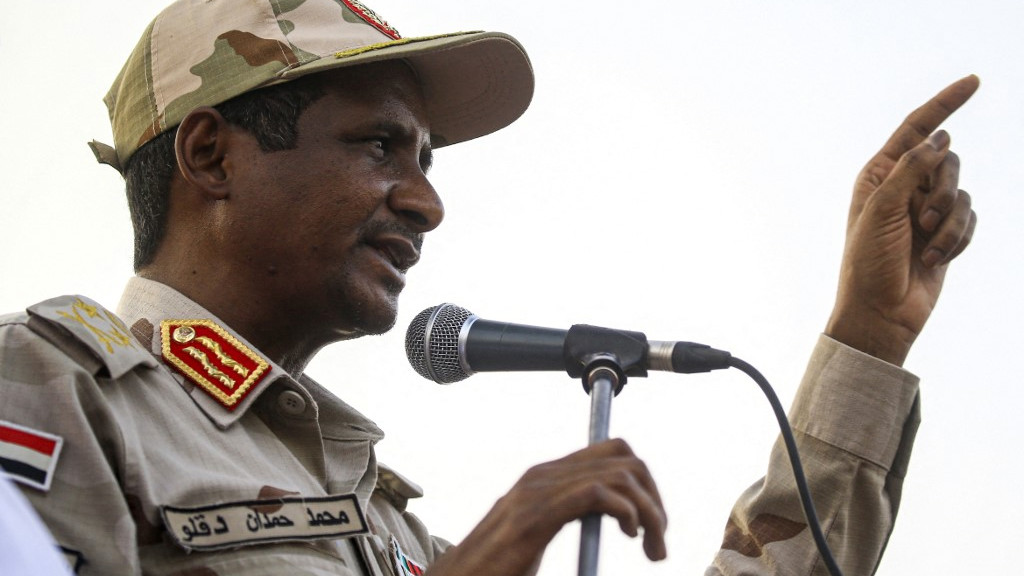
    In a landmark ruling marking the first judicial conviction of senior Rapid Support Forces (RSF) leadership since Sudan’s brutal civil war erupted in April 2023, an anti-terrorism court based in Port Sudan handed down death sentences in absentia on Sunday to RSF commander Mohamed Hamdan Dagalo—widely known as Hemedti—and 15 other co-defendants. The convictions center on allegations of war crimes, crimes against humanity, genocide, and the targeted assassination of West Darfur Governor Khamis Abdullah Abakar in the West Darfur capital of el-Geneina.

    The case was rooted in the 2023 assassination of Governor Abakar, which occurred just 24 hours after the governor publicly condemned RSF shelling of the el-Jamarik neighborhood in el-Geneina. Circulated video evidence showing RSF fighters mutilating Abakar’s body has been publicly available, though the paramilitary group has consistently denied involvement and pinned blame on the opposing Sudanese Armed Forces (SAF).

    Human Rights Watch’s 2024 investigation into violence in el-Geneina concluded that the attacks against the Masalit people and other non-Arab communities in the region amounted to ethnic cleansing, with strong evidence pointing to acts of genocide. Data from Middle East Eye’s June 2023 reporting estimates that roughly 1,500 people were killed in el-Geneina in the first two months of the war alone, forcing tens of thousands of Masalit civilians to flee on foot across the border to refugee camps in eastern Chad.

    Among the convicted defendants are two of Hemedti’s brothers: RSF deputy leader Abdel Rahim Hamdan Dagalo and Algoney Hamdan Daglo Musa, commonly referred to as al-Qoni. Additional high-profile convictions include West Darfur RSF commander Abdel Rahman Juma Barkallah and the region’s former deputy governor al-Tijani al-Tahir Karshoum.

    Presiding over the trial, special judge Mohamed al-Amin ruled that Hemedti bore direct legal responsibility for orchestrating the genocide of the Masalit community and organizing the siege of el-Geneina. The judgment detailed systemic patterns of property destruction and looting, as well as deliberate targeted attacks on civilian populations, residential zones, schools, and religious sites. Abdel Rahim Dagalo was found guilty of co-organizing the el-Geneina siege, mass civilian displacement, and the Masalit genocide; al-Qoni was convicted of facilitating the siege; and Barkallah was held responsible for leading frontline RSF fighters in coordinated assaults on Masalit-majority neighborhoods.

    Alongside the death sentences, the court ordered the full confiscation of all RSF assets and directed Sudanese authorities to request Interpol red notices to secure the arrest and extradition of all convicted individuals. In his closing statement, Judge Amin delivered a blistering rebuke of the RSF’s actions, noting that the group deployed heavy weaponry in residential areas, carried out widespread looting, arson, and sexual violence, and acted on explicit ethnic hatred with the goal of eradicating the Masalit community.

    “These convicted individuals were state leaders who abused their authority and turned state weapons—meant to protect citizens—into tools of crime,” Judge Amin said. “Their actions left thousands dead or displaced, destroyed an entire city, and erased its civilization and history.”

    The Port Sudan ruling comes just days after International Criminal Court (ICC) Deputy Prosecutor Nazhat Khan announced a “breakthrough” in the court’s investigations into alleged crimes against humanity and war crimes in West Darfur, following an investigative trip to eastern Chad. However, a recent Middle East Eye investigation uncovered that the ICC prosecutor’s office has privately decided not to move forward with an arrest warrant application for an RSF member, despite three years of investigations and public promises that applications would be filed imminently. The decision has sparked growing scrutiny over the timeline and commitment of international judicial action against RSF leadership.

    While international progress on accountability remains slow, the first extraterritorial prosecution attempt against RSF members has already been launched in neighboring Kenya. On June 9, 12 Sudanese victims represented by Legal Action Worldwide and the African Centre for Justice and Peace Studies filed a formal complaint alleging war crimes and crimes against humanity with Kenya’s Director of Public Prosecutions, relying on the principle of universal jurisdiction.

    The complaint calls for an investigation into allegations of torture and sexual violence committed by 10 RSF members, several of whom are believed to currently reside in Kenya. The filing directly undermines the Kenyan government’s long-standing public partnership with the RSF: Kenyan President William Samoei Ruto has hosted Hemedti at the country’s State House, allowed the RSF to hold meetings for a parallel Sudanese administration in Nairobi, and granted Kenyan passports to RSF leaders to facilitate cross-border travel. Critics further accuse the Ruto administration of supplying crates of ammunition to the paramilitary group and enabling the smuggling and export of Sudanese gold and gum arabic through Kenyan ports.
    “This moment is not just a test of Kenya’s commitment to upholding international justice,” said Dr. Owiso Owiso, lead Kenyan counsel for the 12 victims. “It also proves that even when domestic accountability systems and the broader international community have failed the people of Sudan, avenues to seek justice are not completely closed.”

  • Identity of Sydney daycare worker facing 329 child abuse offences revealed

    Identity of Sydney daycare worker facing 329 child abuse offences revealed

    One of Australia’s most disturbing recent child abuse cases has moved a step forward, as a Sydney court has lifted a gag order that kept the name of an accused childcare worker hidden from the public for nearly a year. Thirty-five-year-old Hamish Tait, who faces 329 criminal charges connected to the alleged abuse of 136 children across five Sydney-based childcare facilities over a 16-year period, can now be publicly identified. The case has sent fresh shockwaves across Australia, a nation already grappling with a growing pattern of child safety failures in early education settings.

    Tait was first taken into custody in July 2024, after Australian Federal Police (AFP) investigators first connected him to suspected illegal online child exploitation activity the previous month. During a raid on a property in Glossodia, a rural community on Sydney’s outer fringe, officers seized multiple electronic devices and uncovered a large cache of child abuse material. A court subsequently issued a non-publication order, which police requested to give them time to track down potential victims, notify affected families and avoid compromising their ongoing investigation. That order was lifted on Monday this week, clearing the way for Tait’s identity to be released publicly.

    The scope of the alleged offences outlined by police is staggering. Court documents show the charges include 162 counts of producing child abuse material, 81 counts of non-consensual filming of people in private acts, 22 counts of aggravated production of child abuse material involving children under the age of 14, and 18 counts of intentional sexual touching of children under 10 years old. Tait, who remains in police custody, is alleged to have committed all offences between 2009 and 2025.

    Over the course of his career in early childhood education, Tait worked at or was affiliated with 62 different early education facilities across greater Sydney, though investigators say the majority of his work was centered in the city’s fast-growing north-western suburbs. The confirmed abuse is linked to five locations: four commercial childcare centres and a private business run by Tait himself. To date, AFP officers have successfully reached out to 121 families confirmed to have been impacted by the alleged offending, but investigators say they are still working to identify 15 additional victims, leaving 22 families yet to be notified.

    In an official statement following the lifting of the publication ban, AFP Acting Commander Luke Needham emphasized the gravity of the alleged crimes, noting that the breach of public trust at the heart of the case makes it even more abhorrent. “Any form of child sexual abuse is confronting and horrific, even more so when the alleged perpetrator is an individual trusted with the care of our youth,” Needham said. To help families access information and support, police have launched a dedicated public website that lists all facilities linked to Tait’s employment and provides contact details for counseling and victim support services.

    Tait’s case is the third high-profile large-scale child abuse case involving childcare workers to emerge in Australia in less than three years, amplifying longstanding calls for stronger national safety standards for early childhood education facilities. In 2024, Ashley Paul Griffith pleaded guilty to 307 child abuse offences committed over 20 years at childcare centres in Queensland and overseas. Just last year, after Joshua Dale Brown was charged with dozens of abuse offences committed across four Victorian childcare centres, public health officials urged more than 1,200 children who attended the facilities to undergo testing for sexually transmitted infections. These consecutive cases have triggered widespread public anger and renewed pressure on state and federal governments to overhaul background checking and monitoring systems for childcare workers across the country.

  • Pen America chief resigns, accuses literary institution of erasing Palestinians

    Pen America chief resigns, accuses literary institution of erasing Palestinians

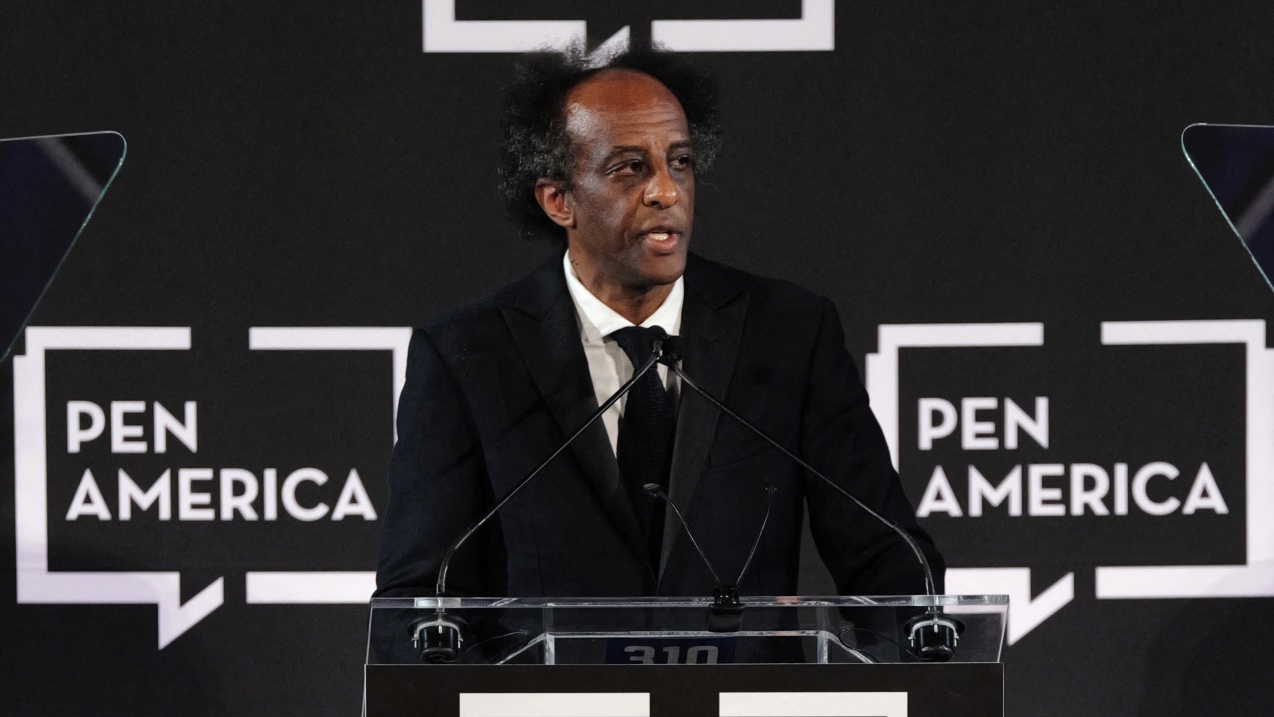
    Seven months after taking on the presidency of PEN America, one of the United States’ most prominent literary organizations dedicated to defending free speech, award-winning Ethiopian-American novelist Dinaw Mengestu has stepped down from his post. His departure, announced last week, stems from long-simmering frustration over what he calls systemic unfair treatment of Palestinians at the organization, in contrast to its positioning toward Israelis and Jewish Americans.

    Mengestu’s resignation came in the wake of PEN America’s release of a new report documenting the professional and emotional harm faced by Israeli and Jewish-American writers in the aftermath of Israel’s ongoing military campaign in Gaza, now stretching nearly three years. The report detailed multiple accounts of writers losing employment, speaking opportunities and career advancement due to their positions on the conflict. But for Mengestu, the report was just the latest example of the organization’s long-standing failure to uphold its core mission of defending free expression fairly and equitably across all sides of the conflict.

    In an Instagram statement posted Sunday, Mengestu clarified that his departure was not a dispute over differing personal perspectives or experiences. Instead, he argued that PEN America’s ongoing institutional choices produce work that enables suppression through bigotry and deliberate indifference toward Palestinian voices. At the center of this disagreement is the organization’s long-standing stance on the Palestinian-led Boycott, Divestment, Sanctions (BDS) movement, a global nonviolent campaign launched in 2005 to end Israeli occupation, racial segregation and the blockade of Gaza, modeled on the anti-apartheid pressure campaign that helped end white minority rule in South Africa. Mengestu emphasized that BDS activity constitutes protected free speech under the First Amendment of the U.S. Constitution, a right PEN America has consistently failed to uphold.

    For years, Mengestu noted, PEN America has framed BDS as a direct assault on the identity of Jewish students, while systematically diminishing Palestinian experiences of violence and dispossession to the point of near erasure. “What PEN America fails to understand is that a boycott is a form of dialogue,” he wrote. He added that the hundreds of writers who boycotted PEN America in 2024 did so to push for meaningful institutional change, and many only returned to the organization after being promised reform.

    Many of those boycotting writers are affiliated with Writers Against The War on Gaza (WAWOG), a prominent collective that labeled Israel’s military campaign in Gaza a genocide just two weeks after it launched in October 2023 – a classification that has since been endorsed by the United Nations, leading historians and leading genocide scholars. WAWOG’s website documents more than 400 successful cultural boycott outcomes across North America since the start of the conflict. The group declined to share its full membership size or demographic breakdown with Middle East Eye, but an anonymous representative praised Mengestu’s decision to step down.

    “We understand and commend [Mengestu] for not wanting to be associated with an institution that would… equate BDS as discriminatory,” the representative told Middle East Eye Monday. “For a lot of us, principles are the only thing we have.” The representative added that PEN America consistently draws false equivalence between material genocidal violence against Palestinians and the semantic disagreements raised by Zionist Israelis and Jewish Americans. “The desecration of cultural spaces in Gaza, wiping out the universities, killing scholars and writers and arresting them, it just doesn’t even compare,” they said.

    When contacted for comment by Middle East Eye, PEN America offered only a brief, measured statement acknowledging Mengestu’s departure. “We are grateful for Dinaw Mengestu’s leadership and we respect that he’s made a decision he believes in,” the organization said. “We recognize people can disagree about how best to apply free expression principles in this extraordinarily difficult environment.” The 100-year-old institution, which centers its public mission on defending free expression in all its forms, outlined its formal stance on boycotts in the 9 July report on Israeli and Jewish writers: the organization opposes cultural and academic boycotts that inhibit the international exchange of art, literature and knowledge, but will defend the right of writers who choose to participate in such boycotts against professional retaliation.

    PEN America confirmed to Middle East Eye that this caveat, affirming BDS participation as protected free speech, was only added to the organization’s public position in the past week. Prior to this update, the organization’s 2007-era stance on boycotts did not acknowledge that participating in or advocating for boycotts qualifies as protected free expression. Mengestu has characterized this last-minute adjustment as a hollow attempt to appease all sides amid mounting pressure for reform, though the organization has not publicly explained why it chose to update its position now after years of escalating criticism.

    The 9 July report did acknowledge that no organized BDS campaign has called for targeting writers solely on the basis of their Jewish identity. It did, however, note that many Jewish writers have reported losing access to agents, publishers and public events since 7 October 2023, due to their Jewish identity, support for Zionism, or sympathy for Israel.

    As of Monday, Gaza’s Ministry of Health has confirmed at least 73,231 Palestinians killed in Israeli military operations since the 7 October 2023 Hamas attacks that killed roughly 1,200 people in southern Israel. Independent experts estimate an additional 10,000 Palestinians remain buried under rubble across the blockaded enclave, with hundreds of thousands more sustaining injuries. Even after a recently announced ceasefire brokered by former U.S. President Donald Trump on 10 October, 1,108 Palestinians have been killed in Israeli airstrikes and sniper fire across Gaza.

  • UK police arrest 12 over far-right terror plot targeting major Muslim gathering

    UK police arrest 12 over far-right terror plot targeting major Muslim gathering

    British Counter Terrorism Policing (CTP) has disrupted an alleged far-right terror plot targeting one of the United Kingdom’s largest annual Muslim gatherings, resulting in 12 arrests and forcing the early closure of the event that drew 15,000 attendees. The gathering, known as the UK Ijtima, is hosted annually by the Tablighi Jamaat movement at Shrubland Hall, attracting worshippers from across Britain and international visitors alike. Scheduled to run from July 9 to 13, the event was wrapped up days early after counter-terrorism officers detected what they categorized as a credible, potentially catastrophic threat to attendees.

    In an official statement, Commander Helen Flanagan, head of CTP London, confirmed that 11 men and one woman were taken into custody across multiple regions of England, including the South East, East of England, and Greater Manchester. Flanagan explicitly tied the ongoing investigation to right-wing extremism, noting that law enforcement teams are currently executing search warrants at multiple locations connected to the suspects across the country. Eight of the arrested men are being held under Section 41 of the 2000 Terrorism Act and remain in police custody as questioning continues. Among the detainees are three men aged 81, 60, and 55, who face suspicion of conspiracy to commit murder, one of the most severe charges connected to the alleged plot.

    CTP has not released additional public details about the specific nature of the planned attack, but officials have repeatedly emphasized that the threat was classified as serious. UK Home Secretary Shabana Mahmood praised the rapid, proactive work of counter-terrorism officers, saying their timely intervention “undoubtedly” prevented mass loss of life at the gathering. Acknowledging the fear and uncertainty the incident has sparked among British Muslim communities across the country, Mahmood called for national unity in the face of extremist hatred. “We must stand against hatred and we must unite around our shared belief in a country that is open, generous and tolerant to all our communities,” she said.