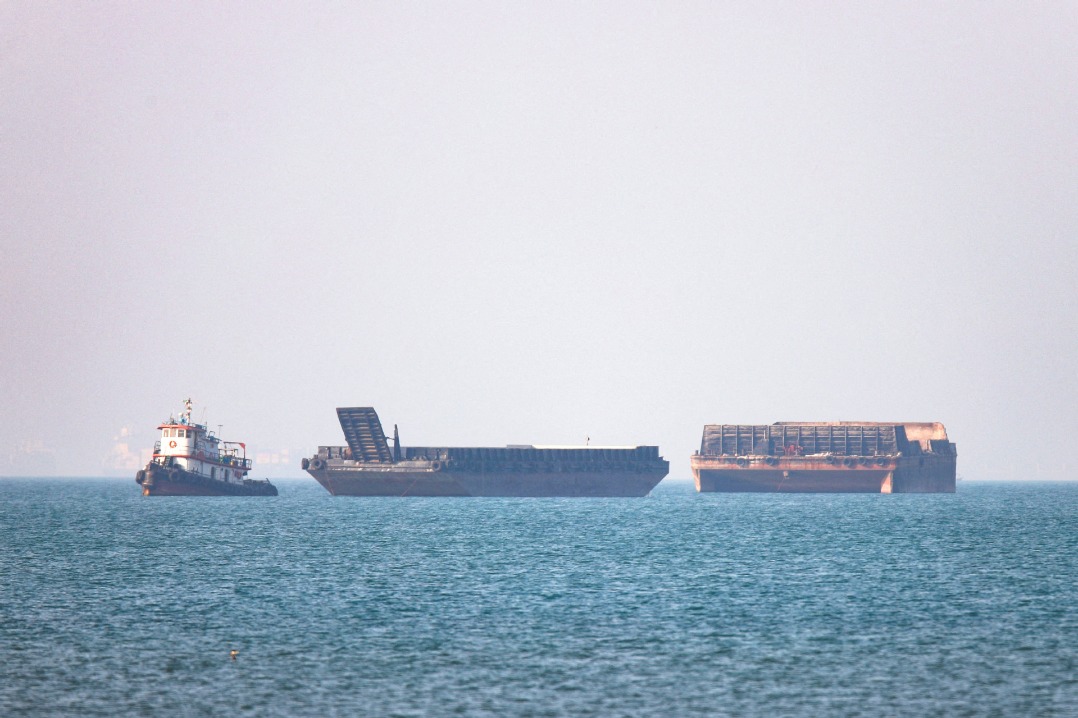
Escalating geopolitical tensions around the strategically critical Strait of Hormuz have spurred a sharp standoff between Iran and the United States, with Iran’s Islamic Revolution Guard Corps (IRGC) issuing a clear, forceful assertion of its sovereignty over the key waterway over the weekend.
In an official statement published Monday on its affiliated media outlet Sepah News, the IRGC flatly denied recent claims circulated by U.S. officials, stating categorically that no commercial vessel or oil tanker has traversed the strait without explicit Iranian authorization in recent hours. The body emphasized that any unauthorized maritime activity that violates the rules set by its naval command carries severe consequences, adding that violators will be intercepted by force if they attempt to ignore Iran’s territorial regulations.
Semi-official Iranian news agency Fars further reported comments from IRGC Navy Deputy Commander for Political Affairs Mohammad Akbarzadeh, who warned that any U.S. military strike intended to forcibly reopen the strait would be met with a pre-planned Iranian operational response that will catch Washington off guard. “This response will be beyond the enemy’s calculations,” Akbarzadeh was quoted as saying.
The latest exchange of warnings came after U.S. President Donald Trump claimed Sunday that the U.S. military would escort all vessels stranded in the restricted Strait of Hormuz out of the area by Monday. Trump’s claim drew an immediate, harsh rebuke from Iran’s top military body, Khatam al-Anbiya Central Headquarters. In a statement carried by Iran’s official news agency IRNA, the headquarters warned that any foreign armed force, particularly what it called the “aggressive U.S. army”, would face direct military attack if they attempt to approach or enter the strait without Iranian approval.
Local Iranian military sources added that on Monday, Iran’s naval forces already demonstrated their readiness by firing cruise missiles, rockets, and launching combat drones in areas close to U.S. destroyers that had moved toward the strait, in a clear warning to the American vessels to withdraw.
The current standoff around the strait, through which roughly a fifth of the world’s oil supplies pass daily, has been building for months. Iran first tightened access controls on February 28, barring passage for any vessels owned by or linked to Israel and the United States. The restriction was imposed after joint strikes targeting Iranian territory carried out by the two nations. Tensions escalated further after ceasefire talks between Iranian and U.S. delegations held in Islamabad, Pakistan on April 11 and 12 failed to produce any breakthrough agreement, prompting the U.S. to implement its own blockade-related measures around the strategic waterway.