作者: admin

  • 7 killed and more than 50 wounded in Ukrainian drone attack on Russian regions

    7 killed and more than 50 wounded in Ukrainian drone attack on Russian regions

    In a significant escalation of Ukraine’s long-range aerial offensive against targets inside Russian territory, seven people were killed and 51 more injured in a wave of overnight drone attacks, Russian regional and federal officials confirmed Saturday. The strikes mark a continued push by Kyiv to bring the costs of the Kremlin’s full-scale invasion of Ukraine, now in its third year, home to Russian civilians and disrupt Moscow’s military supply chains.

    Multiple sites across central and western Russia were targeted, including two large storage warehouses operated by Wildberries, Russia’s largest e-commerce retailer. One warehouse was located in Kotovsk, a town in the Tambov region roughly 360 kilometers (220 miles) north of the Ukraine-Russia border, while the second sat in Elektrostal, an industrial city just 50 kilometers (30 miles) east of the Russian capital.

    Ukrainian President Volodymyr Zelenskyy confirmed the strikes in a social media post on Telegram Saturday, noting the two targeted logistics hubs were being used by Russian forces to source sanctioned electronic components for Russian drone manufacturing and navigation systems. He added that an oil processing and storage facility was also hit in the coordinated attacks, alongside additional strikes against Russian military targets in the Sea of Azov and Russian-occupied Ukrainian territory.

    Casualty reports released by regional officials confirm all seven fatalities were night shift workers at the Kotovsk Wildberries facility, where 25 additional people were wounded. In Elektrostal, 24 people were injured in the strike on the second warehouse, according to Moscow region governor Andrei Vorobyov. A separate drone attack on an oil depot in Noginsk, a city north of Elektrostal, sparked a large fire that forced precautionary evacuations of a nearby maternity hospital and one adjacent residential building, with two additional people wounded in that incident.

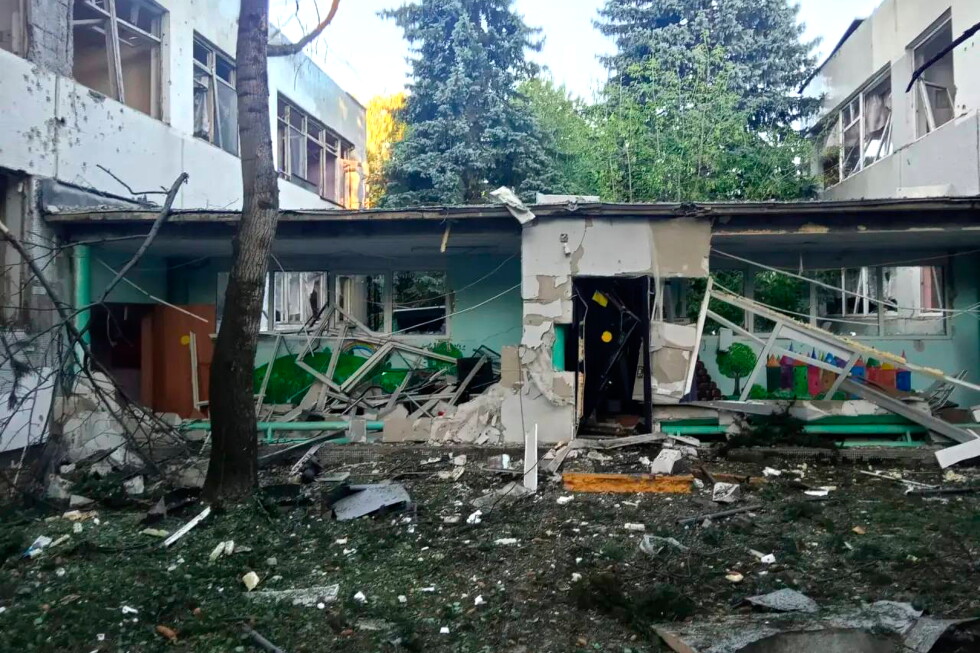
    Further east in Vladimir, a city 180 kilometers (110 miles) east of Moscow, a drone struck a residential apartment building causing a small fire, with no reported casualties, regional governor Alexander Avdeyev confirmed.

    The Russian Ministry of Defense reported in a statement Saturday that its air defense systems intercepted and destroyed 379 Ukrainian drones overnight across 19 Russian regions, as well as over the illegally annexed Crimean Peninsula, the Sea of Azov, and the Black Sea. Kyiv’s ongoing aerial campaign targets both energy infrastructure and military-linked logistics assets across Russia, part of a strategy to erode Moscow’s ability to sustain its full-scale invasion by forcing Russian society to confront the ongoing conflict directly.

  • US-Iran strikes: latest developments

    US-Iran strikes: latest developments

    A rapidly escalating cycle of violence between the United States and Iran has sent shockwaves across the Middle East, entering its seventh consecutive day on Saturday with expanding cross-border strikes, regional spillover, and a stark threat from Tehran of all-out conflict if American attacks continue.

    The latest wave of hostilities has put key global energy infrastructure at severe risk, with the strategically critical Strait of Hormuz—the passage through which roughly 20 percent of the world’s daily oil shipments transits—remaining almost entirely cut off to commercial traffic over the weekend.

    US Central Command (CENTCOM), the American military’s regional headquarters, confirmed via social media platform X on Saturday that its forces had completed another round of targeted strikes against Iranian assets. A CENTCOM statement outlined that the attacks hit a range of key Iranian military assets, including surveillance outposts, military logistics hubs, underground weapons storage facilities, and maritime operations capabilities.

    The expanding conflict has already drawn in neighboring Gulf states, with multiple countries reporting intercepted attacks and damaged infrastructure over the 24-hour period. Bahrain’s military announced Saturday that its integrated air defense systems successfully intercepted and thwarted a wave of incoming Iranian strikes targeting its territory. An Agence France-Presse journalist based in the Bahraini capital Manama confirmed hearing loud explosions after air raid sirens sounded across the city. Bahrain is host to the United States Navy’s Fifth Fleet, a major regional American military installation, and Iranian state television confirmed Saturday that Iranian forces targeted this US-linked air base on Bahraini territory. Bahrain’s interior ministry confirmed air raid sirens were activated across the country, and earlier in the day both Bahrain and Qatar announced they had intercepted incoming ballistic missiles.

    To the north, Kuwait confirmed Saturday that Iran had struck one of its combined power and water desalination plants for the second consecutive day. The attack forced the temporary shutdown of multiple power generation units, Kuwaiti government officials confirmed. Kuwait’s military noted in a social media statement that local residents may hear explosions as its air defense systems work to intercept incoming hostile targets. Iran confirmed its strikes targeted two key military sites in Kuwait—Al-Adiri camp and Ali Al-Salem base—as well as fuel storage tanks at the Al-Azraq military base in Jordan. Jordan’s military responded quickly to the attack, announcing it had shot down 10 incoming Iranian missiles, with no reported casualties or infrastructure damage from the strike.

    Disputes have already emerged over an incident involving two commercial vessels in the Strait of Hormuz. Iran’s Islamic Revolutionary Guard Corps (IRGC) claimed Saturday that two oil tankers transiting the waterway had struck naval mines, that the vessels were misled into the mined area by deceptive American intelligence, and that both ships had caught fire. The US CENTCOM quickly issued a full denial of the IRGC’s claims. Separately, the IRGC also announced it had halted four commercial vessels from attempting to transit the strategic strait, further tightening the chokehold on global energy shipping.

    Human impact from the escalating strikes is already being reported. Iran’s state-controlled Islamic Republic News Agency (IRNA) confirmed Saturday that American strikes in the southern Iranian province of Hormozgan have left three people dead and eight others wounded. IRNA also reported five large explosions in the central Iranian city of Yazd shortly after US strikes were announced Saturday, with another state-run Iranian news outlet, Mehr News, reporting additional blasts across multiple southern Iranian provinces.

    The most alarming development of the day came from a senior Iranian military commander, who issued a stark warning that drastically changes the framework of the conflict. Major General Mohsen Rezaei, speaking to Iran’s state-controlled broadcaster IRIB, threatened that Tehran will launch full-scale offensive operations across the region if American strikes continue in the coming days. “Iran will no longer limit itself to retaliatory, like-for-like responses,” Rezaei said, adding “no political border will be safe” if the US continues its current campaign of attacks.

  • Helicopters dump water as huge Norway fire destroys homes

    Helicopters dump water as huge Norway fire destroys homes

    A devastating large-scale wildfire has torn through the Norwegian city of Drammen, leaving a trail of destruction that has forced residents to flee and destroyed more than 100 residential properties, local emergency authorities confirmed this week. The fast-moving blaze, which ignited in a built-up area of the city, quickly outpaced initial ground containment efforts and spread into adjacent forested land, creating a dual threat to both communities and local ecosystems.

    In response to the rapidly growing emergency, regional disaster management agencies deployed a fleet of helicopters to mount an aggressive aerial assault on the fire, dumping thousands of liters of water over hot spots in an effort to slow the fire’s advance and protect remaining unburned structures.

    Emergency crews have not yet released information on any reported casualties, but local officials have activated evacuations for multiple neighborhoods in the fire’s path, opening emergency shelters to accommodate displaced residents. The cause of the blaze is still under investigation, with authorities yet to announce a confirmed timeline for when the fire is expected to be fully contained. The disaster has already upended the lives of hundreds of people in the Drammen area, marking one of the most destructive urban-adjacent wildfires to hit southern Norway in recent years.

  • Mount Olympus, home of the ancient Greek gods, is a candidate for the UNESCO World Heritage List

    Mount Olympus, home of the ancient Greek gods, is a candidate for the UNESCO World Heritage List

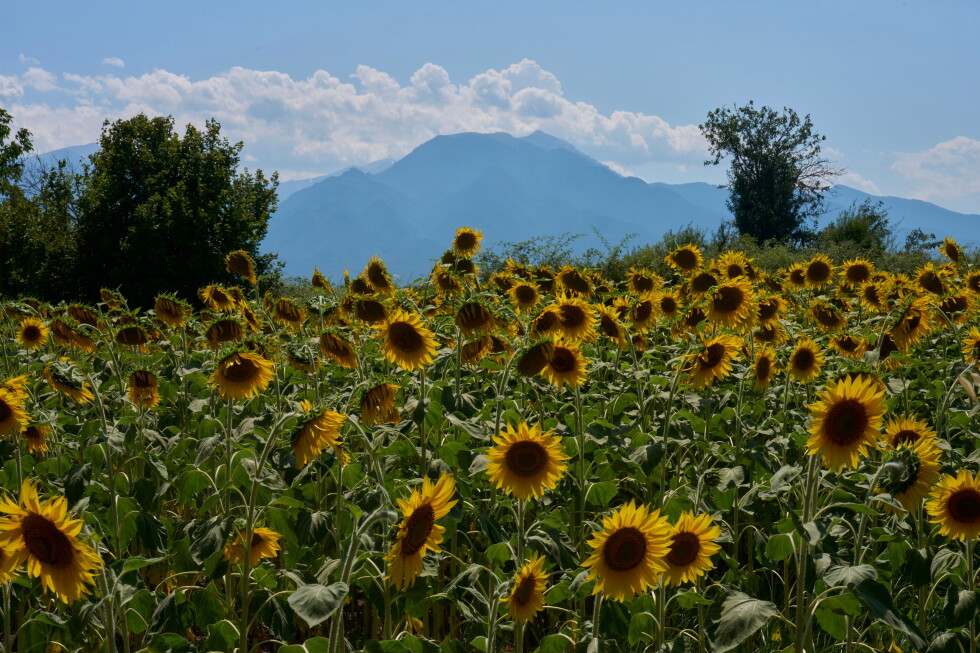
    For thousands of years, the snow-dusted peaks of Mount Olympus – the fabled ancestral home of the 12 Olympian gods of ancient Greek mythology – have captivated human imagination across the globe. Towering 2,918 meters above sea level, with its highest jagged, mist-enveloped peak long believed by ancient Greeks to hold the throne of Zeus, king of the gods, the mountain is now on the cusp of a global recognition that could cement its cross-cultural legacy for generations.

    This month, Greece’s highest peak is up for consideration as a mixed natural and cultural UNESCO World Heritage Site, with the World Heritage Committee set to deliberate the nomination during its annual session running from July 16 to 29 in Busan, South Korea. For local communities that have built their lives around the mountain, the designation is far more than an honor – it is recognition of Olympus’ unmatched blend of mythic history, cultural continuity, extraordinary biodiversity, and stunning natural beauty.

    “Olympus is our life. It is the place we grew up in,” shared Evagelos Geroliolios, mayor of the Dion-Olympus municipality that is centered in Litochoro, the main gateway town to the mountain. “It is the place we see every day, but at the same time, it carries with it myth, history, biodiversity, extraordinary beauty and a very great cultural weight.”

    Few locations hold as central a place in Western cultural mythology as Mount Olympus. Legend holds that after Zeus waged a 10-year war to overthrow his father Cronus and end the reign of the Titans, he established his divine court on the mountain’s highest peaks. This year, public interest in Olympus is also getting a major pop culture boost: Christopher Nolan’s new big-screen adaptation of Homer’s *The Odyssey*, which frames the mountain as the seat of Zeus and the Olympian gods that shape Odysseus’ legendary journey, hit theaters this week.

    Archaeological excavations on one of Olympus’ lower slopes have already uncovered an open-air sanctuary, with the earliest artifacts dating back to the Hellenistic period (323 BCE to 30 BCE). Greece’s UNESCO nomination file notes the sanctuary is widely believed to be the same site referenced by 2nd-century philosopher and historian Plutarch, who recorded regular religious processions to the peak to carry out animal sacrifices to Zeus. The mountain’s religious significance persisted through the Christian era: a chapel dedicated to the Prophet Elias sits at 2,803 meters, making it the highest-altitude Orthodox Christian chapel in the world. Near the mountain’s Enipeas Gorge, the ruins of a 16th-century monastery remain standing, just a short walk from the Holy Cave of St. Dionysios, a cliffside chapel fed by a small spring whose waters are considered holy by Orthodox believers.

    Beyond its deep cultural roots, Olympus’ slopes, which descend almost directly to the Aegean Sea, support an extraordinary wealth of plant and animal life, including multiple species found nowhere else on Earth. It is this rare combination of tangible cultural heritage, millennia of mythic meaning, unique ecosystems, and dramatic natural landscapes that local leaders hope will convince the committee to approve the designation.

    “It is a place we love. It is a place that many people from all over the world visit to see, to live, to experience. We want to protect it,” Geroliolios said. A UNESCO listing, he added, would carry global significance that extends far beyond Greece’s borders. “It is something that concerns the entire world. It is very important.”

    Despite widespread local support, Olympus’ path to World Heritage status is not guaranteed. Greece first launched the nomination process back in 2014, when it added the mountain to UNESCO’s Tentative List – the required first step for any prospective site, where properties remain eligible for formal nomination over a 5 to 10 year window. After a preliminary assessment and the submission of a full nomination dossier, the proposal underwent a 14-month evaluation by advisory bodies including the International Council on Monuments and Sites (ICOMOS) and the International Union for Conservation of Nature. Final votes are cast by representatives of 21 member states on the World Heritage Committee during the annual session. Preliminary meeting agenda documents indicate the committee is poised to refer the nomination back to Greek authorities to request additional technical information, leaving the final outcome uncertain for now.

    Still, local stakeholders hold out hope that approval will bring stronger, more coordinated protections for the mountain’s fragile ecosystem – a priority that has grown more urgent as visitor numbers have surged in recent years. Babis Marinidis, a veteran mountain guide and president of the Alpine Club of Litochoro, explained that while a UNESCO listing would likely draw even more tourists, the mountain’s ecosystem already has a limited carrying capacity.

    “How many people can this mountain, this ecosystem, bear?” he asked. Though much of Olympus was designated a national park decades ago with formal conservation rules in place, Marinidis said regulations against unauthorized camping, swimming in protected watersheds, and off-trail hiking are regularly ignored by visitors. As crowds have grown, local authorities have begun considering mandatory visitor registration and entrance fees to manage foot traffic – a measure Marinidis once opposed but now supports. “But now with so many people, I believe some limit must be imposed,” he said.

    As a world-renowned mountaineering and hiking destination, Olympus draws thousands of adventurers annually from across the globe. While reaching the summit does not require advanced technical climbing skills, the mountain’s rapidly shifting weather and uneven, treacherous terrain make it a serious challenge that has claimed dozens of lives over the years. Just this month, a 64-year-old Greek hiker died after collapsing on a hiking trail, and in May, rescue teams recovered the body of a 25-year-old Spanish hiker who went missing while attempting a winter summit attempt.

    First-time visitor Triantafyllos Giannospyros, 32, noted that while proper preparation and caution are non-negotiable, the mountain is accessible for careful hikers. “You need to be careful, and safety measures must always be kept in mind,” he said. “But with care and with good organization, it isn’t something you should be afraid of.”

    Stavroula Vourou, a Litochoro hotel owner whose business caters to hikers setting off for the peak, echoed that respect for the mountain. “Everyone sets off to go up and conquer a mountain that needs respect,” she said. “You respect this mountain, it respects you too.”

  • Indian police hospitalize an activist who’s on a hunger strike for education reform

    Indian police hospitalize an activist who’s on a hunger strike for education reform

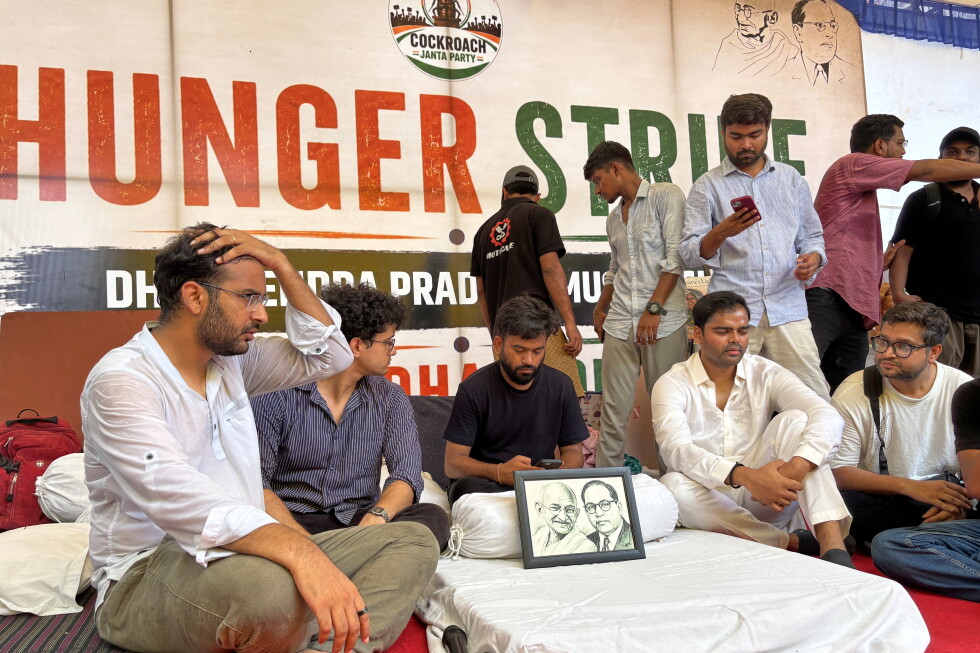
    NEW DELHI — A well-known Indian education activist has been transferred to a New Delhi hospital for urgent medical care, after his condition declined sharply over three weeks of continuous hunger striking as part of the viral grassroots “Cockroach Janta Party” education reform movement. The incident has deepened tensions between the grassroots campaign and Indian authorities, who have bolstered security at the iconic protest site in the heart of the capital.

    The 59-year-old activist, Sonam Wangchuk, a trained engineer and longstanding advocate for education overhaul, had been camped out at Jantar Mantar — New Delhi’s officially designated public protest ground, which has been surrounded by police barricades since the demonstration began. He has been joined by hundreds of student organizers and Cockroach Party supporters, who are calling for the resignation of India’s federal Education Minister Dharmendra Pradhan. The demand follows widespread allegations of large-scale pre-exam question paper leaks that have upended education outcomes for thousands of young job seekers across the country.

    The “Cockroach Janta Party” itself originated from an unexpected remark earlier this year, when India’s Supreme Court Chief Justice Surya Kant compared a group of unemployed youth to cockroaches during a separate court hearing. Rather than dismissing the insult, the young activists reclaimed it as a symbol of their resilience, turning the label into a satirical, viral political movement that gained more than 21 million followers on Instagram within just a few days of its launch. Beyond the education minister’s resignation, the movement is pushing for sweeping systemic changes to India’s high-stakes examination system, as well as financial compensation for the families of students who died by suicide following the recent paper leaks or disappointing exam results.

    Delhi Police confirmed in an official statement that Wangchuk was moved to the hospital on Saturday after his health deteriorated significantly during the hunger strike. Law enforcement officials stated that the transfer followed both medical recommendations and a court order. A short period of unrest broke out at the protest site when a small group of demonstrators attempted to block police vehicles transporting the activist, according to police accounts.

    However, the Cockroach Janta Party pushed back against the official narrative in a public social media post, alleging that the government “forcefully abducted” Wangchuk without consent from the activist or his family. In response to the unrest, authorities deployed extra police personnel and paramilitary troops to Jantar Mantar, and reinforced barricades surrounding the protest compound. Police officials characterized the expanded security deployment as a precautionary measure, and issued a public appeal for demonstrators to comply with law enforcement instructions to maintain public order.

  • Takeaways from AP’s report on the impact of US aid restrictions on reproductive rights in Africa

    Takeaways from AP’s report on the impact of US aid restrictions on reproductive rights in Africa

    Half a world away from the polarized abortion debate playing out across the United States, thousands of African women face heightened danger to their lives and health as American anti-abortion groups expand their influence and funding on the continent. This growing international push gained new momentum from the Trump administration, which implemented sweeping cuts to U.S. foreign aid for any global organization that provides or advocates for abortion-related services — changes that threaten to cut off access to reproductive health support tied to as much as $30 billion in global assistance.

    For decades, conservative American anti-abortion organizations have pushed for restrictions both domestically and internationally, and Africa has become a key front for their efforts, given that many African national health systems rely heavily on foreign donor funding to operate. New analysis from the Institute for Journalism and Social Change has pulled back the curtain on the scale of this funding: 17 major U.S. anti-abortion nonprofits poured more than $16 million into African operations between 2019 and 2022, followed by an additional $9.3 million in spending across 2023 and 2024. Researchers warn that even these figures are an underestimate, as U.S. churches and many religious anti-abortion groups are exempt from mandatory public financial disclosure requirements, leaving millions more in unreported spending off the books. Institute researcher Claire Provost describes the documented spending as “just the tip of the iceberg” of the full scope of U.S. anti-abortion investment in the continent.

    This influx of American funding and support has emboldened a widespread campaign of harassment against local reproductive health workers and rights advocates across multiple African nations. A 2024 report from Marie Stopes International, a leading global reproductive health provider, documented a surge in online harassment, legal threats, and even criminal detention of staff delivering legal abortion and reproductive care. In the Democratic Republic of Congo, health workers have been detained for days for providing services that are fully legal under local law, before being released without any formal charges. In Ethiopia, the local head of U.S.-based anti-abortion group Family Watch International has targeted senior reproductive health leaders with social media trolling and published YouTube videos spreading harmful misinformation about abortion. In Kenya, personal contact information for staff at reproductive rights organizations has been published online, with workers falsely accused of murder. One anonymous Nairobi-based private abortion clinic owner told the Associated Press that staff have been repeatedly detained by police, who demand bribes in exchange for dropping fabricated criminal charges. Kenyan government officials declined repeated requests for comment on these reports.

    Health and rights advocates warn that this growing anti-abortion push is rolling back decades of incremental progress toward expanding safe reproductive care across Africa. The Maputo Protocol, adopted by the African Union 20 years ago, enshrines safe abortion as a human right and requires signatory nations to legalize the procedure in cases of rape, incest, risk to the pregnant person’s health, and fatal fetal abnormality. But implementation of the protocol has been inconsistent at best, leaving millions of women with no access to legal care. The African Institute for Development Policy estimates that sub-Saharan Africa records more than 6 million unsafe abortions every year, and the region already has the world’s highest rate of maternal mortality, making it the deadliest place globally for women of reproductive age.

    In recent months, the anti-abortion movement has notched high-profile policy wins across the continent, powered by U.S. funding and organizing. Last year, U.S., European, and African anti-abortion groups joined with senior Kenyan government officials for a Nairobi conference focused on advancing a conservative “family values” agenda. Charles Kanjama, vice chairman of the conference organizing body the African Christian Professionals Forum, framed the fight over abortion access as an international “culture war.” In May 2024, that work paid off when a Kenyan appeals court overturned a lower court ruling that had affirmed abortion access as a fundamental constitutional right; Kanjama led the legal challenge, and called the ruling a victory that “restored constitutional balance.” Just one month later, delegates from 20 African nations finalized a draft regional charter in Ghana that calls for rejecting established sexual and reproductive health rights, which will go to a vote before the African Union in 2025. Sharon Slater, co-founder of U.S.-based anti-abortion group Family Watch International, was among the organizers fundraising for the charter’s adoption at a European Parliament event in Brussels earlier this year.

    In response to questions about the new aid restrictions, the U.S. State Department defended the policy in a statement, saying “the American people expect their tax dollars to support programs that save lives … and reflect American values, not fund abortion-related activities, left-wing social agendas, or wasteful overseas bureaucracies.” The department added that U.S. assistance continues to support broad maternal and child health programming under the administration’s America First Global Health Strategy. But healthcare providers and reproductive rights advocates say the reality on the ground tells a different story: while the Trump administration and anti-abortion groups frame their work as protecting life, the end result is a growing number of preventable deaths among African women.

  • Women are dying in Africa as US ramps up its global battle against abortion

    Women are dying in Africa as US ramps up its global battle against abortion

    Decades of advocacy by U.S.-based anti-abortion groups have reshaped reproductive health policy both at home and abroad, with the reversal of Roe v. Wade marking their biggest domestic victory. Now, the second Trump administration is injecting dramatic new momentum into their cross-border campaign to export conservative “family values” to nations across the globe.

    Speaking at the annual March for Life anti-abortion demonstration in Washington D.C. in January, Vice President JD Vance unveiled sweeping new restrictions on U.S. funding for international nongovernmental organizations, foreign governments, and United Nations agencies that work to expand access to abortion, gender-affirming care, and diversity programming overseas. “We’re going to start blocking every international NGO that performs or promotes abortion abroad from receiving a dollar of U.S. money,” Vance told the gathered crowd.

    These expanded restrictions build on decades of on-the-ground anti-abortion advocacy led by U.S. conservative nonprofits, particularly in sub-Saharan Africa, a region where local health systems rely heavily on foreign assistance. Already home to the world’s highest rate of unsafe abortions and the highest maternal mortality linked to pregnancy termination, sub-Saharan Africa bears 70% of the world’s global maternal deaths, recording roughly 180,000 preventable pregnancy-related fatalities each year.

    Analysts estimate the new policy could impact at least $30 billion in U.S. foreign aid, upending global reproductive health frameworks that have been in place for decades. For conservative advocates, the shift represents a long-sought alignment of U.S. foreign aid with their ideological goals. “We’re seeing opportunity here to have a consistently pro-life ethic,” explained Nicole Hunt, a representative of Colorado-based conservative evangelical group Focus on the Family. “We’ve been influencing health policies for a long time with our foreign aid. This is just a new direction.”

    A key target of the movement is the Maputo Protocol, a 20-year-old international agreement signed by most African nations that enshrines safe abortion as a human right. The protocol requires signatory countries to legalize abortion in cases of rape, incest, fatal fetal abnormality, and when a pregnancy threatens a woman’s life or health, but implementation across the continent has been uneven, forcing millions of women to seek unregulated, unsafe procedures each year. The African Institute for Development Policy records more than 6 million unsafe abortions annually across sub-Saharan Africa, and emboldened by the new U.S. policy, anti-abortion activists are now working to roll back even the limited access guaranteed by the protocol.

    Reproductive health advocates say the policy shift has already created a new, hostile landscape for reproductive rights work across the continent. “We’ve now moved into a new era where we are the ones who are in opposition because the most powerful and influential supporters of reproductive health — the U.S. and a lot of Europe — are now more aligned with anti-rights groups,” said Nardos Hagos, regional representative for the International Planned Parenthood Federation in Nairobi. “We’re gonna see more women dying from unsafe abortions.”

    Tracking the full scope of U.S. anti-abortion funding flowing into Africa is complicated by loose disclosure rules for religious and charitable groups. An analysis by the Institute for Journalism and Social Change, a research organization, of public tax filings from 17 major U.S. anti-abortion groups found funding to Africa jumped 50% between 2019 and 2022, reaching more than $16 million. Previously unreported data from the institute shows the same groups spent nearly $9.4 million across the continent in 2023 and 2024 alone.

    Claire Provost, a researcher with the institute, notes that these numbers are just “the tip of the iceberg,” because U.S.-based churches and many religious organizations are exempt from mandatory annual financial disclosure requirements that would reveal how much funding they direct to anti-abortion work in Africa. One major group increasingly active on the continent is The Church of Jesus Christ of Latter-day Saints, commonly known as the Mormon church, which has more than 1 million followers across Africa and has hosted “Strengthening Families” conferences across the continent over the past eight years.

    Sean E.R. Donnelly, the church’s Africa communications manager, told the AP roughly a quarter of the $1.5 billion the church spent on international programs last year went to African development projects focused on healthcare, education, and emergency relief “with the goal of helping people, especially families.” When asked about reproductive rights, Donnelly said the church is “not really active” on abortion issues, though it does invite government officials to its conferences to help craft “policy and strategy to make sure that we protect the family.” The church’s official position opposes elective abortion in most cases, but allows exceptions for rape, incest, and threats to a pregnant woman’s life or health.

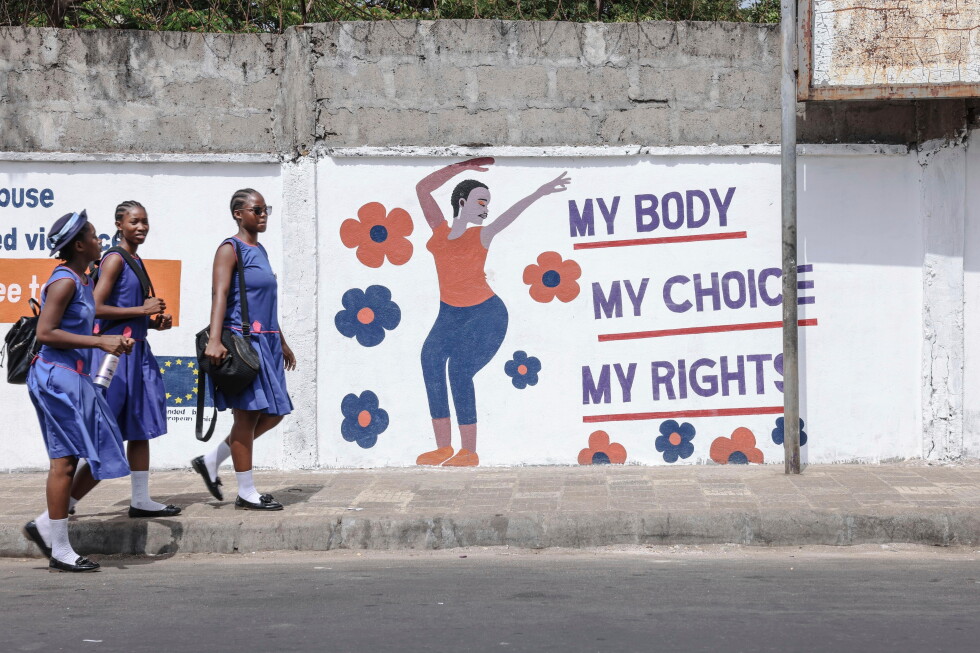
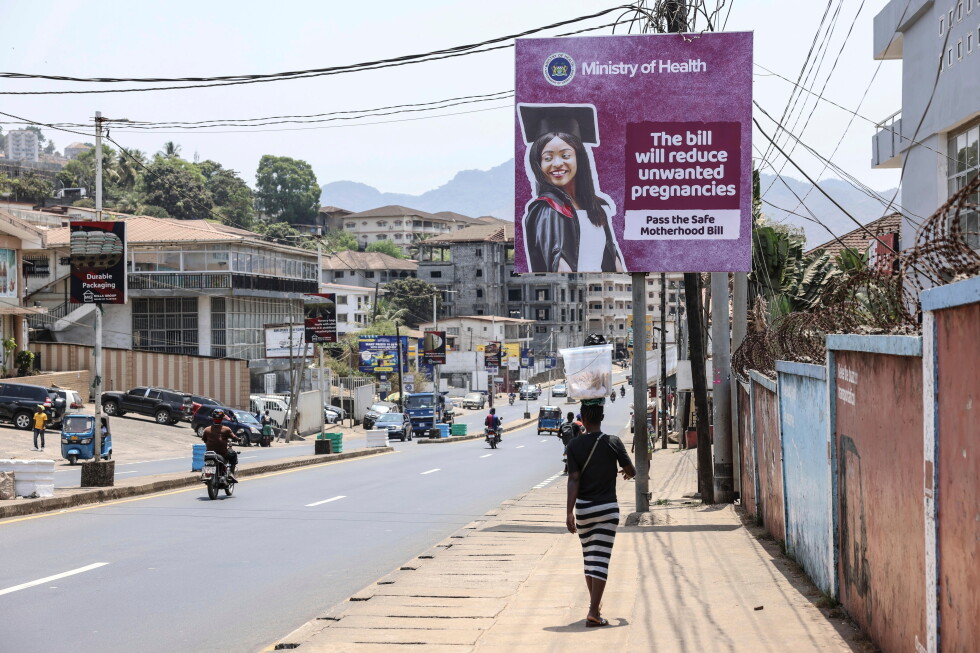
    Local rights groups have noted that the church held a major conference in Sierra Leone last year, just as the country was moving forward with plans to decriminalize abortion. Pressure from local religious lobbies ultimately stalled the reform, a change that advocates link to the ideological and financial support from U.S. conservative groups. Donnelly denies the church interfered in the process, saying “This is not how the church operates in Africa or globally.”

    Beyond shifting funding, the growing influence of U.S. anti-abortion groups has emboldened a wave of harassment and intimidation targeting reproductive health workers and providers across Africa. Hannah Ruguru, who works at a reproductive health clinic in Kisumu, western Kenya, entered the field after her own sister died from an unsafe backstreet abortion. Today, her work has become increasingly dangerous: she has been screamed at by anti-abortion protesters, and deleted her Facebook account after years of relentless online abuse. “Sometimes you can get scared,” she said. “But at the end of the day, I’m helping women.”

    A 2024 report from Marie Stopes International, which operates the clinic Ruguru works at, documents widespread coordinated attacks across multiple African countries led by U.S.-based groups and U.S.-funded local organizations. In the Democratic Republic of Congo, health workers have been detained for days for providing legally allowed abortion services before being released without charge. In Ethiopia, the head of the local office of U.S.-based anti-abortion group Family Watch International has targeted senior reproductive health leaders with online harassment and spread anti-abortion misinformation via YouTube. In Kenya, staff contact information has been published online with false accusations of murder, and private clinic owners report repeated police harassment, detention, and extortion.

    Musoba Kitui, regional director of the Ipas Africa Alliance, which advocates for safe abortion access, called the combination of new U.S. aid restrictions and growing ideological incursion deeply concerning. “The changes in U.S. foreign aid policy combined with this advancing American interest in ideology in Africa is really concerning,” Kitui said. “We think the consequences are going to be dire,” especially for women and marginalized LGBTQ+ communities who already face barriers to care.

    Anti-abortion leaders frame the campaign as a necessary defense of traditional cultural values against what they describe as an imposed global progressive agenda. At a 2023 conference in Nairobi bringing together U.S., European, and African anti-abortion Christian leaders alongside senior Kenyan government officials, attendees framed the fight over reproductive rights as an global cultural conflict. “It’s a culture war, really,” said Charles Kanjama, vice chairman of the African Christian Professionals Forum, the conference organizer. He noted that international aid previously flowed overwhelmingly to reproductive rights groups, but “we are hoping that … we can start attracting money from people who think like us.”

    That momentum is already translating to institutional change across the continent. In June 2024, representatives from 20 African nations finalized a draft charter in Ghana that calls for rejecting international sexual and reproductive health rights frameworks; the charter will go to a vote before the African Union in 2025. Anti-abortion activists from the U.S. have already begun international fundraising to support the charter’s passage.

    In Kenya, one of Africa’s largest economies, the impact of shifting policy is already visible on the ground. The African Population and Health Research Center records an average of seven preventable deaths from unsafe abortion complications every single day. While the 2010 Kenyan constitution allows abortion when a woman’s life or health is at risk, and courts have expanded access to cases of rape, incest, and threats to mental health, a colonial-era penal code still criminalizes abortion providers and patients, who face up to 14 years in prison. Most public hospitals refuse to perform even legal abortions, leaving women to choose between costly private care or unregulated dangerous procedures. In May 2023, a Kenyan appeals court overturned a lower court ruling that affirmed abortion access as a fundamental right — a case led by Kanjama, who called the ruling a restoration of “constitutional balance.”

    The Kenyan government did not respond to repeated requests for comment on the issue. In a statement responding to questions about the new U.S. aid rules, the U.S. State Department defended the policy: “The American people expect their tax dollars to support programs that save lives … and reflect American values, not fund abortion-related activities, left-wing social agendas, or wasteful overseas bureaucracies. U.S. assistance continues to support a wide range of maternal and child health services as part of the America First Global Health Strategy.”

    On the ground in Kenyan public hospitals, doctors and public health workers say the reality of the policy is a growing tide of preventable death. “By the time the women come, we are often dealing with a life-threatening situation,” said Dominic Omollo, reproductive health coordinator in Bondo, western Kenya, where public hospitals only treat life-threatening complications from unsafe abortions, not the procedures themselves.

    For 25-year-old Mary Olouch, that reality proved fatal. A fish seller in rural Karabok village, Olouch discovered she was pregnant while already raising a young child, and hid her pregnancy from her husband. She did not qualify for a legal abortion at a public hospital, and could not afford the cost of private care. She bled to death after an illicit abortion, leaving her young child motherless. Today, two trees mark her grave just meters from her home.

    After Olouch’s death, Loice Ochieng, a local community health volunteer, said women in the village began speaking openly about abortion for the first time — a topic that had long been taboo. “Because they have seen that this thing can cause death,” Ochieng said.

  • Control, threats, disfiguring surgery: My life inside Jeffrey Epstein’s ‘cult’

    Control, threats, disfiguring surgery: My life inside Jeffrey Epstein’s ‘cult’

    Five years after disgraced sex trafficker Jeffrey Epstein died in federal custody, one of his surviving victims has shared a harrowing, unflinching account of the systematic abuse and psychological manipulation that trapped her in his orbit for years. Speaking exclusively to the BBC on condition of anonymity (identified only as Anya to protect her safety), the survivor laid bare the hidden mechanisms of control that allowed Epstein to exploit dozens of vulnerable women long after his 2008 conviction for abusing a minor.

    Anya, a former Russian model who moved west to pursue opportunities in high fashion, first encountered Epstein through a connected modelling scout in Paris more than a decade ago. What initially seemed like a lucky break turned out to be a carefully coordinated trap: scout Daniel Siad, who is named thousands of times in publicly released Epstein court documents, targeted Anya specifically after noting she was intelligent, ambitious, and far from her support network back home. He lured her with promises of elite fashion industry introductions through his connection to Epstein, a wealthy financier with high-profile relationships with global leaders and celebrities.

    The grooming process unfolded slowly, over the course of nearly a year, designed to erode Anya’s defenses gradually. At their first meeting in Epstein’s luxurious 18-room Paris apartment near the Arc de Triomphe, Epstein built trust by asking detailed questions about her life goals, something few in the superficial modelling industry had ever done, and explicitly denied any sexual interest in her to put her at ease. He pressured her to exercise relentlessly to meet his body standards, demanded nude progress photos, and eventually arranged a short, meaningless meeting with Next Management co-founder Faith Kates, a meeting he had already predetermined would end in rejection. When Anya was dejected after the fake rejection, Epstein lured her to his Palm Beach estate, where he was permitted day release during his 2008 conviction sentence, and sexually assaulted her for the first time.

    Lawyers for Kates and Next Management have denied any knowledge of or involvement in Epstein’s trafficking activities, noting that rejecting prospective models is a standard industry practice, and that the agency operated independently of Epstein’s influence.

    After the assault, Epstein maneuvered Anya into moving into a rent-free Manhattan apartment on East 66th Street, part of a network of properties he used to house a rotating group of roughly a dozen women he called “assistants.” Far from the business training he had promised, Anya and the other women were kept on 24/7 call, given trivial menial tasks, and subjected to relentless psychological abuse and sexual violence. Epstein controlled every aspect of their lives: he managed their finances, dictated who they could socialize with, monitored all their communications through company-issued phones, and used isolation and gaslighting to break their sense of self-worth.

    Anya’s account of systemic coercive control aligns closely with testimony another former assistant, Sarah Kellen, gave to the U.S. House Oversight Committee earlier this year. Kellen told lawmakers that Epstein systematically eroded his victims’ ability to make independent decisions, leaving them completely dependent on him for housing, food, healthcare, and even legal status. “He was very good at just decimating your ability to make your own decisions and have your own autonomy. And it made you more and more dependent on him,” Kellen told the committee.

    Epstein used multiple layered tactics to prevent any woman from escaping or speaking out. When one assistant fled, he hired a private investigator to track her down and presented other assistants with an itemized bill for more than $700,000 that she allegedly owed him, a clear warning that he would hunt down any escapee to demand repayment. He collected compromising material, including nude photos and video of the women, to blackmail them into silence, and forced them to write “gratitude letters” praising him for his generosity, which he used to undermine any future claims of abuse. He also pitted the assistants against one another, spreading gossip and pretending to be each woman’s sole supporter, to prevent them from forming solidarity that could challenge his control.

    The abuse extended beyond psychological and sexual violence: Anya told the BBC that Epstein forced her to undergo unnecessary, disfiguring surgery to remove a small teenage tattoo, cutting the tattooed skin out instead of using slower laser removal because it suited his preference. She still bears prominent scars from the two procedures Epstein insisted she complete.

    The most traumatic part of her experience, Anya said, was that Epstein forced every assistant to recruit at least one new young woman to join the network, making survivors complicit in his trafficking scheme. “It’s one or 10, like, you’re already complicit,” she said, tearing up as she recounted the experience.

    Anya only lost her home with Epstein a week after his 2019 death, when Mark Epstein, Jeffrey’s brother, showed up at her apartment door and ordered her to leave. Mark Epstein has denied he had any knowledge of his brother’s criminal activities. While the eviction left Anya homeless, it also freed her from years of abuse, a bittersweet turning point she describes as losing a home but escaping a nightmare.

    Clinical psychologist Dr. Tara Quinn-Cirillo, who specializes in supporting survivors of coercive control, explained that a common public misconception holds that only minors are vulnerable to this kind of grooming. “You can be groomed as an adult,” she said, noting that Epstein’s slow, deliberate approach was designed to fly under a victim’s radar, “like stealth bombers are designed just to go under the radar.” After his 2008 conviction, Epstein deliberately shifted his targeting to adult women, mostly from eastern Europe, who were far from their home support networks and often had insecure immigration status that made them easier to control—though Anya noted most of the women he recruited still looked physically like teenagers.

    Anya, who has received compensation through the Epstein Victims’ Compensation Fund after providing corroborating evidence of her abuse, said she chose to speak out now to correct the widespread narrative that Epstein only abused underage girls. She wants the public to understand that he built a full “ecosystem of abuse” that exploited vulnerable adult women too, and that his high-profile social connections to world leaders and celebrities helped legitimize his actions and silence victims for decades.

    “When you have people like Bill Gates come to his house for dinner and shake his hand, you think, who am I to question it? Who am I to speak up here? It legitimised the abuse,” she said.

    Now, years after escaping, Anya said she hopes her story will help other survivors of coercive abuse find the courage to leave their own traumatic situations. “I’m not in any way special,” she said. “I just somehow managed to find this strength in me to persevere and to survive. If I can do it, you can do it.”

  • Rescuers race to find survivors in the rain after a landslide in China kills at least 8

    Rescuers race to find survivors in the rain after a landslide in China kills at least 8

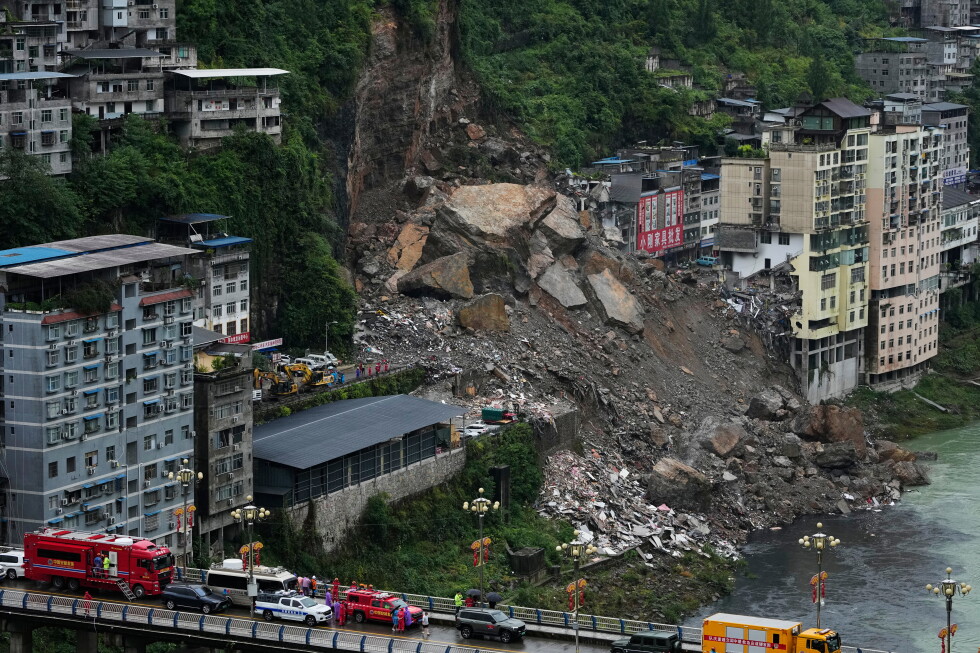
    In the mountainous southeastern region of Chongqing, southwestern China, a catastrophic rain-fueled landslide has left at least eight people dead and 34 others unaccounted for, spurring an urgent large-scale rescue operation that entered its second day Saturday. The disaster unfolded Friday morning in Pengshui County, a municipality-administered region that borders Hubei and Guizhou provinces, when roughly 18,000 cubic meters of rock and soil surged down a steep slope near the Wujiang River, a major waterway cutting through karst terrain dotted with small communities and agricultural terraces.

    State broadcaster CCTV confirmed the slide completely buried more than 10 residential structures, leaving widespread destruction across the affected area. Visual evidence captured by the Associated Press shows the scale of the devastation: the single largest detached rock measures approximately 3,000 cubic meters — bigger than a multi-story building — while surrounding slopes are littered with rubble. One partially damaged structure had its upper level crushed by falling debris, and a passenger car was left half-buried in mud and rock near another damaged building.

    By Saturday morning, rescue teams had pulled 10 survivors from the wreckage, all of whom were transported to local hospitals for emergency treatment. More than 1,100 residents from at-risk areas surrounding the landslide site have already been relocated to safe temporary accommodation to avoid secondary disasters. China’s National Development and Reform Commission moved quickly Saturday to approve 30 million yuan (equivalent to roughly $4.4 million) in emergency relief funding, earmarked for repairing damaged critical infrastructure and restoring basic public services for affected communities.

    Persistent heavy rainfall has dramatically complicated rescue efforts. Local weather monitoring recorded 19.2 centimeters (nearly 8 inches) of rain between Friday night and Saturday morning, keeping ground conditions unstable and raising risks of additional slides. As rainfall tapered slightly Saturday, rescue teams were able to access the disaster zone to conduct systematic searches of collapsed buildings and the adjacent riverbank, but operational challenges remain severe.

    Currently, search and rescue teams are working through the hazards of the site: while initial searches focus on areas around the massive boulders, crews will eventually need to search beneath the massive rock formations, which remain at high risk of shifting and causing additional harm. Once surface searches are complete, engineering teams plan to drill into the largest boulders, insert explosive charges, and break the rock apart to access areas still potentially holding survivors.

    The karst mountain landscape where Pengshui County is located is inherently prone to geological hazards such as landslides, particularly during periods of intense prolonged rainfall that saturates soil and weakens slope stability.

  • Indian activist on hunger strike for 20 days forcibly taken to hospital

    Indian activist on hunger strike for 20 days forcibly taken to hospital

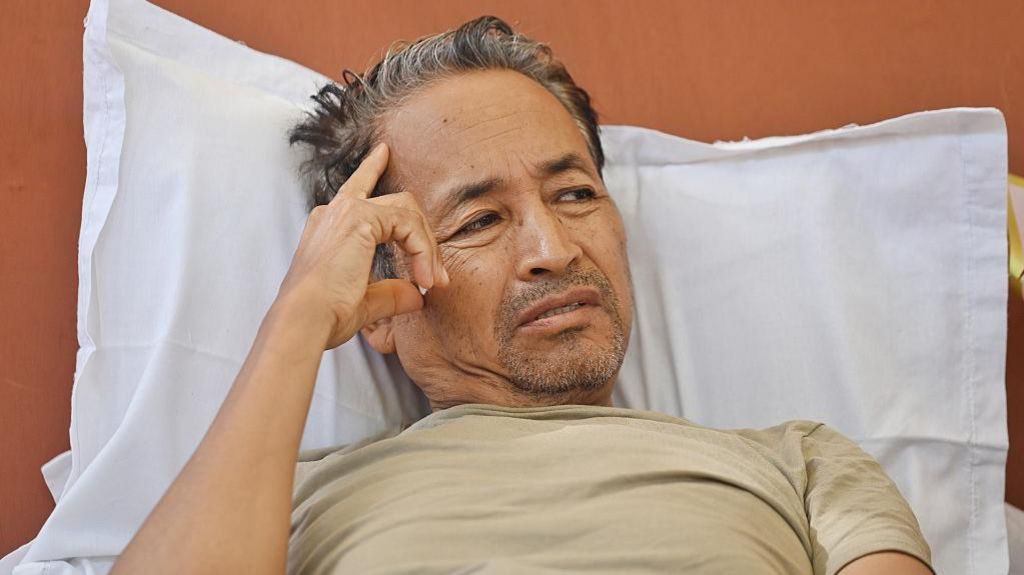
    In a dramatic escalation of a weeks-long protest over India’s flawed educational examination system, prominent Indian activist and education reformer Sonam Wangchuk has been forcibly evacuated from his Delhi protest camp after completing 20 days of an indefinite hunger strike. The 59-year-old reformer, who survived only on salt and water through Delhi’s sweltering summer heat, had already lost more than 9 kilograms and experienced severe physical distress by the time security forces intervened.

    The hunger strike was organized in support of the Cockroach Janta Party (CJP), a viral online satirical movement that has emerged as a leading voice demanding sweeping educational reform and accountability for repeated examination irregularities. Wangchuk had planned to join a planned mass march to India’s national parliament scheduled for Monday, a demonstration that will now proceed without him.

    Shortly before 7:30 a.m. local time on Saturday, dozens of Delhi police officers and paramilitary personnel descended on the protest stage at Jantar Mantar, New Delhi’s iconic historic protest ground, where Wangchuk lay resting. Footage from the scene shows widespread chaos as officers pushed aside peaceful demonstrators who attempted to block the removal operation, covering Wangchuk with bedsheets before transporting him to a local government hospital via ambulance.

    In a post on the social platform X shortly after the operation, Wangchuk’s wife Gitanjali Angmo confirmed that her husband had been admitted to Delhi’s Safdarjung Hospital, and issued a critical stipulation: no oral or intravenous medication should be administered to the activist without explicit consent from her, his family, and the medical team that has monitored his health throughout the 20-day protest.

    Hospital officials confirmed Monday that Wangchuk is currently undergoing a full medical evaluation, with an official public statement expected to be released in the coming hours. Delhi Police Deputy Commissioner Sachin Sharma defended the operation to reporters, framing the removal as a step taken to comply with a Thursday order from the Delhi High Court, which required federal authorities to monitor Wangchuk’s health closely and provide mandatory medical intervention when needed.

    “Sonam Wangchuk has been moved to a government hospital for much-needed medical intervention and is currently under medical supervision,” Sharma stated, emphasizing that the action aligned with court guidance and medical recommendations.

    Despite repeated public calls from civil society and political opponents to end his hunger strike over declining health, Wangchuk refused to abandon his protest. Just days before his removal, he told a crowd of assembled supporters at Jantar Mantar, a 300-year-old former observatory that has long been India’s go-to site for peaceful public protest, that while his body had grown frail, his resolve remained unshaken. “I’ve grown weak from the outside but I’m strong from within,” he told the crowd, drawing loud cheers and applause. He reaffirmed his commitment to joining the parliament march, adding that even if he died before the demonstration, “my ghost would join the march.”

    Following Wangchuk’s removal, CJP founder Abhijeet Dipke stepped into his place to begin an indefinite hunger strike of his own, and confirmed that the planned parliament march will proceed as scheduled on July 20. Dipke, who told the BBC that police blocked him from returning to the protest site after he visited a friend’s home to freshen up Saturday morning, has upped the movement’s demands: the group initially called for the resignation of Education Minister Dharmendra Pradhan, but now is demanding Prime Minister Narendra Modi step down over what it calls a “despicable act” of state repression.

    “If they think that taking Wangchuk away will end this movement, they are mistaken. We will remain here, and will march to parliament on 20 July,” Dipke said.

    The CJP movement launched in May as a satirical online campaign to protest widespread paper leaks and systemic irregularities in India’s most high-stakes competitive examinations, and has rapidly gained a massive following across Indian social media. Protesters adopted the name “cockroaches” as a self-identifier, and have now been demonstrating for more than a month, with dozens of student organization members joining Wangchuk’s hunger strike alongside him.

    The movement’s initial call for Pradhan’s resignation stems from the cancellation of India’s national medical entrance exam in early May, after a widespread paper leak scandal derailed the test for thousands of aspiring medical students across the country. Protesters argue the minister must bear moral responsibility for the systemic failure that upended thousands of young people’s career plans.

    Pradhan has publicly dismissed the CJP and its supporters as “the B-team of disruptive elements”, and the Modi administration has so far refused to enter into any negotiations with the protest movement. The forced removal of Wangchuk has drawn sharp condemnation from across India’s political opposition, with multiple opposition members of parliament describing the action as “shocking coercive state violence” and “an assault on democracy”.

    In recent days, pressure had grown rapidly on the Modi administration from opposition leaders and civil society groups to open dialogue with the protesters. On Thursday, former Delhi Chief Minister and Aam Aadmi Party leader Arvind Kejriwal visited Wangchuk at the protest site, greeting the activist with folded hands and publicly appealing to the government to listen to the demands of students and reformers. “Every year, exam papers get leaked and youth pay the price,” Kejriwal said, adding that “Pradhan should be removed from his post and replaced by Wangchuk.”