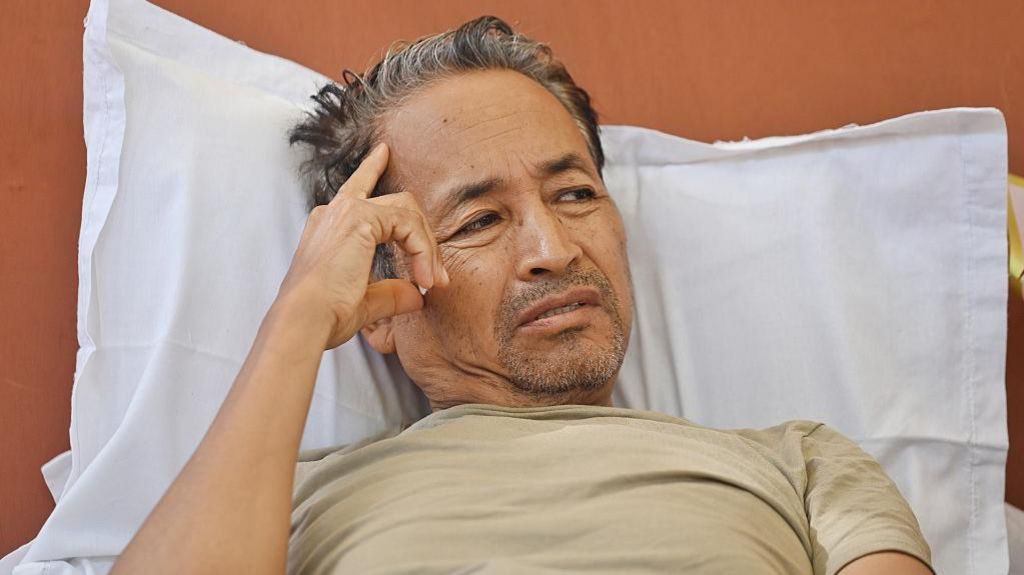
In a dramatic escalation of a weeks-long protest over India’s flawed educational examination system, prominent Indian activist and education reformer Sonam Wangchuk has been forcibly evacuated from his Delhi protest camp after completing 20 days of an indefinite hunger strike. The 59-year-old reformer, who survived only on salt and water through Delhi’s sweltering summer heat, had already lost more than 9 kilograms and experienced severe physical distress by the time security forces intervened.
The hunger strike was organized in support of the Cockroach Janta Party (CJP), a viral online satirical movement that has emerged as a leading voice demanding sweeping educational reform and accountability for repeated examination irregularities. Wangchuk had planned to join a planned mass march to India’s national parliament scheduled for Monday, a demonstration that will now proceed without him.
Shortly before 7:30 a.m. local time on Saturday, dozens of Delhi police officers and paramilitary personnel descended on the protest stage at Jantar Mantar, New Delhi’s iconic historic protest ground, where Wangchuk lay resting. Footage from the scene shows widespread chaos as officers pushed aside peaceful demonstrators who attempted to block the removal operation, covering Wangchuk with bedsheets before transporting him to a local government hospital via ambulance.
In a post on the social platform X shortly after the operation, Wangchuk’s wife Gitanjali Angmo confirmed that her husband had been admitted to Delhi’s Safdarjung Hospital, and issued a critical stipulation: no oral or intravenous medication should be administered to the activist without explicit consent from her, his family, and the medical team that has monitored his health throughout the 20-day protest.
Hospital officials confirmed Monday that Wangchuk is currently undergoing a full medical evaluation, with an official public statement expected to be released in the coming hours. Delhi Police Deputy Commissioner Sachin Sharma defended the operation to reporters, framing the removal as a step taken to comply with a Thursday order from the Delhi High Court, which required federal authorities to monitor Wangchuk’s health closely and provide mandatory medical intervention when needed.
“Sonam Wangchuk has been moved to a government hospital for much-needed medical intervention and is currently under medical supervision,” Sharma stated, emphasizing that the action aligned with court guidance and medical recommendations.
Despite repeated public calls from civil society and political opponents to end his hunger strike over declining health, Wangchuk refused to abandon his protest. Just days before his removal, he told a crowd of assembled supporters at Jantar Mantar, a 300-year-old former observatory that has long been India’s go-to site for peaceful public protest, that while his body had grown frail, his resolve remained unshaken. “I’ve grown weak from the outside but I’m strong from within,” he told the crowd, drawing loud cheers and applause. He reaffirmed his commitment to joining the parliament march, adding that even if he died before the demonstration, “my ghost would join the march.”
Following Wangchuk’s removal, CJP founder Abhijeet Dipke stepped into his place to begin an indefinite hunger strike of his own, and confirmed that the planned parliament march will proceed as scheduled on July 20. Dipke, who told the BBC that police blocked him from returning to the protest site after he visited a friend’s home to freshen up Saturday morning, has upped the movement’s demands: the group initially called for the resignation of Education Minister Dharmendra Pradhan, but now is demanding Prime Minister Narendra Modi step down over what it calls a “despicable act” of state repression.
“If they think that taking Wangchuk away will end this movement, they are mistaken. We will remain here, and will march to parliament on 20 July,” Dipke said.
The CJP movement launched in May as a satirical online campaign to protest widespread paper leaks and systemic irregularities in India’s most high-stakes competitive examinations, and has rapidly gained a massive following across Indian social media. Protesters adopted the name “cockroaches” as a self-identifier, and have now been demonstrating for more than a month, with dozens of student organization members joining Wangchuk’s hunger strike alongside him.
The movement’s initial call for Pradhan’s resignation stems from the cancellation of India’s national medical entrance exam in early May, after a widespread paper leak scandal derailed the test for thousands of aspiring medical students across the country. Protesters argue the minister must bear moral responsibility for the systemic failure that upended thousands of young people’s career plans.
Pradhan has publicly dismissed the CJP and its supporters as “the B-team of disruptive elements”, and the Modi administration has so far refused to enter into any negotiations with the protest movement. The forced removal of Wangchuk has drawn sharp condemnation from across India’s political opposition, with multiple opposition members of parliament describing the action as “shocking coercive state violence” and “an assault on democracy”.
In recent days, pressure had grown rapidly on the Modi administration from opposition leaders and civil society groups to open dialogue with the protesters. On Thursday, former Delhi Chief Minister and Aam Aadmi Party leader Arvind Kejriwal visited Wangchuk at the protest site, greeting the activist with folded hands and publicly appealing to the government to listen to the demands of students and reformers. “Every year, exam papers get leaked and youth pay the price,” Kejriwal said, adding that “Pradhan should be removed from his post and replaced by Wangchuk.”