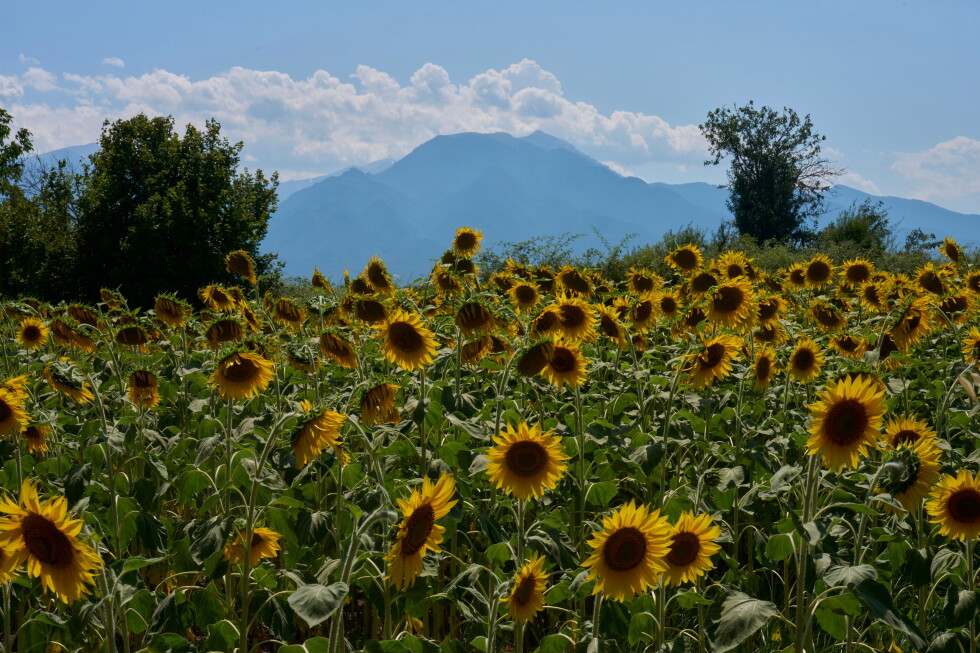
For thousands of years, the snow-dusted peaks of Mount Olympus – the fabled ancestral home of the 12 Olympian gods of ancient Greek mythology – have captivated human imagination across the globe. Towering 2,918 meters above sea level, with its highest jagged, mist-enveloped peak long believed by ancient Greeks to hold the throne of Zeus, king of the gods, the mountain is now on the cusp of a global recognition that could cement its cross-cultural legacy for generations.
This month, Greece’s highest peak is up for consideration as a mixed natural and cultural UNESCO World Heritage Site, with the World Heritage Committee set to deliberate the nomination during its annual session running from July 16 to 29 in Busan, South Korea. For local communities that have built their lives around the mountain, the designation is far more than an honor – it is recognition of Olympus’ unmatched blend of mythic history, cultural continuity, extraordinary biodiversity, and stunning natural beauty.
“Olympus is our life. It is the place we grew up in,” shared Evagelos Geroliolios, mayor of the Dion-Olympus municipality that is centered in Litochoro, the main gateway town to the mountain. “It is the place we see every day, but at the same time, it carries with it myth, history, biodiversity, extraordinary beauty and a very great cultural weight.”
Few locations hold as central a place in Western cultural mythology as Mount Olympus. Legend holds that after Zeus waged a 10-year war to overthrow his father Cronus and end the reign of the Titans, he established his divine court on the mountain’s highest peaks. This year, public interest in Olympus is also getting a major pop culture boost: Christopher Nolan’s new big-screen adaptation of Homer’s *The Odyssey*, which frames the mountain as the seat of Zeus and the Olympian gods that shape Odysseus’ legendary journey, hit theaters this week.
Archaeological excavations on one of Olympus’ lower slopes have already uncovered an open-air sanctuary, with the earliest artifacts dating back to the Hellenistic period (323 BCE to 30 BCE). Greece’s UNESCO nomination file notes the sanctuary is widely believed to be the same site referenced by 2nd-century philosopher and historian Plutarch, who recorded regular religious processions to the peak to carry out animal sacrifices to Zeus. The mountain’s religious significance persisted through the Christian era: a chapel dedicated to the Prophet Elias sits at 2,803 meters, making it the highest-altitude Orthodox Christian chapel in the world. Near the mountain’s Enipeas Gorge, the ruins of a 16th-century monastery remain standing, just a short walk from the Holy Cave of St. Dionysios, a cliffside chapel fed by a small spring whose waters are considered holy by Orthodox believers.
Beyond its deep cultural roots, Olympus’ slopes, which descend almost directly to the Aegean Sea, support an extraordinary wealth of plant and animal life, including multiple species found nowhere else on Earth. It is this rare combination of tangible cultural heritage, millennia of mythic meaning, unique ecosystems, and dramatic natural landscapes that local leaders hope will convince the committee to approve the designation.
“It is a place we love. It is a place that many people from all over the world visit to see, to live, to experience. We want to protect it,” Geroliolios said. A UNESCO listing, he added, would carry global significance that extends far beyond Greece’s borders. “It is something that concerns the entire world. It is very important.”
Despite widespread local support, Olympus’ path to World Heritage status is not guaranteed. Greece first launched the nomination process back in 2014, when it added the mountain to UNESCO’s Tentative List – the required first step for any prospective site, where properties remain eligible for formal nomination over a 5 to 10 year window. After a preliminary assessment and the submission of a full nomination dossier, the proposal underwent a 14-month evaluation by advisory bodies including the International Council on Monuments and Sites (ICOMOS) and the International Union for Conservation of Nature. Final votes are cast by representatives of 21 member states on the World Heritage Committee during the annual session. Preliminary meeting agenda documents indicate the committee is poised to refer the nomination back to Greek authorities to request additional technical information, leaving the final outcome uncertain for now.
Still, local stakeholders hold out hope that approval will bring stronger, more coordinated protections for the mountain’s fragile ecosystem – a priority that has grown more urgent as visitor numbers have surged in recent years. Babis Marinidis, a veteran mountain guide and president of the Alpine Club of Litochoro, explained that while a UNESCO listing would likely draw even more tourists, the mountain’s ecosystem already has a limited carrying capacity.
“How many people can this mountain, this ecosystem, bear?” he asked. Though much of Olympus was designated a national park decades ago with formal conservation rules in place, Marinidis said regulations against unauthorized camping, swimming in protected watersheds, and off-trail hiking are regularly ignored by visitors. As crowds have grown, local authorities have begun considering mandatory visitor registration and entrance fees to manage foot traffic – a measure Marinidis once opposed but now supports. “But now with so many people, I believe some limit must be imposed,” he said.
As a world-renowned mountaineering and hiking destination, Olympus draws thousands of adventurers annually from across the globe. While reaching the summit does not require advanced technical climbing skills, the mountain’s rapidly shifting weather and uneven, treacherous terrain make it a serious challenge that has claimed dozens of lives over the years. Just this month, a 64-year-old Greek hiker died after collapsing on a hiking trail, and in May, rescue teams recovered the body of a 25-year-old Spanish hiker who went missing while attempting a winter summit attempt.
First-time visitor Triantafyllos Giannospyros, 32, noted that while proper preparation and caution are non-negotiable, the mountain is accessible for careful hikers. “You need to be careful, and safety measures must always be kept in mind,” he said. “But with care and with good organization, it isn’t something you should be afraid of.”
Stavroula Vourou, a Litochoro hotel owner whose business caters to hikers setting off for the peak, echoed that respect for the mountain. “Everyone sets off to go up and conquer a mountain that needs respect,” she said. “You respect this mountain, it respects you too.”