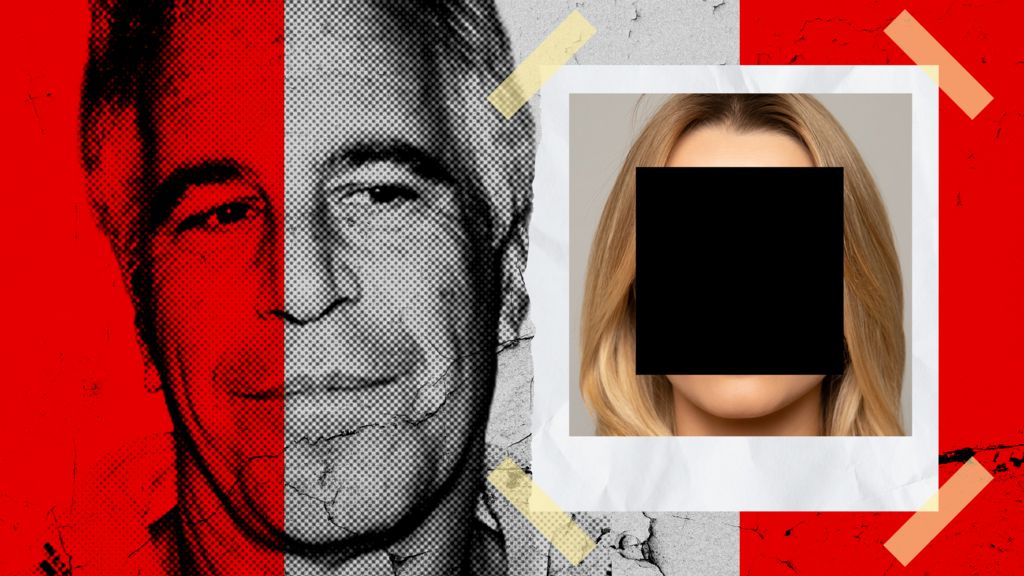
Five years after disgraced sex trafficker Jeffrey Epstein died in federal custody, one of his surviving victims has shared a harrowing, unflinching account of the systematic abuse and psychological manipulation that trapped her in his orbit for years. Speaking exclusively to the BBC on condition of anonymity (identified only as Anya to protect her safety), the survivor laid bare the hidden mechanisms of control that allowed Epstein to exploit dozens of vulnerable women long after his 2008 conviction for abusing a minor.
Anya, a former Russian model who moved west to pursue opportunities in high fashion, first encountered Epstein through a connected modelling scout in Paris more than a decade ago. What initially seemed like a lucky break turned out to be a carefully coordinated trap: scout Daniel Siad, who is named thousands of times in publicly released Epstein court documents, targeted Anya specifically after noting she was intelligent, ambitious, and far from her support network back home. He lured her with promises of elite fashion industry introductions through his connection to Epstein, a wealthy financier with high-profile relationships with global leaders and celebrities.
The grooming process unfolded slowly, over the course of nearly a year, designed to erode Anya’s defenses gradually. At their first meeting in Epstein’s luxurious 18-room Paris apartment near the Arc de Triomphe, Epstein built trust by asking detailed questions about her life goals, something few in the superficial modelling industry had ever done, and explicitly denied any sexual interest in her to put her at ease. He pressured her to exercise relentlessly to meet his body standards, demanded nude progress photos, and eventually arranged a short, meaningless meeting with Next Management co-founder Faith Kates, a meeting he had already predetermined would end in rejection. When Anya was dejected after the fake rejection, Epstein lured her to his Palm Beach estate, where he was permitted day release during his 2008 conviction sentence, and sexually assaulted her for the first time.
Lawyers for Kates and Next Management have denied any knowledge of or involvement in Epstein’s trafficking activities, noting that rejecting prospective models is a standard industry practice, and that the agency operated independently of Epstein’s influence.
After the assault, Epstein maneuvered Anya into moving into a rent-free Manhattan apartment on East 66th Street, part of a network of properties he used to house a rotating group of roughly a dozen women he called “assistants.” Far from the business training he had promised, Anya and the other women were kept on 24/7 call, given trivial menial tasks, and subjected to relentless psychological abuse and sexual violence. Epstein controlled every aspect of their lives: he managed their finances, dictated who they could socialize with, monitored all their communications through company-issued phones, and used isolation and gaslighting to break their sense of self-worth.
Anya’s account of systemic coercive control aligns closely with testimony another former assistant, Sarah Kellen, gave to the U.S. House Oversight Committee earlier this year. Kellen told lawmakers that Epstein systematically eroded his victims’ ability to make independent decisions, leaving them completely dependent on him for housing, food, healthcare, and even legal status. “He was very good at just decimating your ability to make your own decisions and have your own autonomy. And it made you more and more dependent on him,” Kellen told the committee.
Epstein used multiple layered tactics to prevent any woman from escaping or speaking out. When one assistant fled, he hired a private investigator to track her down and presented other assistants with an itemized bill for more than $700,000 that she allegedly owed him, a clear warning that he would hunt down any escapee to demand repayment. He collected compromising material, including nude photos and video of the women, to blackmail them into silence, and forced them to write “gratitude letters” praising him for his generosity, which he used to undermine any future claims of abuse. He also pitted the assistants against one another, spreading gossip and pretending to be each woman’s sole supporter, to prevent them from forming solidarity that could challenge his control.
The abuse extended beyond psychological and sexual violence: Anya told the BBC that Epstein forced her to undergo unnecessary, disfiguring surgery to remove a small teenage tattoo, cutting the tattooed skin out instead of using slower laser removal because it suited his preference. She still bears prominent scars from the two procedures Epstein insisted she complete.
The most traumatic part of her experience, Anya said, was that Epstein forced every assistant to recruit at least one new young woman to join the network, making survivors complicit in his trafficking scheme. “It’s one or 10, like, you’re already complicit,” she said, tearing up as she recounted the experience.
Anya only lost her home with Epstein a week after his 2019 death, when Mark Epstein, Jeffrey’s brother, showed up at her apartment door and ordered her to leave. Mark Epstein has denied he had any knowledge of his brother’s criminal activities. While the eviction left Anya homeless, it also freed her from years of abuse, a bittersweet turning point she describes as losing a home but escaping a nightmare.
Clinical psychologist Dr. Tara Quinn-Cirillo, who specializes in supporting survivors of coercive control, explained that a common public misconception holds that only minors are vulnerable to this kind of grooming. “You can be groomed as an adult,” she said, noting that Epstein’s slow, deliberate approach was designed to fly under a victim’s radar, “like stealth bombers are designed just to go under the radar.” After his 2008 conviction, Epstein deliberately shifted his targeting to adult women, mostly from eastern Europe, who were far from their home support networks and often had insecure immigration status that made them easier to control—though Anya noted most of the women he recruited still looked physically like teenagers.
Anya, who has received compensation through the Epstein Victims’ Compensation Fund after providing corroborating evidence of her abuse, said she chose to speak out now to correct the widespread narrative that Epstein only abused underage girls. She wants the public to understand that he built a full “ecosystem of abuse” that exploited vulnerable adult women too, and that his high-profile social connections to world leaders and celebrities helped legitimize his actions and silence victims for decades.
“When you have people like Bill Gates come to his house for dinner and shake his hand, you think, who am I to question it? Who am I to speak up here? It legitimised the abuse,” she said.
Now, years after escaping, Anya said she hopes her story will help other survivors of coercive abuse find the courage to leave their own traumatic situations. “I’m not in any way special,” she said. “I just somehow managed to find this strength in me to persevere and to survive. If I can do it, you can do it.”