作者: admin

  • Despite gains combating deforestation in Brazil’s Amazon, forest degradation is a looming threat

    Despite gains combating deforestation in Brazil’s Amazon, forest degradation is a looming threat

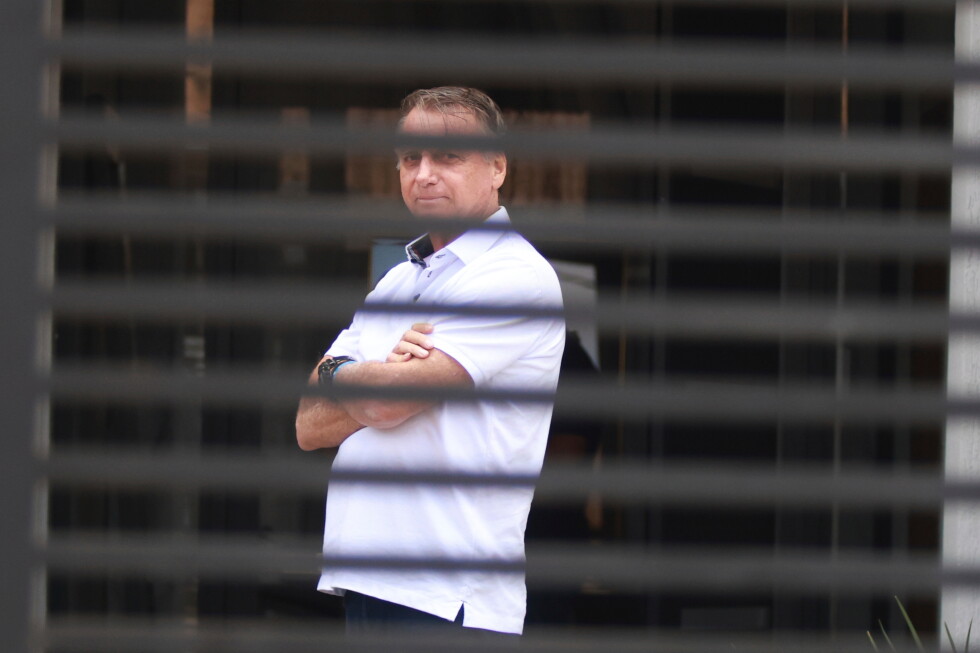
    SAO PAULO, Brazil — Brazil’s President Luiz Inácio Lula da Silva has repeatedly highlighted his administration’s landmark progress reining in Amazon deforestation, a win that is set to be confirmed when official annual data drops in October. Early projections indicate the 2025-2026 deforestation rate will hit its lowest point since 2012, a dramatic reversal from the record-high deforestation seen under former President Jair Bolsonaro’s environmentally deregulatory tenure. But this hard-won progress masks growing, underrecognized threats that continue to erode the world’s largest tropical rainforest, from the creeping damage of forest degradation to looming legislation that could cripple Brazil’s core anti-deforestation enforcement tool.

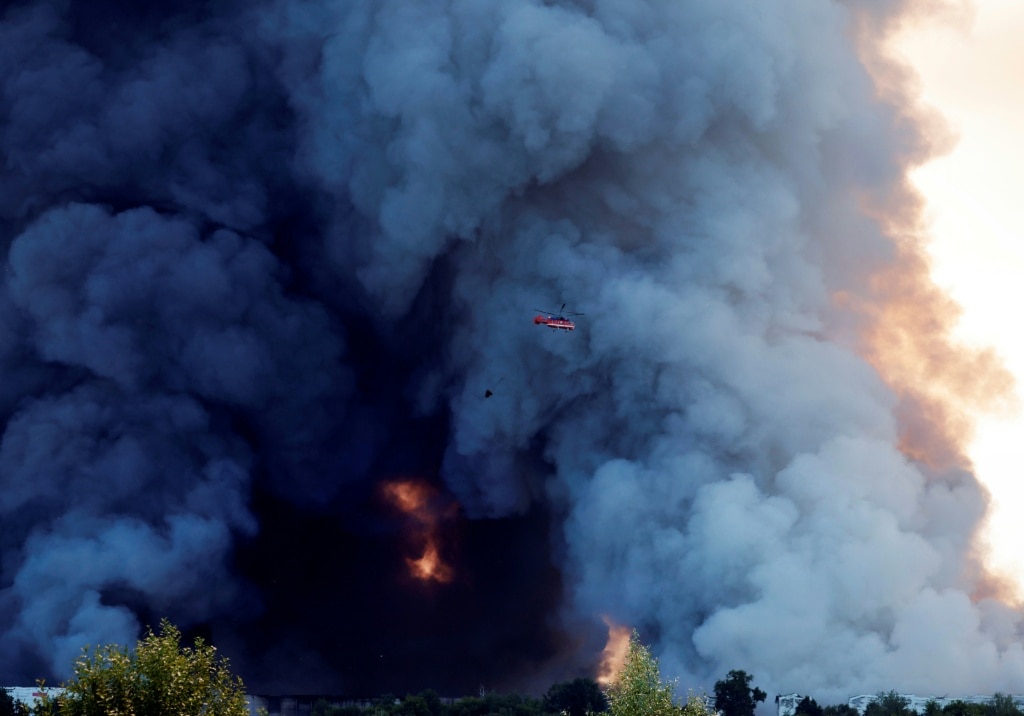
    The Amazon spans nine South American nations, with Brazil holding more than 60% of the total forest area — meaning ecological changes in the Brazilian Amazon shape the fate of the entire biome. While the Lula administration has cut total clear-cutting dramatically, official satellite data from Brazil’s real-time DETER monitoring system shows that forest degradation, the gradual damage of forest ecosystems from activities like illegal logging, wildfires, and drought-linked die-off, has outpaced full deforestation in recent years. Between August 2025 and April 2026, deforestation alerts marked roughly 1,700 square kilometers of cleared forest, while degradation affected more than 4,420 square kilometers of partially damaged woodland. Unlike clear-cutting, which leaves an obvious mark on satellite imagery, degradation progresses slowly and quietly. “Degradation is slower and more silent. It is like a chronic condition,” explained Taciana Stec, a climate policy specialist at Brazilian climate think tank Talanoa.

    This chronic damage is already pushing the rainforest closer to a catastrophic tipping point. Today, the Amazon still acts as a critical global carbon sink, absorbing massive volumes of the planet-warming carbon dioxide driving climate change. But if degradation and stress continue, scientists warn the forest could cross an irreversible threshold where it emits more carbon than it absorbs, triggering full or partial biome collapse. A 2024 study published in *Nature* estimates that between 10% and 47% of the Amazon could reach this critical tipping point by 2050 if current stress levels persist.

    The threat of extreme weather will only amplify this damage. A strong El Niño event, the cyclical warming of equatorial Pacific waters that drives higher temperatures and drier conditions across the Amazon, is projected for 2026. The 2023-2024 El Niño event already offered a preview of this risk: temperatures rose 2 to 4 degrees Celsius above the Amazon’s historical average, and severe drought fueled the worst wildfire season the region had seen in 20 years. During that event, forest degradation increased at a rate three times faster than deforestation fell, erasing much of the progress made to cut clear-cutting, according to research by Guilherme Mataveli, a scientist at Brazil’s National Institute for Space Research (INPE). A partially degraded forest remains standing, but loses much of its ecological function, making it far more vulnerable to additional stress from drought and fire. “If the Amazon were a human patient with a chronic illness, El Nino would strike like a flu, triggering a fever that leaves the body weaker and more vulnerable,” Stec noted. “Two years later, the flu returns. But this time, the patient has not fully recovered. The fever burns hotter, and the illness hits harder.”

    New long-term research has underscored this persistent damage. A 20-year study led by Yale University researcher Leandro Maracahipes, published in April in *Proceedings of the National Academy of Sciences*, found that repeated wildfires do not immediately turn the Amazon into savanna, as many earlier models predicted. Instead, the forest remains standing but permanently degraded: it loses specialized native species that rely on dense old-growth cover, and becomes far more susceptible to future damage. “The forest is resilient, but our message is that we need to preserve it even more, and urgently,” Maracahipes said. “And it has to be now.”

    Beyond climate and ecological threats, environmental regulators are bracing for a major legislative setback that could gut Brazil’s successful anti-deforestation policy. A fast-track bill sponsored by lawmaker Lucio Mosquini, currently pending a vote in Brazil’s lower house of Congress, would bar Brazil’s top environmental enforcement agency IBAMA from issuing sanctions for illegal deforestation based solely on satellite monitoring — the core pillar of Brazil’s current successful deforestation control efforts. Mosquini argues that satellite-based penalties unfairly harm farmers, who are not given an opportunity to defend themselves. But IBAMA officials note that farmers already have 20 days to challenge penalties, and can have sanctions overturned if they prove deforestation was legally authorized.

    IBAMA first adopted satellite monitoring in 2016 to complement limited on-the-ground inspections in remote parts of the rainforest. Bolsonaro halted the policy in 2019 as part of his administration’s deregulatory agenda, leading to a 15-year high in Amazon deforestation by 2021. When Lula returned to the presidency in 2023, his administration immediately restored the remote monitoring policy, driving the sharp drop in deforestation seen today. Political analysts expect the bill to pass, given the outsized political and economic influence of Brazil’s powerful agribusiness sector. If approved, it would be “a major environmental setback,” IBAMA President Jair Schmitt told the Associated Press. “In effect, you end up encouraging environmental offenders and unfair competition.” Schmitt compared satellite monitoring to speed cameras used by traffic enforcement: it is impossible to station a law enforcement officer on every corner of a city, just as it is impossible to place an IBAMA agent on every square kilometer of the 5 million square kilometer Brazilian Amazon.

    To address the growing threat of wildfires in the 2026 season, the Lula administration has already hired 4,600 new firefighters and launched expanded real-time monitoring of high-risk areas. IBAMA has combined historical fire data, deforestation records, and weather forecasts to identify properties at extreme risk of fire, and has ordered landowners in those areas to implement preventive measures. Still, Indigenous fire brigades on the ground already warn that conditions are worsening faster than expected. “The situation this year is worrying. We’re still in the rainy season, and we’ve already recorded two fires in April,” said Tainan Kumaruara, a member of the Indigenous volunteer Guardioes Kumaruara fire brigade in Para state. “The forest is different from what it was 10 years ago. It’s much drier. The trees no longer behave as they did.”

    Experts say addressing the growing threat of degradation will require Brazil to expand its focus beyond just stopping clear-cutting, to prioritize large-scale forest restoration. Brazil has committed to restoring 12 million hectares of degraded Amazon forest by 2030 under the Paris Climate Agreement, and the Brazilian Environment Ministry reports that 3.4 million hectares are already in the process of recovery. Even so, the dual threats of accelerating degradation and pending anti-enforcement legislation mean the long-term future of the Amazon remains far from secure, even with the Lula administration’s progress cutting deforestation.

  • First batch of UFO files is released as Trump urges the public to draw its own conclusions

    First batch of UFO files is released as Trump urges the public to draw its own conclusions

    On Friday, the U.S. Pentagon launched the first batch of long-awaited declassified documents detailing hundreds of reported sightings of Unidentified Anomalous Phenomena, more commonly known to the public as UFOs, capping off weeks of public teasing from former President Donald Trump that reignited widespread public fascination with unexplained aerial encounters across the globe.

    The newly released trove of materials includes decades of Federal Bureau of Investigation interview transcripts, State Department diplomatic cables, NASA mission debriefing records, military sighting reports, and more than 20 video clips captured by military surveillance sensors from regions spanning the Middle East, East Asia, and North America. The documents, hosted on a new, retro-styled Pentagon website that features black-and-white historical imagery and typewriter-inspired typography, represent the first major public release ordered by congressional legislation passed in 2022.

    Among the most notable accounts included in the initial release are firsthand recollections from Apollo 11 astronaut Buzz Aldrin, who recalled spotting an unusual, moderately bright light source and a large unidentified object traveling near the Apollo 11 command module during the 1969 historic moon mission. Another 1994 State Department cable from the U.S. Embassy in Tajikistan details a joint sighting by one Tajik fighter pilot and three American observers of a brightly glowing unidentified object over Kazakhstan that executed sharp 90-degree turns, corkscrew maneuvers, and circular flight patterns at extreme speeds.

    More recent reports included in the release catalog 2023 sightings across multiple regions: a UAP spotted just above the Aegean Sea that pulled off multiple 90-degree turns at roughly 80 miles per hour; a “super-hot” orb encountered by a U.S. intelligence official conducting a helicopter search that traveled 20 miles at high speed before multiple similar orbs appeared, glowing brighter and dimmer in sequence; a linear glowing object spotted by a drone pilot that vanished completely from view within 10 seconds of appearing; and a spherical object that maintained a steady speed of 483 miles per hour for seven minutes while flying over Syria, later deemed non-threatening by military analysts. A 1972 NASA photograph from the Apollo 17 mission, included in the release, shows three bright dots arranged in a triangular formation; accompanying Pentagon notes acknowledge that no consensus exists on the object’s origin, though a preliminary new analysis suggests it may be a physical craft rather than a photographic error.

    The video files included in the release capture unidentified objects ranging from distant fast-moving specks to a distinct football-shaped object spotted over the East China Sea in 2022. The most recent clip, dated January 1 of this year, shows two circular glowing lights moving against a dark nighttime sky at an undisclosed North American location.

    The release comes after years of gradual declassification work by the Pentagon, which established a dedicated UAP office under congressional order in 2022. The office’s 2024 public report cataloged hundreds of previously unreported UAP incidents but confirmed no evidence that any sighting represented alien technology or extraterrestrial visitation. Trump seized on the long-running public curiosity around UAPs earlier this year, promising a major mass release of previously secret documents and framing the move as a break from past administrations he accuses of hiding information from the public.

    In a Friday post on his Truth Social platform, Trump wrote: “Whereas previous Administrations have failed to be transparent on this subject, with these new Documents and Videos, the people can decide for themselves, ‘WHAT THE HELL IS GOING ON?’ Have Fun and Enjoy!” The Trump administration has emphasized that members of the public are free to draw their own conclusions from the unredacted materials released Friday.

    Congressional Republicans who have spent years pushing for full UAP disclosure praised the move Friday. Tennessee Representative Tim Burchett thanked Trump for keeping his campaign promise on transparency, noting that full disclosure will be a gradual process rather than a one-time release. Florida Representative Anna Paulina Luna, who sent a congressional letter earlier this year demanding the release of 46 UAP videos identified by whistleblowers, confirmed Friday that those additional clips will be released by the Pentagon in the coming months.

    However, independent defense and UAP experts have urged the public to approach the new files with caution, noting that most unexplained sensor readings and sightings eventually turn out to be misidentified natural phenomena or advanced human-made military technology. The Pentagon’s 2024 official report explicitly rejected widespread conspiracy theories that the U.S. government has recovered alien craft or hidden evidence of extraterrestrial life.

    UAP research advocacy groups welcomed the initial release but called for further congressional action to mandate full declassification of all remaining secret UAP records. The Sol Foundation, a California-based research group focused on UAP studies, is pushing for new legislation that would require a full review of all classified materials related to non-human technologies and craft. Group representatives noted that while Friday’s release marks a positive step toward transparency, decades of government secrecy around the topic remain unaddressed, and additional disclosures will be needed to fully inform the American public.

  • Cyber attack disrupts swath of US universities and schools nationwide

    Cyber attack disrupts swath of US universities and schools nationwide

    In a disruptive cyber incident that hit just as U.S. higher education institutions entered the high-stress end-of-semester exam period, multiple colleges and K-12 schools across the country suffered widespread service outages Thursday after a ransomware attack linked to hacking group ShinyHunters took the popular academic learning platform Canvas offline.

    The attack impacted educational institutions spanning from coast to coast, with campuses in California, New York, Illinois and other states reporting sudden access failures to the platform, which millions of students and instructors rely on for assignment submission, grade tracking, course materials and exam hosting. Pennsylvania State University, one of the largest public postsecondary institutions in the country, notified students Thursday morning that no users could gain access to Canvas, and warned that a full restoration of service would not likely be completed within 24 hours. In response to the outage, the university canceled a number of final exams scheduled for Thursday and Friday, throwing end-of-semester schedules into disarray for thousands of learners.

    At the University of California Los Angeles, students reported frantic efforts to meet looming assignment deadlines as they were locked out of the platform. The University of Chicago took a proactive step by taking its local Canvas instance offline temporarily after confirming it was among the targeted institutions. The university’s independent student newspaper, The Chicago Maroon, published a screenshot of a direct message from ShinyHunters that confirmed the group’s ransom demand: the message urged university administrators to reach out to the group privately to negotiate a financial settlement, threatening to leak sensitive institutional and student data if the demand was not met.

    Cybersecurity experts note that the group’s threats predate Thursday’s mass outage. Luke Connolly, a threat analyst with cybersecurity firm Emisoft, told the Associated Press that initial targeted threats from ShinyHunters began as early as Sunday, with two deadlines for compliance set for Thursday and May 12. Connolly added that negotiations over extortion payments may already be underway between the hacking group and impacted parties. By late Thursday, Instructure, the Utah-based company that owns and operates Canvas, released a public update stating that the platform has been restored for the vast majority of users, though some smaller institutions and local campus instances still reported residual access issues.

    The timing of the attack has drawn increased attention to growing cyber risks facing U.S. critical infrastructure, coinciding exactly with a high-profile push from top congressional leaders to ramp up national cyber defenses amid the rapid expansion of AI-powered hacking tools. On the same day the Canvas outage occurred, Senate Majority Leader Chuck Schumer, the chamber’s top Democratic leader, sent a formal letter to the Trump administration calling for urgent action to strengthen cyber protections across all sectors, including education. Schumer argued that the U.S. Department of Homeland Security, the federal agency tasked with leading domestic cyber defense efforts, must immediately extend support and resources to state and local governments to help them fend off growing threats. Schumer emphasized the need for proactive action before widespread outages and attacks put American lives and livelihoods at irreparable risk.

  • Canadian firms eye new opportunities under 15th Five-Year Plan

    Canadian firms eye new opportunities under 15th Five-Year Plan

    At a recent business forum hosted in Toronto by the Canada China Business Council (CCBC), industry leaders and diplomatic officials outlined a wave of new cross-border commercial opportunities opening for Canadian firms as China rolls out its 15th Five-Year Plan (2026–2030), with key growth areas spanning energy, agriculture, advanced manufacturing and consumer-focused services.

    After years of bilateral uncertainty that put many cross-border expansion plans on hold, Canadian companies are once again actively evaluating market entry and expansion in China, following a shift in Canada’s diplomatic approach after Prime Minister Mark Carney’s new government took office last year. Speaking at the forum, CCBC Executive Director and Chief Operating Officer Bijan Ahmadi noted that the Canadian government has restarted formal engagement with China, working to recalibrate bilateral ties into a more pragmatic, constructive partnership. This renewed diplomatic foundation has already translated into stronger trade performance and a noticeable rebound in business confidence among Canadian firms, he added.

    “We are moving past a prolonged period of uncertainty,” Ahmadi told attendees. “Companies are now proactively exploring opportunities, and taking a much closer look at spaces where cross-border engagement, Chinese market demand and national policy priorities are starting to align. Complexity in bilateral relations is not a justification for disengagement — it is a reason to operate with greater precision, identifying where real opportunities exist, where constraints remain, and how commercial strategies can align with both market needs and policy goals.”

    Chinese Consul General in Toronto Luo Weidong framed the 15th Five-Year Plan as an unparalleled trove of development opportunities for international businesses, including Canadian firms. “This plan is not only a development blueprint for China’s economic and social progress over the next five years, it is also a clear guiding document that outlines national strategic priorities, clarifies government focus areas, and sets a clear framework for market activity,” Luo said. Both speakers emphasized that the two economies retain deep structural complementarity, creating natural space for mutually beneficial cooperation across multiple high-priority sectors.

    Three core priorities outlined in China’s new five-year plan align particularly well with Canadian industrial strengths, Ahmadi explained: high-quality sustainable growth, global food and energy security, and the expansion of domestic consumer consumption. These policy priorities play directly to the strengths of the “Brand Canada” reputation in the Chinese market, which is built on a long-standing track record of quality, reliability, safety and advanced technical expertise.

    Energy cooperation emerged as one of the most promising areas for near-term growth, particularly amid ongoing global market volatility sparked by the Iran crisis. Luo noted that deepening energy cooperation between the two countries carries both strategic necessity and increased urgency in the current global context. China’s 15th Five-Year Plan prioritizes the clean and efficient utilization of fossil fuels, while also accelerating the rapid deployment of renewable energy sources including solar, wind, hydrogen and nuclear power — creating multiple entry points for Canadian energy firms.

    Ahmadi added that recent expansions to Canada’s export infrastructure have positioned the country to significantly increase energy shipments to Asian markets, with China standing as one of the top destination markets for Canadian energy products. Major projects including the Trans Mountain pipeline expansion, LNG Canada and a slate of upcoming energy developments are enabling increased exports of crude oil, liquefied natural gas and liquefied petroleum gas to the region. Beyond traditional energy exports, China’s ambitious decarbonization goals have also created new openings for Canadian companies that specialize in carbon capture technology, methane reduction solutions and environmental services, Ahmadi said.

    Agriculture and food security represent a second major growth area, aligned with China’s rising consumer demand for high-quality safe food products. Luo noted that Canada’s premium agricultural products, meats and seafood are well positioned to capture expanded market share in China. Ahmadi explained that Chinese consumer demand is increasingly shifting toward premium, safe, fully traceable and reliable food products — a trend that creates significant openings for Canadian producers across canola, seafood, beef, pork, pulses, grains and other high-value food categories. Beyond raw commodity exports, Canadian firms can also leverage their expertise in food traceability systems, customized product offerings, and nutrient-dense wellness-focused food products to stand out in the market, he added.

    Shifting demographic trends and the rapid expansion of China’s middle class are also creating new blue ocean markets for Canadian investment, speakers noted. China’s aging population has driven rising unmet demand for healthcare services, rehabilitation support, senior care, insurance, wealth management and pension-related services, while growing disposable income has boosted demand for trusted premium consumer goods, tourism and cultural experiences. Sectors including eldercare, childcare, healthcare services and advanced consumer services are all poised for strong growth over the plan’s five-year timeline.

    In advanced manufacturing and emerging technology sectors, Luo added that fast-growing areas including quantum technology, aerospace, hydrogen energy and sixth-generation mobile communications will emerge as major new growth drivers, creating additional space for Canadian innovation and collaboration between firms from both countries.

  • Could dangerous weather impact the Fifa World Cup this summer?

    Could dangerous weather impact the Fifa World Cup this summer?

    As the world’s most-watched international football tournament prepares to kick off this summer, growing concerns have emerged over whether extreme and dangerous weather events could disrupt the month-long competition. Climate experts and event organizers alike are now assessing the potential threats that abnormal heat waves, out-of-season wildfires, and severe sudden thunderstorms could pose to scheduled matches, player safety, and spectator experience across host venues.

    In recent years, shifting global climate patterns have led to a rise in unseasonal extreme weather across many regions that typically host major summer sporting events. Unlike the traditional quadrennial World Cup schedule that often placed the tournament in milder spring or fall windows, this summer’s iteration has put organizers on high alert for heat-related risks. High temperatures can not only impair athlete performance and increase the likelihood of heat exhaustion or cardiac events on the pitch, they can also create discomfort for tens of thousands of fans packed into open-air stadiums.

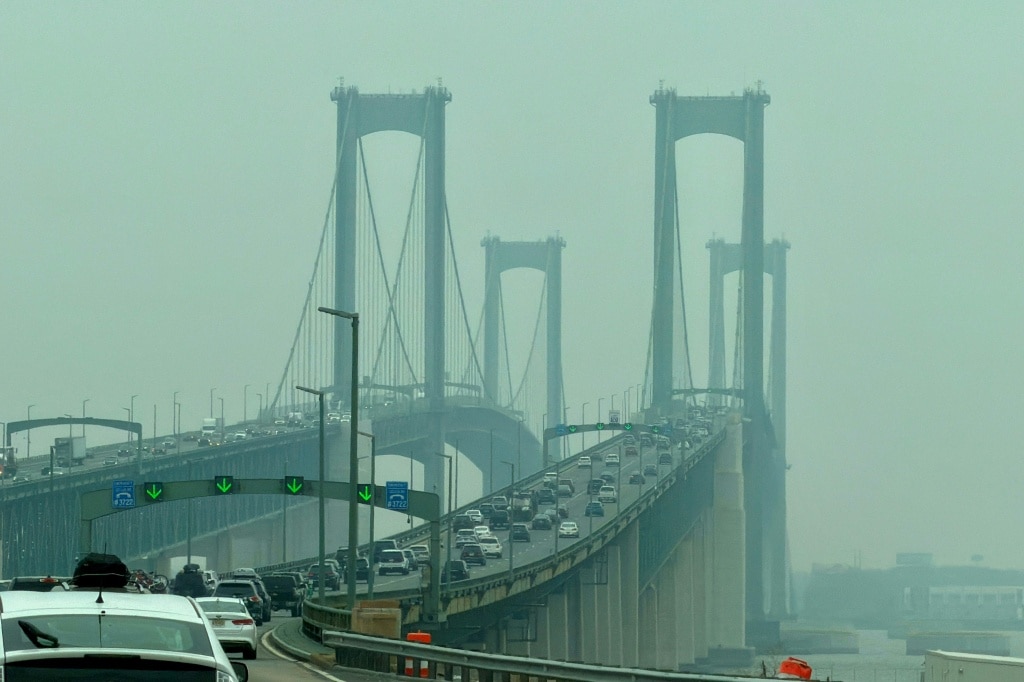
    Beyond extreme heat, the growing risk of uncontrolled wildfires in nearby regions adds another layer of concern. Wildfire smoke can drastically reduce air quality, lowering visibility on the field and creating respiratory hazards for everyone in attendance. Severe thunderstorms, meanwhile, bring risks of lightning strikes, flash flooding near venue areas, and structural risks to temporary fan zones and infrastructure.

    Organizing committees have confirmed they are developing contingency plans, including potential match time shifts to cooler parts of the day, emergency evacuation protocols, and enhanced air quality monitoring, but the unpredictability of extreme weather means full disruption mitigation remains a challenge. Football fans around the world are now waiting to see how these risks are managed as the tournament draws closer.

  • ‘Scapegoating’: Iran’s Bahais feel brunt of crackdown

    ‘Scapegoating’: Iran’s Bahais feel brunt of crackdown

    When Iranian security agents arrived at Peyvand Naimi’s workplace in Kerman on January 8, the 30-year-old member of Iran’s persecuted Bahai religious community had no idea what horrors awaited him behind bars. Accused of involvement in the killing of three Basij militia members the previous night, Naimi’s case already falls apart on basic timeline: he was taken into custody that afternoon, hours before the attack he is alleged to have carried out.

    Decades of systematic discrimination had already closed doors for Naimi: barred from university and competitive swimming teams despite his natural talent for the sport, he had long adapted to life as a target of state-sanctioned prejudice because of his faith. Today, he is one of at least 77 Bahais arrested across Iran since nationwide anti-government protests erupted in January, in what community leaders describe as the harshest wave of repression against the group since the immediate aftermath of the 1979 Islamic Revolution.

    Originating in 19th-century Persia, the Bahai Faith is the largest non-Muslim religious minority in Iran, with an estimated 300,000 followers nationwide. The Islamic republic has never formally recognized the faith, branding its adherents as heretics and repeatedly leveling unsubstantiated accusations that they act as Israeli spies – a baseless claim rooted in the location of the faith’s global spiritual center in Haifa, Israel, which was established decades before the founding of the modern Israeli state. Community advocates say this scapegoating follows a predictable pattern: whenever Iran faces internal unrest or external regional tensions, authorities turn to blaming Bahais to deflect public anger.

    “This is an escalation against the Bahai that we have not witnessed in decades,” Simin Fahandej, the Bahai International Community (BIC) representative to the United Nations, told AFP in an interview. Fahandej confirmed that arrests have continued steadily through the ongoing Israel-Hamas war and intensified sharply after the 12-day Iran-Israel conflict in June 2025. What makes this crackdown different from past waves of repression, she explained, is the state’s deliberate use of tortured, forced confessions broadcast on state media to spread hate speech and legitimize further persecution of the community.

    Amnesty International has corroborated these accounts, confirming that a coordinated state-led campaign of incitement, disinformation, discrimination and violence has targeted Bahais since the June 2025 cross-border war, with repeated false claims that the community serves as Israeli spies and collaborators.

    For Naimi and other detainees, the abuse in custody has been brutal. According to his close relative, who spoke to AFP on condition of anonymity out of fear for family safety inside Iran, Naimi was beaten repeatedly over five days, endured two mock executions with his hands and feet bound, was tied to a wall for extended periods, deprived of food, and forced to appear in a televised coerced confession. During a brief, monitored phone call to his parents, he told them, “If they execute me do not be sad, my soul will be free of the cage of my body.” Later, during a family visit, he reaffirmed his innocence: “I have done nothing wrong, I have not committed any crime and I will not confess.” As of yet, Naimi has not been formally charged or granted a trial.

    Naimi’s 29-year-old cousin Borna was arrested in early March and has faced identical abuse, including at least two mock executions and electric shocks that left severe burns on his feet, BIC reports confirm.

    The crackdown has swept up Bahai communities across the country, from southeastern Kerman province to the southern city of Shiraz. Roya Basiri, a Canadian resident whose brother, sister-in-law, and 25-year-old sister-in-law Mahsa Sotoudeh were all arrested in late March and early April, described the arbitrary nature of the raids. When Revolutionary Guards agents arrived at Mahsa’s family home and demanded to see an arrest warrant, Basiri told AFP, agents responded bluntly: “We are the warrant.” The agents searched the home, seized all electronic devices, then lured Mahsa back to the house by using her mother’s phone, arresting her at the door in front of her distraught parents. While Basiri’s brother has since been released on bail, Mahsa and Mandana Sotoudeh remain in detention.

    In late April, three Bahai women – one of whom is pregnant – from the southeastern town of Rafsanjan were ordered to begin serving existing prison sentences on vague charges of spreading “propaganda” against the Iranian government. Another Bahai detainee, 30-year-old Venus Hosseininejad, who was arrested in January in Kerman and forced to give a televised false confession, was recently released on bail; while she still faces pending charges, BIC confirmed she is not currently at risk of execution, despite recent claims made by former U.S. president Donald Trump on social media.

    Thirteen men already have been executed across Iran on charges linked to the January protests, a wave of punishment that human rights activists say is designed to instill mass fear amid rising tensions with the United States and Israel. For Iran’s Bahai community, the current crackdown represents a dangerous acceleration of a decades-long campaign of persecution, with community members once again being made to pay the price for state instability, advocates say.

  • WHO says hantavirus risk low after flight attendant tests negative

    WHO says hantavirus risk low after flight attendant tests negative

    On Friday, the World Health Organization moved to ease global anxiety over a rare hantavirus outbreak aboard the Dutch-flagged cruise ship MV Hondius, confirming that the general public faces only minimal risk of transmission even as multiple countries finalized plans to repatriate the vessel’s 150 trapped passengers and crew.

    Three passengers on the Atlantic cruise have already died from the infection: a Dutch married couple and a German national. While the Andes virus, the only strain of hantavirus capable of limited person-to-person spread, has been confirmed among positive cases, WHO officials emphasized that the pathogen is far less transmissible than common respiratory viruses such as COVID-19.

    “This is a dangerous virus, but only to the person who’s really infected, and the risk to the general population remains absolutely low,” WHO spokesman Christian Lindmeier told reporters Friday. He added that emerging data from the outbreak has shown even cabin sharers have avoided transmission in multiple cases, a pattern that suggests the virus does not spread easily between people. “That shows you again, luckily, apparently, the virus is not that contagious that it easily jumps from person to person,” Lindmeier said.

    As of Friday, the WHO recorded five confirmed cases and three suspected cases linked to the ship, with no active suspected infections remaining on board. One reassuring development came from contact tracing efforts launched after an infected passenger disembarked early: a KLM flight attendant who had been exposed to the infected passenger and developed mild symptoms tested negative for hantavirus, a result Lindmeier called “good news.”

    The outbreak unfolded after the MV Hondius, a vessel often used for polar expeditions, departed Ushuaia, Argentina on April 1 for a transatlantic cruise bound for Cape Verde. The first fatality and 30 other passengers disembarked at the remote British overseas territory of Saint Helena on April 24, with a connecting flight departing for Johannesburg the following day, triggering a worldwide contact tracing operation. The first fatality’s wife, who was removed from a Johannesburg-to-Amsterdam KLM flight before takeoff, later died in a South African hospital.

    Three early cases, including two crew members who later tested positive, were evacuated from Cape Verde to the Netherlands for treatment. The ship has since sailed for the Spanish Canary Island of Tenerife, where it is expected to arrive early Sunday. Kasem Ibn Hattuta, a YouTuber traveling on the vessel, said passengers have maintained calm after medical personnel boarded to oversee the journey. “We finally left Cape Verde which was a relief for everyone on board, specially knowing that our sick colleagues are finally getting the medical care they need,” he said in a statement. “Everyone is keeping high spirit, people are smiling and taking the situation calmly,” adding that all passengers follow indoor masking and social distancing protocols.

    Spanish authorities have confirmed the ship will anchor off the coast of Tenerife rather than docking at port, and all passengers will be ferried to the island’s airport for repatriation flights organized by their home countries. The United Kingdom has chartered a dedicated flight to repatriate its citizens, with the UK Health Security Agency confirming strict infection control measures will be enforced at every step of the process. British health officials also reported a suspected case on Tristan da Cunha, one of the world’s most remote inhabited islands with a population of roughly 250, which the ship visited during its voyage. U.S. President Donald Trump told reporters Thursday he had been briefed on the outbreak and added, “It’s very much, we hope, under control.”

  • Police called to a hostage situation at a bank in western Germany

    Police called to a hostage situation at a bank in western Germany

    BERLIN – A tense hostage situation unfolded Friday at a community bank branch in a small western German town, prompting local law enforcement to deploy a large response to the incident, official authorities confirmed this week.

    The drama began just after 9 a.m. local time, when regional police received an emergency call reporting the unfolding crisis at a local branch of Volksbank, located in Sinzig. This quiet town, home to roughly 17,000 residents, sits in the scenic Rhine Valley roughly 15 kilometers south of the larger city of Koblenz.

    By late Friday morning, law enforcement officials updated the public on the developing situation, confirming they believe multiple armed perpetrators are involved in the incident, and that multiple people are being held against their will inside the bank branch. Among those confirmed as captives is the driver of an armored cash transport van that was making a routine delivery to the financial institution when the incident began.

    In an official update posted to the department’s social media channels, police characterized the ongoing situation as “static,” meaning no significant changes to the standoff had occurred in the hours after the initial response. Authorities have since established a wide security cordon around the bank building to isolate the incident and prevent harm to bystanders. As of the latest official statement, police confirmed there is no detectable threat to members of the public staying outside of this secured perimeter.

  • White House calls Mark Hamill ‘sick’ after actor’s Trump grave post

    White House calls Mark Hamill ‘sick’ after actor’s Trump grave post

    A heated political firestorm has erupted in Washington D.C. after Star Wars icon Mark Hamill shared an AI-generated image of former President Donald Trump depicting him in a shallow marked grave, prompting scathing condemnation from the White House that has reignited long-simmering debates over political rhetoric and political violence against U.S. leaders.

    The digital image, which Hamill posted to his social media account on the Bluesky platform, showed Trump lying with closed eyes alongside a tombstone engraved with the text “Donald J. Trump 1946-2024”. The post was paired with the short, provocative caption “if only”.

    Hamill, the celebrated actor who originated the iconic role of Luke Skywalker in the 1977 *Star Wars* film and its subsequent franchise installments, also has a long history of vocal public criticism of Trump. In a companion post shared to the X platform that has since been taken down, Hamill laid out his blunt political stance toward the former president: he wrote that Trump “should live long enough to witness his inevitable devastating loss in the midterms, be held accountable for his unprecedented corruption, impeached, convicted & humiliated for his countless crimes. Long enough to realize he’ll be disgraced in the history books, forevermore.”

    Shortly after the image spread widely across social media, Hamill removed the post and issued a public apology. He clarified that his actual intention was not to wish death to Trump, writing “Actually, I was wishing him the opposite of dead, but apologize if you found the image inappropriate.” As of this reporting, BBC News has reached out to Hamill’s representatives for further response to the White House’s critical remarks, and no additional statement has been released.

    The White House press team quickly issued a harsh rebuke of Hamill via the X platform, labeling the actor “one sick individual”. The statement continued: “These Radical Left lunatics just can’t help themselves. This kind of rhetoric is exactly what has inspired three assassination attempts in two years against our President.”

    This controversy comes against a recent backdrop of rising tensions over harsh political rhetoric targeting Trump, amid a string of actual assassination attempts against the former president. Just last month, a gunman discharged a shotgun outside the venue of the White House Correspondents’ Dinner in Washington D.C. U.S. law enforcement officials have confirmed the incident was an attempted assassination of Trump.

    That shooting followed a separate controversy just days prior, when late-night host Jimmy Kimmel drew fierce condemnation from Melania Trump and senior administration officials after a parody sketch on his ABC show included a joke that referred to the first lady having “a glow like an expectant widow”. Melania Trump publicly called for ABC to terminate Kimmel’s contract, arguing that his comment amounted to “hateful and violent rhetoric” designed to divide the American public. “It is time for ABC to take a stand,” she wrote. “How many times will ABC’s leadership enable Kimmel’s atrocious behaviour at the expense of our community?”

    Kimmel pushed back against the criticism, explaining that his joke was a reference to the 24-year age gap between Donald and Melania Trump, not a veiled reference to violence against the president. He later responded to Melania Trump’s statement on air, saying “I agree that hateful and violent rhetoric is something we should reject. I do, and I think a great place to start to dial that back would be to have a conversation with your husband about it.”

    The 2024 calendar year already saw two high-profile assassination attempts against Trump: during a Pennsylvania campaign rally, the president was shot in the ear before the attacker was killed by U.S. Secret Service agents. Later that year, a man was found hiding in underbrush armed with weapons near a golf course where Trump was playing. That suspect was convicted of attempted assassination in February 2025.

  • South Africa’s top court revives Ramaphosa cash scandal, paving way for impeachment

    South Africa’s top court revives Ramaphosa cash scandal, paving way for impeachment

    JOHANNESBURG – South Africa’s Constitutional Court, the nation’s highest judicial body, has delivered a landmark ruling overturning a 2022 parliamentary vote that dismissed an inquiry report finding credible evidence of misconduct by President Cyril Ramaphosa connected to the years-long Phala Phala cash scandal. The decision clears all legal barriers to launch formal impeachment proceedings against the sitting head of state.

    The controversy at the center of the case stems from the 2020 discovery that roughly $580,000 in untraceable cash was hidden inside a sofa at Ramaphosa’s private Phala Phala game farm, where the money was later stolen. A parliamentary investigative panel produced a damning report in 2022 recommending a full impeachment inquiry into the incident, but Ramaphora’s ruling African National Congress (ANC) used its then-parliamentary majority to block the recommendation and kill the probe, allowing Ramaphosa to survive an initial impeachment motion that year.

    Opposition parties, including the hardline Economic Freedom Fighters (EFF), challenged the parliamentary vote in court, arguing that ANC lawmakers abused their majority to shield Ramaphosa from accountability for his alleged actions. On Friday, Chief Justice Mandisa Maya upheld the opposition’s challenge, ruling that the inquiry’s original report must now be sent to a dedicated impeachment committee to conduct a full, formal investigation. If the committee finds sufficient evidence of misconduct after its probe, it will move forward with a vote on whether to impeach Ramaphosa. “In the event that the panel of inquiry concludes that sufficient evidence exists, the matter must be referred to the impeachment committee,” Maya outlined in the court’s ruling.

    Following the ruling, EFF leader Julius Malema, a longstanding vocal critic of Ramaphosa, reiterated calls for the president to step down immediately and demanded impeachment proceedings get underway without delay. Addressing a gathering of his supporters, Malema claimed the coming investigation would produce irrefutable evidence of wrongdoing, stating “Ramaphosa is going to jail. With the amount of shenanigans and evidence that will come out of that impeachment process, there is no way that Ramaphosa is not going to jail.”

    Ramaphosa has repeatedly denied any wrongdoing in connection with the scandal, insisting the cached cash was legitimate proceeds from the private sale of buffalo from his farm. He told investigators he reported the theft to his head of security rather than formal law enforcement, but the original parliamentary inquiry rejected this account and stood by its recommendation for a full impeachment investigation.

    The scandal has lingered as a major political liability for Ramaphosa for years, as opposition groups have continuously pushed for his resignation. The political landscape shifted dramatically for the ANC in 2024, when the party lost its parliamentary majority for the first time since it took power following the end of apartheid in 1994. Ramaphosa is currently serving his final term as president, and faces additional allegations beyond the cash theft incident, including claims of tax evasion, money laundering, and violations of national currency regulations. Critics have repeatedly questioned why proceeds from a legal business transaction would be hidden in a couch at a private farm.

    In a statement released Friday, Ramaphosa’s spokesperson Vincent Magwenya said the president has remained fully cooperative with all previous investigations into the matter, and will continue to comply with all legal processes moving forward. “President Ramaphosa maintains that no person is above the law and that any allegations should be subjected to due process without fear, favour or prejudice,” Magwenya said. It is worth noting that two separate prior inquiries, one conducted by South Africa’s reserve bank and another by a public anti-corruption watchdog, previously cleared Ramaphosa of all wrongdoing.