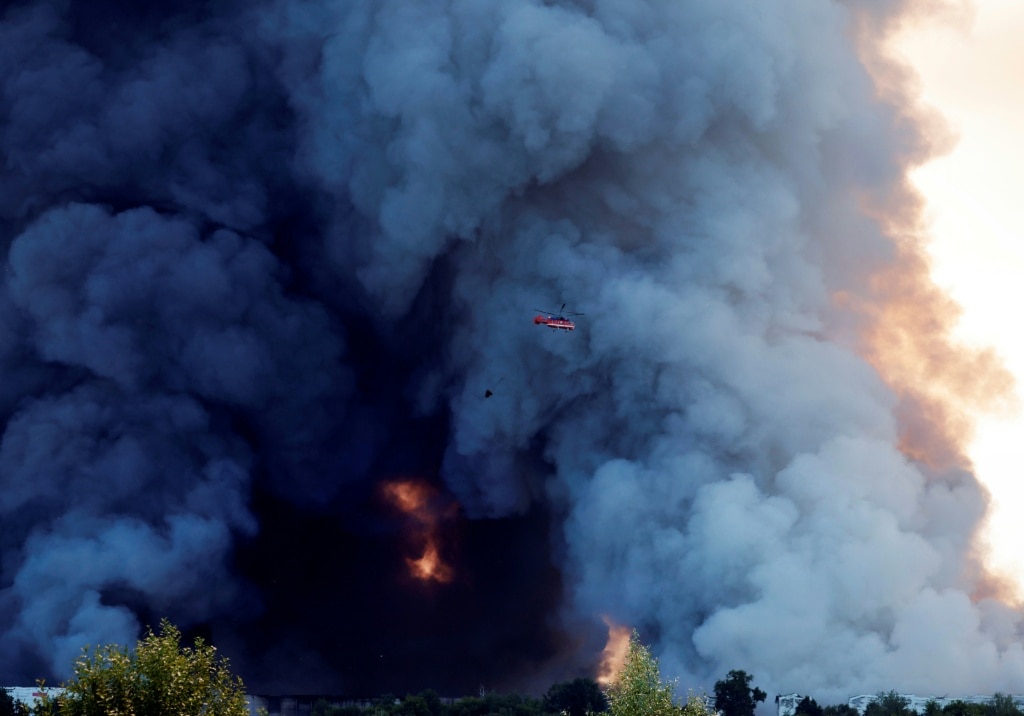
In a sharp escalation of cross-border hostilities between Russia and Ukraine, waves of explosive-laden Ukrainian drones targeted key logistics facilities belonging to Russia’s largest e-commerce retailer Wildberries across the Moscow and Tambov regions on Saturday, leaving eight people dead and triggering massive infernos that filled the sky with thick, dark smoke for hours.
The deadly attack marks a new phase in Ukraine’s months-long campaign of deep strikes into Russian territory, which Kyiv frames as justified retribution for more than four years of continuous Russian bombardment across Ukrainian soil. Dubbed “long-range sanctions” by Ukrainian officials, this campaign has previously focused heavily on Russia’s energy infrastructure, contributing to widespread fuel disruptions in one of the world’s top oil-producing nations.
Saturday’s strikes specifically hit two core Wildberries warehouses, claiming the lives of eight night-shift workers and leaving both facilities nearly completely destroyed by fire. Wildberries CEO Tatiana Kim voiced profound grief over the incident, saying, “A terrible night, terrible events for our company and for our country. It is a pain that cannot be put into words.”
An Agence France-Presse journalist on the ground observed dense black smoke billowing over the Moscow region from early Saturday morning, with the plume lingering until at least late afternoon. Evgeny Pervyshov, governor of the Tambov region located roughly 500 kilometers southeast of Moscow, confirmed seven night-shift employees were killed when an enemy drone struck the local Wildberries logistics center. In the Moscow region, where a second Wildberries warehouse and an adjacent oil depot were hit, regional governor Andrei Vorobyov announced one additional fatality after a wounded person died in hospital.
As of Saturday evening, firefighters continued to battle the remaining blaze in Elektrostal, the Moscow town where the warehouse is located, while the fire in Tambov had already been fully extinguished. Vorobyov added that an empty kindergarten in Elektrostal was also damaged in the strike, though no additional casualties were reported at that site. Regional health officials confirmed that nearly 60 people sustained injuries in the coordinated attacks and were transported to local hospitals for treatment.
Sergei Sobyanin, mayor of Moscow, released details of the unprecedented scale of the overnight drone assault, stating that more than 360 drones were launched toward the Moscow region alone. He added that between July 11 and July 18, Russian air defense systems intercepted nearly 1,900 Ukrainian drones bound for the capital.
In a public post on X confirming the attack, Ukrainian President Volodymyr Zelenskyy framed the strike as a direct response to Russian attacks on Ukrainian civilian infrastructure. “In response to Russian strikes on our civilian infrastructure and on our cities and communities, two major logistics facilities were hit — in the Moscow and Tambov regions,” he wrote. Zelenskyy also alleged that the targeted warehouses were being used to store sanctioned components for Russian drone production and navigation equipment.
The escalation comes amid a broader spike in cross-border hostilities: on the same day as the Wildberries strikes, Russian bombardment of the Ukrainian Black Sea port city of Odesa left one civilian dead and 13 others wounded, as Russian forces continue to ramp up attacks on key Ukrainian port infrastructure.
Ukraine’s sustained campaign of strikes on Russian oil infrastructure has disrupted daily life across Russia more dramatically than at any previous point in the ongoing conflict. Data shows that fuel shortages have impacted nearly 90 percent of Russian regions since June, forcing long lines at petrol stations across the country — a marked shift from the pre-strike era, when fuel was consistently abundant and far cheaper in Russia than in most of Western Europe.
Meanwhile, frontline fighting between the two sides remains largely deadlocked, with Ukrainian defenses slowing Russia’s planned summer offensive to a near standstill. Diplomatic efforts led by the United States to negotiate a end to the conflict remain stalled, as Washington has shifted its foreign policy focus to ongoing tensions with Iran.