作者: admin

  • Russians turn to cash, putting more strain on slowing wartime economy

    Russians turn to cash, putting more strain on slowing wartime economy

    More than four years into Russia’s ongoing conflict with Ukraine, a dramatic shift toward cash transactions is sweeping the country, driven by two interconnected forces: repeated mobile internet shutdowns ordered to counter Ukrainian drone strikes, and growing numbers of businesses turning to off-the-books operations to survive mounting financial and tax pressures.

    New analysis of Russian Central Bank data conducted by the BBC reveals that the nation has injected 1.56 trillion roubles (equivalent to $20 billion or £14.8 billion) into cash circulation since the start of 2026. This marks the largest first-half increase in cash supply outside the acute disruption of the Covid-19 pandemic, underscoring the scale of the current trend.

    The immediate trigger for the latest spike in cash demand has been a series of widespread mobile internet outages implemented by the Kremlin to disrupt Ukrainian drone operations. Without stable connectivity, digital card payments and mobile transactions frequently fail, leaving millions of consumers unable to complete purchases unless they have physical banknotes on hand. For many ordinary Russians, holding cash has become a simple hedge against the uncertainty of wartime life. “Having cash on hand gives you some sense of control and security,” a Moscow resident, speaking on condition of anonymity, told the BBC. “If there’s an emergency in the city, I know I’ll still be able to buy basic necessities, even if the mobile network goes down.”

    This is not the first time cash withdrawals have surged during the war. Previous spikes occurred after President Vladimir Putin announced partial mobilization in September 2022, and again during the short-lived Wagner mercenary group mutiny in June 2023, as Russians rushed to build a financial buffer against chaos. What makes the current shift unique is its lasting impact on state finances, coming at a moment when the Kremlin is already grappling with a widening budget deficit and urgently needs additional revenue to fund its military campaign in Ukraine.

    While Russia’s oil and gas sector – which generates roughly a quarter of all state revenue – has seen a short-term boost from rising global oil prices following the Iran conflict, the broader domestic economy is slowing sharply. In May 2026, the Russian Ministry of Economy downgraded its full-year GDP growth forecast to just 0.4%, which would be the weakest annual expansion the country has seen since 2022.

    To close the budget gap, the Kremlin implemented a controversial tax hike in January 2026, raising the standard value-added tax (VAT) from 20% to 22% and lowering the income threshold that requires small and medium-sized enterprises (SMEs) to pay the tax. The change has squeezed already thin profit margins for countless small businesses, pushing many toward informal cash operations to underreport their income and avoid the full tax burden.

    From neighborhood pharmacies and family restaurants to beauty salons and local corner shops, more merchants are now encouraging customers to pay with cash to keep transactions off official books. “Stalls at our market have been closing one after another because it’s no longer profitable to stay open,” said the owner of a small clothing boutique at a market in Pskov, a western Russian city. “Most of those still trading ask customers to pay in cash whenever they can, so less money goes through the till.”

    The trend extends even to employee wages. Taras Skvortsov, chief financial officer of Sberbank, Russia’s largest financial institution, warned in a recent June 2026 address that there are “very serious signs” of a rise in under-the-table “envelope wages” that avoid payroll tax. Cited by Russian state news agency Interfax, Skvortsov noted: “We are not seeing cash return to the banking system through cash collection, ATMs or self-service terminals. It is staying in people’s hands.”

    A May 2026 survey conducted by Opora Russia, the country’s largest small business association, found that roughly 6% of entrepreneurs have already adopted “grey economy” schemes to cope with the new higher tax burden, including skipping official cash register receipts. For businesses, cash transactions allow them to underreport total turnover to remain below the mandatory VAT threshold, while unreported cash wages cut their payroll tax obligations.

    The growing shadow economy puts the Kremlin in a contradictory position. Cracking down on informal activity has been a top policy priority for the Russian government: before the VAT hike took effect, Putin publicly warned that the new rules must not push businesses into the informal sector, and called for a “radical reduction in illegal employment.”

    Analysts point out that the Kremlin’s own policies are working at cross-purposes. “One arm of the government is trying to squeeze as much money as possible out of people through higher taxes, fines and other charges,” said Alexander Kolyandr, non-resident senior fellow at the Center for European Policy Analysis. “But another, in trying to counter so-called terrorist threats, is undermining that strategy by making it harder to collect tax,” he explained, referencing the routine mobile internet shutdowns that have made digital payments unreliable.

    Even with the Central Bank holding interest rates high to combat war-driven inflation – offering double-digit returns on bank deposits that should incentivize keeping money in accounts – the old Soviet-era habit of holding cash “under the mattress” is making a rapid comeback. Sberbank currently offers a 10% annual interest rate on 100,000-rouble one-year fixed deposits, yet Central Bank data shows that Russians withdrew 550 billion roubles from bank accounts in May 2026 alone, including 200 billion roubles from fixed-term savings products.

    For consumers, the shift is also being driven by businesses offering incentives for cash payments. Anton, a Moscow-based copywriter, told the BBC he recently received a discount for paying cash at a local vinyl record shop, with the vendor openly citing higher taxes as the reason. During the heightened security and mobile internet shutdowns around Russia’s May Victory Day celebrations, Anton said he witnessed widespread disruption at a central Moscow flower market, where customers scrambled to find working ATMs that still had cash available. “There was a woman going from one ATM to another, looking for one that still had banknotes,” he recalled.

  • Immigrants ‘destroying’ Australia, Pauline Hanson claims at CPAC dinner in London

    Immigrants ‘destroying’ Australia, Pauline Hanson claims at CPAC dinner in London

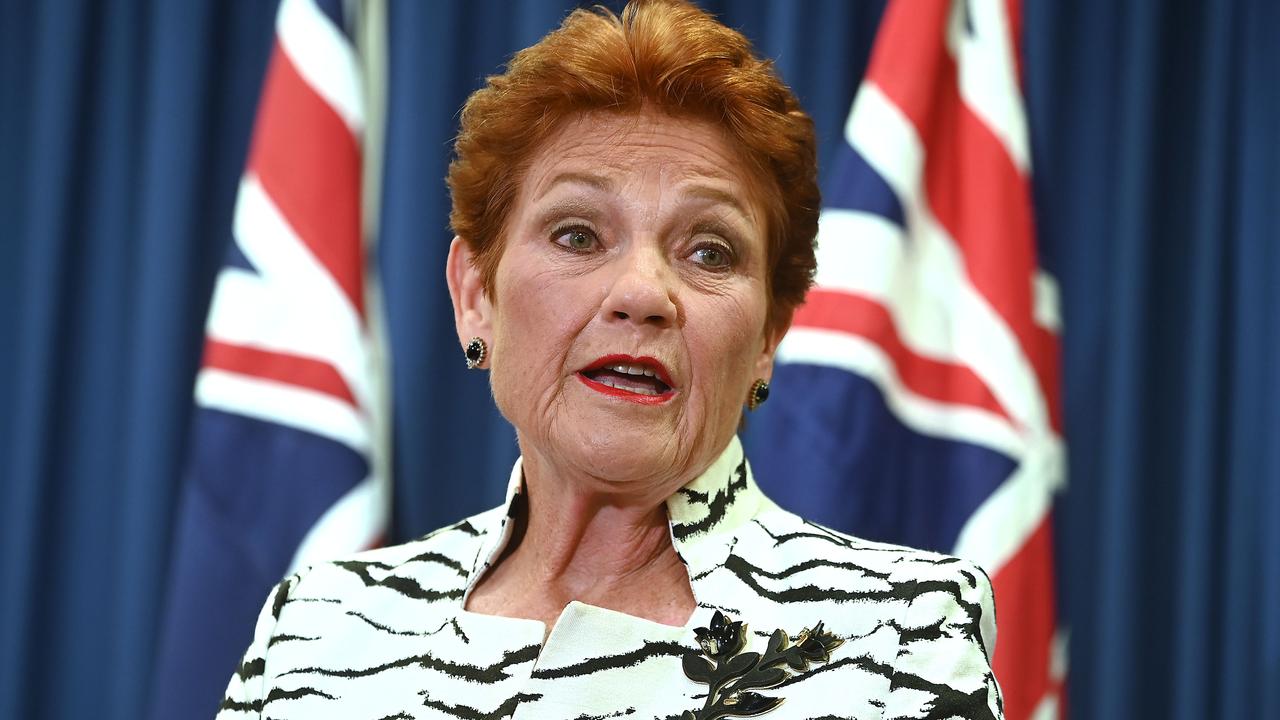
    One Nation party leader and Australian Senator Pauline Hanson has refused to walk back inflammatory remarks about the end of the race-based White Australia policy, doubling down on her anti-immigration rhetoric during a high-profile conservative gathering in London over the weekend. Just one day after sparking widespread public fury for comments lamenting the abolition of the century-old white-only immigration framework, Hanson addressed a black-tie dinner hosted by the Conservative Political Action Conference (CPAC), where she doubled down on her incendiary claims that mass immigration is ‘destroying’ Australia, mirroring what she claims is a crisis unfolding in the United Kingdom.

    Hanson’s latest controversial remarks center on a familiar critique that has defined her political career: she argued that global political leaders are failing to protect national sovereignty, arguing they are increasingly beholden to international special interests rather than the needs of their own domestic populations. She told the assembled conservative audience that the shifts Australia has experienced from decades of high immigration mirror the challenges she says the UK now faces. ‘I see in Australia the problems that you have in Britain. I see immigration is destroying our country as it has destroyed yours,’ Hanson told attendees.

    Hanson’s perspective on UK immigration was shaped by a recent guided tour of Luton, a town located 30 minutes northwest of central London that has become a flashpoint for debates over multicultural integration in the UK. Notably, her tour was led by far-right British activist Stephen Yaxley-Lennon, who is widely known by his professional pseudonym Tommy Robinson. Robinson has a lengthy criminal record that includes convictions for assault, stalking, and public order offenses, and he has previously faced formal investigations over his documented links to Russian state-backed propaganda networks. It was in a separate interview with Robinson that Hanson first made her remarks lamenting the end of the White Australia policy, triggering the initial wave of national and international backlash.

    In her CPAC dinner speech, which was first brought to public attention by *The Sydney Morning Herald*, Hanson also repeated a common grievance among right-wing nationalist circles: she claimed that white communities in both Australia and the UK are being forced to feel collective shame for their national histories and are labeled inherently ‘white privileged.’ She argued that majority populations are being pressured to abandon their long-held national identities to accommodate new immigrant communities, rather than expecting new arrivals to integrate into existing national culture.

    Hanson sought to frame her comments as not inherently anti-immigrant, noting that she has consistently supported immigration by people who commit to integrating into Australian society. ‘I have always welcomed people to Australia, a country built by the migrants that came there for a better way of life,’ she said. ‘And as I said at citizenship ceremonies: I welcome you as long as you give our country your undivided loyalty. But if you don’t, I’ll be the first one to take you to the airport, put you on plane, and wave you goodbye.’

    To contextualize the ongoing controversy, the White Australia policy was formally enshrined in Australia’s 1901 Immigration Restriction Act, a collection of racially discriminatory laws designed to block non-European immigration to preserve a nation dominated by white, British-origin populations. The framework was gradually rolled back through mid-20th century reform, before former Australian Prime Minister Gough Whitlam fully abolished the policy with bipartisan political support in 1973. The controversy has already drawn sharp condemnation from political opponents, with one senior Australian politician already comparing Hanson’s meeting with Robinson to a meeting with Italian fascist dictator Benito Mussolini, and more details on the political fallout are expected to emerge in coming days.

  • Private jets flock to Montana – but locals can’t afford the trailer park

    Private jets flock to Montana – but locals can’t afford the trailer park

    Nestled in the shadow of the snow-capped Rocky Mountains, the rugged, unspoiled beauty of Bozeman, Montana has long drawn dreamers and outsiders seeking a different way of life. For decades, that tight-knit community fit the small-town Western ideal: a mix of back-to-the-land idealists, working cowboys, college students, and seasonal ski workers who called this quiet rural outpost home. Today, that sleepy charm has been replaced by a constant hum of construction, orange traffic cones lining once-quiet streets, and license plates from every corner of the country marking a seismic shift that has split the town along socioeconomic lines.

    Since the start of the COVID-19 pandemic, Bozeman’s population has surged by roughly 20% – an explosive increase for a town that counted fewer than 50,000 residents in 2019. This unprecedented wave of migration has been driven by a perfect storm of overlapping factors. For years, Montana has attracted conservative transplants from across the U.S., drawn to the state’s long-held cultural celebration of rugged individualism and self-reliance, as well as its tax policies that eliminate sales, luxury, and inheritance taxes. That trickle of new arrivals turned into a flood during the public health crisis, as thousands fled dense, locked-down coastal cities on the East and West Coests for open space and lower restrictions. “Their numbers increased exponentially as droves began fleeing the Covid mess … on the East Coast and West Coast,” explains Mark Corner, president of Southwest Montana Realtors.

    One major cultural catalyst that accelerated outside interest has been dubbed the “Yellowstone Effect.” The hit Paramount drama *Yellowstone*, starring Kevin Costner, depicts sweeping, cinematic shots of Montana’s dramatic landscapes and romanticized ranching life, drawing millions of viewers who fell in love with the state on screen. “Everyone in Montana believes the Yellowstone television show, with its dramatic scenery and montages of Montana life and how beautiful it is here… had an impact on the housing market,” says Jeff Michael, director of the Bureau of Business and Economic Research at the University of Montana.

    The result has been a skyrocketing of real estate and rental prices that has priced generations of local working-class residents out of the market. Corner notes that home values jumped 40% across the region in just two years, and costs continue to climb. During the pandemic, local buyers were routinely outbid by all-cash offers from out-of-state purchasers, many of whom bought homes sight unseen. The trend became so common that the Montana Association of Realtors was forced to add a new disclosure form to its standard contract library to address the practice.

    Downtown Bozeman has been transformed in lockstep with the housing market. Long-standing local small businesses have been displaced by upscale boutiques, custom cowboy hat shops catering to tourists, and bespoke steakhouses that cater to new wealth and out-of-state visitors. The city’s airport, currently undergoing a major expansion, now regularly sees 80 to 100 private jets parked on its tarmac on any given day, most shuttling wealthy guests to the exclusive Yellowstone Club in nearby Big Sky – a gated resort community where A-list celebrities including Justin Timberlake and Tom Brady own multi-million-dollar vacation properties.

    For working-class renters and low-income homeowners, the shift has been devastating. One-bedroom apartments now routinely rent for $2,000 or more per month, a rate out of reach for many single-income local households. Many long-term residents have been forced to leave Bozeman entirely, while those who stay often work two or three jobs to make ends meet, share homes with roommates, or commute long distances from more affordable communities outside city limits. Even residents who own their own mobile homes, a historically affordable housing option, have not escaped the crisis. Lot rents, the monthly fee mobile home owners pay to park their homes on community land, have surged across the city.

    Seventy-three-year-old Sara Folger, a former city grants administrator who has lived in the Mountain Meadows mobile home park for 17 years and now works part-time at Montana’s first Whole Foods (which opened in 2023), has watched her lot rent nearly double over the course of her tenure. For many of her neighbors, the mobile home park is the last affordable option in the city. “There are so many people here [for whom] this is their last stop,” Folger says. “They have no place to go. They don’t have the money to pay the rent. There’s no housing for them that they can afford. There’s nothing. Where are they going to go?”

    In May 2024, residents of two Bozeman mobile home parks organized Montana’s first rent strike in 50 years, pushing back against a planned $100 monthly increase in lot rents. After the strike, the park was sold to a new management company based in California, leaving the long-term future of residents and their homes uncertain. For many owners, moving an aging mobile home is not a viable option: “You can’t move a mobile home that’s been sitting for 25 years. It will disintegrate,” says 35-year-old Mountain Meadows resident Ben Moore, who moved to the park as a high school student with his father. “The only equity I have is in this trailer. It’s the same for a lot of people … even if we could move the trailer, where are you supposed to move it to?”

    The growing anger over the housing crisis and the displacement of working-class locals has sparked a grassroots political shift in the city. In November 2023, 28-year-old Joey Morrison, a progressive candidate who ran on a platform of expanding affordable housing, was elected mayor. Morrison, who grew up in eastern Montana to a nurse mother and incarcerated father, was a founding member of Bozeman Tenants United, the local union that helped organize the mobile home park rent strike. He personally understands the impact of skyrocketing rents: a decade ago, he paid $333 per month for a room in a duplex; that same room now rents for $900. Today, he still lives with his fiancée and two roommates to afford housing in the city he leads.

    Morrison’s election was part of a broader wave of young progressive candidates winning office on promises to defend working-class Montanans. In December 2023, 25-year-old local activist Katie Fire Thunder was appointed to a seat in the Montana House of Representatives, and 31-year-old union leader and former smokejumper Sam Forstag recently defeated an establishment candidate to win the Democratic nomination for Montana’s 1st congressional district. “Young people have seen, right in front of our very eyes, the way that our leaders currently are not making decisions that are protecting us,” Fire Thunder says. “They are making reactionary, short-term decisions that are benefiting… the wealthiest in this state, while we are all watching and are like: This is not how Montana works or Montana runs.”

    Today, the stark divide between old and new Bozeman is visible everywhere, from the crowded downtown coffee shops full of remote workers coding on laptops, to the $170 whiskey pours on offer at swanky new downtown eateries. When a Colorado visitor visiting for his son’s Montana State University orientation noted the whiskey list was priced four times higher than what he pays at home, a nearby out-of-state sales rep summed up the new reality simply: “That’s Bozeman.”

  • US and Israel used Karim Khan misconduct claims to ‘defang’ ICC, says former EU top diplomat

    US and Israel used Karim Khan misconduct claims to ‘defang’ ICC, says former EU top diplomat

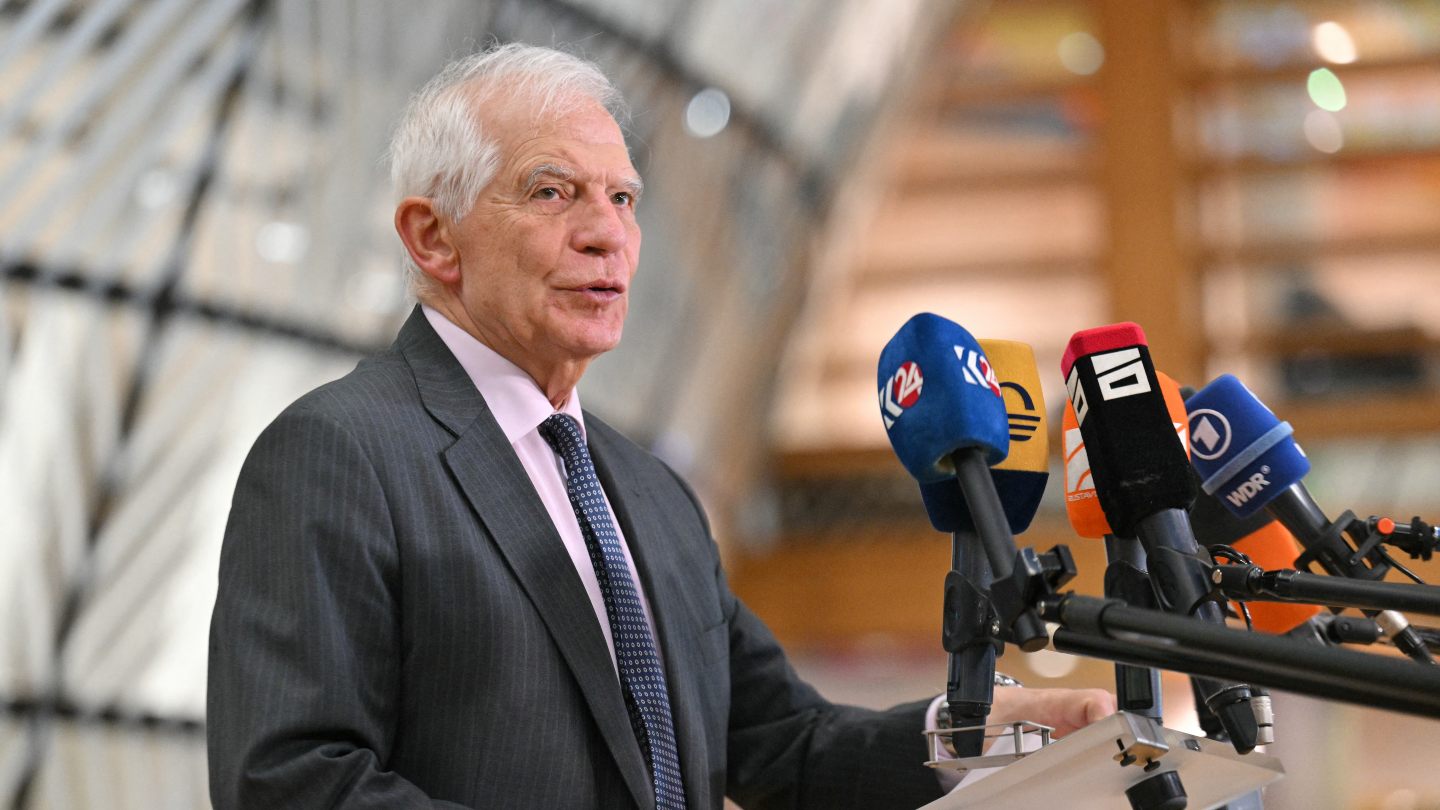
    A former top European Union diplomat has leveled explosive accusations that the United States and Israel are leveraging unproven sexual misconduct claims against International Criminal Court (ICC) Chief Prosecutor Karim Khan to advance a long-held goal: disabling the global court from the inside out. In a Friday opinion piece published by Project Syndicate, Josep Borrell, the former EU High Representative for Foreign Affairs, is calling on ICC member nations to defend fair legal procedure when they vote on Khan’s future next week.

    “Some institutional failures do not stem from public scandal, but from deliberate procedural sabotage, where acts of undermining are disguised under the rhetoric of good-faith investigation and accountability,” Borrell wrote in the piece. “By the time the true nature of what is unfolding becomes clear, irreversible damage has already been done. I fear this is exactly what we are witnessing in the coordinated attacks against Karim Khan. Recent developments align perfectly with objectives Washington and Jerusalem have spent months advancing.”

    The 125-member Assembly of States Parties (ASP) to the Rome Statute, the governing body of the ICC, is scheduled to cast its decisive vote on Khan’s tenure at United Nations Headquarters in New York on 24 July. The vote follows a June decision by the ASP’s 21-member executive bureau, which voted by a two-thirds majority last month to find Khan committed “serious misconduct” — a ruling that directly contradicts the findings of an independent judicial panel appointed by the bureau itself. That panel concluded evidence compiled from a United Nations investigation into the allegations was insufficient to confirm any form of misconduct. Khan has forcefully denied all accusations of wrongdoing and breach of professional duty.

    Borrell points to a series of irregular procedural changes first exclusively reported by Middle East Eye that break the ICC’s own established rules. Originally, the removal process was structured as two separate votes: first, a vote to confirm whether serious misconduct occurred, followed by a second vote to decide on removal if misconduct was upheld. Under the Rome Statute’s Article 46, a finding of misconduct requires a two-thirds majority of states present and voting, while a final removal vote needs an absolute majority of 63 out of the 125 total ASP members. The ASP’s own March procedural guidance, seen by Middle East Eye, explicitly outlined this two-step process. Despite this, the bureau chose to merge the two votes into a single ballot that requires only an absolute majority to remove Khan immediately.

    The contours of the misconduct allegation have also shifted dramatically, Borrell argues. In a confidential June 8 bureau decision obtained by Middle East Eye, the body claimed it had found “beyond reasonable doubt” that Khan engaged in a sexual relationship with the complainant, arguing that such a relationship was inherently inappropriate due to the power imbalance between the two. This reframing directly deviates from the original non-consensual sexual misconduct allegations that formed the core of the investigation and subsequent media leaks. Both Khan and the complainant have denied the existence of any consensual sexual relationship.

    Borrell warns that this procedural manipulation lowers the bar for removal dramatically. “This is no trivial procedural change. Folding the second vote into the first — on an accusation that remains unproven — allows for removal based on an unsubstantiated claim, or even a completely new allegation no one ever raised, such as an abuse-of-authority consensual relationship,” he wrote.

    Tracing the origins of the campaign against Khan to a direct threat from U.S. lawmakers earlier this year, Borrell notes that in April 2024, a bipartisan group of U.S. senators explicitly warned Khan that moving forward with an arrest warrant for Israeli Prime Minister Benjamin Netanyahu would make him a target for retaliation. Despite the threat, Khan proceeded to file applications for arrest warrants against Netanyahu, former Israeli Defense Minister Yoav Gallant, and three senior Hamas officials. This was not the first time Khan has pursued warrants against high-profile leaders who had long been considered untouchable: under his tenure, the ICC has also secured warrants for Russian President Vladimir Putin, former Philippine President Rodrigo Duterte, and senior Taliban leadership.

    Borrell frames the attack on Khan as part of a broader, well-documented offensive to dismantle the ICC entirely. He points to a recent Wall Street Journal op-ed by U.S. Secretary of State Marco Rubio, who openly stated the current U.S. administration intends to dismantle the court “brick by brick.” Washington has already imposed harsh sanctions on 11 senior ICC officials, including Khan, two deputy prosecutors, and eight judges: the sanctions have frozen their personal bank accounts and restricted access to services provided by major global tech and finance platforms including Apple, Amazon, and PayPal.

    Citing reporting from The Financial Times, Borrell also revealed that former U.S. President Donald Trump, during a May 2025 meeting with Chinese President Xi Jinping, proposed that China and Russia — neither of which are parties to the Rome Statute — join the U.S. campaign against the court. Borrell argues this move directly undermines the U.S.’s official justification for its anti-ICC campaign, which it frames as a defense of national sovereignty. “That America’s chosen partners in this crusade are precisely the two countries with the greatest reason to fear the court says more about the real purpose of the operation against Khan than any official communique about sovereignty,” he wrote.

    “Both the Trump administration and Prime Minister Netanyahu want the same outcome: to ensure that no international court can hold soldiers, state officials, or their allies accountable, no matter how severe the allegations of war crimes and crimes against humanity,” Borrell added. “Both see the so-called ‘Khan scandal’ as the perfect opportunity to defang the court permanently. They do not need to destroy it from the outside when they can convince its own member states to hollow it out from within, ignoring a formal judicial finding to stage a political vote against the man who issued the arrest warrants that most inconvenienced them.”

    Closing his argument, Borrell praised Khan for his willingness to pursue high-profile suspects that would have been off-limits in the court’s earlier history. “At a time when international criminal justice and the global rule of law are facing a full-scale frontal assault, not least from indicted war criminals themselves, he deserves the full recognition and support of the international community,” he concluded.

  • Man arrested, charged after alleged stabbing at Bondi Beach

    Man arrested, charged after alleged stabbing at Bondi Beach

    A violent late-night altercation at one of Sydney’s most iconic coastal destinations, Bondi Beach, has left one man hospitalized and another in police custody, after an alleged stabbing incident in the early hours of Saturday night. Emergency services responded to calls for assistance at approximately 11:15 pm on Warners Avenue, where officers located a 33-year-old man suffering from multiple stab wounds concentrated on his face and hands. First responders from New South Wales Ambulance provided urgent on-site medical care to the victim before transporting him to St Vincent’s Hospital. As of the latest update from police, the victim remains in a stable condition as he receives treatment for his injuries. Within a short window following the attack, law enforcement officers took a 32-year-old suspect into custody at a residential property on Ramsgate Avenue, where a crime scene has been cordoned off for forensic examination. The suspect was transported to Surry Hills Police Station for processing, where he was formally charged with reckless wounding. He has been denied bail and is scheduled to make his first court appearance on Sunday. Authorities have not yet released details on the suspected motive behind the attack, and the investigation remains ongoing, with additional updates expected to be released as more information becomes available.

  • Social media influencers Andrew and Tristan Tate arrested in Miami, US Marshals Service tells AP

    Social media influencers Andrew and Tristan Tate arrested in Miami, US Marshals Service tells AP

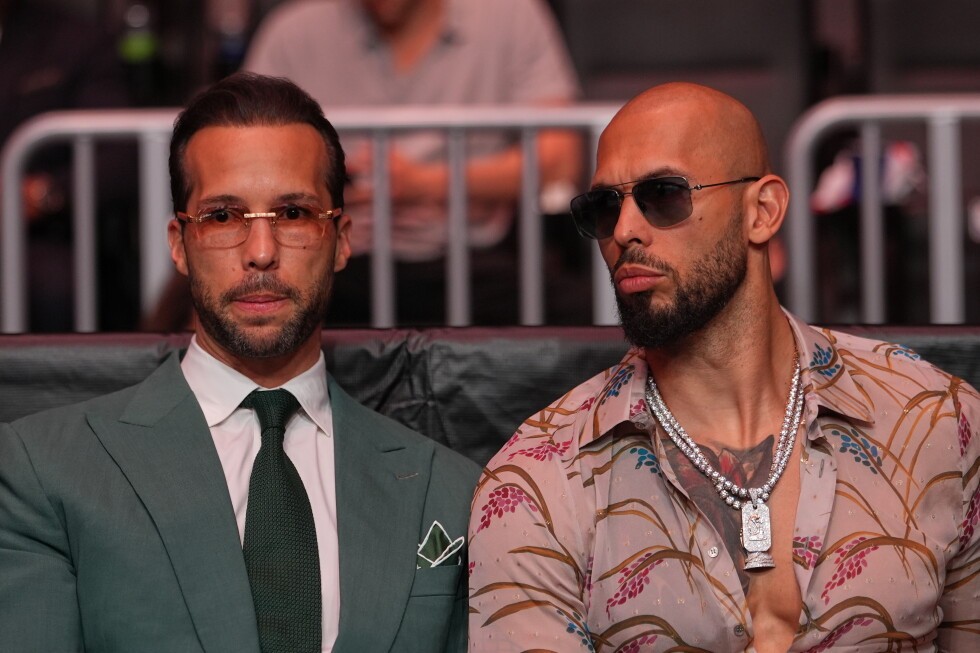
    Controversial social media influencers Andrew and Tristan Tate have been taken into federal custody by U.S. Marshals in Miami, according to official statements from the agency. The arrest, carried out on Saturday, centers on a sealed arrest warrant that has not yet been released to the public, per U.S. Marshals spokesperson Brady McCarron, who confirmed the details to The Associated Press.

    Hours after the Miami arrest, the Crown Prosecution Service (CPS), the UK’s public prosecution body, publicly confirmed that British authorities are moving forward with a formal extradition request for the two brothers. The new charges from UK prosecutors include rape and organized sex trafficking, with the alleged offenses spanning from 2010 through 2017. Specifically, prosecutors say the alleged abuse occurred between 2012 and 2015 in a region north of London, where the pair grew up.

    Both Andrew and Tristan Tate, who are dual citizens of the United States and the United Kingdom, relocated to Romania in 2016. The pair, both former professional kickboxers, rose to global fame by cultivating a persona centered on extreme hypermasculinity, a lavish luxury lifestyle, and unapologetic misogyny, amassing millions of followers across major social media platforms. Their audience draws heavily from young men and adolescent boys, making their controversial ideological stances a frequent topic of public debate worldwide.

    This is not the first time the brothers have faced criminal allegations related to sexual exploitation. In 2022, Romanian authorities arrested the pair on charges that they ran a criminal scheme to lure women into coerced sexual exploitation. The brothers have consistently denied all wrongdoing in every case brought against them, and the 2022 Romanian charges never proceeded to trial after legal and procedural irregularities were identified in the handling of the case. Defense representatives for the Tate brothers have also reaffirmed their clients’ denial of the new UK allegations.

  • Kylian Mbappé passes Lionel Messi for career World Cup scoring record with 22 goals

    Kylian Mbappé passes Lionel Messi for career World Cup scoring record with 22 goals

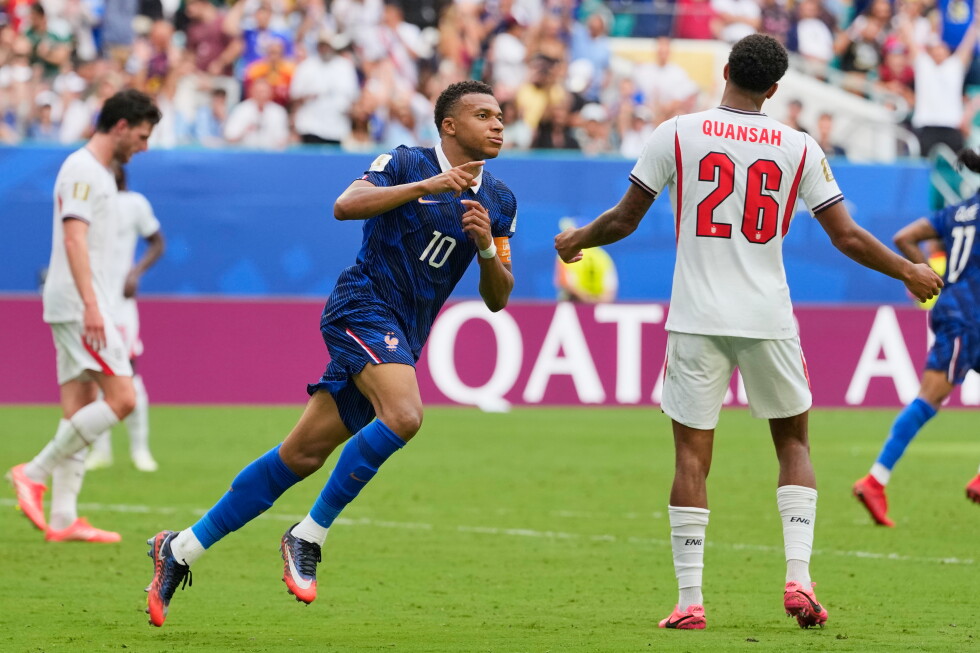
    MIAMI GARDENS, Florida — The 2024 FIFA World Cup third-place match between France and England entered the history books on Saturday, as Kylian Mbappé cemented his status as the greatest goalscorer in World Cup history by overtaking legendary Argentine forward Lionel Messi on the all-time tournament scoring chart.

    Mbappé’s two goals against England pushed his career World Cup goal tally to 22, one clear of Messi’s previous record of 21. The outpouring of goals also keeps him firmly on track to claim a second Golden Boot, the individual honor awarded to the tournament’s top goalscorer. He currently holds 10 goals at this year’s competition, holding a two-goal advantage over Messi, who is competing for Spain in Sunday’s World Cup final.

    The match unfolded with England taking a dominant 4-0 lead heading into halftime, putting France in a difficult position to climb back for the win. Mbappé opened his account in the 48th minute, flicking a clever shot past England backup goalkeeper Dean Henderson to put France on the board. Eighteen minutes later, he netted his second of the match and record-breaking 22nd career World Cup goal with a powerful left-footed strike from 14 yards out, beating Henderson once again to find the back of the net.

    Mbappé’s second strike pulled France within one goal of England at 3-4, though Les Bleus could not find the late equalizer needed to force extra time or turn the tie around. France’s run to the third-place match marked a near repeat of their consecutive final appearances in 2018 and 2022, but their bid for a third straight final spot fell short against Spain in a tightly contested semifinal defeat.

    This is not the first time Mbappé has challenged Messi for World Cup honors. Four years ago at the 2022 Qatar World Cup, Mbappé scored eight goals to claim the Golden Boot, even as France fell to Messi’s Argentina in a dramatic final that was decided by a penalty shootout.

    Unlike the high-stakes pressure of the semifinal and final rounds, the third-place match is often seen as a contest that offers little more than a moral victory for eliminated teams. For Mbappé, however, it provided the perfect stage to etch his name deeper into World Cup history, with the Golden Boot also still within reach. England, meanwhile, fielded a weakened starting lineup for the match, with star forwards Harry Kane and midfield playmaker Jude Bellingham held out of the starting XI and never entering the match even after halftime.

  • England holds on with 13 men to beat Argentina 31-26 in a match of 7 yellow cards

    England holds on with 13 men to beat Argentina 31-26 in a match of 7 yellow cards

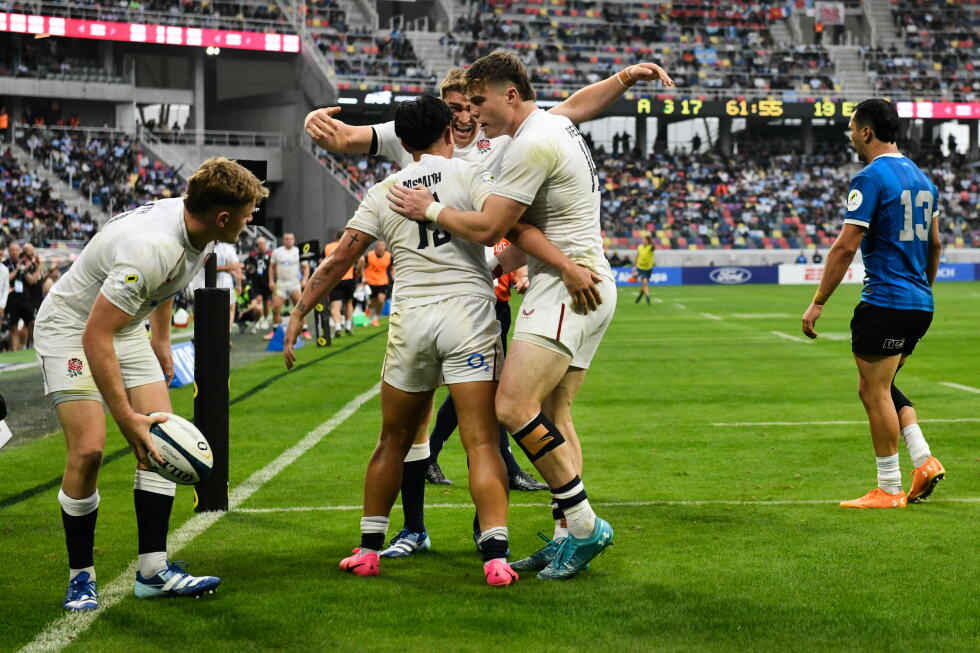
    In a rugby test match that will go down as one of the most dramatic and unconventional in recent memory, England clung to a narrow 31-24 victory over Argentina on Saturday in Santiago del Estero, walking away with a critical bonus point despite being reduced to 13 players twice during a tense, card-marred contest.\n\nThe game was framed by pre-existing tension between the two nations, stoked by Argentina’s upset semifinal win over England at the 2023 Rugby World Cup. The host side amplified the emotional stakes ahead of kickoff: Argentina players wept as their national anthem played, and the team donned special dark blue jerseys to honor Diego Maradona — the legendary Argentine soccer star whose 1986 \”Hand of God\” goal eliminated England from the soccer World Cup, a moment that remains a source of friction between the two countries. A statue of Maradona stands just outside Saturday’s match venue, making the tribute an evocative nod to that historic rivalry.\n\nEngland defused the early hostile energy with a blistering opening, crossing for a try through winger Tommy Freeman just four minutes into the match, followed by two more tries from backrower Ben Earl that put the side up 19-3 by halftime. England captain Jamie George had publicly threatened to pull his team off the pitch if players faced racial abuse, but while there was occasional pushing and shoving after tries, the match stayed largely free of off-field controversy through 80 minutes.\n\nThe complexion of the game flipped dramatically in the opening 15 minutes of the second half, as Argentina mounted a fierce comeback. After gaining their first meaningful possession of the half, the Pumas worked the ball out to their backs, and Mateo Carreras powered through a tackle to score a try, cutting England’s lead to nine points. England quickly lost a player to the sin bin, when Jack van Poortvliet received a yellow card for a deliberate knock-on. Alex Coles followed just minutes later, after he conceded a penalty try while stopping a breakaway that would have resulted in an Argentina try, leaving England with only 13 players on the pitch.\n\nArgentina’s momentum turned the match into a back-and-forth thriller that saw a total of seven yellow cards handed out. Both sides were reduced to 13 men at one point, after Joaquin Oviedo and Santiago Carreras of Argentina were carded for a neck roll and professional foul, followed later by yellows for England’s Henry Pollock (for repeated team infringements) and debutant Emmanuel Iyogun (for cynical play).\n\nDown to 13 men and clinging to a two-point lead, England mounted a legendary defensive stand, repelling wave after wave of Argentina attacks. As sin bin terms expired and England slowly restored their full complement of players, the side shifted back into attack, scoring late tries through Marcus Smith and Manny Feyi-Waboso to push their lead out to 31-19 and seemingly put the game out of reach.\n\nThe drama was far from over, however. Justo Piccardo scored for Argentina in the 79th minute, narrowing the margin to seven points. Three minutes after the final siren sounded, winger Bautista Delguy crossed in the corner for what looked like a match-tying try. Australian on-field referee Angus Gardiner initially awarded the score, but after a lengthy review with the television match official, the try was overturned, and the match was called to a close, denying Argentina the draw they had fought hard to secure.\n\nArgentina captain Julian Montoya expressed quiet frustration after the late call, but accepted the outcome. “We always respect the ref. It’s part of our values,” he said. “We respect the decision. Of course I’m a bit frustrated but it is what it is.”\n\nFor England, the win capped a tumultuous, underwhelming season with a much-needed statement of grit. Jamie George hailed his side’s resilience after holding off Argentina’s surge through two stints down to 13 men. “The way that we rallied, the way we got around each other, the way that we fought when we got down to 13 men, twice, was brilliant. That’s a big win,” George said. “We made life so hard for ourselves, dropping down to 13 again but a lot of it goes down to the amount of pressure Argentina put us under.”

  • Perth and Adelaide dominate list of Australia’s next million-dollar suburbs

    Perth and Adelaide dominate list of Australia’s next million-dollar suburbs

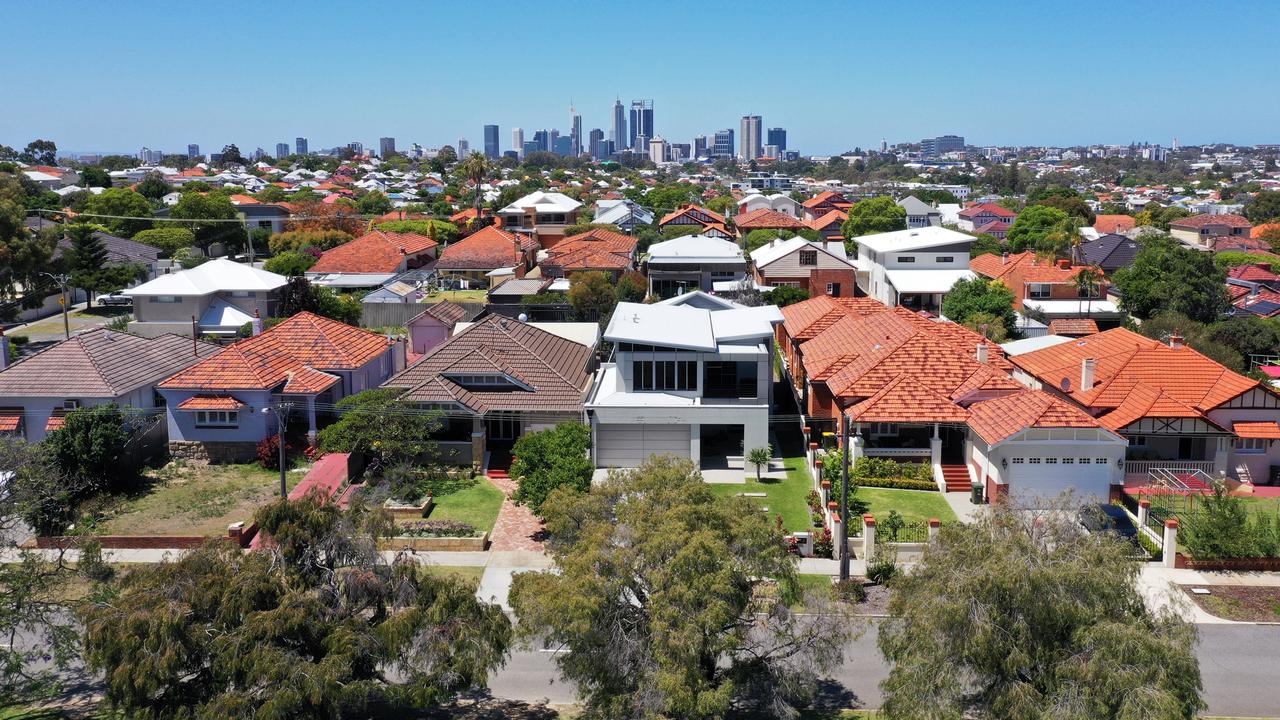
    Australia’s property market is shifting in unexpected ways, with two mid-sized capital cities outpacing the country’s traditional high-price hubs to top a new forecast of suburbs poised to hit a $1 million average house price within the next 12 months.

    Leading national real estate network Ray White Group conducted the targeted analysis to identify upcoming seven-figure suburbs, setting specific criteria for inclusion: neighborhoods must hold at least 2,500 existing homes, currently have an average property value between $900,000 and $1 million, and record enough annual price growth to cross the $1 million threshold in the coming year. Analysts also filtered out suburbs where investor ownership exceeds 19 percent to focus on owner-occupier focused markets.

    Contrary to long-held market expectations that link million-dollar price tags almost exclusively to Sydney and Melbourne, the final list is overwhelmingly dominated by suburbs from Perth and Adelaide. Nine of the 13 identified suburbs are located across Perth’s growing outer corridors, including High Wycombe, Marangaroo, Yangebup, Forrestfield-Wattle Grove, Wanneroo-Sinagra, Huntingdale-Southern River, Ballajura, Casuarina-Wandi and Hocking-Pearsall. Three Adelaide suburbs made the cut: Shadow Park-Trott Park, McLaren Vale and Golden Grove, while Darwin’s Howard Springs rounded out the ranking.

    Atom Go Tian, an economist with Ray White Group, explained that two key factors are driving the unexpected result. First, Perth and Adelaide are simply playing catch-up after years of lagging behind the east coast’s major property markets. Second, post-pandemic shifts in work and lifestyle priorities have reshaped where homebuyers are choosing to put down roots.

    “With far more flexible remote working arrangements now standard across many industries, there is far less pressure for Australians to live in the expensive major hubs of Sydney and Melbourne,” Go Tian noted. He added that the absence of Sydney and Melbourne suburbs from the list is not a sign of stagnation: most suburbs in those cities have already crossed the $1 million average price threshold, while any remaining affordable pockets tend to have higher investor ownership that excludes them from the study’s criteria.

    Go Tian also explained the geographic pattern within the two leading cities: inner-city suburbs in both Perth and Adelaide have already hit seven-figure price points, so growth is now pushing outward into historically affordable outer suburban areas. That trend is visible in Perth’s sprawling outer growth corridors and Adelaide’s southern and northern suburban belts, where all three of the city’s ranked suburbs are located.

    Western Australian property experts say Perth’s strong showing on the list comes as no surprise, pointing to years of consistent incremental growth that has put the market on this trajectory. Suzanne Brown, president of the Real Estate Institute of Western Australia (REIWA), described the growth across Perth’s broader suburban areas as “incredible” in recent years.

    “Perth has offered really strong property value for buyers in recent years – we have a beautiful state with a high quality of life that more people are discovering,” Brown said. She noted that Perth’s market hit a historic low point more than a decade ago, and has been steadily catching up to other capital city markets ever since. Brown also pointed to Western Australia’s long-term political stability as a draw for buyers, contrasting it with frequent changes to property tax and policy in other states like Victoria that have created uncertainty for local homeowners and investors.

    Brown echoed Go Tian’s observation that the Covid-19 pandemic unlocked permanent shifts in where Australians want to live. “Perth and Adelaide are both fantastic places to call home, and since the pandemic, more people have the flexibility to choose that,” she said. “If your role allows remote work, you don’t have to live in Melbourne to work for a Melbourne-based company anymore.”

    For homebuyers and investors watching the Australian market, the forecast signals a broader rebalancing of property prices across the country, as more affordable lifestyle-focused capital cities gain traction with a new generation of buyers reshaping market trends.

  • Iran declares Islamabad agreement suspended, blames US violations

    Iran declares Islamabad agreement suspended, blames US violations

    Tensions between Iran and the United States have reached a new critical juncture, with Tehran formally announcing it has abandoned all obligations under the Islamabad Memorandum of Understanding (MoU), a Pakistan-brokered truce deal reached just months ago to de-escalate open hostilities between the two nations. The official announcement, made Saturday by Iran’s Deputy Foreign Minister Kazem Gharibabadi, represents the clearest break yet from the June agreement, with Gharibabadi directly blaming the United States for triggering the suspension through its own repeated violations of the deal’s terms. As the announcement landed, ongoing military exchanges between the two sides continued to intensify, raising fears of a broader regional escalation that could draw in neighboring states. Signed in June following weeks of open armed conflict, the 14-point Islamabad MoU outlined a clear path toward de-escalation: it included commitments to reopen the strategically vital Strait of Hormuz, end the US naval blockade of Iranian assets, and roll back military operations in a phased, reciprocal process. But according to statements carried by Iran’s state-owned Fars News Agency, Gharibabadi said Washington failed to uphold its end of the bargain. “The US has violated and suspended all its commitments within the framework of the Islamabad MoU,” Gharibabadi told the outlet. In response, Tehran has mirrored the action, halting all its own obligations under the agreement. “We also likewise have suspended all of our commitments as a result; we are no longer implementing those commitments,” added Gharibabadi, who leads Iran’s technical negotiating team for discussions with international parties. “We are now busy defending the country.” This formal suspension comes after weeks of rising tensions: Iranian officials had previously warned that continued US military attacks would put the entire truce at risk. The break from the agreement coincides with a sharp intensification of conflict across the region. Iran’s Ministry of Health confirmed that US military strikes carried out since July 6 have killed at least 50 Iranian civilians and left more than 500 others wounded. The Islamic Revolutionary Guard Corps (IRGC), Iran’s elite military force, has also issued a stark warning to nations that host US military assets on their territory, stating that any support for US attacks will be met with a proportional reciprocal response. Overnight US strikes caused further civilian disruption, damaging a key desalination facility that supplies drinking water to roughly 10,000 Iranians. The strike signals that the conflict has entered a new, more unstable phase, with spillover effects already being felt across the Gulf region. Bahraini authorities activated air raid sirens multiple times in recent days as authorities prepared for potential incoming attacks, while Kuwaiti military forces confirmed they have intercepted several missiles and drones launched toward the country. The breakdown of the Pakistan-mediated deal marks a major setback for regional diplomacy, ending the brief window of de-escalation that opened earlier this year and raising the risk of a full-scale regional conflict in the Middle East.