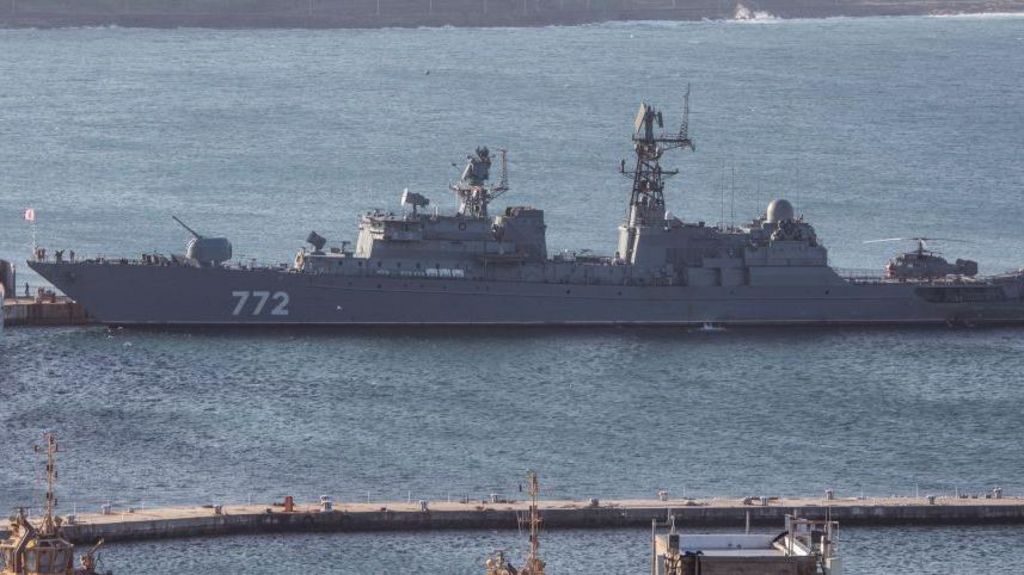
On Monday, a Russian guided-missile frigate carried out a 30-minute live-fire artillery exercise in international waters just 40 nautical miles south of the British coastal city of Plymouth, with a British Royal Navy patrol vessel shadowing and monitoring its movements the entire time. A UK Ministry of Defence spokesperson confirmed that Royal Navy assets have remained on station to closely track every movement of the Russian warship, identified as the Neustrashimy.
Multiple defense sources familiar with the incident told the BBC that the Russian vessel’s activity drew coordinated surveillance from both British and French military assets. A French military patrol aircraft made direct radio contact with the Neustrashimy to request clarification of the frigate’s operational intentions ahead of the exercise. Notably, Russian commanders themselves pre-notified the Royal Navy offshore patrol vessel HMS Tyne of their plan to conduct gunnery drills before opening fire, and formally requested the British vessel reposition to a safer distance, a request that HMS Tyne complied with immediately.
This latest encounter comes amid a documented spike in Russian naval activity near British territorial waters over the past several months, and analysts note it will put the issue of Russian maritime assertiveness front and center for the UK’s incoming prime minister Andy Burnham. UK defense officials have declined to speculate on whether the timing of the exercise, which coincided with the start of Burnham’s premiership, was intentional.
The incident follows a series of high-profile interactions between Russian naval assets and UK forces in the English Channel in recent months. Just one month prior, Royal Marine Commandos carried out a landmark six-hour boarding operation on a Russian “shadow fleet” oil tanker in the channel, the first such operation ever conducted by UK armed forces. In June, a British civilian couple sailing their yacht in international waters encountered another Russian frigate, the Admiral Grigorovich, roughly 23 miles off the Isle of Wight. The frigate fired warning shots after Russia’s defense ministry claimed the yacht made a dangerous approach, but the couple rejected that account, insisting they were never on a collision course with the warship.
While these high-visibility encounters have stoked tensions, it remains standard practice for Russian warships to transit through the international waters of the English Channel, which are legally separated from the territorial waters of both the UK and France.