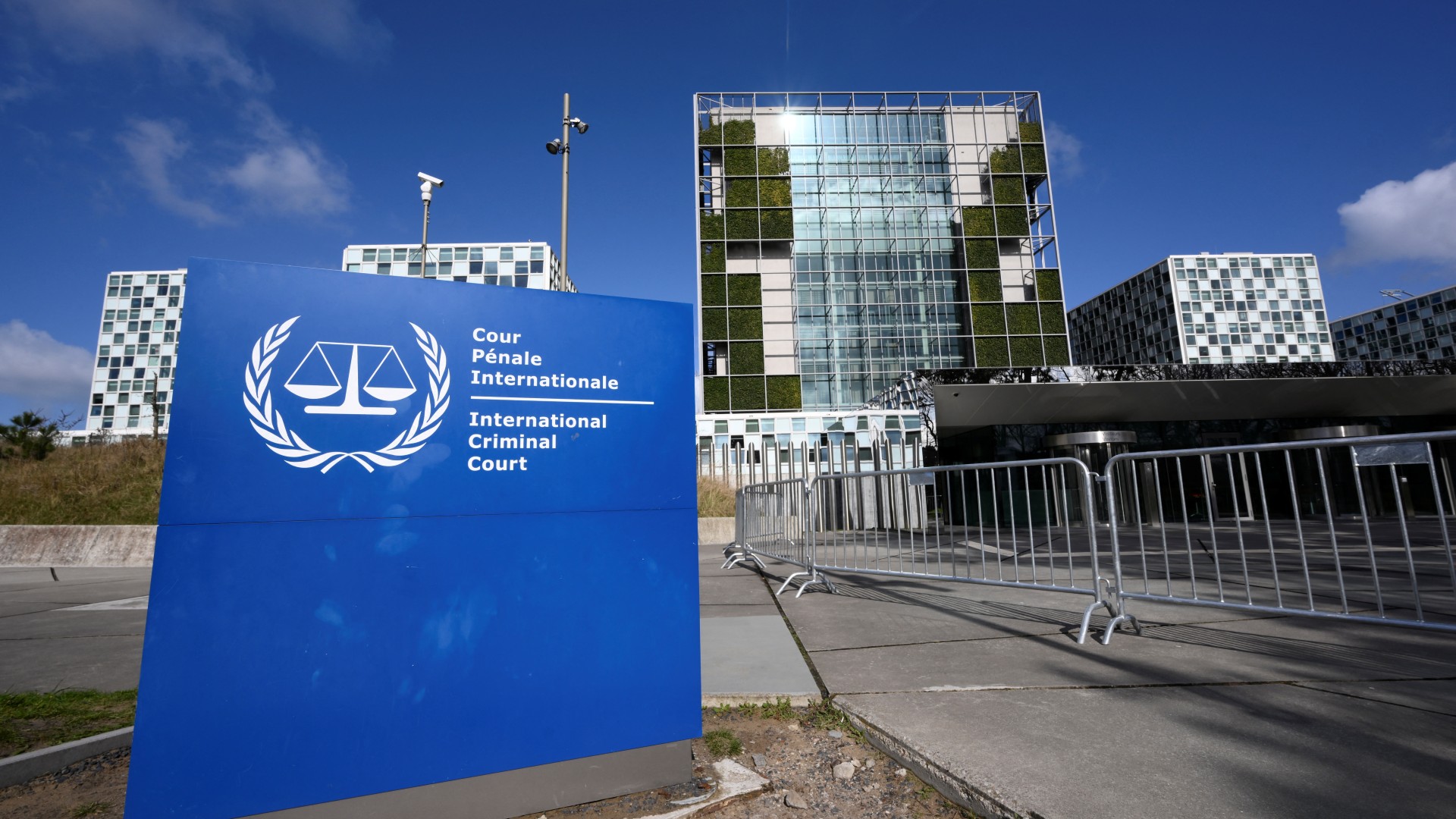
A high-stakes controversy has erupted at the International Criminal Court (ICC) after a veteran former United Nations investigations chief publicly condemned the ICC’s governing bureau for suspending Prosecutor Karim Khan over misconduct claims, calling the action a coordinated, unfair “stitch-up” that undermines fundamental principles of justice. \n\nBen Swanson, who previously served as UN Assistant Secretary-General and deputy head of the UN Office of Internal Oversight Services (OIOS) — and previously led OIOS’ Investigations Division — has submitted four successive expert opinions to the 21-member bureau of the ICC’s Assembly of States Parties (ASP) over the past year. All four opinions, commissioned by Khan’s legal defense team, criticize the procedural irregularities that have marred the misconduct probe and the bureau’s subsequent handling of the case. \n\nSwanson’s most recent submission, dated June 28 and obtained by Middle East Eye via independent sources, directly challenges the bureau’s June 8 decision to suspend Khan, which came after a majority of bureau members ruled he had committed \”serious misconduct.\” Critically, this ruling directly contradicts the unanimous finding of a three-judge independent panel appointed by the bureau itself, which concluded in March that the evidence collected by the UN-led investigation did not prove misconduct or breach of duty under ICC rules. \n\nAfter reviewing both the judges’ panel report and the bureau’s final decision, Swanson wrote, \”I am of the opinion that the Prosecutor is the victim of a massive ‘stitch-up’ and given what has happened since the release of the Panel’s Report I doubt whether justice will be done or seen to be done.\” \n\nSwanson accuses the bureau of adopting a \”dystopian method\” of justice and pursuing an \”activist agenda\” to remove Khan from office. After the independent judicial process the bureau established failed to deliver the outcome it sought, he argues, the bureau usurped both judicial and fact-finding roles to reach its desired conclusion. \”It is clear that an activist agenda is being pursued to remove the Prosecutor from his post, at all costs, by the weaponisation of such scant evidence that may exist, by ignoring the wealth of countervailing evidence available to the Bureau and by failing to take account of the wisdom of three international Judges,\” he added. \n\nThe 125-member ASP, which consists of diplomatic representatives from ICC member states, is set to vote on Khan’s future at UN Headquarters in New York this Friday, bringing the months-long dispute to a decisive head. \n\nThe misconduct process was launched in November 2024, when ASP President Paivi Kaukoranta authorized the probe and outsourced investigative work to OIOS, after the complainant who brought allegations against Khan refused to cooperate with the ICC’s internal investigative body. The probe centered on four allegations: a claim of \”unwelcome conduct of a sexual nature\” and abuse of authority from a female staff member in Khan’s office, plus three separate allegations of retaliation against other office employees. Khan has repeatedly denied all claims of misconduct or breach of duty. \n\nThe bureau’s ruling did not find Khan responsible for any of the three retaliation claims. Instead, the confidential decision obtained by MEE states the bureau found \”the evidence establishes beyond reasonable doubt\” that Khan had a sexual relationship with the complainant, and argued that \”in the context of that power imbalance a sexual relationship could never be appropriate.\” The bureau concluded this conduct amounted to improper use of ICC authority against the complainant. \n\nThis finding marks a significant shift from the original allegations: Khan denies any sexual relationship occurred, while the complainant’s original claim centered on non-consensual sexual conduct. In her first public interview on the case with CNN last week, the complainant reaffirmed her non-consensual conduct allegation. Swanson argues the bureau’s reframing of the claim creates a new allegation that was never part of the original investigation, and was never proven. \”What is charged reads as if the Prosecutor and [the complainant] have indulged in an inappropriate, consensual, workplace romance. That was not what was alleged and in any case has not been proven either,\” he wrote. \n\nAnother core point of criticism from Swanson is the bureau’s decision to conduct its own independent credibility assessment of witnesses and evidence, after both OIOS and the three-judge panel declined to confirm the credibility of the complainant and her evidence. Swanson notes that after the panel issued its report, the bureau had four legitimate procedural options: close the case, request OIOS conduct additional investigation to address open questions, restart the probe from scratch, or launch a formal adjudicated process that would allow for cross-examination of witnesses to properly establish credibility. \n\nKhan’s legal team formally requested an adjudicated process in a letter to the ASP president dated July 30, 2025, but the bureau rejected all such requests, including a demand for an adjudicative hearing before the judicial panel. Swanson argues that by disregarding the panel’s unanimous finding and conducting its own unilateral credibility assessment to reach a finding of serious misconduct, the bureau violated basic procedural fairness. \n\n\”The Bureau in determining credibility did not act with the same legal restraint as the Panel, declaring themselves unrestricted, and by using semantic gymnastics promptly used the same material as was available to the Judges, with the addition of more submissions from the Prosecutor and [the complainant], although they discounted the latter’s, to enable them to make credibility assessments,\” Swanson wrote. He added that the bureau also failed to assess the credibility of evidence itself, a step he says is just as or more important than assessing the credibility of the witness presenting it, and that the bureau applied a blatantly biased standard: it framed the complainant and all her testimony as credible, while dismissing every statement, evidence and testimony from Khan and other witnesses that contradicted her account. \n\nSwanson concluded that the bureau’s finding is \”unsafe and should not be relied upon as a proper basis for disciplinary action,\” and urged ICC member states to give \”decisive weight\” to the three-judge panel’s unanimous conclusion when they vote on July 24. \n\nSwanson is not alone in raising concerns about the legality and integrity of the bureau’s process. Earlier this month, MEE reported that Sir James Eadie KC, the United Kingdom’s First Treasury Counsel, had submitted a private legal opinion to the ASP president last November warning that granting the bureau authority to make a final finding of misconduct was illegal under ICC rules. Eadie argued that any proper process must be judicial in nature, requiring an oral hearing before a panel of judges to test allegations and confirm facts beyond reasonable doubt. \n\n\”It is entirely inappropriate for the determinative function to be undertaken by executive or political bodies,\” Eadie wrote. He added that the approach proposed by the ASP president — which treated OIOS’ investigative findings as fact without an adjudicated process, and only allowed the prosecutor to participate in a limited hearing before the bureau — threatens the core independence and institutional integrity of the ICC.
Former UN oversight chief says ICC prosecutor Karim Khan is ‘victim of massive stitch-up’