作者: admin

  • Chinese fast-fashion juggernaut Shein to buy eco-friendly Everlane in an unlikely fit

    Chinese fast-fashion juggernaut Shein to buy eco-friendly Everlane in an unlikely fit

    In a surprising move that has sent ripples through the global fashion industry, ethical sustainable apparel retailer Everlane has been acquired by Chinese fast-fashion conglomerate Shein, according to internal confirmation obtained by the Associated Press. The deal unites two brands with seemingly opposing business philosophies, bringing a company built on transparent ethical production under the umbrella of the world’s leading fast-fashion empire.

    The Associated Press obtained a Friday internal memo to Everlane staff from chief executive officer Alfred Chang, which formally confirmed the acquisition agreement. Neither party has publicly disclosed the financial terms of the deal: Everlane has not released a purchase price, and Shein has declined to issue any official comment on the transaction beyond internal confirmations.

    Founded in 2011 by entrepreneurs Michael Preysman and Jesse Farmer, Everlane carved out a unique niche in the fashion market by positioning itself as a deliberate alternative to the exploitative fast-fashion model. Its core mission centered on delivering moderately priced apparel made from ethically sourced materials with lower environmental impact. The brand built a loyal millennial customer base by publishing regular third-party audits of factory working conditions, worker wage levels and its carbon footprint, pioneering the radical transparency trend that many sustainable brands now follow. What began as an exclusively online retailer expanded to physical retail in 2017, opening its first brick-and-mortar location to bring its brand mission to life for in-person shoppers.

    But Everlane’s journey has been far from smooth in recent years. Multiple media investigations have exposed deep internal controversies surrounding the company’s treatment of its own corporate and retail employees, contradicting its public image of ethical leadership. Private equity firm L Catterton first began acquiring large stakes in the company in 2020, eventually taking a majority ownership position. The firm also holds major shares in other well-known consumer brands including Boll & Branch, Etro and Birkenstock. Co-founder Preysman stepped down permanently from his leadership role at the company in 2022, and Chang took over as the new chief executive officer earlier this year in 2024.

    In his memo to employees, Chang framed the acquisition as a lifeline for the struggling brand amid a shifting retail environment. “Like many brands, we’ve faced increasing pressure in a rapidly changing retail landscape,” Chang wrote. “This partnership allows us to remain independent, and gives us the stability and resources to make a larger impact, without compromising on the quality and standards that make Everlane, Everlane.”

    Chang emphasized that the deal will unlock new capital to invest in product development, sustainable innovation and workforce support. He confirmed that Everlane will retain its independent brand identity, remain committed to its founding sustainability pledges, and keep its entire existing leadership team in place, with Chang continuing to serve as CEO.

    Industry analysts note that the acquisition comes at a critical moment for Everlane, which has been grappling with severe financial headwinds. Neil Saunders, managing director of GlobalData Retail, explained that the retailer has faced sliding sales and growing debt in recent years, leaving it in need of new capital infusion to stay operational. “The company needs new ownership to survive and Shein can provide that financial stability,” Saunders said.

    For Shein, the acquisition offers a strategic opportunity to diversify its business model beyond its core fast-fashion offerings, as growth in the ultra-low-cost apparel segment slows and regulatory headwinds mount. Everlane’s established reputation in the sustainable fashion space gives Shein an instant foothold in the fast-growing ethical apparel market, a segment that has attracted increasing consumer demand in recent years. The move also comes as longstanding trade issues have disrupted Shein’s core import model: tariffs and trade restrictions implemented during the Trump administration have created ongoing cost pressures for the cheap imported apparel that forms the backbone of Shein’s business.

    Despite the strategic benefits for both parties, Saunders described the pairing of Everlane and Shein as an unusual match, given their clashing brand identities. He added that Shein is not expected to completely overhaul Everlane’s existing supply chain and operations, but the association with a fast-fashion giant could alienate the brand’s core customer base, who chose Everlane specifically for its rejection of fast-fashion practices.

    Saunders summed up the long-term outlook of the deal: “Ultimately, the deal likely saves Everlane. But that salvation comes at a price.”

  • Sabalenka cuts media short as French Open players protest

    Sabalenka cuts media short as French Open players protest

    Ahead of the 2025 French Open, elite tennis players have launched a coordinated, limited protest to draw attention to a years-long disagreement with Grand Slam organizers over fairer revenue sharing, improved player welfare, and greater decision-making input.

    The protest centers on a deliberate 15-minute cap on all pre-tournament media appearances, a symbolic choice: the 15% of total event revenue that the French Open currently allocates to player prize money. World No. 1 Aryna Sabalenka, one of the most vocal leaders of the player movement, cut her news conference short after hitting the 15-minute limit, becoming the most high-profile face of the industrial-style work-to-rule action.

    Sabalenka, a 28-year-old Belarusian star who has previously warned that players could boycott a Grand Slam over the dispute in the future, completed a five-minute on-camera interview with the host broadcaster before wrapping her meeting with written media after 10 minutes, ending the English-language segment early to reserve remaining time for journalists from her home country. “We just wanted to make our point and we are united — 15 minutes is better than zero,” Sabalenka told reporters, adding that she retained deep respect for the media while pushing for structural change.

    Sabalenka was far from alone in the action. Men’s world No. 1 Jannik Sinner and four-time French Open champion Iga Swiatek also joined the work-to-rule directive during Friday’s pre-tournament media day. Reigning women’s French Open champion Coco Gauff praised the unified action, a rare display of collective bargaining in an inherently individual sport. “I’m proud that we were all able to get on the same page,” the 22-year-old American said, highlighting the depth of anger and frustration across the player pool.

    Sinner argued that the protest stemmed from a fundamental lack of respect toward players, while world No. 8 Taylor Fritz added that players felt their repeated requests for change had been ignored by Grand Slam organizers. 24-time Grand Slam champion Novak Djokovic, one of the most long-standing advocates for player rights, did not participate in the planned protest — he was not involved in the pre-action discussions or planning — but he openly backed the players’ demands. “I have always been on the players’ side and tried to advocate for players’ rights and better future for players,” Djokovic said, noting that only a tiny fraction of professional tennis players actually earn a sustainable living from the sport.

    This coordinated protest marks the latest escalation in a dispute that has been simmering for more than a year. Players first held formal talks with Grand Slam governing bodies in 2024, but subsequent negotiations have failed to deliver the tangible progress the athlete community demands. Three core issues are at the heart of the disagreement: first, a larger share of tournament revenue allocated to prize money, with a greater portion of funds reaching lower-ranked players who struggle to cover travel and training costs; second, increased investment in player welfare programs including pensions, healthcare, and maternity support; and third, greater player consultation on key decisions that impact athlete workloads, such as scheduling, late-match finishes, and elongated tournament formats.

    The player coalition has called for Grand Slams to raise prize money allocations to 22% of total revenue by 2030, arguing that the current 15% figure offered by the French Open is far too low to reflect the value players bring to the sport’s commercial success. While this year’s Roland Garros prize pool increased by 9.5% year-over-year, that raise lags behind the 20% increase implemented by the 2024 US Open and the nearly 16% bump at the 2025 Australian Open.

    French Open tournament director Amelie Mauresmo said she was “very sad” to see players take collective action, but expressed confidence that the two sides can reach a mutually acceptable resolution. Mauresmo and French Tennis Federation president Gilles Moretton scheduled a meeting with Larry Scott, the former WTA chairman who serves as the players’ representative in the dispute, on the same day as the protest.

    When asked whether a full Grand Slam boycott could be the next step if talks continue to stall, participating players declined to rule out the possibility, but also refused to issue an explicit threat. “I don’t think we should really make big threats like that unless we’re fully ready to do it,” Fritz said. “But if it gets to a point where something does have to change if we are ignored, that’s a conversation to have.”

    Under current Grand Slam rules, all main-draw players are required to complete mandatory core media commitments before and during the tournament to maintain fan and media engagement. Players who skip required media appearances entirely face fines of up to £50,000, unless they have a pre-approved valid excuse. Because all participating players completed their mandatory core requirements before ending their sessions after 15 minutes, no penalties will be issued to any of the protesting athletes.

    The 2025 French Open runs from May 24 to June 7, with live coverage and commentary available across BBC Sport platforms.

  • ‘We’re playing dumb’: Craig Bellamy unable to work out why the Storm keep falling away in second halves as brutal schedule takes its toll

    ‘We’re playing dumb’: Craig Bellamy unable to work out why the Storm keep falling away in second halves as brutal schedule takes its toll

    The NRL’s most consistently dominant franchise of the last two decades is facing a crisis of consistency that even its long-serving, highly successful head coach cannot explain, after the Melbourne Storm suffered yet another late collapse to drop a 30-20 result against the Canterbury Bulldogs at Accor Stadium in Sydney on Friday night. Friday’s defeat follows a now-familiar pattern for the Storm that stretches all the way back to last season’s grand final, where they surrendered a comfortable first-half lead to the Brisbane Broncos to lose the premiership decider at the same Sydney venue. That bitter déjà vu hung over the club’s latest loss, which marked the fourth time this campaign that the Victorian side has blown a double-digit lead to fall to defeat.

    In a stark contrast to their dominant opening 40 minutes, the Storm carried an 18-6 advantage into the halftime break, only to implode completely after the interval. The side managed just a single penalty goal for two points across the entire second half, while leaking 24 unanswered points to the Bulldogs. Compounding their poor performance were nine unforced errors and 30 missed tackles, statistics that paint a picture of a completely disconnected side during the final 40 minutes.

    While a single upset loss during the State of Origin representative window – when top clubs are frequently missing several of their best players – can be written off as an anomaly, this collapse is the latest in a string of identical results for the Storm this season. The club has already surrendered double-digit first-half leads against the Brisbane Broncos, North Queensland Cowboys and the Dolphins, making the second-half slump a season-defining problem.

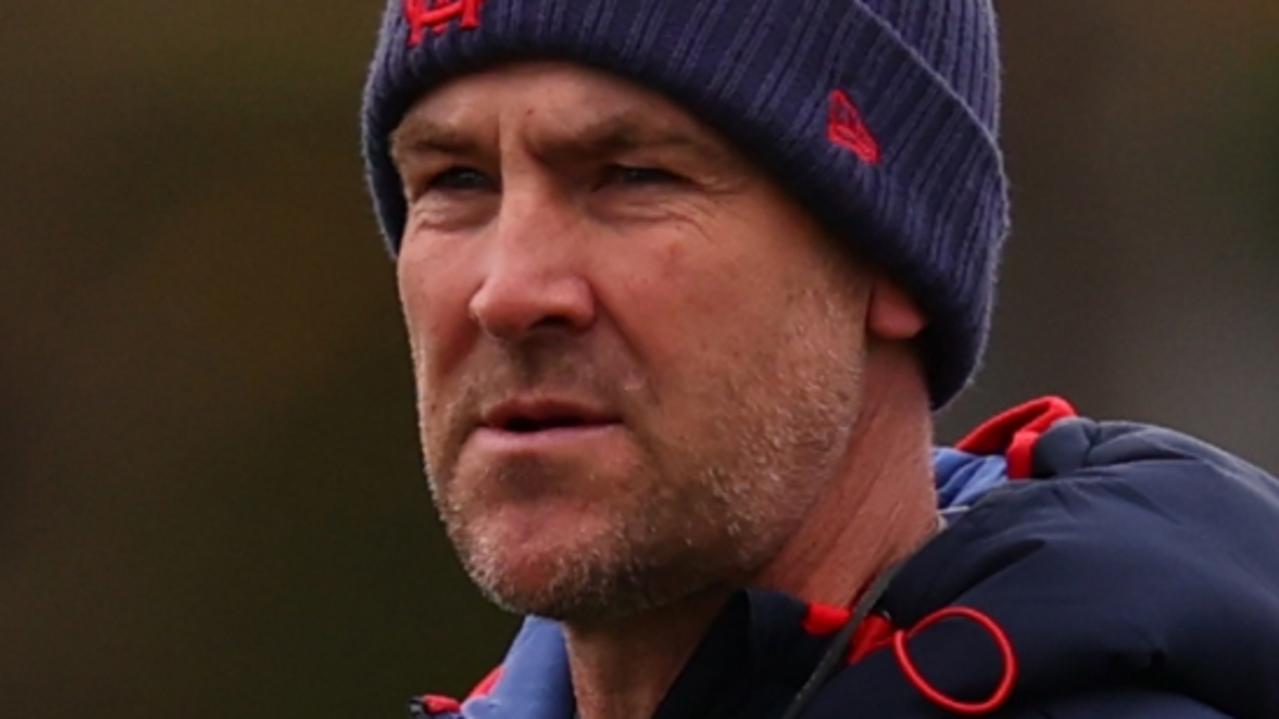
    Speaking after the final whistle, a clearly frustrated Craig Bellamy, the Storm’s veteran long-time coach, said he had no answer for the repeated collapses that have derailed his side’s season. “It’s nothing new. Our second halves have been really poor. I’m not quite sure why (but) I wish I was,” Bellamy told reporters. The coach pointed to a small handful of mitigating factors – a handful of mid-game injuries, and an lopsided 5-0 count in six-again calls that went against his side – but admitted the core issue was one the club has known about for months, yet cannot seem to fix.

    “We played some good footy in the first half. But the second half, we just couldn’t get out of our own 30-metre area,” Bellamy explained. “We aren’t getting run down; we’re getting steamrolled. We’ve always prided ourselves on if we get a lead, we’ll protect it. And we’ll protect it hard and with a bit of ferocity. But we just sort of laid down belly up and let them come and get us.”

    The Storm were already without starting stars Cameron Munster and Harry Grant, who were away on State of Origin duty for Queensland, forcing star halfback Jahrome Hughes to carry the entire load of the club’s attacking structure. Hughes, who was equally as frustrated as his coach after the full-time siren, pulled no punches in criticizing his side’s second-half attitude and decision-making.

    “I just think we’re playing dumb. We’re just doing dumb things at the wrong time,” Hughes said. “You look at our first half, it was really good and we played really well. And then we want to come out in that second half and play a completely different style of footy. You can’t do that. On top of that, we made errors – unforced errors. It was stuff that didn’t need to happen, and you can’t be doing that in today’s game. It’s just too hard to keep up if you make that many errors.”

    Bellamy admitted he still cannot identify whether the repeated collapses are rooted in physical fatigue or a mental block, but did outline a series of challenges his side has navigated through the first half of the 2026 season. The two-time defending grand final runners-up have yet to receive their first bye of the campaign, while many other competing clubs have already had two scheduled byes. The Storm have their first bye in Round 15 this year, a stark contrast to last season when the club had all three of their scheduled byes completed by the same round.

    Bellamy acknowledged that an earlier break would likely have helped his fatigued squad, but stopped short of blaming the club’s draw for the ongoing collapses. “I think if we’d had a bye by now, that would have helped, but I don’t know whether it would have solved the problem,” the coach said. “We’d be looking forward to a bye without a doubt, but we’re going to get three pretty close together by the look of it. It’d be nice if the byes were evenly spread out, but we can’t blame that on what our draw is. It probably has been a little bit tougher the last couple of weeks. We’ve had two six-day turnarounds, and they’ve been both away, so we’ve had to travel. We’ve had some injuries too, so that obviously hasn’t helped. But as I say, we should be able to do it for 80 minutes if we can do it for 40 minutes.”

    Beyond fatigue from a congested draw, the Storm have also had to navigate a devastating string of long-term injuries to key personnel that have gutted the club’s starting depth. Star edge forward Eli Katoa has missed the entire season to date after suffering a serious brain injury in pre-season, while veteran prop Tui Kamikamica remains sidelined after suffering a stroke earlier this year. In another major blow, star winger Xavier Coates has also missed every game of the 2026 campaign while recovering from an Achilles injury, with Bellamy confirming on Friday that the winger’s recovery has hit a small setback.

    Bellamy told reporters that a recent follow-up scan revealed Coates’ injury was more severe than initial assessments suggested, but added that the winger is still on track to return to the field within a month. “I think he had a second scan, and it showed up that it was worse than what they could see from the other (scan),” Bellamy said. “It’s been a long, long time. And I know X (Coates) has been getting frustrated as well. But he should be back sooner rather than later at the moment, so I think they’re thinking about three or four weeks.”

  • France’s youngest PM Attal to run for president

    France’s youngest PM Attal to run for president

    France’s political landscape has been upended by a historic announcement: 37-year-old Gabriel Attal, the youngest person to ever hold the post of French Prime Minister, officially declared his candidacy for the 2025 presidential election on Friday. The centrist contender made his announcement against a backdrop of clear blue skies in the small rural village of Mur-de-Barrez, a strategic choice aimed at addressing longstanding criticism that centrist parties lack deep roots in France’s countryside ahead of a contest that will likely be defined by the battle against the rising far-right National Rally (RN).

    In his opening remarks to supporters, Attal pushed back against the stagnation that has come to define mainstream French politics in recent years. “I can’t take this kind of French politics anymore, where it’s just 50 shades of managing decline,” he told the crowd, positioning himself as a fresh alternative to both establishment gridlock and far-right populism. When he took office as Prime Minister in 2024 at age 34, Attal made history as France’s youngest head of government, and his rapid ascent through the political ranks has already drawn widespread comparisons to current President Emmanuel Macron, who won the Elysee Palace at 39 in 2017, becoming France’s youngest head of state since Napoleon. Attal will turn 38 in March, just one month before the scheduled April presidential vote, which Macron will not contest as he steps down after two terms.

    Attal’s entry into the race creates a crowded field of high-profile candidates from across the political spectrum. He joins former center-right Prime Minister Edouard Philippe, 55, who now leads his own Horizons party, and 74-year-old hard-left leader Jean-Luc Melenchon as major declared contenders. For the far-right RN, the 2025 election represents the party’s strongest chance to seize the presidency in its history, with either party leader Jordan Bardella, 30, or former candidate Marine Le Pen expected to stand as the party’s nominee.

    A product of France’s elite education system and an openly gay politician raised in Paris, Attal has opened up about his personal identity in recent months as he lays groundwork for his campaign. In a book published last month, the candidate dedicated an entire chapter to his partner, Stephane Sejourne, a European Commissioner and former French minister whom Attal describes as “the man of my life.” Attal has also spoken publicly about his mixed cultural background and experiences of prejudice: his father is Jewish, his mother follows Russian Orthodox Christianity, and he has said he has faced both anti-Semitism and homophobia throughout his life and career.

    Attal’s short tenure as Prime Minister came to an abrupt end last year when President Macron dissolved the lower house of parliament and called snap legislative elections, a risky political gambit designed to halt the RN’s growing momentum that ultimately backfired spectacularly. The result was months of crippling political deadlock and a hung parliament, where the RN emerged as the largest single party in the legislature. Shortly after the dissolution, Attal formally distanced himself from Macron’s government, clearing the way for his independent presidential bid.

    On the campaign trail, Attal already faces stiff competition from within the centrist and center-right space, most notably from Philippe, who led Macron’s first government as Prime Minister and has built a strong independent political base. Current polling consistently shows Philippe performing better than other centrist candidates in a hypothetical runoff against the RN nominee. Still, Attal has wasted no time in positioning himself as a candidate connected to working and rural French voters, a contrast to the common critique that Macron’s Renaissance party is too rooted in Parisian elite circles. “The day we stay locked in Parisian offices, in ministries, is the day politics stops,” Attal said in his launch speech. After entering politics in his early 20s, Attal climbed the ranks quickly: he won a seat in the National Assembly in 2017, the same year Macron was first elected, before going on to serve as government spokesperson, budget minister, and education minister between 2023 and 2024. During his time as education minister, he gained national attention for his work addressing school bullying and his controversial ban on the abaya, a loose full-length garment worn by Muslim women, in public schools.

    Closing his launch speech, Attal struck an optimistic tone about France’s future, pushing back against narratives of inevitable national decline. “Having travelled a lot in France and met many French people, I’ve come to a conviction — a very strong one — that our finest chapters are still ahead of us,” he said.

  • Ukrainian protesters in Kyiv urge veto of a bill families fear could declare missing soldiers dead

    Ukrainian protesters in Kyiv urge veto of a bill families fear could declare missing soldiers dead

    On Friday, hundreds of demonstrators took to the streets of Kyiv, Ukraine’s capital, to push the Ukrainian government to reject controversial draft legislation that relatives of missing service members argue would enable premature declarations of death for their unaccounted-for loved ones. The demonstration centered on Bill No. 13646, a proposal designed to formalize the legal status of people listed as missing in the ongoing conflict. Protesters warn that specific clauses in the bill would grant Ukrainian courts the authority to rule missing military personnel legally dead before conclusive evidence of their fate is uncovered.

    “Today all the families came out so that the missing are not equated with the dead,” explained 27-year-old Mariana Yatselenko, one of the participants in the Kyiv march.

    According to Artur Dobrosierdov, Ukraine’s commissioner for missing persons, the country’s unified registry of people disappeared under extraordinary special circumstances currently lists more than 90,000 unaccounted-for individuals. The registry, which launched in May 2023, combines decades of case data covering both military personnel and civilians who went missing during active combat, as a result of Russian armed aggression, or within Russian-occupied Ukrainian territories. While the vast majority of these cases stem from Russia’s full-scale invasion that began on February 24, 2022, some unclosed investigations date back to 2014, when Russian forces seized the Crimean Peninsula and pro-Moscow separatist groups launched an insurgency in eastern Ukraine. This is not the first public demonstration against the bill, highlighting sustained and growing pressure from missing soldiers’ families on the Ukrainian government.

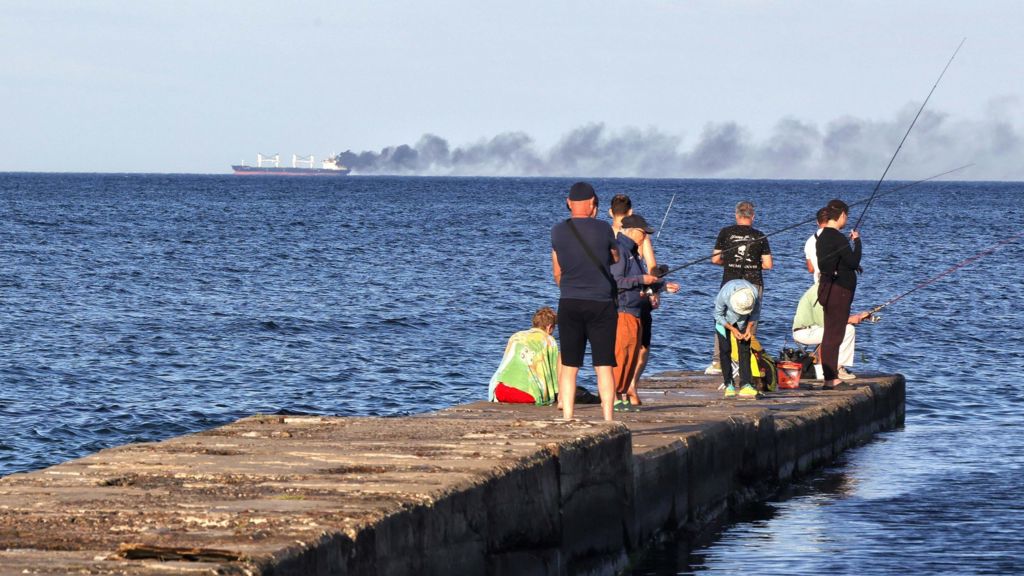
    Beyond the domestic protest, violence on the Ukraine-Russia front has escalated sharply in recent days, with long-range strikes targeting territory deep inside both countries. On Friday, Ukrainian President Volodymyr Zelenskyy confirmed that Ukraine had carried out its fourth strike on Russia’s Yaroslavl oil refinery, located roughly 700 kilometers (440 miles) from the Ukrainian border, as part of a sustained campaign to disrupt Russian oil infrastructure and cut off funding for Moscow’s invasion. Meanwhile, Russian officials reported that a Ukrainian drone strike on a college dormitory in occupied Starobilsk, Luhansk Oblast, left four people dead and 39 others wounded, with up to 18 people still potentially trapped under rubble. Kremlin spokesman Dmitry Peskov called the attack a “heinous crime,” and Ukraine has not issued an official response to the claim. The Russian Defense Ministry also announced Friday that it had intercepted 217 Ukrainian drones across multiple Russian regions, including the Moscow area and St. Petersburg, Russia’s second-largest city.

    On the Ukrainian side of the border, Russia launched a massive overnight drone barrage that targeted civilian infrastructure across the country. Ukraine’s air force reported that it successfully shot down or jammed 115 of the 124 Russian drones launched in the attack, the latest in a months-long escalation of regular Russian strikes on Ukrainian civilian areas. The United Nations has verified a 21% increase in Ukrainian civilian casualties over the first four months of 2025 compared to the same period in 2024, with 815 civilians killed and 4,174 wounded. Friday’s strikes left one civilian dead in Kherson and 11 people, including one child, wounded across Sumy Oblast, according to local Ukrainian officials.

    On the battlefield, Western analysts note that Ukrainian counteroffensive operations have retaken more than 400 square kilometers of southern Ukrainian territory from Russian control since the end of 2024. Analysts attribute these gains to Ukraine’s rapidly expanding domestic drone and missile manufacturing industry, as well as Russian forces being cut off from access to Starlink satellite services, which are widely used to guide drone strikes. In Washington, the Trump administration approved a modest $108 million arms package for Ukraine Thursday evening, which includes components for ground-based Hawk midrange air defense systems, spare parts, and logistical support. The approval marks a small new tranche of support after the Trump administration made deep cuts to U.S. military aid for Ukraine over the past year.

    Diplomatic efforts led by the U.S. to end the full-scale conflict have failed to deliver meaningful progress and have largely stalled in recent months, U.S. Secretary of State Marco Rubio confirmed during a diplomatic trip to Sweden. “They were not fruitful, unfortunately,” Rubio said of talks held over the past year with both Russian and Ukrainian delegations. He added that no active negotiations are currently underway, though the U.S. would be open to resuming talks if a path to progress emerges.

    Ukrainian officials are also increasingly warning of potential new military threats from the north, where Russia could launch fresh incursions into northern Ukraine from neighboring Belarus. Zelenskyy wrote on social media Friday that Moscow “is eager to draw (Belarus) deeper into this war,” and warned of “consequences” for the Belarusian government if it allows Russian forces to use its territory as a launching pad for new attacks. Ukrainian Foreign Minister Andrii Sybiha raised the alarm over the growing threat during a recent NATO meeting in Sweden, calling on allied nations to implement deterrence measures against the Minsk government. Russia and Belarus completed joint nuclear military exercises earlier this week, and the Washington-based Institute for the Study of War has highlighted that Russia retains the capability to use Belarus as a staging ground for future large-scale operations, noting Moscow’s increasing de facto political and military control over the country.

    Reporting for this article was contributed by Matthew Lee in Washington, D.C. and Barry Hatton in Lisbon, Portugal.

  • Plymouth striker Oseni’s ‘disbelief’ at Nigeria call-up

    Plymouth striker Oseni’s ‘disbelief’ at Nigeria call-up

    For 23-year-old forward Owen Oseni, the 2025-26 League One campaign has already exceeded every possible expectation he held when he joined Plymouth Argyle last summer. The first-year EFL striker, who wrapped up his debut season with 10 goals in 33 appearances for the third-tier side, has earned a surprise call-up to Nigeria’s senior men’s national team, and he says the news left him utterly stunned.

    Oseni, who will join the Super Eagles for a pair of upcoming 2026 FIFA World Cup warm-up friendlies against Poland and Portugal next month, is also set to feature in the upcoming Unity Cup hosted in London later this month, where Nigeria will face off against India, Jamaica, and Zimbabwe. In an exclusive interview with BBC Sport, the rising forward opened up about his reaction to the call-up, describing the honor as a life-changing moment he never dared to anticipate.

    “I know I put together a solid season, but to get selected for a country of more than 240 million people, where roughly half the population would jump at the chance to represent the Super Eagles, this is a huge deal for me – I was absolutely buzzing,” Oseni said. “The national coaching staff had been scouting me, and they clearly took notice of the form I found in the closing stretch of the club season.”

    That late-season form was impossible to miss: Oseni found the back of the net three times in Plymouth’s final four League One matches, a hot streak that almost dragged the club into the promotion play-offs before they ultimately fell just short of a spot. Before joining Argyle, Oseni plied his trade at Scottish Premiership side St Mirren, following a stint with National League outfit Gateshead. The forward was one of the first signings made by current Plymouth head coach Tom Cleverley, the former Manchester United and England international midfielder, shortly after Cleverley took the helm at the club.

    Born in Ireland, Oseni holds complex international eligibility: he qualifies for Nigeria through his Nigerian father, and can also represent the Republic of Ireland and Ivory Coast (his mother’s home country). When the Super Eagles reached out to secure his commitment, the striker says the opportunity was too good to turn down, even with other options on the table.

    “Representing any nation at the international level is a dream for any player, it would be massive for my development and my entire career,” Oseni explained. “When the Super Eagles came calling, it was a decision I simply couldn’t say no to. I never even thought this kind of opportunity was on the table for me this early in my career. All I’ve ever focused on is putting in the hard work and trusting that good things would follow – but I never imagined I’d be the one getting this call so soon.”

    In the coming weeks, Oseni will share a training pitch with some of the biggest names in global football, including Nigeria stars Victor Osimhen and Ademola Lookman. When Nigeria faces Portugal in their pre-World Cup friendly, he could even share the field with Cristiano Ronaldo, while a match-up against Poland will pit him against Bayern Munich legend Robert Lewandowski. That high-level experience is something Oseny believes will give him a huge confidence boost heading into Argyle’s 2026-27 League One campaign, where he aims to lock down a permanent starting spot at the Home Park.

    “Going into pre-season next term, this call-up will definitely raise my confidence levels,” he said. “My goal now is to come back to Plymouth and cement a starting place for next year, and this opportunity is going to help me so much to reach that.”

    Oseni also used his call-up as a chance to push back against common misconceptions about the quality of England’s third tier. Many football followers dismiss League One as a lower-standard competition, but Oseni insists the division is packed with top talent that deserves more recognition.

    “A lot of people look at League One, as England’s third tier, and write it off as not the highest standard because of where it sits in the pyramid,” he said. “But there are so many great players in this league, and so many current internationals plying their trade here who go on to perform incredibly well for their national teams. I think this call-up shows that League One gets the recognition it deserves – the individual quality across the league this season has been really high, and the division is much stronger than people give it credit for.”

  • Oil and gas prices to remain high in Europe at least until the end of 2027, officials say

    Oil and gas prices to remain high in Europe at least until the end of 2027, officials say

    NICOSIA, Cyprus — Top European Union economic policymakers issued a sober updated forecast Friday, warning that regional energy costs are set to stay above pre-Middle East conflict levels at least through the end of 2027, dragging broader consumer prices upward across the bloc’s economy. The updated projections mark a sharp downward revision from earlier growth estimates and a notable upward shift for inflation forecasts, as the ripple effects of geopolitical instability continue to reshape Europe’s economic outlook.

    EU Economy Commissioner Valdis Dombrovskis told reporters following a gathering of eurozone finance ministers, collectively called the Eurogroup, that surging energy prices are the single biggest driver of the bloc’s revised inflation outlook. The commission now projects annual eurozone inflation will hit 3.1% this year and cool only to 2.4% in 2027, a marked jump from the earlier 2025 forecast of 1.9%. Dombrovskis noted that the inflationary pressure from energy markets is not contained to the energy sector alone, saying that “this energy inflation will gradually also trickle down to different sectors of the economy.”

    European Central Bank President Christine Lagarde echoed that long-term caution, noting that even an immediate end to the ongoing Middle East conflict would not reverse the upward pressure on prices immediately. Lagarde explained that “lagging effects” from the existing energy price shock would keep consumer and producer costs elevated for years. “And it’s probably a fact that price levels will be higher at the end of this crisis, when we see the end of the crisis,” she added. The ECB chief reaffirmed the central bank’s commitment to hitting its long-term 2% inflation target, saying the institution would take “all the necessary measures” to maintain price stability. She also noted that the bloc holds substantial strategic petroleum reserves to buffer against unexpected supply disruptions.

    For the EU, a full resolution to the current energy market uncertainty hinges on one key geographic chokepoint: the Strait of Hormuz. Eurogroup President Kyriakos Pierrakakis said a lasting end to the crisis would require a full return to unimpeded, toll-free navigation through the strait, which carries roughly one-fifth of the world’s total annual oil and gas supplies.

    On the growth front, Pierrakakis said the bloc is still set to avoid a recession despite the downward revision to output projections. The eurozone is now expected to post 0.9% economic growth this year and 1.2% growth in 2027, numbers that are lower than previous forecasts “but clearly far from a recession scenario,” he emphasized.

    While many market analysts have raised interest rate hike expectations following the higher inflation projections, Lagarde declined to tip the central bank’s hand on future monetary policy moves. She stuck to the ECB’s long-stated guidance, saying “We will continue to follow a data-dependent and meeting-by-meeting approach in order to determine the most appropriate monetary policy stance in order to deliver on our 2% medium-term target.”

  • Tennis players ‘ignored’ but ‘united’ in Grand Slam pay dispute

    Tennis players ‘ignored’ but ‘united’ in Grand Slam pay dispute

    As the 2025 French Open prepares to kick off at Roland Garros this Sunday, professional tennis is facing a growing rift between the sport’s top athletes and Grand Slam organizers, centered on long-simmering discontent over unfair revenue sharing for tournament prize money. The growing movement for reform has led dozens of the tour’s biggest names to organize a coordinated protest that will cut short their media commitments during the clay-court major, demanding a larger, more equitable slice of the multi-billion dollar Grand Slam revenue pie. Currently, players say they only receive 15 percent of the total revenue generated by the four Grand Slam tournaments — the Australian Open, French Open, Wimbledon and US Open — and are pushing for that share to be raised to a more just 22 percent, a change that would particularly benefit lower-ranked and emerging players.

    World number eight Taylor Fritz, one of the leading voices of the protest, told reporters in Paris on Friday that players have made repeated moderate, patient efforts to engage organizers in dialogue, only to have their concerns completely dismissed. “It’s not about greed, it’s about getting what we are owed,” Fritz said. “We have been incredibly mild and patient with our requests, and it feels deeply disrespectful to be ignored at a time when tennis has never been healthier, when the partnership between players and tournaments should be built on open communication.”

    The push for change has drawn support from across the top ranks of both men’s and women’s tennis. Men’s world number one Jannik Sinner was among the first high-profile players to call out organizers, demanding they show basic respect to the athletes who draw global audiences and revenue to the sport. Women’s world number one Aryna Sabalenka went a step further earlier this month at the Italian Open, warning that players could ultimately escalate to a full boycott of all four Grand Slam events to defend their collective rights. While Sabalenka acknowledged that top-ranked players like herself already earn a comfortable living, she emphasized the protest is first and foremost for lower-ranked competitors, young emerging athletes, and players recovering from injury who struggle to cover travel and training costs on their current earnings. “It’s not easy to make a stable living in tennis with the small share of revenue we currently get,” she said. “As the top player in the world, I have a responsibility to stand up for those who don’t have the platform to speak out for themselves.”

    Fritz noted that a full boycott has not yet been seriously debated among players, but he stopped short of ruling out the action as a potential next step if organizers continue to refuse to negotiate. “If our concerns keep being ignored, change has to happen, that conversation will have to happen eventually,” he said. “I don’t want to throw the word boycott around lightly; I only want to say it when I mean it.”

    Not all top players are joining the demonstration, however. 24-time Grand Slam champion Novak Djokovic, who is not participating in the protest, suggested tennis could learn lessons from how golf navigated the emergence of the breakaway LIV Golf circuit, noting that change in professional sports is inevitable, and expressing hope that tennis can resolve its current dispute with minimal disruption to the sport.

    French Open organizers have already made their position clear: tournament director Amelie Mauresmo announced Thursday that Roland Garros would not increase the total prize pool for this year’s event, sticking to its existing payout structure. Russian star Andrey Rublev, a consistent Grand Slam contender who has joined the protest, slammed organizers for their complete lack of communication in response to players’ concerns. “They don’t hear you, they don’t answer,” Rublev said. “When we send official inquiries, no one responds for months. We just want one thing: are we in this together, or do you not care enough about us to even talk?”

    Four-time French Open women’s champion Iga Swiatek, who confirmed her participation in the protest, explained the specific terms of the action: players will cap all media interviews at 15 minutes, a symbolic limit chosen to represent the 15 percent revenue share they currently receive. She stressed that the protest is not targeted at media outlets, but at tournament leadership. “We have nothing against the media, this is just our way to show we need change,” Swiatek said. “We are ready to step up our action if organizers don’t step up to meet our demands.”

    Nineteen-year-old women’s world number eight Mirra Andreeva said the most striking part of the movement is how unified players are across ranks and generations. “We all have a clear, fair reason for this, and every single one of us is on the same page,” Andreeva said. “It’s really powerful to see all players stand together with the same goal.”

    For this year’s tournament, the French Open has raised the men’s and women’s singles champion prize to 2.8 million euros ($3.3 million), up from 2.55 million euros in 2024. While that payout is higher than the champion’s prize at the Australian Open, it remains lower than the top purse at both Wimbledon and the US Open, underscoring the gaps that exist even between the four Grand Slam events as players push for broader industry-wide reform.

  • UK scientists developing new Ebola vaccine that could be ready in months

    UK scientists developing new Ebola vaccine that could be ready in months

    A rapidly escalating Ebola outbreak in the Democratic Republic of Congo (DRC), driven by a rare, untreatable strain of the virus, has spurred urgent vaccine development work from a team of researchers at the University of Oxford, with the candidate potentially ready for field deployment within months.

    The ongoing outbreak, centered in northeastern DRC, has already been linked to 750 suspected cases and 175 confirmed deaths, according to latest outbreak tracking data. The pathogen at the center of the crisis is Bundibugyo, an understudied Ebola species that has only caused two recorded outbreaks in the last 20 years and has no licensed, proven vaccine currently available. The virus kills roughly one-third of all people it infects, making swift containment a top global health priority.

    In response to the crisis, the World Health Organization (WHO) has upgraded the risk level of the outbreak from “high” to “very high” within DRC, with regional risk across central Africa also elevated to “high.” International risk remains low, however, and the WHO declared a Public Health Emergency of International Concern (PHEIC) over the outbreak over the weekend, explicitly noting that the event does not rise to the level of a pandemic.

    Oxford’s vaccine candidate leverages the same ChAdOx1 platform the university’s vaccine group refined during the global COVID-19 pandemic – a flexible, easily adaptable genetic vaccine technology that can be rapidly modified to target new pathogens. During the COVID response, the platform was loaded with coronavirus genetic material; for this Ebola candidate, it has been reconfigured to carry genetic code from the Bundibugyo strain.

    The platform relies on a modified chimpanzee common cold virus, genetically edited to be safe for human use, that delivers Bundibugyo genetic material to human cells. This trains the immune system to recognize and neutralize the actual Ebola virus if exposure occurs, without causing Ebola infection or symptomatic disease. Preclinical animal testing for the new candidate is already underway at Oxford’s facilities, and the Serum Institute of India has been pre-positioned to scale up mass manufacturing as soon as the university provides clinical-grade vaccine material.

    Professor Sarah Lambe, head of vaccine immunology at the Oxford Vaccine Group, emphasized that speed is the top priority for the project. “People are worried about this outbreak, generally, you prepare for the worst case scenario – hopefully contact tracing and quarantine is all that’s needed, but we can’t take our foot off the gas,” Lambe told BBC News. Once the research team delivers initial starting material to the Serum Institute, Lambe noted that the manufacturer can ramp up production both quickly and at large scale. The WHO projects that the candidate could be ready for human clinical trials in affected regions within two to three months.

    This outbreak poses unique challenges to global health responders because of the rarity of the Bundibugyo strain. Of the six known Ebola species, only three are known to cause large human outbreaks, and Bundibugyo had not been detected in more than a decade prior to this event – its last outbreak occurred in DRC in 2012, following an initial 2007 outbreak in Uganda. While existing effective vaccines are available for the more common Zaire Ebola strain, none have been approved for Bundibugyo. A separate experimental Bundibugyo candidate is also in development, but that effort is not expected to produce testable doses for another six to nine months, making Oxford’s accelerated timeline a critical asset for outbreak response.

    If authorized, the vaccine will not be deployed in mass public vaccination campaigns like COVID-19 vaccines. Instead, it will be used in the targeted ring vaccination strategy standard for Ebola outbreaks, which prioritizes immunization for people at highest exposure risk: close contacts of confirmed cases, and frontline healthcare workers treating infected patients. The Oxford team had already been working on related vaccine candidates for other dangerous filoviruses, including Sudan ebolavirus and Marburg virus, prior to this outbreak, allowing them to adapt their work rapidly to address the new Bundibugyo emergency.

  • Palestinian UN ambassador withdraws General Assembly vice presidency bid after US pressure

    Palestinian UN ambassador withdraws General Assembly vice presidency bid after US pressure

    In a move that underscores deep diplomatic pressure on the Palestinian mission at the United Nations, Palestinian UN Ambassador Riyad Mansour has formally pulled his name from contention for the vice presidency of the UN General Assembly, following explicit threats from the United States to revoke the entire Palestinian delegation’s entry visas if he refused to abandon the race, National Public Radio has reported.

    Citing an anonymous source with direct knowledge of the internal developments, the outlet confirmed that Lebanon’s ambassador will now take Mansour’s place on the ballot. The Palestinian UN delegation communicated through a third Arab nation that Mansour would not seek the vice presidential position for the 2024-2026 term, according to the report. La Neice Collins, spokesperson for the sitting UN General Assembly president, later issued a public statement confirming the withdrawal, cementing the outcome of the behind-the-scenes pressure campaign.

    Documents show that internal communications from the US State Department, dated Tuesday, had explicitly instructed American diplomatic staff based in Jerusalem to ramp up pressure on Palestinian leadership to force Mansour out of the race. The cable argued that Mansour’s candidacy ran counter to former US President Donald Trump’s ongoing policy proposals for the post-conflict future of the Gaza Strip. The department’s message was uncompromising: “We will hold the Palestinian Authority responsible if the Palestinian delegation does not withdraw its VPGA candidacy.”

    The cable also carried a veiled reference to past punitive visa actions, reminding recipients that Washington had already denied entry visas to Palestinian Authority President Mahmoud Abbas and 80 other senior Palestinian officials ahead of last year’s UN General Assembly gathering in New York. It noted that “it would be unfortunate to have to revisit any available options” — a clear signal that the US was prepared to enact new restrictions if its demands were not met.

    As of press time, the Palestinian UN mission has not issued an immediate response to requests for comment from Middle East Eye, the independent outlet that first expanded on the reporting of the incident.

    This latest withdrawal marks the second time in 2024 that a senior Palestinian candidate has stepped back from a top UN leadership post amid foreign pressure. Back in February, Mansour withdrew his candidacy for the presidency of the UN General Assembly after coordinated lobbying campaigns from both the United States and Israel. At that time, the Palestinian mission framed the decision as a response to “the prevailing conditions in Palestine.”

    The election for UN General Assembly president and the 21 vice presidential seats from regional groups across the world is scheduled to take place on June 2. The current controversy comes on the heels of a landmark May 2024 vote in the General Assembly that delivered expanded participation rights for the Palestinian Authority. In an unprecedented outcome, delegates overwhelmingly approved a measure granting Palestine enhanced standing beyond its current status as a non-member observer state, including the right to speak on all General Assembly agenda items, co-sponsor resolutions, and propose amendments to draft UN texts. The assembly also voted by a wide margin to back Palestine’s bid for full UN membership, marking a major diplomatic breakthrough for Palestinian statehood efforts that has drawn sharp pushback from the US and Israel.