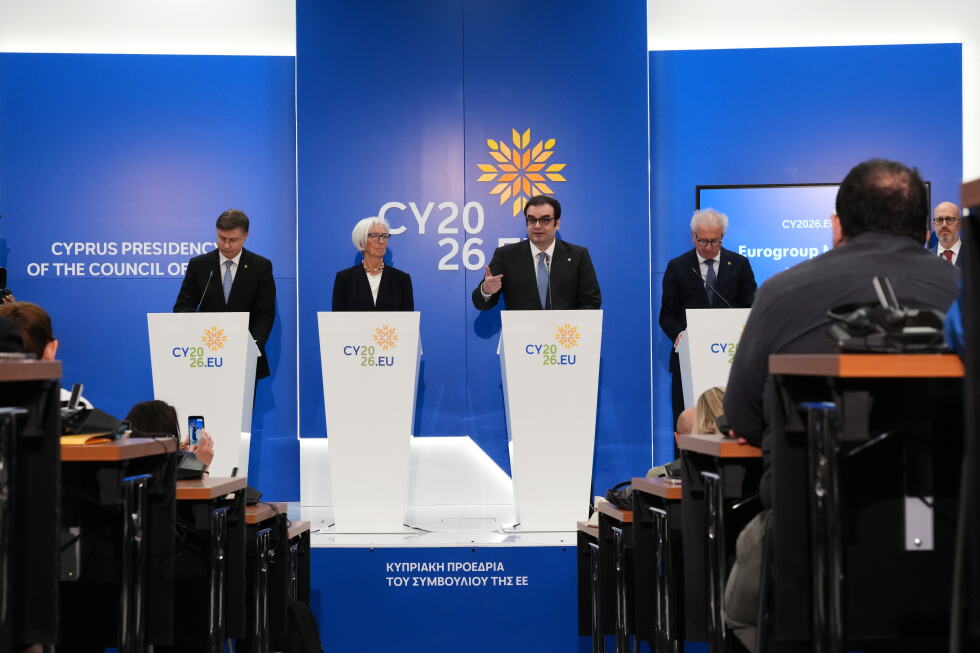
NICOSIA, Cyprus — Top European Union economic policymakers issued a sober updated forecast Friday, warning that regional energy costs are set to stay above pre-Middle East conflict levels at least through the end of 2027, dragging broader consumer prices upward across the bloc’s economy. The updated projections mark a sharp downward revision from earlier growth estimates and a notable upward shift for inflation forecasts, as the ripple effects of geopolitical instability continue to reshape Europe’s economic outlook.
EU Economy Commissioner Valdis Dombrovskis told reporters following a gathering of eurozone finance ministers, collectively called the Eurogroup, that surging energy prices are the single biggest driver of the bloc’s revised inflation outlook. The commission now projects annual eurozone inflation will hit 3.1% this year and cool only to 2.4% in 2027, a marked jump from the earlier 2025 forecast of 1.9%. Dombrovskis noted that the inflationary pressure from energy markets is not contained to the energy sector alone, saying that “this energy inflation will gradually also trickle down to different sectors of the economy.”
European Central Bank President Christine Lagarde echoed that long-term caution, noting that even an immediate end to the ongoing Middle East conflict would not reverse the upward pressure on prices immediately. Lagarde explained that “lagging effects” from the existing energy price shock would keep consumer and producer costs elevated for years. “And it’s probably a fact that price levels will be higher at the end of this crisis, when we see the end of the crisis,” she added. The ECB chief reaffirmed the central bank’s commitment to hitting its long-term 2% inflation target, saying the institution would take “all the necessary measures” to maintain price stability. She also noted that the bloc holds substantial strategic petroleum reserves to buffer against unexpected supply disruptions.
For the EU, a full resolution to the current energy market uncertainty hinges on one key geographic chokepoint: the Strait of Hormuz. Eurogroup President Kyriakos Pierrakakis said a lasting end to the crisis would require a full return to unimpeded, toll-free navigation through the strait, which carries roughly one-fifth of the world’s total annual oil and gas supplies.
On the growth front, Pierrakakis said the bloc is still set to avoid a recession despite the downward revision to output projections. The eurozone is now expected to post 0.9% economic growth this year and 1.2% growth in 2027, numbers that are lower than previous forecasts “but clearly far from a recession scenario,” he emphasized.
While many market analysts have raised interest rate hike expectations following the higher inflation projections, Lagarde declined to tip the central bank’s hand on future monetary policy moves. She stuck to the ECB’s long-stated guidance, saying “We will continue to follow a data-dependent and meeting-by-meeting approach in order to determine the most appropriate monetary policy stance in order to deliver on our 2% medium-term target.”