Ahead of the 2025 French Open, elite tennis players have launched a coordinated, limited protest to draw attention to a years-long disagreement with Grand Slam organizers over fairer revenue sharing, improved player welfare, and greater decision-making input.
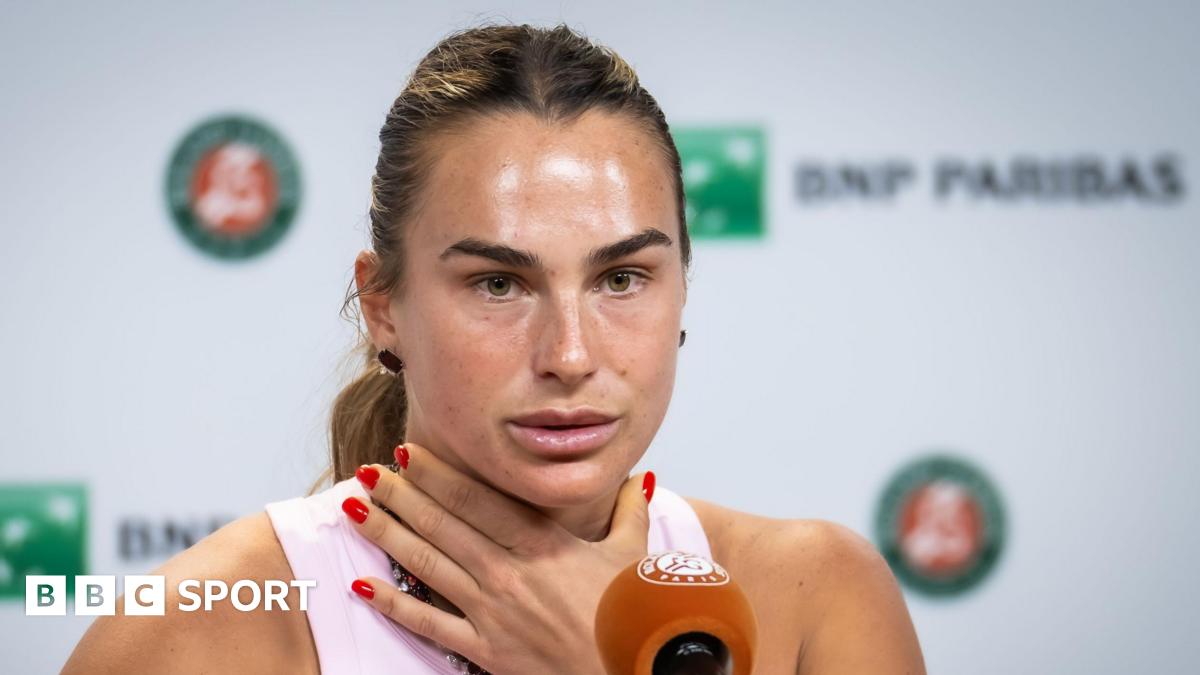
The protest centers on a deliberate 15-minute cap on all pre-tournament media appearances, a symbolic choice: the 15% of total event revenue that the French Open currently allocates to player prize money. World No. 1 Aryna Sabalenka, one of the most vocal leaders of the player movement, cut her news conference short after hitting the 15-minute limit, becoming the most high-profile face of the industrial-style work-to-rule action.
Sabalenka, a 28-year-old Belarusian star who has previously warned that players could boycott a Grand Slam over the dispute in the future, completed a five-minute on-camera interview with the host broadcaster before wrapping her meeting with written media after 10 minutes, ending the English-language segment early to reserve remaining time for journalists from her home country. “We just wanted to make our point and we are united — 15 minutes is better than zero,” Sabalenka told reporters, adding that she retained deep respect for the media while pushing for structural change.
Sabalenka was far from alone in the action. Men’s world No. 1 Jannik Sinner and four-time French Open champion Iga Swiatek also joined the work-to-rule directive during Friday’s pre-tournament media day. Reigning women’s French Open champion Coco Gauff praised the unified action, a rare display of collective bargaining in an inherently individual sport. “I’m proud that we were all able to get on the same page,” the 22-year-old American said, highlighting the depth of anger and frustration across the player pool.
Sinner argued that the protest stemmed from a fundamental lack of respect toward players, while world No. 8 Taylor Fritz added that players felt their repeated requests for change had been ignored by Grand Slam organizers. 24-time Grand Slam champion Novak Djokovic, one of the most long-standing advocates for player rights, did not participate in the planned protest — he was not involved in the pre-action discussions or planning — but he openly backed the players’ demands. “I have always been on the players’ side and tried to advocate for players’ rights and better future for players,” Djokovic said, noting that only a tiny fraction of professional tennis players actually earn a sustainable living from the sport.
This coordinated protest marks the latest escalation in a dispute that has been simmering for more than a year. Players first held formal talks with Grand Slam governing bodies in 2024, but subsequent negotiations have failed to deliver the tangible progress the athlete community demands. Three core issues are at the heart of the disagreement: first, a larger share of tournament revenue allocated to prize money, with a greater portion of funds reaching lower-ranked players who struggle to cover travel and training costs; second, increased investment in player welfare programs including pensions, healthcare, and maternity support; and third, greater player consultation on key decisions that impact athlete workloads, such as scheduling, late-match finishes, and elongated tournament formats.
The player coalition has called for Grand Slams to raise prize money allocations to 22% of total revenue by 2030, arguing that the current 15% figure offered by the French Open is far too low to reflect the value players bring to the sport’s commercial success. While this year’s Roland Garros prize pool increased by 9.5% year-over-year, that raise lags behind the 20% increase implemented by the 2024 US Open and the nearly 16% bump at the 2025 Australian Open.
French Open tournament director Amelie Mauresmo said she was “very sad” to see players take collective action, but expressed confidence that the two sides can reach a mutually acceptable resolution. Mauresmo and French Tennis Federation president Gilles Moretton scheduled a meeting with Larry Scott, the former WTA chairman who serves as the players’ representative in the dispute, on the same day as the protest.
When asked whether a full Grand Slam boycott could be the next step if talks continue to stall, participating players declined to rule out the possibility, but also refused to issue an explicit threat. “I don’t think we should really make big threats like that unless we’re fully ready to do it,” Fritz said. “But if it gets to a point where something does have to change if we are ignored, that’s a conversation to have.”
Under current Grand Slam rules, all main-draw players are required to complete mandatory core media commitments before and during the tournament to maintain fan and media engagement. Players who skip required media appearances entirely face fines of up to £50,000, unless they have a pre-approved valid excuse. Because all participating players completed their mandatory core requirements before ending their sessions after 15 minutes, no penalties will be issued to any of the protesting athletes.
The 2025 French Open runs from May 24 to June 7, with live coverage and commentary available across BBC Sport platforms.