作者: admin

  • Italian island party attended by Mick Jagger shut down by police

    Italian island party attended by Mick Jagger shut down by police

    A high-profile post-filming celebration attended by Rolling Stones frontman Sir Mick Jagger has been cut short by Italian law enforcement, after local officials enforced a longstanding rule prohibiting public music events on Wednesdays. The gathering marked the completion of principal photography for the upcoming feature film *Three Incestuous Sisters*, a star-studded project directed by award-nominated Italian filmmaker Alice Rohrwacher, which has been filming on the tiny volcanic island of Stromboli, located off the northern coast of Sicily.

    According to multiple Italian media reports, the event brought together Jagger, who has a key role in the film, and A-list cast members including Dakota Johnson, Jessie Buckley, Saoirse Ronan, and Josh O’Connor. The celebration was held at a local venue to honor the cast and crew’s months of work on location, when officers from Italy’s Carabinieri police force arrived to end the event. Local outlets note that music was played at a moderate volume through just one small speaker, yet the enforcement action still went ahead.

    Reaction to the shutdown has sparked local political friction, with tourism leaders criticizing the move as unnecessarily harsh. Rosa Oliva, head of Stromboli’s local tourism office, labeled the police action an overreaching “punitive intervention” that harms the island’s already struggling hospitality sector. In comments to Italian news agency Ansa, Oliva argued that the film production represents a major economic boost for the small island, which has faced severe tourism declines and neglect over the past winter. She pointed out that instead of penalizing the gathering, local leaders should have welcomed the high-profile production that puts Stromboli back on the global travel map. “One would have expected a welcome to the guests, or at least a greeting and a thank you for their crucial contribution” to the local economy, Oliva said, referencing Riccardo Gullo, the mayor of Lipari, the administrative seat that governs Stromboli and the rest of the Aeolian Islands. Gullo’s administration introduced the Wednesday music ban that led to the shutdown, and the BBC has confirmed it has reached out to the mayor for comment on the incident. Guests at the party reportedly reacted to the police order with a mix of confusion and amusement, before complying with the request to end the music.

    Beyond the viral party incident, *Three Incestuous Sisters* carries deep personal and cultural ties to Stromboli. Adapted from an American graphic novel of the same name, the film follows the quiet lives of three sisters whose isolated routine is upended by the arrival of a lighthouse keeper and his son. Jagger is set to play the lighthouse keeper, while O’Connor – best known for his lead roles in *The Crown* and *Challengers* – will portray his son. The cast also includes celebrated Italian-American actress Isabella Rossellini, whose connection to the island stretches back three-quarters of a century. In 1949, Rossellini’s parents – legendary director Roberto Rossellini and screen icon Ingrid Bergman – fell in love while filming the 1950 classic *Stromboli* on the very same island. Rossellini has previously shared on social media photos from her trip to Stromboli’s famous active volcano, noting she is working on the project “where my parents […] fell in love in 1949.” Rohrwacher, the film’s director, earned one of the film industry’s highest honors when she was nominated for the Palme d’Or, the top prize at the Cannes Film Festival, cementing *Three Incestuous Sisters* as one of the most anticipated upcoming releases in international cinema.

  • ‘Disappointing’: Rex Airlines axes flights in Tasmania and Victoria as fuel costs soar

    ‘Disappointing’: Rex Airlines axes flights in Tasmania and Victoria as fuel costs soar

    Australia’s largest independent regional airline, Rex Airlines, has delivered a fresh blow to domestic regional connectivity, announcing it will eliminate and scale back several cross-state routes between Victoria and Tasmania starting later this month, citing runaway fuel costs as the primary driver of the decision.

    In a public statement released Friday, the carrier confirmed two routes will cease operations entirely from June 20: Melbourne to Devonport, and King Island to Burnie. Starting two days later on June 22, the airline will also cut weekly service frequency on three additional regional routes: Melbourne to Mildura, Melbourne to Burnie, and Melbourne to King Island.

    A spokesperson for Rex explained that the unpredictable volatility of the current operating environment, paired with persistently rising fuel expenses, left the airline with no other option to maintain operational sustainability. The company moved quickly to reassure impacted passengers that all ticketholders for canceled services will be fully supported, with full refunds or free rebooking onto alternative Rex services available with no hidden fees.

    Federal Infrastructure and Transport Minister Kerry Vincent acknowledged that the exit from the Devonport route is disappointing, but moved quickly to ease public concern, noting that competitor Qantas already maintains multiple daily services on the route that will continue to meet traveler demand. Vincent added that route adjustments have become increasingly common across the entire Australian aviation sector, especially for smaller regional services that are far more exposed to sudden cost swings than high-traffic trunk routes between major cities.

    “We understand how critical these air links are for local residents, small businesses, and the tourism economy that supports many of these regional communities,” Vincent said. “Any break in air connectivity hits regional areas disproportionately hard, and we recognize the anxiety and disruption this decision will cause for people who rely on Rex’s services.”

    Nationals Party MP Anne Webster, who represents the Mildura region, echoed that disappointment in comments to the Australian Broadcasting Corporation, noting that even a reduction in service frequency at Mildura Airport—Victoria’s largest regional air facility—creates significant inconvenience for local residents. Mildura is the most geographically isolated population center in Victoria, making reliable air service a critical lifeline for the region’s 50,000-plus residents and the broader Sunraysia agricultural district.

    Webster noted that Qantas and Rex currently operate competing schedules out of Mildura, and she called on both carriers to adjust their timetables to fill the gap left by Rex’s cuts, in order to preserve travel choice for local people.

    The cuts mark the latest round of route restructuring for Australian regional carriers, which have struggled to recover from pandemic-era travel shutdowns while absorbing sharp increases in jet fuel and labor costs over the past two years. Industry analysts note that small regional routes, which often operate with lower passenger volumes and smaller aircraft, are the first to be cut when input costs rise, as carriers are unable to pass full price increases onto consumers without driving away demand.

  • Africa summit in India postponed over Ebola outbreak fears

    Africa summit in India postponed over Ebola outbreak fears

    A high-stakes diplomatic gathering intended to strengthen ties between India and the entire African continent has been called off at the eleventh hour, derailed by the spreading Ebola outbreak currently impacting the Democratic Republic of Congo and Uganda. The fourth iteration of the India-Africa Forum Summit, which was slated to take place in New Delhi between May 28 and 31 after more than a decade since the last convening, will be rescheduled for a later date, according to a joint statement released Thursday by the Indian government and the African Union.

    The joint announcement cited the rapidly worsening public health crisis unfolding across central Africa as the core reason for the delay, noting that a new confirmed date for the summit will be made public once the outbreak is under control. This decision comes just days after the World Health Organization (WHO) upgraded the current outbreak to the highest level of global alert: a Public Health Emergency of International Concern (PHEIC).

    As of the latest WHO update, the outbreak has already recorded 600 suspected cases and 139 suspected deaths across affected regions. To date, all reported infections have been restricted to the African continent, but public health experts have warned that this outbreak presents unique and unprecedented challenges. Unlike previous Ebola events, the current outbreak is driven by a rare strain of the virus for which no licensed vaccine currently exists, and the epicenter of the spread is located in a conflict-impacted region, complicating rapid response and containment efforts.

    Ebola is a severe, often fatal viral illness that originates in animal populations, most commonly fruit bats. Spillover into human populations typically occurs when humans handle or consume infected wild animals. After an incubation period ranging from two to 21 days, symptoms emerge abruptly, beginning with flu-like indicators including fever, headache, and fatigue. As the virus progresses, patients develop severe vomiting and diarrhea, often progressing to organ failure. A subset of patients also experience internal and external bleeding. The virus spreads between humans through direct contact with infected bodily fluids, such as blood or vomit.

    Historically, Ebola outbreaks were small and easily contained to remote, sparsely populated rural areas. But experts note that accelerating urbanization has pushed growing human populations closer to the natural reservoirs of the Ebola virus, steadily increasing the risk of future spillover events and large-scale outbreaks.

    Even though no confirmed Ebola cases have been detected within India’s borders to date, national health authorities have moved quickly to implement preventive measures. On Thursday, India’s Directorate General of Health Services released an official public health advisory for all passengers arriving from or transiting through Ebola-affected nations. The advisory directs travelers to immediately contact airport health officials and seek urgent medical care if they develop any characteristic Ebola symptoms within 21 days of travel, or if they have had close direct contact with a confirmed or suspected infected person.

  • NATO allies bewildered by Trump’s about face on US troop moves in Europe

    NATO allies bewildered by Trump’s about face on US troop moves in Europe

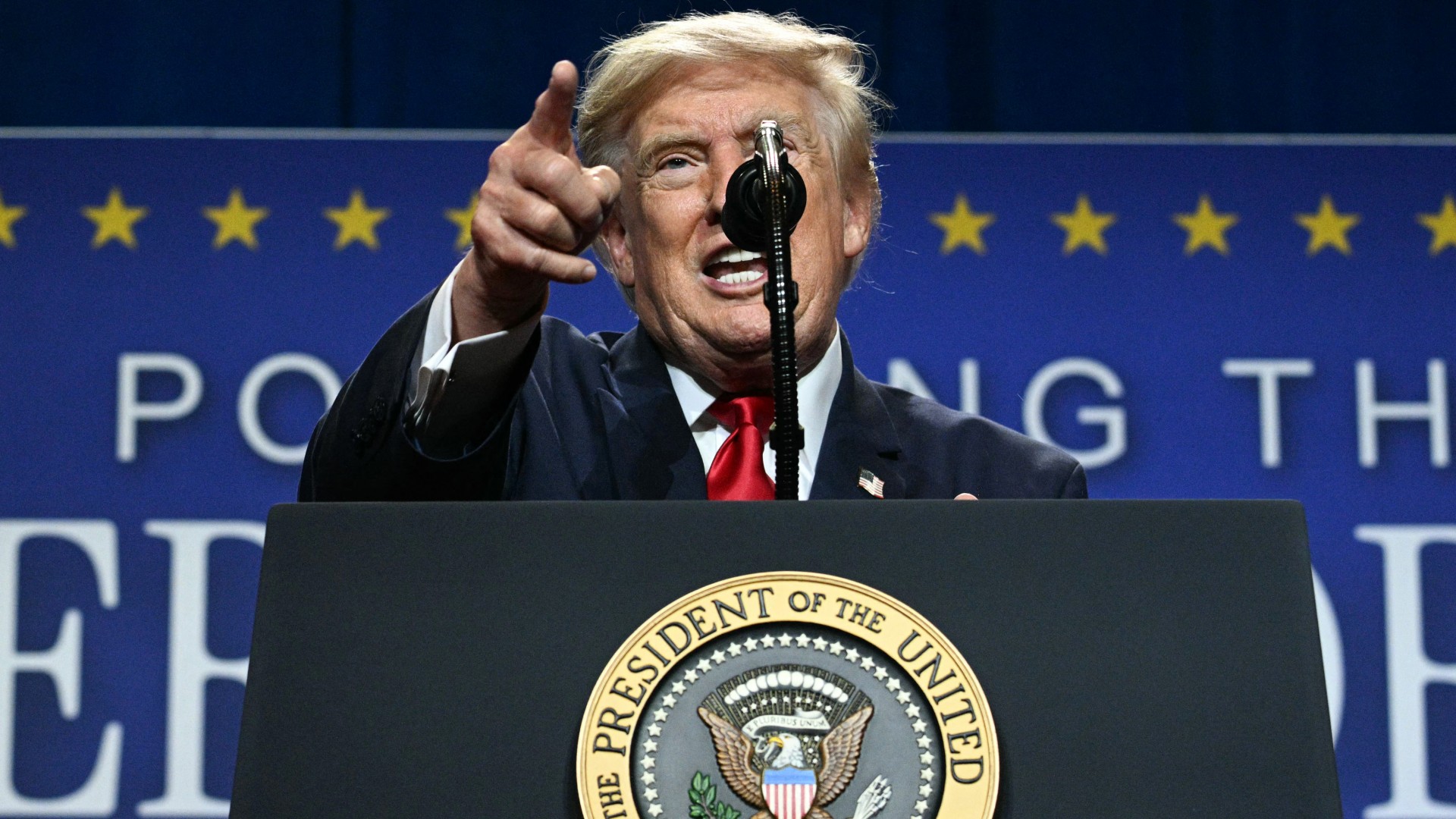
    Helsingborg, Sweden – Just weeks after announcing a drawdown of 5,000 U.S. troops from Europe, U.S. President Donald Trump has reversed course with a new order to deploy an additional 5,000 American service members to Poland – a sudden policy shift that has left NATO allies and senior U.S. defense officials confused and scrambling to adjust.

    Speaking to reporters Friday on the sidelines of a NATO foreign ministers meeting she hosted in southern Sweden, Swedish Foreign Minister Maria Malmer Stenergard acknowledged the widespread uncertainty, noting that the abrupt reversal had created a complex, unclear landscape for alliance coordination. The gathering included U.S. Secretary of State Marco Rubio, along with top diplomatic representatives from across the 32-nation bloc.

    The confusion extends across the Atlantic, even within U.S. defense circles. Two senior U.S. defense officials, speaking on condition of anonymity to discuss sensitive internal military planning, confirmed that uniformed and civilian defense leaders have been left just as puzzled as alliance partners. “We just spent the better part of two weeks reacting to the first announcement. We don’t know what this means either,” one official said.

    Trump broke the news of his new policy in a post on his Truth Social platform, framing the deployment as a gesture of goodwill rooted in his close personal relationship with Polish President Karol Nawrocki, whom Trump publicly endorsed during Poland’s 2024 presidential election. “I am pleased to announce that the United States will be sending an additional 5,000 Troops to Poland,” Trump wrote.

    This latest announcement marks a stark about-face after weeks of inconsistent messaging from Trump and his administration, all of which previously centered on plans to shrink – not expand – the U.S. military footprint across the European continent. Earlier this month, the White House confirmed it would cut U.S. troop levels in Europe by roughly 5,000 personnel, with U.S. officials confirming that around 4,000 scheduled rotational deployments to Poland would be canceled.

    That initial drawdown announcement came after Trump publicly took umbrage at comments from German Chancellor Friedrich Merz, who criticized the U.S. approach to the ongoing conflict with Iran, saying Washington had been “humiliated” by Iranian leadership and lacked a coherent strategy for the war. In response, Trump told reporters the U.S. would cut troop levels “a lot further than 5,000” and unveiled new punitive tariffs on European passenger vehicles – a move that directly targeted Germany, the European Union’s largest and most economically influential automaker.

    NATO leadership was caught off guard by the sudden policy reversal, despite prior public pledges from U.S. officials that all changes to European force posture would be fully coordinated with alliance partners. As recently as Wednesday, NATO’s top military officer, U.S. Lt. Gen. Alex Grynkewich, publicly reaffirmed that the U.S. would “stay well-synchronized with our allies moving forward.”

    Current U.S. military posture in Europe places roughly 80,000 American troops across the continent, under existing Pentagon rules that require a minimum of 76,000 troops and key military equipment to be permanently stationed in Europe – unless NATO allies are consulted first, and a full review confirms a drawdown serves core U.S. national security interests. The initial planned withdrawal of 5,000 troops would have pushed total force levels below this legal mandated threshold.

    For Poland, Trump’s reversal has been met with cautious approval. Polish Foreign Minister Radek Sikorski welcomed the new deployment, noting that it will keep overall U.S. troop presence in Poland “more or less at previous levels,” preserving the security reassurance that has anchored Polish defense policy for decades.

    This report was compiled from contributions by Cook in Brussels and Emma Burrows in London.

  • US sanctions Tanzanian police chief over human rights violations

    US sanctions Tanzanian police chief over human rights violations

    NAIROBI, KENYA – The United States has implemented targeted economic sanctions and a permanent entry ban against Faustine Jackson Mafwele, a senior assistant commissioner of Tanzania’s national police force, over well-documented allegations of human rights violations tied to his leadership, U.S. officials announced Thursday.

    The new punitive measures come nearly six months after Tanzania’s October general election, a contest that saw incumbent President Samia Suluhu Hassan secure a full five-year term with a landslide 97% of the popular vote. The election was marred by widespread accusations of electoral misconduct, a widespread government crackdown on opposition politicians and independent activists, and multiple outbreaks of election-related violence that shook the East African nation.

    Back in December, U.S. Secretary of State Marco Rubio announced that the U.S. government was launching a full review of its bilateral diplomatic and economic ties with Tanzania over the regime’s reported repression and post-election violence. This week’s sanctions mark the first concrete policy action to come out of that review process.

    Rubio confirmed Thursday that the sanctioning of Mafwele was grounded in credible, verified intelligence linking the senior police official directly to serious human rights violations against civil society activists. “One year ago, members of the Tanzanian police detained, tortured, and sexually assaulted Ugandan activist Agather Atuhaire and Kenyan activist Boniface Mwangi, who had traveled to Dar es Salaam to observe the high-profile trial of opposition leader Tundu Lissu,” Rubio explained in an official statement released following the announcement.

    The two cross-border activists were taken into custody by Tanzanian authorities in May 2023. Following their arrest, both Atuhaire and Mwangi have repeatedly stated that Mafwele personally oversaw their abuse while they were in detention. After the mistreatment, the pair were abandoned by police in a remote, unpopulated area near the Tanzania-Kenya border, according to their official accounts.

    The scope of post-election violence in Tanzania has been brought into sharp focus by an independent inquiry commission appointed by President Hassan herself to probe unrest following the October vote. The commission’s final report, published to the public in April, confirmed that at least 518 people were killed and thousands more suffered injuries during widespread protests and crackdowns in the weeks after the election. These fatalities mark the deadliest period of political unrest in Tanzania in several decades. Opposition leaders have pushed back against the official count, arguing that the actual number of casualties is far higher than the commission’s estimate.

    Among the key findings of the inquiry was a formal recommendation that law enforcement officials, including senior commanders, face further criminal investigation over their actions during the protests. Eyewitness accounts and verified social media content have documented multiple cases of uniformed police shooting unarmed civilian civilians inside their private homes during the unrest. The national government also shut down internet access across the entire country for multiple days in the immediate aftermath of voting. Once connectivity was restored, police issued formal public warnings ordering citizens not to share video footage of the violence on social media platforms, though hundreds of clips still circulated widely online.

  • US pauses $14bn weapons sale to Taiwan due to Iran war

    US pauses $14bn weapons sale to Taiwan due to Iran war

    In a significant announcement during a Senate hearing Thursday, acting U.S. Secretary of the Navy Hung Cao confirmed that the Biden administration has put a planned $14 billion arms sales package to Taiwan on hold, a move driven by the need to ensure sufficient ammunition stockpiles for ongoing U.S. military operations tied to the conflict with Iran. Cao, who has held the acting Navy post since April, explained that the pause is intended to align U.S. foreign military sales priorities with the demands of Epic Fury, the codename for joint U.S.-Israel military operations targeting Iran. He emphasized that the U.S. maintains adequate stockpiles for current operational needs, and that the arms sale to Taiwan will proceed once the administration determines it is appropriate to move forward.

    The confirmation comes just days after former President and current U.S. President Donald Trump signaled uncertainty over his final approval of the package, framing the proposed sale as a “very good negotiating chip” in dealings with China and stating he planned to hold direct talks with Taiwan’s President Lai Ching-te on the issue. A potential direct conversation between the U.S. and Taiwanese heads of state would mark a sharp break with decades of diplomatic protocol: no formal direct dialogue between the two leaders has occurred in decades, though Trump did speak with Lai’s predecessor, Tsai Ing-wen, during his 2016 presidential transition period.

    As of Friday, Taiwan’s presidential office has stated that it has received no formal notification from Washington about any adjustments to the planned arms sale, leaving Taipei in a holding pattern as the situation unfolds. For its part, Beijing has long viewed U.S. arms sales to Taiwan as a blatant violation of Chinese territorial claims. China insists Taiwan is an inalienable part of its territory, has repeatedly condemned American military support for the self-governing island, and has never ruled out the use of force to bring Taiwan under Beijing’s control.

    The pause in the sale follows high-stakes talks between Trump and Chinese President Xi Jinping during a recent presidential summit in Beijing, where Xi identified the Taiwan issue as the most sensitive and important matter framing bilateral relations between the two world powers. Trump later acknowledged that he discussed U.S. arms sales to Taiwan with Xi in great detail, a choice that breaks a 1982 U.S. commitment to Taiwan that Washington would not consult Beijing on arms sales to the island.

    This latest development builds on already heightened tensions across the Taiwan Strait. In December of last year, Washington approved an $11 billion arms package for Taiwan, one of the largest such sales in history, prompting fierce pushback from Beijing. At the time, China’s foreign ministry warned that the sale would “accelerate the push towards a dangerous and violent situation across the Taiwan Strait.” In response to growing Chinese military pressure, Lai’s administration has significantly increased Taiwan’s defense budget in recent months, with Lai framing consistent U.S. arms support as a critical pillar of maintaining cross-strait peace and regional stability.

  • ASX posts second weekly gain in past six weeks as miners, Guzman Y Gomez lift sharemarket while telcos and utilities fall

    ASX posts second weekly gain in past six weeks as miners, Guzman Y Gomez lift sharemarket while telcos and utilities fall

    After navigating a period of volatile market conditions, Australia’s domestic sharemarket has closed out the trading week with a modest but stabilizing gain, lifted by strong performances in mining and materials stocks even as telecommunications, utilities and real estate sectors dragged on overall growth.

    The benchmark S&P/ASX 200 index climbed 0.41% on Friday alone, settling at 8,657 points for a 35.3-point daily gain. This uptick pushed the index to a 0.3% weekly increase, marking the second weekly gain the benchmark has recorded over the past six weeks. The broader All Ordinaries index matched the ASX 200’s 0.41% daily rise, while the Small Ordinaries index outperformed broader markets with a 1.1% gain by market close.

    For the full week, consumer stocks and financial services emerged as the top-performing segments. This strength was fueled by recent increases in national unemployment, which have softened market expectations that the Reserve Bank of Australia will implement additional interest rate hikes in the coming months.

    Friday’s trading session saw dramatic gains across uranium equities, with Paladin Energy rising 5.9%, Silex Systems jumping 6%, and Bannerman Energy surging 6.7%. Broader materials sector stocks also rallied, following a 9% sector-wide pullback that ran from May 12 to Wednesday’s market low, creating favorable entry points for investors. Rising global copper prices lifted mining stocks: Sandfire Resources gained 3.5% and Capstone Copper added 3.1%, after investment bank UBS upgraded its bullish outlook for copper, raising its three-year price forecasts by 13%, 4% and 3% respectively. Tight global supply, growing long-term demand from electric vehicle production, and power requirements for AI data centers are the key forces driving upward pressure on copper prices, UBS noted.

    On the downside, the telecommunications sector posted steep losses on Friday. Telecom giant Telstra dropped 1.5%, property portal REA Group fell 4.1%, and employment platform Seek declined 5.8%. The sector’s most dramatic story came from Tuas, which saw a rollercoaster week: the firm plummeted 62% on Monday after revelations it was under investigation for a subsidiary’s alleged illegal use of unlicensed radio frequencies in Singapore, and the Singaporean government blocked a planned regional acquisition. By Friday, Tuas confirmed that the acquisition conditions had not been met and all parties had mutually walked away from the deal. The stock clawed back small losses in afternoon trading to close unchanged at $2.31 for the day. (NewsCorp, the parent company of newswire service that published this report, is the majority owner of REA Group.)

    Utilities also weighed heavily on Friday’s trading: Origin Energy fell 1.8% and Mercury NZ dropped 2.8%. Financials delivered a mixed performance: Insurance Australia Group declined 3.4% after receiving a regulatory warning tied to the collapse of financier Greensill Capital, while QBE Insurance fell 1.3%. All of Australia’s big four retail banks posted solid gains between 0.5% and 0.9% for the day.

    One of the session’s most notable single-stock moves came from Mexican fast-food chain Guzman Y Gomez, whose shares surged as much as 20.6% in early trading after the company announced it would immediately close all of its underperforming United States store locations. The stock closed the day up 9.6% following the announcement.

    Josh Gilbert, market analyst at retail trading platform eToro, explained that Guzman Y Gomez had long been one of the most shorted stocks on the ASX, as investors lost confidence in the company’s US expansion strategy long before Friday’s announcement. “What markets don’t forgive is open-ended losses with no end in sight, and that’s what the company’s US operations had become,” Gilbert noted.

    Looking ahead to next week, all market eyes will turn to Australia’s monthly inflation report, due for release on Wednesday. Economists forecast that headline inflation will ease to 4.4%, though the closely watched trimmed mean measure of core inflation is expected to tick slightly higher from 3.3% to 3.4%.

  • Organized criminals kill at least 25 in Honduras

    Organized criminals kill at least 25 in Honduras

    In a brutal pair of coordinated attacks that underscores the depth of Honduras’s simmering gang violence crisis, organized criminal groups have left at least 25 people dead — including civilians and police officers — just as the Central American nation moves forward with sweeping new security reforms targeting rampant criminal activity.

    The deadliest of the two assaults unfolded at dawn Thursday in Trujillo, a municipality in Honduras’s northern Colon department, where long-running turf battles between rival gangs over control of lucrative palm oil plantations and key drug trafficking corridors have destabilized local communities for years. Officials confirmed that 19 people were gunned down with high-powered long guns in the attack. According to a local rural community leader who spoke to AFP on condition of anonymity for their own safety, all of the victims were members of an armed faction that already controlled the contested plantation. The leader described a climate of constant fear for local residents, noting that “one sleeps with one eye open and another closed” amid repeated threats from violent armed groups.

    Local media shared graphic footage of the aftermath showing at least nine bloodied bodies strewn across the sprawling palm plantation grounds. Security Minister Gerzon Velasquez described the scene as “Dante-esque”, adding that the victims appeared to have been executed with high-caliber firearms, most likely rifles and shotguns. Yuri Mora, a spokesperson for Honduras’s public prosecutor’s office, told local broadcasters that forensic teams recovered 13 bodies in one section of the plantation and six more in a separate area. Velasquez confirmed the region has been mired in conflict for decades, driven by armed groups involved in both illegal narcotrafficking and the exploitative extraction of palm oil. Trujillo’s police chief Carlos Rojas added that these criminal groups seize control of large African palm plantations through illegal occupation, then siphon profits from crop sales to fund weapons acquisitions. While local farmer organizations have accused transnational agribusiness firms of funding these criminal groups to seize disputed land and block local residents from reclaiming property, a senior anonymous government investigator told AFP the massacre was not rooted in land conflict, but instead linked directly to drug trafficking rivalries.

    In a separate incident near the Guatemala border in Omoa, a town in Cortes department, five police officers and one civilian were killed during a clash between a Honduran anti-narcotics squad and alleged drug traffickers, national police confirmed.

    The back-to-back attacks come shortly after Honduras’s national legislature passed a package of sweeping reforms designed to counter the country’s persistent criminal violence. Honduras currently holds a national homicide rate of 24 killings per 100,000 inhabitants, a statistic that places it among the most violent countries in the Western Hemisphere. The new reforms authorize the Honduran military to take on direct public security roles, create a dedicated new anti-organized crime task force, and open the door to officially designating street gangs and drug cartels as terrorist organizations. The reforms are a central policy priority for Honduras’s new conservative president Nasry Asfura, who has already pledged to collaborate with former U.S. President Donald Trump to dismantle transnational organized crime networks across Latin America.

  • US sanctions Tanzanian police official over ‘torture’ of rights activists

    US sanctions Tanzanian police official over ‘torture’ of rights activists

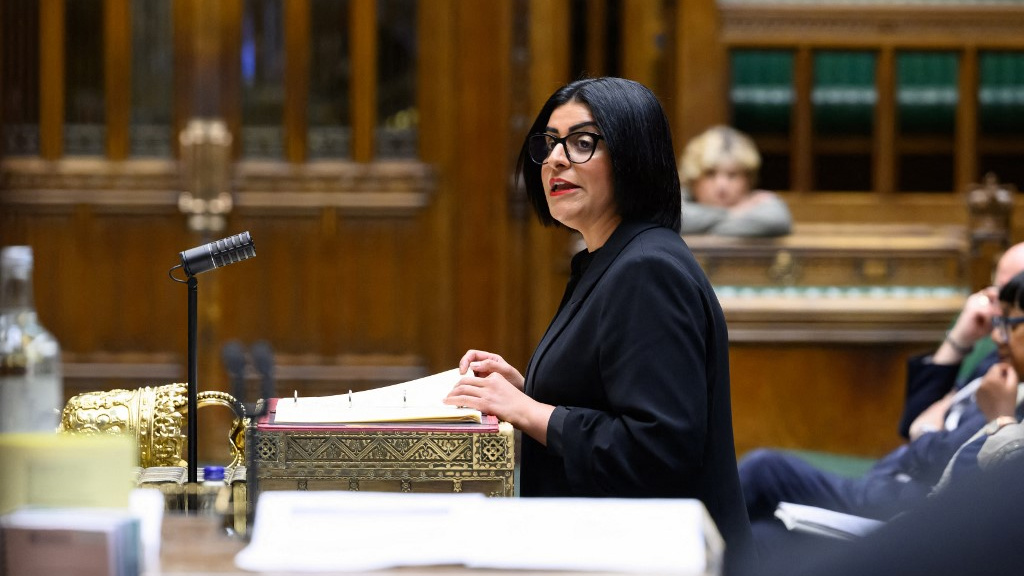
    In a landmark move that marks the first foreign sanctions targeting a senior official under Tanzanian President Samia Suluhu Hassan’s administration, the United States has imposed entry bans on senior assistant police commissioner Faustin Jackson Mafwele over credible allegations of his involvement in gross human rights violations against two East African human rights activists.

    The allegations center on an incident from May last year, when Kenyan activist Boniface Mwangi and Ugandan activist Agather Atuhaire traveled to Tanzania to monitor the high-profile trial of prominent opposition leader Tundu Lissu. The pair were detained by Tanzanian authorities for multiple days before being released, and both have since detailed brutal abuse they endured in custody. Mwangi claims he was stripped naked, suspended upside down, beaten repeatedly on his feet, and subjected to sexual assault, while Atuhaire has alleged she was raped during her detention.

    In a formal statement released late Thursday, U.S. Secretary of State Marco Rubio confirmed the designation of Mafwele, affirming that credible evidence ties the senior police official to the detention, torture, and sexual assault of the two activists. While the statement does not explicitly outline Mafwele’s direct role in the incident, Riley Barnes, U.S. Assistant Secretary of State for Democracy, Human Rights, and Labor, emphasized that the action is a critical step toward holding perpetrators of this heinous abuse accountable. The designation formally bars Mafwele from entering the United States.

    Tanzania’s Foreign Affairs Minister Mahmoud Thabit Kombo told the BBC that the Tanzanian government has not yet received formal notification of the sanctions. Tanzanian police previously dismissed the activists’ abuse allegations as unfounded hearsay and personal opinion, and the BBC’s request for additional comment following the U.S. announcement has not yet garnered a response.

    The sanctions come amid growing international scrutiny of Tanzania’s human rights record, which has deteriorated in recent years despite early hopes of reform under President Samia. Samia took office in 2021 following the death of hardline former President John Magufuli, and initially earned international praise for rolling back some of Maguufi’s most restrictive political policies. In recent years, however, political space has narrowed sharply, with documented crackdowns on opposition voices, civil society organizers, and independent freedom of expression.

    Tensions escalated further following Tanzania’s disputed October general election last year, which saw Samia re-elected with 98% of the vote after all major opposition challengers were barred from running. The opposition dismissed the result as a blatant mockery of democratic process, and widespread post-election protests left hundreds dead. A government-appointed commission of inquiry announced last month that 518 people were killed during the unrest, including 191 shot to death, though the report refused to name the parties responsible for the killings. It instead blamed foreign-backed groups for inciting the violence, a claim rejected by opposition leaders and international human rights groups, who put the actual death toll even higher and accuse state security forces of gunning down unarmed protesters.

    Tanzanian authorities have acknowledged using force against protesters, justifying the action by claiming groups were plotting a violent coup to overthrow the elected government. Samia has repeatedly defended the election as free and fair, echoing the commission’s claim that foreign actors orchestrated the unrest to destabilize her administration.

    Global human rights organizations have long pushed for accountability over the activists’ 2024 detention. Amnesty International called for an urgent investigation immediately after the incident, labeling the arrest, incommunicado detention, torture, and forced deportation of the two activists a blatant violation of international human rights law. Human Rights Watch also highlighted the case in its 2025 country report on Tanzania, framing it as part of a broader systemic crackdown on dissent.

    Just days before the sanctions were announced, a group of U.S. lawmakers publicly called for harsher punitive measures against Tanzania to push back against what they describe as accelerating democratic backsliding in the East African nation. Last December, the U.S. government already accused Tanzania’s government of systemic repression of religious freedom and free speech, noting that these actions have put U.S. citizens, tourists, and American commercial and strategic interests at risk, while threatening decades of productive security and development cooperation between the two nations. Tanzania has not yet issued a formal response to that December accusation.

  • Beijing bans Nvidia’s top graphics card to back domestic rivals

    Beijing bans Nvidia’s top graphics card to back domestic rivals

    The ongoing technological rivalry between the United States and China entered a new, more tense phase this May, when Beijing implemented a sudden ban on imports of Nvidia’s RTX 5090D V2 – a customized graphics card built specifically for the Chinese market to comply with existing US export controls. The unexpected restriction, which took effect on May 15, the same day US President Donald Trump’s delegation left Beijing after high-level summit talks with Chinese President Xi Jinping, has delivered a fresh setback to Chinese domestic gamers and independent AI hobbyists, who relied on the chip for both leisure and small-scale development work.

    First reported by the Financial Times, the RTX 5090D V2 was added to China’s banned import list during the summit. Built on Nvidia’s cutting-edge Blackwell architecture, the chip had only received approval for sale in the Chinese market back in August 2025, after years of incremental adaptations by Nvidia to navigate successive rounds of US export restrictions.

    This ban compounds growing pressure on Nvidia, which already faces a Chinese government push to domestic firms to prioritize locally produced chips over the company’s premium H20 and H200 AI chips. Industry analysts estimate that the H200 line alone could generate more than $14 billion in annual revenue for the US semiconductor giant for the Chinese market. The timing of the ban is particularly striking: Nvidia CEO Jensen Huang joined Trump’s Beijing delegation at the last minute, which had stoked widespread market expectations that he could secure formal approval for continued H200 sales in the country.

    Alongside the chip ban, the Trump-Xi summit produced a key breakthrough on AI governance talks. US Treasury Secretary Scott Bessent announced that Washington and Beijing have opened discussions to establish binding safety guardrails for advanced artificial intelligence. The core goal of these talks is to prevent the most cutting-edge AI models from falling into the hands of criminal organizations and terrorist groups, while preserving space for continued commercial technological development. Bessent noted that the US entered these talks from a position of strength, holding a clear technological lead over China in the AI sector. He added that cross-border working groups from both nations will soon launch formal consultations to craft shared safety standards that do not stifle innovation or industry growth.

    Despite the growing tensions over semiconductor trade, US Trade Representative Jamieson Greer told reporters that chip export controls were not a central topic of negotiation during the bilateral summit. “This was not a major topic of discussion at the bilateral meeting. We did not talk about chip export controls at the meeting,” Greer stated, though he acknowledged that US chief executives in attendance raised individual corporate concerns during the summit. Greer also emphasized that any final decision on allowing H200 imports rests with Beijing.

    Industry observers and commentators point out that the impact of the RTX 5090D V2 ban extends far beyond consumer gaming. While the card is marketed as a high-end gaming graphics processing unit (GPU), independent and hobbyist AI developers across China have relied on it to access Blackwell architecture computing power at a time when sales of Nvidia’s full-powered enterprise AI GPUs are blocked by US controls. Many of these developers use consumer-grade RTX cards to run and fine-tune open-source large language models (LLMs) such as Meta’s Llama series, Google’s Gemma, and China’s own DeepSeek from home-based workspaces.

    “Although the RTX 5090D V2 appears to be a gaming graphics card, its actual uses go far beyond that,” explained a columnist for Hainan-based news outlet Kdnet.net. “Because access to Nvidia’s more powerful AI graphics processing units has been restricted, many Chinese AI developers have been using the RTX 5090D V2 to tap into the computing power of Nvidia’s Blackwell architecture for AI training and inference tasks. In other words, banning this card is equivalent to cutting off a back channel that allowed indirect access to Blackwell computing power while circumventing export controls.”

    The columnist added that the move reflects a clear shift in China’s approach to the US-China chip war: “What is unfolding points in one clear direction. The US is using export controls to pressure China, while China has decided it no longer wants even downgraded versions of foreign chips, turning instead to homegrown alternatives. This episode marks a new phase in the US-China chip contest, though where it ultimately would lead remains to be seen.”

    This latest restriction is the culmination of years of back-and-forth adaptation in the US-China semiconductor trade. The cycle began in October 2022, when the previous Biden administration introduced sweeping new export rules that banned sales of Nvidia’s top-tier A100 and H100 AI chips to China. Nvidia responded by launching downgraded, export-compliant variants – the A800 and H800 – specifically built for the Chinese market. In October 2023, Washington tightened restrictions further, adding the A800, H800, and consumer RTX 4090 graphics cards to the banned list. Nvidia again adjusted, launching the even more scaled-back H20 AI chip. After taking office, the Trump administration initially banned H20 exports in 2025, before later reversing course and approving exports of both the H20 and H200.

    Even with US approval, however, Chinese government guidance urging domestic tech firms to prioritize local chips such as Huawei’s Ascend 910B has resulted in zero H200 imports to date. A nearly identical pattern has played out in the consumer graphics card segment: when Nvidia launched its flagship RTX 5090 in January 2025, it designed a downgraded RTX 5090D variant for China, but Washington blocked that shipment. A further adjusted, lower-spec version – the RTX 5090D V2 – launched in China last August, only to be banned by Beijing this May.

    The ban opens up new market opportunities for Chinese domestic graphics card manufacturers, including Lisuan Technology, Moore Threads, and Biren Technology. But some analysts question whether Chinese consumers will readily shift to local alternatives. Consumer tech commentator Renjian Siliang, based in Henan, noted that for most mainstream 4K gaming use cases, the difference between the full-spec RTX 5090 and the downgraded 5090D V2 is barely noticeable, as Nvidia only cut non-core performance features. The gap becomes far more apparent, however, for 8K gaming, large 3D rendering workloads, and small-scale AI development work.

    Critically, Chinese consumers still have access to Nvidia’s RTX 5080, which falls outside the scope of current US export controls. While the RTX 5090 is 30% to 68% faster than the 5080, the 5080 still outperforms the top Chinese-made graphics card by a factor of multiple times. The most advanced current offering from domestic producer Lisuan Technology, the LX 7G100, is only comparable to Nvidia’s last-generation RTX 4080, leaving a substantial performance gap for both enthusiast gamers and independent AI developers.