作者: admin

  • Uganda approves sending troops for international force in Gaza

    Uganda approves sending troops for international force in Gaza

    KAMPALA, Uganda — In a landmark parliamentary vote held Thursday, Ugandan authorities have secured legislative backing to contribute military personnel to the proposed International Stabilization Force for Gaza, an international security mission first put forward by former U.S. President Donald Trump’s Board of Peace in the wake of the devastating two-year Israel-Hamas conflict.

    The motion, introduced by Uganda’s Defense Minister Kiryowa Kiwanuka, passed successfully, marking the first public confirmation of Uganda’s willingness to join the multilateral stabilization mission. Morocco has already publicly committed its own troops to the deployment, joining a small but growing group of nations that have signaled participation.

    Even as the vote concluded, key questions remain unanswered about the drivers behind Uganda’s decision. Details of any potential underlying agreements or reciprocal arrangements have not been disclosed to the public, prompting immediate pushback from opposition lawmakers who have challenged the government’s stated rationale. Opposition lawmaker Hassan Kirumira raised pointed objections during parliamentary debate, noting that as a member state of the Organization of Islamic Cooperation, Uganda’s participation in the mission could trigger significant diplomatic friction. “The big question that supporters of this deployment must answer is: On which side is our army going to fight?” Kirumira told the chamber, underscoring the uncertainty surrounding the force’s operational mandate.

    Defending the proposal to lawmakers, Kiwanuka pointed to Uganda’s long track record of international peacekeeping operations, most notably its decades-long deployment in Somalia, to argue the country has the trained military capacity to contribute effectively to the Gaza mission.

    The 20,000-strong stabilization force was first unveiled by Trump’s Board of Peace in February, and is set to be commanded by U.S. Major General Jasper Jeffers. In comments made in May, Jeffers stated the force’s core mission would be to lay the groundwork for “future prosperity and enduring peace” in Gaza following the end of major hostilities.

    The deployment plan is tied to a broader ceasefire framework reached last year, which was updated last week when Trump announced a new agreement that would see Hamas fully disarm and Israeli forces complete a phased withdrawal from Gaza. Under the terms of the deal, the international stabilization force will only enter the territory once Israeli troops have completed their staged drawdown. The framework requires Israel to halt all offensive military operations, while Hamas and all affiliated militant groups in Gaza must end all armed activity. It also includes general guidelines for the process of disarming militant factions.

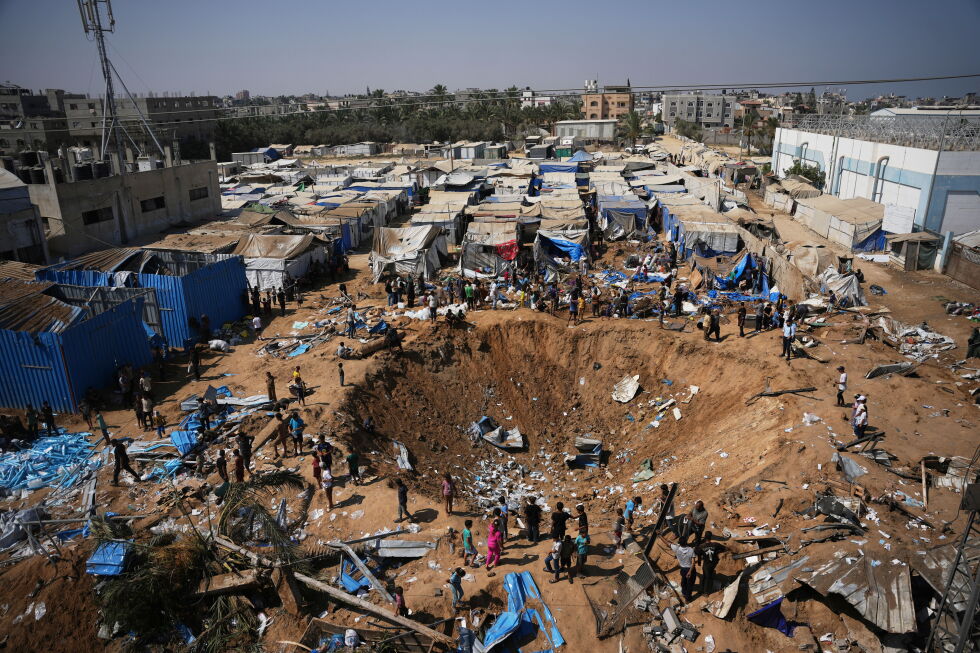
    Since the text of the new agreement was published, Israeli officials have publicly stated they hold “serious security concerns” about the terms, and have already communicated those worries to U.S. negotiators. Tensions remain high even under the existing ceasefire, which ended large-scale combat in October: data shows that 1,250 Palestinians have been killed in Israeli attacks across Gaza since the ceasefire agreement took effect.

  • Real Madrid sign Diomande from RB Leipzig

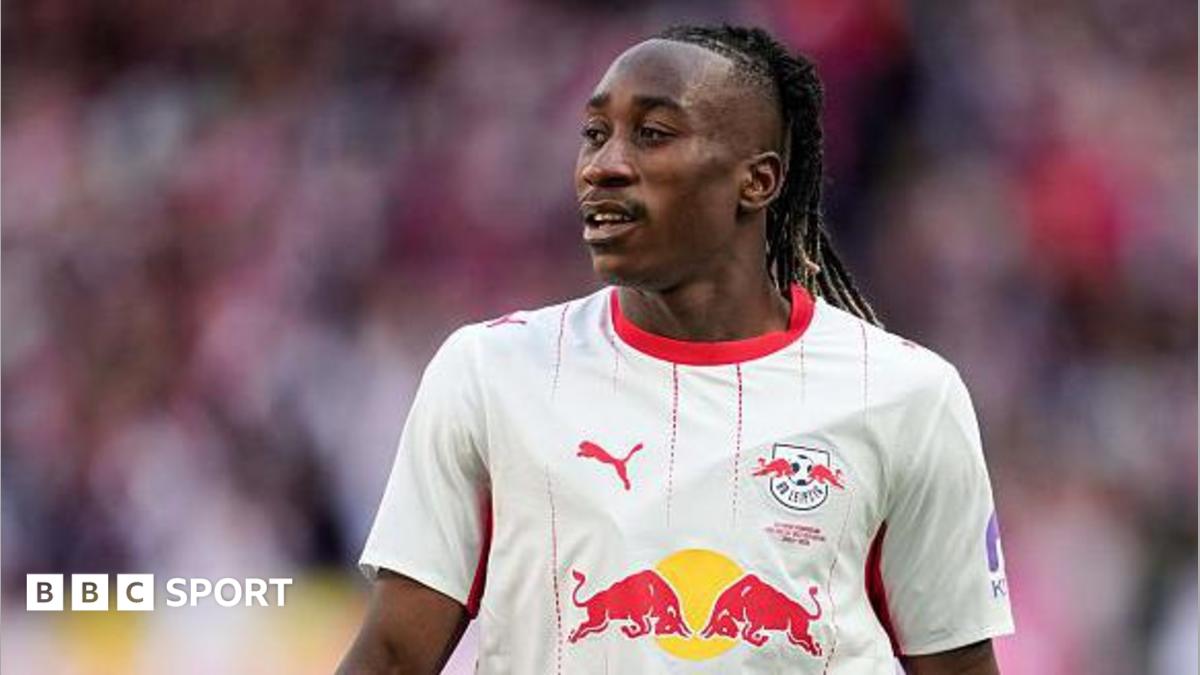
    Real Madrid sign Diomande from RB Leipzig

    In one of the most high-profile transfer moves of the 2026 European summer window, La Liga and Champions League giants Real Madrid have secured the signing of 19-year-old Ivory Coast international winger Yan Diomande from German Bundesliga side RB Leipzig, in a deal that could reach a total value of £120 million (140 million euros).

    The teenage sensation has put pen to paper on a seven-year contract with the Spanish capital club. If all performance-based add-ons are triggered, Diomande’s transfer fee will exceed the £115 million (133.9 million euros) Real Madrid paid Borussia Dortmund for English midfielder Jude Bellingham in June 2023, marking the club’s new record outgoing transfer for a teenager. This valuation would also see Diomande become the fourth most expensive footballer in the history of the sport, trailing only Neymar’s 2017 move to Paris Saint-Germain, Kylian Mbappe’s subsequent permanent transfer to the French champions, and Alexander Isak’s transfer from Newcastle United to Liverpool.

    Additionally, the transfer makes Diomande the most expensive African player in history, breaking the previous record of £72 million set when Arsenal signed fellow Ivorian Nicolas Pepe from Lille in 2019.

    The race for Diomande’s signature captured global football attention for weeks. Paris Saint-Germain was long considered the frontrunner to land the winger, but the French side pulled out of negotiations on Sunday after their £102.5 million bid was rejected by Leipzig. Liverpool, who had been searching for a replacement for Mohamed Salah following his move to Turkish side Trabzonspor earlier this week, also held an interest in Diomande, seeing their initial £69 million offer rejected back in June.

    Diomande’s move to the Santiago Bernabéu is the sixth summer signing for Real Madrid under new head coach Jose Mourinho, joining a group of high-profile new arrivals including Bernardo Silva, Ibrahima Konate, Denzel Dumfries, Marc Cucurella and Carlos Espi. As confirmed by club insiders, Diomande is set to be deployed primarily on the right side of Real Madrid’s attack, filling a long-running gap for consistent output in that position.

    In an official statement released following the completion of the deal, Diomande expressed gratitude to RB Leipzig and its fanbase for their support during his tenure. “I want to thank every RB Leipzig supporter for the incredible welcome and backing I’ve received since joining the club,” he said. “Who knows? Maybe we’ll meet again one day in the Champions League. Moving to Real Madrid is a childhood dream come true. I am all the more grateful to the management at RB Leipzig for making this move possible despite my current contract.”

    Diomande’s rapid ascent to the top of European football has been nothing short of remarkable. Just a year ago, he joined RB Leipzig from Spanish second-tier side Leganes in 2025, after moving from his native Ivory Coast to a youth academy in the United States, then signing his first European professional contract with Leganes earlier that same year. In his debut full Bundesliga season in 2025-26, Diomande scored 12 goals and registered 8 assists in league play, earning him the league’s Young Player of the Season award. Across all competitions, his output climbed to 13 goals and 10 assists, drawing attention from every major club across the continent. He also featured in all four of Ivory Coast’s matches at the 2026 FIFA World Cup, where the side was eliminated in the round of 32 by Norway.

    Football analysts note that Diomande’s transfer is a reflection of Real Madrid’s long-standing strategy of signing elite young talent before they reach their peak, betting on their development to become cornerstones of the squad for a decade or more. At 19, Diomande already boasts a rare skill set headlined by explosive pace, creative dribbling, one-on-one defensive beating ability and consistent attacking output. His biggest asset is his positional versatility: he is comfortable playing on either wing, capable of cutting inside from the left onto his dominant right foot to test goal, while using his acceleration and crossing quality to create chances for teammates when deployed on the right. This flexibility makes him an ideal fit for Real Madrid’s search for consistent production in the right-wing position.

    The 140 million euro price tag underscores just how highly Real Madrid rate Diomande’s upside, with club leadership convinced he can develop into a key long-term starter for the side. During his time at Leipzig, Diomande built a strong attacking chemistry with right-back Ridle Baku, and tactical analysts predict his attacking threat will only grow at Real Madrid, where he will link up with creative, experienced full-backs including Trent Alexander-Arnold and new signing Marc Cucurella.

  • US Senate committee votes to hold Fauci in contempt over Covid hearing

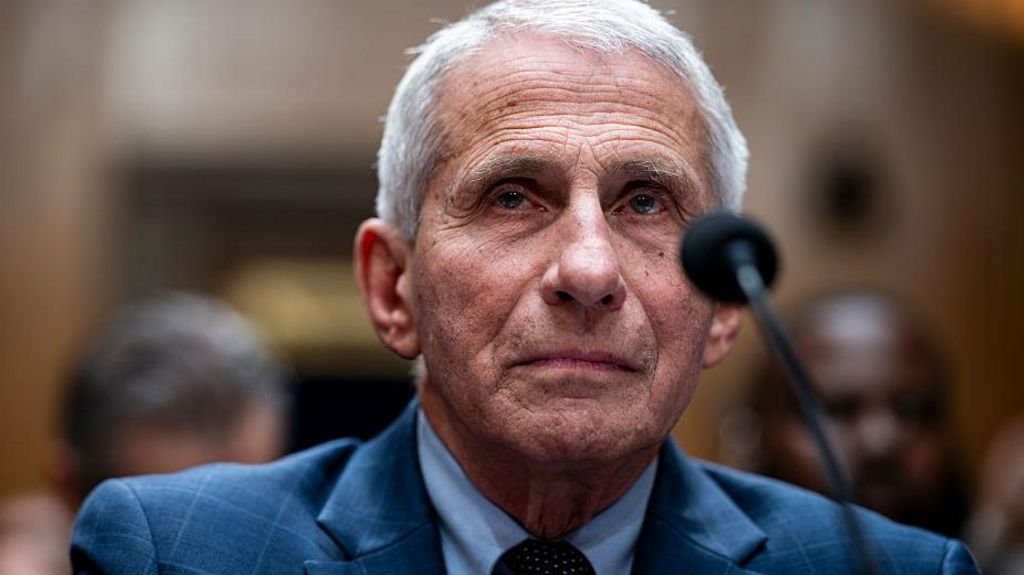
    US Senate committee votes to hold Fauci in contempt over Covid hearing

    In a partisan vote that marks a sharp escalation of years-long partisan tensions over the early handling of the COVID-19 pandemic, a U.S. Senate committee has approved a contempt of Congress citation against Anthony Fauci, the nation’s former top infectious disease official, after Fauci declined to answer questions during a recent investigative hearing.

    The party-line vote clears the way for the committee to send the contempt referral to the U.S. Department of Justice, which will now decide whether to pursue criminal prosecution against Fauci for defying a congressional subpoena. As of this reporting, the Justice Department has not publicly indicated whether it will move forward with the case.

    The confrontation stems from a long-running inquiry led by Sen. Rand Paul, a Kentucky Republican who has spent years targeting Fauci over allegations that the former official concealed evidence about COVID-19’s origins and approved federal funding for research at a Wuhan, China lab. The lab leak hypothesis, which remains a divisive unproven claim, contrasts with the broad scientific consensus that the virus most likely jumped to humans from an infected animal population.

    During his sworn testimony before the committee last week, Fauci invoked his Fifth Amendment constitutional right against self-incrimination more than 100 times. Fauci has repeatedly pushed back against Paul’s accusations, saying the Kentucky senator’s goal is purely political: to have him incarcerated. In comments ahead of the contempt vote, Paul framed the vote narrowly as a check on witness defiance, not a rehashing of six-year-old pandemic policy debates.

    “What we are voting on today — not his opinions, not his policies, not anything he said from the podium six years ago,” Paul said. “We are voting on whether a witness who has received the benefit of a federal pardon can be ordered by this committee to answer questions and then defy that order without consequence.”

    A critical legal context for the proceedings is the pre-emptive full pardon Fauci received from then-President Joe Biden on Biden’s final day in office in January 2025. That pardon shields Fauci from any federal prosecution for actions he took between 2014 and 2025, but it does not extend to post-2025 charges — including the current contempt of Congress citation. It also leaves Fauci open to potential state or local charges that fall outside the scope of a federal pardon.

    In his own remarks during last week’s hearing, Fauci called out Paul’s long-standing fixation on his case. “The only conclusion I can reach is that the sole reason he is calling me before this committee is to get me to say something – anything – that could vindicate his repeated public pledges that I end up, in his words, ‘behind bars,’” Fauci said, while maintaining that he has never engaged in any unlawful or unethical conduct related to his pandemic work.

  • DR Congo river boat under quarantine for Ebola after five deaths

    DR Congo river boat under quarantine for Ebola after five deaths

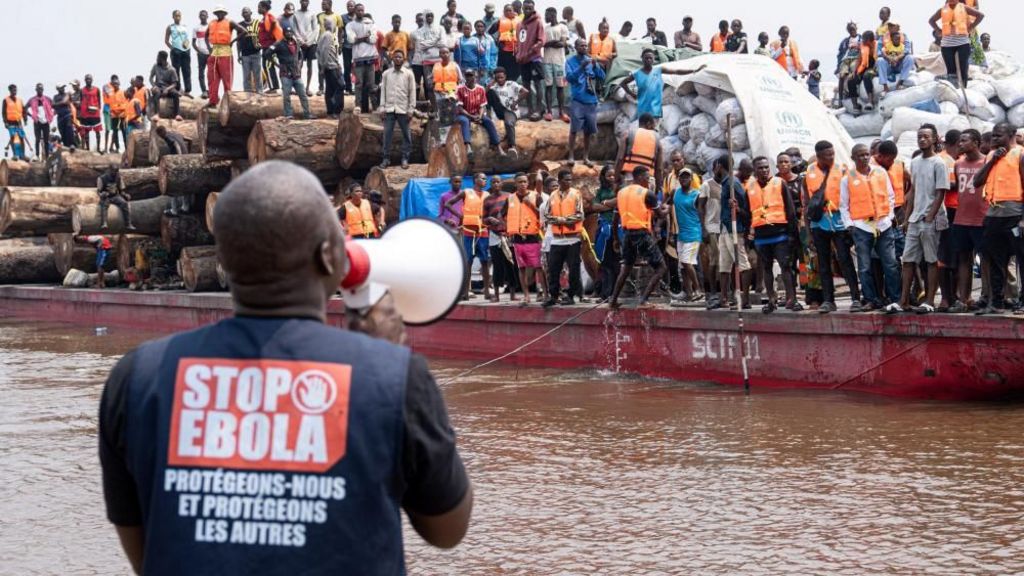
    Congolese public health officials have halted the Chinese-operated cargo-passenger vessel *Yingfeng 2* on the Congo River, 65 kilometers upstream from the capital Kinshasa near Bende Bende port, launching immediate Ebola and cholera screenings for all 255 people on board. The interception comes after a passenger who displayed fever and diarrhoea – symptoms consistent with both Ebola and cholera – disembarked at an earlier stop along the route and later died in hospital, with four additional deaths (two adults, a three-year-old child, and a newborn) also linked to the incident.

    Joint response teams from the Congolese Ministry of Health and the World Health Organization (WHO) have boarded the intercepted vessel and deployed a mobile testing laboratory to process samples from all passengers and crew. As of the latest update, Health Minister Roger Kamba confirmed that none of the tested individuals have returned positive results for either virus. “For now, no-one has tested positive, and it is likely no one will be positive after 21 days of incubation has elapsed,” Kamba told reporters.

    According to BBC intelligence, the *Yingfeng 2* departed Kisangani – the Democratic Republic of the Congo’s (DRC) third-largest city – approximately two weeks ago, travelling more than 1,700 kilometers downstream toward Kinshasa before the interception. Recent Ebola transmissions have been recorded in Kisangani, accounting for at least four local deaths. Kamba also clarified a key point of earlier misreporting: the deceased passenger disembarked in Mongala Province, which has not recorded any confirmed Ebola cases to date.

    To comply with WHO public health protocols, security forces have been ordered to quarantine the vessel offshore, preventing any potential movement of people that could spread the virus into the densely populated capital. Public health response teams remain on high alert to take further action once the quarantine perimeter is fully secured.

    The interception comes as the DRC grapples with its 17th Ebola outbreak, declared on 15 May this year. Caused by the rare Bundibugyo Ebola species – a variant not detected globally for more than a decade – the outbreak has continued to spread three months after it was first announced, with infections and fatalities still rising.

    As of current official counts, the outbreak has recorded 3,973 confirmed cases and 1,801 deaths, making it the second deadliest Ebola outbreak in the country’s history. No specific antiviral treatments or approved vaccines exist for the Bundibugyo variant, though the first human clinical trials for a candidate vaccine are currently ongoing in the United Kingdom. More than 17,000 people who have had close contact with confirmed cases remain under active public health monitoring, 674 patients are currently in isolation or receiving treatment across five affected provinces, and 776 people have recovered from infection, per DRC health authority data.

    In Kinshasa, officials have stepped up preparations for a potential response to a Bundibugyo introduction, reinforcing disease surveillance and rapid response capacity at Maluku, the capital’s main overland and river entry point. While officials stress that the interception and quarantine of the *Yingfeng 2* are strictly precautionary measures, they underscore the severe public health risk the ongoing outbreak poses to the country.

  • Fire burns 60 hectares in Indonesia’s Mount Bromo National Park

    Fire burns 60 hectares in Indonesia’s Mount Bromo National Park

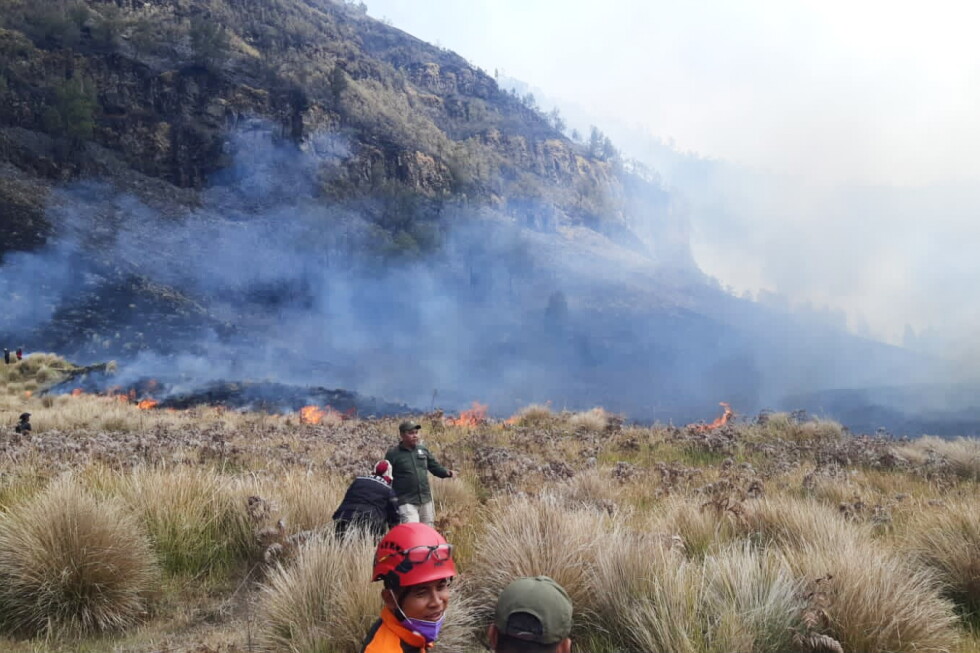
    Indonesia is grappling with a rapidly spreading wildfire that has destroyed 60 hectares of protected land in the popular Mount Bromo tourism region, according to official updates released Thursday. The blaze, which first ignited Monday, burns across an area equivalent to more than 80 full-size soccer pitches within the boundaries of Bromo Tengger Semeru National Park, one of East Java Province’s most visited natural attractions and a key draw for domestic and international tourism.

    The country’s National Disaster Management Agency confirmed Thursday that uneven, challenging terrain has created major obstacles for teams working to contain the fire, and investigators have not yet identified what sparked the blaze. In an official written statement, agency spokesperson Abdul Muhari outlined the core barriers slowing suppression efforts: multiple active hot spots are scattered across the steep slopes of Mount Bromo, locations that are nearly inaccessible to ground-based firefighting crews. Compounding this danger, sustained strong winds in the region are fueling the fire and accelerating its spread across dry vegetation.

    To overcome these access barriers, the agency deployed two water-bombing helicopters to the site Thursday to target the unreachable slope hot spots. Authorities are also preparing additional unconventional firefighting measures, including weather modification operations such as cloud seeding to trigger much-needed rain over the burning area. As a critical public safety precaution, local officials have closed a portion of the Mount Bromo tourist district until further notice, barring visitor access to the fire zone.

    The Mount Bromo fire is not an isolated incident: Indonesia has already recorded multiple separate forest fire outbreaks across the islands of Sumatra and Borneo since the start of this month. In West Kalimantan Province’s Ketapang Regency, one person has already died from oxygen starvation while attempting to flee through thick toxic wildfire smoke. Historically, large-scale forest fires across Sumatra and Borneo peak during annual dry seasons, and the resulting smoke haze often drifts to neighboring Singapore and Malaysia, causing widespread air quality crises across the region.

    Associated Press journalist Niniek Karmini contributed reporting from Jakarta, Indonesia.

  • Livestreamer’s murder raises questions over relations between Mexico’s creators and cartels

    Livestreamer’s murder raises questions over relations between Mexico’s creators and cartels

    The brazen, livestreamed assassination of Mexican social media influencer César Gastélum in Culiacán, the capital of violence-plagued Sinaloa state, has cast a harsh new spotlight on the growing intersection between digital content creation and organized criminal violence that has terrorized the region for years. The killing, which unfolded in seconds in broad daylight outside a local fast-food restaurant, was captured in real time for Gastélum’s online audience: two armed men on a motorcycle pulled up alongside the influencer, who was chatting with friends during the broadcast, and the passenger fired a close-range shot to Gastélum’s head before the pair sped away from the scene.

    While the Sinaloa state prosecutor’s office has released only limited details about the ongoing investigation into the murder, officials confirmed that one key line of inquiry centers on past social media posts Gastélum published, some of which reference a major local criminal group. This killing is far from an isolated incident, however. Over the past two years, following the eruption of a brutal internal power struggle between two rival factions of the notorious Sinaloa cartel, at least 10 digital content creators have been killed in the state.

    Unlike some previous targeted influencers, officials confirm Gastélum had not received any prior threats from organized crime groups, nor was he the subject of any police investigation into alleged ties to cartel activity. Still, communications scholars warn that the lines between social media culture and the criminal underworld in Sinaloa have become dangerously blurred, with fatal outcomes for creators who build large followings.

    Claudia Arruñada, a communications researcher at Mexico’s Iberoamerican University, explains that both social media algorithms and criminal organizations reinforce the same toxic value system: that luxury and consumption are the ultimate markers of success, and that these goals should be achieved as quickly as possible, rather than through gradual, steady work. “The model for success is no longer based on methodically working on your career, but rather on having a meteoric rise,” Arruñada notes. In many cases, she argues, influencers end up inadvertently or intentionally promoting narcoculture by showcasing lavish lifestyles and implicitly tying that wealth to the activities of drug traffickers.

    Gastélum’s social media feed aligned with this pattern: alongside comedy skits and viral challenge content, he regularly shared images of himself posing with high-end vehicles, enjoying exclusive nightlife, and taking luxury trips. In one widely shared post, he visited the gravesite of Leobardo Aispuro, an influencer known as “El Gordo Peruci” who was murdered in Sinaloa in 2024. Creators working in the region have pushed back against widespread labeling of local influencers as “narco-influencers,” arguing that simply being a young public figure who displays a luxury lifestyle is enough to make a creator a target in the tense, cartel-dominated environment of Culiacán.

    Independent research into cartel activity supports the idea that organized crime groups have adapted to the digital age, operating much like global corporations that use content creators as unofficial brand ambassadors and community managers to spread their influence and promote their image to local communities. When rival cartel factions go to war, any creator perceived as supporting one side immediately becomes a high-priority target for the opposing group.

    This dynamic played out publicly in January 2025, when leaflets naming 25 influencers and regional musicians were dropped from an aircraft over Culiacán’s streets. The pamphlets accused all those named of ties to “La Mayiza,” one of the two rival Sinaloa cartel factions currently locked in a deadly conflict with the Los Chapitos faction. Four of those named were already marked as “eliminated” at the time the leaflets were distributed, and two more have been killed in the months since. While Gastélum’s name did not appear on that list, his murder is widely recognized as the latest entry in a growing, deadly trend of targeted attacks on Sinaloa-based influencers.

    In response to the high-profile killing, Mexican President Claudia Sheinbaum announced this week that both local and federal law enforcement agencies will pursue not only the gunmen who carried out Gastélum’s murder, but also the criminal figures who ordered the attack. Her administration has made it a priority to break the growing connection between mainstream popular culture and the criminal underworld: officials have publicly denounced narcocorridos, the popular folk songs that glorify drug traffickers, while ramping up direct law enforcement action against cartel activity. Official government data shows that the national homicide rate fell by 48% in 2025, a marked improvement that the administration highlights as proof of its progress.

    Even so, the public, livestreamed nature of Gastélum’s killing has reinforced a persistent, widespread perception that cartels still retain enormous power over both public life and digital spaces in Sinaloa. For millions of online observers who watched the murder unfold in real time, the attack was a stark reminder that cartel violence no longer stays confined to the streets of border and drug-producing regions—it now extends into the feeds and screens of social media users around the world.

  • UEFA chief Ceferin: ‘Underdog’ leader taking fight to FIFA’s Infantino

    UEFA chief Ceferin: ‘Underdog’ leader taking fight to FIFA’s Infantino

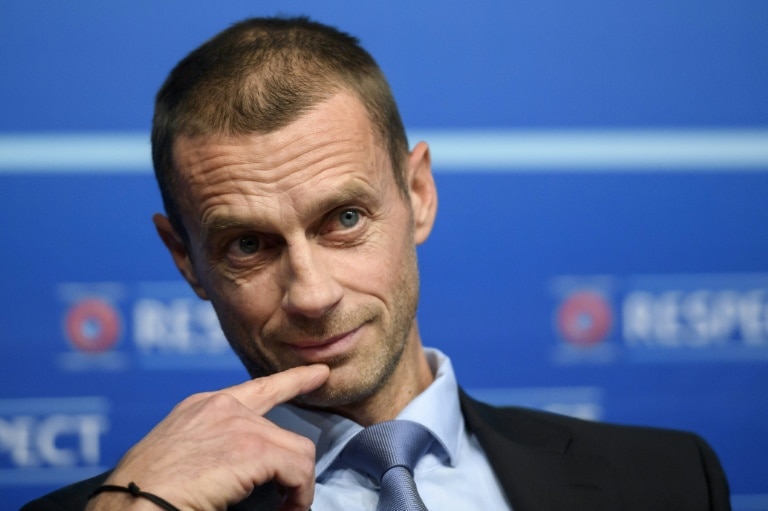
    Global football is currently roiled by an unprecedented high-stakes power struggle between two of the sport’s most influential leaders: UEFA president Aleksander Ceferin and FIFA chief Gianni Infantino. For months, tensions between Europe’s top football governing body and the global governing body have simmered, reaching a dramatic boil in recent weeks that has reshaped the hierarchy of international football.

    Ceferin, a 58-year-old Slovenian lawyer who has led UEFA since 2016, has long described himself as an “underdog” leader despite holding one of the sport’s most powerful positions. A controversial 2024 statute change allows him to run for a fourth term as UEFA president next year, a rule tweak that has drawn sharp criticism from within football circles and triggered the resignation of former UEFA chief of football Zvonimir Boban, the Croatian football legend. Even so, Ceferin has ruled out a challenge to Infantino in FIFA’s March 2025 presidential election in Rabat, where the FIFA chief is seeking his own fourth and final term. When asked last September if he would run for the global role, Ceferin told Politico simply: “No.”

    Still, that public refusal to run has not stopped Ceferin and UEFA from waging an aggressive campaign to block Infantino’s policy agenda, and their efforts have already delivered multiple high-profile wins. The most recent victory came last weekend, when Infantino backed down from a controversial plan to bring in private investors to FIFA’s club competitions, a reversal widely seen as a humiliating climbdown. The turning point was UEFA’s explicit threat to boycott future World Cups if the proposal moved forward, a threat that industry insiders describe as both aggressive and uniquely credible.

    Terrence Burns, a veteran brand and marketing strategist who worked on two successful World Cup host bid campaigns, told AFP that Ceferin emerged as the clear winner from the standoff. “Ceferin played it well,” Burns said. “UEFA carried the fight collectively while he issued no personal statement at any point. The boycott threat was aggressive and credible, which is a rare pairing.”

    This is not the first time Ceferin has successfully pushed back against Infantino. In 2021, joint opposition from UEFA and South American football confederation CONMEBOL forced Infantino to abandon a controversial plan to shift the World Cup from a four-year cycle to every two years. Ceferin has also proven his willingness to take on powerful opponents close to home: when the breakaway European Super League launched in 2021, he condemned the project aggressively, even calling then-Juventus chairman Andrea Agnelli “a snake” despite being godfather to Agnelli’s daughter. Ceferin later recalled that the 48 hours after the ESL launch were some of the most stressful of his tenure, saying: “I didn’t sleep, eat or drink for 48 hours, because I had phone calls with governments and royal families… and pressures and threats.” In the wake of the ESL’s collapse, UEFA overhauled its flagship club competition, the Champions League, to address the structural grievances that had fueled the breakaway attempt.

    Tensions between UEFA and FIFA first flared into public view during the 2024 World Cup, when Ceferin boycotted the tournament final in protest of a controversial FIFA decision. The dispute centered on US striker Folarin Balogun, who received a red card in the United States’ round of 32 win over Bosnia and Herzegovina. FIFA overruled the suspension, clearing Balogun to play in the round of 16 against Belgium, a decision that sparked widespread outrage after it was revealed that former US President Donald Trump had personally called Infantino to intervene in the case.

    Ceferin’s background prepared him for high-stakes conflict: he served in the Yugoslav Army in the 1980s before being called up to Slovenian forces during the country’s 1991 War of Independence. He once told ESPN, “Luckily I never had to shoot (anybody).” Today, he frames his confrontations with Infantino through a long-held personal mantra: “I think you should in professional and private life, choose your battles. You should fight when it’s really a reason to fight, but every fight is tiring.”

    The controversial 2024 statute change that clears Ceferin’s path to a fourth UEFA term has already drawn significant criticism. The rule did not eliminate the three-term limit entirely, but it stipulated that any terms started or served before July 1, 2016 would not count toward the cap, a carve-out that applies exclusively to Ceferin. Boban, who resigned in protest, noted that the shift directly contradicted reforms Ceferin himself introduced in 2017 to prevent exactly this kind of incumbency advantage. “Ironically, it was the UEFA president himself that proposed and launched a set of reforms in 2017 which were introduced to prevent such a possibility,” Boban said. “The reforms were to football’s great credit, and that of the UEFA president. His shift away from these values is beyond comprehension.”

    Looking ahead, Ceferin’s core goal is to block Infantino from securing a fourth term as FIFA president. Infantino, who was re-elected unopposed in both 2019 and 2023, is facing public pressure for the first time during his tenure, largely due to the unified opposition from Ceferin and UEFA. While Ceferin has said he will not run for the top job himself, his behind-the-scenes organizing has already reshaped the race, and his track record of beating Infantino on policy fights suggests the coming months will bring more upheaval to global football governance.

  • Man extradited from Australia charged with historical sexual offences

    Man extradited from Australia charged with historical sexual offences

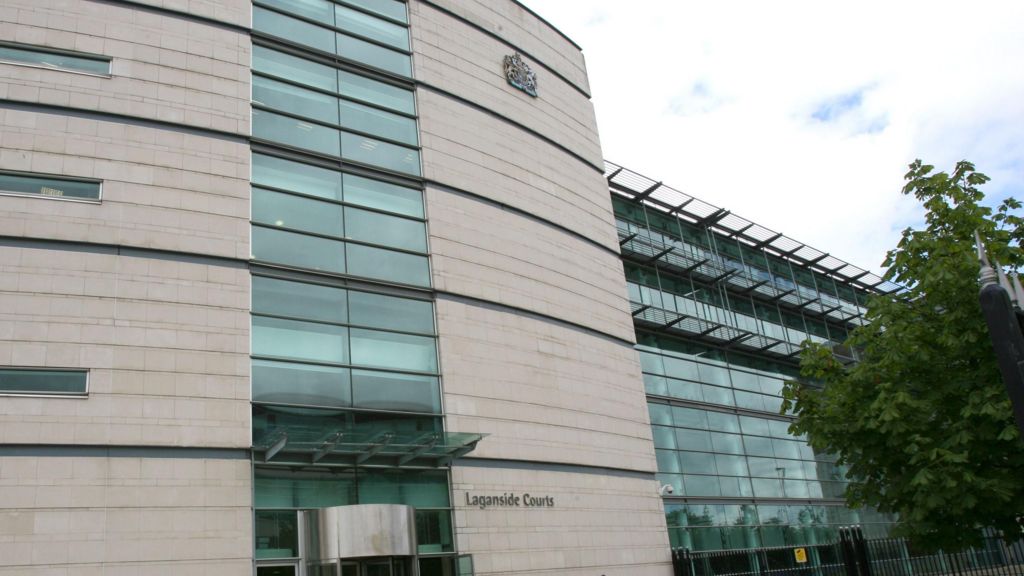
    A 75-year-old man, who was extradited from Australia back to Northern Ireland to face historical criminal allegations, has made his first court appearance at Belfast Magistrates’ Court on Thursday. For legal restrictions that protect the integrity of ongoing legal proceedings, the defendant’s identity cannot be publicly disclosed.

    The accused faces a total of 17 separate criminal charges tied to alleged sexual offences against a minor. Among these counts are 14 charges of indecent assault against a female, and an additional three charges of gross indecency committed against a child. Court documents outline that the offences are alleged to have taken place over a 14-year period, spanning from January 1969 to March 1983.

    Due to the defendant being held in police custody, the short preliminary hearing was conducted via remote video link. Throughout the proceeding, the accused did not make any verbal statements or enter a plea. The defendant’s legal representation, a defence barrister, confirmed that there were no challenges lodged against the execution of the international arrest warrant that facilitated the extradition. The barrister also made clear that no application for bail would be submitted on the defendant’s behalf.

    Following the hearing, the magistrate ordered the accused to be remanded in custody continuing. The case has been adjourned until 20 August, when court officials will schedule a formal preliminary inquiry to move the legal process forward. The investigation and prosecution are being handled by authorities in Northern Ireland, following the cross-continental extradition that brought the defendant back to face the charges decades after the alleged offences occurred.

  • Railway can transform Persian Gulf politics and global security

    Railway can transform Persian Gulf politics and global security

    Recent geopolitical disruptions including the ongoing crisis in the Strait of Hormuz and escalating tensions in the Red Sea have laid bare a critical global economic vulnerability: both Gulf nations and international commodity markets rely heavily on maritime trade routes that remain persistently exposed to conflict and political instability. While global leaders and diplomatic negotiators work to de-escalate tensions and reopen these critical shipping corridors, a little-noticed cross-border infrastructure project has quietly accelerated after 15 years of incremental development: the Gulf Cooperation Council (GCC) Railway initiative. Scholars of global governance and political economy have raised a pressing question: can this massive rail network do more than boost regional trade – can it reshape political dynamics and reduce conflict risk across the Middle East?

    This question has grown far more urgent amid the ongoing US-Iran war, which has shut down most commercial shipping through the Strait of Hormuz for months, crippling global energy trade flows. For centuries, access to and control of Persian Gulf shipping routes has been dominated by outside military powers and fractured by regional rivalries. From Portuguese colonial control of the Strait of Hormuz in the 16th and 17th centuries to centuries of British and American military dominance in the region, this critical chokepoint has never been fully controlled by the Gulf nations that depend on it most.

    Since the GCC’s founding in 1981, the six member states – Bahrain, Kuwait, Oman, Qatar, Saudi Arabia, and the United Arab Emirates – have formally committed to deepening regional integration. But after more than four decades of summits and joint declarations, tangible economic and political cooperation has consistently fallen short of rhetorical promises. The ongoing conflict with Iran has underscored the urgent need for coordinated action, and the GCC Railway has emerged as the most promising vehicle to finally deliver meaningful integration.

    First announced at the GCC’s 30th annual summit in 2009, the project plans to build a 2,177-kilometer (1,352-mile) cross-border network connecting all six member states, with a total projected investment of $250 billion. The design calls for a standard-gauge network supporting both freight and passenger services: freight trains will operate at 80 to 100 kilometers per hour, while passenger services will reach speeds of 200 kilometers per hour, all equipped with European train control technology. After years of slow progress, delayed by prolonged periods of low global oil prices that squeezed government infrastructure budgets across the fossil fuel-rich region, the United Arab Emirates and Saudi Arabia led a major push to accelerate construction throughout the 2020s.

    The outbreak of war with Iran added new urgency to the project. When GCC leaders gathered in Jeddah, Saudi Arabia in April 2026, against the backdrop of Iranian strikes on Gulf states and the full closure of the Strait of Hormuz, the bloc made a formal pledge to speed up completion of the full rail network, alongside commitments to deepen security cooperation and build integrated oil pipeline and electricity connections across member states. Under the project structure, each GCC nation oversees construction and operation of its own national segment, and Saudi Arabia and the UAE have advanced furthest toward completion.

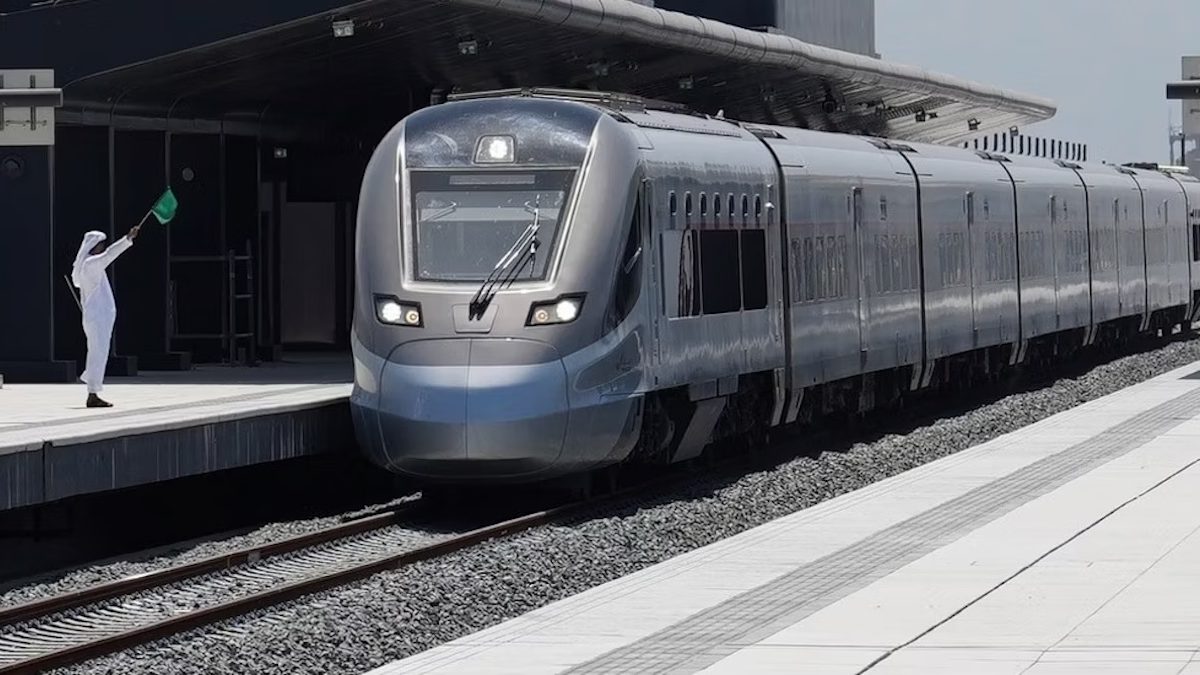
    In June 2026, the UAE launched commercial passenger service for Etihad Rail, connecting Abu Dhabi and Fujairah. A full line from the Gulf of Oman to the Saudi border is scheduled to open by the end of 2026, construction of the UAE-Oman cross-border segment is well advanced, and the remaining member states – Qatar, Bahrain, and Kuwait – are in active planning and design for their sections. Early in 2026, the director of the GCC Rail Authority confirmed the overall project has reached 50% completion and remains on track to launch full operations by 2030.

    When finished, the network will deliver the Gulf region’s first fully integrated cross-border rail system, stretching from Gulf of Oman ports all the way to Kuwait City. But the transformative potential of the project extends far beyond intra-GCC connections: planners are already developing extensions to link the network to major markets in Europe and Asia. Four primary routes to Europe are currently under consideration or early development: a northern corridor from Kuwait through Iraq and Turkey; a central route across Saudi Arabia through Jordan, Syria, and Turkey; a connection from Saudi Arabia through Jordan to the Israeli Mediterranean port of Haifa; and a southern link via Saudi Arabia’s planned Landbridge project to Red Sea ports, with onward sea connections through the Suez Canal.

    For Asian trade, the network will connect Gulf countries to Indian Ocean and Arabian Sea markets via existing and expanded Gulf of Oman ports, including the UAE’s Fujairah and Oman’s growing Sohar port. This creates a critical alternative trade route that bypasses the Strait of Hormuz entirely during periods of crisis, eliminating the chokehold that conflict in the strait can hold over global energy and trade flows.

    Multiple complementary corridor initiatives are already underway, backed by billions in investment from both regional and international stakeholders. These include the high-profile India-Middle East-Europe Economic Corridor, backed by India, the European Union, the United States, and multiple GCC states; Saudi Arabia’s Landbridge project, which has already finalized its design contract; and Iraq’s Development Road Project. In June 2026, Saudi Arabia and Turkey signed a memorandum of understanding to advance rail connectivity, including plans to revive and upgrade the century-old Hejaz Railway to reconnect Turkey, Saudi Arabia, and Jordan via Syria.

    Beyond its role as alternative trade infrastructure, the GCC Railway and its extended connections carry profound political and social implications. The network will enable cross-border travel for tens of millions of business and leisure passengers, opening new opportunities for regional tourism by making it far easier for international visitors to travel across multiple Gulf states. These deepened people-to-people and economic connections also lay the groundwork for greater political stability and long-term development across the broader Middle East.

    For example, Iraq’s Development Road corridor could redefine GCC-Iraq relations, shifting the dynamic from a focus almost entirely on countering Iranian influence and security concerns to a partnership centered on shared economic growth and interconnected supply chains. Similarly, deeper GCC integration could drive much-needed investment and economic recovery in post-civil war Syria. Closer economic ties between GCC states also reduce the risk of future intra-bloc conflicts, such as the 2017-2021 Qatar blockade that divided the alliance for years.

    In the near term, GCC leaders view deepened economic and political cooperation through the railway as a strategic counterbalance to Iran. But over the longer term, the shared economic incentives created by the network could create new pathways to improved relations between Iran and GCC states.

    Historically, large-scale rail networks have played transformative roles in nation-building and regional integration, from forging the transcontinental economies of the United States and Canada to binding European economies together and driving modernization in 20th century Japan and contemporary China. The GCC Railway fits squarely into this legacy: it is far more than concrete and steel rails. It represents a collective strategic effort to strengthen regional resilience to geopolitical shocks, deepen economic integration, reduce overreliance on the vulnerable Strait of Hormuz, and position the Gulf as a critical connected hub linking Asian, Middle Eastern, and European markets.

    While railways cannot eliminate the risk of war or erase long-standing geopolitical rivalries, infrastructure projects gradually reshape the incentives and shared identities that drive political decision-making over time. For the Gulf, the GCC Railway could finally put meaningful, lasting regional cooperation on track. This analysis is by Stacy D. VanDeveer, professor of global governance and human security at UMass Boston, and Firmesk Rahim, PhD candidate at UMass Boston, republished with permission from The Conversation.
  • Man behind deadly Munich car ramming handed life sentence

    Man behind deadly Munich car ramming handed life sentence

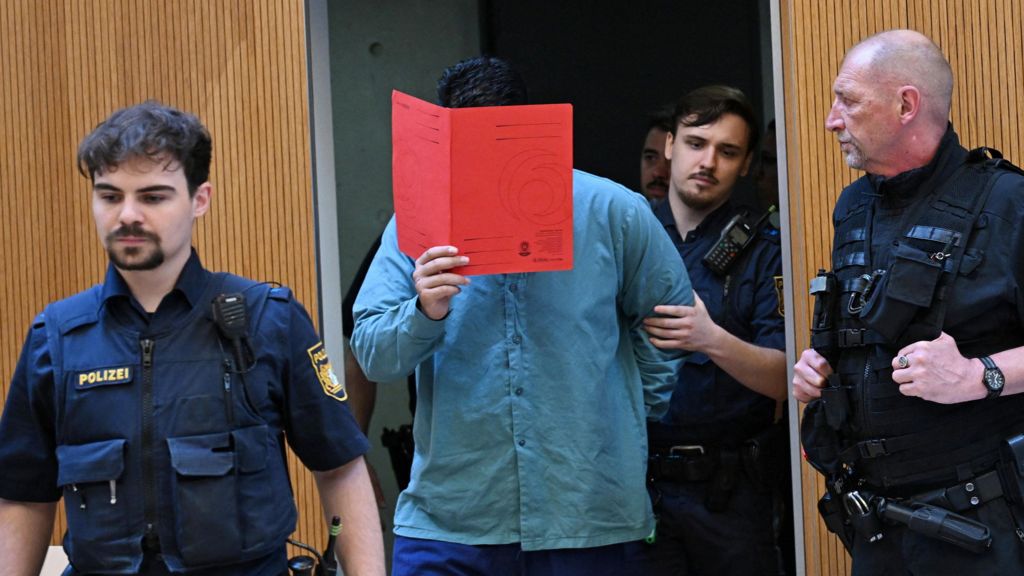
    In a landmark verdict delivered Wednesday, Munich Higher Regional Court has sentenced 25-year-old Afghan national Farhad N to life imprisonment for a deadly vehicle attack on a central Munich trade union rally that left two people dead and more than 40 others injured in February 2025. Under German privacy rules, the defendant’s full surname has not been released to the public.

    The court found Farhad N guilty on all counts brought by prosecutors: two charges of murder, 23 counts of attempted murder, and multiple additional counts of grievous bodily harm. Judges further ruled the attack carried particularly serious aggravating circumstances, a designation that drastically reduces the chance of early parole after the defendant completes the mandatory 15-year minimum prison term.

    Court documents outline that on the morning of February 13, 2025, Farhad N deliberately steered his Mini vehicle into a crowd of roughly 1,400 trade union demonstrators gathered in downtown Munich. The first two victims — a 37-year-old mother and her two-year-old daughter — were rushed to local hospitals but died shortly after the collision. Dozens of other attendees were wounded, with many sustaining life-threatening critical injuries.

    In his ruling, the presiding judge laid out the defendant’s stated motives, confirming Farhad N carried out the attack to target random civilians in Germany as retaliation for Western military and policy actions in Islamic countries, specifically naming U.S. and Western intervention in Gaza and Afghanistan. The judge added that the defendant believed the mass killing would be seen as an act pleasing to God, and that he sought to prove his piety as a Muslim to Allah, himself and his family. Prosecutors noted that personal anger, long-held disappointment, and deep-seated bitterness toward the West also contributed to his decision to launch the attack.

    The case unfolded against a backdrop of long-running political division over migration in Germany. Farhad N first entered Germany as an unaccompanied minor in 2016, at the peak of Europe’s continent-wide migrant crisis, when Germany welcomed more than one million asylum seekers over the 2015-2016 period. While his initial asylum application was ultimately rejected, he was never deported, and was allowed to remain in the country on legal resident status, holding a valid work permit. Prior to the attack, he had held jobs as a shop detective and security staff, had no prior criminal convictions, and was active on Instagram sharing content focused on bodybuilding and religious topics.

    Throughout the trial, Farhad N’s defense team argued for a lenient 15-year prison sentence and involuntary commitment to a psychiatric hospital, claiming the defendant showed clear diagnostic signs of schizophrenia. The verdict is not final: under German legal procedure, Farhad N retains the right to file an appeal against the conviction and sentencing.

    The 2025 Munich attack was one of several violent incidents in Germany in recent years that have been seized on by far-right political groups to amplify anti-migration rhetoric. The 2015-2016 migrant influx has remained one of the most divisive issues in German politics, and directly contributed to the sharp rise in electoral support for the far-right Alternative for Germany (AfD) party over the past decade.