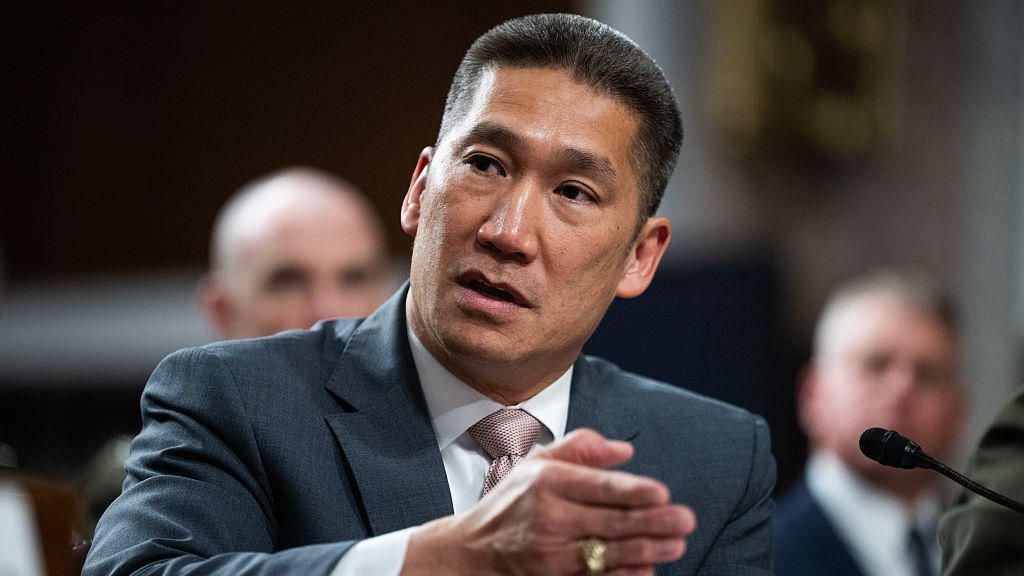
In a significant announcement during a Senate hearing Thursday, acting U.S. Secretary of the Navy Hung Cao confirmed that the Biden administration has put a planned $14 billion arms sales package to Taiwan on hold, a move driven by the need to ensure sufficient ammunition stockpiles for ongoing U.S. military operations tied to the conflict with Iran. Cao, who has held the acting Navy post since April, explained that the pause is intended to align U.S. foreign military sales priorities with the demands of Epic Fury, the codename for joint U.S.-Israel military operations targeting Iran. He emphasized that the U.S. maintains adequate stockpiles for current operational needs, and that the arms sale to Taiwan will proceed once the administration determines it is appropriate to move forward.
The confirmation comes just days after former President and current U.S. President Donald Trump signaled uncertainty over his final approval of the package, framing the proposed sale as a “very good negotiating chip” in dealings with China and stating he planned to hold direct talks with Taiwan’s President Lai Ching-te on the issue. A potential direct conversation between the U.S. and Taiwanese heads of state would mark a sharp break with decades of diplomatic protocol: no formal direct dialogue between the two leaders has occurred in decades, though Trump did speak with Lai’s predecessor, Tsai Ing-wen, during his 2016 presidential transition period.
As of Friday, Taiwan’s presidential office has stated that it has received no formal notification from Washington about any adjustments to the planned arms sale, leaving Taipei in a holding pattern as the situation unfolds. For its part, Beijing has long viewed U.S. arms sales to Taiwan as a blatant violation of Chinese territorial claims. China insists Taiwan is an inalienable part of its territory, has repeatedly condemned American military support for the self-governing island, and has never ruled out the use of force to bring Taiwan under Beijing’s control.
The pause in the sale follows high-stakes talks between Trump and Chinese President Xi Jinping during a recent presidential summit in Beijing, where Xi identified the Taiwan issue as the most sensitive and important matter framing bilateral relations between the two world powers. Trump later acknowledged that he discussed U.S. arms sales to Taiwan with Xi in great detail, a choice that breaks a 1982 U.S. commitment to Taiwan that Washington would not consult Beijing on arms sales to the island.
This latest development builds on already heightened tensions across the Taiwan Strait. In December of last year, Washington approved an $11 billion arms package for Taiwan, one of the largest such sales in history, prompting fierce pushback from Beijing. At the time, China’s foreign ministry warned that the sale would “accelerate the push towards a dangerous and violent situation across the Taiwan Strait.” In response to growing Chinese military pressure, Lai’s administration has significantly increased Taiwan’s defense budget in recent months, with Lai framing consistent U.S. arms support as a critical pillar of maintaining cross-strait peace and regional stability.