Helsingborg, Sweden – Just weeks after announcing a drawdown of 5,000 U.S. troops from Europe, U.S. President Donald Trump has reversed course with a new order to deploy an additional 5,000 American service members to Poland – a sudden policy shift that has left NATO allies and senior U.S. defense officials confused and scrambling to adjust.
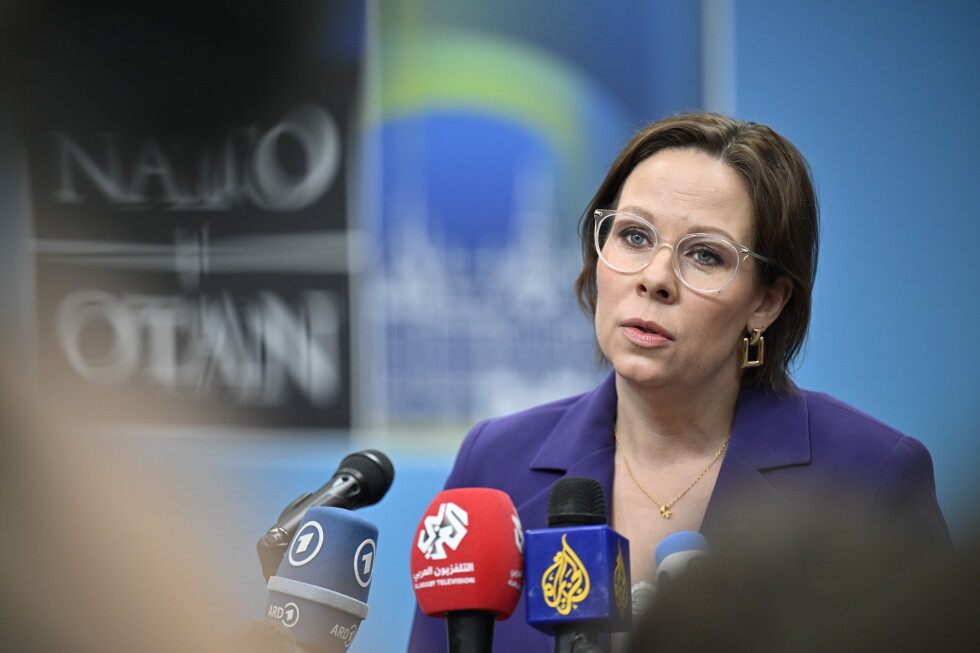
Speaking to reporters Friday on the sidelines of a NATO foreign ministers meeting she hosted in southern Sweden, Swedish Foreign Minister Maria Malmer Stenergard acknowledged the widespread uncertainty, noting that the abrupt reversal had created a complex, unclear landscape for alliance coordination. The gathering included U.S. Secretary of State Marco Rubio, along with top diplomatic representatives from across the 32-nation bloc.
The confusion extends across the Atlantic, even within U.S. defense circles. Two senior U.S. defense officials, speaking on condition of anonymity to discuss sensitive internal military planning, confirmed that uniformed and civilian defense leaders have been left just as puzzled as alliance partners. “We just spent the better part of two weeks reacting to the first announcement. We don’t know what this means either,” one official said.
Trump broke the news of his new policy in a post on his Truth Social platform, framing the deployment as a gesture of goodwill rooted in his close personal relationship with Polish President Karol Nawrocki, whom Trump publicly endorsed during Poland’s 2024 presidential election. “I am pleased to announce that the United States will be sending an additional 5,000 Troops to Poland,” Trump wrote.
This latest announcement marks a stark about-face after weeks of inconsistent messaging from Trump and his administration, all of which previously centered on plans to shrink – not expand – the U.S. military footprint across the European continent. Earlier this month, the White House confirmed it would cut U.S. troop levels in Europe by roughly 5,000 personnel, with U.S. officials confirming that around 4,000 scheduled rotational deployments to Poland would be canceled.
That initial drawdown announcement came after Trump publicly took umbrage at comments from German Chancellor Friedrich Merz, who criticized the U.S. approach to the ongoing conflict with Iran, saying Washington had been “humiliated” by Iranian leadership and lacked a coherent strategy for the war. In response, Trump told reporters the U.S. would cut troop levels “a lot further than 5,000” and unveiled new punitive tariffs on European passenger vehicles – a move that directly targeted Germany, the European Union’s largest and most economically influential automaker.
NATO leadership was caught off guard by the sudden policy reversal, despite prior public pledges from U.S. officials that all changes to European force posture would be fully coordinated with alliance partners. As recently as Wednesday, NATO’s top military officer, U.S. Lt. Gen. Alex Grynkewich, publicly reaffirmed that the U.S. would “stay well-synchronized with our allies moving forward.”
Current U.S. military posture in Europe places roughly 80,000 American troops across the continent, under existing Pentagon rules that require a minimum of 76,000 troops and key military equipment to be permanently stationed in Europe – unless NATO allies are consulted first, and a full review confirms a drawdown serves core U.S. national security interests. The initial planned withdrawal of 5,000 troops would have pushed total force levels below this legal mandated threshold.
For Poland, Trump’s reversal has been met with cautious approval. Polish Foreign Minister Radek Sikorski welcomed the new deployment, noting that it will keep overall U.S. troop presence in Poland “more or less at previous levels,” preserving the security reassurance that has anchored Polish defense policy for decades.
This report was compiled from contributions by Cook in Brussels and Emma Burrows in London.