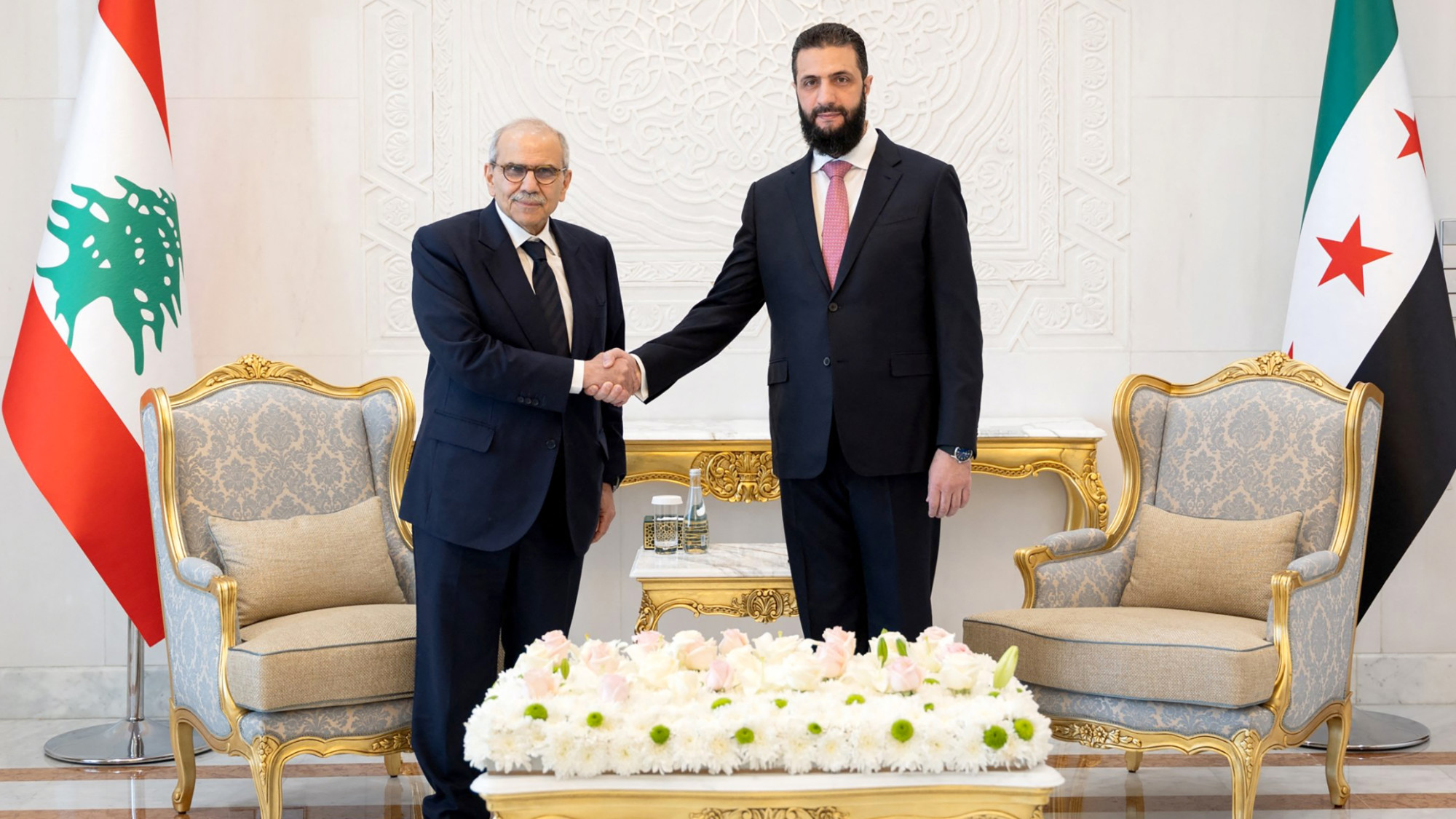
In the months following the collapse of Bashar al-Assad’s Syrian government, bilateral relations between Lebanon and neighboring Syria have hovered in a tense limbo, caught between shared strategic necessity and decades of accumulated mutual mistrust. Tied together by shared geography, intertwined history, overlapping security interests, and a sprawling backlog of unresolved bilateral disputes, neither nation has managed to shake off the heavy legacy of their fraught past.
Lebanon has remained deeply wary of any return to the era of Syrian political dominance over its domestic affairs, while Syria’s new leadership under President Ahmed al-Sharaa is keenly alert to the risk that unilateral policy moves by Beirut could spill across their shared border and undermine Damascus at a critical transitional moment for the war-torn state. That underlying tension has now flared anew around one of the region’s most sensitive diplomatic topics: direct bilateral negotiations with Israel.
According to a senior Lebanese official with direct knowledge of recent diplomatic exchanges between Beirut and Damascus, Syria has raised clear concerns that Lebanon’s rapidly advancing negotiation track with Israel is proceeding without sufficient coordination with the Syrian government, even as Damascus’s own talks with Tel Aviv remain stalled. The Syrian position was laid out explicitly during Lebanese Prime Minister Nawaf Salam’s recent official visit to Damascus, where he held talks with al-Sharaa.
“The Syrian leader spoke in a diplomatic, non-confrontational tone, but made clear that coordination between the two countries on issues of vital national interest was essential to strengthening the negotiating hand of both sides,” the Lebanese official shared.
Damascus’s unease extends beyond the simple breach of diplomatic protocol: Syrian leaders worry that Beirut’s separate negotiation path could set a precedent that international powers will later pressure Syria to follow. For months, United States officials have cited ongoing Syrian-Israeli diplomatic contacts to push Lebanon to launch its own direct talks with Israel. But with the Syrian negotiation track now largely deadlocked – in large part because Damascus judges Israel unwilling to make meaningful territorial or security concessions – the regional diplomatic dynamic has shifted dramatically. What began as a tool to pressure Lebanon to align with Syria’s approach could now become a mechanism to force Syria to adopt Lebanon’s framework.
Lebanon’s negotiation process carries additional sensitivity given the conditions under which it has unfolded. Lebanese President Joseph Aoun previously pledged that Beirut would not enter talks until a permanent ceasefire with Israel was implemented. Yet diplomatic contacts have continued even as Israeli military strikes on Lebanese territory persist, despite a nominal ceasefire agreement reached in mid-April.
For Damascus, this creates a core strategic threat: if Lebanon advances negotiations amid ongoing violence and makes early concessions to Israel, Syria could face mounting pressure from Washington and other global actors to accept an identical unfavorable framework. The dispute over negotiations has added a new layer of friction to an already deeply fragile bilateral relationship.
The two neighbors are still working through a host of long-simmering unresolved issues: the status of Syrian detainees held in Lebanese prisons, unresolved land and maritime border demarcation, the future of Hezbollah’s role in regional security, the presence of former Assad regime officials in Lebanese territory, and the fundamental question of how to restructure their security relationship after decades of domination, open hostility, and mutual suspicion. Syrian unease over Beirut’s unilateral moves has already emerged across multiple of these files.
Back in December, Damascus raised formal objections to Assad-linked military officers residing in Lebanon, with Syrian security officials sharing name lists with their Lebanese counterparts and warning that some of these figures could use Lebanese territory as a base to plot against Syria’s new government. Damascus has also framed the resolution of the Syrian detainee issue as a non-negotiable prerequisite for any meaningful improvement in bilateral ties.
The Israel negotiation file is now the latest addition to this complex web of competing interests. For Syria, the dispute is not merely a matter of diplomatic etiquette – it is a question of strategic leverage. Damascus argues that despite their bitter shared history, Lebanon and Syria face overlapping regional vulnerabilities, meaning any concession Lebanon makes to Israel – particularly on security arrangements, border demarcation, or post-war security guarantees – will indirectly erode Syria’s own future negotiating position.
“This is why Sharaa stressed that coordination on vital issues was not an optional courtesy, but a strategic necessity,” the Lebanese official said. “If Syria takes one step in favour of Lebanon, Lebanon should understand that its own vital interests require it to take many steps in favour of Syria.”
That comment underscores the core asymmetry in how the two sides view their relationship: while Lebanon fears a return to Syrian dominance, Syria believes that Lebanese policy decisions can still expose it to severe strategic risk.
The dispute over maritime energy rights adds further complexity to the dynamic. Turkey has already raised sharp objections to Lebanon’s 2025 exclusive economic zone agreement with Cyprus, arguing that the deal was reached without sufficient consideration of Syrian and Turkish economic and security interests in the Eastern Mediterranean. The incident has reinforced a widespread regional perception that Beirut often pushes ahead on sensitive cross-border issues without adequate consultation with neighboring stakeholders.
Against this backdrop, Damascus does not view Lebanon’s separate talks with Israel as an isolated domestic decision by Beirut. Instead, it frames the move as part of a broader pattern of unilateral action by Lebanon on issues that carry implications far beyond its own borders.
A senior Syrian official noted that Damascus has repeatedly emphasized to Arab regional states the need for coordinated diplomatic strategy and the risk of separate negotiation tracks that weaken the broader Arab position in talks with Israel. “There is a positive atmosphere, but there are realities on the ground that cannot be ignored,” the official said. “Cooperation with Lebanon is growing, but it has not yet reached the required level. The issue is less about disagreement and more about poor coordination.”
The official added that Syria has a clear stake in a stable, prosperous neighbor: “The Syrian state wants Lebanon to be strong and capable of standing on its own feet,” he said, noting that al-Sharaa has stressed in meetings that Lebanon is navigating an unusually sensitive period and requires more innovative solutions than the outdated frameworks it has relied on in the past. Damascus believes Lebanon needs “precise tools” to navigate this transitional phase, and that Syria’s role is to support Beirut rather than add to existing pressure, the official added.
For Lebanon, the core risk is that what appears to be an effort to expand diplomatic room for maneuver could end up narrowing its long-term options. A unilateral negotiation track with Israel could deepen Syrian mistrust, alienate Turkey, complicate Beirut’s own domestic political relationship with Hezbollah, and leave Lebanon exposed to pressure from international actors pushing for a quick, superficial deal rather than a durable, sustainable peace settlement.
For Syria, the risk follows a different logic. Having inherited a fractured state, a weakened regional position, and already difficult talks with Israel, Damascus fears that Lebanon’s acceptance of a US- and Israeli-backed negotiation framework could create a regional precedent that Western powers will later use to pressure Syria into accepting identical terms.
That said, the current tension does not signal an imminent slide into open confrontation between the two neighbors. On the whole, diplomatic exchanges between the two sides remain cautious and pragmatic. Both states still depend on one another: Syria needs Lebanon to prevent its territory from becoming a staging ground for anti-Damascus opposition activity, while Lebanon relies on Syria for border management, progress on the detainee file, refugee repatriation, anti-smuggling oversight, security coordination, and any credible regional peace settlement.
For Lebanon, the central question now is whether it can advance negotiations with Israel while maintaining a coherent, aligned regional posture. For Syria, the key challenge is whether it can prevent Lebanese policy decisions from becoming a precedent that undermines its own negotiating position.
The latest developments make clear that the post-Assad bilateral relationship has not yet evolved into an institutionalized, trust-based strategic partnership. It remains largely transactional, reactive, and still shaped by the lingering suspicions of the past. Caught between the legacy of the old order and the demands of a new regional landscape, the two neighbors face a familiar dilemma: they are no longer bound by the old hegemonic relationship, but neither can afford to ignore one another’s core strategic interests.