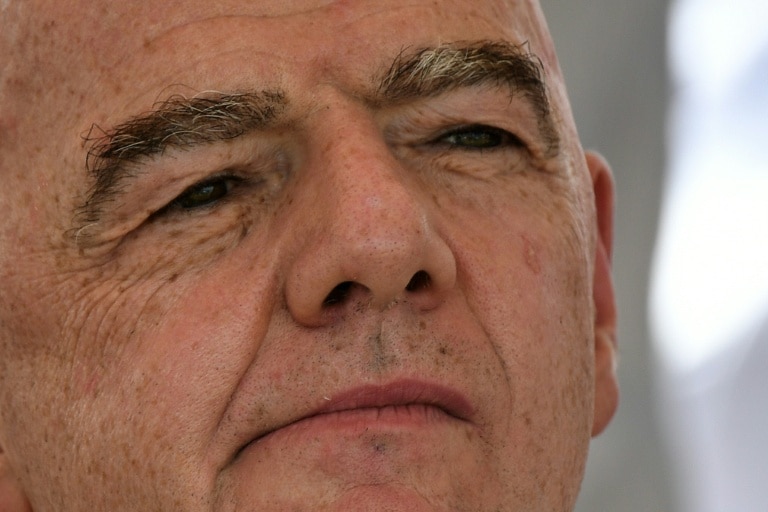
As the 2025 FIFA presidential re-election campaign approaches, a growing storm of controversy has engulfed incumbent head Gianni Infantino, with the global football governing body issuing a fierce public rebuke of what it calls an organized, sustained campaign to weaken both its leadership and reputation. The latest wave of criticism comes on the heels of the collapse of Infantino’s controversial private World Cup investment plan, and new unproven allegations published by a major British newspaper last Friday.
The claims published by *The Telegraph* center on actions Infantino took during his tenure as Secretary General of UEFA, European football’s top governing body, between 2009 and 2016. Citing anonymous sources, the outlet reported that Infantino abused his influence to secure a promotion for a female UEFA staff member with whom he allegedly had an intimate relationship. The newspaper further alleged that the employee received a six-figure payout when she left the organization, in addition to roughly £45,000 (equivalent to $60,700) to cover tuition fees for an elite business school program. When reached for comment by Agence France-Presse (AFP), UEFA confirmed that a departure settlement and MBA tuition payment were provided to the individual in question, but did not address the broader allegations of improper influence.
In an official statement posted to social media on Saturday, FIFA pushed back forcefully against the cascade of negative coverage and calls for Infantino’s resignation. The organization acknowledged that it welcomes legitimate oversight of its work, but drew a clear line between constructive scrutiny and bad-faith attack. “Scrutiny is not a licence to distort facts, amplify unsubstantiated allegations or manufacture distractions designed to undermine progress,” the statement read. “Where reporting is inaccurate or misleading, FIFA will challenge it directly and vigorously.”
Infantino’s current crisis began in late October 2024, when he first unveiled a plan to open World Cup tournament operations to private investment. The proposal sparked immediate widespread backlash from global football stakeholders, most notably UEFA, which ultimately forced Infantino to shelve the plan. Even after the proposal was withdrawn, UEFA has stood firm in its opposition, reaffirming its threat to organize a boycott of future World Cup tournaments last Thursday, arguing that the u-turn was not enough to resolve concerns over Infantino’s leadership.
With Infantino set to stand for re-election next March, FIFA’s Saturday statement also addressed efforts by opponents to alter the election outcome through non-democratic means. The organization made clear that it “will not support, facilitate or tolerate any process concerning the election of the FIFA President that is inconsistent with FIFA’s Statutes, democratic procedures and established governance framework.” It added that critics who lack sufficient backing from FIFA member associations have no right to push their agenda through false claims and innuendo, rather than the established democratic processes already set out by the governing body.
作者: admin
-
FIFA condemns ‘concerted and ongoing effort’ to weaken Infantino
-
The political black hole over the Strait of Hormuz
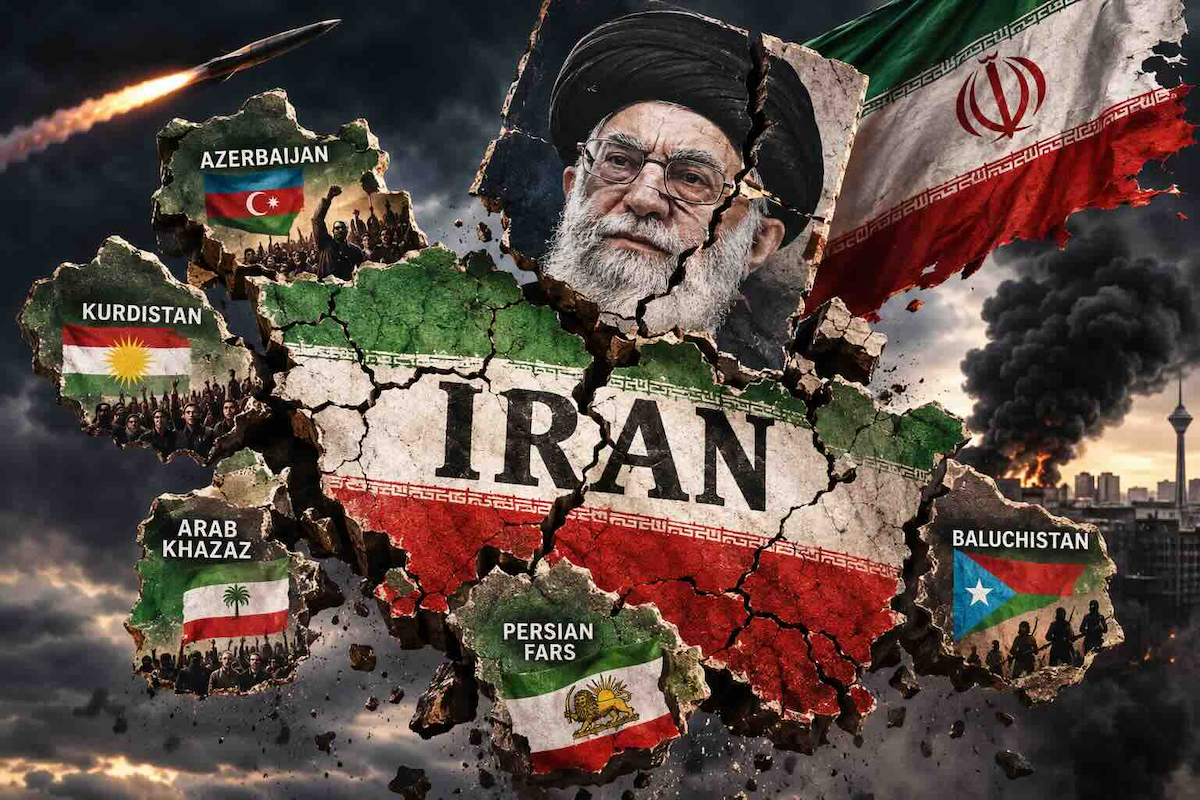
Uncertainty over the status of Iran’s supreme leader and deepening internal power rifts have pushed the country to the brink of state failure, sending ripple effects of instability that reach all the way to China’s doorstep and leaving Beijing facing a tricky diplomatic dilemma. At the center of current regional tensions is a newly emerging Iran-Oman agreement that regime-affiliated media in Iran claims will formalize Tehran’s continued control over the Strait of Hormuz, the critical chokepoint through which roughly a fifth of global oil supplies pass daily. From Washington’s perspective, any international recognition of Iran’s full control over the strait would deliver a major blow to U.S. and global commercial interests, granting Tehran a powerful strategic tool to blackmail the international community during future political disputes by threatening to block traffic through the waterway.
With U.S. midterm elections approaching and high-stakes multilateral negotiations underway with Beijing across a range of issues, the Biden administration is strongly motivated to block international recognition of Iran’s claim, a move that carries major stakes for U.S. global influence. But behind what appears to be a political win for Tehran lies a far more concerning, underreported transformation inside Iran’s ruling regime that points to accelerating fragmentation of central power and looming systemic chaos.
On August 5, China’s state-run Xinhua News Agency published remarks from Iranian President Masoud Pezeshkian, who openly acknowledged that communication with Supreme Leader Mojtaba Khamenei has become extremely difficult in recent weeks. Analysts say this unusual public comment, amplified by a major Chinese state media outlet, may be a quiet signal that Beijing itself is struggling to establish reliable lines of communication with Tehran’s top decision-makers, raising questions about who actually holds power in the country. Iranian media reports have further fueled these doubts, claiming Pezeshkian was only granted a brief meeting with a figure presented as Khamenei, held in a dark, tinted-window vehicle at a secret location outside the capital.
It remains unclear whether Mojtaba Khamenei, the son of Iran’s late long-time supreme leader Ali Khamenei, even exercises full control over his own circumstances, let alone the affairs of the entire country. These disclosures from Iran’s own elected president confirm long-running rumors of bitter, intractable splits at the highest levels of Iran’s leadership. The most radical factions within the Islamic Revolutionary Guard Corps (IRGC) are widely believed to have seized de facto ultimate power, using Mojtaba as a largely powerless figurehead to legitimize their rule. This arrangement has isolated both Mojtaba and the hardline IRGC leadership, creating a cascade of disruptive internal power dynamics that threaten to unravel central governance.
To compound this instability, Iran’s military command structures were deliberately decentralized and devolved to local regional units years ago to pre-empt the risk of U.S. decapitation strikes on top leadership, and there is little sign these structures can be re-centralized any time soon to restore clear top-down command. Unconfirmed but persistent rumors also suggest Israeli intelligence has cultivated close contacts with senior Iranian officials who are prepared to launch a coup against the current hardline regime, fueling a culture of pervasive paranoia and mutual suspicion across all levels of government. Under this climate, any official, for any reason, can be targeted and purged on accusations of treason, making it nearly impossible to build consensus or implement consistent policy.
The result is a broken decision-making system: any proposed compromise with external powers can be immediately vetoed by radical factions that dismiss any deal as a “traitor’s surrender,” while the official supreme leader remains a distant, opaque figure controlled by unelected hardline factions behind the scenes. Despite this political chaos, Iran still retains active production capacity for missiles and drones, as well as large stockpiles of these weapons, creating a dangerous scenario: a fractured state with plentiful tools to project destabilizing force across the region.
This portrait adds up to a country mired in deep institutional disarray, on the edge of full state failure. Yet history shows that failing states can survive for years while remaining a major threat to regional security, as seen in Myanmar, where years of brutal civil conflict have failed to unseat the ruling military junta. A collapsed, failing Iran would expand a broad arc of instability stretching from Central Asia all the way to the Mediterranean coast. The U.S. has thus far avoided being drawn into the messy Iranian quagmire, but even if Tehran retains de facto control over the Strait of Hormuz, the country’s political fragmentation poses unique new risks to regional security and global oil markets.
One potential path to de-escalation that has been floated by geopolitical analysts involves offering security guarantees to Mojtaba Khamenei and other top Iranian leaders in exchange for Tehran rolling back its claims to full control over the strait. On a more positive note, Iran’s growing internal instability has paradoxically helped unify regional states that were once deeply divided over how to address Tehran’s expansionist threats. Middle Eastern nations are now converging on coordinated strategies to limit Tehran’s harmful regional influence, building new medium- and long-term pressure campaigns to constrain the regime. This has also accelerated regional plans to build oil and gas export pipelines that bypass the Strait of Hormuz entirely, a shift that will ultimately restrict Iranian trade and further isolate the country’s hardline religious leadership.
For China, the current situation creates a tricky diplomatic balancing act. While Beijing would likely welcome any setback to U.S. interests in the region, its demonstrated inability to intervene and mediate the dispute for Gulf allies has left China sidelined from evolving regional political dynamics, which are increasingly dominated by the U.S. and Israel. Finding common ground with Washington and Jerusalem to address the Iranian crisis would be a major challenge for Beijing, in large part because it is not clear what strategic benefits Beijing would gain from such collaboration. However, the emergence of a large, unstable political black hole along China’s western border will almost certainly create new security and economic risks for Beijing in the near term. The Iranian meltdown is unfolding at the same time that Russia faces ongoing military setbacks and struggles to hold its position in Ukraine, meaning China could soon find itself bordered by multiple zones of active instability – a outcome that Beijing has long sought to prevent.
-
Turkey and Saudi Arabia’s rocky relations: A brief history
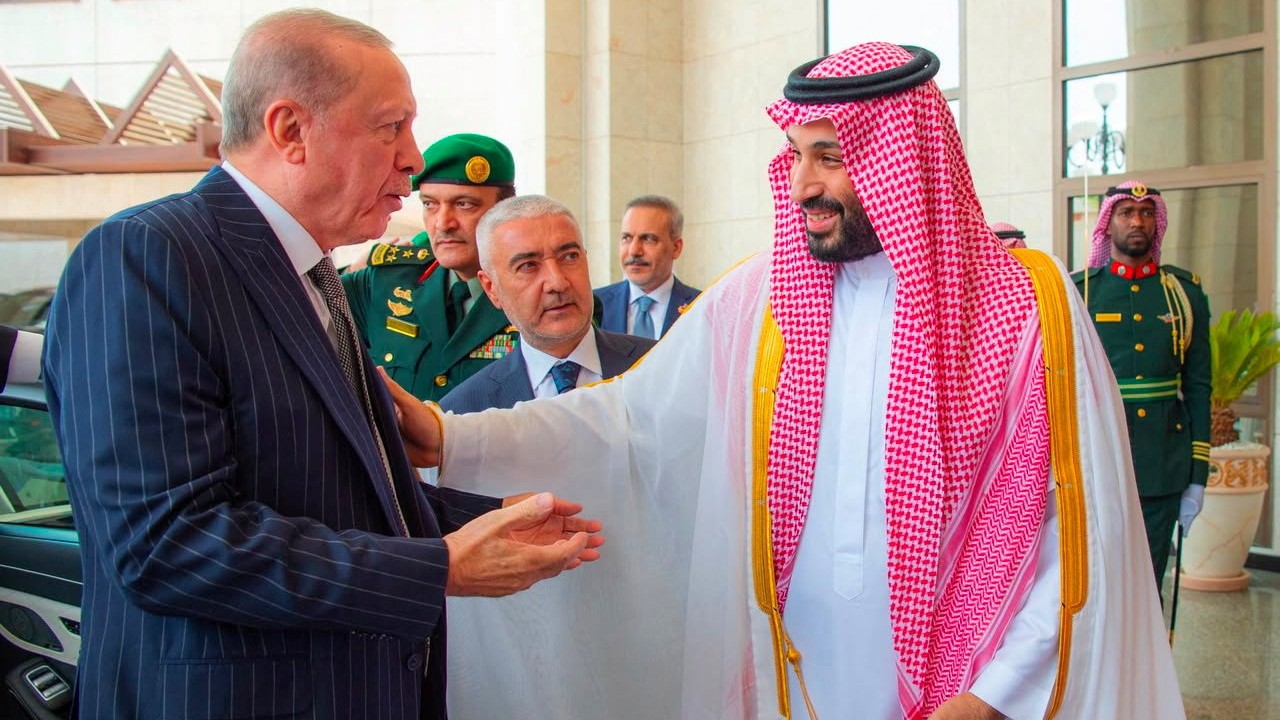
In a moment laden with religious and geopolitical symbolism, the leaders of three major Muslim nations gathered this week in Islam’s holiest city of Mecca to perform Friday prayers together, capping years of gradual reconciliation and marking a new chapter in regional security cooperation. Turkish President Recep Tayyip Erdoğan, Saudi Crown Prince Mohammed bin Salman Al Saud, and Pakistani Prime Minister Shehbaz Sharif joined the collective worship at the site, a public display of unity that follows years of strained ties between Ankara and Riyadh.
The symbolic prayer service comes on the heels of a landmark breakthrough: the signing of a historic trilateral joint defense agreement between the three countries, which for the first time places the three regional powers under a unified security framework. While Pakistan has long maintained warm, stable diplomatic and economic ties with both Saudi Arabia and Turkey, the relationship between Ankara and Riyadh has been defined by centuries of rivalry and decades of alternating détente and open rupture.
To understand the gravity of this week’s developments, it is necessary to trace the long, fraught history of relations between the two nations. Tensions over claims to leadership of the global Sunni Muslim community date back to the founding of both modern states in the early 20th century, with roots stretching even further to the 19th-century Ottoman-Saudi war, when Ottoman forces crushed an early Saudi expansion across the Arabian Peninsula. When the Ottoman Empire collapsed after World War I, the House of Saud defeated local rivals to seize control of Mecca and Medina in 1925, ending more than 350 years of continuous Ottoman rule over Islam’s two holiest sites. Formal diplomatic relations between the newly established Kingdom of Saudi Arabia and Republic of Turkey were not established until the 1930s, and the two sides maintained generally cordial ties for decades after: both backed Iraq during the 1980s Iran-Iraq War (with Saudi support far more public) and aligned with the United States during the 1991 Gulf War.
Even during this period of calm, however, low-level frictions persisted. Turkey repeatedly criticized Saudi Arabia for demolishing historic Ottoman-era sites across the kingdom, including fortresses, cemeteries, and 19th-century railway infrastructure. The most high-profile dispute came in 2002, when Turkey’s culture ministry condemned the demolition of the 220-year-old Al-Ajyad Fortress, which overlooked Mecca’s Grand Mosque. Turkey’s then-parliament speaker called the destruction “sinful behaviour in breach of the moral values of Islam”, but Saudi Arabia defended the move as a exercise of its sovereign right to redevelop the site to accommodate growing numbers of religious pilgrims. The site was later redeveloped to house the Mecca Clock Tower, one of the tallest structures in the world.
This era of cordiality, interrupted only by minor disputes, collapsed into deep strategic disagreement after the 2010 Arab Spring. While both Riyadh and Ankara backed efforts to oust longtime Syrian dictator Bashar al-Assad, their approaches to regional uprisings diverged sharply across the Middle East. In Egypt, Turkey openly supported the first democratically elected president Mohamed Morsi and fiercely condemned the 2013 military coup led by Abdel Fattah el-Sisi, a close ally of Saudi Arabia. For years after the coup, Ankara hosted Egyptian opposition media outlets and dissident groups, and Erdoğan refused to recognize Sisi’s government, calling for the release of tens of thousands of political prisoners.
Strategic rifts widened across the region in subsequent years. During the 2017 Saudi-led blockade of Qatar, which accused Doha of supporting terrorism and meddling in regional affairs, Ankara sided openly with Qatar and deployed military forces to the Gulf state. In post-revolution Libya, where power fractured into rival factions after 2011, Turkey backed the internationally recognized government in Tripoli, while Riyadh threw its support behind eastern-based warlord Khalifa Haftar. Tensions boiled over into open hostility in early 2018, when Mohammed bin Salman labeled Turkey part of a “triangle of evil” alongside Iran and extremist religious groups.
Relations hit their modern lowest point later that year, following the killing of veteran Saudi journalist Jamal Khashoggi, a former contributor to Middle East Eye, who was murdered by Saudi operatives inside the Saudi consulate in Istanbul in October 2018. Turkish prosecutors indicted 20 Saudi citizens over the killing, building a case based on phone records, entry and exit logs, witness testimony, and analysis of Khashoggi’s personal devices. Erdoğan publicly stated the killing had been ordered at the “highest levels” of the Saudi government. In the years that followed, Riyadh imposed an unofficial boycott on Turkish goods that saw Turkish exports to Saudi Arabia plummet 92% year-on-year in 2021, after systematically pressuring local businesses to drop Turkish products from store shelves. Both sides also blocked each other’s state media outlets.
After more than four years of open rupture, Ankara and Riyadh formally ended their dispute in 2022, as part of a broader wave of regional rapprochement led by Saudi Arabia. That June, Mohammed bin Salman traveled to Ankara for his first visit since Khashoggi’s killing, meeting Erdoğan at the presidential palace and agreeing to deepen cooperation across trade, defense, energy, and tourism. A key concession from Turkey that cleared the way for reconciliation was the transfer of the Khashoggi murder trial to Saudi courts, meeting a core Saudi demand for restoring ties.
The reconciliation between Ankara and Riyadh fits into a broader regional shift: Saudi Arabia has moved to end disputes across the Middle East in recent years, including ending its three-and-a-half-year rift with Qatar, launching peace talks with the Houthi movement in Yemen, and restoring full diplomatic relations with Iran in a 2023 deal brokered by China. For Turkey, mending ties with oil-rich Gulf states was also an economic priority, as Ankara grappled with a collapsing national currency and widespread economic instability. Since the 2022 reconciliation, the two sides have signed a series of major deals on technology, defense, and renewable energy, highlighted by a 2023 Saudi agreement to purchase Turkish drones in what remains the largest defense contract in Turkey’s history.
In recent months, growing strategic alignment on regional issues has pushed the two countries even closer. In Syria, both now back the new government led by Ahmed al-Sharaa and have joined forces to lobby the United States to lift crippling sanctions on Damascus. In Libya, once a point of sharp division, both now back the internationally recognized unity government. In war-torn Sudan, both Riyadh and Ankara support the Sudanese Armed Forces led by Abdel Fattah al-Burhan, while the UAE backs the rival Rapid Support Forces. In Somalia, too, Ankara and Riyadh stand together in supporting the internationally recognized central government, while the UAE backs Somaliland’s bid for independence. Notably, a growing public rift has emerged between Saudi Arabia and its one-time closest Gulf ally the UAE, with Turkey increasingly aligned with Riyadh on these issues, even as Ankara avoids taking an open public stance to protect its own substantial financial ties with Abu Dhabi.
This week’s joint prayer service and historic defense pact cement the completion of a years-long reconciliation process, reshaping the geopolitical landscape of the Middle East and creating a new trilateral security bloc connecting South Asia, the Anatolian Peninsula, and the Arabian Gulf.
-
Springboks edge Argentina as Siya Kolisi limps off with a recurring hamstring injury
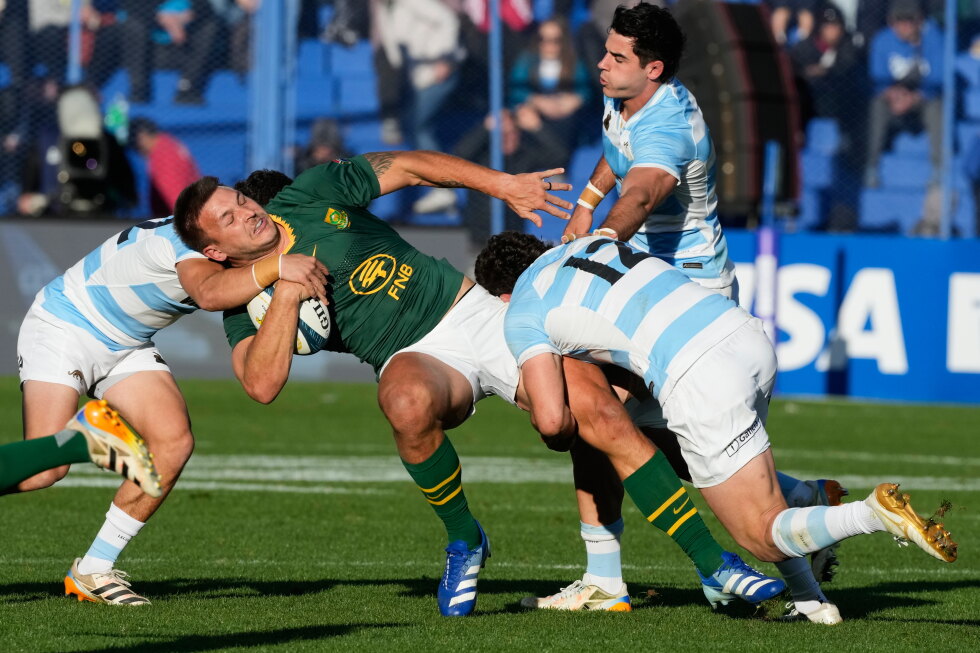
BUENOS AIRES, Argentina — The South African Springboks secured a hard-fought 17-10 test rugby victory over Argentina’s Pumas on Saturday, but the win came with a major potential setback: inspirational captain Siya Kolisi was forced off the pitch with a recurring hamstring injury, putting his participation in the upcoming high-stakes series against New Zealand in doubt.
Kolisi’s early exit in the 25th minute marked just his first match action in seven weeks, after he had spent time on the sidelines recovering from a previous hamstring issue. Speaking after the match, the captain acknowledged the disappointing setback, saying, “I hurt my hamstring again unfortunately. It’s tough but I can’t be sad about it. There’s nothing I can do but go in for a scan and see how long I’m out for.” The injury leaves his availability for the opening test of the blockbuster “Greatest Rivalry” series against the All Blacks, scheduled for two weeks from now on South African soil, uncertain.
The Buenos Aires test was structured as a tune-up fixture for the Springboks ahead of the All Blacks series, and head coach Rassie Erasmus deliberately reshuffled his squad, making 13 changes from the side that swept Wales 43-0 in their last outing. The starting line-up centered on giving match time to star players recovering from long-term injuries, who had missed the July Nations Championship due to their recovery processes. Alongside Kolisi, Springboks cap record holder Eben Etzebeth played the full 80 minutes, rising star flyhalf Sacha Feinberg-Mngomezulu also went the distance, and lock Lood de Jager, returning from a hip injury, played through the third quarter of the match.
Stripped of their top Europe-based players including captain Julián Montoya, Marcos Kremer and Joaquín Oviedo because the fixture fell outside the official international rugby window, the depleted Pumas fielded four debutant forwards and put on a far more competitive performance than most observers predicted. The underdog side came agonizingly close to snatching a last-gasp draw after the final fulltime hooter had sounded. Awarded a tap penalty just in front of the South African posts, the Pumas built a 15-phase attack that ended with a high pass to an unmarked Matías Moroni, who dropped the ball. A devastated Moroni left the field in tears, while Pumas head coach Felipe Contepomi reacted by slamming his boot in frustration at the missed opportunity.
The opening 20 minutes of the match saw both sides trade penalty goals: Santiago Carreras slotted a long-range effort from 45 meters out for the Pumas, and Feinberg-Mngomezulu responded with one of his own for the Springboks. Argentina broke the deadlock shortly after, when prop Boris Wenger held off multiple defenders to offload a pass to flanker Benjamín Grondona, who broke clear to score the opening try.
For the remaining 30 minutes before halftime, South Africa pinned Argentina deep in their own half. The Pumas held firm, however, with solid set-piece play and intelligent kicking that let them win the battle for aerial territory, though they repeatedly failed to convert pressure into points with a decisive final pass. The Springboks, for their part, struggled to break through Argentina’s well-organized defense, with frustration boiling over when Feinberg-Mngomezulu’s drop goal attempt ricocheted off the crossbar.
South Africa finally broke through to score their first try on the brink of halftime. A sequence of offloads from the Springbok centers, followed by a well-timed line run from fullback Aphelele Fassi, created space for right winger Edwill van der Merwe to round the Pumas defense and touch down, putting South Africa ahead 10-7 at the break.
Erasmus emptied his substitutes bench in the third quarter to inject fresh energy, and the impact of the Springbok reserves quickly showed. The more rested South African pack dominated the scrums, putting consistent pressure on the Pumas. That pressure told in the 63rd minute, when Canan Moodie trapped Pumas fullback Gerónimo Prisciantelli to force a five-meter scrum for South Africa. The Springboks splintered the Pumas scrum on the tighthead side, allowing No. 8 Cameron Hanekom to cross untouched for the match-winning try.
South Africa’s defense held firm through the final minutes to secure the result, extending the team’s winning streak to 12 consecutive test matches. While the result was a positive outcome heading into the All Blacks series, the entire build-up to the blockbuster rivalry clash will now be overshadowed by the uncertainty over Kolisi’s fitness as the team waits for scan results to confirm the severity of his hamstring injury.
-
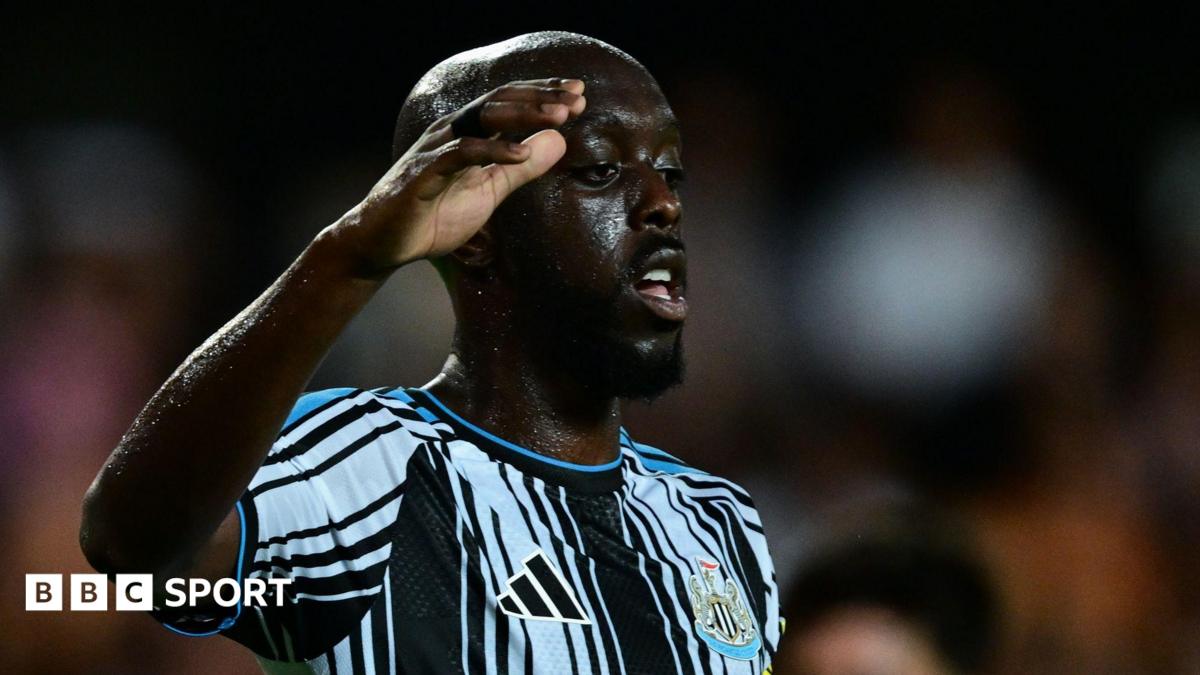
Wissa & Toure star as Jaissle wins first Newcastle friendly – ratings
Newcastle United kicked off the Matthias Jaissle era with a hard-fought 2-1 pre-season friendly victory over La Liga side Valencia at Mestalla Stadium, with substitute forward Yoane Wissa stealing the show with two late goals.
Valencia drew first blood in the encounter, as Filip Ugrinic curled a stunning effort past Newcastle’s keeper to put the hosts ahead. The game took a pivotal turn just before half-time when Valencia captain Jose Gaya was shown a red card for a dangerous late tackle on Newcastle winger Anthony Elanga, leaving the Spanish side down to 10 men for the remainder of the match. Elanga, who had been one of Newcastle’s most dangerous attacking players before the challenge, was stretchered off the pitch in visible discomfort. However, Newcastle’s medical team has since expressed optimism that the injury is not severe, confirming the winger only suffered a bruised shin.
With a numerical advantage to exploit, Jaissle made key half-time substitutions that would turn the tide of the match. Wissa, who endured a difficult first season at St James’ Park, only notching three goals in all competitions, leveled the score with a cool, composed close-range finish after Valencia turned over possession. The DR Congo international, who earned confidence from his strong showing at the 2026 World Cup with his national side, then put Newcastle ahead, finishing calmly after fellow new signing Bazoumana Toure made an unselfish square pass across the penalty area to leave Wissa with an open goal.
The match marked the competitive debut for two of Newcastle’s high-profile summer transfers: Aladji Bamba, who joined from Monaco for a fee that could rise to £34 million, and Toure, who arrived from Hoffenheim for £43 million. Bamba, who played the full 90 minutes, showed glimpses of quality, looking comfortable on the ball and constantly asking for possession, though he was guilty of a few careless passing errors on his first outing. Toure, meanwhile, was instrumental to both of Newcastle’s goals, pressing Valencia’s Guido Fernandes into the mistake that led to Wissa’s equalizer before setting up the winner, showcasing the pace and awareness that convinced Newcastle to spend big on the winger. 18-year-old academy prospect Sean Steur also turned heads on his senior outing, looking far more mature than his age would suggest, keeping possession cleanly and showing great desire to get on the ball to earn an 8/10 rating.
Jacob Ramsey was the highest-performing outfield starter, notching an 8/10 after delivering a brilliant clipped through ball that would have given Elanga a goal if not for an offside flag, putting in an energetic display that constantly drove Newcastle forward. Several other young players also impressed: 19-year-old full-back Leo Shahar looked dangerous pushing down the right flank, while Malick Thiaw wore the captain’s armband on his 25th birthday in what many see as a sign of his key role in the club’s future under Jaissle. A few players struggled to make an impact, however: striker Nick Woltemade struggled to hold up play and influence the match in the number 10 role, earning just a 5/10 for his performance, while Sven Botman survived a scary moment where a defensive mix-up nearly saw him score an own goal, recovering well enough for a 6/6 rating.
For Jaissle, the result marks a positive first step in his tenure at Newcastle, as the German head coach begins implementing his vision for the club after taking over this summer. While the win provides a boost of confidence heading into the rest of the pre-season schedule, Jaissle has already moved to play down expectations, emphasizing that the project to rebuild Newcastle is still in its early stages.
-

Paris tells e-scooter riders to wear safety gear or face fines
Paris has rolled out stringent new safety mandates for riders of privately owned electric scooters and similar micro-mobility devices, launching a targeted crackdown on violations after a worrying spike in deadly and serious accidents across the French capital. Local law enforcement announced the new regulations over the weekend, alongside grim data from France’s national road safety authority that underscores the urgency of the policy shift.
Last year alone, 79 people lost their lives in e-scooter-related accidents across France, marking a dramatic 75% jump from the 45 fatalities recorded just 12 months earlier. In Paris specifically, 1,100 people sustained injuries in e-scooter crashes in 2025 – a 33% year-over-year increase that has pushed city officials to strengthen safety standards.
Under the new rules, all riders of private e-scooters, electric unicycles, and hoverboards on public roads are now required to wear an approved safety helmet and a high-visibility vest or attach retro-reflective markers to their vehicles. Violators face steep penalties: riders caught without a compliant helmet will be issued a €135 (£129) fine, while those missing high-visibility gear will receive a €35 (£30) fine.
The updated regulations build on existing safety restrictions already in place across Paris, which prohibit riders under the age of 14 from operating e-scooters, ban carrying extra passengers, and cap maximum speed at 25km/h (16mph). The policy also follows a 2023 city-wide ban on rental e-scooters, a move approved by 90% of voters in a public referendum – even though just 8% of eligible voters participated in the ballot.
Despite the elimination of rental services, private e-scooters remain a widely popular commuting option in Paris, where narrow, frequently congested city streets make compact micro-mobility an attractive alternative to cars or public transit. European Union data shows France has the highest rate of private e-scooter ownership in Europe, with roughly 2.5 million units owned by French residents as of 2023, and hundreds of thousands more sold in the time since. A large share of these private scooters are registered and used in Paris, though the city does not track exact ownership numbers.
The push for mandatory helmet and high-visibility gear is not unique to Paris: several other French regions, including Seine-et-Marne, Alpes-Maritimes, and Vaucluse, already enforce similar requirements. Paris’ policy shift also aligns with a growing trend across major European cities: Madrid implemented a full ban on rental e-scooters in 2024, and Brussels has announced it will introduce its own rental ban this coming June.
-
Turkey says defense pact with Saudi Arabia and Pakistan is not aimed at Iran or any other country
ANKARA, Turkey – In a public clarification Saturday, Turkish Foreign Minister Hakan Fidan has pushed back against speculation that a newly signed trilateral defense agreement between Saudi Arabia, Pakistan, and Turkey is crafted to target Iran or any other regional nation, framing the pact as a foundational step for strengthening collective security across the Middle East and South Asia.
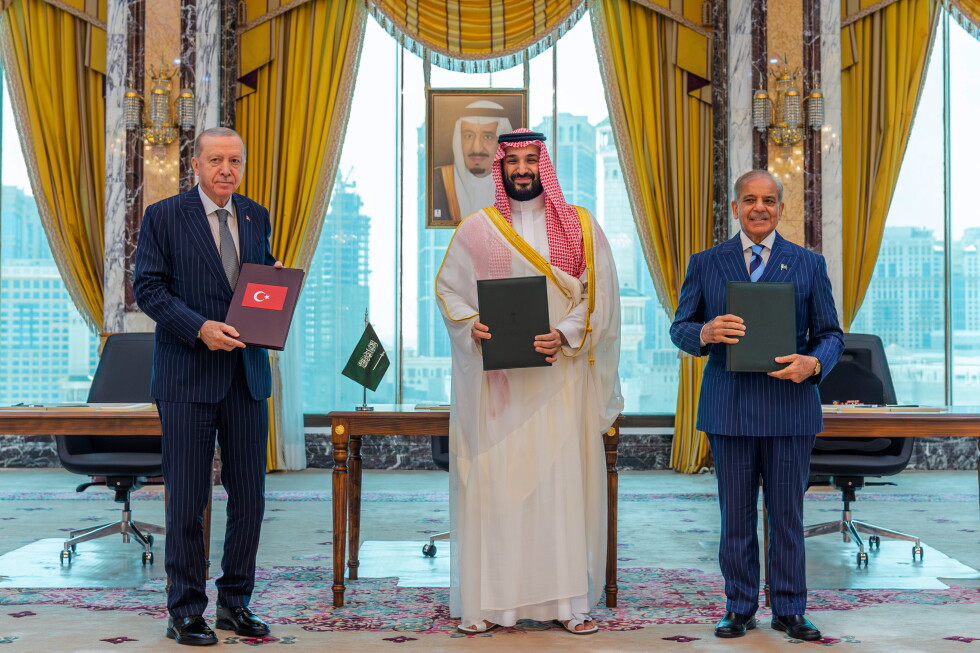
The landmark “Mecca Joint Defense Agreement” was formally signed Friday by Saudi Crown Prince Mohammed bin Salman, Turkish President Recep Tayyip Erdogan, and Pakistani Prime Minister Shehbaz Sharif during a gathering in Islam’s holiest city, Mecca. Its core mutual defense clause mirrors NATO’s long-standing Article 5 framework, stipulating that any armed aggression against one signatory will be treated as an attack on all three nations.
The agreement brings together three major regional players with complementary strategic strengths: energy-rich Saudi Arabia, Pakistan—a recognized nuclear weapons state, and Turkey, which boasts NATO’s second-largest standing military and one of the fastest-expanding defense industrial bases in the Eurasian region. The pact comes amid a period of heightened regional volatility, driven in part by escalating tensions linked to ongoing conflict across the broader Middle East.
Speaking in an interview with Turkey’s state-owned Anadolu Agency, Fidan emphasized that the three signatory states have not pre-designated any country as a shared enemy. Hostile action against the alliance, he clarified, is the only threshold that would trigger the pact’s collective defense provisions.
“We do not have any codified agreement, nothing we have signed, that identifies a specific common threat,” Fidan stated. “Any country that refrains from attacking us is not a target for our alliance.”
Fidan further explained that the agreement’s mutual defense clause is operationally aligned with NATO’s Article 5, the cornerstone of the Western alliance’s collective defense posture that has been in place since the organization’s founding.
When detailing how the alliance’s support mechanism would function in practice, Fidan noted that any affected member state must first submit a formal request for assistance. The nature of support provided by the other two nations would be scaled to match the severity of the threat, ranging from intelligence sharing and logistical backing to the full deployment of combat military forces.
“These are multi-layered arrangements that adapt to the scale of any potential threat,” Fidan said. “This is the guiding framework we have established for our ongoing cooperation.”
The foreign minister also revealed that multiple unnamed countries have already expressed interest in joining the new defense agreement. He specifically named Egypt as a “natural partner” for the alliance and stated that he expects Cairo to join the pact during its next expansion phase.
To institutionalize ongoing cooperation, the agreement outlines regular coordination meetings between the three nations’ foreign ministers, defense ministers, and top military commanders. A permanent administrative secretariat for the alliance will also be established, with its headquarters set to be located in Saudi Arabia, Fidan confirmed.
-
Malaysia seizes container suspected of carrying goods bound for Israel
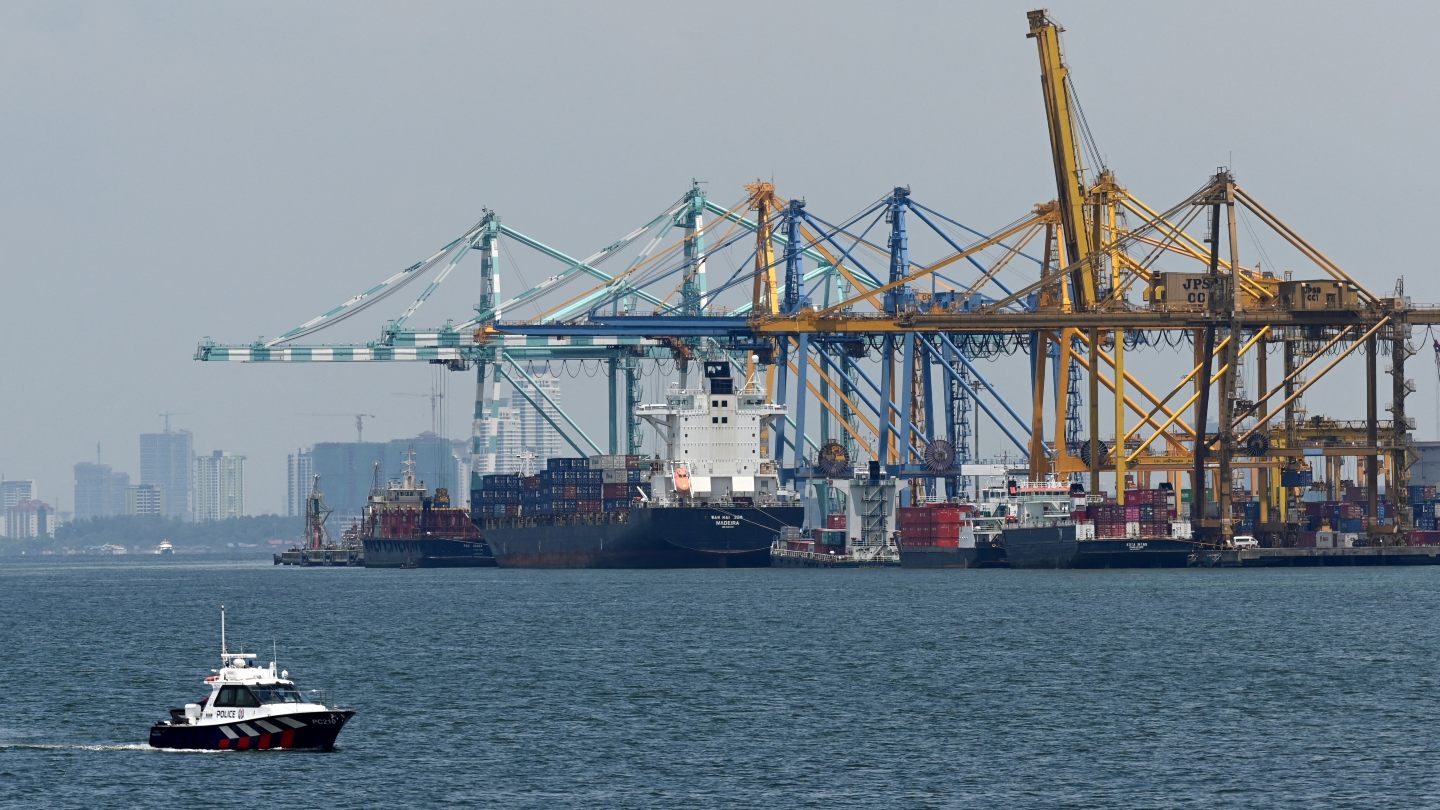
In a move that underscores Malaysia’s long-held policy opposing trade that supports Israeli actions in Palestinian territories, Malaysian border authorities have seized a container at Johor’s Port of Tanjung Pelepas that was suspected of being ultimately bound for Israel, local media has confirmed.
The seizure was carried out Friday by the Malaysian Border Control and Protection Agency (AKPS), launched after intelligence sharing prompted officials to order a targeted inspection of the container. According to AKPS’s official statement, quoted by local outlet Berita Harian, initial checks suggest the shipment violates Malaysia’s 2023 Customs (Prohibition on Export) Order, which bans all direct and indirect exports of any goods to Israel, specifically falling afoul of Item No 15 in the order’s Second Schedule.
AKPS officials confirmed the agency is now conducting a full investigation into the cargo, to clarify the goods’ nature, technical specifications, intended end use and official classification. A key line of inquiry is whether the shipment includes strategic goods that fall under regulation by Malaysia’s Strategic Trade Act. The agency emphasized that any attempt to move goods to Israel, whether through direct or indirect channels in violation of national law and government regulations, will face strict enforcement action.
Malaysian Prime Minister Anwar Ibrahim publicly praised the operation, framing the seizure as clear proof of the country’s commitment to preventing its territory from being used as a transit hub for trade that benefits Israel. In a public statement shared on the social platform X, Anwar congratulated AKPS for its rapid response to the intelligence and seizure of the suspected cargo.
“This action demonstrates Malaysia’s firm stance to ensure that our country will never serve as a conduit for trade that could support or contribute to the Israeli regime’s atrocities against the Palestinian people,” Anwar said, adding that the operation aligns with both Malaysia’s commitments as a member of The Hague Group and the trade restrictions the government implemented in December 2023.
The Hague Group, the international coalition Malaysia helped found, issued its own statement welcoming the seizure, noting the action gives practical, on-the-ground effect to the obligations all United Nations member states hold under international law. The group referenced the International Court of Justice’s July 2024 Advisory Opinion, which was later affirmed by UN General Assembly Resolution ES-10/24, that confirms all states have a legal obligation to not provide aid or assistance that supports Israel’s unlawful occupation of Palestinian territory.
Varsha Gandikota-Nellutla, Executive Secretary of The Hague Group, highlighted the significance of enforcement at ports rather than just rhetorical commitments. “The defence of humanity is won at ports, courts, and factories, not from the podium. Law that goes unenforced is no law at all. By halting this cargo, Malaysia has upheld the obligations that bind every UN member state under international law. We invite all states to join The Hague Group and do the same,” she said.
As a founding member of The Hague Group, Malaysia is part of a coalition of nations that have pledged to block transfers of arms, ammunition, military fuel, related military hardware and dual-use items to Israel when there is clear risk these materials could be used to violate international law. The group’s founding founding declaration also requires members to bar vessels transporting restricted Israeli-bound materials from docking at member state ports.
Friday’s seizure is not an isolated policy move, but follows broader restrictions Malaysia implemented in December 2023, when the government banned Israeli-owned shipping firm Zim from docking at Malaysian ports and barred all Israeli-flagged vessels from entering the country’s territorial waters. At that time, Anwar also announced that any vessel with a final destination of Israel would not be permitted to load cargo at Malaysian ports. The government framed those initial restrictions as a targeted response to Israel’s military campaign in Gaza and a reflection of Malaysia’s longstanding public support for Palestinian sovereignty and human rights.
What makes this latest seizure notable is that it expands Malaysia’s enforcement beyond just Israeli-owned or flagged vessels, now actively targeting any cargo transiting through Malaysian ports that is suspected of being ultimately destined for Israel, even if it is not carried on an explicitly Israeli-connected vessel.
-
What Pakistan’s defence pact with Saudi Arabia and Turkey means for the Middle East
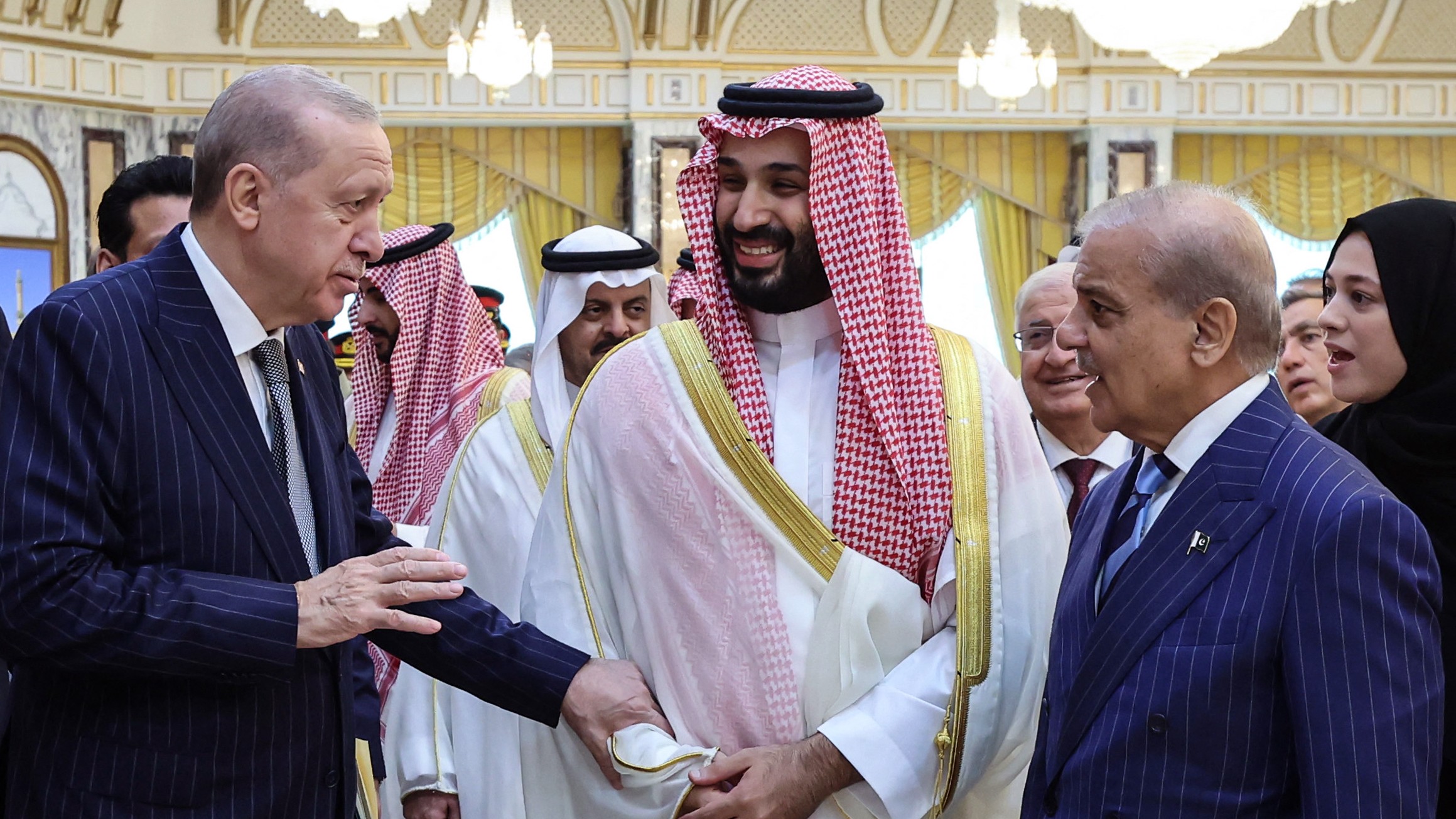
A historic new collective defence agreement signed last Friday in Mecca is dramatically reshaping the strategic landscape of the broader Middle East, uniting three of the Muslim world’s most powerful and influential nations under a mutual security framework that echoes Nato’s core collective defence principle. Dubbed the Mecca Joint Defence Agreement, the landmark pact includes a binding clause stating that any armed aggression against one signatory will be considered an attack against all three – a provision that immediately elevates the agreement’s geopolitical weight, despite the joint statement leaving specific military commitments intentionally undefined.
For Pakistan, the world’s only nuclear-armed Muslim-majority nation, the accord marks a sharp break from its longstanding policy of cautious neutrality as a regional diplomatic mediator. By aligning formally with Saudi Crown Prince Mohammed bin Salman and Turkish President Recep Tayyip Erdogan, Islamabad is repositioning its well-trained, combat-proven armed forces as a potential security anchor for an emerging strategic axis stretching across South Asia and the Gulf Cooperation Council region.
This new pact reflects a far broader shift in regional power dynamics. As the decades-old regional security order anchored by the United States faces mounting strain from ongoing wars, shifting alliances and escalating tensions, major Middle Eastern powers are increasingly moving to take control of their own security futures, with Pakistan’s unique combination of nuclear deterrence and conventional military strength offering a new regional stability pillar.
The agreement emerges at a moment of unprecedented upheaval for the Middle East’s traditional security architecture. The ongoing US-Israeli confrontation with Iran has remade the regional strategic map, with direct strikes reaching Saudi territory and critical commercial shipping lanes – including the Strait of Hormuz and the Red Sea – suffering widespread, costly disruptions. A senior anonymous Pakistani security official with expertise in regional affairs explained to Middle East Eye that all three signatory nations share overlapping economic and security priorities focused on stopping further regional escalation, a common interest that directly drove the decision to formalize the pact. Disruptions to Hormuz shipping have already hit Saudi energy and fertilizer exports, sending ripples through global markets, while import-reliant economies like Pakistan and Turkey have faced particularly severe economic fallout from these disruptions.
The strategic calculations behind the agreement run even deeper. Both Saudi Arabia and Turkey have suffered attacks tied to the broader regional conflict, while Pakistan and Turkey both face growing concerns over cross-border instability spilling over from their extensive shared borders with Iran. For Ankara, an additional risk looms: external backing for Iranian Kurdish militias threatens to unravel the years-long fragile peace process with the Kurdistan Workers’ Party (PKK). The wider regional conflict has also emboldened Iran and its Houthi allies in Yemen, who have stepped up direct attacks on Saudi territory.
For Gulf leadership, the repeated failure of long-standing US security guarantees to deter these attacks has sparked growing doubts over Washington’s reliability as a security partner. The result has been a clear, decisive push by major regional powers to build new defence arrangements that reduce reliance on external security commitments. Former Pakistani ambassador Asif Durrani framed the pact as the “first concrete building block of an emerging regional security architecture”, noting that it signals a clear shift toward greater regional control over security affairs. On X, Durrani added that if this cooperative momentum holds, it could open the door to resolving decades-long conflicts – including the intractable Israeli-Palestinian issue – through a process led and driven by regional actors themselves.
Regional analysts emphasize the pact is not an out-of-the-blue development, but rather the natural culmination of years of deepening trilateral cooperation between the three nations. Michael Kugelman, senior fellow for South Asia at the Atlantic Council, called the agreement “a logical outgrowth of deepening security ties” between Pakistan, Saudi Arabia and Turkey that has accelerated over recent months. The new pact builds on pre-existing bilateral foundations: Riyadh and Islamabad signed a separate bilateral mutual defence agreement in late 2025, which saw roughly 8,000 Pakistani troops, fighter aircraft and advanced air defence systems deployed to the kingdom, while Turkey has long been a leading defence equipment supplier for both Saudi Arabia and Pakistan. Interestingly, Kugelman notes the pact is likely to be well-received in Washington, which has long pushed for greater security burden-sharing among its key regional allies, given the agreement’s core focus on collective deterrence focused on Iran.
For Pakistan, however, the pact is about far more than just geopolitics – it is deeply tied to the country’s ongoing economic vulnerabilities, analysts point out. Islamabad spent months positioning itself as a neutral diplomatic bridge between Washington and Tehran, and even helped broker the June Islamabad Memorandum of Understanding to temporarily pause regional hostilities. But subsequent waves of escalation have squeezed the space for Pakistan’s neutral stance. For Pakistan’s ruling government, which is grappling with persistent high inflation and severe fiscal instability, strategic defence policy is now increasingly intertwined with pressing economic needs.
Historically, Pakistan has leveraged its military strength to secure critical economic support, most notably from the United States and Saudi Arabia. This new collective defence framework formalizes that model, allowing Islamabad to monetize its decades of operational military expertise – from joint training exercises and troop deployments to arms exports – in exchange for much-needed Gulf investment, discounted energy access and diplomatic support. For Riyadh, the partnership grants access to a large, experienced military with decades of counterinsurgency and combat experience, while for Islamabad, closer security ties open the door to transformative investment, financial assistance and deeper economic integration with one of the region’s wealthiest and most powerful states. “In this sense, Pakistan’s military strength is becoming an economic asset as well as a strategic one,” the anonymous Pakistani security official told Middle East Eye.
The emerging trilateral partnership brings together three complementary forms of national power, as political analyst Sheharyar Khan, senior adviser at Pakistan’s Ministry of Law and Justice, explained. Khan framed the dynamic as a division of complementary strengths: Saudi Arabia contributes the financial capital, Turkey brings cutting-edge defence technological innovation, and Pakistan provides core military capability. “Together, the three countries could form a security partnership whose capabilities extend far beyond traditional troop deployment,” Khan noted. Each nation brings unique, complementary assets to the table: Saudi Arabia, home to Islam’s holiest sites, offers vast capital reserves, outsized influence over global energy markets and significant regional diplomatic clout; Turkey, which commands Nato’s second-largest standing military, boasts a rapidly advancing, increasingly self-sufficient domestic defence industry with world-leading expertise in unmanned aerial systems, electronic warfare and precision-guided munitions that reduces reliance on foreign suppliers; and Pakistan contributes a large, combat-hardened ground force and the Muslim world’s only operational nuclear deterrent.
Despite these potential benefits, experts warn the agreement carries significant strategic risks for Pakistan. Iran’s response to the pact was swift and sharply critical. Ebrahim Rezaei, a member of Iran’s parliamentary National Security and Foreign Policy Commission, dismissed the arrangement in a post on X, writing “The Saudis should know that a paper agreement with Turkey and Pakistan does not bring them security, just as years of unilateral milking of the Americans did not bring them security.” This reaction underscores Islamabad’s core strategic dilemma: deepening integration into Gulf security architecture risks damaging its delicate, long-cautious relationship with Tehran.
Analysts also warn of the risk of “entrapment” – the very real danger that Pakistan could be pulled into foreign conflicts that do not align with its own national interests. Historically, Pakistan has intentionally avoided direct entanglement in Middle Eastern power rivalries: in 2015, the country’s parliament famously rejected a request to join the Saudi-led military coalition in Yemen over domestic political and sectarian concerns. Pakistan is also home to a large Shia minority, many of whom look to Iranian clergy for political and religious guidance, meaning the government must avoid having its closer alignment with Riyadh and Ankara perceived as an anti-Iranian stance that could reignite internal sectarian tensions.
The agreement has already sparked widespread debate over whether it could eventually expand into a broader multi-national security bloc encompassing additional Muslim-majority nations across the globe. Retired senior Pakistani military official Muhammad Saeed has suggested that additional Muslim countries from the Middle East and beyond could eventually join the framework. But Saeed also cautioned that military strength alone will not determine the pact’s long-term success. “For Muslim states, the real and collective strength will not come only through military capabilities but primarily through long-term investments and collaboration in knowledge, innovation, discipline, character, and tolerant interpretation of sectarian sentiment,” he wrote on X.
The prospect of a more cohesive Muslim-majority security bloc has already drawn sharp attention from Israel. In February, former Israeli Prime Minister Naftali Bennett explicitly warned against Turkey forming what he described as a “hostile axis” leveraging Pakistan’s nuclear capabilities “to surround Israel”. Analysts note, however, that Pakistan’s nuclear status inevitably reshapes the strategic calculations surrounding the entire pact. For Saudi Arabia, closer defence ties with Islamabad add an extra layer of deterrence at a time when the kingdom faces persistent threats from Iran while navigating its fragile normalization process with Israel.
The pact’s implications stretch far beyond the Middle East. For Pakistan, closer alignment with Saudi Arabia and Turkey creates a new strategic counterweight to neighboring India. While Saudi Arabia maintains extensive economic and trade ties with New Delhi, the new collective defence framework further solidifies Pakistan’s role as a core security partner for key Gulf powers. Though India’s Ministry of External Affairs has responded cautiously, saying only that New Delhi is “closely following developments”, Indian national security analysts are monitoring the shift with growing concern. “While most are obviously seeing this from a Middle East lens, it impacts other theatres as well. Pakistan’s conflict-laden relationship with India [is] at the top of that list,” Kabir Taneja, executive director of the Middle East programme at New Delhi-based think tank Observer Research Foundation, wrote on X. Former Indian Foreign Secretary Kanwal Sibal went further, calling the pact “a very negative development for Indian interests” in an X post, and suggesting India should expand its own strategic partnerships with the United Arab Emirates, Israel, Greece, Cyprus and Afghanistan to counter the shift.
-
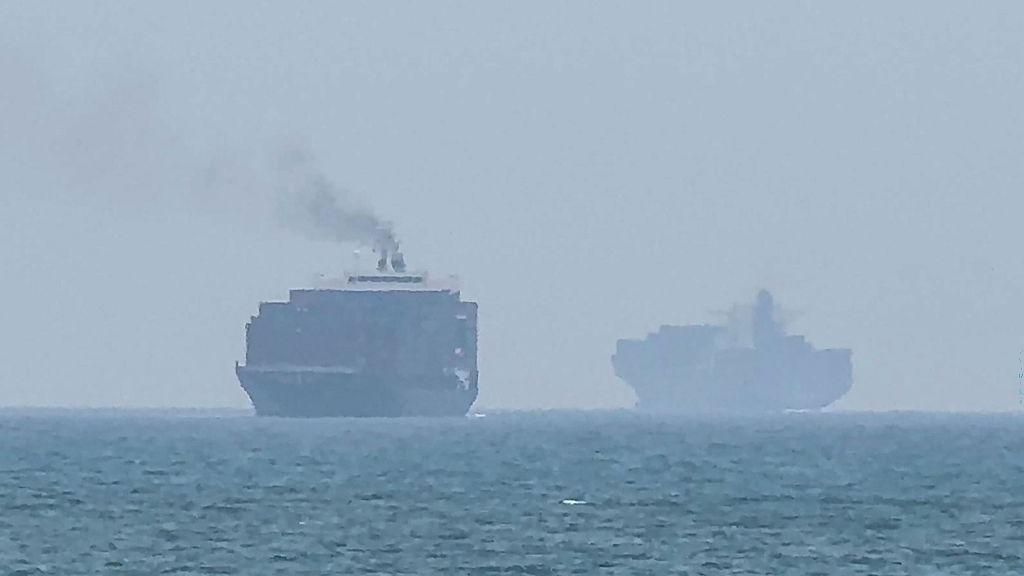
Hormuz talks positive, Oman says, as Iran warns deal would not open strait
Diplomatic discussions between Oman and Iran over a new security agreement for commercial shipping through the strategically critical Strait of Hormuz are moving forward in a positive direction, Omani officials have confirmed, though Iranian leaders have cautioned that no immediate full reopening of the waterway can be expected even if a deal is reached.
Both nations issued updates on Saturday confirming that negotiations are advancing, but no clear timeline for the finalization of any agreement has been set. Oman’s foreign ministry has issued a urgent warning against shipping attacks that could derail the ongoing diplomatic process.
Iranian Foreign Minister Abbas Araghchi noted that talks have entered their final stages, but a full resumption of unobstructed transit through the strait remains tied to the fulfillment of additional unspecified conditions. Tehran has maintained an effective blockade of the strait – a chokepoint through which roughly 20% of the world’s daily oil and natural gas supplies transit – since the United States and Israel launched military operations against Iran in February.
Recent negotiations have centered on a proposed joint Omani-Iranian framework for managing a secured shipping route through the waterway, a plan that backers hope will pave the way for the gradual return of commercial traffic. Araghchi clarified that full reopening depends on Iran receiving compensation from the U.S. for what Tehran frames as violations of the June ceasefire Memorandum of Understanding (MoU) between the two sides. That earlier deal collapsed within days of being signed, with tit-for-tat military hostilities resuming shortly after.
In a separate comment to semi-official Iranian news outlet Tasnim, Iran’s top security official Mohammad Baqer Zolqadr went further, stating that the Strait of Hormuz will not reopen until the U.S. fundamentally revises its policy toward Iran. He outlined six core Iranian demands, including an end to U.S. threats against Tehran, the lifting of the U.S. naval blockade on Iranian ports, and the release of billions of dollars in frozen Iranian assets.
The broader Middle East maritime disruption has expanded in recent months: Yemen’s Iran-aligned Houthi movement has imposed a separate blockade on commercial shipping approaching Saudi Arabian ports in the Red Sea since July 20.
U.S. officials have offered mixed signals on the pace of a potential deal. Earlier this week, former President Donald Trump said an agreement with Iran could come “soon”, but Vice President JD Vance struck a more cautious tone during an appearance on Fox News Saturday. Vance emphasized that negotiations remain far from complete, saying “We’re really in the middle of the game here. This thing is not over.”
Vance added that the U.S. is deploying a full suite of diplomatic, economic, and military tools to secure an outcome that serves American interests. He also claimed that Gulf oil export volumes have remained unchanged since the launch of U.S. military operations in late February, though he offered no data to support that assertion. “What we’re really working through now is how you can actually set up a traffic scheme so that the ships can pass through safely,” he explained.
A major point of contention between Washington and Tehran has been reports that Iran plans to impose transit fees on commercial vessels passing through the strait. Reuters previously cited an anonymous Iranian official reporting that Tehran was seeking fees equal to between 5% and 7% of the value of each vessel’s cargo. Vance pushed back on these reports Saturday, saying “The Iranians have told us they have no plans to toll the Strait of Hormuz.”
Oman’s warning against shipping attacks came on the same day that the United Arab Emirates (UAE) accused Iran of carrying out a hostile missile attack on an oil tanker affiliated with ADNOC, the UAE’s state-owned energy giant, as it transited the region. The UAE foreign ministry said the strike caused no casualties. Later Saturday, the UK Maritime Trade Operations (UKMTO) agency reported that a vessel had been hit by an unknown projectile off the coast of Oman, sparking a fire that was later extinguished with no reported injuries. It remains unconfirmed whether UKMTO was referencing the same ADNOC tanker targeted in the UAE statement.