作者: admin

  • Watch: Moment opposition MP throws eggs at Kosovo’s acting PM

    Watch: Moment opposition MP throws eggs at Kosovo’s acting PM

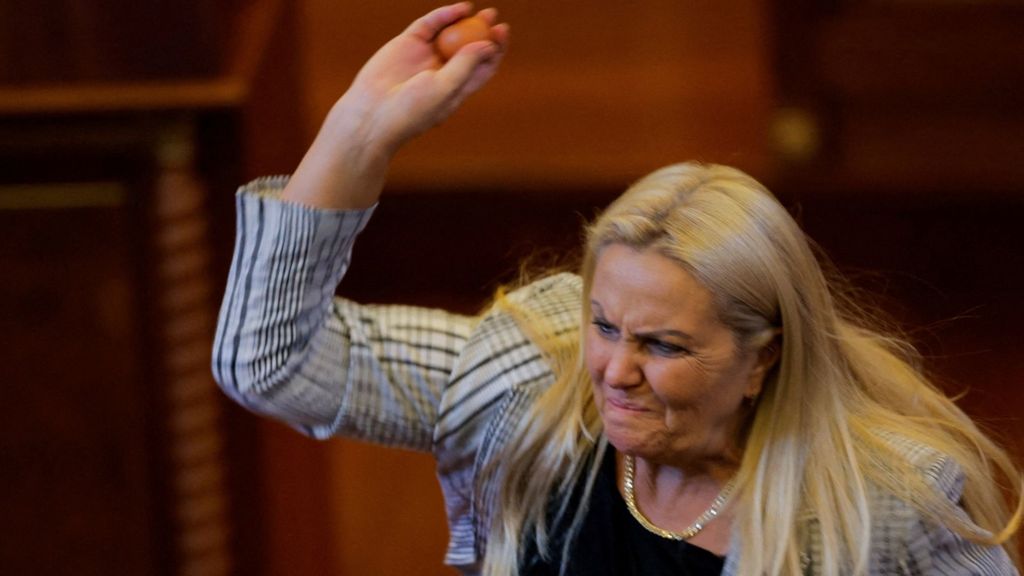
    A dramatic incident has sent shockwaves through Kosovo’s legislative body, as a confrontational opposition lawmaker resorted to unusual and chaotic tactics against the country’s top executive. Time Kadrijaj, a member of parliament from Kosovo’s Alliance opposition party, launched at least four eggs directly toward acting prime minister Albin Kurti during a parliamentary session, triggering immediate disruption to the proceedings.

    Witness footage captured the chaotic moment immediately after the eggs were thrown, with sitting lawmakers and on-site security police rushing in to intervene and de-escalate the tense situation. The unexpected act of political protest has drawn immediate attention to the rising tensions between Kosovo’s ruling coalition and opposition blocs, highlighting the deepening partisan divides that have shaped the country’s recent political landscape.

    While no injuries have been reported in the immediate aftermath of the incident, the confrontation underscores how fractious political discourse has become in Kosovo, as opposition groups increasingly turn to unconventional, public acts of protest to challenge the acting prime minister’s agenda. Parliamentary procedures were temporarily suspended following the incident to restore order to the chamber.

  • ‘My Ray of Light’: Madonna remembers acclaimed producer William Orbit

    ‘My Ray of Light’: Madonna remembers acclaimed producer William Orbit

    The global pop icon Madonna has opened up about her grief and gratitude following the passing of her legendary creative partner, Grammy Award-winning producer William Orbit, who died at his home last month at 69. Orbit’s family shared the news of his death in an official statement released Friday, expressing profound sorrow, though no cause of death has been disclosed to the public. On Saturday, Madonna took to her official Instagram to share an emotional, personal tribute to the British producer, who reshaped her artistic trajectory and helped deliver one of the most celebrated albums of her decades-long career.

    Born William Wainwright in London, Orbit built a reputation as a boundary-pushing producer with a gift for blending electronic, ambient, and pop sounds. His most iconic collaboration came in 1998, when he stepped into the studio with Madonna to create *Ray of Light* — an album that upended the pop superstar’s established sound, merging electronic dance music and ambient techno with mainstream pop and trip-hop influences. At a point when many wondered if Madonna had reached the peak of her cultural impact, the project reinvigorated her career and cemented her status as a enduring innovator in pop music. The genre-bending record would go on to claim three Grammy Awards, and decades later, it remains widely regarded as the finest work of Madonna’s catalog, often referred to as the Queen of Pop’s masterpiece.

    In her Instagram tribute, Madonna paired heartfelt written reflections with a touching multimedia montage: the compilation includes footage of the pair accepting a Grammy Award together alongside clips of the iconic music videos and unreleased behind-the-scenes content they created during their years of collaboration. In her post, Madonna described Orbit as a creative force who unlocked parts of her artistry she never knew existed. “You pressed a magic button inside of me and I fell into a galaxy of unrealised dreams,” she wrote. “Your music gave me a magic carpet to fly on and I visited many places.”

    Madonna explained that collaborating with Orbit encouraged her to experiment with new approaches to songwriting and vocals, freeing her from the pressure to adhere to conventional expectations. She recalled that Orbit inspired her to create without overthinking whether her lyrics “made sense or not”, opening a new era of creative authenticity for the artist. The singer also linked Orbit’s influence to one of the most pivotal personal periods of her life, noting: “In many ways you were my Ray of Light – as was my daughter Lola who was born around this time.”

    Looking back on their studio sessions, Madonna painted a picture of quiet, electric creativity: “The studio was often church-like and I would sit in silence, waiting for your ideas to explode out of your keyboard or your guitar and then I would run with them. I miss those days.” Beyond *Ray of Light*, the pair continued their creative partnership across multiple eras of Madonna’s career: Orbit contributed to her 2000 album *Music* and produced multiple tracks for her 2012 record *MDNA*. Beyond his work with Madonna, Orbit left an indelible mark on modern music through collaborations with other prominent acts, including British rock band Blur, American pop-rocker Pink, and British girl group All Saints.

    Madonna closed her tribute by honoring Orbit’s one-of-a-kind artistic vision, writing: “You were so otherworldly. So singular.” The pop star emphasized that even across decades of working with other producers, she never forgot the magical creative bond they shared. “I was so lucky to have known you and fallen down the rabbit hole with you,” she added. The tribute comes as fans and fellow artists around the world continue to mourn the loss of one of the most innovative producers in modern pop and electronic music. Separately, the news also notes that Madonna recently staged a surprise pop-up performance for fans in New York City ahead of the tribute.

  • Messi’s father Jorge dies aged 68 after illness

    Messi’s father Jorge dies aged 68 after illness

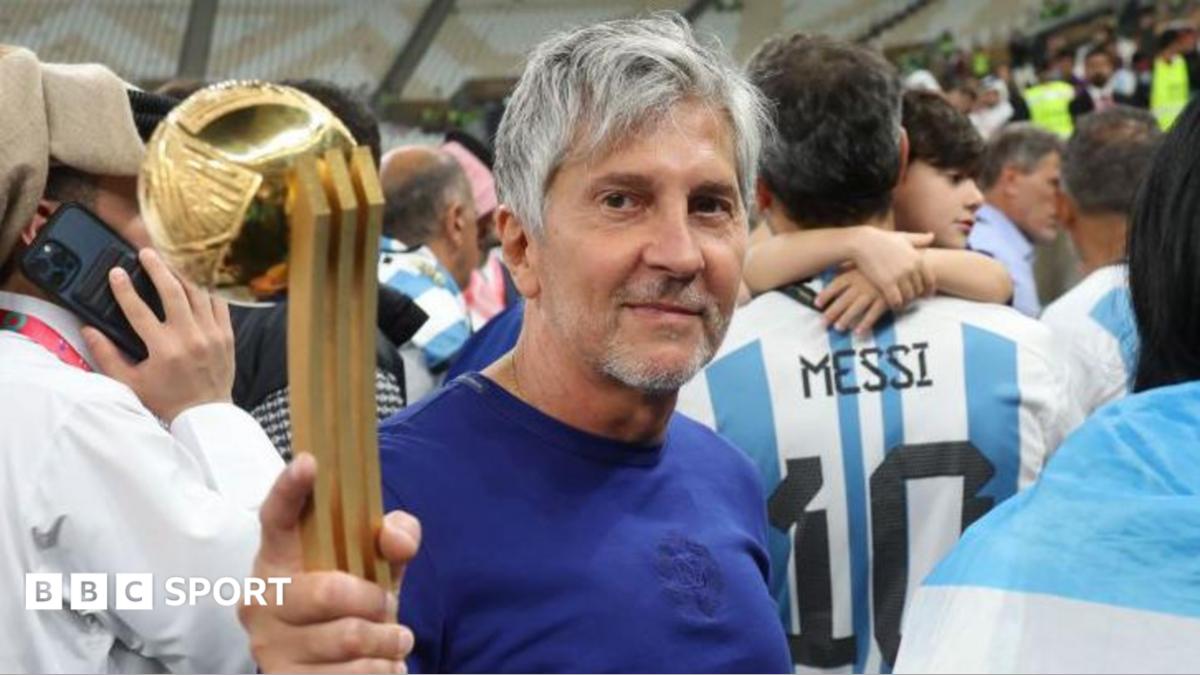
    The global football community is in mourning following the passing of Jorge Messi, the father, foundational mentor and long-time agent of eight-time Ballon d’Or winner Lionel Messi, at 68 after a prolonged battle with illness. He died in the early hours of Saturday at a hospital in his native Rosario, Argentina, the city where the Messi story first began.

    Speculation over Jorge’s health had circulated widely during this summer’s World Cup, prompting the Messi family to release a statement confirming he was managing an undisclosed private health issue, without sharing further details of his condition at the time. This was not the first time unfounded rumors of his death spread: earlier this year, an Argentine television presenter falsely announced Jorge’s passing during Argentina’s opening World Cup match, leading to the presenter’s resignation and a sharp rebuke from the family, who condemned the irresponsible violation of their privacy.

    Jorge Messi’s legacy is inextricably tied to the rise of Lionel Messi, widely regarded as the greatest men’s footballer to ever step onto the pitch. He began serving as his son’s agent when Lionel was just 14 years old, guiding every major step of his career from a prodigious child prospect to a global icon. He was present in Qatar in 2022 to witness the crowning achievement of Lionel’s career, as Argentina lifted their third World Cup trophy, fulfilling a decades-long dream for both father and son.

    Jorge, a lifelong supporter of Argentine club Newell’s Old Boys, first brought 7-year-old Lionel into the club’s youth academy, laying the groundwork for his extraordinary career. When Lionel was scouted and signed by FC Barcelona at age 13, the family relocated to Spain in 2001. While Messi’s mother and three siblings later returned to Rosario, Jorge remained in Barcelona to support his son through the early, formative years of his professional career.

    Tributes have poured in from across the global football community following the announcement of his passing. Newell’s Old Boys, the club that Jorge supported his entire life, honored his foundational role in a post on X, writing: “Jorge was the pillar and the person who supported with vision, rigor and affection the career of the greatest player of all time alongside his wife, Celia Cuccittini. His constant companionship and behind-the-scenes leadership were essential in backing every step of Lionel, from his beginnings at Malvinas [youth academy] to the pinnacle of world football glory. Thank you for teaching him to love these colours.” The club also extended its condolences to the entire Messi family during their period of grief.

    FC Barcelona, the club where Lionel spent the first 21 years of his professional career winning four Champions League titles and 10 La Liga crowns, thanked Jorge for his trust and contribution to the club’s most successful era: “for his commitment to our club, for entrusting us with the beginnings and the most glorious years of his son Leo’s football career.”

    The Argentine Football Association also released a statement mourning his loss, saying it “deeply mourns with sadness and sorrow the passing of Jorge Messi, father of our captain and emblem, Lionel Messi. From here, we stand in solidarity with the entire family during this difficult time and send the most heartfelt, warm and affectionate embrace.”

    Lionel Messi, currently 39, plays professionally for Major League Soccer side Inter Miami. He has not yet released a public statement following his father’s passing as of the publication of this report.

  • Typhoon Dolphin batters Japan’s Okinawa before bearing down on China

    Typhoon Dolphin batters Japan’s Okinawa before bearing down on China

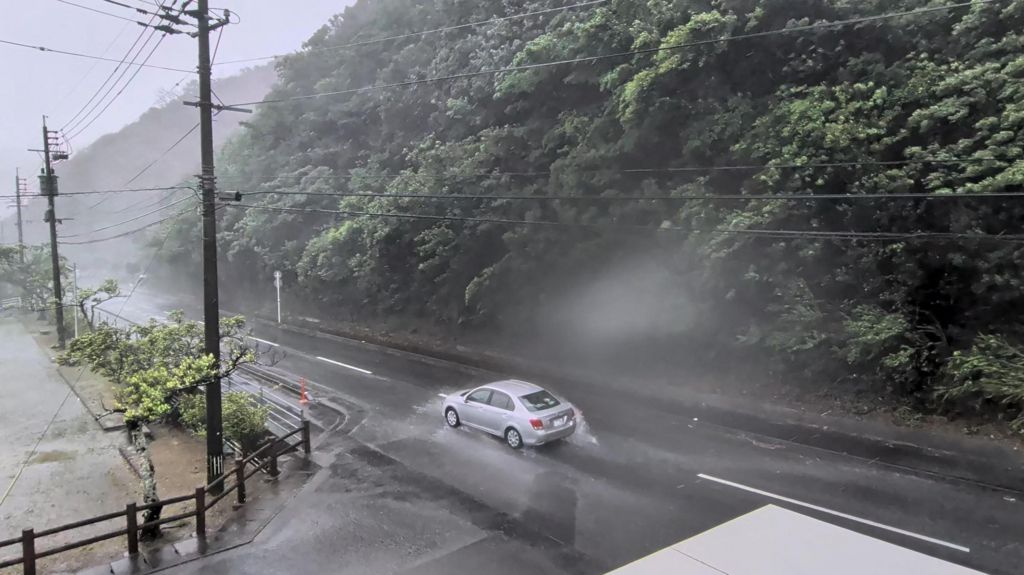
    One of the most intense tropical cyclones of the 2026 Pacific typhoon season, Typhoon Dolphin, has swept through Japan’s southwestern island chain, leaving widespread disruption and minor injuries in its wake before turning toward China’s eastern seaboard, where emergency authorities have activated full preemptive safety measures.

    The Japan Meteorological Agency (JMA) has classified Dolphin as a “very strong” typhoon, recording maximum sustained wind speeds of 162 kilometers per hour (101 miles per hour) when the storm made its closest approach to Okinawa prefecture on Saturday. The hardest-hit regions across Japan are the remote southern islands of Amami Oshima and the main Okinawa archipelago, which bore the full brunt of the storm’s high winds and dangerous storm surge.

    As of the latest official updates from the Okinawa prefectural government, approximately 44,000 residential and commercial buildings across the affected islands have been left without electrical power, and five elderly residents have sustained non-fatal injuries from the storm. Three of the five injuries occurred when victims were knocked off their feet by powerful gusts, authorities confirmed. Local reporting from Japan’s public broadcaster NHK documents extensive storm damage across the region: countless mature trees have been uprooted across Nago City in northern Okinawa, and one passenger vehicle was found flipped onto its roof in a public parking lot, leaking motor oil onto the pavement.

    Days before the storm’s arrival, regional transportation networks already began shutting down to avoid risk. Naha International Airport, Okinawa’s primary international and domestic air hub, suspended all operations and closed its runways on Friday, leading to the full cancellation of all incoming and outgoing flights for the duration of the storm’s passage.

    JMA issued urgent public warnings throughout the event, cautioning residents to stay away from coastal areas due to extreme risks of life-threatening high waves, coastal flooding from storm surge, and dangerous embedded lightning strikes across the affected region.

    After moving past Japan’s southwestern islands, Dolphin is projected to continue on its northwest track and make landfall along China’s eastern Zhejiang province coast sometime between late Sunday and early Monday local time. Chinese emergency management officials have moved quickly to prepare for the storm’s arrival, upgrading the provincial coastal typhoon alert to the highest possible level and halting all port operations, ferry services, and in-person schooling across at-risk coastal districts.

    In line with this precautionary shutdown, Zhejiang’s Ningbo Lishe International Airport announced it would suspend all flight operations starting at 23:30 local time Saturday (15:30 GMT), with all air traffic canceled for the full day of Sunday.

    This year’s Pacific typhoon activity has been shaped by a strong El Niño event, which climate researchers note creates more favorable ocean conditions for the development of unusually intense tropical cyclones. The western Pacific typhoon season typically runs from May through October, when warm sea surface temperatures fuel storm formation. On average, the JMA records 25 tropical cyclones that reach tropical storm strength in the region each year, with approximately three of those systems making landfall in Japan, a small number of which typically reach “very strong” typhoon classification matching Dolphin’s intensity.

    For context, the term “typhoon” is the regional classification for mature tropical cyclones that form in the northwestern Pacific Ocean, while equivalent storms in the Atlantic and eastern Pacific oceans are referred to as hurricanes.

  • Ukraine warns of tough winter as Russia strikes kill 4 in Kyiv region

    Ukraine warns of tough winter as Russia strikes kill 4 in Kyiv region

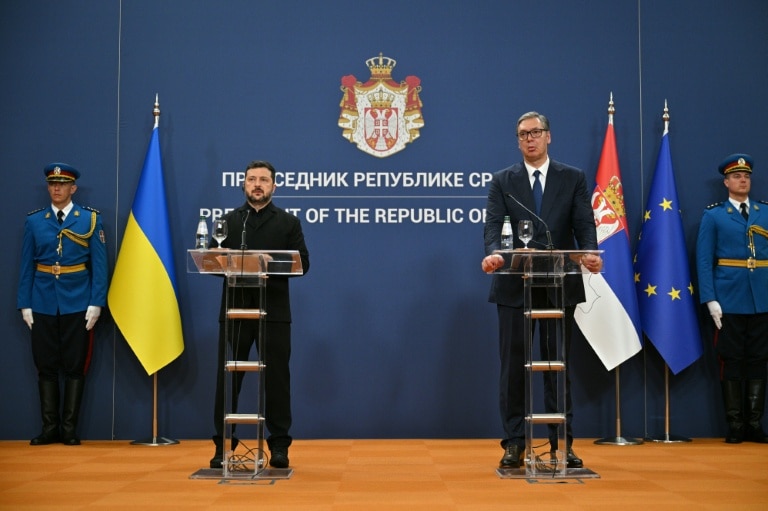
    On Saturday, Ukrainian President Volodymyr Zelensky made his first official visit to Belgrade as head of state, where he delivered a stark warning about the coming winter amid a fresh wave of deadly Russian long-range strikes that claimed multiple civilian lives, including a young child, in the Kyiv region.

    During a press conference alongside Serbian President Aleksandar Vucic, Zelensky confirmed that Russian overnight missile and drone barrages, paired with intensified shelling across frontline communities, had killed 13 civilians across Ukraine in the 24-hour period. Among the fatalities was a three-year-old boy killed in a strike on a village outside Kyiv; four additional people, including the child’s parents, his 15-year-old brother, and a neighbor who rushed to provide aid, were hospitalized after a follow-up double-tap strike on the residential site. Local reports and on-the-ground accounts from AFP correspondents in Kyiv documented roughly a dozen explosions across the capital region, as Ukrainian air defense units issued urgent alerts for incoming ballistic attacks from the north.

    Zelensky emphasized that Russian forces are deliberately targeting Ukraine’s critical energy infrastructure to break civilian morale, leaving the country with virtually no undamaged thermal power plants as it prepares for the winter heating season. Thermal power facilities serve as a critical backup to Ukraine’s nuclear energy fleet, which forms the backbone of the country’s national power grid. With more than three years having passed since Russia launched its full-scale invasion, both sides have sharply escalated long-range strike operations, leading to a steady rise in civilian casualties. Moscow has ramped up attacks on Kyiv in recent months, primarily using salvos of ballistic missiles that are notoriously difficult for existing air defense systems to intercept, prompting repeated Ukrainian appeals for additional U.S.-manufactured Patriot interceptor missiles and other advanced Western air defense systems. In response to the intensified strikes, Kyiv has launched a growing number of drone attacks against targets inside Russian territory.

    During his meetings with Serbian leadership, Zelensky renewed his call for tougher international sanctions on Russia, aiming to cut off the flow of missile components that he says are reaching Moscow from nearly every continent, including from some of Ukraine’s closest international partners. “These components arrive, and then missiles strike people, killing children, civilians and soldiers,” he told reporters, reiterating that expanded access to interceptor missiles is a non-negotiable priority to counter the growing wave of long-range attacks.

    Serbia, which maintains long-standing close ties to Moscow, remains one of the only European countries that has refused to implement formal sanctions against Russia. While Vucic’s government has provided non-military humanitarian assistance to Ukraine, it has not altered its long-held neutral policy on the conflict. Vucic confirmed that no military cooperation agreements were discussed during Saturday’s meeting, noting that any future arrangements would be addressed only after the war concludes. He reaffirmed that Serbia’s policy of recognizing Ukraine’s territorial integrity remains unchanged, and has repeatedly denied Kremlin accusations that Serbian firms have supplied munitions to Kyiv. Vucic previously traveled to Ukraine for a regional summit in 2025 and visited Kyiv earlier this year, but has declined to sign any formal declaration of support for Ukraine in the ongoing conflict.

    Zelensky’s visit to Belgrade comes as part of his years-long global diplomatic tour to rally international support for Ukraine, a campaign he has led consistently since Russia launched its full-scale invasion in February 2022.

  • 2 drones spotted flying over German military base after drone with explosives found at cargo airport

    2 drones spotted flying over German military base after drone with explosives found at cargo airport

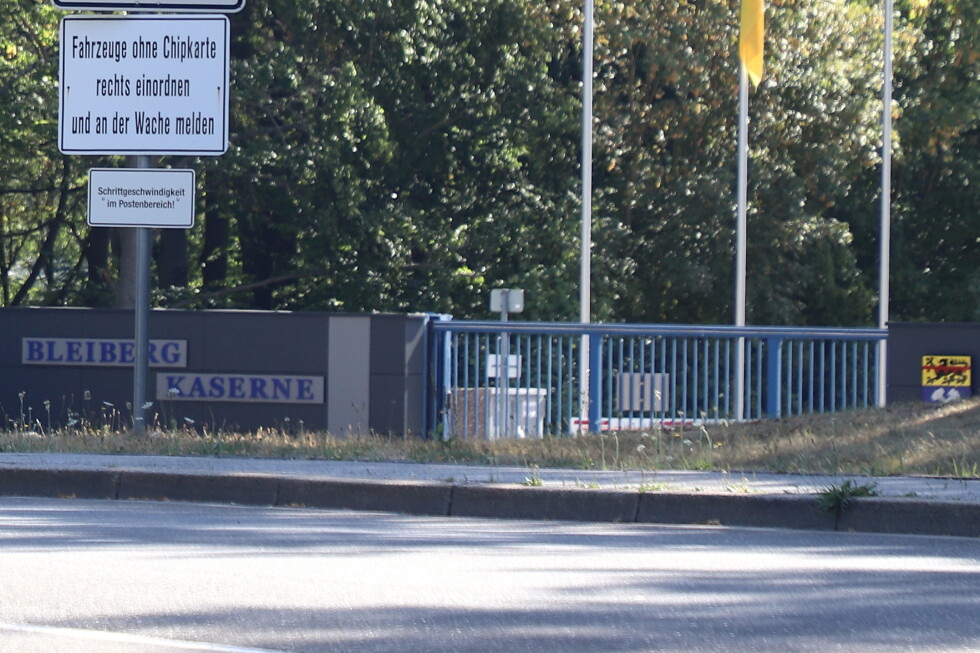
    BERLIN — Germany’s armed forces, the Bundeswehr, announced Saturday that two unidentified unmanned aerial vehicles were detected over a western German military installation earlier this week, an incident that comes only 48 hours after an explosive-carrying drone was recovered at one of the country’s most critical freight airports.

    Per an official statement from Germany’s Joint Force Command, base security surveillance at the Mechernich Bundeswehr facility first registered the two drones at approximately 10 p.m. local time Thursday. After the sighting was independently confirmed, military police were immediately dispatched to the area to conduct on-site checks.

    The national military confirmed that the Euskirchen state police department has launched a formal criminal investigation into the incursion. As of Saturday evening, local law enforcement had not issued any public response to requests for comment on the case, and the Bundeswehr declined to share further details about the scope of the investigation or any potential leads regarding the drones’ operators.

    This latest drone sighting comes amid a growing pattern of unauthorized drone incursions across critical European infrastructure sites. Over the past year, repeated mysterious drone flights over civilian and cargo airport airspace across EU member states triggered widespread public alarm and forced major disruptions to air travel, leading to the cancellation of dozens of commercial flights that left thousands of passengers stranded across the continent.

    Thursday’s incursion follows the discovery of an explosive-laden drone at Germany’s Leipzig/Halle Airport, a major international logistics hub that plays a key strategic role in military and humanitarian support operations for Ukraine. The drone was found shortly before midnight Tuesday and successfully defused by bomb disposal experts before it could cause harm. After the incident, German Interior Minister Alexander Dobrindt warned that the episode marked a “new quality of danger” for German security.

    Leipzig/Halle Airport is not only a top freight hub for global trade; it also hosts NATO’s Strategic Airlift International Solution (SALIS), a program that conducts daily operational flights to deliver military equipment to NATO battle groups deployed along the alliance’s eastern flank, stretching from Finland to Romania. The airport regularly accommodates Ukrainian Antonov transport aircraft that move critical supplies to frontline forces amid Russia’s ongoing full-scale invasion of Ukraine.

    This is not the first major security incident at the facility: earlier in 2024, an incendiary device ignited at an on-site logistics center, destroying a freight container in a suspected sabotage plot that Western security officials have attributed to Russian intelligence operatives. Since Moscow launched its full-scale invasion of Ukraine more than four years ago, Western officials have repeatedly accused Russia and its proxy actors of carrying out dozens of coordinated sabotage attacks and disruptive security incidents across European soil.

    In response to growing accusations linking Russian intelligence to the Leipzig drone incident, the Russian Embassy in Berlin issued a statement Friday dismissing the incident as part of a “new wave of anti-Russian hysteria in Germany.”

  • Jorge Messi, Lionel Messi’s father and longtime agent, dies at 68

    Jorge Messi, Lionel Messi’s father and longtime agent, dies at 68

    In a sad announcement that has rippled through the global soccer community, Jorge Messi, the father, first mentor, and long-time professional manager of Argentina captain and eight-time Ballon d’Or winner Lionel Messi, has passed away at the age of 68 at a hospital in Rosario, Argentina, on Saturday.

    The death was first confirmed via a social media statement from Club Atlético Newell’s Old Boys, the Rosario-based soccer club where Jorge Messi once rose through the youth ranks. The club shared that Jorge had been receiving ongoing treatment for an undisclosed health condition over the past several months, and remembered him as “the pillar and the person who, with vision, rigor and affection, supported the career of the best player of all time, alongside his wife, Celia Cuccittini.”

    Shortly after the confirmation, the South American Football Confederation (CONMEBOL) released an official statement extending its sincere condolences “with respect and affection for Lionel” and the entire Messi family.

    Though the public only learned of Jorge’s passing Saturday, his health struggles first became public knowledge during the 2026 FIFA World Cup, when Lionel Messi gave an uncharacteristically emotional post-match interview after scoring against Algeria in Argentina’s opening group stage match. At the time, the star said his tears were prompted by “a reason unrelated to sports,” adding that he had just navigated “some difficult, complicated days” and thanked his national team teammates for supporting him through the crisis. Unfounded and invasive media speculation about Jorge’s health in the wake of that interview drew sharp condemnation from the Messi family, which released a statement days later confirming Jorge was dealing with a health issue but rejecting intrusive reporting. The statement pushed back against the “lack of sensitivity, respect and scruples with which some people have treated a strictly private and family matter,” noting that “a person’s health and the peace of mind of their loved ones should not be the subject of speculation or irresponsible media interest.”

    Beyond being the father of one of the greatest athletes in history, Jorge Messi built his own working-class background before devoting much of his adult life to nurturing his son’s unprecedented career. A trained chemical technician who worked for years as a steelworker, Jorge was a skilled youth soccer midfielder who earned a spot in Newell’s Old Boys’ youth system, only to be forced to abandon his own playing aspirations to complete mandatory military service in Argentina.

    That unfulfilled soccer dream turned into a legacy of supporting his third son, Lionel. From Lionel’s earliest youth matches in Rosario to his global stardom, Jorge served as his son’s agent and primary advisor, managing all of his professional contracts, business affairs, image rights, and diverse business investments spanning real estate, hospitality, and restaurants. Most famously, Jorge was the one who traveled with a 13-year-old Lionel to Barcelona in the early 2000s for the trial that earned the young prospect a spot at La Masia, FC Barcelona’s legendary youth academy, launching the career that would redefine modern soccer. Lionel would go on to make his professional debut in 2005, claim a record eight Ballon d’Or awards, and lead Argentina to the 2022 FIFA World Cup title.

    In a 2007 interview with Radio del Plata, Lionel Messi opened up about the quiet sacrifice his father made during their earliest, hardest days in Barcelona. “My dad was always by my side,” he recalled. “Sometimes I would lock myself in my room to cry when we arrived in Barcelona, or my dad would do the same without me seeing him, or thinking I didn’t see him. We pretended we were both OK, but we weren’t. My dad even asked me what I wanted to do when we were feeling down, if I wanted to stay or go back, and I wanted to stay, and he stayed with me.”

    The pair also faced professional controversy together: in 2016, both were convicted of tax evasion by a Spanish court. They avoided prison time, as the sentenced term was less than two years, a requirement for suspended sentences under Spanish law at the time.

  • Spain imposes border controls against Italy as row over Ceuta migrant influx intensifies

    Spain imposes border controls against Italy as row over Ceuta migrant influx intensifies

    A diplomatic dispute between two European Union member states, Spain and Italy, has escalated sharply in recent days over a surge of migrant arrivals into the Spanish North African exclave of Ceuta, with both nations enacting temporary border controls that suspend long-standing Schengen Area free movement rules. The tit-for-tat measures, each set to run for one month, took effect after Italy first implemented random additional checks for air and sea travelers arriving from Spain a week ago, triggering an immediate retaliatory response from Madrid that went into force at midnight Spanish time (22:00 GMT).

    The root of the crisis stretches back to late July, when roughly 78,000 migrants crossed from Morocco into Ceuta, a Spanish territory that Morocco has long claimed as its own. In the wake of that mass influx, Italian Prime Minister Giorgia Meloni, a conservative leader who has built her political platform on demanding stricter EU-wide migration policies, announced Rome would temporarily pause its Schengen border-free commitments to block any migrants who entered Ceuta from traveling onward to Italy. Italian officials clarified that only non-EU residents would face extra checks, with Spanish and other EU citizens exempt, and confirmed the restrictions would remain in place through at least August 15, citing unsubstantiated claims of an anticipated second major migrant wave into Ceuta.

    Spain has flatly rejected Italy’s justification for the controls, dismissing the argument as factually baseless spurious reasoning. Spanish authorities note that migrants currently in Ceuta have no existing route to enter the wider Schengen Area, making Italy’s security concerns unfounded. Madrid issued an ultimatum for Rome to reverse the measures by the past Sunday, a demand that Meloni’s government rejected outright. In response, Spain rolled out its own set of random border checks for all air and sea passengers arriving from Italy, set to expire September 7, with a clause allowing for early termination only if the underlying circumstances that prompted the move change significantly.

    While both governments have characterized their respective checks as random, on-the-ground reports have challenged these claims. Spanish national newspaper El Pais has documented long passenger queues and extended wait times at multiple Italian airport terminals over recent days, with all travelers from Spain directed to separate screening lines regardless of their nationality. On the Spanish side, multiple passengers arriving from Italy told public broadcaster RTVE that every person on their flights was required to show passports before being allowed to disembark. “They told us we couldn’t get off the plane without showing our documents,” one passenger, Elisa, told reporters.

    The dispute has laid bare deep divisions across the European Union over migration policy. Italy’s one-month suspension of Schengen rules for Spanish travelers has received public backing from Finland and Denmark, while the Czech Republic has gone a step further, calling for Spain’s EU Schengen Area membership to be temporarily suspended. Temporary Schengen suspensions are not without precedent: Italy already maintains ongoing extra controls along its land border with Slovenia.

    In the weeks following the initial mass crossing, the vast majority of the 78,000 migrants who entered Ceuta have been returned to Morocco. Tragically, an estimated 100 people are believed to have died during the dangerous crossing from North Africa, and nearly 1,400 unaccompanied minor migrants, including many very young children, remain in Ceuta with no clear path forward.

    Though Spain’s government has stated it does not expect a second large-scale wave of migrant crossings to match the late July surge, BBC Arabic has identified dozens of public Facebook posts calling for a new mass crossing in mid-August, including some posts marketing swimming equipment to aspiring migrants. Some of these Facebook groups had accumulated more than 100,000 followers before parent company Meta removed the content for violating its platform policies.

    Officials have continued to debate the underlying cause of the unprecedented mass crossing. The European Union’s Migration Commissioner Magnus Brunner has blamed criminal smuggling networks spreading intentional disinformation for the event, a conclusion that the Spanish government under Socialist Prime Minister Pedro Sanchez has endorsed. The crossing came shortly after Spain’s Supreme Court issued a ruling that barred authorities from immediately summarily returning migrants intercepted at sea while attempting to reach Ceuta or the other Spanish Moroccan exclave Melilla. The Moroccan government has echoed this framing, with an anonymous senior source telling local outlets that the ruling eliminated the existing deterrent to unauthorized crossings, saying “the dam gave way, not under the weight of the criminals, but of a judge’s decision”.

    The mass crossing also reignited long-standing diplomatic tensions between Spain and Morocco, as Morocco does not recognize Spanish sovereignty over either Ceuta or Melilla, and questions remain open about why Moroccan border forces did not intervene to stop the tens of thousands of people attempting the crossing simultaneously.

  • Lionel Messi’s father Jorge dies aged 68

    Lionel Messi’s father Jorge dies aged 68

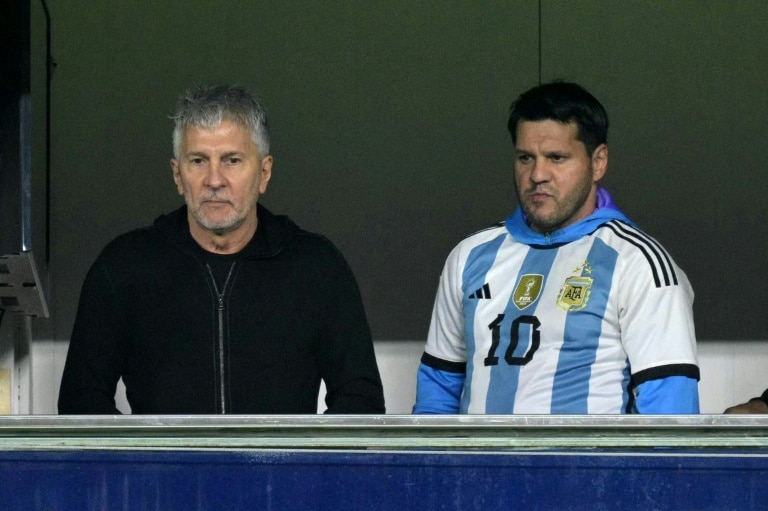
    Jorge Messi, the father, first coach and long-time professional agent of global football icon Lionel Messi, has passed away at the age of 68, according to an official announcement from Newell’s Old Boys, the Argentine club where Lionel Messi launched his childhood football career. The confirmation was made public by the club on Saturday.

    Local Argentine media outlets have reported that Jorge Messi died on Friday at a hospital in Rosario, the central Argentine city where the Messi family has deep roots. The 68-year-old had been facing publicized health struggles in recent months, during which the Messi family made a public plea for media privacy and empathy amid widespread speculation over his condition.

    In a heartfelt social media statement shared Saturday, Newell’s Old Boys paid tribute to Jorge Messi’s foundational role in his son’s unprecedented career, noting: “His constant companionship and behind-the-scenes leadership were essential in backing every step of Lionel.”

    The story of Jorge Messi is inextricably tied to Lionel’s rise from a young prospect in Rosario to one of the greatest footballers in history. He served as Lionel’s first coach when the future star began playing the sport at the grassroots level in Argentina, and was the only person to accompany the 13-year-old Lionel when he moved across the Atlantic to join FC Barcelona’s youth academy, a move that set the stage for his legendary career. Later, he stepped into the role of Lionel’s official agent, managing the off-pitch business and logistics that allowed the footballer to focus on his performance on the pitch.

    Looking back on his father’s influence in a 2022 interview with DirecTV Sports, Lionel Messi publicly acknowledged the outsized impact Jorge had on his career and personal growth, saying: “My father helped me enormously. He is very critical of me. That made me always want to push myself further.”

    The news of Jorge’s passing has prompted an outpouring of tributes from across the global football community in the hours following the announcement, with fans, fellow players and football institutions extending their condolences to the Messi family.

  • Australia survives red card and Japan rally for a 35-32 win in Les Kiss debut

    Australia survives red card and Japan rally for a 35-32 win in Les Kiss debut

    In a gripping, physically demanding test match in Osaka on Saturday, Australia’s national rugby union team, the Wallabies, secured a nail-biting 35-32 victory over Japan, delivering a winning start for newly appointed head coach Les Kiss. The result was far from straightforward, however: Australia was reduced to 14 players before halftime after lock Miles Amatosero received a red card, forcing the side to fight through extra pressure, sweltering conditions and a late Japanese fightback to claim the win.

    Kiss stepped into the Wallabies’ top coaching role last month, taking over from Joe Schmidt after a mixed opening phase of the Nations Championship, where Australia finished with a 1-2 record – picking up a victory over Italy following back-to-back losses to Ireland and France. For the opening match of this two-test series against Japan, Kiss made several notable selection calls: he named just one uncapped player, center Isaac Henry, recalled experienced Queensland Reds forward Lukhan Salakaia-Loto, and opted to leave veteran prop James Slipper out of the matchday squad.

    Throughout the 80 minutes, temperatures at the Osaka venue hovered near 30 degrees Celsius (86 Fahrenheit), adding an extra layer of fatigue for both sides. The game’s turning point came in the 32nd minute, when Amatosero was penalized for a dangerous cleanout on Japan captain Warner Dearns. Referees initially issued a yellow card, but upgraded the sanction to a red following a bunker review just before halftime, with the two sides locked at 14-all at the break.

    Down a player for the entire second half, Australia still managed to stretch its lead early after the break, with tries from Max Jorgensen and Fraser McReight pushing the Wallabies’ advantage to nine points. But Japan fought back methodically, cutting the deficit with two well-taken penalties from fly-half Takuro Matsunaga.

    The difference in the final 20 minutes proved to be Australia’s depth off the bench, as the Wallabies’ replacements maintained intense pressure on the Japanese defense. With 10 minutes remaining, prop Taniela Tupou crashed over the try line to extend Australia’s lead back to 10 points, appearing to put the game out of reach.

    Japan, however, had one final push left. Dearns, the host nation’s captain who was on the receiving end of Amatosero’s controversial foul earlier in the match, crossed for a late try to cut the gap back to just three points. Despite the frantic final minutes, Australia held firm to defend its narrow lead and close out the win.

    Saturday’s match also pitted Kiss against Japan head coach Eddie Jones, a former Wallabies coach who is currently serving his second stint in charge of the Japanese national side. The two teams will meet again next weekend in the second test of the series.