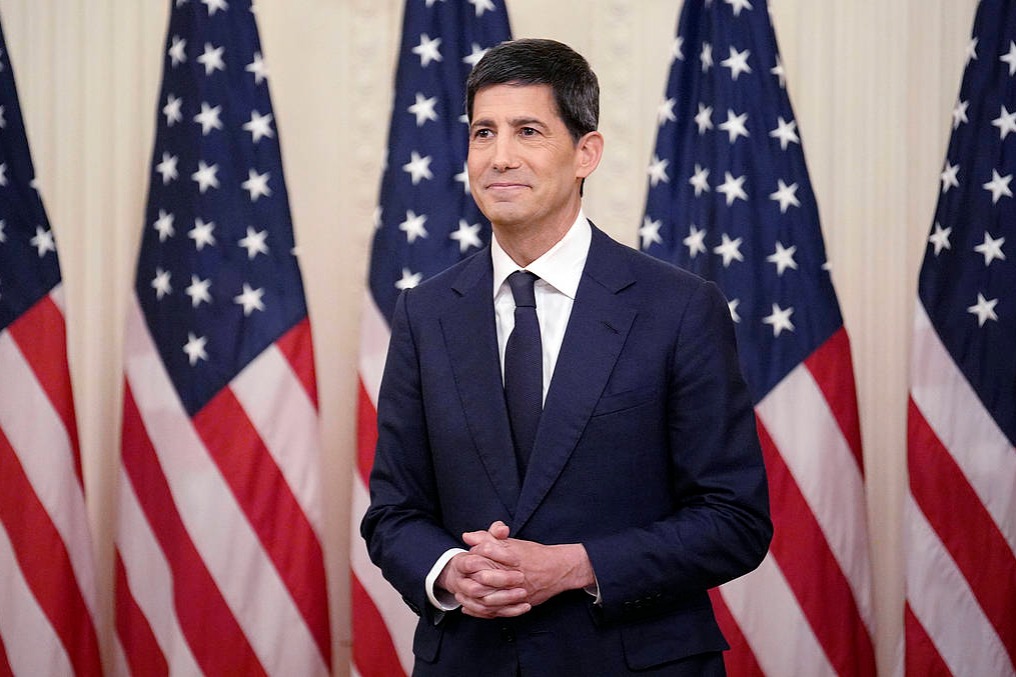
On a Friday ceremony held in the White House East Room, Kevin Warsh officially took office as the 17th Chair of the United States Federal Reserve, marking the start of his four-year term at the helm of the world’s most influential central bank. The oath of office was administered by Supreme Court Justice Clarence Thomas, with the event hosted by U.S. President Donald Trump. Attendees included a roster of high-profile guests: senior White House administration officials, sitting members of Congress, sitting Supreme Court justices, and leading figures from the American business community.
In remarks ahead of the swearing-in, Trump emphasized his expectation that Warsh would maintain full institutional independence from the executive branch. “I want Kevin to be totally independent. I want him to be independent and just do a great job,” Trump told the assembled audience. “Don’t look at me, don’t look at anybody. Just do your own thing and do a great job, okay?” Per CNBC reporting, this White House swearing-in marks the first time a Fed chair has taken office at the presidential residence since Alan Greenspan’s 1987 inauguration, a break from recent tradition that has drawn attention from political and financial observers.
At 56, Warsh succeeds Jerome Powell, who led the Federal Reserve through post-pandemic recovery and a historic inflation surge starting in 2018. Powell, who will retain his seat on the Fed’s Board of Governors after stepping down from the chair role, has already signaled he will remain active in central bank governance.
In his first public remarks as chair, Warsh reaffirmed the Federal Reserve’s core statutory mandates: fostering stable prices and maximizing sustainable employment. “When we pursue those aims with wisdom and clarity, independence and resolve, inflation can be lower, growth stronger, real take home pay higher and America can be more prosperous. And no less important, America’s place in the world is more secure,” Warsh stated. Outlining his policy and institutional agenda, he committed to leading what he called a “reform-oriented Federal Reserve,” saying the body would draw lessons from both past successes and missteps, move beyond rigid, outdated analytical frameworks and models, and uphold strict standards of integrity and accountability in all its operations.
Warsh brings deep prior experience at the central bank: he served as a member of the Federal Reserve Board of Governors from 2006 to 2011, and after leaving the institution, he held academic appointments at the Stanford Graduate School of Business and the conservative think tank the Hoover Institution.
Warsh’s inauguration comes amid a period of heightened tension between the Trump White House and the Federal Reserve, with the administration pushing repeatedly for looser monetary policy to pair with its signature policy agenda of tax cuts and broad financial deregulation designed to accelerate U.S. economic growth. Over the past 12 months, the Trump administration has moved repeatedly to exert greater political influence over the central bank’s decisions. Most notably, Trump attempted to remove Biden-appointed Board member Lisa Cook over unproven fraud allegations, and directed the U.S. Department of Justice to open an investigation into outgoing chair Jerome Powell connected to a Fed headquarters building renovation project. A federal judge later ruled that the investigation was an explicit attempt to pressure Powell into cutting interest rates or resigning from his post.
That investigation was ultimately halted after Republican Senator Thom Tillis of North Carolina threatened to block Warsh’s Senate confirmation vote unless the probe was dropped, clearing the path for Warsh’s appointment.
Going into his term, Warsh has positioned himself as an advocate for institutional change at the Fed, publicly calling for “regime change” that would overhaul how the central bank measures and communicates economic data to markets and the public. He has also signaled openness to lowering interest rates, while pushing back against claims he would defer to the White House on monetary policy. Warsh has repeatedly stated he will rely on his own independent judgment when setting policy, and will not take direct instructions from the executive branch.
The new chair takes office at a critical moment for U.S. monetary policy. As of April 2026, the Federal Open Market Committee has held its benchmark federal funds rate steady at a range of 3.5% to 3.75%, keeping borrowing costs elevated to pull persistent inflation back down to the central bank’s longstanding 2% target. However, recent economic data has upended market expectations for imminent rate cuts. A U.S. Labor Department report released earlier this week showed annual consumer price inflation hit 3.8% in April, the highest reading recorded since May 2023. The sharp rise in price pressures has been fueled in large part by global energy market disruptions: tanker traffic disruptions in the Strait of Hormuz, sparked by the ongoing U.S.-Israeli military campaign against Iran, have driven sharp increases in global crude oil and retail gasoline prices, creating new headwinds for the Fed’s inflation fight.