作者: admin

  • France bans Israeli minister Itamar Ben-Gvir after ‘unspeakable’ flotilla detainee taunts

    France bans Israeli minister Itamar Ben-Gvir after ‘unspeakable’ flotilla detainee taunts

    In a significant diplomatic rebuke, France announced Saturday that it has issued an entry ban against Itamar Ben-Gvir, Israel’s far-right national security minister, over what French officials call “unspeakable” aggressive behavior toward detained activists from a Gaza-bound aid flotilla.

    French Foreign Minister Jean-Noël Barrot confirmed the ban in a public post on the social platform X, stating that the entry prohibition is effective immediately. The measure follows Ben-Gvir’s widely condemned actions against French and European citizens who were among the passengers of the Global Sumud Flotilla, an initiative aimed at challenging Israel’s long-standing naval blockade of the Gaza Strip.

    “We cannot tolerate that French nationals can be threatened, intimidated or brutalized in this way — all the more so by a public official,” Barrot wrote, adding that he has called on the European Union to implement collective sanctions against Ben-Gvir. Notably, the French foreign minister also made clear that Paris does not support the flotilla’s direct blockade-breaking approach, noting that the action “produces no useful effect and places an additional burden on diplomatic and consular services.”

    The controversy ignited earlier this week when Ben-Gvir publicly shared a series of videos showing his interactions with detained flotilla participants, triggering widespread global outrage. The footage captures Ben-Gvir taunting bound detainees: in one clip, he waves a large Israeli flag over hunched, restrained captives; in another, he shouts the Hebrew phrase “Am Yisrael Chai” (The nation of Israel lives) at a kneeling activist with zip-tied wrists; a third clip shows dozens of detainees forced to lie face-down on the ground in an open-air pen, surrounded by armed guards as the Israeli national anthem plays.

    The 50-vessel flotilla was intercepted by Israeli forces in international waters approximately 400 kilometers off Israel’s coast earlier this month, with around 430 activists taken into custody. Detained participants have accused Israeli security personnel of systematic mistreatment, including beatings, the use of tasers, and deployment of attack dogs against the group.

    France is not the first democratic country to move against Ben-Gvir over the incident. On Thursday, Poland announced a five-year entry ban against the minister, with Polish Foreign Minister Radek Sikorski noting in a social post that “In the democratic world we do not abuse and gloat over people in custody.” Even within Israel’s own governing coalition, Prime Minister Benjamin Netanyahu joined other foreign leaders in condemning Ben-Gvir’s on-camera conduct toward the detainees.

    The Associated Press has reached out to Ben-Gvir’s spokesperson and Netanyahu’s office for comment on the new French ban, and no response has been released publicly as of Saturday. The entry ban comes amid ongoing international scrutiny of Israeli policy toward Gaza and actions by far-right members of the Israeli cabinet, as global actors continue to track stalled negotiations over a ceasefire to end the months-long devastating conflict in the enclave.

  • Pitches, PlayStations and protein ice cream – A look inside Brazil’s World Cup base camp

    Pitches, PlayStations and protein ice cream – A look inside Brazil’s World Cup base camp

    As the world’s most anticipated football tournament draws near, all eyes are on how top contenders are shaping up for their quest for the trophy. Among the elite national sides preparing for the competition, Brazil has set up its pre-tournament base far from home, at the Columbia Park Training Facility nestled in Morris Township, New Jersey. BBC correspondent Brandon Livesay recently got rare access to the closed camp, offering football fans around the globe an unprecedented peek into how the five-time world champions are getting ready for their World Cup campaign.

    What stands out most about the Brazilian camp is the careful balance the team’s support staff have struck between high-performance training and personal comfort, designed to keep the squad in peak physical and mental condition ahead of the tournament. Beyond the meticulously maintained grass pitches, where players put in daily work on tactics, fitness and teamwork, the facility includes off-pitch amenities that cater to modern athletes’ needs for recovery and relaxation. To help players unwind after intense training sessions, the camp has been equipped with gaming stations including PlayStations, allowing team members to unwind with casual friendly competitions. Meanwhile, the nutrition team has tailored a performance-focused diet for the squad, that even includes specially sourced protein ice cream – a treat that fits the team’s strict fitness requirements while satisfying players’ cravings for sweet snacks.

    Choosing a pre-tournament base in the United States rather than in Brazil or closer to the tournament host nation was a strategic call by the Brazilian Football Confederation. The New Jersey location offers controlled privacy, cutting out distractions that often come with a high-profile side preparing for a major tournament, while still providing easy access to travel logistics for the final journey to the competition. Livesay’s tour confirms that every detail of the camp, from training infrastructure to off-field comfort, has been planned to give the Brazilian squad the best possible chance to lift the World Cup trophy, underscoring the side’s commitment to preparing thoroughly for every possible challenge ahead of the tournament.

  • Iran chief negotiator vows ‘crushing’ response if US returns to war

    Iran chief negotiator vows ‘crushing’ response if US returns to war

    Rising tensions across the Middle East have reached a new flashpoint this weekend, as Iran’s top nuclear and security negotiator has issued a stark warning of devastating retaliation should the United States choose to resume open hostilities, while parallel violence on the Lebanon-Israel border continues to escalate despite tentative ceasefire efforts.

    The warning came Saturday from Mohammad Bagher Ghalibaf, Iran’s chief negotiator, following recent American media reports that the White House is actively considering launching new military strikes against Iran amid stalled negotiations over a permanent end to the conflict that began when U.S. and Israeli forces launched attacks on the Islamic republic on February 28. Writing on his social media channels, Ghalibaf emphasized that Iran’s armed forces have used the current ceasefire, implemented on April 8, to rebuild and reposition their capabilities. “If Trump commits another act of folly and restarts the war, it will certainly be more crushing and bitter for the United States than on the first day of the war,” he wrote.

    The statement came just after Pakistan’s influential army chief, Field Marshal Syed Asim Munir — who has served as a key international mediator in efforts to turn the temporary ceasefire into a long-term diplomatic settlement — concluded two days of talks with senior Iranian officials in Tehran and departed the capital Saturday. Iran’s leadership has repeatedly accused Washington of making unreasonable excessive demands that have stalled negotiations, leaving the region in a tense limbo between open conflict and formal peace.

    Multiple U.S. media outlets, including Axios and CBS News, have recently cited anonymous sources confirming that the Trump administration is weighing the option of renewed military action if no breakthrough is reached in talks. U.S. Secretary of State Marco Rubio reinforced that posture last week, telling reporters on the sidelines of a NATO conference in Sweden that while there had been “some progress” toward a peaceful resolution, “things were not there yet.

    Weeks of negotiations, including landmark direct talks hosted by the Pakistani government in Islamabad, have so far failed to produce a permanent ceasefire agreement or reopen full access to the Strait of Hormuz, the critical global oil chokepoint whose closure has disrupted millions of barrels of daily energy trade and roiled international markets. The ongoing impasse has left ordinary Iranian citizens facing profound uncertainty about their futures. Speaking to Agence France-Presse, 39-year-old Tehran resident Shahrzad summed up the widespread anxiety: “The state of ‘neither war nor peace’ is far filthier than war itself. You can’t even plan something as simple as signing up for a gym, let alone bigger things… I’m about to start a new job, and I’m scared war might break out again — that I’ll end up leaving the job like before, running off to another city out of fear.”

    Diplomatic activity accelerated across the region over the weekend as global powers scrambled to de-escalate. Iranian Foreign Minister Abbas Araghchi spoke by phone with United Nations Secretary-General Antonio Guterres, emphasizing that Tehran remains committed to diplomatic efforts despite what he called Washington’s “repeated betrayals of diplomacy and military aggression against Iran, along with contradictory positions and repeated excessive demands.” Araghchi also held separate diplomatic calls with his counterparts from Turkey, Iraq, Qatar, and Oman, according to Iran’s official IRNA news agency. On the U.S. side, President Donald Trump spoke Saturday with Qatari Emir Sheikh Tamim bin Hamad Al Thani, whose office confirmed the Emir voiced support for “all initiatives aimed at containing the crisis through dialogue and diplomacy.”

    Beyond the Iran-U.S. standoff, violence continues to escalate on the Lebanese front of the broader regional conflict. On Saturday, the Israeli military ordered residents of 10 southern Lebanese villages to evacuate their homes immediately ahead of planned airstrikes targeting alleged Hezbollah positions. Since a fragile April 17 ceasefire, Israel has maintained a steady campaign of strikes, infrastructure demolitions, and evacuation orders in southern Lebanon, framing the operations as necessary to counter Hezbollah, which has also continued to launch regular attacks on Israeli military positions.

    Hezbollah entered the broader conflict on March 2, firing a barrage of rockets into Israel just days after U.S.-Israeli strikes killed Iran’s supreme leader. Lebanon’s state-run National News Agency (NNA) reported that Israeli warplanes hit roughly a dozen locations across southern Lebanon on Saturday, including an agricultural area where several Syrian workers were wounded. One overnight strike targeted a site adjacent to a hospital in the southern Lebanese city of Tyre, causing severe damage to the medical facility that currently cares for 40 patients. Hospital CEO Dr. Salman Aydibi told AFP that this marked the third Israeli strike near the facility since the outbreak of the war.

  • French pair held until trial after boys abandoned by road in Portugal

    French pair held until trial after boys abandoned by road in Portugal

    A Portuguese court has ruled that a French woman and her partner will continue to be held in pre-trial custody following allegations that they abandoned the woman’s two young sons along a rural roadside in the country’s south. The disturbing case unfolded earlier this month, drawing cross-border attention from both French and Portuguese authorities and media outlets.

    The two boys, aged four and five, were discovered on the evening of Tuesday last week, huddled and crying beside a highway near the town of Alcacer do Sal, located roughly 100 kilometers south of Portugal’s capital Lisbon. According to accounts shared with local media by the mother of the motorist who found the children, one of the boys told rescuers their mother had blindfolded them, luring them to search for a hidden toy. When the children removed their blindfolds, she had already disappeared.

    Two days after the boys were found, law enforcement apprehended the pair — identified by official sources as 41-year-old Marine R, the children’s mother, and her 55-year-old partner Marc B — in the central Portuguese pilgrimage town of Fatima. Under Portuguese legal regulations, all criminal suspects must be brought before a judge within 48 hours of arrest to determine whether they will remain in custody or be released pending trial.

    When the pair arrived at the Setubal District Courthouse on Saturday morning, observers documented unusual public behavior: Marc B shouted “I love you” to onlookers in French, while Marine R sang aloud to herself. After closed-door proceedings, the judge issued an order remanding both suspects to pre-trial detention, as confirmed by reports from both French and Portuguese media. The couple face a trio of criminal charges: aggravated assault, child endangerment, and willful abandonment of minors.

    Prior to their disappearance, the boys had been living full-time with their mother in Colmar, a city in northeastern France, according to local media reports shared with the court. The children’s biological father only held limited, supervised visitation rights, and he officially reported the boys and their mother missing to French authorities on May 11. That missing person report triggered a cross-border search, which led to a European arrest warrant being issued for the mother before the children were found in Portugal. Investigators have noted that the couple appears to have no pre-existing ties or connections to Portugal, leaving their motive for traveling to the country with the children still unclear.

    The couple’s professional backgrounds have sparked particular public interest in both countries. Marine R’s public LinkedIn profile lists her as a sexologist specializing in body-focused therapy, psychotrauma treatment, and developmental dynamics. Marc B, meanwhile, is a former officer with the French national gendarmerie who left the force in 2010. Local Portuguese newspaper Correio da Manhã has also reported that prison staff have overheard the pair shouting at each other through the walls of their separate holding cells. Since their arrest, both suspects have undergone several hours of questioning by investigating officers.

    For the time being, the two young boys have been placed in the care of a French foster family based in Lisbon, and authorities are arranging for them to return to France in the coming days to be reunited with their biological father, according to official updates.

  • Jackson smashes meeting record to win 200m

    Jackson smashes meeting record to win 200m

    The Xiamen Diamond League track and field meet delivered a day of thrilling competition and historic performances on Saturday, headlined by a masterclass victory from two-time 200m world champion Shericka Jackson.

    Fresh off a win at the opening Shanghai/Keqiao Diamond League stop a week prior, Jackson picked up right where she left off in Xiamen, delivering a dominant run that left her competitors trailing far behind. From the moment the starting gun fired, the Jamaican sprinter seized control of the race, putting her unparalleled strength on the bend to create an insurmountable gap over the rest of the field. She crossed the finish line with a blistering time of 21.87 seconds, breaking the existing meeting record and falling just one hundredth of a second short of claiming the current world leading time.

    While Jackson claimed the top spot on the podium, her fellow competitors also turned in impressive personal season-best results. Bahamian sprinter Shaunae Miller-Uibo took second place with a time of 22.04 seconds, while American sprinter Anavia Battle secured third with 22.29 seconds. Neither runner ever looked positioned to challenge Jackson for the win, however. 2023 world 100m champion Sha’Carri Richardson also notched a new season best, finishing fourth in 22.38 seconds. Great Britain’s Amy Hunt, the 2022 200m world junior silver medallist, crossed the line seventh out of nine competing athletes.

    The standout historic performance of the day came from 18-year-old Chinese javelin thrower Yan Ziyi, who rewrote multiple record books with a stunning 71.74m throw. Just one day after celebrating her 18th birthday, Yan’s effort broke not only the Xiamen Diamond League meet record but also the long-standing Asian senior record and the world under-20 record. This milestone comes just over a year after Yan set the world junior record at the age of 17, cementing her status as one of the most promising young track and field talents in the world. Her throw moves her into second place on the all-time global women’s javelin performance list.

    Another crowd-pleasing matchup came in the men’s 400m hurdles, which pitted 2024 Olympic bronze medalist Alison dos Santos of Brazil against Norwegian world record holder and 2024 Olympic silver medalist Karsten Warholm in a much-anticipated head-to-head duel. The two elite hurdlers quickly separated themselves from the rest of the pack, battling neck-and-neck for the top spot through every hurdle. In the final stretch, dos Santos pulled ahead to claim the win, finishing in 46.72 seconds – 0.10 seconds ahead of Warholm’s runner-up time.

  • Two traffic accidents in Cambodia kill 14 garment factory workers and injure 93 others

    Two traffic accidents in Cambodia kill 14 garment factory workers and injure 93 others

    Cambodia is confronting renewed scrutiny of its chronic road safety failures after two separate fatal traffic collisions on Saturday left at least 14 garment factory workers dead and 93 more injured, most of the victims being women who make up the majority of the country’s garment workforce.

    The garment manufacturing sector stands as Cambodia’s single largest source of export revenue, drawing global investment and orders thanks to its low labor cost structure. Most full-time garment workers earn between $200 and $300 per month including overtime pay, making the sector the backbone of the country’s industrial employment landscape. It supports between 800,000 and 1 million workers across roughly 1,900 factories that produced more than $15.5 billion in exports of clothing, footwear and travel goods in 2024, according to official data from Cambodia’s Ministry of Commerce.

    The first of Saturday’s crashes took place in Kampong Chhnang Province, a location roughly 37 miles north of the capital Phnom Penh. A heavy-duty cargo truck collided head-on with an open flatbed truck that was carrying garment workers en route to their morning shift, the Cambodian Labor Ministry confirmed in an official statement. This incident alone left nine people dead and another 53 with injuries ranging from minor to critical.

    The second fatal collision occurred just hours later in Svay Rieng Province, a southeastern region that is one of Cambodia’s major concentrations of garment manufacturing facilities. A passenger bus transporting workers to their shifts veered off the paved roadway and overturned, killing five people and hospitalizing 40 injured passengers.

    For thousands of Cambodian garment workers, open-top flatbed trucks are the most common form of transportation arranged or utilized to get to and from factory shifts. These vehicles are rarely fitted with proper seating or safety benches, forcing most passengers to stand for the duration of their commute—a practice that drastically elevates the risk of severe injury or death even in minor collisions.

    In the wake of Saturday’s back-to-back tragedies, the Labor Ministry released a statement saying it was “deeply shocked by two horrific traffic accidents that occurred simultaneously,” and issued a formal appeal for strict compliance with national traffic laws to prevent similar deadly incidents in the future. Current data from the Cambodian Transport Ministry shows that traffic accidents killed 1,467 people across the country in 2025, cementing road crashes as the leading cause of accidental death in this Southeast Asian developing nation, a crisis that has persisted for decades without comprehensive systemic reform.

  • Here are some of China’s major coal mining disasters this century

    Here are some of China’s major coal mining disasters this century

    A devastating gas explosion at the Liushenyu coal mine in Changzhi, Shanxi Province – China’s largest coal-producing region – has left at least 90 miners dead, according to official state media reports released Saturday. The fatal incident unfolded Friday evening while 247 workers were on shift underground, authorities confirmed.

    As China’s core coal heartland, Shanxi holds outsized importance for the country’s energy-dependent economy: spanning an area larger than Greece and home to roughly 34 million residents, the province produced nearly 1.3 billion tons of coal last year alone, accounting for close to one-third of China’s total national coal output. Hundreds of thousands of miners work across its thousands of operating mines to feed the country’s rapid industrial growth.

    This latest disaster brings renewed attention to the persistent safety crisis plaguing China’s coal mining sector. For decades, the country’s breakneck industrial expansion has relied on aggressive resource extraction, which has often come at the cost of worker welfare: poor working conditions, insufficient safety infrastructure, and loose regulatory oversight have created a landscape where major mining accidents are a recurring tragedy. Industry observers and regulators alike have repeatedly noted that many mine operators and local officials prioritize profit margins over worker safety, with most underground gas explosions traced to inadequate ventilation systems that fail to clear flammable methane that seeps naturally from coal seams.

    While the Chinese national government has implemented widespread reforms over the past 20 years – including upgrading safety standards across the sector and shuttering thousands of unregulated small-scale mines – deadly disasters continue to occur. This incident adds to a grim list of major mining fatalities across China over the past two decades:
    – In 2023, a collapse at an open-pit mine in Inner Mongolia killed 53 workers
    – In 2009, a gas explosion at the state-run Xinxing mine in northern Heilongjiang Province near the Russian border claimed 108 lives, leaving dozens of miners trapped more than a third of a mile underground as rescue teams fought to reach them through blocked access tunnels
    – In 2005, two separate major accidents killed hundreds: a blast at the Dongfeng coal mine in Heilongjiang’s Qitaihe killed 171, while a gas explosion at Liaoning’s Sunjiawan mine claimed 214 lives
    – In 2004, two gas explosions killed 166 at Shaanxi’s Chenjiashan mine and 148 at Henan’s Daping mine respectively
    – In 2000, an explosion at Guizhou’s Muchonggou mine left 162 miners dead

    The latest fatal explosion in Shanxi is expected to reignite calls for stronger safety enforcement and more rapid investment in protective infrastructure to protect mining workers across the country.

  • Counting under way in Ireland by-elections

    Counting under way in Ireland by-elections

    On Saturday morning, vote counting officially kicked off for two pivotal by-elections that will select two new Teachtaí Dála (TDs), or members of the Irish parliament, to fill vacant seats in Dáil Éireann. The contests are taking place across two constituencies: Dublin Central and Galway West, where voters cast their ballots the previous day.

    The Dublin Central seat became vacant after former Fine Gael TD and ex-Irish Finance Minister Paschal Donohoe stepped down to take up a senior leadership position at the World Bank. In Galway West, the by-election was triggered by the resignation of local TD Catherine Connolly, who was recently elected to the role of president of Dáil Éireann.

    By-elections in Irish politics have long followed a well-established trend: sitting governing parties typically face a disadvantage, as voters often use these special contests to register dissatisfaction with the current administration’s performance. In Dublin Central, pre-count analysis had pegged candidates from the Social Democrats and Sinn Féin as the clear front-runners to claim the empty seat, and early tallies have done little to shift that projection.

    After all ballot boxes were opened and tallied in Dublin Central, unofficial vote projections show Social Democrat candidate Daniel Ennis holding a narrow lead over Sinn Féin’s Janice Boylan. Ennis has secured 19.6% of first-preference votes, according to preliminary tallies, while Boylan trails slightly at 17.7%. It is important to note that these early tallies only provide an indication of the initial count outcome, and the final result for both seats will depend heavily on the distribution of transferred votes from eliminated candidates, a key feature of Ireland’s single transferable vote system.

    In Galway West, with fewer than half of all ballot boxes processed as of Saturday, the race is also shaping up to be extremely close. Independent Ireland candidate Noel Thomas holds a thin lead with 21.3% of first-preference votes, while Fine Gael’s Sean Kyne is just one percentage point behind at 20.2% in the preliminary counts. Counting is expected to continue through the day as officials work toward finalizing official results for both seats.

  • Uganda confirms new Ebola cases, linked to DR Congo

    Uganda confirms new Ebola cases, linked to DR Congo

    Ugandan health officials announced Saturday that three new positive Ebola cases have been detected in the country, all linked to an ongoing, rapidly spreading outbreak centered in the neighboring Democratic Republic of the Congo that the World Health Organization has already designated a public health emergency of international concern. This update brings Uganda’s total number of confirmed Ebola infections to five since the virus first crossed the country’s border and was detected locally on May 15.

    Health authorities have publicly identified the three newly confirmed patients: a Ugandan long-haul driver, a Ugandan frontline healthcare worker, and a female patient from the DRC, where the outbreak originated. In an official statement posted to the social platform X, the Ugandan Ministry of Health confirmed that all three patients are still alive as of Saturday’s update.

    The new diagnoses come just one day after the WHO upgraded the overall risk level of the DRC Ebola outbreak to its highest classification, “very high,” for the DRC itself. The UN health agency also noted that the regional risk level across central Africa remains “high,” while the global risk level is still categorized as “low.”

    Ebola is an extremely virulent viral pathogen that spreads exclusively through direct contact with infected bodily fluids. In severe cases, it triggers catastrophic systemic symptoms including unstoppable internal bleeding and complete organ failure, with high mortality rates for unmanaged cases. According to the latest WHO data, the DRC has recorded 82 confirmed Ebola cases and seven confirmed deaths from the current outbreak, alongside nearly 750 suspected cases and 177 additional suspected fatalities.

    Outbreak investigators say the epidemic spread undetected for an unknown period before it was officially identified. Complicating response efforts further, the outbreak is caused by the rare Bundibugyo Ebola strain, for which no specifically approved vaccines or targeted therapeutic treatments currently exist.

    Days before the new cases were announced, on Thursday, Uganda enacted strict border control measures, suspending all public cross-border passenger and cargo transport to and from the DRC, after confirming the country’s first two Ebola cases. Both of those initial cases involved Congolese citizens who crossed the border into Uganda, and one of those patients died from the infection.

    Contact tracing has revealed clear transmission links between the initial cross-border cases and the three new diagnoses. The infected Ugandan driver was operating the vehicle that carried the first ill Congolese patient into Uganda, while the Ugandan healthcare worker contracted the virus while providing care to that same infected cross-border patient. The third new case, the Congolese woman, had traveled to Kampala to receive treatment for abdominal pain, was discharged in apparent good health on May 14, and tested positive for Ebola after she returned to the DRC.

    Ugandan health authorities stated that all known close contacts of the confirmed cases have already been identified and are currently under active, close medical monitoring to catch any new potential infections early.

    WHO Director-General Tedros Adhanom Ghebreyesus warned Friday that the ongoing response to the outbreak in the DRC faces unprecedented challenges. The epicenter of the epidemic lies in the eastern DRC, a region that has been torn by decades of persistent conflict between dozens of armed rebel groups and government forces, leaving it unstable and largely cut off from formal state services. This remote, insecure environment has forced response teams to work under extreme conditions to slow virus transmission and track down the contacts of all confirmed infected people.

    The outbreak was first detected in the DRC’s Ituri province, and has since spread into areas of South Kivu that are currently controlled by the Rwanda-backed M23 militia. State healthcare infrastructure has been largely non-existent in rural parts of Ituri for decades, and local residents have grown increasingly critical of the Congolese national government for what they say is an unacceptably slow and under-resourced response to the crisis. Meanwhile, the M23 militia, which controls the affected parts of South Kivu, has no prior experience managing a large-scale outbreak of a deadly disease like Ebola, which has killed more than 15,000 people across Africa over the past 50 years.

  • Pope condemns environmental harm in Italy’s ‘Land of Fires’

    Pope condemns environmental harm in Italy’s ‘Land of Fires’

    On a historic Saturday visit to one of Europe’s most devastating environmental disaster zones, Pope Leo XIV delivered a blistering rebuke of the criminal networks and systemic negligence that have turned southern Italy’s Campania region’s ‘Land of Fires’ into a public health crisis that has plagued local communities for nearly 40 years.

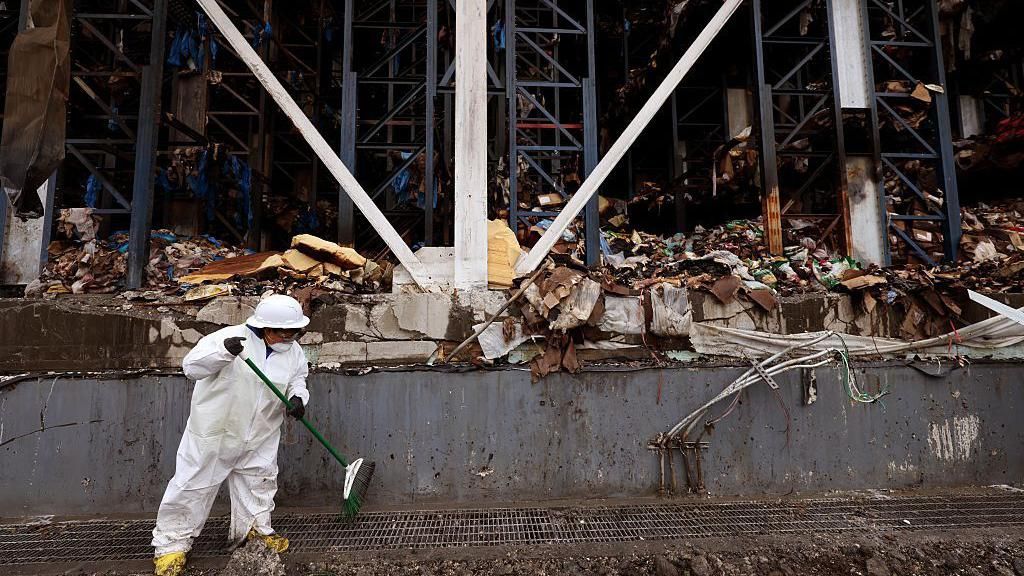
    Known alternately as the ‘Triangle of Death’, the territory stretching around the city of Acerra, roughly 15 kilometers northeast of Naples, has been exploited since the late 1980s as an illegal dumping and incineration ground for hazardous industrial waste. Most of the toxic material originates from wealthy industrial regions in northern Italy, where corporate entities avoid the steep costs of compliant waste disposal by paying off the local Camorra mafia to eliminate the waste illegally. The illicit operation has buried or burned everything from asbestos panels and used vehicle tires to barrels of concentrated industrial chemicals, leaching heavy metals, dioxins, and asbestos into local soil, groundwater, and air across decades.

    Today, the region is home to roughly three million residents, and public health data has consistently recorded cancer rates far above the Italian national average, alongside elevated rates of fetal and neonatal developmental malformations. Multiple Italian parliamentary inquiries launched since 2013 have confirmed widespread official negligence, and in some cases, direct political complicity with the criminal waste racket. A 2018 Senate report formally labeled the crisis an ecological catastrophe driven by organized crime and years of government inaction. Most recently, Europe’s highest human rights court ruled in 2025 that the Italian state had failed in its legal duty to protect local residents, ordering the national government to implement comprehensive remediation measures within a two-year deadline.

    Arriving in Acerra’s Piazza Nicola Calipari via popemobile, Pope Leo drew thousands of excited local worshippers and onlookers. For many residents, the pontiff’s visit marked a rare high-profile moment of global attention for a crisis that has long been overlooked by national and international leaders. ‘The pope is maybe the only person who can awaken the conscience a little bit of all the people who have harmed this territory,’ 60-year-old local worshipper Giuseppina De Francesco told Agence France-Presse during the visit.

    Speaking to clergy and family members of pollution victims at Acerra’s cathedral, the U.S.-born pontiff condemned what he called ‘a deadly mix of obscure interests and indifference toward the common good, which has poisoned the natural and social environment.’ He noted that the contaminated land ‘has paid a heavy price. It has seen many of its children buried. It has borne witness to the suffering of children and innocents.’ Pope Leo also extended recognition to local environmental activists, honoring their ‘courageous commitment’ that he described as pioneering work to raise public awareness of the ongoing poisoning of the region.

    The pontiff’s trip was deliberately timed to coincide with the 11th anniversary of *Laudato Si’*, the landmark climate change encyclical released by his predecessor Pope Francis. That 2014 document, which denounced humanity’s unbridled and exploitative treatment of the natural world, was widely praised by climate scientists for its commitment to evidence-based environmental advocacy. Echoing the core message of his predecessor’s manifesto, Pope Leo emphasized that ‘In life, we understand that the more fragile beauty is, the more it requires care and responsibility.’