作者: admin

  • David Pocock refuses to rule out lower house pivot as independents eye One Nation rise

    David Pocock refuses to rule out lower house pivot as independents eye One Nation rise

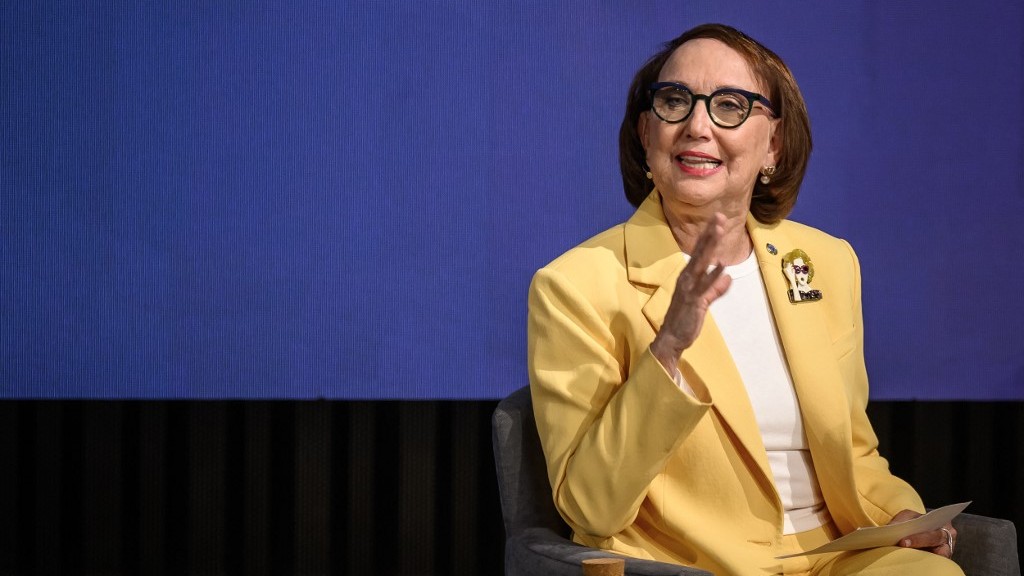
    Australia’s political landscape is facing growing turbulence as Pauline Hanson’s right-wing populist One Nation party surges in recent polling, and high-profile independent Senator David Pocock is refusing to rule out a cross-party shift as like-minded centrist and progressive independents explore forming a unified political bloc to counter the far-right party’s growth.

    A former professional Super Rugby player for the ACT Brumbies, Pocock entered federal parliament as an independent senator for the Australian Capital Territory in 2022, quickly emerging as one of the upper house’s most vocal crossbench figures. In recent months, he has led high-profile advocacy for two key policy priorities: implementing a 25 percent tax on gas exports and pressuring the ruling Labor government to deliver long-delayed gambling regulation reform.

    In an interview with the Australian Broadcasting Corporation, Pocock addressed growing speculation about independents organizing into a formal registered party to challenge the dominance of Australia’s major parties and respond to One Nation’s rising poll numbers. He framed the question of independent coordination as a critical priority for Australia’s current political climate, asking: “As an independent, how do you be part of changing our country for the better?”

    “For me, at the moment, that is serving people in the ACT, engaging on each issue, bringing solutions, using whatever power I have in the Senate to actually work on behalf of the people that have sent me there,” Pocock said. “As to what that looks like in the future, who knows. I think we’re in a real time of flux politically, and there’s people actually looking for candidates who are going to come to Canberra and actually put them first, put them ahead of vested interests.”

    When asked about ongoing discussions between independents about launching a new party, Pocock confirmed that informal talks are a constant occurrence in the current political environment, noting he is always open to conversations about the future direction of Australian governance. For now, he said he remains fully committed to his current Senate role, which he says offers ample opportunity to deliver for constituents and advance policy change.

    Pressed repeatedly on whether he would consider leaving the Senate to run for a seat in the House of Representatives, Australia’s lower house of parliament, Pocock declined to close the door on a future shift. “I don’t know why you’d rule something out,” he said, adding: “But, certainly at the moment, I’m committed to doing what I’m doing, and my hope is that there’ll be really great candidates” running for office across the country as independents.

    Pocock pushed back against the modern political focus on charismatic personalities and rhetorical flair, arguing that effective governance relies on consistent, grounded work that prioritizes public good. That, he said, is exactly what community-backed independent candidates have already proven they can deliver once in office.

    Addressing One Nation’s unexpected surge, new polling released Saturday suggests the party could win as many as 59 federal parliamentary seats if an election were held tomorrow. Pocock argued that the party’s rise is a symptom of a larger failure among Australia’s established major parties, who he says have refused to tackle pressing national challenges in good faith.

    He listed a range of long-term policy failures that have eroded public trust in major parties: no coherent long-term plan for immigration and population growth, no actionable strategy to address the ongoing national housing and homelessness crisis, and a constant focus on short-term three-year election cycles rather than planning for Australia’s needs over the next 10 to 20 years.

    “No wonder we’re lurching from crisis to crisis,” Pocock said. “What I’ve seen is major parties who aren’t willing to engage in that, in that debate.”

  • Labor minister Andrew Charlton grilled over trust, start-up over CGT reform

    Labor minister Andrew Charlton grilled over trust, start-up over CGT reform

    Australia’s Albanese government’s proposed capital gains tax (CGT) reforms have landed a senior cabinet minister in the hot seat, as he faced intense public questioning over his personal financial arrangements while defending the policy. Speaking in a televised interview on Sky News on Sunday, Cabinet Secretary and Assistant Technology Minister Andrew Charlton pushed back against critics, arguing the changes to Australia’s capital gains tax framework will create a fairer system and boost long-term economic growth.

    Under the current system, Australian taxpayers are eligible for a 50 percent discount on capital gains for assets held over 12 months. Labor’s reform proposal would adjust this discount to be pegged to inflation, extending the new rule across all asset classes including residential property, publicly traded shares and startup business ventures.

    Charlton has rejected widespread claims that the new framework would push Australia’s burgeoning startup sector to relocate overseas in search of more competitive tax treatments. He argued that comparisons between Australia’s proposed new system and international capital gains tax regimes are misleading, noting that the new Australian model taxes only real gains adjusted for inflation, while many other nations tax nominal gains without adjusting for rising prices. “In many cases, our regime will be more generous to assets that have experienced high inflation over a long holding period, a benefit that does not exist in other countries’ systems,” he explained.

    The minister framed the reforms as a targeted adjustment that discourages unproductive short-term housing speculation while creating more even taxation across all asset groups. “Some people will pay less under the new system, and others will pay more,” he said. “But overall, the entire system becomes fairer because every investor is taxed evenly on the actual gains they earn, rather than artificial gains driven by inflation. We are not incentivizing the short-term speculation that the old, overly generous CGT framework encouraged.”

    Pressed on how the reforms would have impacted his own sale of a private startup he founded earlier in his career, Charlton acknowledged he has held a diverse portfolio of assets over his professional life. “I have built and sold my own business, and I have owned property like many Australians,” he said. “Some of the assets I have held would be treated more generously under the new CGT framework, and others less so. Even with that personal impact, I can say this is a fairer system overall – I would lose out on some sales, gain on others, but the system as a whole is much more equitable.”

    The interview also turned to Charlton’s personal use of a discretionary trust, an arrangement that has drawn criticism from opponents who argue it is a common tax workaround. Charlton flatly denied that his trust was established for tax minimization purposes. He explained that setting up a trust alongside a new proprietary limited company is an extremely standard step for Australian entrepreneurs following their accountant’s advice. “The primary purpose of a trust in this context is asset protection, not tax reduction,” he said. “This is exactly what many small business owners across the country do when they launch a new venture, and that was my reason for setting it up.”

    Charlton did acknowledge that trusts are sometimes used to reduce tax liabilities, saying “that is precisely why these reforms are needed” while adding that trusts hold a legitimate role in Australian business structure for asset protection purposes. He confirmed all details of his financial dealings are already disclosed on the official government register of ministerial interests.

    The Albanese government has faced growing pressure from the business community over the potential impact of CGT reforms on the startup and small business sectors, and recently committed to ongoing consultation with industry stakeholders as part of the latest federal budget. It has also faced criticism over potential impacts of the reforms on trust structures, and the government has not ruled out introducing additional tax exemptions for certain trust arrangements. Responding to questions after Charlton’s interview, opposition housing shadow spokesperson Andrew Bragg disclosed he has never held a personal trust.

  • Missile strikes pound Kyiv after Russia vows retaliation

    Missile strikes pound Kyiv after Russia vows retaliation

    In an early Sunday attack that followed explicit Russian threats of retaliation for a deadly Ukrainian drone strike on Russian-occupied eastern Ukraine, a large-scale ballistic missile barrage slammed into Ukraine’s capital Kyiv, leaving at least five people wounded, local officials confirmed.

    AFP correspondents on the ground reported hearing multiple loud explosions across the city, which rattled a residential structure located close to Kyiv’s government district. Dozens of panicked residents rushed to take shelter in underground metro stations in the city’s central core as the attack unfolded.

    Tymur Tkachenko, head of the Kyiv City Military Administration, announced the mass attack via his official Telegram channel, confirming that blasts had impacted at least four districts across the capital: Shevchenkivsky, Dniprovsky, and Podilsky. Initial assessments documented multiple blazes and structural damage to civilian residential buildings. As the attack continued, Tkachenko warned that additional drone strikes were still ongoing and the threat of more ballistic missile launches remained active, urging all residents to remain in secured shelters.

    Kyiv Mayor Vitali Klitschko later confirmed the casualty count, noting that five people had been hurt, with one person admitted to a local hospital for treatment. Klitschko added that response teams had been deployed to Podilsky district in northwest Kyiv, where missile debris fell on a non-residential plot of land, while a separate fire broke out adjacent to a residential building in Shevchenkivsky district.

    The Sunday strike came as no surprise to Ukrainian and international authorities, who had explicitly warned of imminent large-scale Russian retaliation in the 24 hours leading up to the attack. The escalation followed a major Ukrainian drone barrage launched overnight between Thursday and Friday against Starobilsk, a city held by Russian forces in the occupied Lugansk region. Russian officials claimed the strike hit a college dormitory, pushing the confirmed death toll to 18 with an additional 42 people wounded after rescuers pulled two more bodies from the rubble on Saturday. Leonid Pasechnik, the Moscow-appointed governor of occupied Lugansk, reported that most of the fatalities were young women born between 2003 and 2008.

    Ukrainian officials have rejected Russia’s claims of targeting civilians, asserting that the strike was focused exclusively on a Russian military drone unit based in the Starobilsk area.

    Within days of the strike, the Russian Ministry of Foreign Affairs vowed that those responsible would face “inevitable and severe punishment”, setting off warnings from Ukrainian leadership. On Saturday, Ukrainian President Volodymyr Zelenskyy posted a public alert on social media noting that intelligence showed clear preparations for a combined large-scale strike across Ukrainian territory, with a specific focus on Kyiv that could include deployment of the Oreshnik, Russia’s nuclear-capable hypersonic missile. The United States Embassy in Kyiv echoed the warning hours later, confirming it had received credible intelligence of a potentially major air attack that could strike at any point within the following 24 hours.

    The United Nations issued a statement Friday condemning all attacks on civilians and civilian infrastructure regardless of location, though the organization added it could not independently verify casualty and targeting details due to restricted access to occupied Ukrainian territories.

    This latest exchange of heavy strikes fits within a broader pattern of escalating cross-border attacks that has defined the 4-year full-scale Russian invasion of Ukraine. Kyiv has significantly expanded its domestic drone production capabilities in recent months, allowing it to step up strikes against both Russian-occupied Ukrainian territory and undisputed Russian soil, targeting military positions, energy infrastructure, and logistics hubs. For its part, Russia has launched near-daily mass missile and drone barrages across Ukraine since it launched its full-scale invasion in 2022, causing widespread damage to civilian infrastructure and thousands of civilian casualties. Like Ukraine, Russia denies intentionally targeting civilian populations.

    Starobilsk, the site of last week’s fatal drone strike, sits roughly 40 miles from the active front line in eastern Ukraine and was captured by Russian forces in the early weeks of the 2022 full-scale invasion.

    International diplomatic efforts to end the conflict, led by the United States, have stalled in recent months as U.S. political and military attention has been diverted to the ongoing conflict in the Middle East, leaving little momentum for new peace negotiations.

  • China rescuers search for missing after mine blast kills 82

    China rescuers search for missing after mine blast kills 82

    Two days after a devastating gas explosion ripped through the Liushenyu coal mine in northern China’s Shanxi province, emergency response teams continued a desperate search operation Sunday for the last two missing workers, after the blast claimed the lives of 82 people. The explosion, which occurred Friday, ranks as China’s deadliest mining disaster in nearly 20 years, and unfolded when 247 miners were working underground at the shaft, according to official Chinese state media. Hundreds of rescuers have been deployed to the remote accident site, with medical teams evacuating 12 injured people to nearby hospitals by Saturday evening. Late Saturday, AFP correspondents observed a heavy police cordon blocking all access roads to the mine, with only credentialed emergency and official vehicles permitted entry. State media reports confirm teams of helmeted rescue workers rotated shifts descending into the damaged mine shaft overnight to continue the hunt for the two missing workers. “As long as there is hope, we will make every possible effort,” one rescue worker told China’s official Xinhua News Agency. In the wake of the disaster, Chinese national and provincial authorities have launched a full formal investigation into what caused the blast. Preliminary investigations have already uncovered “serious illegal violations” on the part of the company that operates the mine, officials told a press conference carried live on state-run China Central Television (CCTV). Authorities have pledged that anyone found responsible for the accident will face strict punishment under Chinese laws and regulations. Xinhua also confirmed that a senior leader of the operating company has already been taken into police custody. China’s national cabinet, the State Council, has responded to the disaster by ordering immediate sweeping nationwide safety crackdowns on violations common in the country’s mining sector, including falsification of workplace safety data, unreported underground worker headcounts, and unregulated illegal contracting of mining work. One survivor of the blast, Wang Yong, recounted his harrowing escape to CCTV, saying he detected no loud explosion but noticed a strong sulphur odor right before toxic smoke filled the mine tunnel. “I didn’t hear any sound at all, but then a cloud of smoke appeared. When I smelled it, it was the smell of sulphur like when people set off firecrackers. When the smoke came down, I shouted for people to run,” he told reporters. Wang recalled seeing multiple fellow miners overcome by toxic smoke before he lost consciousness. “After more than an hour, I came to on my own, and then I woke up the person next to me” before the pair escaped the mine, he said. Shanxi, one of China’s less economically developed provinces, is the core of the country’s national coal mining industry, producing much of the fossil fuel that powers China’s industrial grid. While national mine workplace safety has improved markedly over the past three decades, deadly accidents still occur with some regularity, as many smaller operations cut corners on safety protocols and regulatory enforcement remains inconsistent in many regions. Just last year, an open-pit coal mine collapse in the northern region of Inner Mongolia killed 53 workers. Beyond the human cost of the disaster, the accident draws renewed attention to China’s ongoing reliance on coal: the country is the world’s largest consumer of coal, and the world’s top greenhouse gas emitter, even as it expands renewable energy capacity at a global record pace.

  • Security forces swarm White House after shots fired

    Security forces swarm White House after shots fired

    On a Saturday evening when U.S. President Donald Trump was inside the White House negotiating a diplomatic agreement with Iran, a shooting incident near the executive residence triggered a massive emergency response from law enforcement and security agencies, sending the complex into immediate lockdown.

    Within minutes of reports of gunfire, heavily armed police and security forces converged on the site, establishing cordons to block public and media access to the downtown Washington area. National Guard troops deployed to the perimeter prevented an Agence France-Presse (AFP) reporter from entering the secured zone, as multiple federal agencies coordinated their response to the threat.

    FBI Director Kash Patel confirmed via social media platform X that the bureau was on site assisting the U.S. Secret Service, which leads security operations for the White House. Fox News anchor Bret Baier, citing an anonymous senior administration official, shared key details of the incident: an unidentified gunman approached the White House’s west perimeter and fired three shots. Secret Service agents returned fire, striking the attacker, while an unrelated bystander was hit by gunfire during the exchange. Crucially, the official confirmed the gunman never managed to breach the White House’s layered security perimeter.

    Witnesses on the ground described scenes of chaos and panic as the shooting unfolded. Canadian tourist Reid Adrian, who was visiting the area, told AFP that the group heard what they initially mistook for 20 to 25 fireworks, only to realize the sounds were gunshots, prompting a mass rush of evacuating civilians. Reporters working on the White House North Lawn at the time received urgent orders to run for shelter, and all gathered in the locked-down press briefing room.

    ABC News correspondent Selina Wang was recording a social media update when the gunfire began. Her on-location recording captured the sound of shots as she dove for cover, and she later posted on X that the gunfire sounded like dozens of separate shots. As of initial reporting, a U.S. Secret Service spokesperson told AFP via text that the agency was still actively collecting details and confirming facts about the incident, with no immediate update on the conditions of the gunman and the injured bystander.

    This latest shooting near President Trump marks the fourth alleged assassination attempt against the 79-year-old commander-in-chief in less than a year. The string of threats began in April 2024, when an armed individual tried to force his way through a security checkpoint at a Washington hotel where Trump was speaking at a media gala. That attacker never reached the former candidate or other event attendees.

    In July 2024, a far more severe attack unfolded during a Trump campaign rally in Butler, Pennsylvania. A shooter opened fire on the crowd, killing one attendee and striking Trump in the ear with a bullet, leaving him with a minor wound. Just a few months after that rally attack, law enforcement arrested another armed man on a golf course in West Palm Beach, Florida, where Trump was playing a round of golf.

    Following Saturday’s incident, House Republicans released a statement on X confirming that President Trump was unharmed. “Thank God President Trump is safe,” the statement read. “Endless gratitude to the Secret Service for their immediate, heroic response. Political violence has to stop.”

  • East Africa wants to curb imports of used clothes. But it’s not easy

    East Africa wants to curb imports of used clothes. But it’s not easy

    Even torrential downpours cannot dampen the energy of Nairobi’s Gikomba Market, East Africa’s largest open-air second-hand clothing hub. When a BBC reporting team visited, flooded walkways did not stop throngs of shoppers, many donning rubber boots, from squeezing through packed aisles in search of affordable, quality second-hand garments known locally as mitumba. This bustling scene sits at the heart of a decade-long regional debate: how can East Africa grow a vibrant domestic fashion industry when its markets are flooded with cheap, imported cast-offs from the U.S., Europe and China?

    Local clothing designers across the region say they stand no chance against the price point of mitumba. “We’re competing with second-hand clothing, but we can’t compete on price,” explains Zia Bett, founder of Kenyan womenswear label Zia Africa, who supports a full ban on mitumba imports. Elizabeth Paul, owner of Kuya Creations in Tanzania’s Dar es Salaam, echoes this frustration: a single new dress in her shop costs a minimum of 50,000 Tanzanian shillings (£14.50), a price that can buy shoppers 10 pre-owned garments at local mitumba markets.

    The debate over mitumba is not new. A decade ago, the East African Community (EAC), the regional bloc counting Kenya, Uganda, Tanzania and Rwanda among its members, moved to implement a region-wide ban on second-hand clothing imports to protect local manufacturing. The plan collapsed after heavy diplomatic pressure from the U.S., a top mitumba exporter, which threatened to revoke EAC nations’ access to the African Growth and Opportunity Act (AGOA) — a trade deal that allows duty-free access to the U.S. market for thousands of African goods. Now, the conversation has reignited, with member states taking divergent approaches to regulation.

    Uganda has led the charge with a new 30% additional levy on mitumba imports, layered on top of existing 35% import duty and 18% VAT. Officials say the tax serves two goals: cutting environmental damage from textile waste and supporting domestic garment production. Uganda’s president has previously drawn controversy for describing second-hand clothing as cast-offs from deceased white people, framing the trade as incompatible with national economic development. The new tax has faced fierce pushback from mitumba traders, who note the industry supports millions of livelihoods across the region. “This has to be a free economy,” argues Ugandan mitumba trader Aaron Sekky. “The second-hand trade supports so many people.” His point is widely shared by proponents: the mitumba supply chain extends far beyond street retailers, supporting importers, wholesalers, tailors who repair damaged garments, and food vendors at markets. Industry research from the Mitumba Consortium Association of Kenya (MCAK) estimates up to 4.9 million East Africans rely on the trade for income.

    Neighboring Kenya recently saw a proposed overhaul of mitumba taxation dropped quickly after widespread public backlash over fears it would push up prices for consumers. Kenya already charges a 30% customs duty on used clothing imports, 5 percentage points higher than the tariff on new clothing imports. Current trade data confirms Kenya is Africa’s largest mitumba importer: the country brought in nearly 180,000 tonnes of second-hand clothing in 2022, a 76% jump from 2013 import volumes. A 2024 government-backed study in Uganda found mitumba is the most popular category of clothing in the country, outstripping both imported new clothing and locally manufactured garments.

    Critics of the unregulated mitumba trade argue the employment argument masks deeper economic downsides. “Retail is the most limited form of job creation you can have in an economic sector, versus production, marketing and distribution,” explains Dr Andrew Brooks, a King’s College London academic and author of *Clothing Poverty: The Hidden World of Fast Fashion and Second-hand Clothes*. “If you’re just importing things and selling things, you’re doing very, very little to contribute to your nation’s economy.” Kenya Fashion Council board member Lisa Kibutu adds that most mitumba-related jobs are low-income, hand-to-mouth roles that offer little room for upward social mobility. Still, Kibutu acknowledges mitumba fills a critical gap for low-income Kenyans: “When I left Kenya in the 80s, you would see poor people without clothing. Right now even the poorest person has decent clothing.”

    Affordability is no longer mitumba’s only draw, however. Today, shoppers across income levels seek out second-hand garments for their quality and unique style. “Most of the clothes have good quality… they last long,” says Najma Issa, a shopper at Dar es Salaam’s Ilala mitumba market. Twenty-two-year-old Juma Awadh agrees, noting he buys mitumba “because of quality and they look unique.” Even with Tanzania’s 35% import tax on used clothing, Ilala Market remains constantly crowded with shoppers.

    Rwanda is the only EAC member that held firm to its 2015 commitment to restrict mitumba, after other nations backed down to U.S. pressure. In 2016, Rwanda raised mitumba import taxes from $0.20 to $2.50 per kilogram, prompting the U.S. to impose a 30% retaliatory tariff on Rwandan clothing exports. Rwandan authorities say the policy has delivered clear results: before the tax hike, mitumba made up 26% to 32% of all garment and textile imports, a figure that dropped to just 2% to 7% in the two years after the change. Local garment exports have also grown, indicating the domestic industry is expanding, officials say. Even so, smuggling of mitumba from neighboring countries remains widespread, with police regularly seizing illegal bales of second-hand clothing. Rwanda also hit an unexpected hurdle: with mitumba supply reduced, many consumers shifted to buying cheap new fast fashion imports from Asia, rather than purchasing locally made garments.

    Environmental concerns have added new urgency to the mitumba debate. Environmental activists note that more than one in three second-hand garments shipped to East Africa are too low-quality to be resold, and end up in local landfills. A 2023 estimate from the non-profit Changing Markets Foundation confirmed this trend for Kenyan imports. “There is no infrastructure to dispose of these massive amounts of textile waste, and official dump sites have been overflowing for years,” Greenpeace says. MCAK chairperson Teresia Wairimu Njenga pushes back on this framing, arguing mitumba is actually more environmentally friendly than mass-producing new clothing: “Can you imagine what would happen to Kenya if we are manufacturing 198,000 tonnes [of new clothes] per year?”

    Global regulation could soon reshape the mitumba trade: signatories to the Basel Convention, the global treaty governing waste, are currently debating whether to reclassify used garments — most of which now contain plastic-based synthetic fibers — as controlled waste, which would lead to tighter restrictions and higher import costs globally.

    Many industry stakeholders across East Africa say a full ban on mitumba is impractical right now, given the gaps in local manufacturing capacity. Ugandan designer Joel Okalany, whose brand Ekikumba Fusion upcycles mitumba into new statement pieces, says the region’s garment sector is still underdeveloped: “The reality is, we are not yet ready for our own manufacturing to take off. In farming, the person who uses a tractor is more efficient than the person who uses the horse. In the tailoring industry, we are still at the level where we are using the horse.” Even Rwanda’s government acknowledged this reality in a 2022 report, saying it would delay implementing a full mitumba ban because of “current domestic gaps in the production of textiles and apparels.”

    A shared frustration across both mitumba traders and local designers is the flood of cheap new clothing from China and Turkey, which undercuts both sectors. Designers like Zia Bett say cheap counterfeit garments copy high-end designs and sell for a fraction of the price of authentic local pieces. Still, Bett remains optimistic about the future of East African fashion, arguing the region should focus on building premium, desirable local brands rather than just competing on price: “We need to focus on storytelling and content and quality. I think what the question should be now is: ‘How do we build brands that people choose – and not just afford?’”

    For Njenga and other mitumba proponents, the solution is not a ban, but coexistence. “We should allow them to coexist,” Njenga says. “Let’s not kill mitumba – give the consumer power of choice.”

  • It’s like the Olympics – except steroids are allowed

    It’s like the Olympics – except steroids are allowed

    Beneath the scorching desert sun of Las Vegas, giant billboards blare the slogan “Live Enhanced” as a deep-voiced sports commentator runs through a practice introduction for British elite swimmer Ben Proud and dozens of other competing athletes. The open-air arena where he rehearses will host one of the most divisive sporting events in modern history: the inaugural Enhanced Games.

    Often described as “the Olympics with steroids” — a description that is literally accurate — this groundbreaking competition changes the core rules of traditional competitive sport entirely. For Sunday’s first official contest, dozens of top-tier athletes from around the world will be permitted to use performance-enhancing substances in their bids to shatter long-standing world records across three disciplines: track and field, weightlifting, and swimming.

    The event offers staggering financial incentives to draw top talent, with a total prize pool of $25 million (£18.6 million) awarded directly to winning competitors. Any athlete who breaks a recognized world record in their event walks away with an additional $1 million (£740,000) bonus — a payout that has caught the eye of high-profile competitors including American sprinter Fred Kerley, who is among the event’s headline participants. While all substances used must be legally approved by the U.S. Food and Drug Administration, compounds strictly banned by the World Anti-Doping Agency (WADA) — including testosterone and human growth hormone — are not just permitted here: they are openly encouraged and even available for purchase on-site.

    Founded in 2023 by entrepreneurs Aron D’Souza and Maximilian Martin, the project has secured high-profile backing from leading industry figures, including billionaire tech investor Peter Thiel and Donald Trump Jr. This prominent support has only amplified global scrutiny of the event’s unconventional stance on doping. Public health experts have issued urgent warnings about the severe health risks linked to regular anabolic steroid and growth hormone use, ranging from increased stroke risk to permanent cardiovascular damage and long-term organ dysfunction.

    Event organizers frame the Enhanced Games as a bold push to expand the absolute limits of human physical performance, but critics — particularly leaders within the global Olympic movement — condemn the competition as a direct insult to the foundational spirit and core principles of fair competitive sport.

    “You don’t have to be pressured or use drugs in order to be the best,” stated Travis Tygart, Chief Executive Officer of the U.S. Anti-Doping Agency (USADA). In an interview with the BBC, Tygart argued that while the existing Olympic anti-doping system has clear flaws that need addressing, the solution is systemic reform, not full normalization of performance-enhancing drug use. He emphasized that athletes must be able to trust that the Olympics remain a clean competition where cheating is not tolerated. “We don’t want kids to have to say, ‘in order to win an Olympic medal, when I’m 18 or 20 years old, I have to inject myself every day in the rear end with a potentially dangerous drug, ‘” he added.

    Organizers of the Enhanced Games push back against this criticism, arguing that their event brings into the open an open secret of elite athletics: that many athletes already use performance-enhancing drugs in secret, away from drug testing regimes. This transparency, they claim, makes their model more ethical than the current system, which relies on imperfect testing that catches only a fraction of cheaters.

    At a two-hour media question-and-answer session held in a packed ballroom at Las Vegas’ Resorts World Casino, most participating athletes declined to specify which performance-enhancing substances they were using. Only one competitor — legendary strongman Hafthor Bjornsson, best known for playing The Mountain in *Game of Thrones*, who aims to break his own 510 kg (1,124.4 pound) world deadlift record — openly shared details of his drug use. Bjornsson explained that he is comfortable being open about steroid use because the practice is already widely accepted in the professional strongman community.

    American sprinter Shania Collins argues that the full transparency around doping at the Enhanced Games gives the competition more integrity than traditional elite sports, where cheaters hide their use. “We’re being up front and honest and transparent from the start,” Collins told the BBC. “So how can you challenge our integrity when we’re forthright with the information?”

    Mainstream national sports governing bodies have already taken strong public action against athletes who have chosen to compete in the event. Jack Buckner, Chief Executive of UK Athletics, said he was “appalled” when former British national sprinter Reece Prescod’s participation was revealed in January. UK Anti-Doping (Ukad) has gone further, labeling the entire venture a “reckless” project that endangers athlete health. Meanwhile, GB Aquatics has issued an explicit ban: if British swimmer Ben Proud competes in the Enhanced Games, he will never again be selected for the British Olympic team.

    Proud, who won a silver medal in the men’s 50m freestyle at the 2024 Paris Olympics, says financial incentive is his core motivation. He is aiming to break the 50m freestyle world record at the event, which would net him $1 million. Even if he wins the race but falls short of the record, he will still take home $250,000 (£185,000) — a sum he says it would take 13 years of consecutive World Championship titles to earn through traditional elite swimming channels. “There’s no money in sport,” Proud told the BBC ahead of the competition. “I was 30 and had just come off a silver medal, what future path do I follow?”

    Not all athletes competing at the Enhanced Games plan to use performance-enhancing substances, however. A small number of competitors have confirmed they will compete clean, including American swimmer Hunter Armstrong. “I definitely don’t want to dope for the games,” Armstrong said, adding that “I personally have taken pride in getting as far as I can on natural God-given talent.” Armstrong plans to compete clean for a shot at the event’s prize money before returning to traditional competition to qualify for the 2028 Los Angeles Olympics. Whether he will be allowed to do so remains unclear, given widespread pushback from mainstream sports governing bodies. USADA’s Tygart, however, noted that as long as Armstrong passes all required anti-doping tests to qualify for the Olympic team, there is no formal rule to bar him from participation.

    Earlier this month, Enhanced Group, the parent company behind the competition, went public and began trading on the New York Stock Exchange, a move that has drawn further attention to the organization’s commercial ambitions. Beyond the competition itself, the event doubles as a platform for Enhanced to sell its own line of performance-enhancing medications and supplements both on-site and via its online store. This commercial model has sparked broader public concern, particularly at a time when social media is flooded with unregulated offers for performance and appearance-enhancing peptides, and young people face growing pressure to conform to unrealistic body standards.

    Joe Vennare, founder of industry analysis outlet Fitt Insider, warned that normalizing performance-enhancing drug use could have unforeseen long-term impacts on both public health and global culture. While Vennare acknowledges that adults have the right to choose to use legal medical interventions, he expressed concern that many people will turn to these products instead of prioritizing consistent fitness and balanced nutrition. “Kids are using social media filters, they’re getting Botox injections,” he told the BBC. “They’re having body dysmorphia – especially young men, in this case at record numbers.” Vennare emphasized that the Enhanced Games does not create these cultural trends, but rather reflects existing problems that need broader societal action. “That’s a problem that parents and culture and society more broadly have to address,” he said.

    Australian swimmer and Enhanced Games athlete James Magnussen echoed the call for personal and parental responsibility, arguing that the event is not targeted at young people. “It’s an entertainment company and product targeted at people looking at the longevity and human performance space,” Magnussen said.

    Despite the wave of global criticism the event has attracted, controversy has done nothing to dampen enthusiasm among participants or the invited Las Vegas audience. With the inaugural competition set to kick off, the debate over the Enhanced Games’ place in global sport is only just beginning — and it will likely reshape conversations about doping, fairness, and the limits of human performance for years to come.

  • Usyk rocked but beats Verhoeven to retain heavyweight titles

    Usyk rocked but beats Verhoeven to retain heavyweight titles

    One of the most unusual cross-sport heavyweight boxing bouts in recent memory delivered chaos, controversy and a stunning late finish on Saturday, as unified heavyweight champion Oleksandr Usyk retained his WBA, WBC and IBF titles against elite kickboxer Rico Verhoeven in a spectacular event staged in the shadow of Egypt’s Great Pyramid of Giza.

    The bout was billed as a ceremonial showcase for Usyk, who has already defeated former champions Anthony Joshua, Tyson Fury and Daniel Dubois in one of the most dominant reigns in modern heavyweight boxing. Few gave Verhoeven — a kickboxing legend who had only competed in one professional boxing bout, back in 2014 — a serious chance of troubling the Ukrainian champion. But what unfolded over 10 and a half rounds defied all pre-fight expectations.

    Verhoeven’s unorthodox, jerky striking style, relentless bulldozing aggression and devastating right hand kept a sluggish Usyk off balance for almost the entire contest. He landed brutal clean shots early, rocking the champion in the opening rounds and leaving Usyk struggling to find his consistent range. While Usyk claimed a strong fourth round after rocking Verhoeven with a sharp uppercut, the challenger largely controlled the pace of the fight through the first 10 rounds, and most ringside observers had him ahead on the unofficial scorecards heading into the championship rounds.

    The turning point came late in the 11th round, as a fatigued Verhoeven began to slow under the cumulative pressure of 12-round professional boxing. Usyk, digging deep, landed a stunning uppercut that dropped the Dutch challenger to the canvas. Verhoeven beat the count and climbed back to his feet with just 10 seconds remaining in the round, but Usyk immediately pressed forward, unloading a flurry of follow-up shots that sent Verhoeven stumbling against the ropes. With just one second left on the round clock, the referee stepped in to stop the contest, triggering immediate controversy over the early stoppage.

    Speaking after the bout, Verhoeven expressed disappointment with the referee’s decision, arguing he had earned the chance to see out the final seconds of the round and compete in the 12th. “I thought it was an early stoppage but in the end it’s not up to me,” Verhoeven told broadcaster DAZN. “I wanted the referee to let me go out on my shield or let me go in the 12th. I felt we were pretty even on the scorecards.” Despite the result, Verhoeven said he was proud of his performance, thanked organizers for the opportunity, and revealed that Usyk had already offered him a rematch. “I am super proud of my performance and hopefully, the boxing world embraces me as a boxer,” he added.

    For Usyk, the victory marked another successful title defense, but the champion made clear the fight carried far more meaning than just a belt retention. With his home country of Ukraine continuing to endure Russian missile attacks, Usyk shared a heartfelt message from his daughter, who was sheltering in a bomb shelter while watching the bout. “I know right now, Ukrainian people are sitting in the bomb shelter, my daughter too, in a bomb shelter, sent me a message saying, ‘Papa, I love you, you will win’,” Usyk said after the fight.

    Paying tribute to his game challenger, Usyk added: “Thank you so much, Rico. You are an amazing fighter. Thank you so much to your team. My team, I love you. My wife, I love you. You are my light and my heart. This fight was hard. It was a good fight.”

    The result leaves Usyk’s reign intact, but the controversial late stoppage and Verhoeven’s shock performance have already left fans calling for a rematch to settle the score.

  • In Japan, divorce splits parents from children. Could a law change end sole custody?

    In Japan, divorce splits parents from children. Could a law change end sole custody?

    On a quiet weekday afternoon in a Tokyo residential neighborhood, John Deng (a pseudonym to protect his privacy) lingers near a local playground, straining to catch the sound of laughter that might belong to his 8-year-old son and 10-year-old daughter. For nearly three years, the Hong Kong-born long-term Japanese resident has been locked out of the daily rhythms of his children’s lives, after his marriage ended and his ex-partner took the children without advance notice. Today, he only gets a handful of supervised hours with them each month, with no unsupervised contact in between. His story is far from unique in Japan — until this year, decades of family law forced hundreds of thousands of children to grow up without regular access to one parent after divorce.

    That landscape shifted dramatically on April 1, 2026, when a landmark revision to Japan’s Civil Code came into force, formally legalizing joint child custody for divorced couples. Before the amendment was approved by Japan’s parliament in 2024, Japan stood alone among G7 nations as the only country that did not recognize the legal concept of shared parental custody after separation. Under the previous sole custody regime, only one parent held full legal rights over children after a split, and the non-custodial parent could be completely cut off from their children’s lives unless the custodial parent voluntarily granted access. In practice, custody was most often awarded to whichever parent removed the children from the shared home first, creating a race for custody that left many non-custodial parents disconnected from their kids.

    Seiya Saito, a family lawyer at Tokyo’s Setagaya International Law Office, notes that the shift to joint custody aligns Japan with a global consensus centered on prioritizing children’s best interests. “It always shocked me that every time I speak to lawyers in the US and the UK, they say that it’s not about win or lose, it’s just focusing on the best interest of children,” Saito explained. The new legal framework codifies the principle that children typically benefit from maintaining healthy relationships with both parents, while also spreading parental responsibility more evenly between separated couples.

    Latest official data from Japan’s Ministry of Health, Labor and Welfare shows that roughly 38.5% of Japanese marriages ended in divorce in 2024 — equal to one out of every three unions. That same year, women retained sole custody in more than 86% of all divorce cases, and joint custody arrangements made up only a tiny fraction of finalized custody agreements. Overall, more than 164,000 children under 18 were affected by sole custody arrangements after parental divorce in 2024. The legal reform comes amid broader national pressure to support families, as Japan grapples with plummeting birth rates and a rapidly aging population that has pushed policymakers to re-examine systems that place disproportionate burden on single parents.

    For parents like Deng, who have spent years fighting for even limited access to their children, the new law offers a rare glimmer of hope. Deng, who maintains two residences — one in Tokyo and a second just an hour from his children’s home — says he clings to the possibility that the reform will let him rejoin the ordinary moments he misses: waking his kids up in the morning, taking them to the park, and attending school recitals and holidays like Father’s Day. “They mean the world to me,” he said. “It’s something that no parent should face.” He notes that the current arrangement robs children of their right to connect with both parents whenever they want: “I just feel so empty.”

    Yet the landmark change has sparked fierce debate, with critics and domestic violence advocates warning that the new framework puts survivors of abuse at serious risk. Chisato Kitanaka, co-head of the All Japan Women’s Shelter Network, warns that joint custody could force survivors of domestic violence and child abuse to remain in contact with abusive former partners, trapping them in cycles of harm. “There is a risk that those suffering from domestic violence or child abuse may be unable to escape,” Kitanaka said.

    Those fears are echoed by survivors like Ryo Suzuki (also a pseudonym), who endured years of severe physical abuse at the hands of her ex-husband, including being choked against a wall and dragged by her hair. After winning sole custody of her two children, Ryo thought she had escaped the abuse — but the new law leaves her facing constant anxiety that her ex-husband could petition for joint custody of her 15-year-old daughter, forcing her back into contact with her abuser. “When I got sole custody, I used to think, ‘It’ll be okay from here on out,’ but now there’s the possibility that we might be tied together,” Ryo said. “I’ll have to live with that anxiety until my daughter becomes an adult.” Her 18-year-old son Taro, who witnessed years of his mother’s abuse, says he believes the new law should never have been passed: “I really think this is a law that shouldn’t exist.”

    Lawmakers and supporters of the reform have included explicit legal protections for vulnerable families: Japanese courts are required to award sole custody if they confirm a history of domestic violence that puts children or survivors at risk. Even so, survivors and advocates worry that Japan’s court system will demand hard physical evidence of abuse, which many survivors do not have — abusers often intentionally avoid leaving visible marks, as Ryo says was the case for her. Many survivors remain skeptical that courts will consistently rule to protect their safety.

    Today, the new law occupies a delicate middle ground, balancing the goal of preserving children’s access to both fit parents against the urgent need to protect survivors of domestic abuse. For hopeful parents like Deng, it represents a long-overdue step forward for family law in Japan that could finally restore the relationships he has spent years missing. For survivors like Ryo, it introduces a new source of constant uncertainty that undermines the safety they fought so hard to win.

  • Rosenberg: Luhansk strike sparks Russian accusations and vow to retaliate

    Rosenberg: Luhansk strike sparks Russian accusations and vow to retaliate

    A devastating incident that reduced a five-story college building in Starobilsk to mounds of rubble has plunged the ongoing Russia-Ukraine conflict into a new phase of escalating tensions, triggering mutual accusations between Moscow and Kyiv, an urgent emergency gathering of the UN Security Council, and open threats of harsh retaliation from the Kremlin.

    Starobilsk sits within the Luhansk region of eastern Ukraine, an area that has been under Russian military occupation since Moscow launched its full-scale incursion in 2022, and that Russia controversially claims to have formally annexed. Early Friday, the structure that collapsed housed the Starobilsk Professional College, a branch of Luhansk Pedagogical University, leaving a scene of widespread destruction visible in footage broadcast on Russian state television. Rescue crews could be seen working methodically through piles of concrete and twisted metal to pull survivors and victims from the wreckage.

    Russian authorities have publicly blamed Ukraine for the carnage, framing the event as a deliberate drone strike targeting the college’s student dormitory. As of the latest official updates from Moscow, the death toll has climbed to 21, with 42 additional people sustaining injuries of varying severity. Russian state media has shared firsthand accounts from survivors, including 21-year-old Olga Kovaleva, who was trapped under fallen debris for hours before being pulled out alive and transported to a local hospital for treatment. The outlet also published a full list of the deceased students, alongside their dates of birth, to confirm the identities of those killed.

    Russian President Vladimir Putin has labeled the incident a “terrorist strike”, rejecting any suggestion that the building was hit accidentally by Russian air defense or electronic warfare systems. “There had been no military facilities, intelligence service facilities or related services in the vicinity,” Putin stated, arguing this eliminates any plausible defense of unintended collateral damage from Russian operations. He has since formally ordered Russia’s Ministry of Defence to draft a comprehensive set of retaliatory measures in response to what Moscow calls an unacceptable attack on civilian targets.

    Kyiv has pushed back entirely against Russia’s narrative. In an official statement released by the General Staff of Ukraine’s Armed Forces, the military confirmed it did conduct a targeted strike near Starobilsk overnight between May 21 and 22, but clarified that the attack hit a Russian military unit stationed in the area, not a civilian college dormitory. To date, Ukraine has not acknowledged any civilian casualties from the strike.

    Within hours of the incident, Russia submitted an official request to the United Nations for an emergency meeting of the Security Council to address the attack. At the session, Russian Ambassador to the UN Vasily Nebenyza presented graphic photos of the destroyed college to council members, arguing that the strike “constitutes a war crime” under the standards of international humanitarian law.

    Not all council members backed Russia’s framing of the event, however. Denmark’s representative to the UN pushed back against Russia’s call for condemnation, pointing to the widespread destruction and civilian casualties that Russia’s own military campaign has inflicted across Ukraine since 2022. “If we were to apply the same logic behind Russia’s call for today’s meeting, we would need twice-daily emergency Security Council meetings — including on the weekends — to only scratch the surface of the terror, death and destruction inflicted across Ukraine by Russia,” the Danish representative noted.

    The incident has also emboldened hawkish, pro-Kremlin voices to push for aggressive retaliation that extends beyond Ukrainian territory. Sergey Karaganov, honorary chairman of the presidium of the Council on Foreign and Defence Policy, told Russian state outlet Vesti that Moscow should not limit its response to targets inside Ukraine. “We need to start punishing Europe for things like this, including with strikes,” Karaganov said. “Symbolic [strikes] to start with. Then, perhaps, less symbolic ones.”

    By late Saturday, Russian emergency officials confirmed that search and rescue operations at the site had been fully completed, bringing an official end to efforts to recover additional victims or survivors from the rubble.