
In an exclusive interview with the Associated Press from an underground command post in eastern Ukraine, the leader of Kyiv’s newly formed Unmanned Systems Forces has laid out Ukraine’s ambitious, ongoing strategy to disable Russian military operations on the Crimean Peninsula, a territory Moscow illegally annexed in 2014 that currently serves as a critical staging hub for Russian invasion forces.
作者: admin
-

Israeli general says Gaza should remain ‘destroyed for generations’
In a stark interview that has drawn international attention, retired Major General Giora Eiland, a former leader of Israel’s National Security Council, has publicly advocated for keeping the Gaza Strip in ruins for decades, framing widespread Palestinian destruction and collective despair as a core strategic goal for Israel in the aftermath of its year-long military campaign in the enclave.
Speaking to Israel’s 103FM radio station on Sunday, Eiland argued that any large-scale reconstruction of Gaza runs directly counter to Israeli national interests. “Israel has no interest in Gaza being rebuilt,” he stated. “It is better for us that it be destroyed for generations to come. The greater the despair in Gaza and the greater the destruction, and the greater the monument to what they did on October 7, years to come, that is good.”
A secular Israeli nationalist affiliated with opposition politician Avigdor Lieberman, Eiland has long been a political opponent of incumbent Prime Minister Benjamin Netanyahu. Even so, his policy prescriptions for Gaza go far beyond the positions Netanyahu has publicly outlined to the international community.
Eiland also waded into the debate over U.S. President Donald Trump’s 15-point proposal for Gaza, labeling the plan “pro-Hamas” — a description that aligns with Netanyahu’s formal rejection of the proposal issued Sunday. Drawing a parallel to post-World War II Germany, where the defeated nation ceded 25% of its pre-war territory, Eiland argued Israel should permanently hold the so-called Yellow Line, a boundary marking Israeli military-occupied territory inside Gaza. Israeli forces have steadily expanded this zone of control in recent months, with current occupied territory estimated to cover as much as 70% of Gaza’s total land area. Eiland emphasized that holding this territory is non-negotiable, framing it as a critical security buffer rather than a base for civilian settlements: “Along with this, there is the territorial need for the Yellow Line, which we must not give up under any circumstances. This is a war, the enemy has lost, and we need land, not for settlement, but as a security buffer between the settlements and where the IDF can be located.”
Beyond his stance on Gaza’s future, Eiland leveled sharp criticism at Netanyahu’s management of Israel’s relationship with the United States, arguing that the Israeli government has become overly reliant on the personal rapport between Netanyahu and Trump, a dynamic he described as unstable. “I believe Israel’s entire approach towards the US in recent years has been outrageous,” he said. “It relies excessively on the personal relationship between Netanyahu and Trump, which is good on some days and less so on others.”
Instead of an outright rejection of the U.S. plan, Eiland advised Netanyahu to take a more tactical approach: accept the proposal on paper while conditioning approval on protections for Israel’s core strategic demands. “Where did Netanyahu go wrong in my opinion? You should never say no, you should always say yes but… or yes in the sense of I agree if certain points happen,” he explained. He added that Israel could offer a temporary suspension of targeted assassinations in Gaza as a tactical gesture to Washington, while refusing to cede control of the Yellow Line occupied zone.
Eiland’s controversial comments come as violence persists in Gaza even under the current ceasefire framework that took effect in mid-January 2025. Local health sources report that since the ceasefire began, Israeli forces have killed at least 1,258 Palestinians and injured more than 4,100 others. Earlier this week, the United Nations Children’s Fund (UNICEF) confirmed that at least 300 children have been killed by Israeli forces in Gaza over the past 10 months. Since the start of Israel’s military campaign on October 7, 2023, the campaign has killed at least 73,386 Palestinians and left more than 174,250 others wounded, according to local health authorities.
-
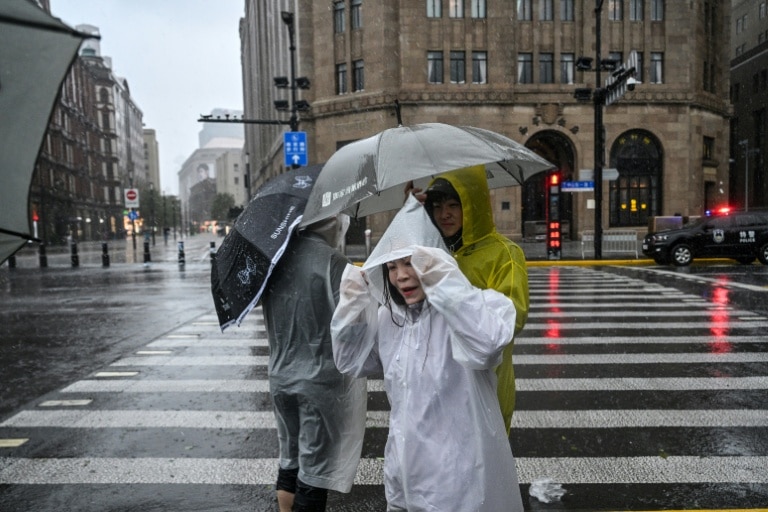
Typhoon Dolphin weakens but disrupts travel in east China
Just two weeks after another powerful storm battered southern China, Typhoon Dolphin has swept through the country’s eastern coastal regions, leaving a trail of transportation chaos and persistent flood threats even as its wind speeds drop after making landfall.
The storm came ashore twice along Zhejiang Province’s coastline on Sunday, August 9 2026, and had steadily lost intensity by the following day, according to China’s National Meteorological Centre (NMC). By Monday morning, the agency had downgraded the typhoon alert to its lowest severity level, but issued a urgent advisory that heavy downpours would continue to drench large swathes of eastern and central China for another 24 hours.
The elevated risks from lingering rainfall prompted state broadcaster CCTV to report that authorities had activated the highest possible flash flood warning for multiple areas in eastern and southern Zhejiang. Northern parts of the country are also bracing for extreme weather this week: five Beijing districts activated red heavy rain alerts on Monday, with official warnings highlighting elevated risks of landslides and urban flooding.
In Shanghai, China’s leading financial hub, the storm’s impact on travel has been severe. The city’s two major commercial airports reported that a total of 943 scheduled flights were scrapped on Monday, while most local public transit services including regional train lines were temporarily suspended. Adjacent Zhejiang has seen a uneven recovery: Hangzhou, the provincial capital, restored suspended subway services by Monday morning, while Ningbo International Airport only cleared for a resumption of flight operations starting at midday local time. Airport officials cautioned that many services would remain disrupted, as residual storm damage and unstable weather conditions have not fully abated.
Over the weekend, when Typhoon Dolphin was at its peak strength, it triggered a top-tier national emergency alert, forced more than 1,000 flight cancellations across the region and pushed authorities to evacuate tens of thousands of residents from high-risk coastal and low-lying areas.
This storm marks the latest in a string of extreme weather events to hit China in 2026. It comes just 14 days after Typhoon Noul made landfall in southern Guangdong Province, which officials labeled the strongest storm to hit the country so far this year. Last month, Typhoon Maysak caused catastrophic damage across southern and central China: devastating floods triggered by the storm killed 39 people in Guangxi Zhuang Autonomous Region, while thunderstorms and gale-force winds in central Hubei Province left 11 more dead and 331 injured.
Climate scientists have repeatedly warned that the rising frequency and intensity of such extreme weather events is a direct consequence of global warming driven by greenhouse gas emissions from fossil fuel combustion. As the world’s largest emitter of greenhouse gases, China has also positioned itself as a global leader in renewable energy development, with a formal national policy target to achieve carbon neutrality across its entire economy by 2060.
-

Count Binface, the man in a can with a plan, seeks Parliament seat in Britain’s wackiest election
British electoral politics has long embraced a playful tradition of eccentric, novelty candidates, but few have captured national and international media attention quite like Count Binface – the self-styled intergalactic warrior who wears a repurposed garbage can as a headpiece – ahead of this week’s special by-election in Clacton-on-Sea. What began as a political stunt triggered by Nigel Farage’s abrupt resignation has turned into a viral political circus, with the joke candidate emerging as the most high-profile challenger in a race that has been dismissed as a farce even before polling day.
The by-election was called after Reform UK leader Nigel Farage suddenly resigned from his recently won parliamentary seat, announcing he would run again to clear his name amid ongoing financial and ethics allegations. Count Binface – whose real identity is veteran British political comedy writer Jon Harvey – was the first candidate to register for the contest, throwing his ‘bucket’ into the ring immediately after Farage’s announcement with a typical cheeky taunt: ‘Game on, Nige.’
The race took an unexpected turn when Britain’s major established political parties, dismissing Farage’s gambit as a cynical publicity stunt, chose to boycott the by-election, leaving the field wide open for novelty and minor-party candidates. With 34 candidates on the ballot – including three representatives of the long-running Monster Raving Loony Party – Count Binface quickly emerged as the default center of media attention, embarking on a weeks-long blitz of interviews with global outlets ranging from Japan to the Netherlands, Italy, and Germany.
Speaking to the Associated Press amid his packed media schedule, Count Binface leaned into his outsider appeal, framing his candidacy as a breath of fresh air for voters fed up with mainstream politics. ‘I’m the only fresh thing on the menu,’ he said. ‘You’re all sick of these politicians, as good as they’re trying to be, but you know you need something different, a little bit of secret sauce.’ Even top Labour Party figures have gotten in on the joke: Then-Treasury Secretary Rachel Reeves joked when announcing the by-election timeline, ‘If (Farage) wants to spend the summer arguing with a bin, I won’t stop him.’
Few voters would recognize Harvey behind Count Binface’s signature costume: a black cape, a waste-bin helmet, and low-budget sci-fi style body armor. A married father of two, Oxford-educated classics scholar, and veteran TV writer for iconic British political comedy series *The Thick of It* and long-running news quiz *Have I Got News for You*, Harvey has never broken character during public appearances, leaning fully into the intergalactic gimmick. When pressed by a BBC host to reveal his identity, he drew a parallel to *Star Wars*’ iconic unmasking scene: ‘Nobody wants to know what’s under the recycling. … It’s absolutely putrefying.’
The Count Binface persona emerged from an unexpected origin story: a copyright dispute over the character Harvey originally used to enter electoral politics. Almost a decade ago, Harvey first ran for Parliament against then-Conservative Prime Minister Theresa May under the name Lord Buckethead, a gimmick borrowed from an old *Star Wars* parody. When the character’s original creator laid claim to the Lord Buckethead identity in what Harvey calls ‘an unfortunate battle on the planet Copyright,’ he rebranded his novelty candidate as Count Binface, and has run in every major British election since.
He has challenged sitting prime ministers Boris Johnson and Rishi Sunak, twice ran against London Mayor Sadiq Khan – who joked in his 2024 victory speech that he was the first British politician to win back-to-back victories over Count Binface – and most recently lost a June by-election to current Prime Minister Andy Burnham. In Clacton, his campaign platform blends absurd humor, local petty grievances, and subtle digs at Farage that tap into broader public frustration with mainstream politics. The manifesto promises include ‘cut your taxes, and raise everyone else’s,’ building exactly one affordable home, nationalizing beloved British singer Adele, and moving a mispositioned hand dryer in the men’s bathroom of a local Uxbridge pub – a gripe he has campaigned on for years. ‘Do you want to be using the urinal and have another human blasting your bits with insanely hot air?’ he told reporters, perfectly leaning into his everyman schtick.
Beyond the jokes, the platform carries quiet digs at Farage’s ongoing ethical controversies: Count Binface has pledged he will never accept £5 million in undeclared gifts from Earth-based crypto billionaires, a direct reference to the undeclared donation that triggered Farage’s resignation and the current by-election. He also proposes banning mid-term resigning MPs from running in the subsequent by-election, and has pledged to spend far more time in his constituency than in Washington D.C. – a nod to Farage’s close ties to former U.S. President Donald Trump, whom Count Binface openly calls ‘awful.’ Despite his criticism of Trump, he says he would strengthen the U.S.-UK ‘special relationship’ by turning it into a ‘galactic union.’
Count Binface openly admits he does not expect to win the by-election, but even his run has highlighted the public’s growing frustration with mainstream British politics. If he does pull off the otherworldly upset, he faces one major procedural barrier: House of Commons rules ban ceremonial costumes and require formal business attire, meaning he would have to check his iconic garbage can helmet at the door. He says some sitting MPs have already floated the idea of changing the rules to allow him to keep his headgear – a proposal he jokes is more pressing than fixing the UK’s ailing economy, strained healthcare system, or crumbling infrastructure. After all, those are problems for serious politicians – not for an intergalactic warrior campaigning for croissant price caps and punishing rule-breaking cyclists by forcing them to ride unicycles.
-

The Argentine who wishes he could play for Wales
For more than 150 years, a distinct Welsh community has endured and thrived thousands of miles from its homeland, rooted in the windswept Patagonian region of southern Argentina. It all began in 1865, when 160 Welsh emigrants set sail across the Atlantic to build a new settlement they named *Y Wladfa* – a haven where their native language, cultural traditions, and religious beliefs could grow unimpeded by English political and cultural dominance. Today, the Welsh language remains a living part of daily life for many in the region, and more than 50,000 Patagonians can trace their lineage back to these original Welsh settlers. One of those descendants is 25-year-old professional footballer Jeremias James, a fifth-generation member of Patagonia’s Welsh-Argentine community.
James was born and raised in Trelew, a Chubut Province city founded by Welsh settlers in 1886. The city’s name translates directly from Welsh to “Town of Lewis”, a tribute to founding pioneer Lewis Jones. “I’m part of a Welsh family, part of the Welsh colony that settled in southern Argentina, specifically Chubut,” James shared in an interview with BBC Sport Wales. “Five generations of my family have been born in Trelew, and I am the fifth. Over decades, my family put down roots here, and this is where my story, my family line, and all my ancestors come from.”
Following the first 1865 voyage from Wales to Patagonia, waves of additional immigrants joined the settlement over the subsequent years. Many of these new arrivals were Welsh immigrants who had first settled in 19th-century North America, drawn south to help strengthen and sustain the growing Welsh-speaking community. After the early years of the Chubut Valley settlement brought harsh challenges and slow growth, more migrants arrived not just directly from Wales, but also from established Welsh farming communities scattered across the United States. Tracing his own family history, James explains: “The first member of my family to come to Patagonia was William James, who traveled here on a ship from the United States. David Stephen James, my great-great-grandfather, was the first member of our line born in Argentina. Then came my great-grandfather, my grandfather, my father, and me – all born right here in Trelew. The land in Chubut was granted to Welsh settlers, and my family still lives there today. That land is ours.”
Beyond his unique Welsh ancestral roots, James carries a compelling personal story of resilience. At just nine years old, he received a devastating diagnosis of leukemia, requiring his family to relocate 1,000 miles north to Buenos Aires for urgent, long-term treatment. “I underwent treatment for around a year and a half before I was able to return to Trelew, fully cleared by doctors, and slowly get back to my normal life,” he said. After making a full recovery, James worked his way through local youth football teams in Chubut, eventually catching the eye of scouts from San Lorenzo, one of Argentina’s most prestigious top-flight clubs based in Buenos Aires.
He made his professional debut in Argentina’s Primera Division for San Lorenzo in 2022, before spending successive loan spells at three other Argentine clubs: Barracas Central, Deportivo Riestra, and Alvarado. After a successful loan spell at Chilean side Magallanes earlier this season, James completed a permanent transfer to the Primera B club, where he has become a core starter for the side this year.
A left-footed ball-playing central defender renowned for his aerial strength and on-pitch leadership, James is helping Magallanes in their push to win promotion back to Chile’s top flight. “I’ve always played as a central defender, and it’s a role I’ve always loved,” he said. “I see my biggest strengths as my leadership on the pitch and my ability in aerial duels. We’ve been so lucky in Argentina over recent years to have an incredible national team and so many world-class defenders. I’ve always admired players like Cristian Romero and Nicolas Otamendi – I’ve followed their careers closely and tried to learn from their example on the pitch.”
While James has deep ancestral ties to Wales, current FIFA eligibility rules bar him from ever representing the Welsh men’s national team. The regulations require that a player’s biological parents or grandparents must be born in the country a player wishes to represent, a requirement James cannot meet – his family has lived in Argentina for five generations. Even so, James holds fast to a quiet dream of connecting with his roots. “I was born and raised in Argentina, but I’ve always known about my connection to Wales,” he said. “As you grow and progress in football, you always think about the possibility of playing for a national team you share family ties with. First and foremost, I just want to visit Wales. I’ve never had the chance to go, and it’s something I really want to do to learn more about my roots and where my family came from. It’s a dream of mine, and I know I’ll get to do it one day. If the chance ever came to play there, whether for the national team or a club, that would be something truly special for me.”
While a senior international cap for Wales seems out of reach for James today, football’s rules have shifted many times over history. If that ever changes, the small, tight-knit Welsh-Argentine community of Patagonia would be the first to celebrate.
-

Elderly man, 82, hospitalised after repeated assaults by teen on e-scooter in Melbourne
A shocking act of unprovoked violence has left an 82-year-old man seriously injured in Melbourne’s eastern suburbs, prompting Victoria Police to issue an urgent public appeal for information to track down the teenage attacker. The entire incident, which left the elderly victim with significant facial bruising and deep lacerations, was triggered by nothing more than a polite request for the young rider to slow down on a popular shared recreational trail.
The assault unfolded on July 6 along the Blind Creek Trail, a well-used walking and cycling route stretching between Bond Street and Lewis Road in Ferntree Gully. According to official statements from Victoria Police, the senior citizen had called out politely to the teenager, asking him to reduce his speed as he rode along the trail. What followed was a sudden and brutal escalation of aggression.
Investigators outline that the teen first launched into a verbal tirade against the elderly man, before throwing repeated punches directly at his face and head. The repeated blows knocked the victim off his feet, sending him crashing to the ground. When the 82-year-old managed to regain his footing, the attacker struck him again, knocking him to the ground for a second time. In an added display of disrespect and aggression, the teen then pulled out a device to photograph the injured man as he lay helpless on the trail.
Witnesses at the scene eventually stepped in to help the victim get back on his feet, while the teenage offender fled the area on his distinctive orange and black electric scooter. In a further disturbing turn of events, the attacker returned just a short time later and struck the elderly man for a third time, hitting him from behind on nearby Rankin Road.
Emergency services transported the victim to a local hospital for treatment. While his injuries are not considered life-threatening, they have still left the 82-year-old facing a painful recovery period. As of the latest update, no charges have been filed, and the offender remains at large.
Victoria Police has now released a public image of the person they wish to question in connection with the attack, alongside a detailed description of the suspect. He is believed to be between 16 and 18 years old, with a slim build and blond hair. At the time of the assault, he was wearing dark clothing and a motorcycle helmet.
Law enforcement is calling on any member of the public who may have been in the area on the day of the incident, who captured relevant footage from CCTV or dashcam, or who holds any other information that could help identify the teen to come forward immediately. Anyone with details can contact Crime Stoppers anonymously on 1800 333 000, or submit a confidential report through the official Crime Stoppers Victoria website at www.crimestoppersvic.com.au.
-

Adelaide man sentenced over homemade bombs found in car days before Christmas
A high-stakes emergency incident that unfolded just days before Christmas in suburban Adelaide has concluded with a sentencing that will see the man at the center of the scare walk free from custody in less than a fortnight. On December 23, concerned members of the public in Clovelly Park, a residential neighborhood roughly 7 kilometers south of Adelaide’s central business district, called police after spotting 39-year-old Tristan Atkins slumped unconscious in a running vehicle. What started as a standard welfare check quickly escalated into a major bomb response when officers discovered two homemade explosive devices stowed inside the car.
The discovery sparked particular anxiety across the region, coming only days after the fatal terror attack at Sydney’s Bondi Beach that put Australian law enforcement on high alert for further violence. Atkins, who was homeless and sleeping in his vehicle at the time of the incident, was taken into custody immediately and charged with two offenses: possessing materials for explosive manufacturing and taking preperatory steps to build an explosive device. He entered guilty pleas at an earlier court hearing, and his sentencing was handed down Monday at South Australia’s District Court.
While the court did not hear a detailed account of why Atkins had the devices in his possession, prosecutors confirmed his intentions were not classified as malicious or terror-related. According to Judge Nicolas Alexandrides, who presided over the sentencing, Atkins told authorities he had acquired the components to build sparkler bombs, which he claimed he believed were comparable to legal consumer fireworks. Judge Alexandrides noted that Atkins had stored the components in his car only after collecting them from a recently vacated rental property, and that he failed to grasp how dangerous the unregulated devices actually were.
“The explanation you provided for possessing these materials is inadequate, and it does nothing to reduce the risk or potential harm that came from keeping them in your vehicle,” the judge stated in his remarks. “While these devices were unlikely to cause death, they were fully capable of inflicting catastrophic permanent injury, including the loss of a hand or arm.”In total, Atkins was sentenced to 11 months and eight days in prison, with a non-parole period of eight months. Because the sentence was backdated to the date of his arrest on December 23, Atkins has already served the vast majority of his sentence behind bars. He will become eligible for release from custody in just two weeks. The incident triggered a massive emergency response at the time, including the deployment of specialist bomb disposal units and increased police patrols through the Clovelly Park residential area, with the devices found stowed on the passenger seat and inside the driver’s side door compartment. The court also acknowledged that Atkins had been experiencing significant personal hardship in the period leading up to the incident, which contributed to him living out of his vehicle.
-
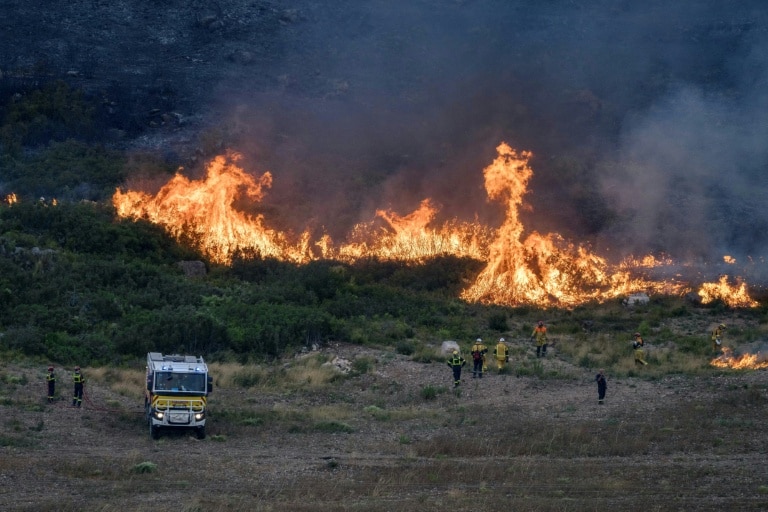
Western Europe experienced hottest June-July on record: EU monitor
Europe, the continent warming faster than any other on Earth, is facing an unprecedented summer of climate-driven disasters, after the European Union’s official climate monitoring service confirmed Monday that Western Europe has just endured the hottest combined June and July ever recorded.
Successive back-to-back heatwaves have baked the region, leaving parched landscapes and severe water shortages that have created near-perfect conditions for out-of-control wildfires to spread. Data from the Copernicus Climate Change Service, the EU’s leading climate monitoring body, shows that the average temperature across Western Europe for the first two months of summer 2025 hit 21.62 degrees Celsius, breaking the previous record set just three years ago in 2022.
This new record is a direct reflection of the extraordinary, unrelenting heat that has gripped the region since the start of summer, Copernicus officials noted. Beyond air temperatures, soil moisture levels across Western Europe are already significantly lower than they were during the crippling 2022 drought, one of the most severe water shortages the region has seen in modern history.
Samantha Burgess, deputy director of the European Centre for Medium-Range Weather Forecasts which manages the Copernicus program, emphasized that these conditions offer a clear, stark example of how human-caused climate change is supercharging extreme heat events. “Heat and drought increasingly reinforce one another, creating a feedback loop that makes these events more severe and longer-lasting,” Burgess explained.
Exceptionally dry conditions have been recorded across much of Western and Central Europe in July, stretching from southern Europe’s Spain and France through Central Europe’s Austria and Hungary, and reaching as far north as the United Kingdom, Ireland and parts of Iceland. Major European waterways including the Seine, Rhine and Danube have seen water levels drop to far below normal seasonal averages, disrupting commercial shipping, cutting off water supplies for agricultural irrigation and reducing hydropower output across multiple countries.
The combination of extreme heat and dry vegetation has also created prime wildfire conditions. Climate scientists have long warned that the frequency of extreme fire-prone weather across Europe is rising steadily as global temperatures climb. This summer, France and Spain have already fought the most destructive wildfires the two nations have seen in living memory, with dangerous blazes also spreading across other European nations, as well as western North America, where the U.S. Northwest and Canada have faced severe fire seasons of their own.
Beyond land-based extremes, Copernicus also announced that global ocean surface temperatures hit a new record high in July, marking the second consecutive month that this benchmark has been broken. The record warmth is being driven by widespread marine heatwaves around European coastlines and a rapidly strengthening El Niño event developing across the tropical Pacific Ocean.
The global average sea surface temperature for July hit 20.96 degrees Celsius, surpassing the previous record set in 2023. Carlo Buontempo, director of Copernicus, told reporters on August 5 that while parts of the Mediterranean and North Atlantic are running far above average temperatures, the developing El Niño is the primary driver of the new global ocean heat record. “We are now facing a very large El Niño — possibly unprecedented in terms of its amplitude,” Buontempo said. “It is clear that the contribution coming from the tropical Pacific becomes quite important.”
El Niño is the warm phase of a natural Pacific climate cycle that temporarily raises tropical ocean temperatures and alters global weather patterns, increasing the risk of extreme drought and flooding across many regions. It also adds extra heat to a planet already warmed by centuries of fossil fuel burning that has pumped greenhouse gases into the atmosphere.
El Niño events typically reach their peak strength at the end of the calendar year, before stored ocean heat is released into the atmosphere, pushing up global average temperatures. The previous major El Niño event helped make 2023 the second-hottest year on record globally, and 2024 the hottest. Buontempo said climate researchers now expect a new global average temperature record to be set either later this year or by early 2027.
On a global scale, July 2025 tied for the second-warmest July ever recorded, with an average surface air temperature 1.47 degrees Celsius above the pre-industrial baseline from 1850 to 1900, the benchmark used to measure progress toward global climate targets. The last 11 consecutive years are already the 11 hottest years ever recorded, and Buontempo noted that current temperatures are outside the range that modern human civilization has ever experienced. “We have not seen a climate that warm during our lifetime, and very possibly our civilisation,” he said, adding that the primary driver of this ongoing warming remains the rising concentration of greenhouse gases from human activity.
Oceans absorb more than 90 percent of the excess heat generated by humanity’s carbon emissions, making them the planet’s primary natural climate regulator. But rising ocean temperatures come with severe cascading risks: hotter oceans fuel more intense tropical storms, increase extreme rainfall events, and cause widespread coral bleaching that destroys critical marine ecosystems.
Copernicus generates its climate data using billions of measurements from satellites, land-based weather stations and ocean monitoring sensors, with a consistent temperature record extending back to 1940, making it one of the most trusted regional and global climate monitoring sources in the world.
-
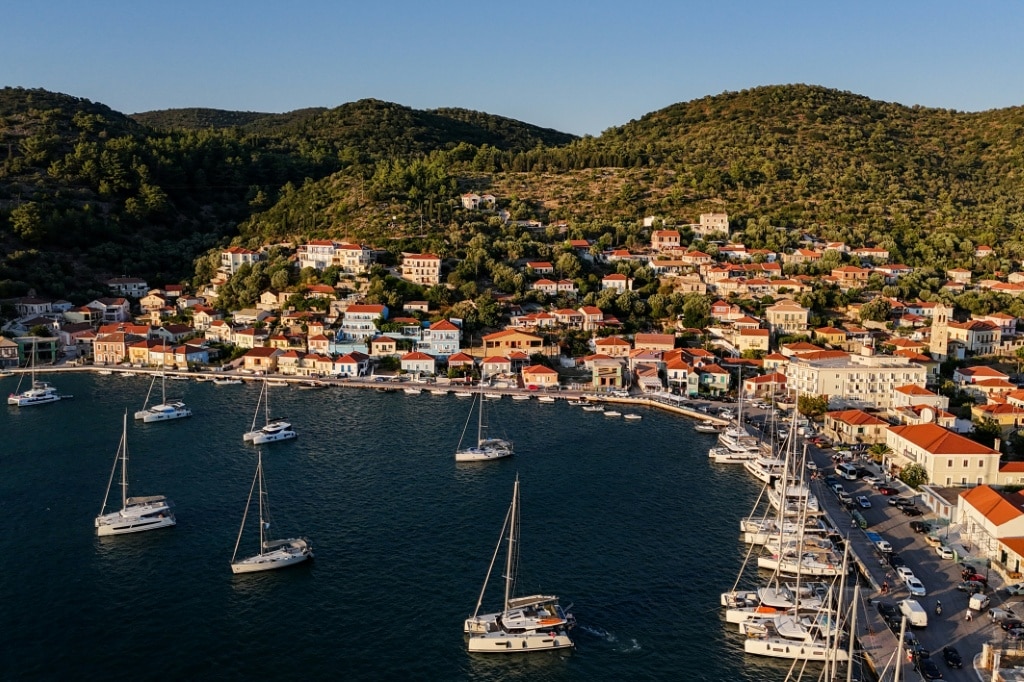
Ithaca bets on hometown hero Odysseus for tourism boom
When Italian lawyer Giorgia Ongarato stepped off the docked ferry onto the shores of the Greek island of Ithaca, her first conversation centered on the epic that has drawn visitors to this quiet Ionian Sea island for centuries: Homer’s *Odyssey*. For Ongarato, a lifelong student of ancient Greek literature who studied the epic as a child, visiting the fabled home of hero Odysseus has been a lifelong dream. Though she counts Christopher Nolan’s newly released blockbuster inspired by the ancient poem among her favorite recent films, she emphasizes that the movie was not what sparked her desire to make the trip—still, she calls the adaptation “wonderful”.
Now, local businesses and municipal leaders across the island are betting that thousands more travelers like Ongarato will follow her lead, turning the film’s global fame into a long-overdue tourism boom for the quiet, off-the-beaten-path destination. Tucked off the western coast of mainland Greece, Ithaca has never been part of Greece’s crowded tourist circuit, despite its crystal-clear coastal waters, dramatic cliffside bays, and lush, rugged interior carpeted with centuries-old olive groves and fragrant cypress forests. Even at the peak of July and August travel season, the island retains a quiet, unhurried calm that sets it apart from neighboring popular Greek getaways.
While Nolan’s blockbuster has undeniably piqued global interest in Ithaca, the production has not been without controversy on the island. Though the film shot on location at other Greek sites, not a single scene set on Odysseus’s home island was actually filmed in Ithaca—a fact that has left many local residents disappointed. For the 3,000-person community that hosted two open-air screenings of the film shortly after its worldwide July 16 release, the snub stung.
Still, most local stakeholders are choosing to focus on the unprecedented publicity the film has brought the island, rather than the missed filming opportunity. Xhimi Xoxha, a restaurant owner in Ithaca’s capital Vathi, says even without on-location shooting, the movie is already driving free global exposure for the island, and he expects those positive economic ripple effects to grow in coming years.
Ithaca mayor Dionysis Stanitsas echoed that perspective, calling the worldwide media attention “tremendous” even as he acknowledged his disappointment that the production declined the island’s outreach to host filming. “We reached out to the production team and asked that some scenes be filmed here on the island,” Stanitsas explained. “Unfortunately, that wasn’t feasible.” Despite the missed chance, the mayor says the island was already completely booked for the 2024 tourist season by the time the film hit theaters, and he is forecasting even stronger demand for 2025, as more moviegoers see the film and start planning their own trips to the mythic destination.
Visitors who make the trip will not find a excavated royal palace of Odysseus or a major archaeological site that can confirm the Homeric hero’s literal existence—but the island is steeped in *Odyssey*-themed heritage at every turn. Statues of Odysseus and Homer line village squares and stand outside the town hall, and working fishing boats bobbing in the sun-drenched main port bear names tied to the epic, from Telemachus (Odysseus’s son) to Calypso, the nymph who held the hero captive on her island for seven years.
Local souvenir shops cater to mythology fans, selling small busts of Homer and Penelope, Odysseus’s faithful wife, graphic T-shirts featuring the one-eyed giant Cyclops Polyphemus, and hand-painted decorative wall plates emblazoned with the Trojan Horse. According to legend, Dexia Beach, a popular soft-sand spot just a short walk from the port, is the exact spot where Odysseus washed ashore after his decade-long voyage home from the Trojan War.
Archaeologist Spyros Couvaras, who has worked on sites across Ithaca, says he expects a dramatic long-term increase in visitor numbers, driven by a shifting trend in global travel: modern travelers are no longer satisfied with just beach getaways, they are craving immersive cultural and mythic experiences that the island can deliver in spades. Couvaras notes that while Nolan’s film is the immediate catalyst for the current wave of interest, the enduring pull of Homer’s 3,000-year-old epic is the real draw that will keep visitors coming long after the film leaves theaters. “The driving force of the renewed interest was undoubtedly the movie,” Couvaras said. “But behind Nolan’s film stands Homer.”
-

Western Europe sets new temperature record as heat waves pummel the region
A brutal summer heat wave sweeping across Western Europe has broken the region’s average temperature record for the June-July period, a benchmark previously set just four years ago in 2022, the European Union’s Copernicus Climate Change Service has confirmed.
The extreme heat event actually began earlier, starting in May 2026, and has already triggered cascading environmental and public health crises across the continent: large-scale wildfires have burned thousands of hectares of land, prolonged drought has strained agricultural and water supplies, multiple nations have broken their all-time national temperature records, and thousands of premature heat-related deaths have been projected by public health researchers.
Global climate data paints an equally stark picture for 2026. As of the end of July, it ranks as the third-warmest year ever recorded globally, trailing only 2024 and 2025 in average temperatures. But scientists note there is still half of the year remaining for temperatures to rise further, and the confluence of two major warming forces makes it increasingly likely 2026 could claim the unwanted title of hottest year on record by December.
The dual drivers are accelerating anthropogenic (human-caused) global warming and a particularly strong El Niño event developing in the equatorial Pacific. El Niño is a naturally recurring climate pattern marked by elevated ocean surface temperatures in parts of the Pacific Ocean, which ripples out to drive temperature increases across much of the globe. Even if 2026 does not overtake 2024’s top spot, scientists say it will almost certainly land near the top of the historical ranking.
Copernicus also confirmed a new concerning ocean temperature milestone: July 2026 saw the highest average sea surface temperature ever recorded for the month across all extra-polar oceans – the parts of the world’s oceans outside polar regions that do not experience seasonal sea ice. The agency pegged the new July average at 20.96 degrees Celsius (69.73 degrees Fahrenheit), beating the previous 2023 record of 20.89 C (69.60 F). Researchers said developing El Niño conditions in the equatorial Pacific were a key contributor to the new ocean heat record.
Globally, the average surface air temperature for July 2026 came in at 16.90°C (62.42 F), tying it with July 2024 as the second-warmest July ever recorded, according to Copernicus.
For Western Europe specifically, the June-July 2026 average temperature hit 21.62°C (70.92 F), shattering the previous regional average mark. Samantha Burgess, strategic lead for climate at the European Centre for Medium-Range Weather Forecasts, which hosts Copernicus operations, explained the dynamic that prolonged and amplified the regional heat wave.
“Persistent high-pressure systems trapped heat over western Europe, and the extreme temperatures also amplified widespread drought,” Burgess explained. “As soils dry out, they lose their ability to provide natural cooling, allowing heat to build more readily. This is a clear example of how climate change is intensifying heat extremes, with heat and drought increasingly reinforcing one another.”