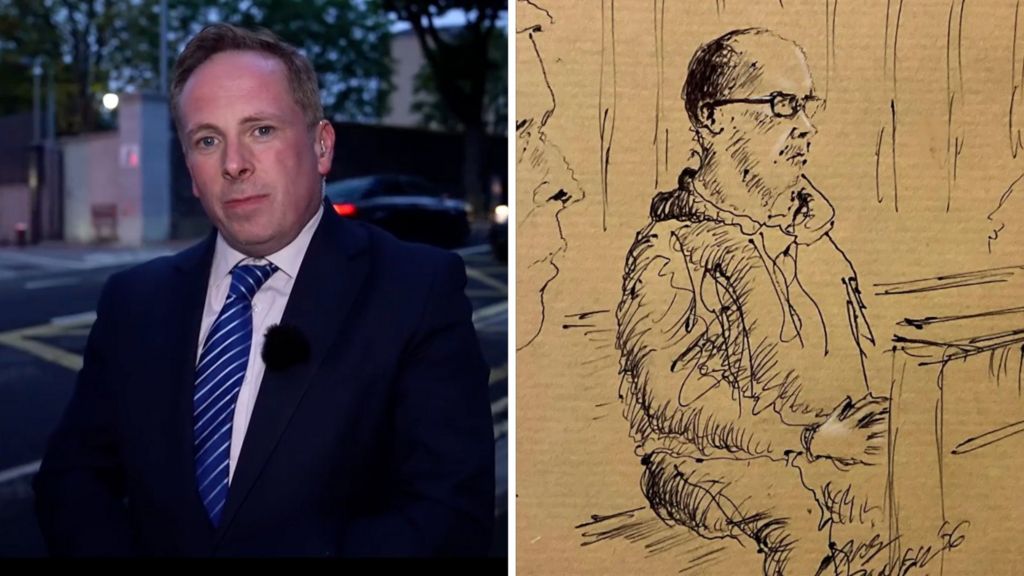
The long-awaited first court appearance of alleged transnational criminal network leader Daniel Kinahan unfolded this week in a Dublin courtroom, closing a major chapter in a years-long international manhunt following his extradition from the United Arab Emirates. Kinahan, who has long been linked to organized drug trafficking, money laundering, and violent gang rivalries across Europe, was transferred into Irish law enforcement custody after authorities in Dubai approved the extradition request put forward by Irish judicial officials. Once inside the Dublin courtroom, prosecutors formally presented a single core charge: directing the activities of a designated criminal organization, an offense that carries severe legal penalties under Irish organized crime legislation. Kinahan stood before the judge as the charge was read aloud, with security details surrounding the high-profile defendant to maintain order throughout the brief hearing. The appearance marks a significant milestone in international law enforcement cooperation against transnational organized crime, ending years of Kinahan operating outside the reach of Irish justice systems. Legal proceedings are set to advance in the coming months as both the prosecution and defense prepare their cases for trial.
作者: admin
-
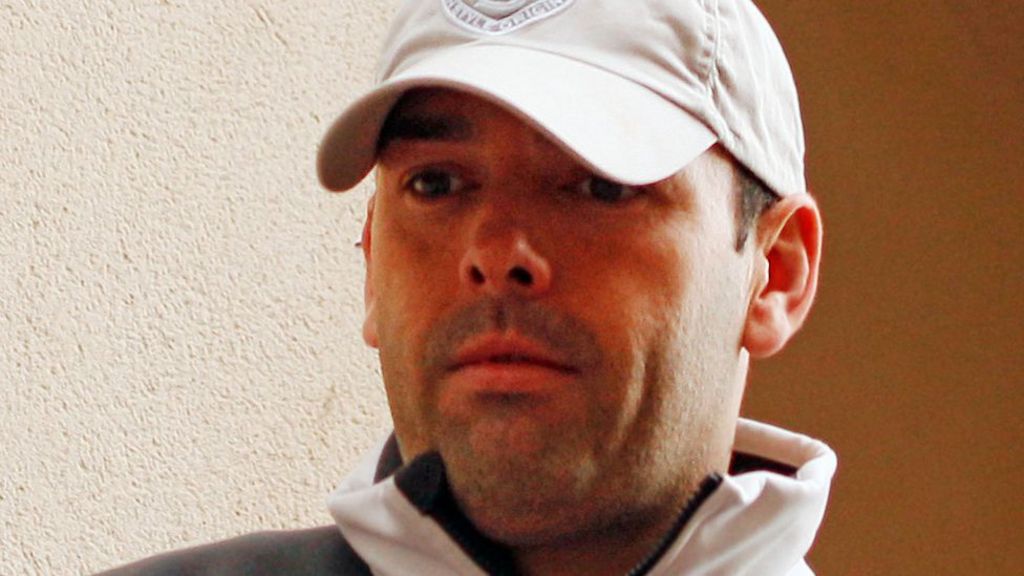
Suspected crime boss Daniel Kinahan appears in court after extradition
After months of legal challenges and years of international pursuit, alleged transnational crime boss Daniel Kinahan has finally been extradited from the United Arab Emirates to the Republic of Ireland, landing in Dublin on a government jet Sunday evening and appearing in court hours later to face organized crime charges.
The 49-year-old, who heads what global law enforcement has labeled one of the world’s most dangerous criminal syndicates, was arrested immediately upon landing at Dublin’s Casement Aerodrome. He was then transported under heavy armed police escort to the Special Criminal Court in Dublin, where a packed courtroom of journalists, prosecution legal teams, court staff and members of the public awaited his first appearance.
Prosecutors have charged Kinahan with directing the activities of a criminal organization between October 2015 and April 2017. The short, 13-minute non-jury hearing concluded with the judge remanding Kinahan in custody until his next court date, scheduled for October 5. Kinahan attended the hearing without legal representation, telling the court he had not had sufficient time to secure a lawyer following his overnight transfer. When informed he could apply for bail through Ireland’s High Court, Kinahan responded calmly, “I think we all know I won’t be getting bail, but thank you for your time.” He was granted the option to choose between in-person or remote appearance for his next hearing at a later date.
Kinahan’s extradition marks the culmination of a years-long international manhunt. He fled Ireland more than a decade ago, following a 2016 assassination attempt at a Dublin hotel boxing event that left one man dead. He resided in Spain for several years before relocating to Dubai, where he was arrested by Emirati authorities in April this year. The suspected crime leader launched multiple appeals against his extradition over the past four months, but all legal challenges were ultimately rejected.
Global law enforcement has linked the Kinahan cartel to widespread international criminal activity: the UK’s National Crime Agency (NCA) confirms the syndicate has imported tonnes of illicit drugs and illegal firearms across global markets, and has been directly connected to more than 12 gangland killings. The cartel’s violent decade-long feud with a rival Irish gang alone has claimed 18 lives. The U.S. Department of the Treasury has compared the Kinahan organization to notorious global syndicates including Italy’s Camorra, Mexico’s Los Zetas and Japan’s Yakuza, formally labeling it one of the world’s most dangerous transnational criminal networks in 2022, when U.S. authorities imposed sweeping sanctions on Kinahan, his father and his brother, who are named as the cartel’s top leaders. The U.S. government also currently offers a $5 million reward for information that leads to the arrest or conviction of Kinahan and his immediate family members. Former Irish Garda Commissioner Drew Harris estimates the cartel has generated more than €1 billion ($1.08 billion) in illicit profits from its global operations.
This extradition is not the first high-profile outcome of the bilateral extradition treaty between Ireland and the UAE. Last year, senior Kinahan cartel lieutenant Sean McGovern was extradited under the same agreement, and was sentenced to 24 years in prison in June for directing criminal organization activities. In the UK, three senior cartel members including the group’s UK operations leader Thomas Kavanagh were jailed in 2022 for a combined 60.5 years, convicted over a smuggling operation that brought £29.8 million worth of cocaine and cannabis into the country.
Irish and UAE justice officials framed Sunday’s extradition as a landmark win for international judicial cooperation. Irish Justice Minister Jim O’Callaghan praised the “professionalism, efficiency, and diligence” of Emirati authorities throughout the proceedings, noting that the handover represents a major milestone in cross-border collaboration against organized crime. His UAE counterpart, Abdullah bin Sultan bin Awad Al Nuaimi, added that the extradition underscores both nations’ unwavering commitment to supporting global efforts to dismantle transnational criminal networks.
Garda Commissioner Justin Kelly highlighted that the successful arrest and extradition demonstrates Irish law enforcement’s unwavering commitment to targeting transnational organized crime, in close partnership with international policing and judicial allies. “This outcome is a direct result of years of coordinated work between our force, UAE judicial and police authorities, and the Irish Department of Justice,” Kelly said.
Kinahan has long denied all allegations of criminal activity. His legal team previously told BBC Panorama that Kinahan holds no criminal convictions anywhere in the world, and all claims that he leads an international crime syndicate are unsubstantiated and false.
-
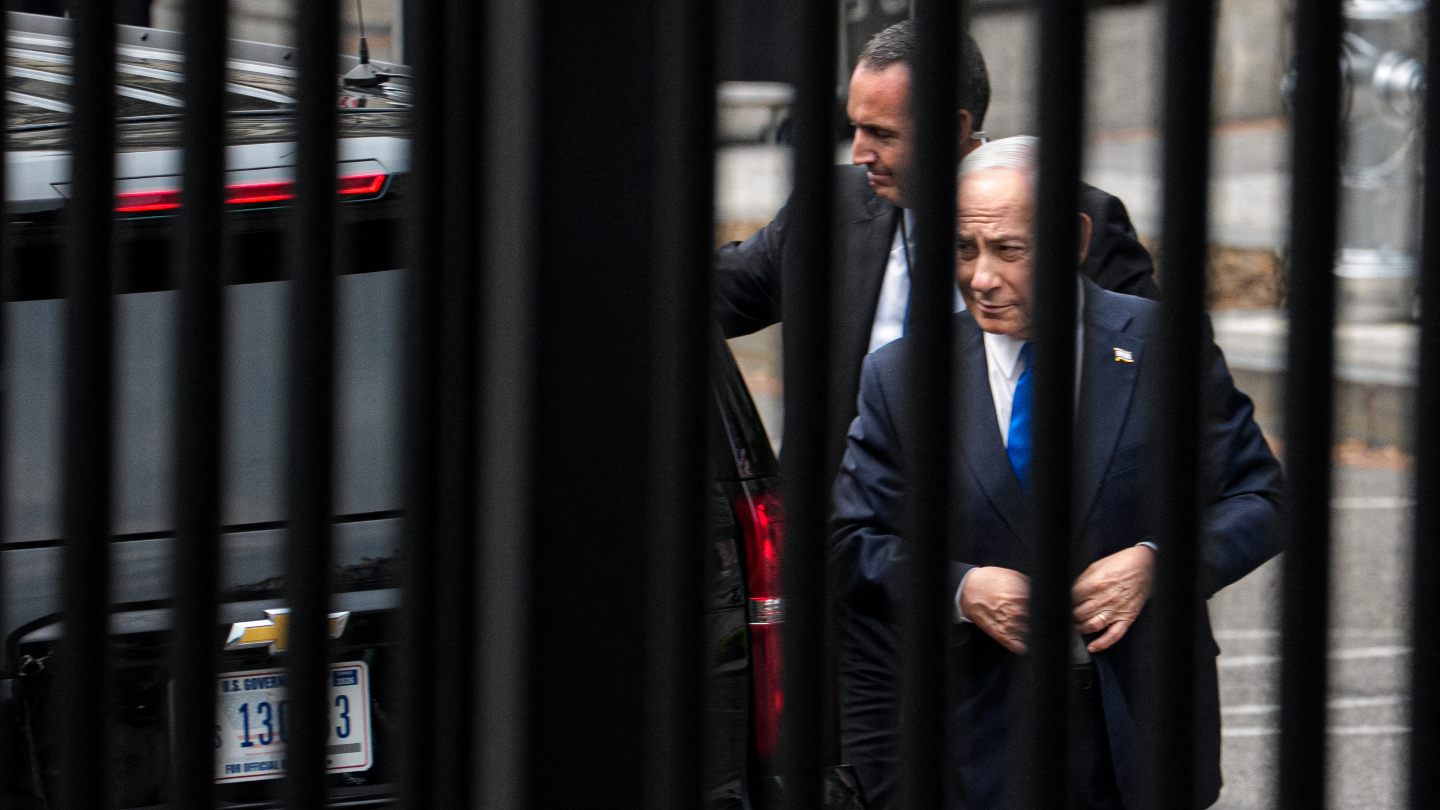
India to Israel and back: How a fake IRGC quote on nuclear weapons reached Netanyahu’s speech
A joint investigation by leading Israeli outlet Ynet and veteran New York Times journalist Ronen Bergman has exposed how Israeli Prime Minister Benjamin Netanyahu deployed a fabricated quote attributed to a top Iranian military commander to advance his hardline narrative on Iran’s nuclear program — a false claim that originated from a fringe pro-Israel, Hindu-nationalist social media account in India before spreading across global right-wing media and political circles.
The fake quote, falsely credited to Islamic Revolutionary Guard Corps chief Ahmad Vahidi, was first posted to X on August 5 by Ritika, an Indian account aligned with Hindu nationalist politics that openly supports Israel. The fabricated statement claimed Vahidi said: “There will be no discussion over enriched uranium or nuclear weapons. As long as the United States and Israel possess nuclear weapons, we will continue working on them for our national security. If they disarm, we will disarm.”
Within hours of the original post, the false claim went viral. Just four and a half hours after its initial publication, an unofficial X account falsely branding itself “Mossad Commentary” — which has no actual connection to Israel’s official intelligence service and boasts more than 1 million followers — amplified the quote, adding additional commentary claiming Iran’s regime “is not preparing to abandon its nuclear ambitions. It is buying time. There will be no deal.”
The false attribution was then picked up by Israel’s Channel 14, a media outlet widely recognized as a mouthpiece for Netanyahu and his far-right governing coalition. A 2024 report confirmed the Israeli government has purchased millions of shekels in commercial airtime from the channel in recent years. Channel 14 presented the fake quote as “the first direct admission by an Iranian official that Tehran was developing a nuclear bomb,” and failed to disclose any verifiable primary source for the remarks.
Shortly after Channel 14 ran the story, Yair Netanyahu — the prime minister’s eldest son and an influential far-right voice within his inner circle, with nearly 300,000 X followers — reposted the content from both the unofficial Mossad account and Channel 14. Multiple independent reports have confirmed Yair Netanyahu, alongside his mother Sara, wields significant influence over the prime minister’s policy decisions, and he has a well-documented history of spreading misinformation and extreme right-wing messaging via his social media platforms. Even senior figures within Netanyahu’s own Likud party regularly seek his approval for political messaging.
It was at this point that Benjamin Netanyahu himself deployed the fake quote in an official public address to Israeli citizens. According to the investigation’s transcript, Netanyahu told attendees: “Today, we heard the commander of the Revolutionary Guards, Vahidi, explicitly declare Iran’s intention to continue developing nuclear weapons – ‘continue’, as he put it.”
From there, the disinformation spread beyond Israel’s borders, reaching top political and media figures in the United States. Mike Waltz, the U.S. Ambassador to the United Nations, reposted Channel 14’s report on his own X account before deleting the post hours later after the fabrications were exposed. Prominent conservative U.S. commentator Mark Levin also shared the false claim with his large audience.
Mainstream U.S. outlet Fox News initially ran a story repeating the claim that Vahidi had admitted Iran would pursue nuclear weapons as long as Israel and the U.S. maintained their own arsenals, linking the remarks to growing concerns that Iran was using Strait of Hormuz negotiations to delay nuclear concessions. Only two days later did Fox News issue a clarification, acknowledging the remarks had been “previously taken out of context and amplified as comments made this week.” Major Indian wire service Asian News International also repeated the false claim, citing unvetted Israeli media reports.
Even after the source of the fabrication was exposed, the quote continued to circulate in pro-Netanyahu Israeli media. Multiple pro-government journalists, including Yaakov Bardugo and Avishay Ben Haim, repeated Netanyahu’s warning on national television, and Israel’s foreign ministry even amplified Netanyahu’s remarks featuring the fake quote on its official Persian-language X account.
Investigators say the entire episode fits a clear pattern of deliberate disinformation that serves Netanyahu’s longstanding political goal of blocking any nuclear deal between the U.S. and Iran. Netanyahu has repeatedly stated his opposition to any new agreement, telling Channel 14 in June 2024: “As long as I am prime minister, Iran will not have nuclear weapons,” adding that he had already saved Israel from “annihilation” twice by pushing back against Iranian nuclear progress.
While Ynet’s investigation could not definitively prove that Netanyahu or his inner circle coordinated the initial spread of the fake quote, it noted the campaign matches “a series of familiar markers of disinformation distribution” that have been tied to Netanyahu in the past. Just months earlier, in September 2024, Netanyahu’s office was accused of supplying false information to UK outlet *The Jewish Chronicle* and German newspaper *Bild* falsely claiming Hamas planned to smuggle Israeli hostages out of Gaza through the Rafah border crossing into Iran. Two senior Netanyahu aides are currently under criminal investigation for leaking classified documents to shape public opinion in favor of the controversial Israeli military offensive in Rafah.
The investigation also noted that Israeli state-backed influence operations have increasingly targeted audiences outside of Israel — particularly in the U.S. — as the Netanyahu government faces growing bipartisan criticism over its military campaign in Gaza and its hardline stance on Iran. This is not the first time Indian media has been used to spread anti-Iran disinformation either: Last month, Iran’s embassy in New Delhi issued a formal statement accusing Indian outlets of spreading false information about the country, urging media outlets “not to compromise the public trust and its professional credibility by disseminating fake and fabricated news” and asking them to “avoid participating in external propaganda efforts.”
-
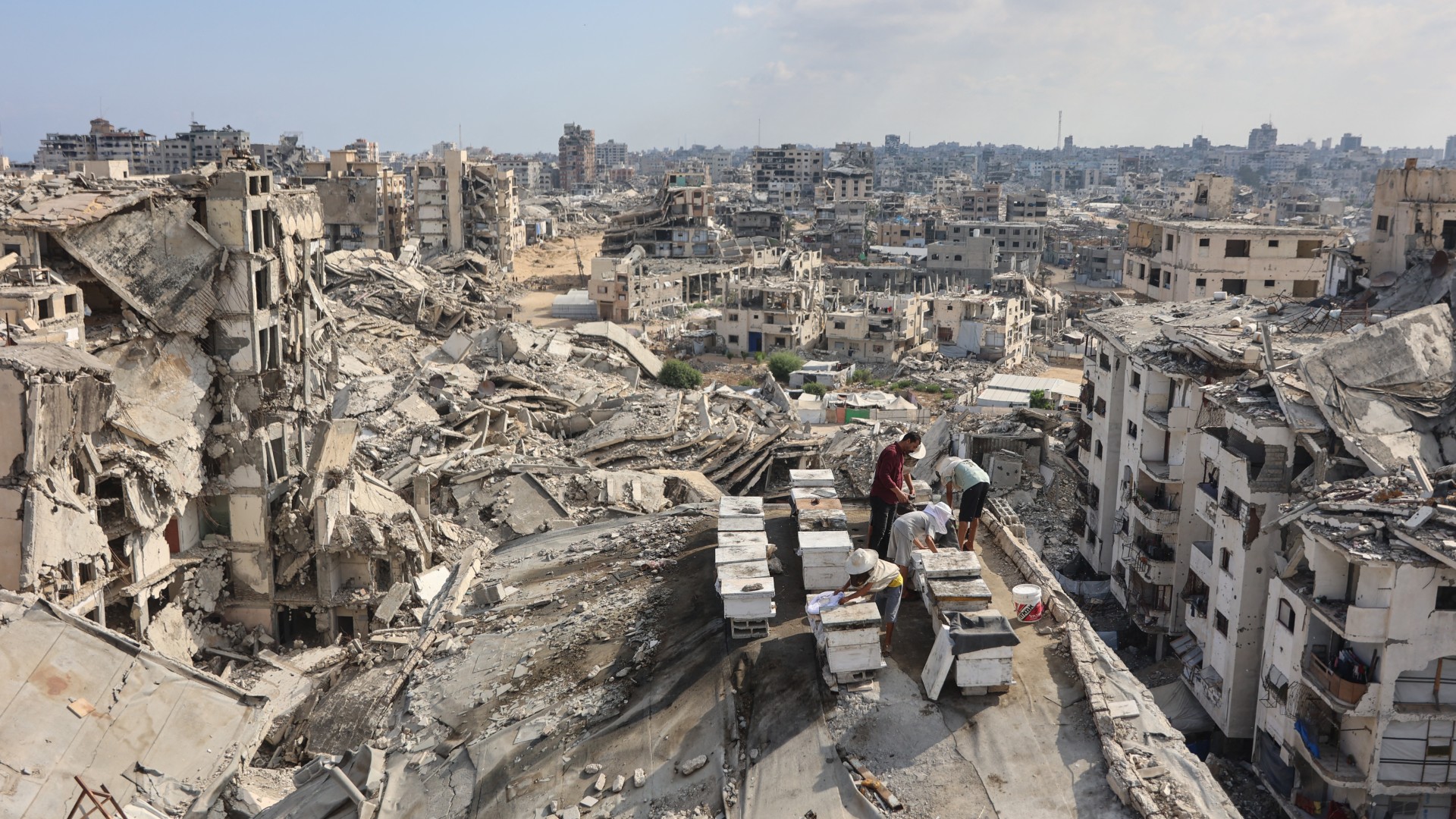
Israel rejects Trump’s 15-point plan for Gaza, says Netanyahu
In a stark rejection of a US-brokered initiative aimed at ending months of conflict in Gaza, Israeli Prime Minister Benjamin Netanyahu announced Sunday that his government will not accept former President Donald Trump’s 15-point peace framework, and ruled out any Israeli military withdrawal from the enclave until the complete disarmament of the Hamas militant group.
The plan, spearheaded by Trump’s Board of Peace, was billed as a major breakthrough to de-escalate the Gaza war when it was unveiled last month. The original ceasefire architecture, agreed to by both Israel and Hamas in October 2023, was meant to pave the way for a gradual end to hostilities. But despite the formal ceasefire agreement, Israel has continued to launch near-daily airstrikes across Gaza in the months since.
When the 15-point plan was announced, Trump stated that Hamas had already committed to laying down its weapons under the terms of the deal. However, Netanyahu made clear his government’s opposition during a weekly cabinet meeting Sunday. “Israel rejects the 15-point document,” he said, adding that the Israel Defense Forces “will not carry out any withdrawal until Hamas is genuinely disarmed and will continue to thwart threats against our forces and our citizens.”
Independent regional news outlet Middle East Eye obtained a full copy of the draft agreement last month, revealing key details that explain the core disagreement between the two sides. Unlike Israel’s demands for Hamas to surrender weapons directly to Israeli authorities, the framework outlines that Hamas and other Palestinian factions would not transfer Gaza’s weapons to Israeli control. Instead, all weapons would be managed by a newly created domestic Palestinian body called the National Committee, with all arms remaining under exclusive Palestinian ownership.
The draft text explicitly states: “No weapons will be transferred or surrendered to Israel or any non-Palestinian parties,” and specifies that by the conclusion of the disarmament process, “the National Committee alone shall retain, store, or control weapons in Gaza.” The agreement frames the weapons collection process as an exclusively domestic Palestinian affair, noting that the National Committee — set to act as Gaza’s transitional authority — would hold sole power to register weapons, issue and revoke licenses, and enforce weapons regulations, with all Palestinian factions required to cooperate with the body.
Hamas has already publicly pushed back on any unilateral implementation of the plan, stating it will not enact any part of the framework unless Israel fulfills its own agreed obligations, chief among them a full, phased withdrawal of Israeli forces from all areas of Gaza they currently occupy. The 15-point document itself codifies this condition, requiring that each phase of the process can only move forward after an independent international commission verifies that all parties have completed their obligations from the previous stage.
Shortly after the plan was made public, Trump praised the initiative on his social platform Truth Social, calling it “a monumental step toward lasting PEACE and SECURITY.” He outlined at the time that Israeli forces would withdraw from Gaza incrementally as disarmament progressed, and that a UN-mandated International Stabilization Force would partner with a new Palestinian police force to maintain security in the enclave.
Hamas official Ghazi Hamad reaffirmed the group’s position to Reuters when the plan was released, noting that Hamas would keep its weapons until Israel halts all military attacks, allows a massive expansion of humanitarian aid and commercial goods into blockaded Gaza, and completes its force withdrawal in line with the original October 2023 ceasefire agreement.
-

NSW government to offer $250 washing machines in electricity bill push
As cost-of-living pressures continue to squeeze household budgets across Australia, the New South Wales (NSW) state government has launched a new round of a popular practical relief program, offering thousands of low-income and vulnerable residents heavily discounted energy and water-efficient washing machines to cut long-term utility bills.
Under the expanded initiative, at least 6,000 eligible households – including qualifying pensioners, veterans, social housing tenants, and low-income families – will be able to replace their old, inefficient top-loading washing machines with a new 8kg front-loading model that meets modern water and energy efficiency standards for just $250. The scheme includes additional perks beyond the discounted appliance: major white goods retailer The Good Guys handles delivery to any location across NSW, provides a two-year manufacturer’s warranty, and arranges for the responsible recycling and removal of the old unit.
State officials estimate that the switch from an older top-loader to a new efficient model will save the average participating household roughly $300 per year through combined reductions in electricity use, water consumption, and detergent costs. Beyond household savings, the initiative also delivers measurable environmental benefits: across the roughly 12,000 upgrades completed in the program’s first two rounds, total water usage has fallen by an estimated 223 million liters – a volume equivalent to 93 Olympic-sized swimming pools.
Housing Minister Rose Jackson highlighted that the program has consistently outperformed expectations in demand, with all discounted units selling out in less than a week in both previous rounds. “The response to this program has been extraordinary with machines snapped up in next to no time and that’s why we’re back again with another 6,000 discounted washing machines,” Jackson said, adding that the scheme delivers targeted, long-lasting cost-of-living support for households struggling with ongoing economic pressure.
Veterans Affairs Minister David Harris emphasized that the program is one small way the state can honor its commitment to former service members. “The state’s veterans are owed an unpayable debt,” Harris said. “Easing their electricity bills with a new washing machine is the least we can do.” Seniors Minister Jodie Harrison echoed that sentiment, noting that cumulative annual savings add up to meaningful financial relief for older residents on fixed incomes, urging eligible seniors to apply quickly given the program’s history of rapid sell-outs.
The expanded washing machine scheme is part of the incumbent Labor state government’s broader push to deliver tangible cost-of-living relief to voters, ahead of state elections scheduled for 2025. Ongoing geopolitical instability in the Middle East has continued to put upward pressure on global fuel prices and supply chains, keeping utility and grocery costs elevated for Australian households. In addition to energy efficiency support, the government has recently expanded access to common prescription medications, allowing women to access contraceptive pills without a doctor’s prescription and broadening access to ADHD medication without requiring a specialist referral.
-

Nigerian army says it safely rescued 33 people kidnapped by gunmen
In a recent successful security operation, Nigeria’s military has announced the safe rescue of 33 civilians who were abducted by armed assailants while traveling through Nigeria’s northwestern Zamfara State. The abduction took place Saturday afternoon in the Tsafe local government area of the state, and security forces from the Nigerian Army moved out alongside police units immediately after receiving word of the incident, according to official military statements.
Military tracks intercepted the kidnapping group as they were moving their captives to an undisclosed location. When troops opened fire on the abductors, the armed gunmen abandoned their hostages and fled into the dense surrounding bushland. All 33 hostages were recovered without a single casualty among the freed victims, Nigerian Army spokesman Lieutenant Colonel Aliyu Danja confirmed in an official briefing. Danja added that military command has not yet confirmed the final destination the kidnappers were heading for, but search operations are currently underway to track down the fleeing perpetrators.
Kidnapping-for-ransom attacks by criminal armed groups have become a persistent security crisis across northwestern Nigeria, with major intercity highways regularly targeted by bandit gangs. Security analysts point out that widespread ransom payments, made by desperate victim families, middlemen negotiators, and in some instances government officials, have only amplified the cycle of abductions and incentivized more attacks. Danja has urged local residents to maintain heightened situational awareness and share any intelligence about suspicious activity with security agencies to help prevent future kidnappings.
This latest rescue marks part of a string of recent security successes for Nigerian forces against kidnapping groups. Just two days before the Zamfara operation, Nigeria’s presidency announced that more than 300 abducted people held across different regions of the country had been freed in coordinated operations. That large group of freed hostages included 163 people kidnapped in a deadly February attack on the Woro and Nuku communities in Kwara State, which left dozens of residents dead, alongside another 145 captives seized in attacks across Niger State. The successful operations come only a few weeks after 44 abducted schoolchildren and their teachers were released following more than 50 days of captivity after a raid on a Oyo State primary school.
In a sign of the Nigerian government’s commitment to tackling the country’s widespread insecurity, President Bola Tinubu announced last week that frontline soldiers combatting extremist violence and banditry would receive a pay raise of up to 80 percent, a gesture meant to recognize the military’s sacrifice in facing the nation’s acute security challenges. Tinubu, who took office with a core campaign promise to curb widespread banditry, kidnapping, and insurgent violence from groups including Islamist militant networks, has made security a top priority of his administration. The continuing wave of insecurity across the country has emerged as one of the most contentious political issues ahead of Nigeria’s 2027 general elections, with voters widely demanding tangible progress in curbing kidnapping and violence.
-
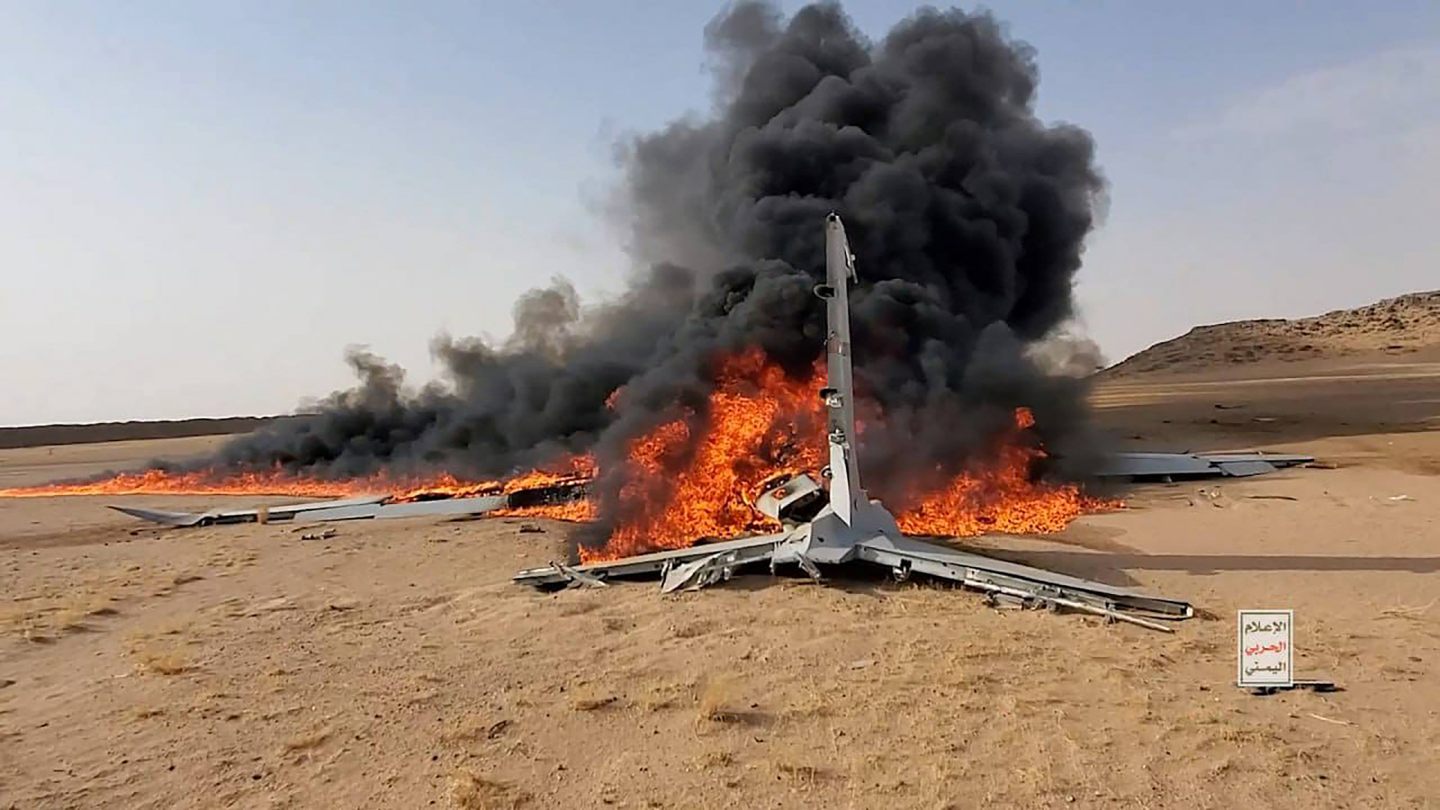
Saudi Aramco refinery erupts in flames in Jizan as Houthis claim drone attack
Early on Sunday, a blaze erupted at a facility operated by Saudi Arabian state energy giant Aramco in the Red Sea coastal city of Jizan, located near Saudi Arabia’s southern border with Yemen. Saudi emergency services quickly responded to the incident, and authorities confirmed the fire was fully extinguished with no injuries or fatalities reported in the attack.
In an official statement posted to the social platform X, Saudi Arabia’s Ministry of Energy confirmed the fire struck an Aramco refinery site in Jizan, adding that competent agencies had finalized initial response protocols. The ministry declined to comment on the potential origin or cause of the blaze when releasing the statement.
Shortly after the fire was reported, however, Yahya Saree, military spokesperson for Yemen’s Houthi movement, claimed responsibility for the incident via X. Saree said the Houthi group had launched a precision drone strike against the Jizan Aramco refinery, noting the attack was launched in retaliation for what he described as Saudi Arabia’s violation of Yemeni airspace over the northern provinces of Saada and Hajjah.
Jizan has been a repeated target of Houthi attacks targeting Saudi energy infrastructure for years, as the border region has remained a flashpoint in the long-running Yemen conflict. Just one month prior, the Houthi movement claimed credit for separate strikes against Aramco facilities in Jizan, as well as attacks on oil infrastructure in Yanbu, another key Saudi Red Sea export terminal. Just last week, Aramco CEO Amin Nasser acknowledged that previous strikes on company assets had caused minor temporary production disruptions, but emphasized that operations were restored rapidly and that the attacks had not resulted in any material operational or financial damage to the firm.
In addition to the Jizan refinery strike, the Houthis also announced they had launched a large-scale attack using dozens of ballistic missiles and drones against Saudi-backed Yemeni government troops and military equipment positioned in the Yemeni Red Sea port city of Mokha.
This latest wave of attacks comes as armed conflict has reignited between the Houthi movement and Yemen’s internationally recognized government, which receives extensive military backing from Saudi Arabia. The resumption of fighting ends a two-year period of relative calm that followed a widely observed 2022 ceasefire. Since 2014, the Houthis have controlled Yemen’s capital Sanaa and most of northern Yemen, while the Saudi-backed government holds sway over much of the country’s southern territory. Last month, the Houthi movement also announced a naval blockade targeting Saudi shipping in the Red Sea and issued threats to commercial vessels transiting the strategic Bab el-Mandeb Strait, a critical global chokepoint for maritime energy trade.
The Jizan fire is being investigated separately from a separate incident reported in the eastern Saudi industrial city of Jubail. Turkey’s state-owned Anadolu Agency reported hearing a massive explosion in the Jubail region, with local Saudi media claiming the blast targeted gas processing facilities at Jubail Industrial City and sparked subsequent fires, though no official confirmation of that attack has been released as of yet.
These concurrent security incidents coincide with a major diplomatic shift in the region, as Saudi Arabia moves to deepen collective security cooperation with regional partners amid rising cross-border threat risks. Just two days before the Jizan attack, on Friday, Saudi Arabia signed a landmark trilateral defense agreement with Turkey and Pakistan in the holy city of Mecca. The pact includes a mutual defense clause, stating that an armed attack against any one of the three signatories will be considered an attack against all three parties.
On Saturday, Turkish Foreign Minister Hakan Fidan clarified the terms of the new agreement, stressing that the pact was not targeted at Iran and that the three partners had not formally named any shared adversary. “There is no common threat that we have put in writing,” Fidan told Anadolu Agency. He noted that the agreement’s mutual defense clause is technically comparable to NATO’s Article 5 collective defense framework, but added that any collective response to an attack would be tailored to the specific circumstances of the incident.
Beyond the mutual defense commitment, the pact is set to cover a wide range of security cooperation, including joint military training exercises, cross-border intelligence sharing, coordinated logistics support, joint threat assessment, and expanded collaboration between the three countries’ defense industries. Fidan also added that Ankara hopes to expand the bloc beyond its three founding members, suggesting that Egypt could be invited to join the partnership in the future.
This flurry of diplomatic and security activity comes as broader regional uncertainty has spiked sharply in recent months, following escalating tensions across the Middle East tied to the ongoing conflict between Israel and Hamas, with renewed clashes involving armed factions across Iraq, Lebanon, and Yemen disrupting years of relative de-escalation.
-
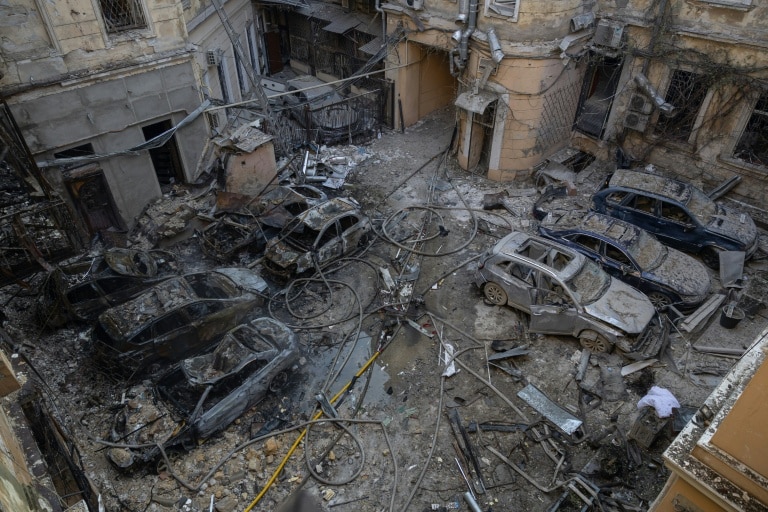
Five dead in new Russia, Ukraine strikes
Five civilians have been killed and dozens more injured in a fresh wave of reciprocal long-range strikes between Russia and Ukraine over the weekend, marking an escalating escalation of hostilities more than four years after Moscow launched its full-scale invasion.
Overnight strikes carried out by Russian forces left two civilians dead and 23 wounded in Ukraine’s northeastern city of Kharkiv, where a residential building suffered a partial collapse that reduced four of its floors to rubble, Ukrainian officials confirmed. Regional governor Oleg Synegoubov released on-site images showing emergency responders working to clear debris from the gutted structure after the attack.
Additional Russian strikes targeted infrastructure and residential areas across southern and central Ukraine overnight. Eight people were wounded in the Black Sea port city of Odesa, where the strikes damaged critical port facilities, residential buildings, and local power grids. In Pavlohrad, located in the central Dnipropetrovsk region, nine people including four children were wounded in what Ukrainian President Volodymyr Zelenskyy called an “absolutely brutal” strike on energy infrastructure adjacent to a local shopping center.
The World Health Organization (WHO) added its voice to international condemnation after one of its supply warehouses in the Ukrainian city of Dnipro, which stored critical medical and humanitarian supplies, was completely destroyed in strikes carried out Friday. WHO Director-General Tedros Adhanom Ghebreyesus reiterated that attacks on healthcare infrastructure are prohibited under international law, saying in a Sunday post on X: “I cannot say loudly enough: attacks on health care MUST STOP. Otherwise, people are deprived of lifesaving healthcare. Even wars have rules. One of those is that health must be protected!”
Across the border in Russia’s Belgorod region, a Ukrainian drone strike left three civilians dead and 25 wounded, including children aged four and nine, according to acting regional governor Alexander Shuvaev. The attack sparked large fires in two apartment buildings, a private residence, and multiple parked cars, with local media footage showing one residential building engulfed in towering flames as onlookers gathered across the street to watch the blaze.
Zelenskyy defended Ukraine’s cross-border strikes as legitimate responses to unprovoked Russian attacks on Ukrainian territory. In his Sunday evening address, he noted that Russia has waged a campaign of what he called “ballistic terror” against Ukraine, with 61 missiles of varying ranges fired at Ukrainian targets over the past week. “More pressure, more sanctions against Russia and more air defence for Ukraine are needed,” Zelenskyy wrote in a separate social media post Sunday. He added that Ukraine’s targeted strikes on Russian infrastructure including oil refineries, air defense systems and radar stations are “truly just responses” to Russian aggression, noting that “The Russian war will be increasingly felt at home, in Russia.”
On the eastern front line in Ukraine’s Donetsk region, the Russian military announced Sunday that it had seized control of two small villages, including Vasiutynske, which sits roughly six miles from Kramatorsk, a key Ukrainian logistics and population hub. The claim has not yet been verified by independent third-party observers.
The escalating cycle of cross-border strikes and rising civilian casualties has drawn sharp condemnation from the United Nations. Last week, UN Secretary-General António Guterres condemned both Russia and Ukraine for repeated strikes on civilian areas, saying “Attacks against civilians and civilian infrastructure are a clear violation of international humanitarian law, and must stop immediately.”
Nearly four and a half years after Russia launched its full-scale invasion of Ukraine, peace talks remain effectively stalled, with no signs of a negotiated breakthrough to end the ongoing conflict.
-
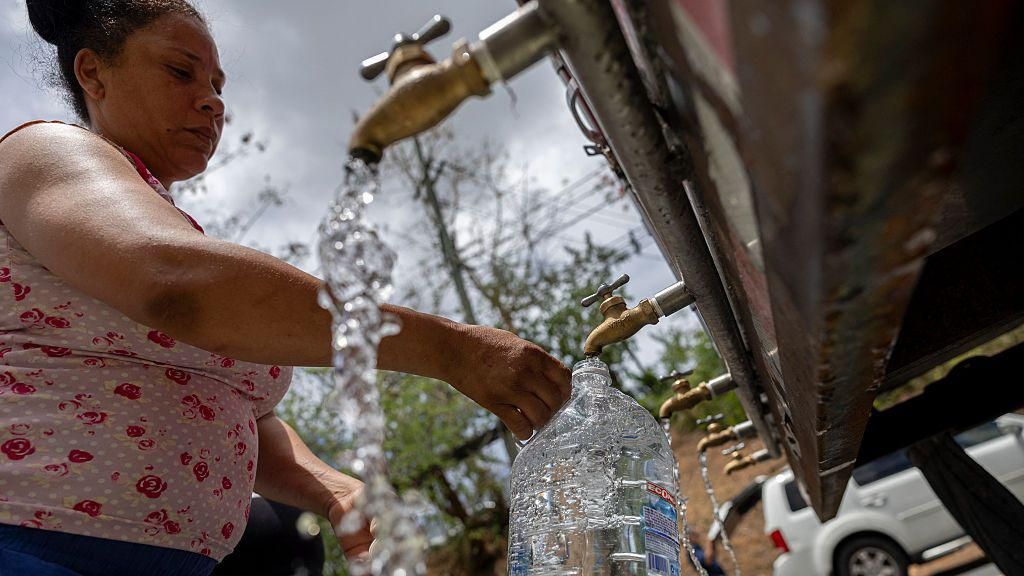
Puerto Rico rations water supplies due to intense drought
A crippling drought, worsened by decades of crumbling infrastructure, has pushed the U.S. Caribbean territory of Puerto Rico into a widespread water crisis, forcing authorities to implement strict rolling water cutoffs that have left hundreds of thousands of residents without consistent access to running water.
Under the emergency rationing plan, most affected households have been divided into two rotating groups, with each group facing full 48-hour suspensions of their piped water supply. As of this week, 180,000 properties across seven regions that rely on the critically depleted Carraízo Reservoir are covered by the measure, and officials have not yet announced when the restrictions will be lifted. When San Juan’s taps went dark for its scheduled 48-hour shutdown Friday, residents across the capital immediately decried the disruptive policy.
Data from the U.S. Drought Monitor confirms that 68% of Puerto Rico is currently experiencing drought conditions, ranging from moderate to extreme. July 2026 ranks as the driest July ever recorded on the island, draining Carraízo—one of Puerto Rico’s most important water storage hubs—to critically low levels that are clearly visible in recent drone footage, which shows large swathes of the reservoir’s normally submerged bed now exposed to the air. Governor Jenniffer González has framed the crisis as primarily weather-driven, noting that the rationing decision came after a joint review of current reservoir levels and long-range weather forecasts. “This situation is beyond our control,” González stated in an official press release. “It is the result of the weather conditions we have been facing, which experts had warned about weeks ago.” She added that rain may return to the island once a lingering blanket of Saharan dust that has stalled storm systems moves out of the Caribbean region, and confirmed that more than 1,000 wildfires are currently burning across the territory as dry conditions persist.
Yet long-standing systemic failures have drastically amplified the impact of the dry spell. According to Puerto Rico’s own water authority, roughly 65% of all treated water produced on the island is lost before reaching customers, largely through unpatched leaks in a network of aged, corroded pipes that have not received full systematic upgrades for decades. Additional contributing factors cited by water management experts include excessive sediment buildup that has reduced the total storage capacity of the island’s key reservoirs.
As the rationing took effect, hundreds of residents across affected areas lined up at government water distribution trucks to fill large containers for drinking, cooking, and hygiene. Many have voiced frustration and confusion over inconsistent implementation of the rotating schedule and unclear communication about which areas will be affected when. For example, residents in Morcelo, a community south of San Juan, were promised running water for a 48-hour window starting Friday, but reported no water service even after the first 24 hours of the scheduled access period had passed. “People are uncertain because they know we’re in the 48-hour window where we’re supposed to have drinking water,” local community leader Rubén Torres told Puerto Rico’s *El Nuevo Dia* Saturday. “What’s happening? The first 24 hours have already passed and the water hasn’t arrived.” San Juan resident Gloriany Baba summed up the widespread frustration in comments to CBS News, calling the conditions “brutal” and adding “It’s unbelievable to live through this today.”
This is not the first time Puerto Rico has been forced to implement large-scale water rationing to combat drought: similar harsh measures were deployed in 2015 and 2020, when some 400,000 households only received running water once every three days. Climate scientists note that extreme weather events like this record-breaking drought are growing more frequent and more intense across the Caribbean as a result of human-caused climate change. The island already has a well-documented history of climate-linked extreme weather disasters, most notably Hurricane Maria in 2017, which devastated Puerto Rico’s already fragile electricity grid, killed thousands of residents, and brought extreme rainfall that scientists confirmed was made far more likely by human-induced climate change.
Governor González stated that the U.S. federal government is providing assistance to address the crisis, though she offered no additional details on the scope or type of support. BBC News has reached out to the U.S. Federal Emergency Management Agency (FEMA) for further comment on the federal response.
-
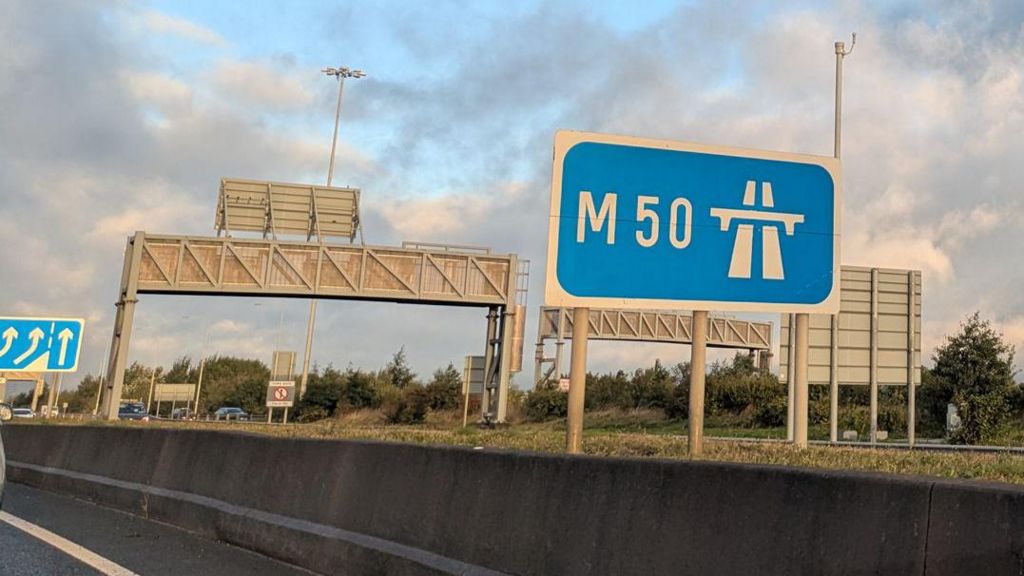
Car carrying eight teenagers crashes on wrong side of motorway
A serious early-morning wrong-way collision on one of Dublin’s busiest orbital motorways has left nine people injured, with two patients fighting for life in hospital, Irish police have confirmed.
The crash unfolded at 5:30 a.m. local time on Sunday along the southbound carriage of the M50, near Junction 12 in the Firhouse area of Dublin. Investigators say the first vehicle, carrying eight male juveniles, was traveling the wrong direction down an on-ramp when it slammed head-on into a oncoming privately operated car.
Emergency services rushed all occupants of both vehicles to nearby hospitals across the region for urgent care. Of the eight young people in the wrong-way vehicle, one remains in critical condition, according to updates from local health authorities. The driver of the second vehicle, a man in his 20s, is also hospitalized with serious injuries, though no further update on his prognosis has been released as of Sunday afternoon.
In the wake of the collision, Irish national police, known locally as gardaí, have implemented a full closure of the affected southbound stretch of motorway between Junction 12 and Junction 11. Local diversion routes have been put in place to redirect through traffic away from the crash site, where forensic investigators are now conducting a detailed examination of the scene to piece together the cause of the incident.
Authorities are issuing a public appeal for assistance with their investigation. Any road users who were traveling through the Firhouse area of the M50 between 5:00 a.m. and 5:30 a.m. on Sunday, or anyone who has dashcam footage from the collision site or surrounding approaches, is asked to contact local gardaí to share any information that could advance the investigation.