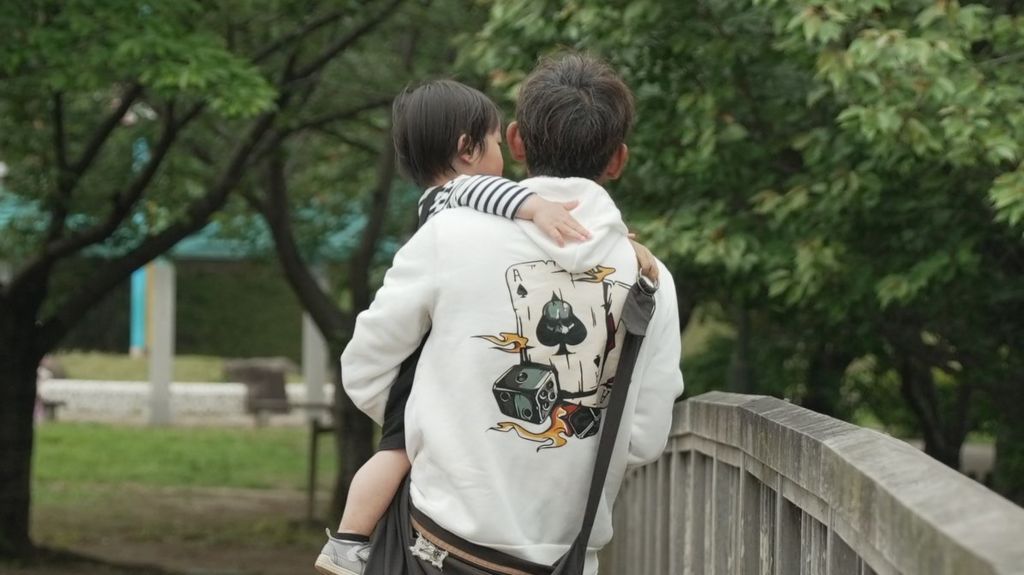
On a quiet weekday afternoon in a Tokyo residential neighborhood, John Deng (a pseudonym to protect his privacy) lingers near a local playground, straining to catch the sound of laughter that might belong to his 8-year-old son and 10-year-old daughter. For nearly three years, the Hong Kong-born long-term Japanese resident has been locked out of the daily rhythms of his children’s lives, after his marriage ended and his ex-partner took the children without advance notice. Today, he only gets a handful of supervised hours with them each month, with no unsupervised contact in between. His story is far from unique in Japan — until this year, decades of family law forced hundreds of thousands of children to grow up without regular access to one parent after divorce.
That landscape shifted dramatically on April 1, 2026, when a landmark revision to Japan’s Civil Code came into force, formally legalizing joint child custody for divorced couples. Before the amendment was approved by Japan’s parliament in 2024, Japan stood alone among G7 nations as the only country that did not recognize the legal concept of shared parental custody after separation. Under the previous sole custody regime, only one parent held full legal rights over children after a split, and the non-custodial parent could be completely cut off from their children’s lives unless the custodial parent voluntarily granted access. In practice, custody was most often awarded to whichever parent removed the children from the shared home first, creating a race for custody that left many non-custodial parents disconnected from their kids.
Seiya Saito, a family lawyer at Tokyo’s Setagaya International Law Office, notes that the shift to joint custody aligns Japan with a global consensus centered on prioritizing children’s best interests. “It always shocked me that every time I speak to lawyers in the US and the UK, they say that it’s not about win or lose, it’s just focusing on the best interest of children,” Saito explained. The new legal framework codifies the principle that children typically benefit from maintaining healthy relationships with both parents, while also spreading parental responsibility more evenly between separated couples.
Latest official data from Japan’s Ministry of Health, Labor and Welfare shows that roughly 38.5% of Japanese marriages ended in divorce in 2024 — equal to one out of every three unions. That same year, women retained sole custody in more than 86% of all divorce cases, and joint custody arrangements made up only a tiny fraction of finalized custody agreements. Overall, more than 164,000 children under 18 were affected by sole custody arrangements after parental divorce in 2024. The legal reform comes amid broader national pressure to support families, as Japan grapples with plummeting birth rates and a rapidly aging population that has pushed policymakers to re-examine systems that place disproportionate burden on single parents.
For parents like Deng, who have spent years fighting for even limited access to their children, the new law offers a rare glimmer of hope. Deng, who maintains two residences — one in Tokyo and a second just an hour from his children’s home — says he clings to the possibility that the reform will let him rejoin the ordinary moments he misses: waking his kids up in the morning, taking them to the park, and attending school recitals and holidays like Father’s Day. “They mean the world to me,” he said. “It’s something that no parent should face.” He notes that the current arrangement robs children of their right to connect with both parents whenever they want: “I just feel so empty.”
Yet the landmark change has sparked fierce debate, with critics and domestic violence advocates warning that the new framework puts survivors of abuse at serious risk. Chisato Kitanaka, co-head of the All Japan Women’s Shelter Network, warns that joint custody could force survivors of domestic violence and child abuse to remain in contact with abusive former partners, trapping them in cycles of harm. “There is a risk that those suffering from domestic violence or child abuse may be unable to escape,” Kitanaka said.
Those fears are echoed by survivors like Ryo Suzuki (also a pseudonym), who endured years of severe physical abuse at the hands of her ex-husband, including being choked against a wall and dragged by her hair. After winning sole custody of her two children, Ryo thought she had escaped the abuse — but the new law leaves her facing constant anxiety that her ex-husband could petition for joint custody of her 15-year-old daughter, forcing her back into contact with her abuser. “When I got sole custody, I used to think, ‘It’ll be okay from here on out,’ but now there’s the possibility that we might be tied together,” Ryo said. “I’ll have to live with that anxiety until my daughter becomes an adult.” Her 18-year-old son Taro, who witnessed years of his mother’s abuse, says he believes the new law should never have been passed: “I really think this is a law that shouldn’t exist.”
Lawmakers and supporters of the reform have included explicit legal protections for vulnerable families: Japanese courts are required to award sole custody if they confirm a history of domestic violence that puts children or survivors at risk. Even so, survivors and advocates worry that Japan’s court system will demand hard physical evidence of abuse, which many survivors do not have — abusers often intentionally avoid leaving visible marks, as Ryo says was the case for her. Many survivors remain skeptical that courts will consistently rule to protect their safety.
Today, the new law occupies a delicate middle ground, balancing the goal of preserving children’s access to both fit parents against the urgent need to protect survivors of domestic abuse. For hopeful parents like Deng, it represents a long-overdue step forward for family law in Japan that could finally restore the relationships he has spent years missing. For survivors like Ryo, it introduces a new source of constant uncertainty that undermines the safety they fought so hard to win.