作者: admin

  • At least 19 people taken to hospital after ‘strong smell’ reported at Tokyo mall

    At least 19 people taken to hospital after ‘strong smell’ reported at Tokyo mall

    A public safety incident at one of Tokyo’s most high-end shopping destinations has left nearly two dozen people hospitalized and launched a citywide manhunt for a male suspect, Japanese authorities confirmed this week. The attack unfolded on Monday inside the Ginza 6 shopping complex, a landmark luxury retail hub located in the heart of Tokyo’s iconic Ginza district.

    According to a police spokesperson, the unidentified man released an unknown chemical substance near an automated teller machine on the complex’s ground floor. Investigators have since determined the substance is almost certainly an irritant spray laced with capsaicin, the active heat-producing compound found naturally in chili peppers.

    Witnesses described immediate, uncomfortable symptoms after exposure, with throat irritation, scratching, stinging pain, and numbness reported by multiple people who were in the area at the time of the incident. A 70-year-old woman who spoke to AFP recalled her experience as she approached the ATM: “It started stinging and hurting right away. By the time I got there, the commotion had already started, and I initially thought there might have been a small fire or something. Once I went into the ATM corner, my throat felt scratchy, almost numb.”

    By Tuesday, local media reported that at least 19 people affected by the fumes had been transported to local hospitals for evaluation and treatment. First responder teams from across Tokyo converged on the scene rapidly, with uniformed police, city firefighters, and ambulance crews all deploying to the shopping complex. Hazmat-suited emergency personnel led the evacuation of visitors from the affected area of the mall, while local authorities blocked off the public street directly in front of Ginza 6 to secure the crime scene.

    Images from the incident site show police cordons sealing off access to the ATM zone, with emergency crews erecting tarpaulin barriers to contain the spread of the chemical irritant. As of the latest update from Japan’s national public broadcaster NHK, the suspect remains at large, and police are continuing their investigation to identify and apprehend the attacker.

  • Rescuers race to reach 7 trapped in a Laos cave after flash floods block exit

    Rescuers race to reach 7 trapped in a Laos cave after flash floods block exit

    BANGKOK – A cross-border rescue operation is in a critical, time-sensitive phase in central Laos, where seven villagers have remained cut off inside a flooded cave system for nearly a week after a flash flood cut off their only escape route.

    The group of local prospectors entered the remote cave in Xaisomboun province on May 19, drawn by deposits of gold that have long drawn informal miners to the narrow, confined underground space. According to rescue teams from both Laos and Thailand that are participating in the emergency response, unseasonably heavy rainfall hit the region shortly after the group entered, triggering sudden flash flooding that sealed the cave’s exit before all could exit.

    Bounkham Luanglath, head of Laos’ Rescue Volunteer for People, shared details with the Associated Press on Monday, confirming that one member of the party managed to scramble out of the cave ahead of the flood blockage. That survivor immediately alerted local officials to the crisis, launching the ongoing search effort. As of Monday, however, there has been no contact with the seven trapped people, and their condition and whereabouts inside the cave remain unconfirmed.

    Luanglath noted that informal gold seekers have long accessed this particular cave despite repeated public safety warnings from local authorities, who have long flagged the site’s risk of sudden flooding during the rainy season.

    Thai rescue specialists, including specialized cave divers, deployed to the remote site on Sunday to support the under-resourced Laotian operation. Divers have begun the dangerous work of navigating the murky, flooded passageways of the cave, slowly advancing toward the chamber where rescuers believe the trapped group may be sheltering.

    Laos’ Ministry of Foreign Affairs has declined to offer any official comment on the incident. The Southeast Asian country, a one-party communist state with no registered formal political opposition, maintains strict controls over the flow of public information about emergencies and local incidents.

  • Kenya police shake up president’s protection team after security breach

    Kenya police shake up president’s protection team after security breach

    A shocking security lapse at a public thanksgiving gathering in eastern Kenya on Sunday has triggered a sweeping restructuring of President William Ruto’s personal protection detail, after an unidentified man successfully bypassed multiple layers of security to approach and briefly embrace the head of state.

    Viral footage circulating across social media platforms shows the man, who was carrying an item widely identified as a Bible, climb onto the event stage before wrapping his left arm around Ruto. Plainclothes presidential bodyguards reacted within seconds, tackling the intruder to the ground in a brief scuffle that ended the encounter quickly. Remarkably, no injuries were reported to either the intruder, the president, or any members of the security team following the incident.

    Inspection General of Police Douglas Kanja has labeled the security failure “unacceptable,” emphasizing that any breach of the president’s personal protection qualifies as a matter of “the gravest national concern.” In response to the lapse, authorities have already implemented immediate personnel changes: a new leader has been appointed to head the Presidential Escort Unit, while multiple senior security officials assigned to the president’s detail have either been removed from their posts or placed on administrative leave pending the outcome of an official investigation.

    Kanja issued a stern public warning following the overhaul, reminding attendees at all events attended by the president and other senior national leaders that strict adherence to established security protocols is mandatory. “Any attempt to breach security will be met with the full force of the law,” he stressed.

    Despite the alarming breach, President Ruto remained calm immediately after the incident, intervening to de-escalate the situation by telling security personnel, “Leave that young man alone. That young man has no problem.” As of the latest updates, the intruder has not been publicly named, and no formal arrests have been announced in connection with the incident.

    Law enforcement officials have assembled a specialized investigative task force to trace exactly how the man was able to get past multiple tiers of security screening that are supposed to block unauthorized individuals from approaching the president. The incident has reignited long-simmering public debate over the adequacy of security arrangements for presidential open-air rallies, where large crowds of supporters often gather in close proximity to the head of state.

    Notably, Sunday’s breach is not an isolated incident. It comes just three months after security officers intercepted another young man who managed to get close to Ruto’s podium during a public event. In an even earlier incident in May 2025, an attacker threw a shoe toward the president during a crowded rally, adding to a pattern of security gaps that have now prompted this major leadership shakeup within the presidential security apparatus.

  • Strait of Hormuz closure chokes trade and aid for Afghanistan

    Strait of Hormuz closure chokes trade and aid for Afghanistan

    Landlocked Afghanistan, a country already grappling with decades of instability and widespread food insecurity, now faces a cascading logistical catastrophe after two of its primary trade routes were simultaneously knocked offline by overlapping regional conflicts. What began as a border dispute with neighboring Pakistan that closed key crossing points late last year quickly pushed Afghan traders and aid organizations to shift their supply chains to a second alternative: routing goods through Iran’s major Indian Ocean port of Bandar Abbas, located on the strategic Strait of Hormuz. That workaround, however, became unsustainable almost immediately after the outbreak of war in the region left hundreds of commercial vessels stranded in the strait and thousands of crew members trapped aboard, cutting off this critical alternate corridor even as thousands of Afghanistan-bound containers remained stuck at Pakistan’s Karachi shipping hub. For already vulnerable Afghans and strained local businesses, the loss of both major trade arteries has been nothing short of devastating.

    The United Nations World Food Programme (WFP), which runs life-saving nutrition interventions across Afghanistan serving acutely malnourished women and children, has borne the brunt of the disrupted supply chains. Most of the organization’s critical nutritional supplements and fortified high-energy biscuits for school-aged children were sourced from Pakistan, but after the Pakistan border closure in October, WFP was forced to reroute incoming supplies via sea through Dubai and Iran. Today, that second route is effectively inaccessible amid heightened tensions: Tehran controls access to the Strait of Hormuz, while U.S. blockades have shut down operations at Iranian ports. By mid-April, WFP’s stockpiles of life-sustaining nutritional supplements had been completely exhausted, leaving health clinics with no aid to distribute to at-risk patients.

    “At a time when malnutrition is already at near-record levels, weakened and desperate mothers and children are being turned away from health clinics, as we have no food to give them,” stated John Aylieff, WFP’s country director for Afghanistan. The crisis comes on top of a pre-existing funding shortfall that has stretched the organization’s operations thin: WFP has only received 8% of its required annual funding for its Afghanistan operations this year. “On top of a funding crisis, conflict in the Middle East and the closure of the border with Pakistan are choking WFP’s operations — blocking supply routes, driving up costs and straining markets at the worst possible time,” Aylieff added in emailed comments.

    With both southern and southwestern trade routes closed, WFP has been forced to redirect all incoming shipments overland through Central Asia, a far longer and more costly route that lies thousands of kilometers from major ocean ports. Aylieff confirmed that overall transportation costs have tripled, while the per-unit cost of nutritional supplements for vulnerable mothers and children has jumped by 35%. One ongoing shipment of fortified high-energy biscuits, originally bound for Afghanistan from the United Arab Emirates, illustrates the scale of the logistical nightmare: what was supposed to be a short journey through Dubai, Iran and into Afghanistan has turned into a three-month-long circuitous trip across Saudi Arabia, Jordan, Syria, Turkey, Georgia, Azerbaijan, across the Caspian Sea, and finally into Afghanistan via Turkmenistan. The shipment is still in transit after three months.

    Private Afghan businesses are facing similarly catastrophic pressures, with many small and medium enterprises on the brink of collapse. Lutfullah Akbari, who operates a small construction equipment import company in Kabul, said his incoming shipment of Chinese-manufactured equipment is stuck on a stranded vessel unable to transit the Strait of Hormuz, while logistics costs have surged past what his business can absorb. “I have nothing else to use to continue my business here,” Akbari said, noting that he is considering abandoning his cargo entirely if the strait does not reopen soon. “The Iran-U.S. war has had a huge impact on my business. Other traders have rerouted shipments through Central Asia, but it is longer and more expensive. The logistics company now wants more than the value of our goods and the capital we had invested in them. We can’t afford it. Even if I bring them here, I’ll have to sell them all at a loss. I can’t afford to lose twice.”

    Logistics industry leaders confirm that cost increases have upended nearly every segment of Afghanistan’s import and export market. Gul Meer Amini, logistics director at Kabul-based freight firm Etifaq Bamyan International Transport and Trade Forwarding, which handles both commercial and humanitarian cargo, said container rental rates have more than doubled since the outbreak of war in the Strait of Hormuz. Pre-conflict rates hovered between $3,000 and $3,600 per container; today, rates top $7,000, with some shipments reaching over $11,000. “The impact is reaching all traders,” Amini said.

    For smaller retail traders, the price hikes are even more staggering. Mohammad Murtaza Ishaqzai, a Kabul-based electronics retailer, said pre-war delivery costs for Chinese goods shipped through Iran ran between $1,100 and $1,500 per shipment. Today, that same shipment costs more than $15,000 — a tenfold increase. “We can’t export and we can’t import,” Ishaqzai said, appealing to the Taliban-led Afghan government to resolve its ongoing border dispute with Pakistan to reopen the original southern trade route. “If the situation continues, our business will be finished.”

    Afghan government officials have sought to downplay broader inflationary impacts, noting that the country has shifted the majority of its trade volume to alternate routes through Central Asia to mitigate damage. Abdul Salam Jawad, spokesperson for Afghanistan’s Commerce and Trade Ministry, said overall national price increases have been held to roughly 3% thanks to continued imports from Central Asia, Russia and China. “The problem we faced was the restrictions on our imported goods and containers coming from other countries via Iran,” Jawad explained. “We are waiting for a solution to be found in the Strait of Hormuz so that we can export normally.”

    Khan Jan Alokozai, senior adviser to Afghanistan’s Chamber of Commerce and Investment, confirmed that more than 60% of the country’s total trade now flows through Central Asia, softening the overall blow of the two closed routes. Key supplies including food and petroleum products are currently arriving via Central Asia and Russia, while a growing share of trade is routed through Turkey before moving by rail through either Iran or Azerbaijan into Afghanistan, Alokozai said. Even with these adjustments, however, the humanitarian and economic damage from the collapsed southern routes continues to mount for the country’s most vulnerable populations and struggling small businesses.

    (Reporting by Becatoros in Athens, Greece)

  • Leaders keep a wary eye on Belarus after Russia’s biggest missile attack of the year on Ukraine

    Leaders keep a wary eye on Belarus after Russia’s biggest missile attack of the year on Ukraine

    KYIV, Ukraine – As recovery crews swept shattered glass from Kyiv’s sidewalks and assessed damage to residential blocks, public infrastructure and government compounds Monday, two overlapping diplomatic and military developments shifted global attention to the northern flank of the Russia-Ukraine war: Sviatlana Tsikhanouskaya, Belarus’ exiled opposition leader, made her first ever visit to the Ukrainian capital, while world powers raced to dissuade Belarus’ authoritarian leadership from formally joining Moscow’s full-scale invasion.

    Monday’s visit marked a landmark moment for Tsikhanouskaya, who fled Belarus in 2020 after disputing the contested re-election of longtime strongman Alexander Lukashenko, who has held unchecked power in the country for over 30 years. Her arrival by train came just 24 hours after French President Emmanuel Macron held a landmark phone call with Lukashenko – their first direct conversation since early 2022, just after Russia launched its large-scale invasion of Ukraine.

    According to a senior anonymous French presidential aide, Macron used the call to underscore the severe strategic risks Belarus would face if it allowed itself to be pulled deeper into Russia’s war of aggression against Ukraine. The call came at Paris’ initiative, per a brief official statement from Lukashenko’s press office, which only noted that the two leaders discussed regional security dynamics and Belarus’ bilateral ties with the European Union and France.

    Tsikhanouskaya told the Associated Press that France’s core goal in outreach to Lukashenko is clear: to prevent Belarus from being dragged into open participation in the conflict. “The main goal — to warn Lukashenko that dragging Belarus into the war would be unacceptable,” she said. She added that Lukashenko’s regime has long been aware of the steps required to normalize relations with the EU, but instead has continued to back Russia’s campaign with hybrid attacks, nuclear posturing, and threats to the broader Eastern European region.

    Macron also held a separate call Sunday with Ukrainian President Volodymyr Zelenskyy, who has issued increasingly urgent warnings in recent days that Russia could use Belarusian territory as a launchpad to open a new northern front against Ukraine. Belarus already allowed Russian forces to use its territory to launch the initial incursion into northern Ukraine in 2022, and Lukashenko relies heavily on the Kremlin for economic support including cheap energy supplies, financial loans, and political backing. Just last week, Moscow and Minsk held joint nuclear military drills, amplifying regional anxiety over deeper Belarusian involvement.

    The diplomatic maneuvering comes as Ukraine reels from Sunday’s massive Russian missile barrage – the largest single air attack on the country this year. The strike included the first widely confirmed use of Russia’s new Oreshnik hypersonic ballistic missile, a weapons system President Vladimir Putin has publicly touted for its ability to reach targets at speeds of up to Mach 10, far faster than most conventional air defense systems can intercept, and its capacity to carry multiple independent warheads.

    Zelenskyy confirmed Monday that Ukrainian intelligence received advance warning from U.S. and European partners that Russia planned to deploy the Oreshnik in an upcoming strike. Even with advance notice, the attack left a wide trail of damage and casualties across Kyiv: at least 87 people were wounded, including three children, with 21 people admitted to hospitals for ongoing care. Structures across the capital, including residential buildings, schools, a busy local market, and facilities near government administrative centers, suffered significant damage. By Monday, shattered glass and debris still littered sidewalks across the city as clean-up crews worked to restore normal operations.

    More than two and a half years into Russia’s full-scale invasion, Russian forces are engaged in a grueling, costly attritional campaign along the 1,000-mile front line that stretches primarily across eastern and southern Ukraine. Compounding Ukraine’s defense challenges, stockpiles of U.S.-origin air defense interceptors have been depleted amid rising American military commitments to other conflict zones including the Iran-linked Israel-Hamas war, leaving Ukrainian air defenses stretched thinner and less able to intercept every incoming Russian missile and drone.

    Diplomatic efforts led by the U.S. to de-escalate the conflict and reach a ceasefire have also hit a stalemate, with little meaningful progress toward peace talks in recent months. The international community now maintains a close watch on Belarus, as leaders weigh the risk that the country could open a new front that would force Ukraine to divert critical military resources from its current front lines.

  • Moment of gas explosion at China coal mine

    Moment of gas explosion at China coal mine

    A devastating gas explosion has torn through a coal mine in northern China, leaving a devastating toll of human life, according to official statements released following the Sunday incident.

    Local authorities confirmed Monday that at least 82 people have been confirmed dead in the blast, with search and rescue operations still underway to locate two remaining miners who are currently unaccounted for. The incident, which occurred during a standard operational shift at the mine, has sparked urgent calls for enhanced workplace safety inspections across China’s vast mining sector, an industry that has long grappled with safety challenges amid high global demand for energy.

    Emergency response teams were dispatched to the site immediately after the explosion was reported, working around the clock to clear debris and reach trapped workers. While investigation teams have not yet released a preliminary cause for the blast, industry analysts note that gas buildup is a persistent hazard in underground coal mining, requiring rigorous monitoring and ventilation protocols to prevent catastrophic accidents.

    The Chinese government has announced that it will launch a full investigation into the incident, with officials indicating that any parties found responsible for safety lapses will face strict legal consequences. This tragedy has also renewed public discussion about balancing the country’s energy security needs with the protection of workers’ lives, as the nation continues to transition toward cleaner energy sources while still relying heavily on coal for a large share of its power generation.

  • Ugandan health officials report new Ebola virus infections, bringing cases to 7

    Ugandan health officials report new Ebola virus infections, bringing cases to 7

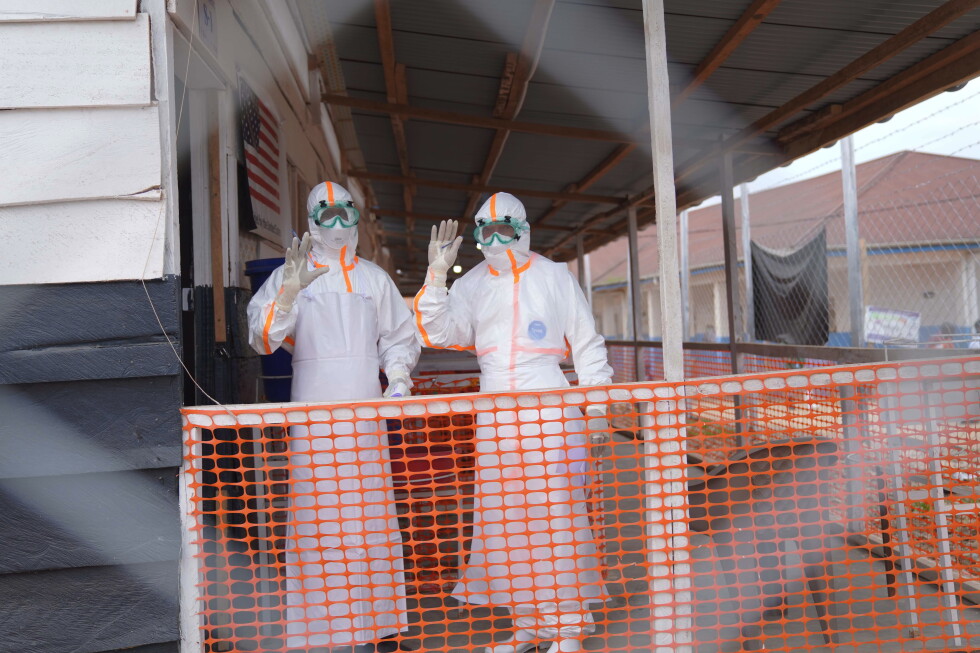
    KAMPALA, UGANDA – In a fresh update to the expanding Ebola outbreak that originated in the Democratic Republic of the Congo, Ugandan health officials announced two additional confirmed infections on Monday, pushing the total number of active cases in the East African nation to seven. All Ugandan cases can be traced directly to the ongoing outbreak centered in eastern DR Congo, which health experts confirm was circulating for days or even weeks before Congolese authorities officially declared the public health emergency on May 15. The cross-border spread first reached Uganda on May 11, when a 59-year-old Congolese national sought care at a Kampala hospital. He died three days later, before clinicians confirmed he was infected with the Ebola virus. Two more Congolese travelers seeking medical treatment in Uganda subsequently tested positive for the virus. Over the weekend, Ugandan authorities confirmed the first locally transmitted infections: a commercial driver and a frontline health worker who had both been exposed to the initial Congolese patient who died in mid-May. Monday’s announcement added two more local cases, both health workers employed at a private Kampala facility who tested positive for the virus. Dr. Charles Olaro, Uganda’s national director of health services, confirmed in an official statement that both newly identified patients have been transferred to a specialized Ebola treatment unit and are currently receiving targeted care. To slow community transmission, Ugandan President Yoweri Museveni has rolled out a series of urgent public health measures, including a national appeal to residents to abandon the common cultural practice of handshakes to reduce viral spread. He also issued an order postponing a major annual religious gathering that typically draws thousands of pilgrims from the Congo and other neighboring countries to a Catholic basilica on the outskirts of Kampala, scheduled to take place before June 3. Additional containment measures include a temporary halt to all cross-border public transportation and commercial flights between Uganda and the DR Congo to limit unchecked movement across the shared border. The crisis unfolding in the DR Congo is far more severe: Congolese authorities reported Sunday that suspected Ebola cases have surpassed 900, with the vast majority concentrated in eastern Ituri province, the epicenter of the current outbreak. Response efforts in the region have been severely hampered by widespread public fear, anger, and deep-seated frustration among local communities, a legacy of decades of armed conflict that has also eroded trust in national authorities. Violent attacks on Ebola treatment centers have further disrupted emergency response work. The DR Congo has recorded more than a dozen Ebola outbreaks since the virus was first identified, but public health experts warn that recent cuts to international aid from wealthy nations including the United States have left eastern Congo uniquely vulnerable to large-scale spread. Aid organizations on the ground confirm they lack critical personal protective equipment for frontline health workers, including face shields and full-body hazmat suits, as well as insufficient diagnostic testing kits and materials for safe burial of contagious victims, a core step to halting transmission. The current outbreak is caused by the Bundibugyo strain of Ebola, a variant for which no approved vaccine or targeted treatment currently exists. The World Health Organization has already declared this outbreak a Public Health Emergency of International Concern, the highest global alert level for infectious disease events. Public health officials identify contact tracing and rapid isolation of exposed individuals as the most critical interventions to stop the virus from spreading widely. Ebola typically causes severe hemorrhagic fever, and the WHO notes that a species of fruit bat is the natural reservoir for the virus. The pathogen spreads through direct contact with bodily fluids of an infected person, or contact with contaminated surfaces and materials.

  • Brazil turns to Carlo Ancelotti to end long wait for World Cup glory

    Brazil turns to Carlo Ancelotti to end long wait for World Cup glory

    For a nation as soccer-obsessed as Brazil, 24 years without a FIFA World Cup trophy has felt like an eternity. The five-time world champions, creators of some of the most iconic players the sport has ever seen—from Pelé to Ronaldo to Ronaldinho—have not lifted football’s most coveted prize since their 2002 triumph, and this year, the country’s hopes for ending that dry spell do not rest on a lethal striker, crafty playmaker or dynamic dribbler. Instead, Brazilians are pinning their dreams of a sixth title on a 66-year-old Italian sitting on the sidelines: legendary manager Carlo Ancelotti.

    Ancelotti, one of the most decorated club coaches of his generation, departed Real Madrid last year to take the helm of the Brazilian men’s national team, a highly unusual move for a program that has almost exclusively been led by domestic managers. Though his early results in charge have been uneven, posting a mixed record of five wins, three defeats and two draws across his first matches, widespread optimism persists that he can lift a current squad widely viewed as less star-studded than Brazil’s legendary historic sides—even with elite global talents such as Neymar and Vinicius Júnior on the roster.

    Brazil’s decades-long title drought has been punctuated by repeated heartbreaking disappointment. Since 2002, the Seleção have only advanced past the World Cup quarterfinals once, when they hosted the tournament in 2014. That run ended in infamous humiliation, with a crushing 7-1 semi-final defeat to eventual champion Germany that remains a raw memory for Brazilian fans. Compounding the nation’s lack of confidence in recent years has been the sustained success of archrival Argentina, which claimed the 2022 World Cup title and has won back-to-back Copa America championships, feeding a growing undercurrent of self-doubt within Brazil’s soccer community.

    In response to this uncertainty, Ancelotti has struck a balanced yet encouraging tone. “It is allowed to believe,” the manager stated in a recent World Cup-themed advertising campaign, acknowledging the quiet uncertainty that has lingered among fans. For the 2026 expanded 48-team World Cup, Brazil will kick off their campaign at New Jersey’s MetLife Stadium on June 13 against 2022 World Cup semi-finalist Morocco, with Haiti and Scotland rounding out their Group C fixtures. While advancing past the group stage is widely treated as an expectation in Brazil—failure to do so would be considered a catastrophic outcome—the question of how far the side can progress against elite competition in the knockout round remains open. Ancelotti, for his part, has expressed confidence in his squad’s potential: “I am aware and reliant that this team can compete against the best in the world. Can we win the World Cup and reach the final? Yes, we can reach the final. But I don’t know if that is enough, it is best for us to get there and win the final.”

    One of the biggest selection calls Ancelotti has made already is the inclusion of 34-year-old star Neymar, who has been plagued by a string of serious knee injuries in recent years. After transferring to Saudi Arabia’s big-spending Pro League in 2023, Neymar barely featured due to fitness issues, and a subsequent return to his boyhood club Santos in Brazil was also cut short by recurring injuries. Despite widespread concerns over his match fitness, Ancelotti named Neymar to the final World Cup squad, calling him a critical piece of the team. Barcelona winger Raphinha echoed that sentiment, recently describing Neymar as “the man of our sixth World Cup title.”

    Unlike the free-flowing, attacking style that made Brazilian football famous around the globe, Ancelotti—renowned as one of the sport’s sharpest tactical minds—has implemented a more structured, counter-attacking system for the Seleção. He often deploys a compact 4-4-2 formation that can quickly shift to an aggressive 4-2-4 when turning defense into attack, prioritizing defensive solidity over the constant ball dominance that defined past Brazil sides.

    Overall, Ancelotti retains broad support among Brazilian fans and football figures, even with his uneven early results. During World Cup qualifying, Brazil claimed two wins, one draw and one loss under Ancelotti, finishing fifth in the South American standings behind Argentina, Ecuador, Colombia and Uruguay. In recent friendly matches, the side secured a meaningful win over Croatia—who knocked Brazil out of the 2022 World Cup on penalties—before falling to 2022 runner-up France. Former Brazil left-back Filipe Luís, who recently launched his own coaching career, called Ancelotti “the best thing that happened” to the national team back in April. “It is not a sure thing we will win anything,” he noted. “But we needed someone big, with enough support to make decisions. A man people respect, who knows Brazil has gone through many years in doubt for not winning the World Cup.”

    Ancelotti took charge of Brazil after a period of extreme instability for the national program. The Seleção struggled through 2026 qualifying, dropping two matches to Argentina, and were knocked out by Uruguay in the 2024 Copa America quarterfinals. Three different managers occupied the role in quick succession—interim coaches Ramon Menezes and Fernando Diniz, plus full-time boss Dorival Júnior—all departing after poor results and widespread fan criticism. While that was unfolding, the Brazilian Football Confederation actively pursued Ancelotti, whose second tenure at Real Madrid was drawing to a close even after the club claimed both the 2024 Champions League and La Liga titles. So convinced are Brazilian officials that they have made the right hire that they already extended Ancelotti’s contract through the 2030 World Cup. “We have a beast taking care of our national team, a man who is respected by everyone,” Luís said. “This World Cup is for us to build on that.”

  • Husband of former Scottish leader pleads guilty to embezzlement from party

    Husband of former Scottish leader pleads guilty to embezzlement from party

    EDINBURGH, Scotland — In a landmark development that has rocked Scottish politics more than two years after the start of a sweeping financial probe, the former chief executive of the Scottish National Party (SNP) and estranged husband of ex-Scottish leader Nicola Sturgeon has entered a guilty plea to charges of embezzling over £400,000 ($540,000) from the pro-independence party.

    Sixty-two-year-old Peter Murrell was remanded into custody immediately following his admission of guilt at the High Court in Edinburgh on Monday. Court documents outline that Murrell diverted party funds for personal use between 2012 and 2016, acquiring a recreational motorhome, two private vehicles, and a range of high-end luxury goods with the misappropriated funds.

    Murrell’s legal process stretches back to April 2023, when he was first taken into custody as part of the investigation into the SNP’s opaque financial records. Formal charges against him were not filed until April 2024. The investigation itself was triggered by questions surrounding the expenditure of more than £600,000 ($810,000) that had been earmarked specifically for a grassroots campaign pushing for Scottish independence from the United Kingdom. For nearly two years, the probe hung over Scottish public life, casting uncertainty over both the SNP’s leadership and the legacy of its long-serving leader, Nicola Sturgeon.

    Sturgeon, who led the SNP and Scotland’s semi-autonomous devolved government for eight years before stepping down unexpectedly in 2022, was officially cleared of any wrongdoing in the case last year. The former first minister, who dominated Scottish political discourse for nearly a decade, overhauled the SNP during her tenure, transforming the once-single-issue independence party into a formidable liberal governing force that won repeated electoral victories. She steered the country through the global COVID-19 pandemic, earning widespread public acclaim for her calm, consistent communication style, and led the party through three UK-wide general elections and two devolved Scottish parliamentary contests. Sturgeon’s political exit came amid deep internal divisions within the SNP, however, and she left office without achieving her core policy goal of securing independence for Scotland’s 5.5 million residents.

    Former SNP treasurer Colin Beattie, who was also arrested and questioned as part of the investigation three years ago before being released on bail, has likewise been cleared of all wrongdoing. In the wake of Murrell’s arrest in 2023, Sturgeon and Murrell announced they would end their 15-year marriage, and their divorce was finalized last year.

    The guilty plea closes one chapter of the SNP’s financial scandal, but it is expected to reignite debates over internal party governance and transparency, as the current SNP leadership continues to grapple with fallout from the probe and ongoing divisions over the strategy for advancing Scottish independence.

  • Pope urges ‘disarming’ of artificial intelligence in major manifesto

    Pope urges ‘disarming’ of artificial intelligence in major manifesto

    In a landmark, long-awaited address on the accelerating growth of artificial intelligence, Pope Leo XIV, the first American pontiff to lead the global Catholic Church, released his first-ever encyclical Monday at the Vatican, using the authoritative Church teaching document to issue a urgent call for the full “disarming” of AI and warn of hidden systemic harms that threaten human dignity.

    Joined on stage by top AI ethics leaders, including a co-founder of major U.S. AI developer Anthropic, the pontiff used the text *Magnifica Humanitas* (translated Magnificent Humanity) to reject modern arguments for military use of AI, declaring that the long-held concept of “just war”—recently cited by the Trump administration to justify conflict—has become entirely outdated. Pope Leo, who has already publicly clashed with the White House over the Iran war and the use of religious doctrine to legitimize armed conflict, drew a clear line on lethal AI systems, stressing that it can never be morally acceptable to hand life-or-death lethal decisions over to algorithmic systems.

    The pope’s stance aligns with the public position of Anthropic, which has framed itself as an industry leader in ethical AI development. The firm is currently locked in a legal dispute with the U.S. military over its refusal to allow its technology to be repurposed for lethal autonomous weapons or mass surveillance programs. While Pope Leo did not name U.S. President Donald Trump directly in the text, he left no ambiguity about his position: “It is important to reaffirm that the ‘just war’ theory, which has all too often been used to justify any kind of war, is now outdated. No algorithm can make war morally acceptable.”

    Beyond military risks, the pontiff unpacked the broader social and economic inequities amplified by the AI boom. Citing United Nations projections that the total value of the global AI economy could reach $4.8 trillion by 2030—a 25-fold increase over a decade—he noted that almost all of this wealth is concentrated in the hands of a tiny elite. Defining what “disarming AI” actually means, he wrote: “Disarming AI means freeing it from the mentality of ‘armed’ competition. It does not mean rejecting technology, but preventing it from dominating humanity.” He condemned the global mad dash for more powerful algorithms and larger proprietary datasets, driven exclusively by the pursuit of geopolitical advantage and commercial monopoly, and argued that AI must be redesigned to be human-centered, universally accessible, and open to ongoing public debate.

    Making AI ethics a defining cornerstone of his early papacy, Pope Leo wove references to global cultural touchstones throughout the 70-page text, drawing comparisons to the thoughts of Greek philosopher Plato, thematic elements of Beethoven’s Ninth Symphony, and even narrative insights from a character in J.R.R. Tolkien’s *The Lord of the Rings*. The encyclical was signed on May 15, the 135th anniversary of Pope Leo XIII’s groundbreaking 1891 encyclical that established the Catholic Church’s modern social doctrine amid the upheaval of the first Industrial Revolution— a deliberate parallel drawn to frame AI as the defining ethical challenge of the current industrial age.

    In one of the text’s most striking passages, Pope Leo warned that the AI revolution is already creating insidious “new forms of slavery” that are hidden from public view. “Nothing in the world of AI is immaterial or magical,” he wrote. Every seamless, instant response that users interact with relies on the unseen, exploitative labor of millions of people around the world: from content moderators forced to consume violent and traumatic material on a daily basis, to child laborers mining the rare earth minerals that power AI data centers. These workers, he noted, are left “scarred, injured and worn down so that computational flow may continue uninterruptedly.”

    The pontiff added that greater technological efficiency and commercial innovation can never justify a deliberately hidden global chain of exploitation, and called for urgent action to cut AI’s large carbon footprint and protect the planet, which he described as humanity’s “common home.” The release of *Magnifica Humanitas* follows years of careful study and consultation by the Vatican on AI ethics; as early as 2020, the Holy See launched the Rome Appeal for an AI Ethic, which laid out early principles requiring new technologies to uphold fundamental human dignity. AI and ethics experts now widely predict the encyclical will carry global influence comparable to Pope Francis’s 2015 *Laudato Si*—the landmark climate manifesto that reshaped global political and public discourse around climate action.