作者: admin

  • Gunman shot dead near White House

    Gunman shot dead near White House

    On a Saturday evening in downtown Washington D.C., a violent shooting incident unfolded just blocks from the White House, triggering an immediate security lockdown and leaving one assailant dead and an uninvolved civilian fighting for life, according to statements from United States law enforcement authorities.

    The chaos began when 21-year-old suspect Nasire Best positioned himself at the intersection of 17th Street and Pennsylvania Avenue — a high-traffic area steps from the secure White House complex — before pulling a firearm from his carry bag and opening fire, the U.S. Secret Service confirmed in an official post on the social platform X. In response, on-site Secret Service agents returned fire, striking the suspect. He was rushed to a nearby medical facility where he was later pronounced dead.

    A bystander was also hit by gunfire during the exchange and remained in critical condition as of the latest updates. Law enforcement officials noted that investigators have not yet determined whether the civilian was struck by bullets fired by Best or by the returning rounds from Secret Service agents. The agency confirmed no officers were harmed in the incident, and that former President Donald Trump, who was staying at the White House at the time, was never in danger and his schedule was unaffected. Trump had originally planned to spend the weekend at his golf club in New Jersey, but altered his plans a day prior to remain in Washington.

    Details released publicly later confirmed Best had a documented prior encounter with law enforcement near the White House. Court records from the District of Columbia show Best was arrested in July 2025 after he attempted to enter an unauthorized White House checkpoint, ignored repeated orders from officers to stop, claimed he was Jesus Christ, and explicitly stated he wanted to be taken into custody. Following an initial court hearing, a Pretrial Stay Away Order was issued — a standard protective measure that barred Best from entering the White House perimeter before his trial. When Best failed to appear for a scheduled follow-up hearing in August 2025, a bench warrant was issued for his arrest over documented noncompliance with court terms.

    In the hours after the shooting, evidence of the confrontation remained visible to onlookers outside the White House complex: yellow crime scene tape stretched across the sidewalk, investigators placed dozens of orange evidence markers to catalog bullet casings and other evidence, and discarded emergency medical supplies including purple surgical gloves and first aid kits were left at the scene. Journalists covering the White House who were on the North Lawn when shots rang out described a sudden, chaotic evacuation: multiple reporters said they heard what sounded like dozens of gunshots before being ordered to run to the secured press briefing room for shelter.

    “I was in the middle of taping a social media video from the White House North Lawn when we heard the shots,” ABC News White House correspondent Selina Wang told media outlets after the lockdown. “It sounded like dozens of gunshots. We were told to sprint to the press briefing room where we are holding now.”

    The incident marks the third shooting-related security scare near the U.S. president within a single month. Prior incidents included a weapons-related event at the White House Correspondents’ Association dinner in April and another shooting near the Washington Monument earlier in May.

    Federal law enforcement teams have led the investigation into the attack. FBI Director Kash Patel confirmed in a social media statement that FBI personnel were deployed to the scene immediately and that the agency would release new public updates as more information becomes available.

  • Rubio says ‘solid’ Iran deal may come on Monday

    Rubio says ‘solid’ Iran deal may come on Monday

    During a press briefing while on an official visit to New Delhi, India, U.S. Secretary of State Marco Rubio has confirmed that negotiators from the United States and Iran have put forward a substantive draft framework for a preliminary agreement, with a possible announcement as early as Monday.

    Rubio emphasized that the agreement remains an unfinished work, telling reporters that while a solid proposal outlining the reopening of the Strait of Hormuz is already on the table, Washington is still awaiting a formal response from Tehran. “I wouldn’t read too much into it, it takes a little while to hear back from Iran,” Rubio noted.

    The reported tentative deal centers on three core components: a 60-day extension of the existing ceasefire, the full reopening of the strategic Strait of Hormuz, and a structured roadmap for future negotiations on the long-standing dispute over Iran’s nuclear program. The Strait of Hormuz, a chokepoint through which roughly 20% of the world’s daily oil and liquefied natural gas supplies transit, has been effectively blocked by Iran since the outbreak of the latest conflict in the region, sending global energy markets into volatility.

    The update comes just days after U.S. President Donald Trump contradicted earlier hints of an imminent deal by publicly instructing his negotiating team to avoid rushing into an agreement. Behind the scenes, the talks have been delayed by a major communication barrier, according to reporting from CBS News, the BBC’s U.S. news partner. U.S. intelligence assessments indicate that Iran’s Supreme Leader Mojtaba Khamenei, who took power after his father and predecessor was killed in an Israeli strike on the first day of the war, has been hiding in an undisclosed location after sustaining injuries in the same attack. This isolation has slowed decision-making and communication between Khamenei and his negotiating envoys, a factor that has extended the timeline of talks.

    Iranian foreign ministry spokesperson Esmail Baghaei struck a measured tone over the weekend, acknowledging that the two sides are simultaneously “very close and very far” from sealing an agreement. Crucially, the proposed deal is not a final comprehensive resolution, but instead a confidence-building stepping stone that pushes the most intractable issues to subsequent negotiations. These thorny outstanding questions include the scope and timeline for lifting U.S. economic sanctions on Iran, the release of billions of dollars in frozen Iranian assets held overseas, and Washington’s core demand that Iran permanently curb its nuclear enrichment activities.

    The prospect of the deal has already created a deep schism within Trump’s own Republican party, with several high-profile senators coming out publicly against the framework, arguing it is far too lenient toward Tehran. Senator Ted Cruz has called the potential agreement “a disastrous mistake”, while Senate Armed Services Committee Chair Roger Wicker claimed that a 60-day ceasefire would erase all gains from the U.S.-Israeli military campaign Operation Epic Fury, saying “everything accomplished by Operation Epic Fury would be for naught!” Even Lindsey Graham, a long-time close ally of Trump, has criticized any deal that would leave Iran perceived as a dominant regional power, asking “It makes one wonder why the war started to begin with.”

    Trump pushed back hard against his intra-party critics on his Truth Social platform, dismissing them as “losers, who are critical about something they know nothing about”. The president insisted that any deal he finalizes with Iran will be a strong, positive agreement for the United States, writing “If I make a deal with Iran, it will be a good and proper one.” He also reaffirmed his red line that Iran cannot be permitted to develop a nuclear weapon, a demand that Tehran has repeatedly pushed back on, with Iranian officials consistently maintaining that their nuclear program is exclusively for peaceful civilian energy and medical purposes.

    Some unconfirmed U.S. media reports suggest that the draft deal includes a provision for Iran to eventually transfer its stockpile of highly enriched uranium to third-party oversight. At the outbreak of the war in late February, U.S. estimates placed Iran’s stockpile of uranium enriched to 60% purity at roughly 440 kilograms, a level just one small processing step away from the 90% purity required to build a functional nuclear weapon. In recent comments to Iranian state television, Iranian President Masoud Pezeshkian said Tehran was ready to “assure the world that we are not after a nuclear weapon.”

    Beyond the political wrangling in Washington and Tehran, news of the potential deal has already moved global markets. On Monday, international crude oil prices dropped sharply amid growing optimism that the Strait of Hormuz will reopen, while equity markets across Asia posted significant gains. Still, industry analysts warn that even if a deal is announced in the coming days, it will take months for global shipping and energy supply chains to return to their pre-crisis state. Lars Jensen, chief executive of Vespucci Maritime and a former senior director at shipping giant Maersk, told BBC Radio 4’s Today programme that shipping firms will remain cautious even after a deal is signed. “Should a deal between Iran and the US be announced in the coming days, the industry would still remain ‘cautious and hesitant’ to make any ‘major operational changes’,” Jensen explained, adding that it could take months for supply chains to return to the physical condition they were in before the crisis began.

    To contextualize the current talks: the latest Middle East conflict began on February 28, when the United States and Israel launched widespread military strikes against Iranian targets, triggering retaliatory attacks from Iran on Israel and U.S. allied states in the Gulf. Iran’s subsequent decision to close the Strait of Hormuz sent global oil prices soaring to multi-year highs. A preliminary ceasefire was reached in early April, after which the U.S. imposed a full naval blockade on Iranian ports, a measure that Trump says will remain “in full force and effect until an agreement is reached, certified, and signed.”

  • Iranians find ‘peace and safety’ in Mecca during hajj

    Iranians find ‘peace and safety’ in Mecca during hajj

    For thousands of Iranian pilgrims gathering in Mecca for this year’s annual hajj, the sacred Islamic journey has offered a rare, precious escape from the chaos of devastating conflict unfolding back home.

  • Tennis Australia hires NRL CEO Andrew Abdo to replace Craig Tiley

    Tennis Australia hires NRL CEO Andrew Abdo to replace Craig Tiley

    In a widely anticipated leadership shakeup for Australian tennis, Andrew Abdo, a long-time executive with Australia’s National Rugby League (NRL), has been tapped to take over as chief executive officer of Tennis Australia, filling the vacancy left by outgoing chief Craig Tiley. Both the NRL and Tennis Australia formally confirmed the senior leadership appointment in official media statements released on Monday.

    Tiley, a South African-born sports administrator, first announced his planned departure back in February. After nearly two decades at the helm of Australian tennis, he will step down from his dual roles as Tennis Australia CEO and Australian Open Tournament Director to take up a senior position with the United States Tennis Association, the governing body that oversees the annual U.S. Open Grand Slam.

    Tiley’s tenure with Tennis Australia stands as one of the most transformative periods in the organization’s history. He first took on the Australian Open tournament director role back in 2006, and over his 18 years in charge, he oversaw the event’s dramatic expansion, most notably extending it from a 14-day to a 15-day competition. Under his leadership, the tournament repeatedly smashed both attendance and revenue records, cementing its status as one of the most prestigious and commercially successful stops on the global tennis tour. He added the title of Tennis Australia CEO to his portfolio in 2013.

    Like Tiley, Abdo is also a South African-born leader, and brings nearly 11 years of senior executive experience in Australia’s professional sports industry to his new role. He joined the NRL in 2013, starting out as the league’s chief commercial officer before being promoted to CEO in 2020. Throughout his time at the NRL, Abdo earned widespread praise for his steady leadership, particularly during the unprecedented disruption of the COVID-19 pandemic, when he guided the league through complex public health restrictions to keep competition running. He also played a central role in driving the NRL’s expansion and long-term commercial growth during his tenure as CEO.

    In his first public comment following the appointment, Abdo emphasized the unique standing of tennis and the Australian Open in the global sports landscape. “Tennis Australia has a unique role in Australian sport. The Australian Open is already one of the leading sporting events in the world,” Abdo said. “The opportunity is to keep evolving it – as a global event, as a fan experience, and as a platform that brings more people into the sport.”

    Tennis Australia’s board conducted a global recruitment search for the new CEO role, which drew more than 150 expressions of interest from candidates across the world. The organization highlighted that Abdo’s proven track record of leading a high-profile, large-scale national sports league made him the clear standout candidate for the role.

    In a farewell statement, Tiley offered an optimistic assessment of Australian tennis’s current position and future trajectory. “Tennis is one of the nation’s most popular sports, and participation is growing,” Tiley said. “We have a great group of players performing at the highest level and a world-class team developing the next generation of talented players and coaches.”

    As the first of the four Grand Slam tournaments on the annual global tennis calendar, the Australian Open holds a unique place in the sport, opening the season each year before the tour moves on to the French Open, Wimbledon, and the U.S. Open. The leadership transition comes as the tournament continues to solidify its status as a cornerstone of the international tennis circuit.

  • Anger grows after China’s deadliest coal mining disaster in years

    Anger grows after China’s deadliest coal mining disaster in years

    A massive explosion at the Liushenyu coal mine in northern China’s Shanxi Province, the core of the country’s massive coal mining sector, has left at least 82 people dead and more than 120 injured, marking the deadliest mining disaster China has seen since 2009. What makes this tragedy particularly jarring for the Chinese public is that it harks back to the deadly epidemic of mining disasters that plagued China’s coal sector in the 2000s — a dark chapter that many believed had been permanently closed through years of regulatory reform.

  • Record 50m freestyle time at controversial Enhanced Games

    Record 50m freestyle time at controversial Enhanced Games

    The first ever Enhanced Games, a controversial Las Vegas-based competition that openly permits competitors to use performance-enhancing substances banned from mainstream elite sport, concluded with only one athlete beating a recognized global world record — a result that falls far short of organizers’ earlier optimistic predictions.

    Greek swimmer Kristian Gkolomeev, a 32-year-old who has gone podium-less across four consecutive Olympic appearances, clocked 20.81 seconds in the men’s 50m freestyle event. That time beat the previous official world record of 20.88 seconds set by Australian Cameron McEvoy earlier this year. However, Gkolomeev’s new mark will never be formally recognized by global sporting authorities, due to the event’s permissive stance on banned substances. Gkolomeev also wore a polyurethane swimsuit, a design that is outlawed in all official international swimming competitions for the performance advantage it provides.

    The Enhanced Games’ founding premise rejects mainstream anti-doping rules, arguing that performance enhancement is already widespread in elite sport but practiced in secret, and that open, regulated access to enhancement would create a safer, fairer playing field. All performance-enhancing substances used by athletes at the event are required to be approved by the U.S. Food and Drug Administration, and include testosterone, growth hormone, anabolic steroids and peptides — all substances strictly banned by the World Anti-Doping Agency (WADA) and the International Olympic Committee (IOC).

    Of the 42 athletes competing across swimming, athletics and weightlifting, the majority admitted to using performance-enhancing substances, with organizers confirming 13 competitors set new personal bests. The invite-only event was held in front of a curated audience of roughly 2,500 guests, with no tickets made available to the general public.

    Other high-profile competitors saw mixed results. American former 100m world champion Fred Kerley, one of the few athletes who competed clean, won the men’s 100m with a time of 9.97 seconds, far off his personal best of 9.76 seconds. British swimmer Ben Proud, 2024 Paris Olympic silver medalist in the 50m freestyle, took gold in the 50m butterfly with a time of 22.32 seconds, just 0.05 seconds off Andrii Govorov’s existing world record, a margin that left him disappointed. Fellow British Olympic swimmer Emily Barclay won the women’s 50m freestyle in 24.09 seconds, roughly half a second slower than the current world record. Hafthor Bjornsson, the former Game of Thrones actor best known for playing The Mountain and a former professional weightlifter, also competed but failed to beat his own existing deadlift world record of 510kg.

    For his world record swim, Gkolomeev took home $250,000 in prize money for the win plus an additional $1 million bonus for the unofficial record. The Greek athlete called the windfall life-changing, saying: “It’s not bad at all. This is going to change my life to the good, for sure. It’s a big help for me and my family. And yeah, I’m going to continue next year. Maybe I’ll break it again.”

    The event has faced fierce condemnation from global sporting governing bodies since its announcement. World Aquatics, the global governing body for swimming, labeled the Enhanced Games a “circus, built on short-cuts”. The IOC and WADA have described the concept as “immoral”, “dangerous” and “irresponsible”, while World Athletics president Lord Coe called any athlete choosing to compete “moronic”. Multiple national governing bodies have issued formal rebukes to participating athletes, and some have issued formal bans for competing.

    Founded in 2023 by entrepreneurs Aron D’Souza and Maximilian Martin, the project has secured high-profile backing from Silicon Valley billionaire Peter Thiel and Donald Trump Jr. Prior to the event, Martin predicted that athletes would break “quite a few” world records, a projection that fell far short of the single record set at the 2025 inaugural competition.

  • ‘You are not alone’: Prince Harry issues powerful fatherhood message while backing Movember mental health report

    ‘You are not alone’: Prince Harry issues powerful fatherhood message while backing Movember mental health report

    During a recent official visit to Australia, the Duke of Sussex has delivered a raw, personal address on the ups and downs of modern fatherhood, throwing his support behind a landmark new study that will soon spark parliamentary debate over systemic gaps in support for first-time fathers. Prince Harry, the youngest son of Britain’s King Charles III, helped launch the Movember Foundation’s new report titled *More than a Provider* — an in-depth study of new fatherhood experiences from the global men’s mental health charity. The report pulls back the curtain on widespread neglect of paternal mental health that has long flown under the public and policy radar.

    Opening up about his own journey into parenthood, Prince Harry shared a vulnerable, reassuring message for any new father grappling with the seismic life shift of welcoming a child: “You are not alone.” He warned against the dangerous cultural expectation that men should suppress their struggles, explaining that bottling up emotions does not make them disappear — instead, stress and uncertainty snowball over time, leaving fathers in a place where they cannot show up for their families, a position no one wants to reach. “To simply be seen, acknowledged and asked how you’re doing as a dad — that can be transformational,” he said. “Too many men go through this period without anyone checking in, even though it is such a big moment in their lives.”

    Reflecting on his own transition to fatherhood, the Duke noted that the emotional and practical shift of becoming a parent begins the moment a pregnancy is announced, not nine months later when the child arrives. He emphasized that self-doubt and turbulence during this transition are normal: “It is messy, it’s a rollercoaster, and there are moments where you question yourself. We shouldn’t judge ourselves for that.”

    The *More than a Provider* report draws on survey responses from 1,216 Australian first-time fathers to build its evidence base. While the vast majority of respondents — 84 percent — agreed that becoming a father gave their life deeper meaning, the study also laid bare critical shortcomings in the mental health and practical support available to new dads. The most staggering finding: three out of five new fathers reported that no one ever asked about their mental health, either during their partner’s pregnancy or in the first 12 months after their child’s birth. One in four respondents rated their overall physical and mental health as poor or fair in their first year of fatherhood, and 20 percent said they had experienced increased isolation and loneliness since welcoming their child.

    Zac Seidler, global research director at Movember, explained that investing in paternal support during the transition to fatherhood benefits entire families: “Dads want to be present, involved and healthy for their families. The opportunity now is to keep building practical support around them, including routine check-ins, confident health workers and community programs that help dads stay connected.” Seidler added that fatherhood is one of the rare moments when men actively engage with the health system and reflect on their own well-being — yet systemic gaps leave this window of opportunity untapped, as few providers or loved ones think to ask how fathers are actually coping.

    Moving forward, the report will be formally tabled in the Australian Parliament by a cross-party group of lawmakers, led by Dan Repacholi, Australia’s special envoy for men’s health. Repacholi echoed the report’s call for greater action, noting: “Becoming a dad is one of the proudest moments in a bloke’s life, but it can also be one of the hardest. This report shows that Aussie dads are stepping up for their kids and families in ways that are really positive. It also shows there is a real opportunity to make it easier for dads to talk about their health, get support early and stay connected during one of the biggest transitions of their lives.”

  • Australian sharemarket soars, oil prices sink after Trump’s Iran post.

    Australian sharemarket soars, oil prices sink after Trump’s Iran post.

    Financial markets around the Asia-Pacific region swung sharply on Monday after a social media post from former US President Donald Trump hinted at progress in ongoing negotiations for a new nuclear and energy deal with Iran, triggering a sharp drop in global crude prices and lifting Australia’s benchmark share index to its highest level in two weeks.

    Trump took to his Truth Social platform to share an unexpected update on the stalled talks, writing that a potential agreement was “largely negotiated”, with only final details remaining to be ironed out before an official announcement. The former president stressed that any deal his team reaches would be far stronger than the 2015 Obama-era agreement, which he criticized for granting Iran access to large cash reserves and an unimpeded path to develop nuclear weapons. “If I make a deal with Iran, it will be a good and proper one… Our deal is the exact opposite,” he wrote, while adding that negotiations are not yet fully finalized to temper overblown market expectations.

    Global markets quickly priced in the prospect of a breakthrough that could reopen the critical Strait of Hormuz — the chokepoint through which roughly 20% of the world’s daily oil supplies pass — easing geopolitical supply risks that have propped up crude prices in recent months. By the close of Australian trading, benchmark Brent crude had tumbled 5.6% to settle at $US97.77 a barrel, marking its first dip below the $100 threshold in weeks.

    The decline in energy prices flowed through directly to Australia’s benchmark S&P/ASX 200, which climbed 35 points, or 0.4%, to close at 8692 — a fresh two-week high. The broader All Ordinaries index followed suit, gaining 38.20 points, or 0.43%, to end the session at 8915.40. The Australian dollar also strengthened against the US dollar, rising to 71.65 US cents by market close.

    Six of the ASX’s 11 industry sectors closed in positive territory, led by mining and technology stocks. Major mining names led the rally: BHP added 0.62% to close at $60.12, Rio Tinto climbed 1.62% to $187.81, and Fortescue Metals Group jumped 1.67% to $21.86. In the technology sector, accounting software firm Xero gained 0.99% to $76.59, logistics tech provider WiseTech Global rose 0.75% to $37.37, and communications technology firm Codan added 1.15% to $40.42.

    Australia’s big four banks recorded mixed performance: Commonwealth Bank of Australia fell 0.65% to $164.60, Westpac gained 0.60% to $36.77, National Australia Bank climbed 1.14% to $38.28, and Australia and New Zealand Banking Group closed up 0.76% at $35.77.

    Energy stocks, as expected, retreated sharply on the back of falling crude prices. Top Australian energy producer Woodside Energy fell 4.24% to $30.74, Santos dropped 3.64% to $7.94, and fuel retailer Ampol gave up 4.20% to $33.95.

    Kyle Rodda, senior financial market analyst at global investment platform Capital.com, noted that while speculation of a looming US-Iran deal lifted market sentiment, traders remained cautious after months of inconsistent reports about negotiation progress. “There is healthy scepticism – along with plenty of cynicism – about the prospects of a deal. That’s especially true after months of misleading news and propaganda about a peace deal. Recent reportage suggests negotiators are closing in on an agreement,” Rodda explained.

    In individual company news, property fund manager Charter Hall led gainers with a 6.67% jump to $20.62 after the firm upgraded its 2026 operating earnings guidance and reported $6.5 billion in year-to-date equity inflows. Online beauty retailer Adore Beauty also climbed 6.25% to $0.34 after releasing unaudited interim results showing $193.4 million in revenue over the 47 weeks ending May 24.

    Mexican fast food chain Guzman y Gomez, which recently announced it would exit the US market after six years of sustained losses, saw volatile trading on Monday: the stock surged as high as $21.77 in early morning trading before paring gains to close up just 0.25% at $19.86.

  • Dramatic footage captures moment rescue crews winch rock climber to safety after horror 8m fall from Mount Buffalo in Victoria

    Dramatic footage captures moment rescue crews winch rock climber to safety after horror 8m fall from Mount Buffalo in Victoria

    Footage of a high-stakes mountain rescue operation that unfolded earlier this year has been made public, detailing the nerve-wracking extraction of a rock climber who survived a devastating 8-meter fall after his climbing gear malfunctioned at a popular Victorian alpine destination.

    The incident took place on the Horn, a well-known climbing spot located on Mount Buffalo, roughly 325 kilometers northeast of Melbourne. Standing at 1,723 meters above sea level at its highest plateau, Mount Buffalo draws hundreds of hikers and climbers annually for its challenging rock faces and scenic alpine views. On the day of the accident, a failure in the climber’s protective equipment sent him tumbling off the route he was ascending, leaving him stranded on a narrow, unstable ledge hundreds of meters above the valley floor.

    A spokesperson for Ambulance Victoria confirmed that the climber suffered severe trauma from the fall, including suspected broken ribs. The impact of the fall left him briefly unconscious before emergency responders were called to the remote site. Multiple specialized emergency teams were deployed to the incident: a Helicopter Emergency Medical Service (HEMS) air crew, paired with ground teams from Mobile Intensive Care Ambulance (MICA) with advanced life support capabilities.

    Before the extraction could begin, the HEMS crew first completed a low-altitude reconnaissance flight over the ledge to evaluate whether a winch rescue could be carried out without putting responders at unacceptable risk. After confirming the operation was feasible, MICA Flight Paramedic Shaun Whitemore was lowered down onto the narrow ledge to treat the injured climber. Working in what emergency officials described as “extremely tight conditions,” Whitemore stabilized the climber’s injuries, administered potent pain relief, and applied splints to fractured ribs to prepare the patient for air extraction.

    Once the climber was stabilized, he was successfully winched back up to the waiting rescue helicopter. He was then flown directly to Royal Melbourne Hospital, a major tertiary trauma center, to receive ongoing specialized medical care. Months after the successful operation, Ambulance Victoria has released on-the-scene footage and photos from the March rescue, shining a light on the extraordinary work of high-altitude emergency responders who carry out these risky missions to save lives.

  • Drone attacks raise fears as Colombians vote to elect a new president

    Drone attacks raise fears as Colombians vote to elect a new president

    JAMUNDI, Colombia — For 70-year-old Potrerito villager Gladys Marín, the route to Colombia’s upcoming presidential polling station is only a short cross-street walk away. Yet even this trivial trip feels like an enormous risk, as growing insecurity has left her questioning whether casting a ballot is worth endangering her life.

    Marín’s southwestern home sits less than 100 meters from the local police station — a site that has become a repeated target for drone-borne explosive attacks carried out by a dissident rebel faction that rejected the 2016 peace accord with the Colombian government. “You have to stay alert every minute, because we live right next to the police station,” Marín explained from her porch, 470 kilometers southwest of the capital Bogotá.

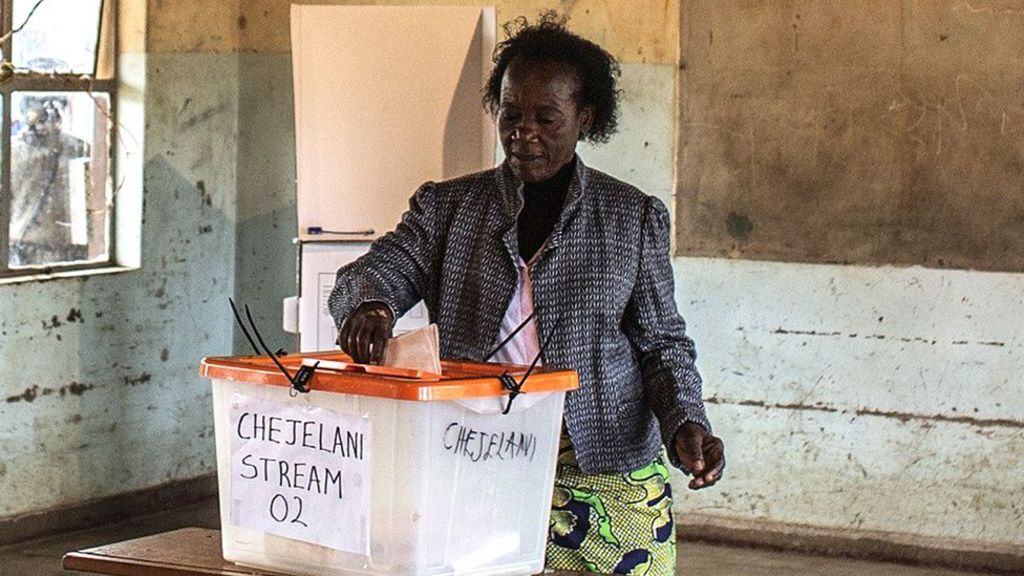
    On May 31, Colombians will head to the polls to elect a new president and vice president, in a contest widely framed as a public referendum on the policies of incumbent President Gustavo Petro. The most debated topic at the heart of the race is Petro’s signature “total peace” initiative, a bold policy designed to end decades of internal conflict by negotiating disarmament with the country’s remaining illegal armed groups.

    Across the country, rising violence linked to these armed factions has intensified under Petro’s administration, creating fear and uncertainty that extend directly to the electoral process. Colombia’s Electoral Observation Mission estimates that 386 municipalities — roughly one-third of the country’s total local jurisdictions — face high risk of interference and harm from illegal armed groups. Independent analysis from the Bogotá-based think tank Ideas for Peace Foundation adds that approximately 27,000 combatants remain active under arms across the nation.

    In recent years, the proliferation of modified drones carrying explosives has fundamentally reshaped the landscape of conflict in Colombia, creating new risks for both security forces and civilian populations. This tactical shift is particularly visible in Jamundi, where neighboring Robles town has blocked all streets leading to the local police station with makeshift barricades. Officers stand watch in sandbag-reinforced sentry posts draped in black fabric, constantly scanning the sky for incoming hostile drones.

    Eucaris Zamora, a Robles resident who was forced to abandon her home after a cylinder bomb from a drone destroyed half the building last October, says constant dread has become part of daily life. “You pass the police station always looking up, dreading that you’ll run into a nasty surprise,” she said.

    Guillermo Londoño, security secretary for the Valle del Cauca department where Jamundi is located, notes that armed groups have evolved their drone tactics to increase casualties and chaos. Instead of launching single drone attacks followed by reloading, groups now carry out coordinated “swarm-style” simultaneous strikes that overwhelm defensive positions.

    Colombia’s Defense Ministry data underscores how rapidly this threat has grown: 333 drone attacks were recorded across the country in 2025, a more than fivefold increase from just 61 incidents in 2024. As of early 2025, the Colombian army has documented 107 drone strikes that have already killed two soldiers, with the highest concentrations of attacks along the Venezuelan border, northern Bolívar province and southwestern coastal regions.

    Local officials frame the rising violence in Valle del Cauca as a direct failure of Petro’s “total peace” strategy, which was designed to end one of the world’s longest-running internal armed conflicts. Petro has publicly acknowledged that the initiative has failed to deliver the rapid disarmament of illegal networks he initially promised, and has recently hardened his approach: negotiations with several non-compliant groups have been frozen, while dialogue continues with other factions that have adhered to ceasefire commitments.

    The election has exposed a sharp ideological divide among presidential candidates over how to address the country’s security crisis. On one side, candidates aligned with Petro’s administration, including ruling movement Sen. Iván Cepeda, advocate for continuing negotiated dialogue to end the conflict. On the opposition side, candidates like Sen. Paloma Valencia of the right-wing Democratic Center and Abelardo de la Espriella — an open admirer of Salvadoran hard-line President Nayib Bukele — have pledged to abandon negotiations entirely and prioritize full-scale military pressure to dismantle illegal groups.

    International crisis analysts warn that escalating military pressure could backfire and lead to even more bloodshed. “Right-wing candidates propose a hard-line response that could exacerbate violence, because armed groups will respond to state military pressure with terror attacks against civilian and security targets,” explained Elizabeth Dickinson, senior analyst for the International Crisis Group. “They lack the capacity to fight a conventional symmetric war against the army, so they will turn to asymmetric attacks to sow fear.”

    Even in communities that have born the brunt of rising violence, many residents still hold out hope for a peaceful future. Last December, a large-scale gun assault on the police station in the small southern town of Buenos Aires left multiple officers injured, destroyed a local bank and reduced dozens of nearby homes to rubble. Among the wrecked properties was the home of 89-year-old Celimo Enrique Aguilar. When asked if he still believed Colombia could achieve lasting peace, Aguilar said: “I haven’t lost faith that someday, we’ll all be able to live without fear.”