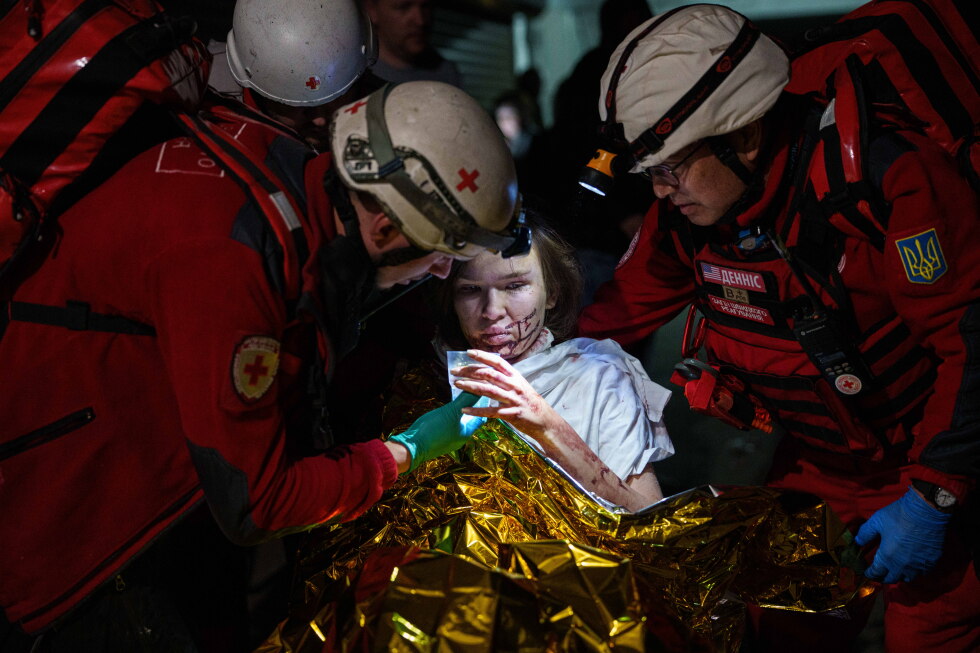
KYIV, Ukraine – As recovery crews swept shattered glass from Kyiv’s sidewalks and assessed damage to residential blocks, public infrastructure and government compounds Monday, two overlapping diplomatic and military developments shifted global attention to the northern flank of the Russia-Ukraine war: Sviatlana Tsikhanouskaya, Belarus’ exiled opposition leader, made her first ever visit to the Ukrainian capital, while world powers raced to dissuade Belarus’ authoritarian leadership from formally joining Moscow’s full-scale invasion.
Monday’s visit marked a landmark moment for Tsikhanouskaya, who fled Belarus in 2020 after disputing the contested re-election of longtime strongman Alexander Lukashenko, who has held unchecked power in the country for over 30 years. Her arrival by train came just 24 hours after French President Emmanuel Macron held a landmark phone call with Lukashenko – their first direct conversation since early 2022, just after Russia launched its large-scale invasion of Ukraine.
According to a senior anonymous French presidential aide, Macron used the call to underscore the severe strategic risks Belarus would face if it allowed itself to be pulled deeper into Russia’s war of aggression against Ukraine. The call came at Paris’ initiative, per a brief official statement from Lukashenko’s press office, which only noted that the two leaders discussed regional security dynamics and Belarus’ bilateral ties with the European Union and France.
Tsikhanouskaya told the Associated Press that France’s core goal in outreach to Lukashenko is clear: to prevent Belarus from being dragged into open participation in the conflict. “The main goal — to warn Lukashenko that dragging Belarus into the war would be unacceptable,” she said. She added that Lukashenko’s regime has long been aware of the steps required to normalize relations with the EU, but instead has continued to back Russia’s campaign with hybrid attacks, nuclear posturing, and threats to the broader Eastern European region.
Macron also held a separate call Sunday with Ukrainian President Volodymyr Zelenskyy, who has issued increasingly urgent warnings in recent days that Russia could use Belarusian territory as a launchpad to open a new northern front against Ukraine. Belarus already allowed Russian forces to use its territory to launch the initial incursion into northern Ukraine in 2022, and Lukashenko relies heavily on the Kremlin for economic support including cheap energy supplies, financial loans, and political backing. Just last week, Moscow and Minsk held joint nuclear military drills, amplifying regional anxiety over deeper Belarusian involvement.
The diplomatic maneuvering comes as Ukraine reels from Sunday’s massive Russian missile barrage – the largest single air attack on the country this year. The strike included the first widely confirmed use of Russia’s new Oreshnik hypersonic ballistic missile, a weapons system President Vladimir Putin has publicly touted for its ability to reach targets at speeds of up to Mach 10, far faster than most conventional air defense systems can intercept, and its capacity to carry multiple independent warheads.
Zelenskyy confirmed Monday that Ukrainian intelligence received advance warning from U.S. and European partners that Russia planned to deploy the Oreshnik in an upcoming strike. Even with advance notice, the attack left a wide trail of damage and casualties across Kyiv: at least 87 people were wounded, including three children, with 21 people admitted to hospitals for ongoing care. Structures across the capital, including residential buildings, schools, a busy local market, and facilities near government administrative centers, suffered significant damage. By Monday, shattered glass and debris still littered sidewalks across the city as clean-up crews worked to restore normal operations.
More than two and a half years into Russia’s full-scale invasion, Russian forces are engaged in a grueling, costly attritional campaign along the 1,000-mile front line that stretches primarily across eastern and southern Ukraine. Compounding Ukraine’s defense challenges, stockpiles of U.S.-origin air defense interceptors have been depleted amid rising American military commitments to other conflict zones including the Iran-linked Israel-Hamas war, leaving Ukrainian air defenses stretched thinner and less able to intercept every incoming Russian missile and drone.
Diplomatic efforts led by the U.S. to de-escalate the conflict and reach a ceasefire have also hit a stalemate, with little meaningful progress toward peace talks in recent months. The international community now maintains a close watch on Belarus, as leaders weigh the risk that the country could open a new front that would force Ukraine to divert critical military resources from its current front lines.