作者: admin

  • ‘Hit you like a tonne of bricks’: NSW great backs Blayke Brailey to rip through Queensland’s ruck

    ‘Hit you like a tonne of bricks’: NSW great backs Blayke Brailey to rip through Queensland’s ruck

    A decade after former NSW Blues hooker and Cronulla Sharks legend Michael Ennis first heard rumblings of a pair of promising young brothers rising through the Cronulla development ranks, he believes one of those prospects is poised to deliver NSW a victory in the opening game of the 2024 State of Origin series from the interchange bench.

    Ennis, an eight-time Blues representative and part of the Sharks’ 2016 NRL premiership-winning squad, made his prediction as he teamed up with public health initiative DrinkWise at Accor Stadium on Monday morning, just 48 hours before kickoff of the highly anticipated Origin opener. The event launched a new campaign backed by the New South Wales government, NSW Police Force, the National Rugby League, and local support services, which encourages matchgoing fans and home viewers alike to drink responsibly and maintain respect for other spectators during the game.

    Serving as a DrinkWise ambassador for this year’s State of Origin series, Ennis emphasized the value of creating positive, lasting memories of the sport’s biggest annual interstate rivalry. “It was a privilege to experience State of Origin as a player, but now as a fan and a parent, I want to see the night remembered for great moments on the pitch, and the good times we share off it,” he said. “No matter if fans are watching from home, at local pubs and clubs, or right here at Accor Stadium, we just want to encourage anyone drinking to do so in moderation, enjoy the experience, and show respect to everyone around them. That way, everyone can leave with great memories and hopefully a NSW win.”

    Off the campaign trail, Ennis’s attention quickly turned to the on-field action, where he named Cronulla Sharks dummy-half Blayke Brailey – one of the two brothers he first heard about a decade ago during his final years at the Cronulla club – as the secret weapon that could swing the opener in the Blues’ favor. Brailey, who will make his State of Origin debut off the NSW bench on Wednesday, has worked his way into the representative side after several strong seasons leading Cronulla’s attack, and Ennis said he has watched the young hooker’s growth with pride.

    “I haven’t spoken to Blayke ahead of this debut, but I couldn’t be happier for him,” Ennis said. “Blayke and his brother Jayden were just coming through the youth system when I was finishing up my time at Cronulla, and to see both of them now playing elite NRL footy is fantastic. There was always chatter around the club about how talented both boys were, even back then – when Jayden made his first-grade debut, everyone was already talking about Blayke coming up right behind him.”

    From his early days in the top grade, Blayke Brailey was always tipped as a future Origin-calibre dummy-half, Ennis explained. Over the past few seasons, as he has grown into the starting nine role for the Sharks, he has transformed his game to become a key attacking focal point, rather than just a support player for his teammates. That evolution has helped Cronulla push deep into the NRL finals series in recent campaigns, and Ennis said Brailey has finally found the self-belief to match his proven on-field skill.

    Ennis noted that Brailey’s call-up to the Blues squad is fully deserved, after the hooker gained valuable experience on last year’s Kangaroos Ashes tour, where he got the chance to test himself against Queensland’s star hooker Harry Grant. While Ennis said he does not know exactly how Blues coach Laurie Daley will deploy Brailey from the bench, he is confident the rookie will make a major impact when he comes on to relieve starting hooker Reece Robson late in the first half, when fatigue starts to set in for the starting side.

    “That rotation between Reece and Blayke off the bench is going to be one of NSW’s biggest strengths through the whole series,” Ennis said. “Reece already has that established combination with Blues captain James Tedesco from their time together at the Roosters, but having Blayke’s attacking threat to bring on in the middle part of the game, when fatigue really hits, is going to be a massive asset. Origin fatigue hits you harder than any other football, especially in the first game of the series, and with wet conditions forecast for Sydney on Wednesday, that tiredness will set in even faster. Blayke’s speed and ability to change direction quickly out of the ruck could be exactly what the Blues need to take control of the game.”

    For Ennis, if the Blues can pull off the opening win, he plans to celebrate with a quiet couple of beers of his own – responsibly, of course – watching the young rookie he first heard about a decade ago take the next step in what looks set to be a stellar representative career.

  • Serbian president deepens ties with China while facing pressure from protests at home

    Serbian president deepens ties with China while facing pressure from protests at home

    BEIJING — Against a backdrop of growing domestic political unrest back home, Serbian President Aleksandar Vucic concluded high-profile talks with Chinese President Xi Jinping in Beijing on Monday, marking a major milestone in deepening bilateral cooperation between the two nations. The visit comes as Vucic confronts sustained pressure from large-scale anti-government demonstrations that escalated into violent clashes between protestors and riot police in Belgrade over the weekend, where tens of thousands of opponents gathered to voice discontent with his administration.

    According to China’s state-run CCTV, following closed-door talks between the two leaders, they oversaw the signing of over 20 new bilateral cooperation agreements spanning multiple key sectors, including political cooperation, cross-border trade, technological innovation and educational exchanges. In his official remarks during the meeting, Xi emphasized that China and Serbia should ramp up mutual exchanges and collaborative work to elevate their long-standing comprehensive strategic partnership to an unprecedented new level.

    “China supports Serbia in sticking to a development path that fits its own national conditions, and we are ready to deepen exchanges of governance experience with the Balkan nation,” Xi stated, as quoted by CCTV. He also called for expanded joint work in three emerging high-priority areas: artificial intelligence, the digital economy, and green energy, to cultivate new engines of shared economic growth for both countries.

    In a joint bilateral statement released by China’s official Xinhua News Agency, the two countries jointly affirmed that global actors must avoid politicizing human rights issues. They also committed to upholding sovereign equality for all nations, advancing multilateralism, and abiding by the international rule of law in global affairs.

    Vucic reaffirmed that Serbia prioritizes expanding its strategic relationship with China and remains unwavering in its support for all of China’s core national interests, per CCTV reporting. In a further gesture of bilateral goodwill, Xi presented Vucic with China’s Friendship Medal, a top honor bestowed on foreign figures who have made exceptional contributions to friendly relations with China, Xinhua confirmed.

    Vucic’s five-day state visit to China launched on Sunday, and it unfolds as the Serbian leader grapples with the most significant domestic challenge to his administration in years. The current wave of protests was reignited by a deadly train station collapse in November 2024, which became a flashpoint for broader public anger over systemic corruption and lack of governmental transparency in the country. Over the past year, demonstrations have persisted, challenging Vucic’s hard-line governance, and Saturday’s massive turnout in Belgrade made clear that popular dissent remains strong.

    A large share of Serbia’s major infrastructure projects over the past decade have been developed in partnership with Chinese firms, even as the country maintains its formal bid to join the European Union. While pursuing EU accession, Serbia has simultaneously nurtured close diplomatic and economic ties with both China and Russia, a balancing act that sets it apart from many other Balkan states.

    In an opinion piece published by the *South China Morning Post* ahead of his Beijing visit, Vucic pushed back against growing skepticism of China in European political circles. He argued that public discussions of China across Europe are too often skewed by unfounded suspicion and strategic anxiety. “I understand that every major political community must protect its future, but I believe Europe should engage with China not through fear and suspicion, but with confidence and a clear, open willingness to cooperate,” Vucic wrote.

  • Cambodian opposition leader Kem Sokha receives royal pardon for treason sentence

    Cambodian opposition leader Kem Sokha receives royal pardon for treason sentence

    In a surprising development that has drawn both praise and criticism from global rights observers, Cambodian opposition figure Kem Sokha has been released from house arrest via a royal pardon, one month after an appeals court upheld his 27-year treason conviction. The pardon was issued by Senate President Hun Sen, who is serving as acting head of state while King Norodom Sihamoni undergoes extended medical treatment in China.
    Kem Sokha, who has consistently denied allegations that he conspired with the United States to overthrow Cambodia’s government, has been held in some form of detention since his initial arrest in 2017. While the pardon secures his release from carceral restrictions, it does not overturn existing bans that bar him from political participation and international travel for five full years after the conclusion of his original sentence.
    Prime Minister Hun Manet, who succeeded his father Hun Sen in the top executive role in 2023, framed the pardon as a constructive step toward healing national divides and strengthening unity across the country. As of the announcement, Kem Sokha has not issued any public statement on the decision. Earlier on the day the pardon was granted, he had received court permission to visit his ailing 101-year-old mother, and in a social media video captured by his legal team, he stated he would enter the Buddhist monkhood to honor her if granted freedom, and emphasized he held no desire for revenge against those who secured his conviction.
    The 2017 arrest of Kem Sokha, who led the popular opposition Cambodia National Rescue Party, marked the beginning of a widespread government crackdown on independent political organizing and independent media. Just weeks after his arrest, the Supreme Court ordered the full dissolution of the CNRP, clearing the way for Hun Sen’s long-ruling Cambodian People’s Party to win every seat in parliament during the 2018 general election.
    Kem Sokha’s final conviction came in 2023 after years of prolonged pretrial detention, with the prosecution’s core evidence consisting of a video recording of Kem Sokha discussing political strategy with U.S.-based pro-democracy organizations. During his appeal hearing last month, he reaffirmed his innocence, stating he never colluded with any foreign power to harm Cambodian citizens or threaten the country’s territorial integrity.
    Human rights advocates have characterized the pardon as a partial, incomplete step toward redressing a long-standing injustice. Elaine Pearson, regional director for Human Rights Watch, noted that while the release reverses part of the unfair treatment Kem Sokha has faced for more than eight years of arbitrary detention, the ongoing restrictions on his political and civil rights remain unacceptable. Pearson added that all remaining opposition figures and independent activists in Cambodia still operate under constant threat of arbitrary arrest and unwarranted political restrictions, and called on the Cambodian government to fully uphold universal political rights for all citizens.
    Analysts note the pardon is unlikely to produce major shifts in Cambodia’s political landscape. Most other prominent opposition leaders live in exile, and independent political and social activists continue to face broad restrictions on freedom of speech, assembly, and movement. Hun Sen, who led Cambodia as prime minister for 38 years before moving to the Senate presidency in 2023, has long faced international accusations of weaponizing the country’s judicial system to target political critics and eliminate opposition rivals. While the government has repeatedly stated it upholds the rule of law within a democratic electoral framework, courts have a well-documented history of dissolving opposition parties and jailing or harassing their leadership. Critics also argue that little has changed in terms of political repression under the new administration of Hun Manet.

  • Cambodia’s former opposition leader receives royal pardon for 27-year sentence

    Cambodia’s former opposition leader receives royal pardon for 27-year sentence

    In a significant political development that has drawn international attention, Cambodia has issued a royal pardon to Kem Sokha, the ex-top leader of the now-banned main opposition party, who had been serving a 27-year prison sentence for widely criticized treason convictions. The announcement of the pardon was made by Hun Sen, Cambodia’s long-serving former prime minister who currently holds the position of acting head of state. Hun Sen confirmed that he formally signed the pardon decree on behalf of the country’s monarch, King Norodom Sihamoni.

    The case against Kem Sokha stretches back to 2017, when he was first taken into custody over comments he made in a recorded video, where he acknowledged receiving backing from United States-based pro-democracy organizations. After a years-long legal process, he was ultimately found guilty of the treason charge in 2023, and since that conviction, he has remained confined to house arrest while serving his 27-year sentence.

    From the moment the charges were first brought forward, global human rights organizations and political observers have repeatedly dismissed the conviction as a politically motivated move. The case was widely seen as part of a broader crackdown on opposition political forces in Cambodia that cleared the way for Hun Sen and his ruling party to consolidate full control of the national government ahead of the 2018 general election, when the Cambodia National Rescue Party (CNRP), the main opposition bloc that Kem Sokha led, was ordered dissolved by the country’s courts. This pardon marks a sudden shift in the long-running political standoff that has shaped Cambodian politics for nearly a decade.

  • Police fire shots in air to disperse angry crowds at DR Congo Ebola treatment centre

    Police fire shots in air to disperse angry crowds at DR Congo Ebola treatment centre

    A resurgent Ebola outbreak caused by a rare, long-unseen strain has sparked escalating community unrest and urgent cross-border response efforts across Central Africa, with more than 900 suspected cases and 220 suspected fatalities already recorded in eastern Democratic Republic of Congo (DRC).

    In the Ituri province town of Mongwalu, local journalists report that police were forced to fire warning shots into the air on Sunday to disperse angry crowds demanding to retrieve the bodies of two relatives who died at the town’s Ebola treatment center. The unrest dragged on for the full day, marking the second consecutive attack on the facility: just two days prior, attackers set fire to an isolation tent at the same hospital compound.

    This wave of violence is rooted in deep community distrust of public health authorities, fueled by widespread suspicion of official accounts of Ebola as the cause of death. The pattern mirrors an incident days earlier in the nearby outbreak hot spot of Rwampara, where crowds torched isolation wards after being barred from taking a suspected Ebola victim’s body for traditional burial. The risk of this unrest is not merely civil disorder: Ebola viral loads remain extremely high in deceased victims’ bodies, and unsanctioned burials are a major driver of new transmission chains.

    Three Red Cross volunteers, who have been tasked with conducting safe, controlled burials under armed police protection, have already died of suspected Ebola after contracting the virus while handling remains, the organization confirmed. Mongwalu General Hospital medical director Dr Richard Lokudu told reporters the facility remains on full general alert following Sunday’s unrest.

    As the outbreak spreads across provincial and national borders, regional health authorities have moved to coordinate a unified response. Over the weekend, health ministers from DRC, neighboring Uganda and South Sudan met with leadership from the Africa Centres for Disease Control and Prevention (Africa CDC) to finalize cross-border monitoring and response protocols.

    On Monday, Uganda announced two new confirmed Ebola cases, both affecting frontline health workers, bringing the country’s total caseload to seven. Uganda’s health ministry noted that the two patients are receiving care, and contact tracing is underway to limit further spread.

    Africa CDC has issued a formal warning that 10 additional African nations – Angola, Burundi, the Central African Republic, Ethiopia, Kenya, Rwanda, South Sudan, Tanzania, and Zambia – face elevated risk of the outbreak spreading across their borders. The agency’s director-general Dr Jean Kaseya announced a full briefing for all African leaders on Monday to outline national response guidance, with a core focus on reducing response resource waste, improving case isolation and management, and accommodating culturally appropriate, dignified funerals for victims to reduce community tension.

    The coordinated response plan carries an overall price tag of $319 million, agreed to by the three most affected countries. To date, only 10% of the budget has been secured by the impacted nations. In a show of continental solidarity, South African President Cyril Ramaphosa pledged $5 million in contribution on Monday. Additional fundraising efforts are underway: African business leaders will gather in Lagos on May 29 to raise new funds, and major international partners including the United States, United Kingdom, European Union, and the World Bank have also committed financial support.

    Africa CDC first declared the outbreak in DRC’s Ituri province on May 15, marking the 17th recorded Ebola outbreak in the country’s history. Just days later, the World Health Organization (WHO) upgraded the event to a Public Health Emergency of International Concern (PHEIC), the global body’s highest alert level.

    What makes this outbreak particularly challenging is that it is caused by the Bundibugyo strain of Ebola, a rare variant that has not been detected in any outbreak for more than a decade. No targeted vaccines or antiviral treatments currently exist for Bundibugyo Ebola, and the WHO has warned it could take up to nine months to develop and deploy a specific vaccine for the strain.

    In addition to the lack of targeted medical countermeasures and community unrest, response teams face another major barrier: DRC’s North Kivu and South Kivu provinces, which have now recorded cases alongside Ituri, are the site of ongoing armed conflict between government forces and the rebel group M23. Large swathes of these eastern border regions remain outside government control, complicating disease surveillance, vaccine deployment, and patient care efforts.

  • Cypriot social media star Fidias will keep his European Parliament job after winning Cyprus seat

    Cypriot social media star Fidias will keep his European Parliament job after winning Cyprus seat

    NICOSIA, Cyprus — Six months after launching a new anti-establishment political party built on his massive social media following, 26-year-old Cypriot content creator Fidias Panayiotou has announced he will retain his seat in the European Parliament instead of taking the newly won seat he earned in Cyprus’ national House of Representatives. The announcement came Monday, just one day after his upstart Direct Democracy party defied all political expectations to claim 5.4% of the national vote and four of the 56 seats in the Cypriot parliament.

    Fidias, who is universally known to his online audience by just his first name, confirmed his decision to reporters ahead of the official proclamation ceremony for newly elected lawmakers. “I’ll stay in the European Parliament because it would be good for the Direct Democracy party to have a European Parliament member,” he said. “We could’ve done better but we’re happy with what has happened, this is a small victory.”

    The result marks a stunning rise for a political outsider who parlayed viral internet fame into electoral success in under a year. For months leading up to Sunday’s vote, Fidias kept the public guessing about his future plans, fueling widespread speculation across Cypriot political circles. What makes the outcome even more notable is that Fidias founded Direct Democracy only half a year ago, building the party around a core promise to upend Cyprus’ decades-old, establishment political order. The party’s unique model lets ordinary citizens shape policy directly and register as candidates through an open online platform, a sharp break from traditional top-down party structures.

    In Sunday’s election, Fidias earned more individual votes than any other candidate running for Direct Democracy, but he has already agreed to cede his parliamentary seat to the party’s runner-up in his district, Yiannis Laouris, clearing the way for him to remain in Brussels.

    While the four-seat result is already a historic win for a brand-new political movement, it fell short of Fidias’ own high expectations. That high bar was set by his astonishing performance in the June 2024 European Parliament election, where he captured nearly 20% of the national vote — an outcome he achieved without releasing a formal policy platform, making campaign promises, or taking clear stances on key issues. After that election, Fidias argued that his broad support reflected a deep hunger among voters for authenticity over conventional politics. “It seems now that people are hungry not for political positions, but for true people that are not lying, (but) saying the truth,” he told the Associated Press shortly after the June poll.

    Fidias first built his global audience of millions on YouTube and TikTok through a series of outrageous, viral stunts: videos of him spending large sums of cash while traveling in Vietnam, living for a full week inside an airport without paying, and even surviving a 10-day burial while buried alive. His big mainstream breakthrough came when he spent months campaigning to meet and get a hug from Tesla and X CEO Elon Musk — a stunt that succeeded, and earned him a new fan in the billionaire entrepreneur.

    The influencer-turned-politician has openly acknowledged that his rapid political growth has been fueled by widespread anger among Cypriot voters, who have grown deeply disenchanted with the country’s traditional party system, which is widely perceived as corrupt and built on a decades-old culture of quid pro quo favors for supporters. For Fidias, his candidature and new party have become a vessel for that widespread public frustration.

    As an MEP, Fidias has leaned heavily on social media to connect with his base, regularly posting content explaining the inner workings of the European Parliament, breaking down his reasoning on key votes, and responding to his growing cohort of critics. Many of those detractors dismiss Fidias and his trial-by-error approach to policy as politically inexperienced and unfit for office. He has also sparked significant controversy for his foreign policy stances: he has expressed support for opening negotiations with Russia amid its ongoing full-scale invasion of Ukraine, and has questioned the International Criminal Court’s finding that the mass deportation of Ukrainian children to Russia is unlawful.

    Sunday’s national election also saw another notable shift in Cypriot politics, with the ultranationalist National Popular Front, commonly known as ELAM, making major gains. The party increased its vote share to nearly 11%, up from just under 7% in the previous election, growing its representation from four seats to eight in the 56-member parliament.

  • Three killed in Uganda after crashing into elephant

    Three killed in Uganda after crashing into elephant

    A deadly collision between a passenger vehicle and a wild elephant has left at least three people dead and four others injured inside Uganda’s iconic Murchison Falls National Park, Ugandan law enforcement confirmed this week. The tragic incident unfolded Sunday evening along a park roadway linking the northern city of Arua to Kampala, the country’s capital, according to an official update posted by the Uganda Police Force to the social platform X.

    All seven people traveling in the vehicle at the time of the crash were employed as officials by the Uganda Revenue Authority, the nation’s tax administration body. Emergency response teams quickly transported the injured casualties to a nearby local medical facility for immediate stabilization, before transferring them to more advanced hospitals in Kampala for ongoing care.

    Officials have not yet released any details regarding the condition of the elephant involved in the collision, leaving it unclear whether the animal sustained life-threatening injuries or escaped unharmed.

    The crash marks one of a growing number of human-wildlife conflicts recorded across Uganda in recent years. As human populations expand rapidly across the East African nation, residential and agricultural communities have increasingly encroached on protected wildlife habitats, shrinking the natural ranges of native species and bringing them into more frequent contact with roadways built for human travel. Vehicle accidents are already a widespread public safety issue across Uganda, and collisions between cars and large wildlife have become an increasingly common fatal outcome of this habitat encroachment.

    Following the incident, the Ugandan Wildlife Authority issued a renewed public warning to all drivers traveling through the country’s protected conservation areas. The agency stressed that wild animals cross park roads on a regular basis, and urged all motorists to maintain reduced speeds and exercise extreme caution while traveling through these habitats to prevent future tragedies.

  • Injured Yamal and Williams in Spain’s World Cup squad, no Real Madrid players named

    Injured Yamal and Williams in Spain’s World Cup squad, no Real Madrid players named

    MADRID – In a high-stakes announcement that has shaken up European football ahead of the 2026 FIFA World Cup, Spain head coach Luis de la Fuente unveiled his 26-man squad for the upcoming tournament on Monday, making the controversial call to include injured star forwards Lamine Yamal and Nico Williams despite their late-season muscle issues.

    De la Fuente made clear in post-announcement comments that he remains confident both attackers will be fully match-fit by the time Spain kicks off its Group H campaign. The Spanish side will open its World Cup run against Cape Verde on June 15 in Atlanta, Georgia, before facing Saudi Arabia in the same city on June 21, and wrapping up group play against Uruguay on June 26 in Guadalajara, Mexico.

    One of the most notable surprises in the squad selection is a historic first for Spanish football: for the first time in the nation’s World Cup history, no Real Madrid players have earned a call-up. Young defender Dean Huijsen, one of the last hopefuls fighting for a spot, was ultimately cut from the final roster by de la Fuente.

    Several other high-profile absences were confirmed, as expected. Promising Barcelona midfielder Fermín López was ruled out after sustaining a right foot fracture earlier this month, ending his hopes of a first World Cup appearance. In welcome return news, however, Arsenal midfielder Mikel Merino – who has only featured once for the Premier League side since suffering a foot injury in January – has earned his place back in the national squad. Paris Saint-Germain playmaker Fabián Ruiz also secured a spot despite picking up a recent minor injury.

    Spain’s pre-tournament preparations are scheduled to get underway this coming Saturday, with two warm-up friendly matches scheduled before the World Cup kicks off: against Iraq on June 4, followed by a clash with Peru on June 5.

    In recent years, Spain has emerged as one of the most consistent top performers in international men’s football, bouncing back from a disappointing 2022 World Cup round-of-16 exit at the hands of Morocco to claim the 2024 European Championship title in Germany. The side also lifted the 2023 UEFA Nations League trophy, and finished as runners-up behind Portugal in the 2025 edition of that competition. Even with this recent form, however, Spain has not advanced past the round of 16 at the World Cup since claiming its only tournament title in 2010, creating extra pressure for the side to break that drought in 2026.

    The full 2026 Spain World Cup squad is as follows:
    – Goalkeepers: Unai Simón (Athletic Bilbao), David Raya (Arsenal), Joan García (Barcelona)
    – Defenders: Marc Cucurella (Chelsea), Alejandro Grimaldo (Bayer Leverkusen), Marcos Llorente (Atletico Madrid), Pau Cubarsí (Barcelona), Aymeric Laporte (Athletic Bilbao), Pedro Porro (Tottenham), Eric García (Barcelona), Marc Pubill (Atletico Madrid)
    – Midfielders: Rodri (Manchester City), Martín Zubimendi (Arsenal), Pedri (Barcelona), Dani Olmo (Barcelona), Mikel Merino (Arsenal), Fabián Ruiz (Paris Saint-Germain), Gavi (Barcelona)
    – Forwards: Lamine Yamal (Barcelona), Ferran Torres (Barcelona), Yéremi Pino (Crystal Palace), Mikel Oyarzabal (Real Sociedad), Víctor Muñoz (Osasuna), Alex Baena (Atletico Madrid), Borja Iglesias (Celta Vigo), Nico Williams (Athletic Bilbao)

  • Clashes as Venezuelan prisoners protest over alleged mistreatment

    Clashes as Venezuelan prisoners protest over alleged mistreatment

    A dramatic confrontation has broken out between incarcerated people and Venezuelan security forces at the Injuba prison in the southwestern state of Barinas, sparked by long-simmering claims of systemic mistreatment under the facility’s new leadership.

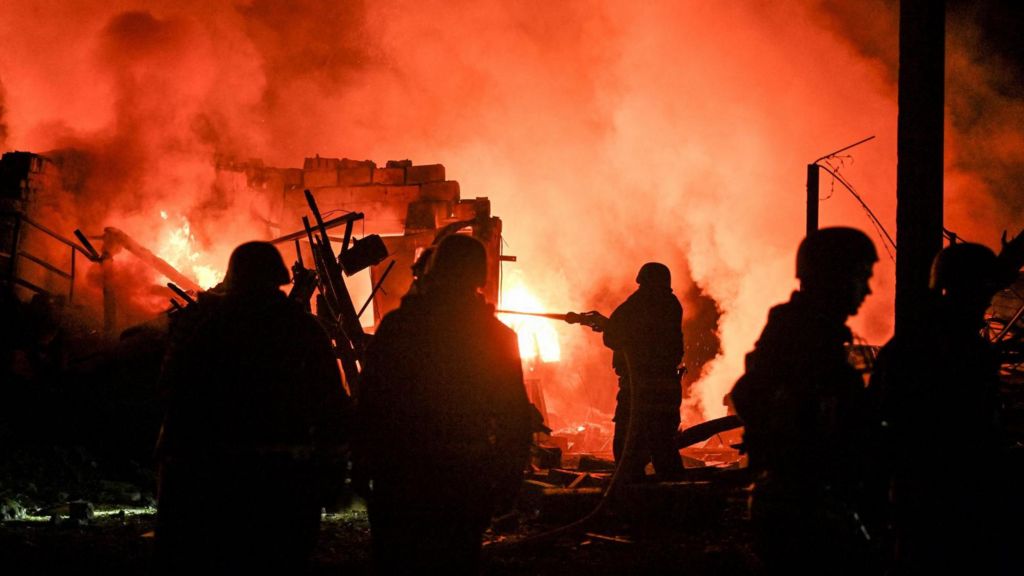
    Fed up with unaddressed grievances, dozens of inmates climbed onto the prison’s roof and set fire to mattresses to draw attention to their claims, prompting authorities to deploy additional reinforcements to the facility. Local witnesses reported hearing multiple explosions inside the complex, and inmates have alleged that security forces opened fire on the protesting group. Footage collected and published by the Venezuelan Prison Observatory (OVP), a prominent non-governmental prison rights watchdog, captures the unrest: inmates gather on the roof chanting “we want justice”, one man displays visible gunshot wounds on his torso and arm, and a masked female speaker directly addresses interim President Delcy Rodríguez, calling for the resignation of both the national prisons minister and Injuba’s director.

    The protest is the culmination of more than a week of unheard complaints about poor treatment, inmates and OVP report. Inmates allege that since the new director took charge, they have been subjected to violent arbitrary searches, extended stays in solitary confinement, and ongoing physical abuse. They also highlighted a critical lack of access to life-saving medication for incarcerated people living with tuberculosis, a longstanding issue in Venezuela’s overcrowded, under-resourced prison system.

    Prison rights advocates have spent years decrying the inhumane conditions that plague most of Venezuela’s penitentiaries, which the OVP has repeatedly confirmed fail to meet even the most basic legal minimum standards for correctional facilities. The current unrest comes against a shifting political backdrop in Venezuela: following the U.S. military operation that removed long-time leader Nicolás Maduro from power in Caracas on January 3, widespread U.S. pressure has led to the release of hundreds of political prisoners. But despite this progress, the Venezuelan human rights group Foro Penal estimates that more than 400 political prisoners remain in detention across the country.

    While Injuba is not a facility that primarily holds political detainees, Venezuela’s Committee for the Freedom of Political Prisoners has issued a statement of solidarity with the protesting inmates, arguing that widespread abuse—including punishment, deliberate hunger, prolonged solitary confinement, torture, and unsanitary, dangerous conditions—are not isolated incidents, but a core part of Venezuela’s official prison policy. These allegations echo recent findings from United Nations human rights bodies: UN High Commissioner for Human Rights Volker Türk noted in March that his office had continued to receive consistent reports of torture and abuse of detainees in Venezuela even after Maduro’s ouster.

    As of this report, neither Injuba’s prison director nor the interim government under Delcy Rodríguez has issued a public response to the inmates’ allegations or the ongoing unrest at the facility.

  • Senegal’s leadership row mounts as parliament speaker resigns

    Senegal’s leadership row mounts as parliament speaker resigns

    A rapidly escalating political crisis has gripped Senegal in recent days, following President Bassirou Diomaye Faye’s sudden dismissal of Prime Minister Ousmane Sonko, his one-time political mentor, and the dissolution of the entire national government. Now, just days after that high-stakes shakeup, El Malick Ndiaye, the speaker of Senegal’s National Assembly, has stepped down from his leadership post, opening a critical vacancy that political observers say could see Sonko return to legislative power.

    In a public statement released Sunday announcing his resignation, Ndiaye framed his departure as a decision rooted in principle. He explained that his exit came after “deep reflection” on his “sense of statehood,” adding that, “In public responsibilities as well as in the trials of national life, there are times when the interest of the country commands to prioritise integrity, discernment and sense of duty.”

    The move has set the stage for a extraordinary parliamentary session scheduled for Tuesday, when sitting lawmakers will convene to formalize Sonko’s return to the legislature and vote to fill the vacant speaker position. Sonko, the firebrand founder and leader of the ruling Pastef party, was originally elected to parliament in the 2024 legislative elections, topping the party’s candidate list. But at the time, he declined his legislative seat to remain in the post of prime minister, telling reporters two years ago, “I am staying at the prime minister’s office. I submitted my resignation letter as a member of parliament.”

    With Sonko’s tenure as prime minister cut short by Faye’s sacking, political insiders say his loyalists in the assembly are now planning to nominate him for the open speaker role in a direct challenge to Faye’s authority. Sonko’s Pastef party already holds an absolute majority in parliament, meaning his bid for the speaker’s post is almost certain to succeed if it comes to a vote.

    The unfolding power struggle is the culmination of months of simmering tension between Faye and Sonko, a relationship that has gone from alliance to open rivalry. It is a historic irony that Faye owes his presidency largely to Sonko: the 51-year-old former prime minister was barred from running in the 2024 presidential election over a defamation conviction, clearing the way for Faye to run as the Pastef party’s candidate and win the top office.

    A popular populist who commands massive support across Senegal, particularly among the nation’s large youth demographic, Sonko built his political career as a fierce opposition critic of former President Macky Sall, and in recent months he has increasingly taken the same combative approach to Faye’s leadership.

    Political analysts warn that if Sonko takes control of parliament, Faye’s ability to govern and advance his policy agenda could be severely undermined, leaving him sidelined without legislative backing. The already uncertain political landscape is further complicated by constitutional constraints: Faye cannot legally dissolve parliament until at least two years after the last legislative election, meaning any attempt to call early elections before November 2026 would be unconstitutional and invalid.

    Senegal is now waiting for Faye to nominate a new prime minister to replace Sonko, but even that routine step carries uncertainty. Lawmakers have up to three months to approve the president’s nominee, and with Pastef holding a majority, it remains unclear whether the confirmation process will proceed smoothly.

    For a West African nation already struggling with heavy debt burdens and a history of contentious leadership struggles, this latest rift between the country’s two most powerful politicians has deepened political instability. Senegal won international praise in recent years for its transition to a youthful, dynamic democratic government, but the future of that progress now hangs in the balance as the full scope of the split between Faye and Sonko remains unclear.